
Quick Take
- Sharks are divided into eight orders based on their anatomy and evolutionary history.
- Carcharhiniformes is the largest shark order, containing more than 250 species.
- Shark orders include highly specialised species such as sawsharks, angel sharks and bullhead sharks.
- The eight orders range from tiny deep-sea sharks to the world's largest shark, the whale shark.
There are more than 500 species of sharks living today. Although they all share the same basic features, sharks are actually some of the most diverse animals in the world. While some are fast-swimming ocean predators, others are slow-moving bottom dwellers. Therefore, scientists have divided sharks into eight different orders based on their anatomy and evolutionary history. Understanding these orders makes it easier to see how sharks have adapted to almost every marine habitat.
Continue reading
Carcharhiniformes
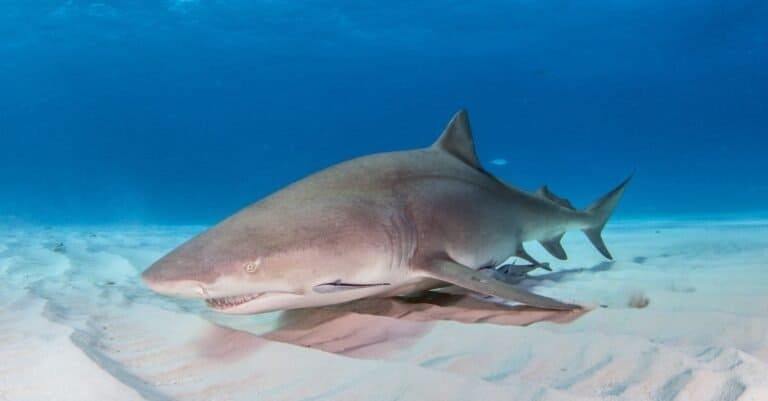
Also known as ground sharks, Carcharhiniformes is the largest order of sharks, comprising more than 250 species. Carcharhiniformes sharks have five pairs of gill slits, two dorsal fins, and an anal fin. They also have a large mouth that extends past their eyes. Carcharhiniformes also have a nictitating membrane, which is a protective transparent third eyelid. This membrane can be drawn across the eye to protect it from debris and sharp objects, such as those encountered when capturing thrashing prey. Other animals, such as cats, also have a nictitating membrane, but among sharks, it is mainly found in Carcharhiniformes.
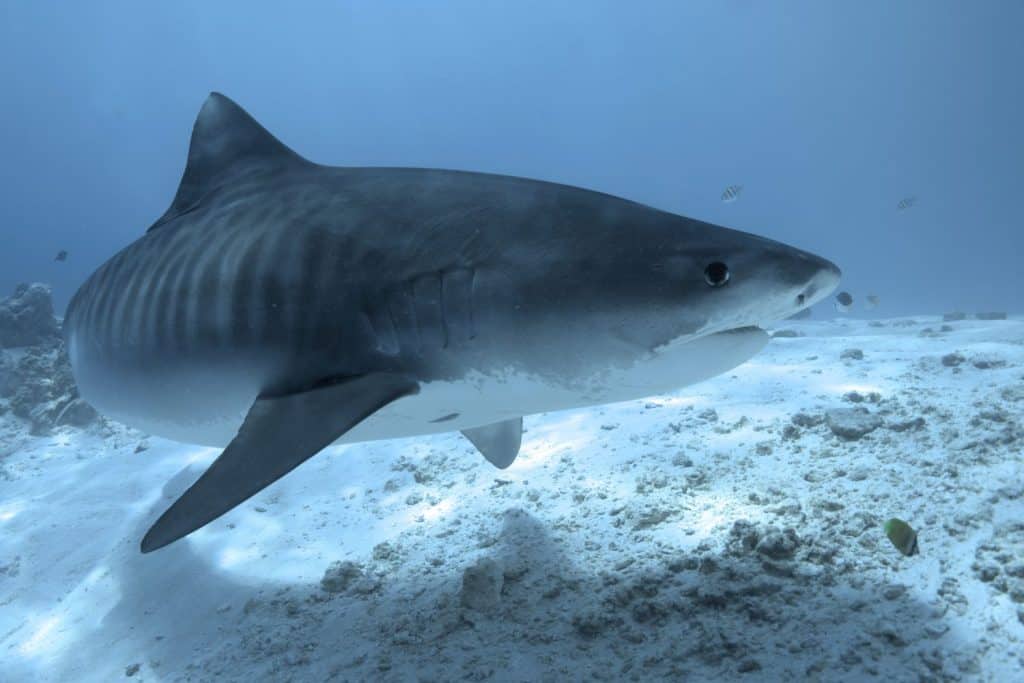
Tiger sharks are large ground sharks.
©Stefan Fan/Shutterstock.com
Carcharhiniformes inhabit most oceans around the world, and they can be found in tropical, subtropical, temperate, and even Arctic waters. The group varies widely in size, with some species of catsharks being just nine inches long. However, it also includes some of the largest and most powerful sharks in the world, such as bull sharks, tiger sharks, great hammerheads, and oceanic whitetips.
Hexanchiformes
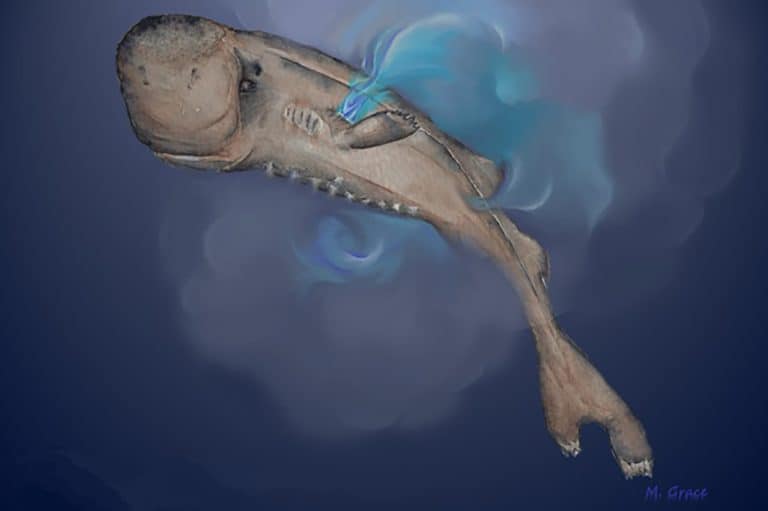
There are just seven species in this order, split between two families – the frilled sharks (Chlamydoselachidae) and the cow sharks (Hexanchidae). Hexanchiformes are widely regarded as being the most primitive order of sharks. This is because they retain several features that were found in ancient fossilized sharks from the Paleozoic and Mesozoic eras. Hexanchiformes sharks have either six or seven gill slits, unlike most other sharks, which usually have only five pairs. They also have only a single dorsal fin. The dorsal fin is located further back on the body, nearer the position of the pelvic fins. This gives them a long, slender, eel-like appearance.
Hexanchiformes sharks can be found in coastal habitats but often live in deep, cold water around the world. The largest species is the bluntnose sixgill shark, which can reach 20 feet long and inhabits depths of more than 6,500 feet. However, one of the most unusual is the bigeye sixgill shark, which has large green eyes to help it see in the dark depths of the ocean.
Squaliformes
Squaliformes are some of the most widely distributed sharks and can be found across the world in a variety of habitats, including the cold Arctic and warm tropical seas. These sharks have five gill slits and two dorsal fins. However, unlike most of the other orders, they lack an anal fin, giving them a distinctive appearance. Sharks in this order also lack the nictitating membrane found in ground sharks.
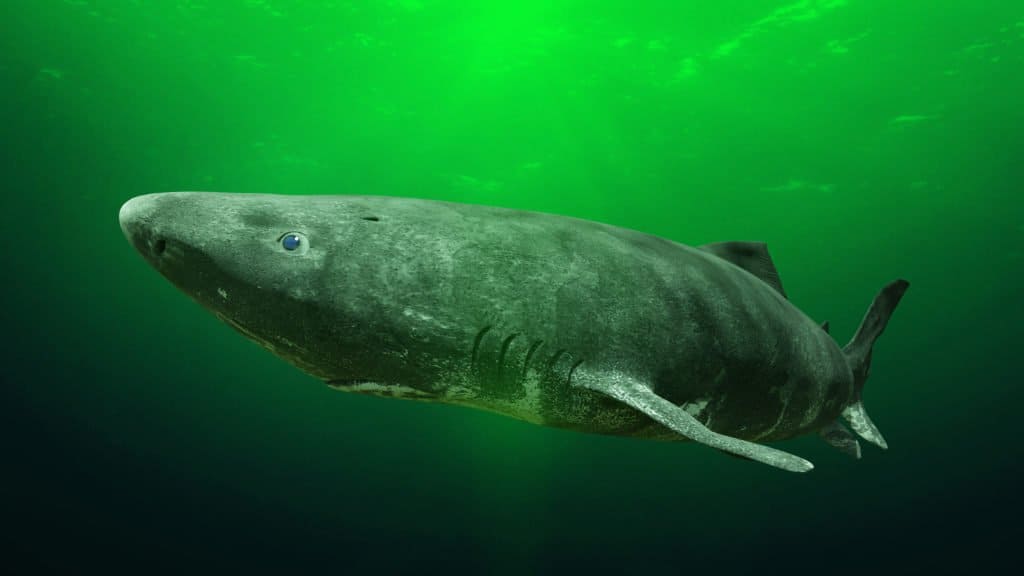
The Greenland shark is a large sleeper shark that inhabits the cold Arctic and Atlantic Oceans.
©iStock.com/dottedhippo
There are approximately 126 species in Squaliformes, and they include the lantern sharks, sleeper sharks, and dogfish sharks. This order includes the smallest shark in the world, the dwarf lantern shark, which reaches just eight inches in length. Squaliformes also includes the Greenland shark, which is one of the largest sharks in the world. It is also one of the oldest, with estimates suggesting it can live for around 400 years.
Pristiophoriformes
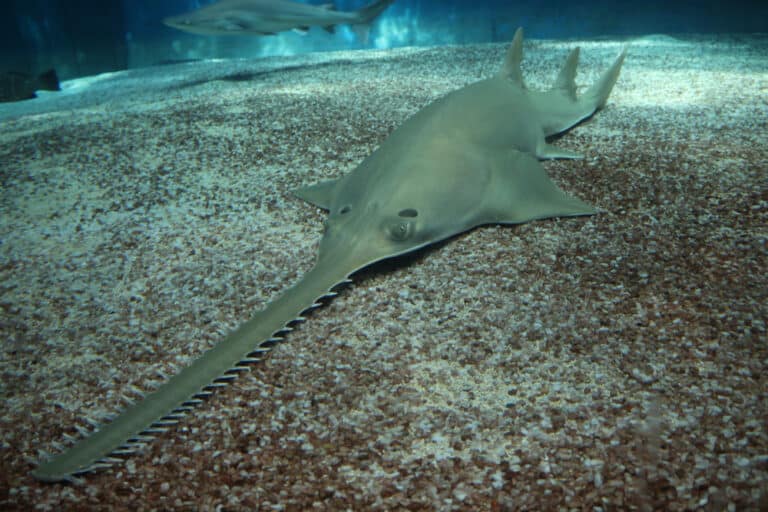
Pristiophoriformes are also known as the sawsharks and have a very long, thin, saw-like snout, which is nothing like any of the other sharks. Sawsharks can have either the standard five gill slits or, in some species, six, similar to certain Hexanchiformes. They have two dorsal fins and wide pectoral fins, but lack an anal fin. They have a pair of barbels halfway along their snout that they use for detecting prey on the ocean floor. Their snout is particularly unusual, as it has a flattened appearance and is edged with sharp tooth-like structures, known as rostral teeth. The rostral teeth are modified dermal denticles and often alternate between large and small, adding to the saw-like appearance. The teeth inside their mouths are tiny and razor-sharp, making them particularly effective for grasping small fish, crustaceans, and squid.
Sawsharks are mainly found in tropical and temperate waters, particularly in the Indian and Pacific Oceans. They are sometimes found in coastal waters but can also be found offshore on the continental shelves. There are ten species of sawsharks, and these include the Bahamas sawshark and the Japanese sawshark.
Squatiniformes
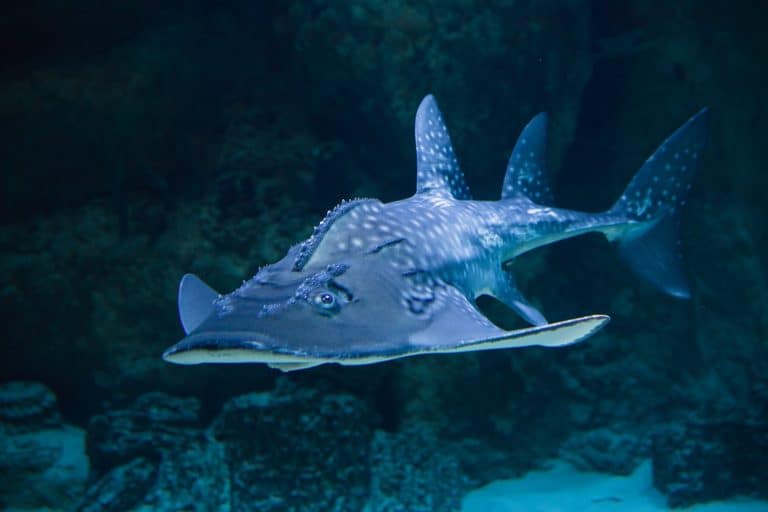
Another unusual group of sharks is the Squatiniformes order, characterized by a wide, flattened body and broad pectoral fins. Although their general appearance closely resembles rays, they are actually true sharks and are known as angel sharks. Angel sharks have five pairs of gill slits located partly on the underside of their body, while their eyes and spiracles are positioned on top. As bottom dwellers, angel sharks use their spiracles to keep oxygen flowing to their brains while buried in sand and silt.
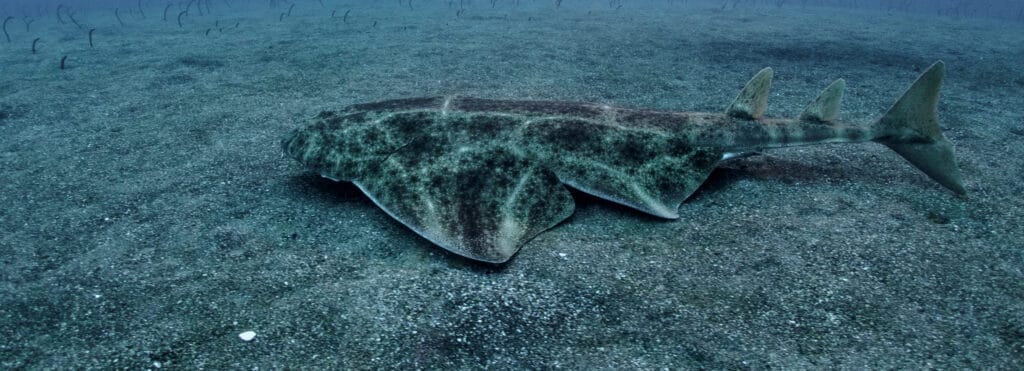
Angel sharks have a broad, flattened appearance and blend in with the ocean floor.
©LuisMiguelEstevez/Shutterstock.com
There are 24 species of angel sharks and they live in temperate and tropical waters around the world. Most are found at depths of up to 330 feet, but some species can live in deeper water, such as the Atlantic angel shark, which inhabits waters up to 820 feet deep. Angel sharks are excellent ambush predators, lying in wait on the ocean floor before seizing prey such as fish, skates, octopus, and crustaceans.
Heterodontiformes
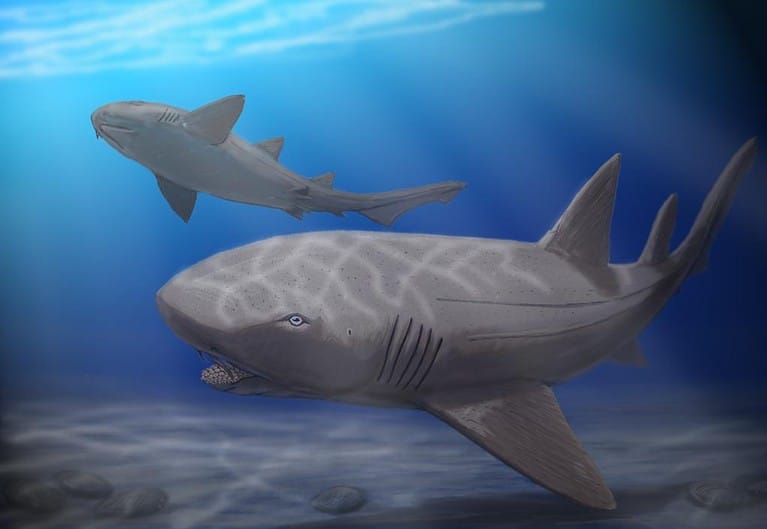
There are just nine living species of sharks in the Heterodontiformes order, and they are known as the bullhead sharks. Heterodontiformes have five gill slits, with the last three located above the pectoral fins. They have two dorsal fins, both of which have a rigid spine at the front. Bullhead sharks have large, blunt heads but small mouths. Their bodies are slender and tapered, similar to Hexanchiformes, but bullhead sharks are relatively small, reaching a maximum length of 5.5 feet. The most unusual feature of Heterodontiformes is their teeth: sharp, pointed front teeth with cusps for grasping prey, and flattened back teeth for crushing hard-shelled animals like crabs and lobsters.
Bullhead sharks live in tropical and temperate waters, mainly in the Indian and Pacific Oceans. Species include the Port Jackson shark, which is endemic to the waters around southern Australia, and the horn shark, which lives around the west coast of North America.
Orectolobiformes
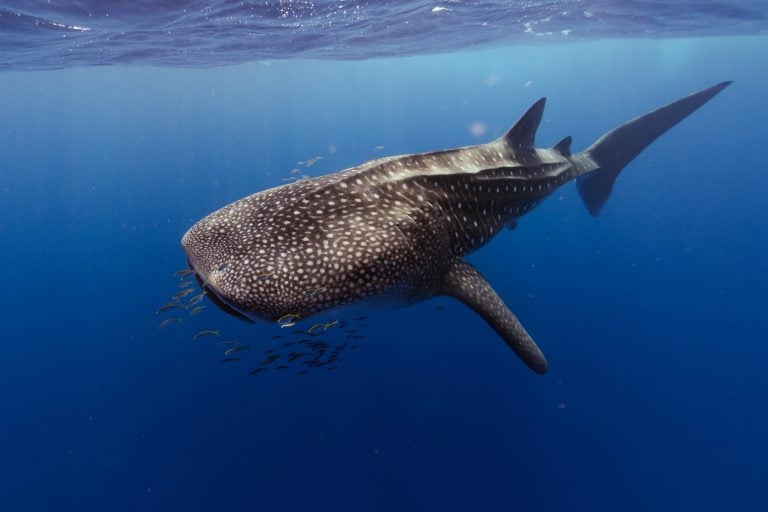
Orectolobiformes are also known as the carpet sharks and comprise around 45 species. Carpet sharks have five gill slits and two dorsal fins. However, unlike Heterodontiformes, their dorsal fins are spineless. Carpet sharks have a relatively small mouth that does not extend beyond their eyes. Most are slow-moving bottom dwellers and have a small set of spiracles beneath each eye to help them breathe, except for the whale shark, whose spiracles are located behind its eyes. Some species, such as the nurse shark, also have barbels hanging from their upper lip to help them search for food.
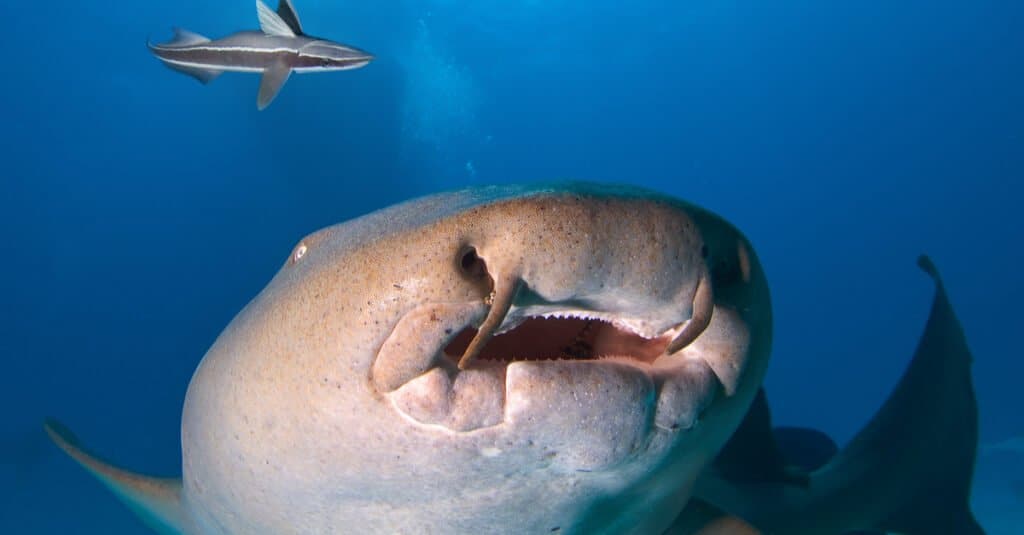
Some carpet sharks have barbels on their upper jaw.
©frantisekhojdysz/Shutterstock.com
Many carpet sharks have a patterned appearance that helps them blend in with the ocean floor. Carpet sharks vary greatly in size, ranging from foot-long species like the barbelthroat carpet shark to the whale shark, the largest shark in the world at around 40 feet long. Carpet sharks have a widespread distribution and are found all around the world. Some species are found in coastal regions, but most prefer deeper offshore waters.
Lamniformes
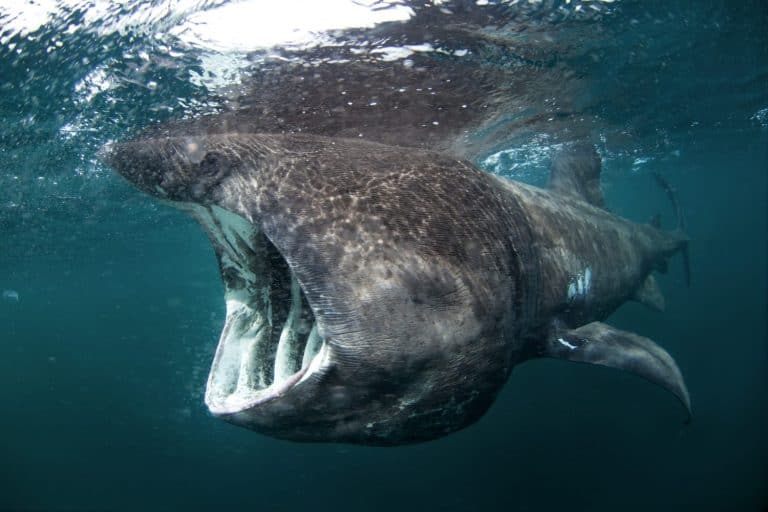
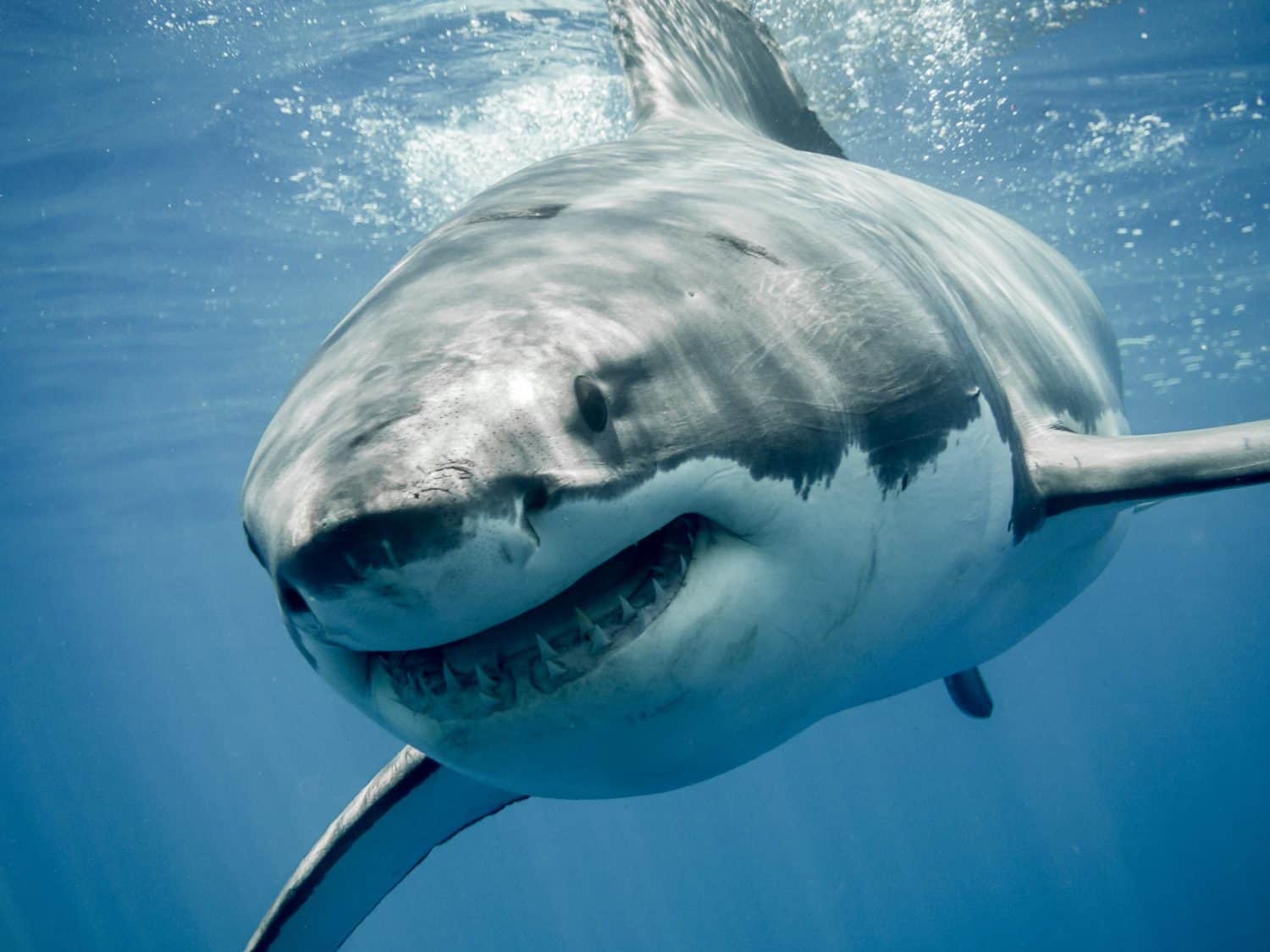
Lamniformes are also known as mackerel sharks and inhabit temperate and tropical waters. They have five gill slits and two spineless dorsal fins. They also have a mouth that extends beyond their eyes. A unique feature of some Lamniformes, specifically those in the Lamnidae and Alopiidae families, is their ability to maintain a body temperature higher than the surrounding water—a trait known as regional endothermy. This adaptation increases their muscle power, enabling them to hunt fast-moving prey in colder water. Some of the species in Lamniformes that possess this capability include the great white shark and the shortfin mako shark.
There are just 15 species of mackerel sharks, but the order historically included other species, such as the famous megalodon. Mackerel sharks vary greatly in their habitats, with some species living in coastal waters, while others prefer the deeper oceans. They also have vastly different diets. Some species prey on fish and marine mammals, while basking and megamouth sharks feed on small organisms such as plankton and crustaceans.