
Quick Take
- Tardigrades don't just slow down to survive extreme conditions. They do something far stranger to the inside of their own cells. Discover cryptobiosis →
- The same trick that protects them from freezing also reveals why ice is so deadly to nearly every other living thing on Earth. How ice damage is avoided →
- Scientists sent tardigrades into the vacuum of outer space, and what came back changed what we thought we knew about life's limits. Read the space experiment →
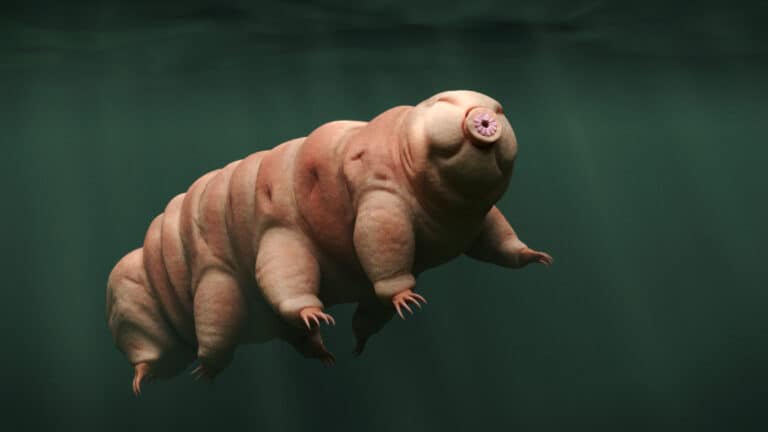
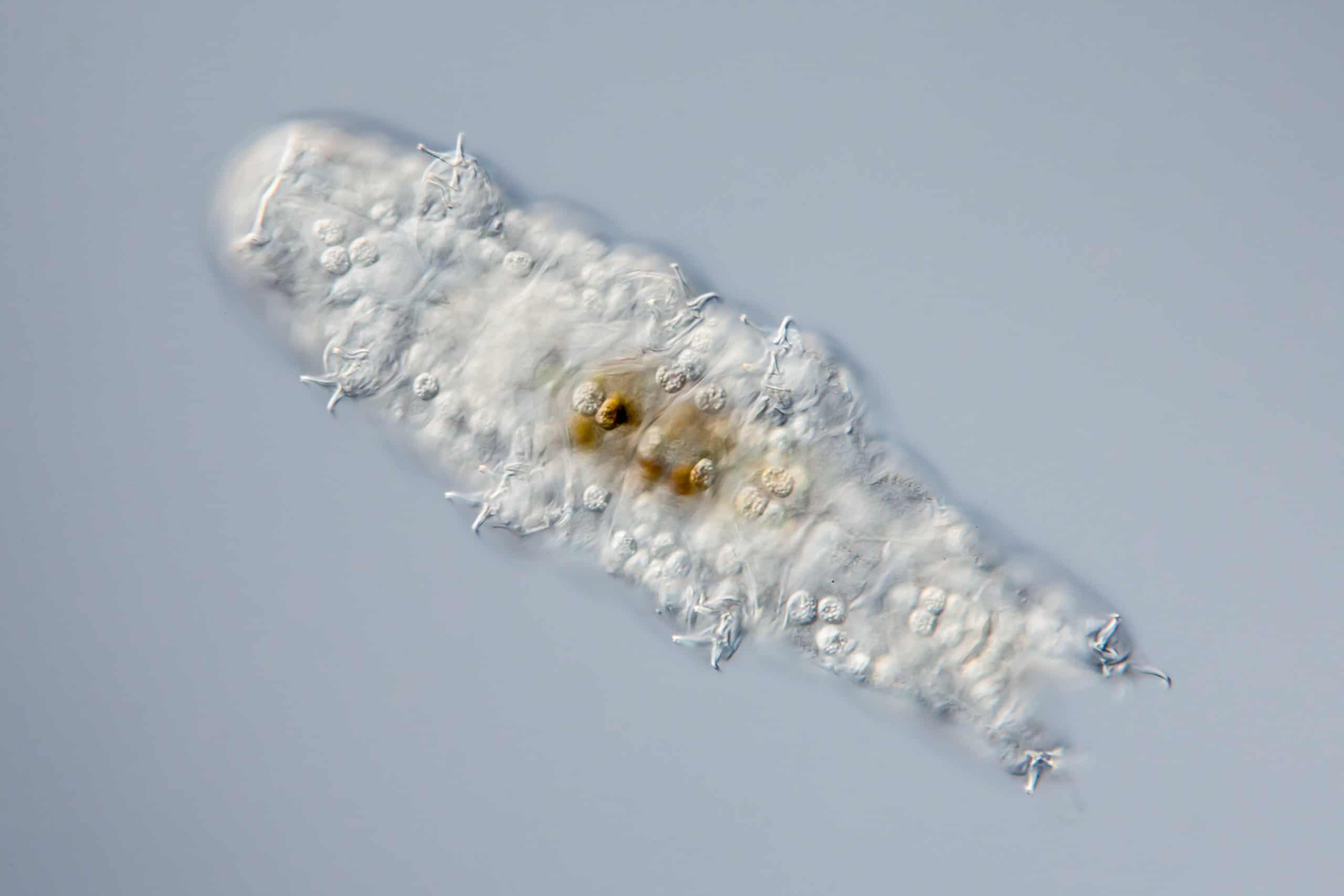
Tardigrades are one of the most resilient creatures on Earth. They can survive almost anything, yet you’ve probably never heard of them. Measuring less than a millimeter long, these microscopic creatures have survived conditions that would kill nearly every other known form of animal life, including places where temperatures are either as cold as -328 degrees Fahrenheit or as hot as 300 degrees Fahrenheit. Also known as water bears due to their round bodies and lumbering walk, these creatures can also withstand lethal radiation and even the vacuum of outer space.
Water bears can achieve this feat by engaging in a process called cryptobiosis, where they transform the inside of their cells into a glass-like substance that protects them from harm. Let’s look more into this amazing phenomenon.
What Is Cryptobiosis?
Also known as “hidden life,” cryptobiosis is a state of suspended animation that allows tardigrades to survive when water becomes scarce or the environment becomes unlivable. Essentially, their bodies become dormant. However, unlike hibernation, where an animal’s metabolism merely slows down, cryptobiosis brings biological activity almost to a complete standstill. This remarkable adaptation allows tardigrades to remain dormant for years until favorable conditions return.
Then They Turn Into Glass
At this point, the process becomes even more remarkable as the tardigrade undergoes a dramatic physical transformation. It pulls its eight legs inward and contracts into a compact, barrel-shaped form known as a tun. During this time, the tardigrade expels almost all of the water from its body.
The key to tardigrades’ survival lies in their unique proteins, called Tardigrade Intrinsically Disordered Proteins (TDPs). As water disappears, these proteins reorganize into a glass-like material that fills the interior of the cell. The process is called vitrification. While this process does not literally create glass as we know it, it forms a stable, solid matrix that immobilizes everything inside the cell. Think of it like preserving an object in clear resin. Because the molecules can’t move freely, harmful chemical reactions nearly stop, proteins remain stable, and delicate cellular components remain protected until water returns.
How This Process Protects Tardigrades in Dangerous Conditions
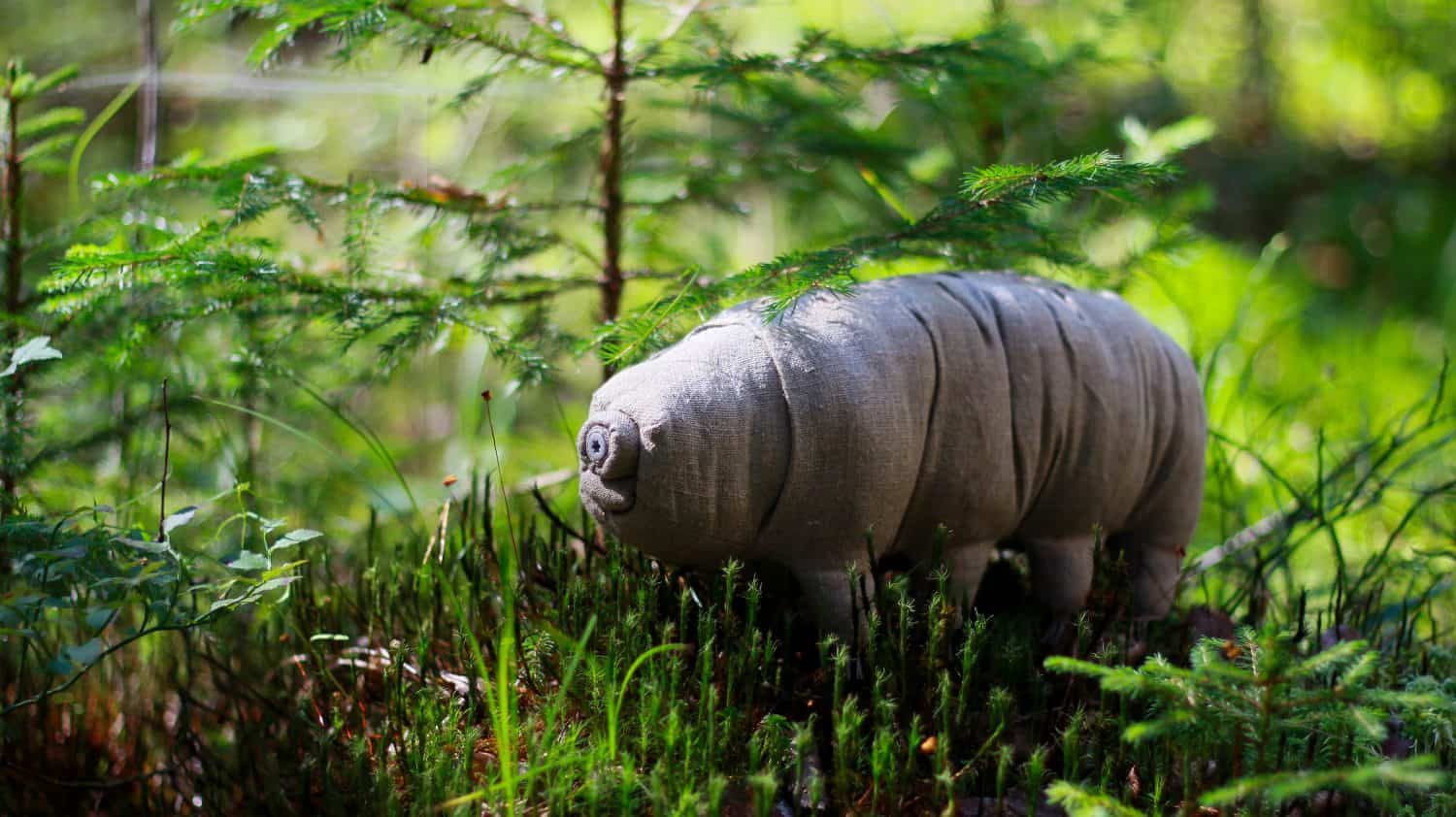
Tardigrades can live in many harsh conditions, which truly separates them from the rest of the animal kingdom.
©Kirsanova Tania/Shutterstock.com
This process is incredibly helpful for surviving harsh conditions that would kill almost any other living creature. Consider the following environments:
Protection From Freezing
When water freezes inside ordinary cells, expanding ice crystals puncture membranes and damage internal structures. This is one reason freezing can be so destructive to living tissue. Tardigrades largely avoid this problem because they remove almost all of their water before freezing occurs. Instead of forming sharp crystals, the remaining cellular contents exist within the glass-like matrix created by TDPs. That’s how they can survive temperatures that are colder than anything that can naturally occur on Earth.
Safety From Heat
Extreme heat causes our proteins to unfold and permanently lose their function. Water bears can avoid this threat because, via cryptobiosis, their molecules are essentially locked into place, so proteins are far less likely to unravel during brief periods of intense heat.
Surviving Radiation
Radiation is extremely harmful because it damages living organisms by breaking DNA strands and producing highly reactive molecules that attack cells. However, the glass-like matrix that occurs in tardigrades limits the movement of damaged molecules while specialized proteins help stabilize DNA during dormancy. Then, once the water bear is rehydrated, its powerful DNA repair systems rapidly fix much of the damage that occurred during its suspended state.
Alive in Outer Space
Tardigrades proved to be so resilient that scientists wanted to test their abilities in the vacuum of space, and they weren’t disappointed. While facing the threats of space, the water bears went into their cryptobiosis state. After returning to Earth, they resumed crawling, feeding, and reproducing. It’s important to note that these creatures don’t live in space. These were simply short-term experiments. Tardigrades are not adapted to a permanent life beyond Earth.
Nature’s Ultimate Survival Strategy
Despite their reputation, tardigrades aren’t truly indestructible, but they’re about as close as you can get. The ability to reduce their metabolism to nearly zero and go into a suspended state truly separates them from much of the animal kingdom. This phenomenon demonstrates the resilience of life on Earth, and tardigrades serve as a reminder that life on our planet often finds astonishing solutions to its greatest challenges.