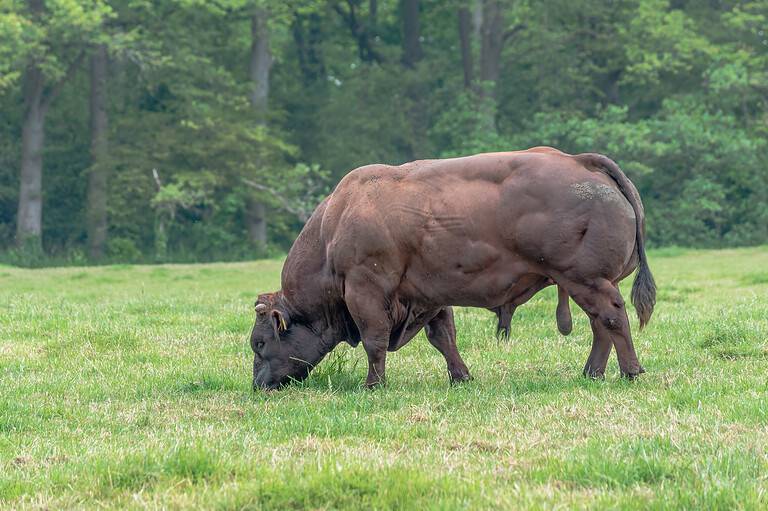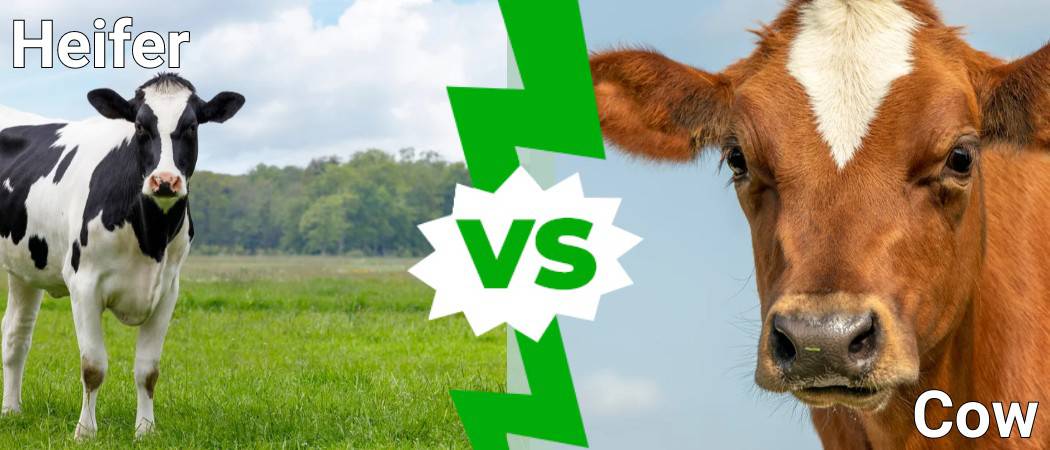

When you’re looking out upon a field of large ruminant animals, you might be tempted to call them all cows. That’s not a very precise term, though. The same bovine species could be called cows, heifers, steer, bulls, and more, depending on sex and reproductive status. We’re going to take a closer look at a heifer vs. cow, and you’ll learn how to tell the differences between these animals. Some of these distinctions are more subtle than those between different species, but you’ll learn the most important ways that heifers and cows differ.
Key Differences Between a Heifer vs. Cow
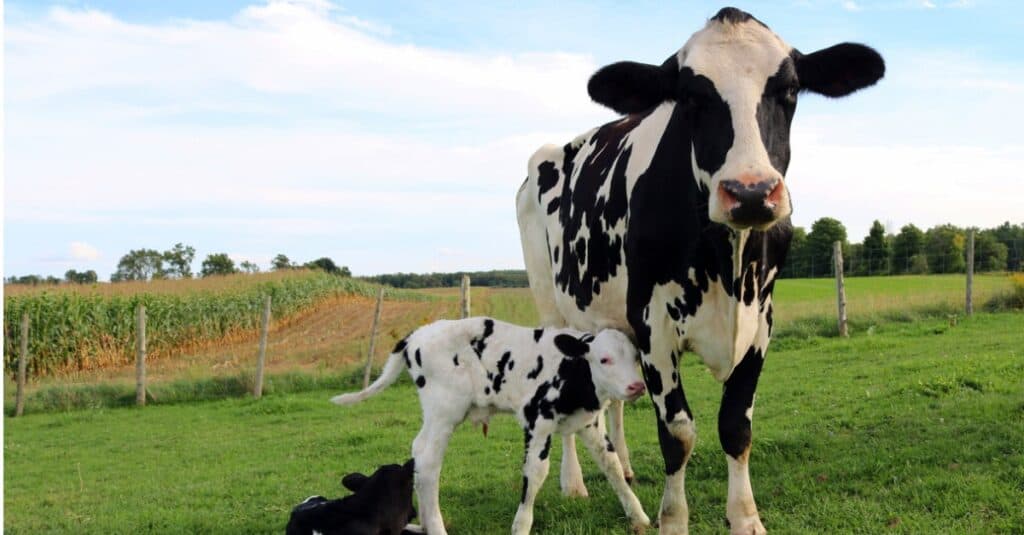
A heifer is a female bovine that has not given birth to calves, but cows have given birth to calves.
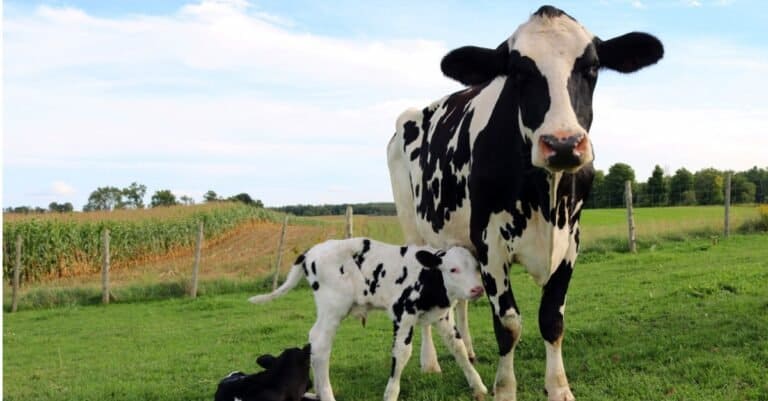
©iStock.com/Diane Kuhl
The term “cow” is often used to refer to any animal within the Bos genus of domestic and wild cattle. Yet, it’s possible to distinguish the animals within this family in several ways. So, what is a heifer? Heifers are young, developmentally mature female cattle that have not yet given birth to calves. Cows are adult female cattle that have had calves at some point in their lives. However, there are several other differences that are relevant.
Age
Heifers are young females generally between one and two years of age. Female bovines are considered heifer calves when they are younger than one year of age. However, if a female bovine is younger than 2.5 years of age, has not had a calf or has lost a calf, and is not intended for future breeding, she is referred to as a heiferette.
A cow can be any age, as long as she has had one or more calves. The difference between a heiferette and a cow is that a heiferette is intended for meat. However, a cow is intended to be kept for future breeding and milk production.
Size
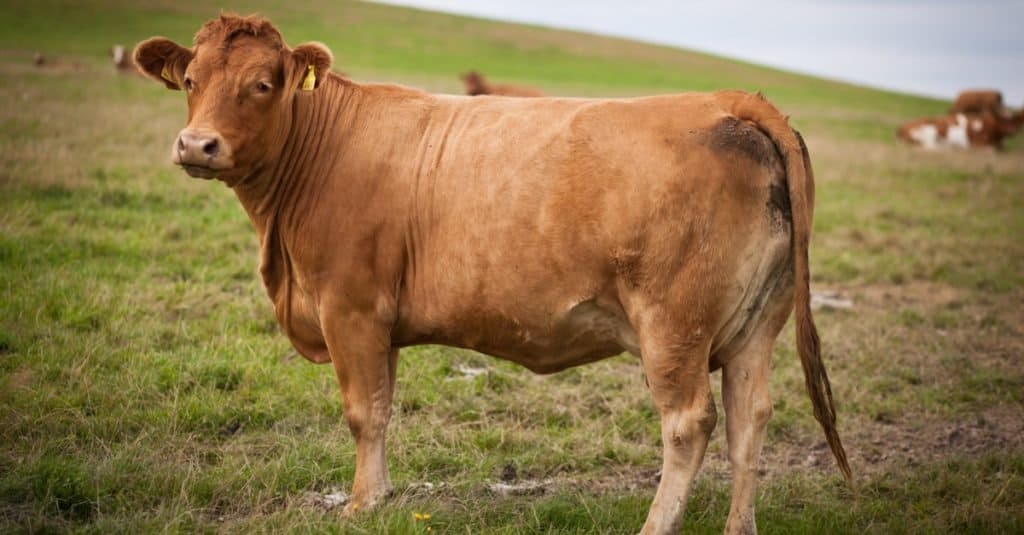
Cows are larger than heifers due to their age and changes in their bodies after having offspring.
©l i g h t p o e t/Shutterstock.com
Heifers are also generally smaller than cows because they are not yet fully mature. For example, in Jersey cows, heifers should reach 45% to 50% of their mature size at puberty. Their breeding weight is 55% of their mature weight, while their calving weight is only 85% of their mature weight. There are slight variations by breed, but most heifers should reach about 55% of their mature weight and 90-95% of their mature height by their target breeding age.
Cows are not typically considered fully physically mature until they are around 2 to 3 years old, although the age varies by breed, as do the weights and heights. The average weight for a mature Jersey cow, which is a smaller breed, is approximately 1,000 pounds. They stand about 4-4.5 feet tall at the shoulder. Holsteins are a large breed, with mature cows weighing around 1,500 pounds and standing about 4.8 feet tall at the shoulder.
Udders
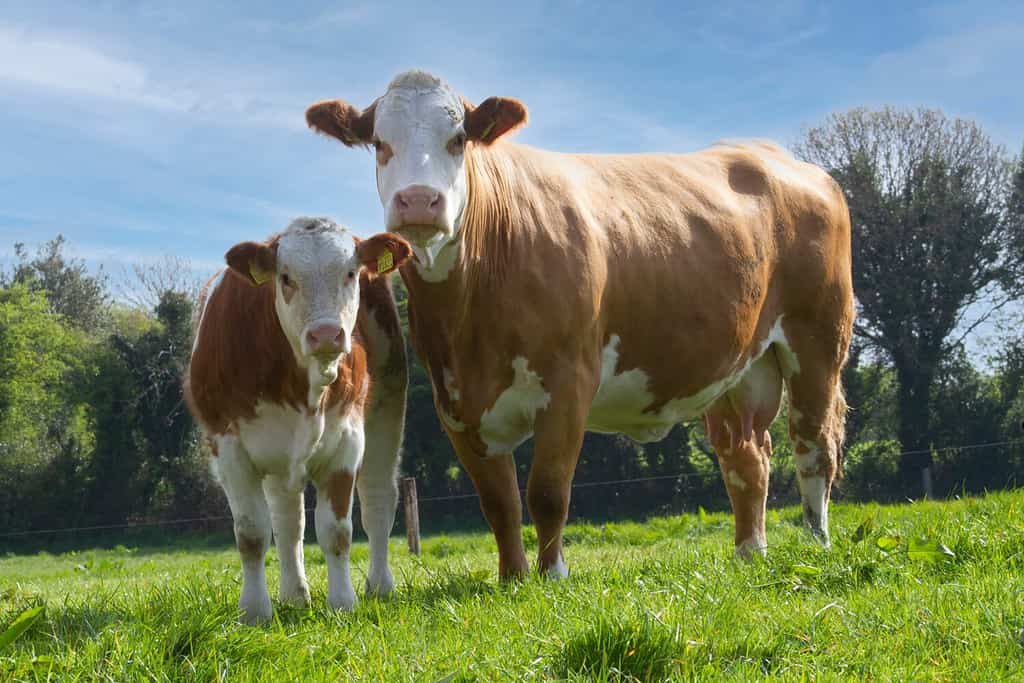
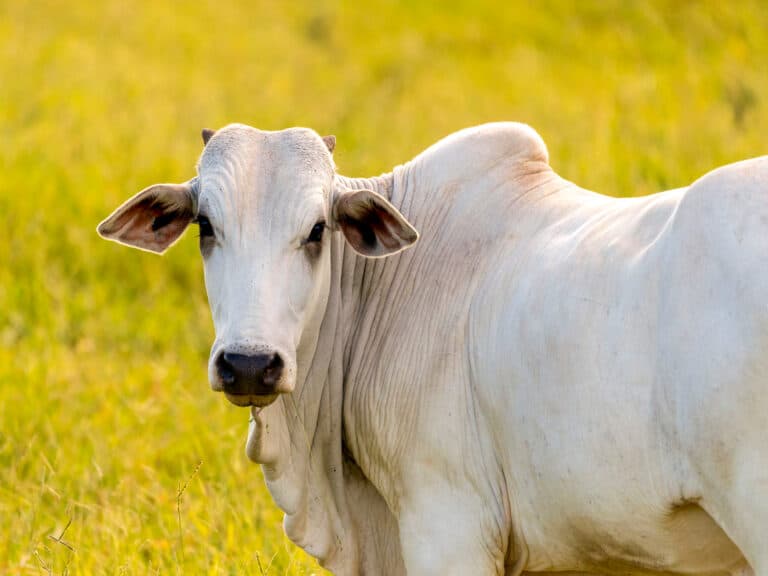
Cows have more conspicuous udders than heifers.
©Show Business/Shutterstock.com
Udders are another distinguishing factor between heifers and cows. Heifers have visible teats, but they may not have visible mammary glands, as they do not have a fully developed udder. A heifer’s mammary glands do not begin to develop until she becomes pregnant with her first calf. So a heifer cannot produce milk.
A cow’s udder is large and pronounced. The udder has four glands, or quarters, with their own milk production and teat. A cow’s udder produces milk for her calf and may continue to produce milk in dairy operations.