
Quick Take
- North Atlantic right whales are one of the most endangered whale species, with only about 380 individuals remaining. Traits that doomed them →
- Female right whales reproduce slowly, usually giving birth only once every several years after a year-long pregnancy. See what changed →
- Ship strikes and fishing gear entanglements remain the biggest threats to the species’ survival. Entanglement's lasting effects →
- Scientists believe the whales can still recover if enough females survive and calf numbers continue to improve. The birth rate they need →
There are approximately 90 species of whales, and they live in oceans all around the world. One of the rarest species of whales is the North Atlantic right whale, which has an estimated population of just 380 individuals. These whales were once hunted almost to extinction. Although it’s now illegal to hunt them, their population remains so low that every calf plays an important role in the survival of the species. Keep reading to learn why these animals are so rare, and if there’s anything that can be done to help them.
Why Are North Atlantic Right Whales So Rare?
North Atlantic right whales (Eubalaena glacialis) are large whales that inhabit the North Atlantic Ocean. They are approximately 43 to 60 feet long, with females being larger than males. They are baleen whales, meaning that they have large baleen plates in their mouths rather than teeth. As a result, they are filter feeders and prey on tiny crustaceans.
North Atlantic right whales often feed by skimming through the water close to the surface. Historically, this made them an easy target for whalers. Additionally, their high blubber content causes their bodies to float after they are killed. Due to their popularity with whalers, they were hunted almost to extinction by the end of the nineteenth century.
North Atlantic right whales are classified as a critically endangered species, and there are just 380 of them left. Although it is now illegal to hunt and kill them, their population is still under significant threat. One of the most serious threats that they face nowadays comes from entanglement in fishing nets, particularly around the East Coast. Often, this leads to them drowning as they are unable to reach the surface to breathe. However, even if the whales survive, entanglement can have lasting effects on their health. Many whales have also been killed by ship strikes, usually when they are in busy shipping lanes.
Why Do They Have a Slow Reproduction Rate?
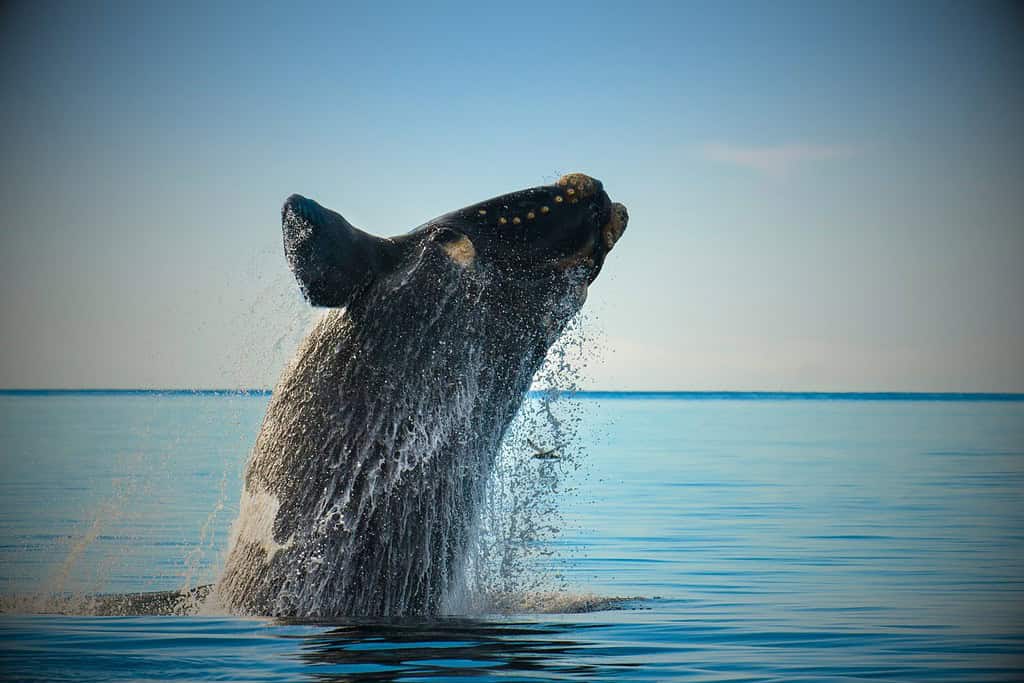
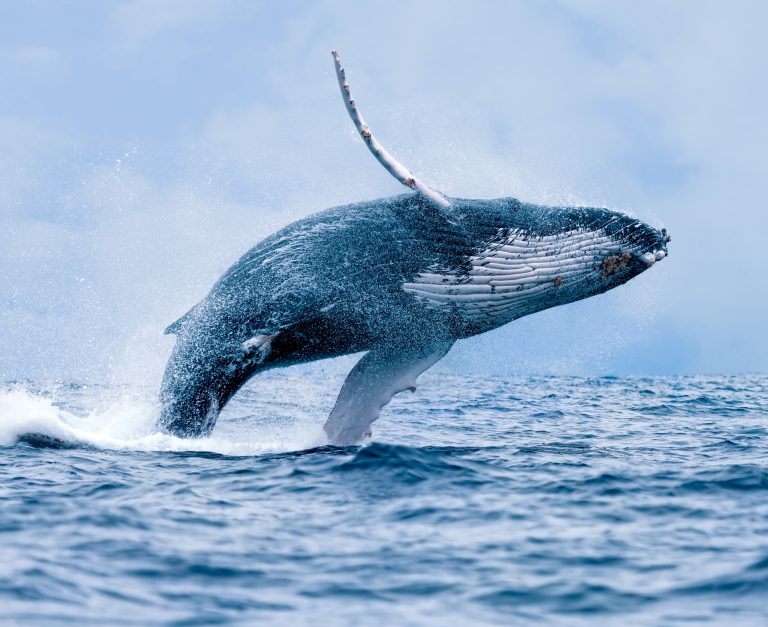
North Atlantic right whales only give birth every seven to ten years.
©Tharuka Photographer/Shutterstock.com
As the population of North Atlantic right whales is so low, they have a very small number of females that are actively breeding. It is estimated that there are only 70 North Atlantic right whale females of breeding age left. Females reach sexual maturity at around nine to ten years old. They have a gestation period of around one year, and calves suckle for anything from seven months up to a year and a half.
However, North Atlantic right whales don’t give birth every year. Instead, they give birth to a single calf every seven to ten years. Therefore, there aren’t enough calves born to allow the population to grow, as the death rate is higher than the birth rate.
North Atlantic right whales didn’t always have such a slow reproduction rate. They initially gave birth approximately once every three years. However, issues resulting from entanglement, even if they are successfully released from the nets, have a lasting effect on the whales. These issues include stress and physical injuries from being trapped, which are thought to contribute to the slower reproduction rate. These whales are also not living as long as they once did, with females now living to around 45 years. Their shortened lifespan significantly reduces the length of their viable breeding years. As a result, each female now produces fewer calves than in the past.
How Many Calves Are Born?
There are two populations of North Atlantic right whales: one in the eastern region of the ocean and one in the western region. North Atlantic right whales typically migrate south to give birth in the warm, shallow waters off the southeastern coast of the United States. They give birth between mid-November and mid-April. After giving birth, the whales spend some time nursing their calves in the warmer waters before migrating back north to their regular feeding grounds.

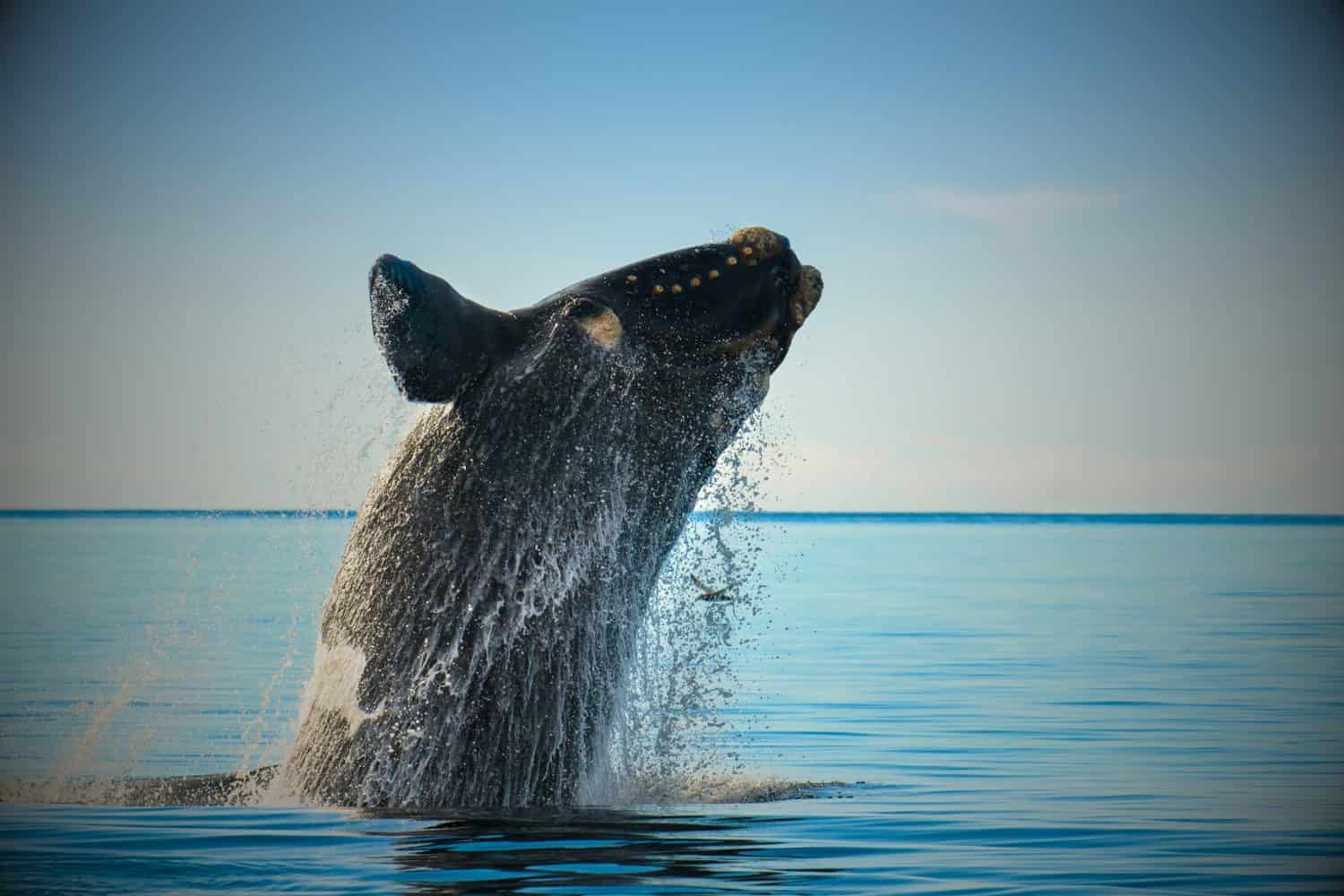
There were 23 North Atlantic right whale calves born this season.
©6381380/iStock via Getty Images
Although there are around 70 breeding females, the annual birth rate is extremely small, as they don’t reproduce every year. The births of North Atlantic right whales are tracked and recorded every year so the population can be monitored. Each calf is given an identification number and eventually a name so that it can be identified throughout its life.
Twenty births in a season is considered to be a good year for these whales. However, the actual birth rate is often much lower. The 2026 season (from November 2025 to April 2026) has been the best year since 2009, with 23 calves born. However, in the previous year, the 2025 season, there were just 11 calves born. The highest number in the last two decades came in 2009, when 39 births were recorded. However, they then went into a steady decline over the next ten years. 2018 was the worst year on record, with no births recorded at all. Despite this, there are now signs that the numbers might be starting to improve as this year’s births are the highest since the high of 2009.
What Does It Mean for the Future?
The future of North Atlantic right whales remains uncertain. However, it is possible that the population can recover if the females can survive long enough to reproduce. At the current death rate, scientists estimate that 50 births per year are needed to stop the continuing population decline. However, due to the long interval between births and the high mortality rate, this goal is currently unlikely to be achieved. Instead, scientists believe that the best chance of recovery for these whales is to try to reduce the chances of them dying early.
To try and lower the deaths, conservation efforts are currently focused on encouraging seasonal speed limits for ships to try and prevent collisions from occurring. A seasonal speed limit of 10 knots is in force for ships longer than 65 feet between Florida and Rhode Island. However, there is currently no such rule for ships less than 65 feet long.