
Quick Take
- A deer can look completely healthy and still be spreading a 100% fatal disease. Here's how that's possible. See asymptomatic carriers →
- CWD prions don't need a living animal to keep spreading. The environment itself becomes a trap. Explore environmental transmission →
- One historical prion disease crossed from animals to humans with devastating results, and researchers aren't ready to say CWD can't do the same. See the human risk →
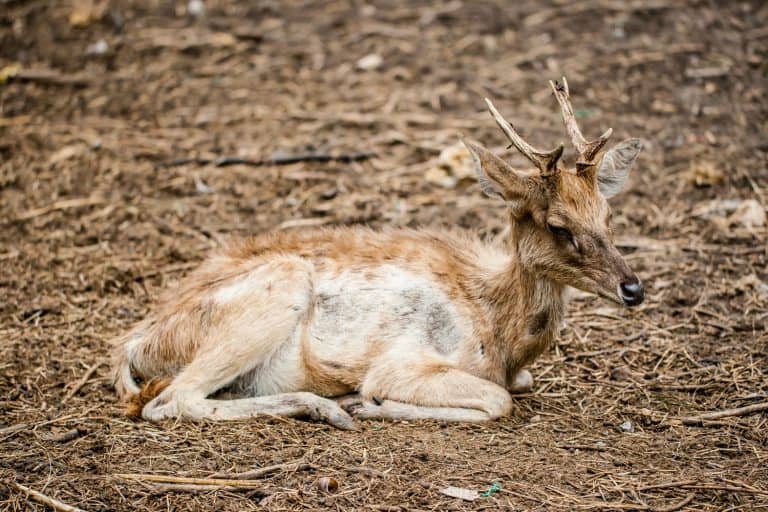
Chronic wasting disease, also known as CWD, is 100% fatal. Each year, it kills thousands of animals across the U.S. and Canada, often called “zombie deer.” Despite the nickname ‘zombie deer,’ the disease can take up to two years to kill its victims, with symptoms progressing gradually. Animals can feel the effects of CWD for up to two years before finally succumbing to its symptoms.
Even scarier, a new study published in Science Advances reveals that some animals may even be asymptomatic. The prion could pass between species without either species realizing it, making this now-invisible illness one of the deadliest for deer, elk, and moose.
The Silent Killer
Researchers at the University of Calgary found that CWD is spreading. It’s been detected in animals in Alberta, which is a new region for the disease. This news is surprising given the devastating symptoms associated with CWD, which typically include:
- Emaciation, or dramatic weight loss
- Sudden fear of humans
- Listlessness and/or lack of awareness
- Lowered head, droopy ears, loss of balance
- Excessive salivating
- Frequent urination
- Increased thirst
For many animals, their final resting place is near water. Excessive thirst and extreme weight loss drive them to seek hydration, which is where they ultimately perish. However, the University of Calgary study now proves that none of these symptoms need to be present for an animal to carry the prion.
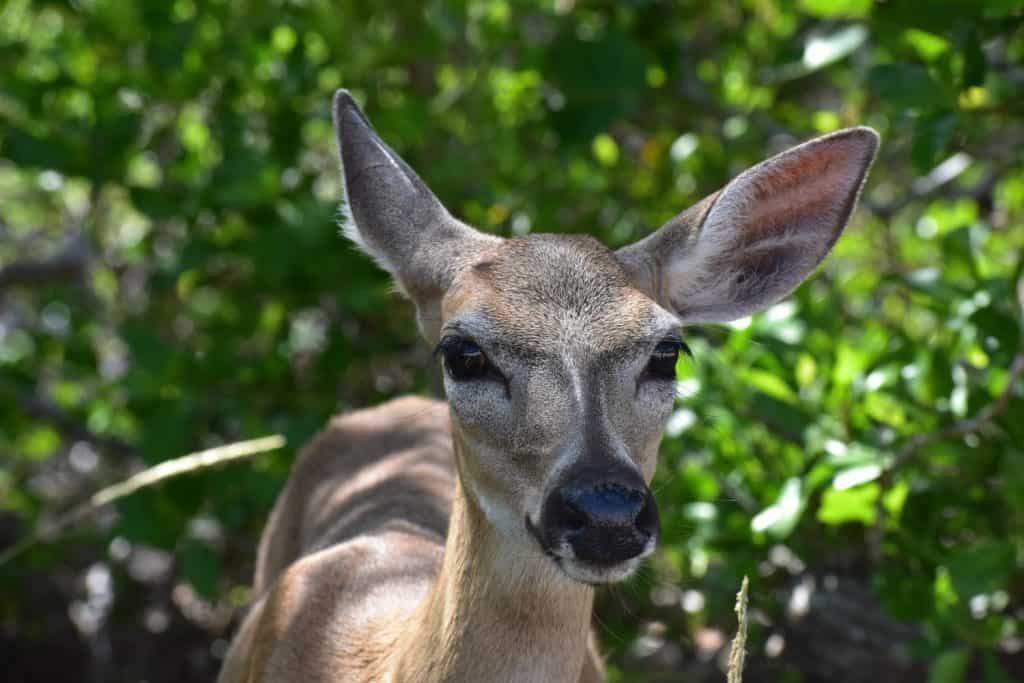
Chronic wasting disease can have an incubation period of up to 24 months or as little as 18.
©adioCX/Shutterstock.com
In a controlled laboratory setting, researchers explored how the disease presents in various animals. Those that were asymptomatic still carried low levels of prions, which can change and evolve from host to host. Each time the prions are transmitted to a new host, they can mutate, causing microscopic holes to form in the brain and nervous tissue of the infected animal.
Because these prions accumulate in an animal’s nervous system, including the spinal cord, they are impossible to break down, treat, or cure. Over time, prion-affected proteins begin to influence healthy proteins, breaking down various parts of an animal’s nervous system. This typically causes severe symptoms, except in asymptomatic carriers.
How CWD Spreads Between Species
CWD is a nasty disease that’s just as stealthy as it is lethal. It commonly spreads through direct animal-to-animal transmission. Any bodily fluid, including urine, feces, saliva, and blood, that contains prions can spread them to another animal. For deer, this is especially dangerous. Prions are present in the velvet of infected animals, which can transmit the prion to another that happens to rub against the same tree or branch.
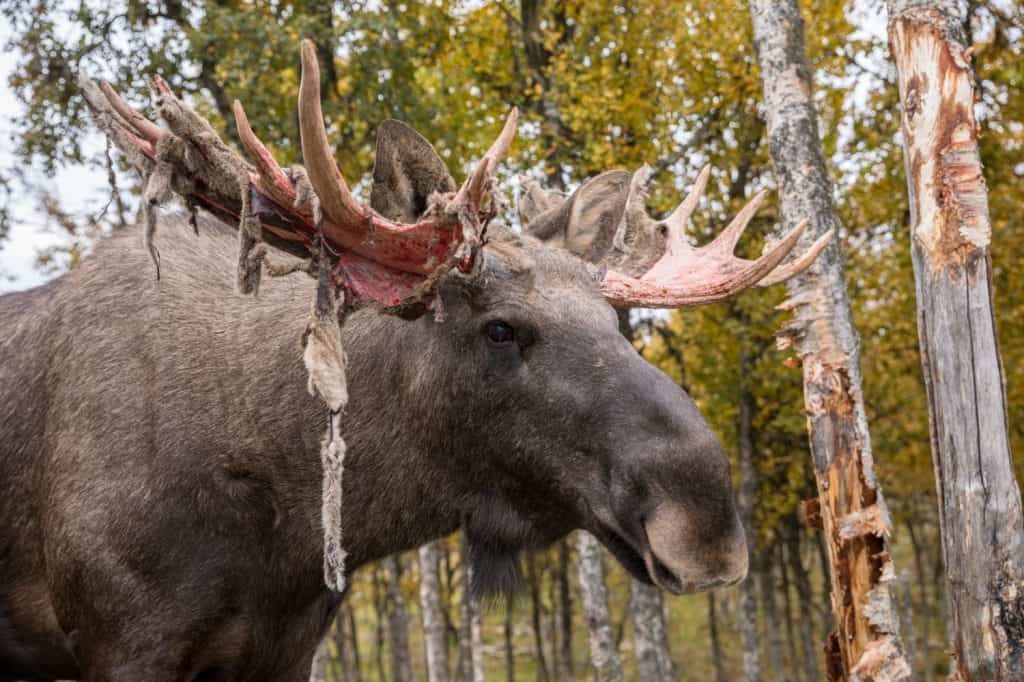
Prions that cause chronic wasting disease can be spread through the environment, such as when animals shed antler velvet.
©Lillian Tveit/Shutterstock.com
Environmental contamination is another way that CWD spreads. Prions can persist in soil for years, meaning the disease continues to mutate as it latches onto hosts who walk through infected soil. It can also survive in food and water, making communal waterways breeding grounds for prions that carry CWD.
While not every animal becomes infected, some animals that are resistant can still carry and transmit the disease. Scavengers, such as vultures and rodents, may come into contact with prions, but there is currently no strong evidence that they transmit CWD to other animals. As prions spread to asymptomatic animals, those animals can become infected and unknowingly transmit the disease, further extending the invisible trail left by CWD.
Can CWD Mutate and Infect Humans?
While the findings from the University of Calgary study are alarming, there is a limit to CWD’s spread. As of 2026, there are no confirmed cases of human CWD. However, researchers say there’s still more to learn before definitively ruling out animal-to-human transmission.

More research is needed to understand prion mutations before scientists can rule out human transmission.
©H_Ko/Shutterstock.com
“Our findings don’t indicate an immediate risk to humans, but they do suggest the situation is more nuanced than previously understood. As CWD becomes more widespread, understanding these dynamics becomes increasingly important,” said Dr. Hermann Schaetzl, MD, Dr. med, UCVM professor and last author on the study.
Given that CWD is caused by a prion, researchers cannot rule out the possibility of future transmission to humans. Its high mutation rate makes it unpredictable, especially as the disease infects more asymptomatic carriers. Researchers cited the example of Bovine Spongiform Encephalopathy, specifically known as mad cow disease.
This prion disease underwent a dramatic mutation, allowing it to jump to humans via infected meat. The result was Creutzfeldt-Jakob Disease, a fatal brain condition caused by abnormal proteins. If CWD were to infect humans, hunters would be at primary risk due to their close contact with deer and other game animals. Another concern would be eating meat infected with CWD prions, as was the case with mad cow disease. But more studies are needed to determine when and whether CWD could become transmissible to humans.