
The June bug (Cotinis nitida) and the Japanese beetle (Popillia japonica) are similar in appearance, which can make them difficult to distinguish. However, there are notable differences between the two. Both are scarab beetles with a metallic green color. They emerge as adults during the summer months and overwinter as grubs in the soil. However, these beetles differ in several ways, including their origin, adult appearance, and feeding habits. Continue reading to discover how June bugs differ from Japanese beetles.
Size
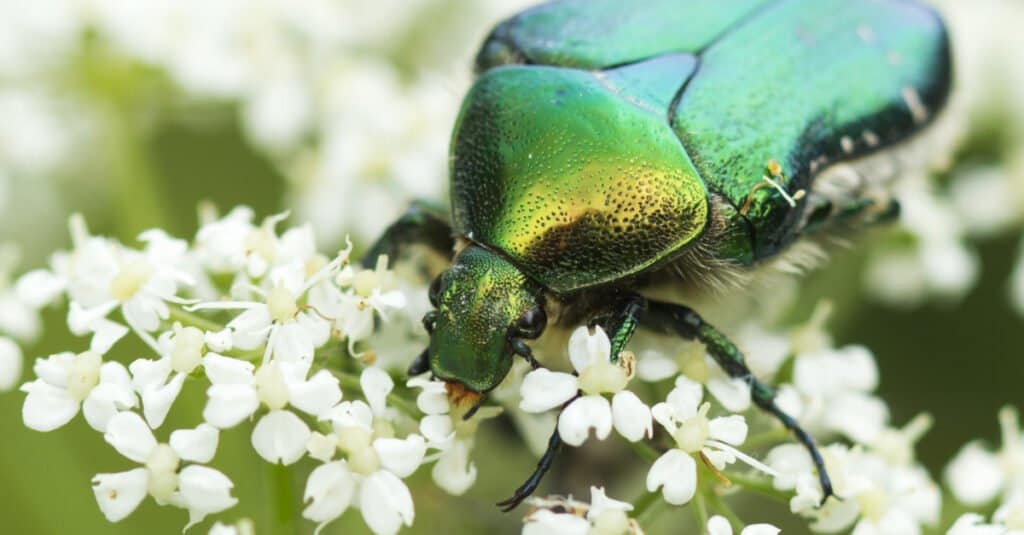
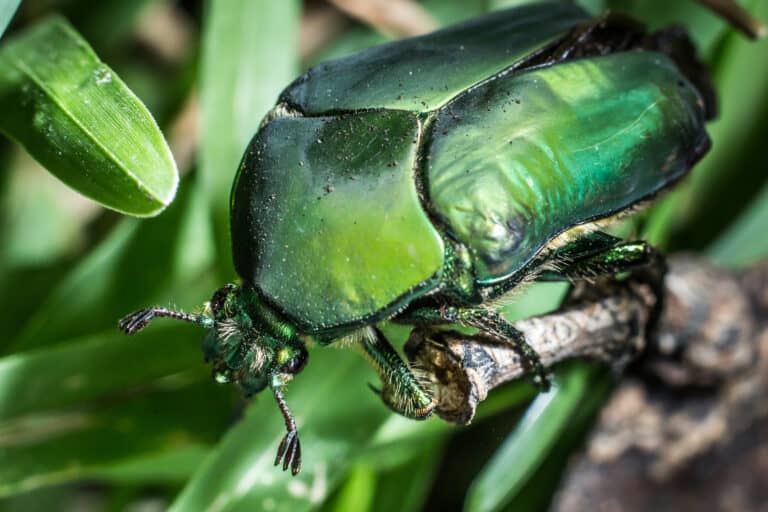
June bugs are agricultural pests that feed on a variety of vegetation.
©Galina Savina/Shutterstock.com
The most obvious difference between a June bug and a Japanese beetle is their size. The Japanese beetle is considerably smaller than the June bug. The Japanese beetle has an average size of 0.4 – 0.5 inches, with the largest specimens reaching 0.6 inches. June bugs typically measure 0.5 to 1 inch, making the June bug about twice the size of a Japanese beetle.
Color
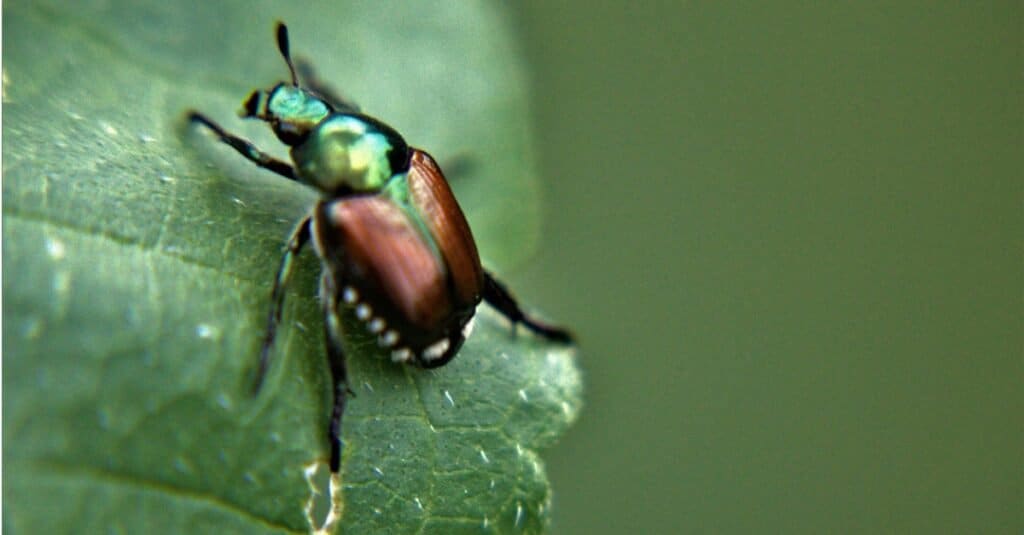
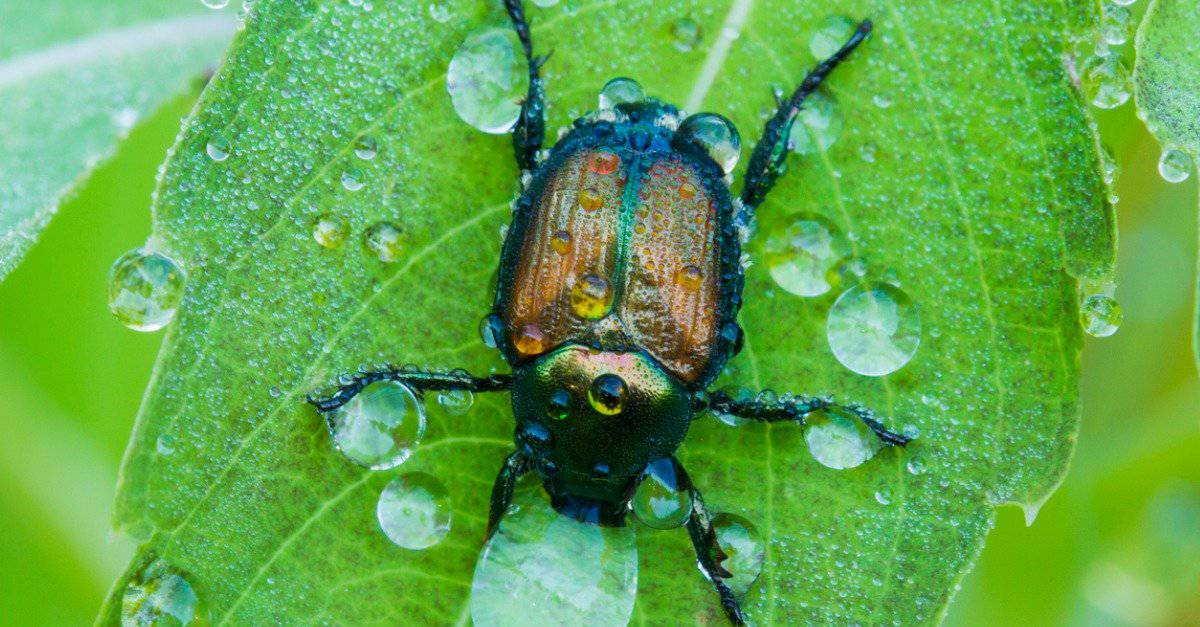
An invasive pest from Japan, the Japanese beetle was first recorded in the United States in 1916.
©iStock.com/Justin Tahai
The June bug is typically dull velvety green on top with bronze or gold margins and a gold or bronze underside, while the Japanese beetle has a metallic green head and thorax, coppery-bronze wing covers, and five pairs of white hair tufts along its sides. The June beetle’s wing covers can be green or brown and are often streaked, whereas the Japanese beetle’s wing covers are a uniform coppery-bronze
Diurnal vs. Nocturnal
Japanese beetles are diurnal, meaning they are active during the day. In contrast, June bugs are typically nocturnal and are most active at night. It is possible to see June bugs fly around during the day, especially when they have just emerged as adults. However, they are most active at night and are attracted to lights from houses and gardens. However, they are most active at night and are attracted by lights from residential houses and gardens. At night, Japanese beetles retreat to underground nests.
Reproduction
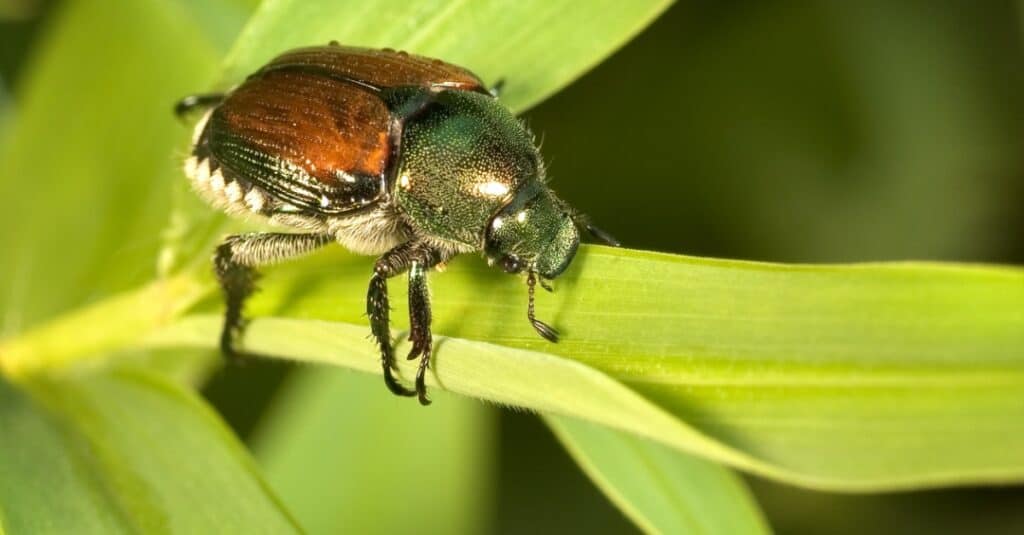
Japanese beetles lay 40-60 eggs per season.
©iStock.com/WebSubstance
A female Japanese beetle will lay between 40 and 60 eggs in her lifetime. In 10-14 days, the eggs hatch into small grubs that live in the soil, feeding on plant roots while developing into adult beetles over the following year. However, June bugs are far more fecund, laying 50-200 eggs. The time from egg-laying to adult emergence is about one year, with the egg, larval, and pupal stages having different durations.
Destructive Behaviors
While both insects can harm crops and plants, the adult Japanese beetle is far more destructive than the June bug. Though they are not considered as destructive as Japanese beetles, June bugs are considered agricultural pests primarily because their larvae (white grubs) damage crops, lawns, and pastures by feeding on plant roots. Adult June bugs, however, cause minimal plant damage.
Japanese beetles remain a highly destructive agricultural pest as of 2025, damaging numerous ornamental and crop plants by feeding on foliage, flowers, and fruits. Their grubs damage the roots of grasses and other plants. The Japanese beetle, an invasive species in the United States, causes significant economic losses estimated at $6–7 million annually nationwide, through both direct crop damage and the extensive costs associated with control efforts. Some states project much higher potential losses if infestations are not managed
Similarities between June Bugs and Japanese Beetles
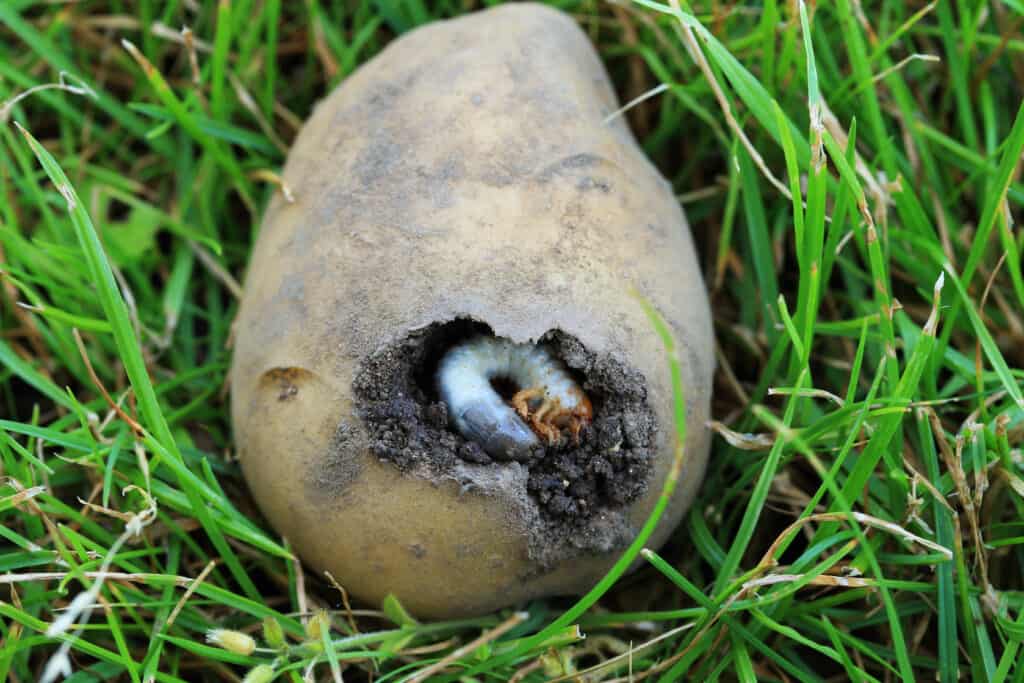
The larvae of the June bugs, called grubs, live underground, feeding on plant roots.
©theapflueger/Shutterstock.com
Despite their differences, June bugs and Japanese beetles share several similarities, including the fact that they are both edible. While not a mainstream practice today, both insects are nutritious, and their consumption is being explored as a sustainable food source.
Other similarities between June bugs and Japanese beetles include:
- They are both harmless to human beings: Japanese beetles and June bugs pose no threats to humans in any way. They do not bite, sting, or spread diseases. Their only danger is to plants and flowers.
- They have similar predators: They are both prey to predators such as birds, raccoons, moles, and other animals that eat beetles and bugs.