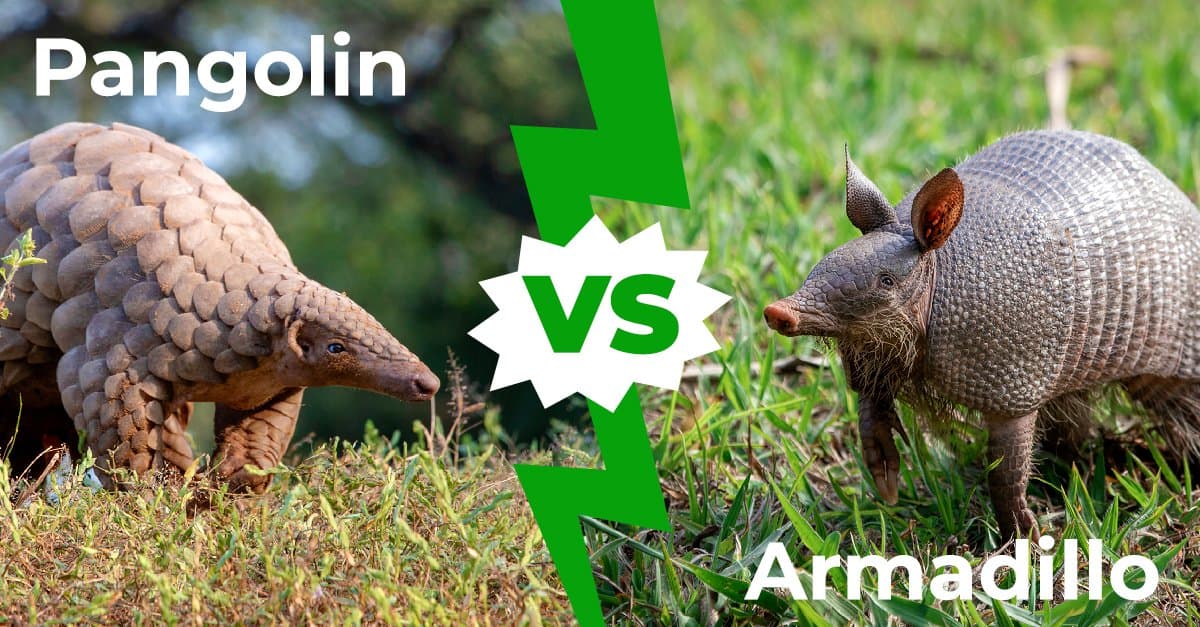

When comparing a pangolin vs. an armadillo, it’s no surprise that many people get the two animals mixed up. These two small-to-medium-sized insectivores both possess hard scales made of keratin, the same material found in human fingernails and toenails. Although they may look similar, these two animals have unique habitats, physical characteristics, and behaviors. In this article, we’ll discuss the different ways that you can distinguish one from the other. Here are nine key differences that separate pangolins from armadillos.
Comparing Pangolins and Armadillos
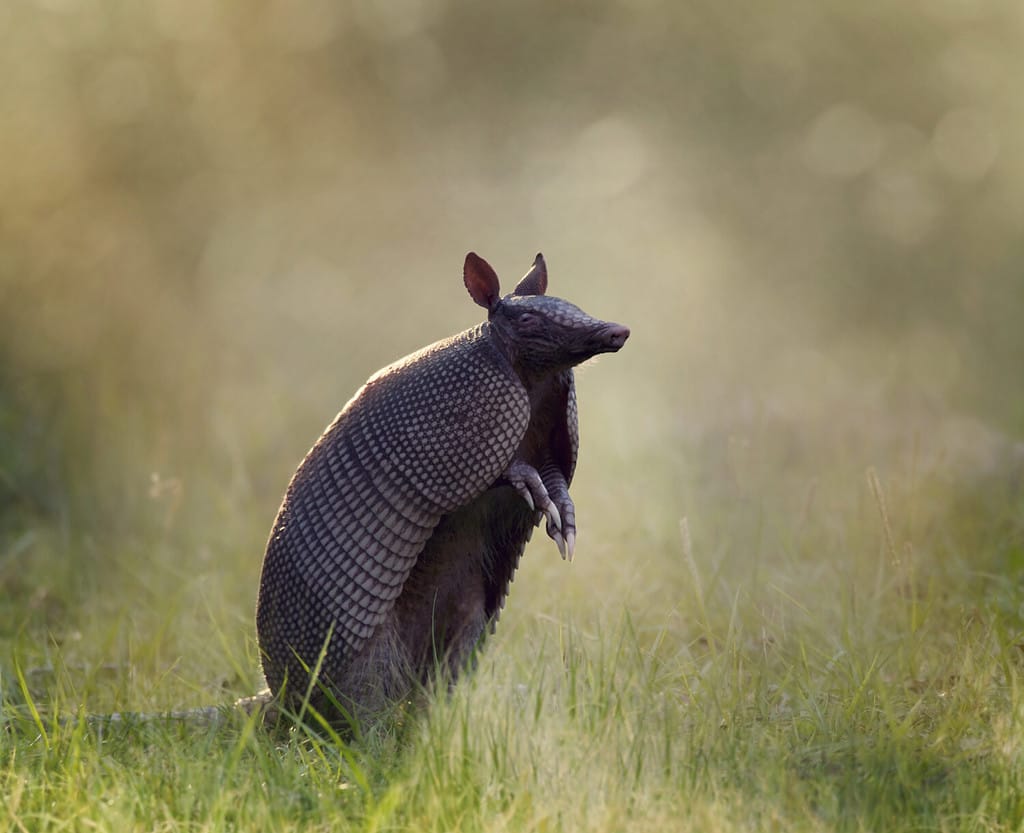
The nine-banded armadillo is the only armadillo species in North America.
©Svetlana Foote/Shutterstock.com
| Pangolin | Armadillo | |
|---|---|---|
| Taxonomy | Order: Pholidota Family: Manidae Genera: Manis, Phataginus, Smutsia | Superorder: Xenarthra Order: Cingulata Families: Chlamyphoridae and Dasypodidae; 8 genera with 20 different species |
| Distribution and Habitat | South Asia and sub-Saharan Africa; may live in trees or underground | South and Central America; one species in North America; live in dens underground |
| Size | Varies by species; 31 inches to 54 inches; weighs from about 5 pounds to 73 pounds | Varies by species; 5 inches to 59 inches long; weighs from 8 ounces to 132 pounds |
| Movement | Up to 3mph; walks with front claws bent under the footpad; may walk on two legs; can climb trees | Up to 30mph in short bursts; some can walk underwater while holding their breath; can climb |
| Teeth | No teeth | Teeth not divided into molars or premolars; no incisors or canines |
| Armor | Sharp, large interlocking plate-like scales | Bony shell on shoulders and hips; connected bands on the back |
| Defense Mechanisms | Curl into a ball; emit a noxious chemical from glands near the anus | Roll into a ball; run to safety in dense vegetation and thorny bushes; jump in the air; burrow into the ground |
| Feeding and Digestion | Eats termites, ants, and larvae with tongue; uses small stones to grind food in the stomach | Eats termites, ants, larvae, fruit, eggs, small animals, invertebrates, and carrion; digs for food |
| Mating and Reproduction | Solitary; mates in summer or autumn; males fight with tails as clubs; 1 to 3 live offspring | Solitary; breeding season varies; some armadillos in the genus Dasypus give birth to identical offspring; 1 to 12 live offspring |
The 9 Key Differences Between Pangolins and Armadillos
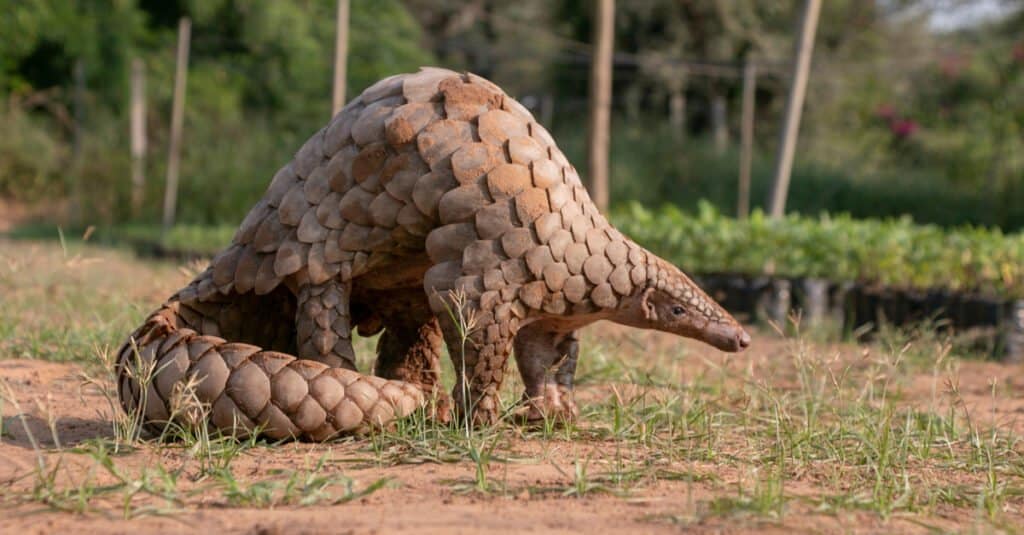
The pangolin bears a resemblance to the anteater, but the animals are unrelated.
©Vickey Chauhan/Shutterstock.com
Although pangolins and armadillos have some similarities, they are not closely related. Their differences include taxonomy, distribution and habitat, size, movement, teeth, armor, defense mechanisms, feeding and digestion, and mating and reproduction. Take an in-depth look at each of these differences below.
Taxonomy
As mentioned above, pangolins and armadillos do not share a similar lineage. Pangolins, which get their name from an Ancient Greek word that means “clad in scales,” belong to the order Pholidota. While many families used to exist within this order, now only one extant family remains, Manidae. The Manidae family contains three genera that include all 8 current pangolin species: Manis, Phataginus, and Smutsia.
However, armadillos, or “little armored ones” in Spanish, belong to the superorder Xenarthra, which also includes anteaters and sloths. Within this order, they fall into the sub-order Cingulata. Scientists recognize 20 official armadillo species, many of which belong to the families Chlamyphoridae and Dasypodidae.
Distribution and Habitat
Both animals prefer warm climates. However, you will never find them in the same habitat, because they live on opposite sides of the globe. Pangolins can be found in forests, scrublands, and grasslands. The four Manis species range throughout South and Southeast Asia, while the two Phataginus and two Smutsia species live in sub-Saharan Africa. Depending on the species, pangolins either make their homes in trees or in tunnels underground.
Most armadillo species live in Central and South America. One species, the nine-banded armadillo, lives in the United States. Armadillos favor wetlands and rainforests with dense vegetation and soil that is easy to dig into. However, they are adaptable and can also be found in grasslands, wooded areas, thorn scrub, and semi-desert regions. Unlike the more arboreal-inclined pangolins, armadillos only nest underground in burrows.
Size
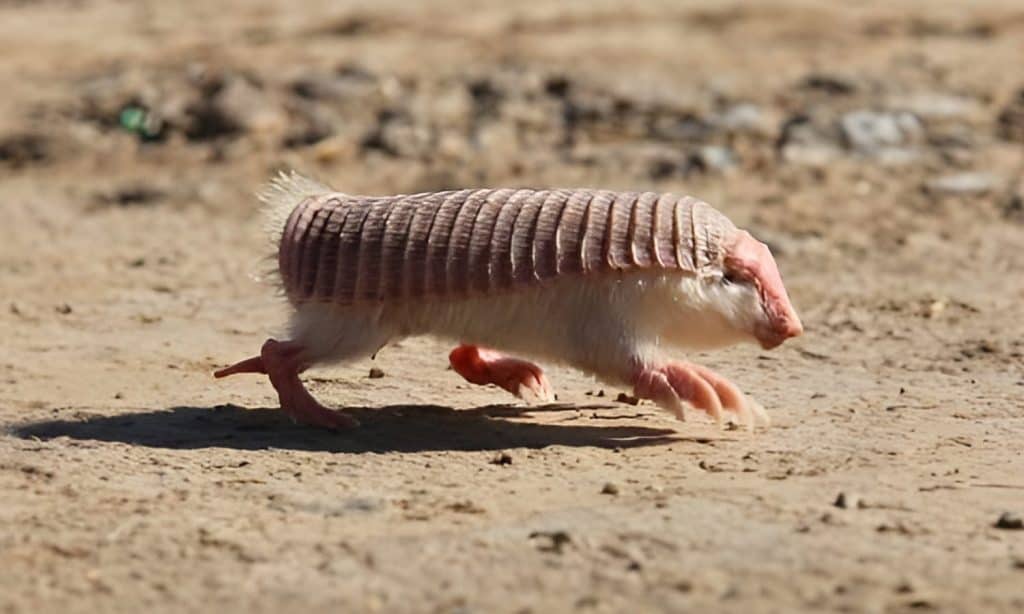
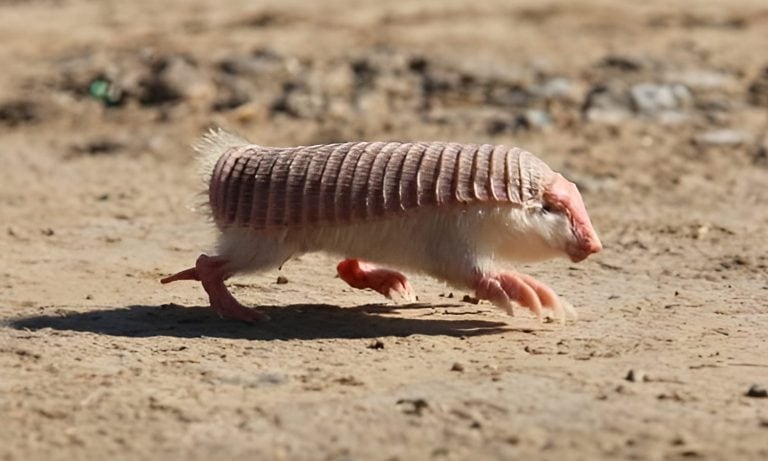
The pink fairy armadillo is the smallest armadillo species, reaching only about 6 inches long.
©Harsha_Madusanka/Shutterstock.com
On average, pangolins and armadillos appear roughly the same size. However, you can find armadillos in a wider variety of sizes, ranging from tiny to massive. Typically, pangolins measure between 12 and 54 inches long. The giant pangolin can reach up to 54 inches long and weigh 73 pounds. The smallest species, the long tailed pangolin, or the black-bellied pangolin, reaches about 31 inches long including the tail and weighs around 5 pounds.
In contrast, the largest species of armadillo, the aptly named giant armadillo, can reach up to 59 inches long and weigh nearly 132 pounds. At the other far end of the spectrum, the pink fairy armadillo grows to only 6 inches long and weighs a mere 8 ounces.
Movement
At first glance, pangolins and armadillos may appear to move similarly, as both stand low to the ground and have short, stocky legs. However, observing them closely reveals several key differences in their movement. Pangolins reach a top speed of only 3mph. When walking, they bend their front claws under their footpads. At times, especially when fleeing, they may walk on their hind legs, and some species are adapted to climb trees.
Armadillos generally walk at less than 1mph, but some sources suggest they are capable of a maximum speed of 30mph in short bursts. Some species can walk underwater, a feat made capable by their ability to hold their breath for up to six minutes. Armadillos can also climb. Some armadillos can even walk underwater by holding their breath for up to six minutes. While they do not climb trees, they have been observed climbing small fences.
Teeth
Although pangolins and armadillos both subsist mostly on insects, they evolved very different methods for consuming their food. Pangolins evolved without teeth. Rather than chew their food, they simply use their sticky tongues to catch insects and then swallow them whole.
Unlike pangolins, armadillos do have teeth, which they employ vigorously while munching on insects. Similar to some other species such as elephants and manatees, an armadillo’s teeth are not divided into molars or premolars. In addition, armadillos do not grow incisors or canines.
Armor
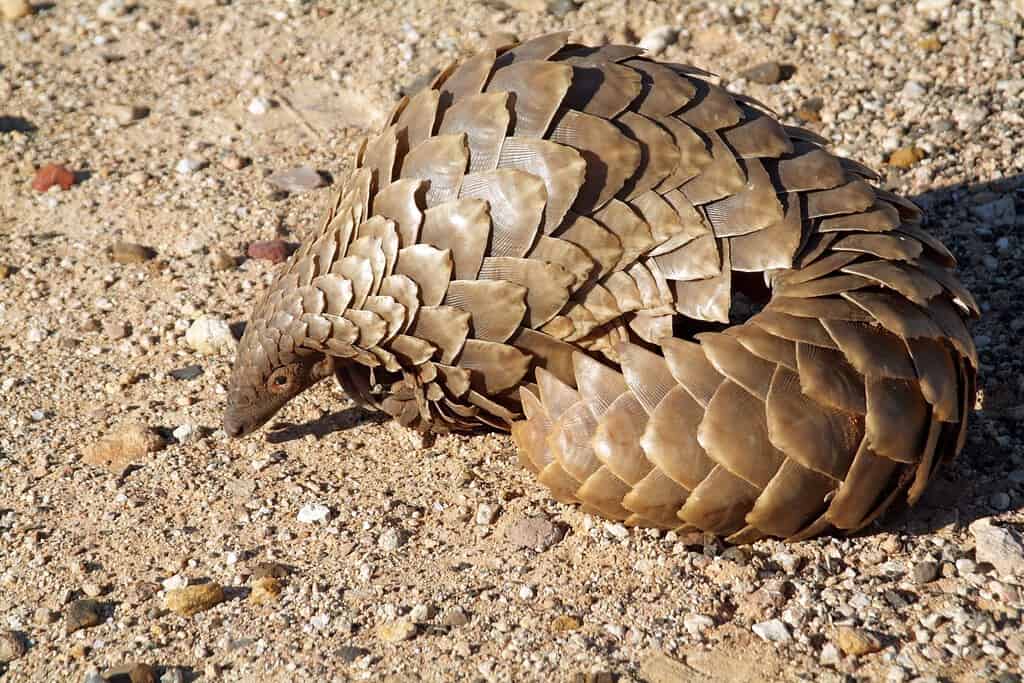
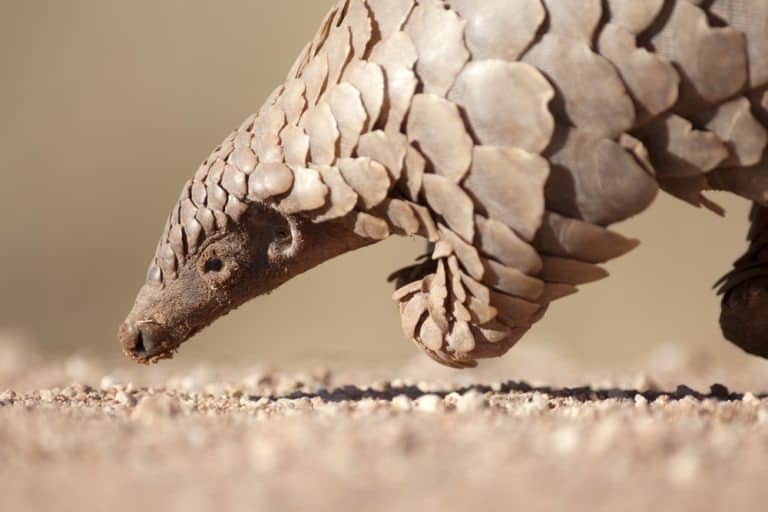
Pangolins have sharp, overlapping plate-like scales.
©Peter Titmuss/Shutterstock.com
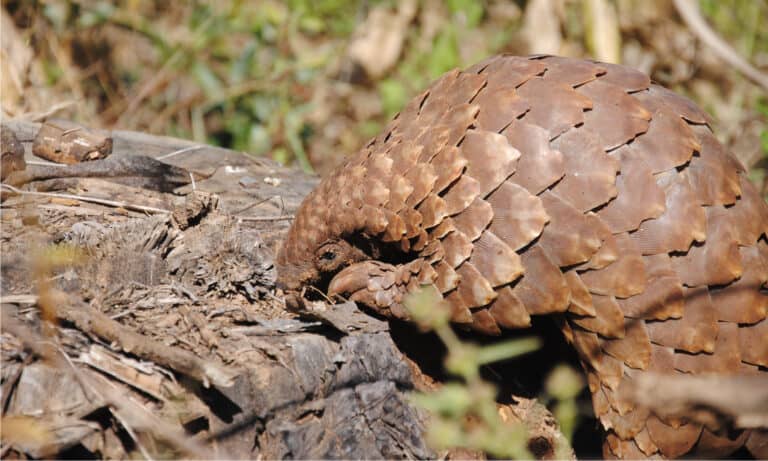
When looking closely, it’s easy to spot the differences in the armor of a pangolin vs. armadillo. Pangolins have flexible armor consisting of sharp, overlapping plate-like scales. They are the only known mammals that grow scales in this way. While they look similar to lizard scales, pangolin scales share little in common with lizard scales, either structurally or in composition.
The armadillo’s armor differs in several ways from a pangolin’s. Armadillo armor is formed by plates of dermal bone covered in keratinous scales called scutes. These plates are typically located on the shoulders and hips, while connected bands run the length of an armadillo’s back and tail. Different species have unique numbers of bands, which help scientists distinguish between armadillo species.
Defense Mechanisms
It’s a common misconception that all armadillos can curl into a ball to protect themselves from predators. In fact, pangolins more frequently curl into balls for protection than armadillos do. They may also use their tails like clubs to slap and slash at threats. Pangolins also evolved glands near their anus that emit a noxious odor similar to a skunk’s.
Most armadillos cannot roll into a ball because their armor is too tight. Of the 20 species of armadillo, only the three-banded armadillos use this strategy to escape. When armadillos want to avoid predators, they most frequently run away at high speed and take cover in thick, thorny vegetation. They may also jump 3-4 feet straight up in the air to confuse predators or try to dig their way to safety using their powerful claws.
Feeding and Digestion
Pangolins and armadillos are both insectivores and subsist primarily on a diet of ants, termites, and larvae. They use their long claws to break up nests, then their long, sticky tongues capture the insects. Arboreal pangolins use their claws to peel off bark from trees to access any insects hiding inside. Since pangolins can’t chew, to aid them in their digestion, they ingest small rocks while eating. Known as gastroliths, these tiny rocks help pangolins to grind the food in their stomachs. To assist in this task, they have developed a gizzard covered in sharp spikes, which also aids in the digestion process.
While pangolins almost exclusively live on a diet of insects, armadillos also eat invertebrates and small animals, along with fruit, eggs, and even carrion. Armadillos have poor eyesight, so they use their noses to help them locate food. They primarily root around for food or use their claws to dig up insects and other invertebrates from the soil.
Mating and Reproduction
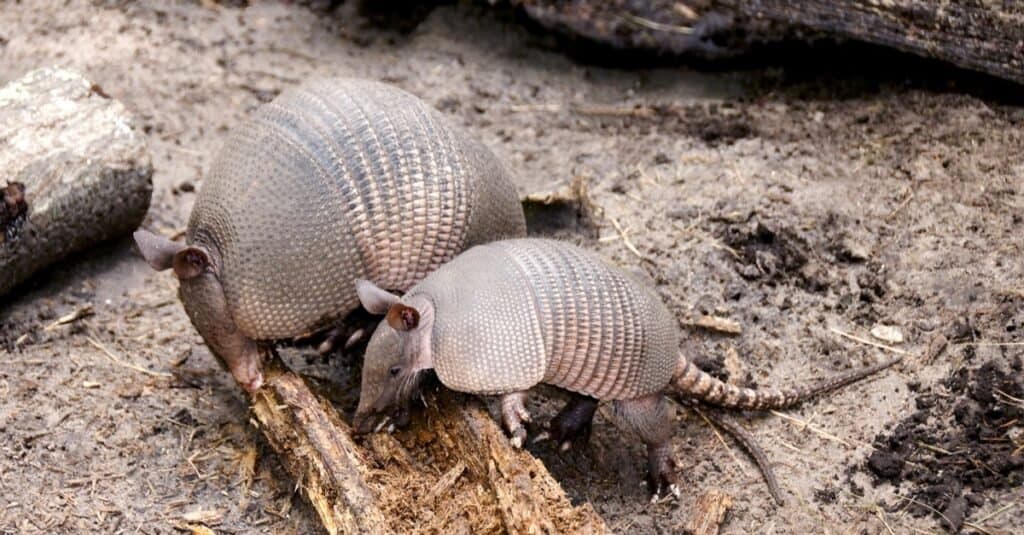
Armadillos give birth to live young. Their babies are called pups, and quadruplet births are common.
©Rose Waddell/Shutterstock.com
Both pangolins and armadillos live relatively solitary lives, except during mating season. Pangolins normally reproduce once per year in either the summer or autumn. If the competition for females is especially fierce, male pangolins may wield their tails as clubs and use them to fight each other to determine which male will get the girl. Typically, female pangolins give birth to one live offspring, although some species can give birth to up to three pangopups at once.
The breeding season varies among armadillos, with some species able to mate at any time of the year. Some species of armadillo in the genus Dasypus, specifically the nine-banded armadillo and the seven-banded armadillo, always give birth to identical offspring. Outside of these armadillos, most species may give birth to one to eight live offspring at a time.