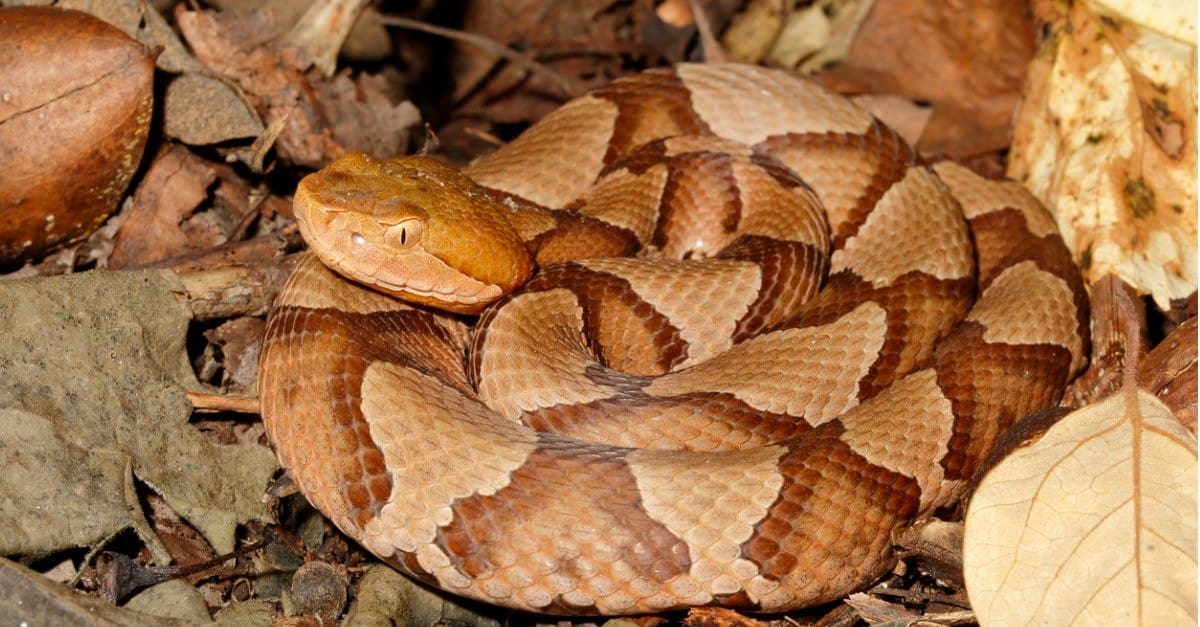

There may not be cottonmouths (water moccasins) in Ohio, but there are copperheads in Ohio. The state is home to three species of venomous snakes, including one subspecies of the famous copperhead. In addition to northern copperheads, Ohio is also home to timber rattlesnakes and Massasauga rattlesnakes. Of the three venomous snakes in Ohio, only the copperhead lacks a rattle.
Here, we’ll learn all there is to know about copperheads in Ohio. We’ll start by discovering the basics about this fascinating snake: where they live, what they look like, how they reproduce, and what they eat. Then, we’ll take a deep dive into just where you might find copperheads in Ohio and how often they bite. Finally, we’ll learn what you should and shouldn’t do if you find a copperhead in Ohio.
Keep reading to learn everything there is to know about one of Ohio’s most interesting reptiles!
Copperheads: The Facts
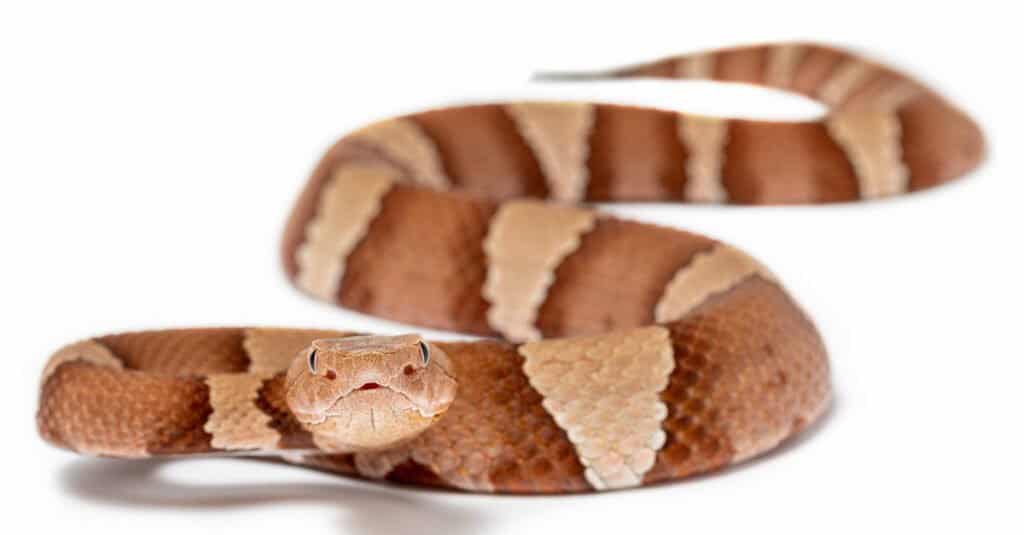
Copperheads are shy snakes.
©Scott Delony/Shutterstock.com
The copperheads in Ohio are actually a subspecies of the eastern copperhead (Agkistrodon contortrix) known as northern copperheads (Agkistrodon contortrix mokasen). They grow up to three feet long and have heavy bodies with triangular heads. These snakes aren’t aggressive, but they’re hard to spot, which means people frequently come upon them by accident. Copperhead venom isn’t usually deadly, but bites can cause severe pain, swelling, and tissue damage, and can be serious if not treated promptly.
Location and Habitat
Copperheads in Ohio live only in the southern part of the state, particularly in the southeastern quarter. They live primarily in unglaciated parts of Ohio. Outside of the state, copperheads can be found as far south as Georgia and as far north as southern New York. They occur far to the east too, and can even be spotted in Texas and some parts of northern Mexico.
Copperheads like rocky areas with plenty of cover. They often live under abandoned building materials, like wood, insulation, or scrap metal. They’re not generally found in or around homes since they’re quite shy of humans. Instead, copperheads prefer rocky, wooded slopes where they can blend in with the broken terrain. They’re occasionally found in swamps, especially if there are rocky outcroppings near the swamp.
Size and Appearance
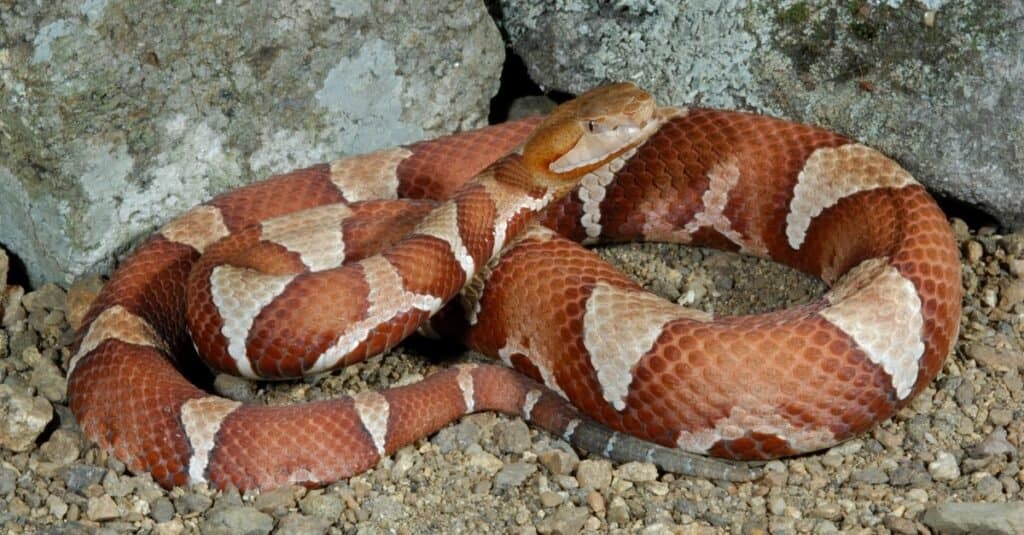
Copperheads are famous for their hourglass body pattern.
©Breck P. Kent/Shutterstock.com
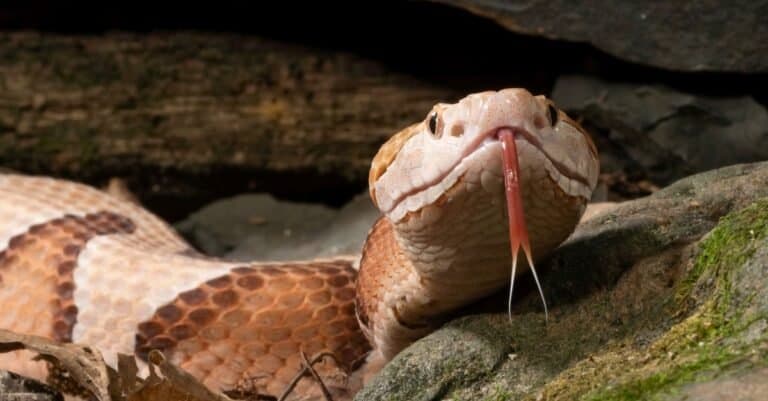
Copperheads in Ohio are so named for their famously copper-colored heads. Like all pit vipers, copperheads have triangular heads, with heat-sensing pits between the eyes and nostrils. Their eyes are vertically elliptical, like a cat’s eyes. Adults grow to about three feet long and have heavy, rattlesnake-like bodies with narrow, tapered tails. Copperheads are the only snakes in Ohio with an hourglass pattern, which displays as either gray, orange, pink, or red.
Juvenile copperheads have large heads and highly unique tails. You can always tell if the copperhead you’re looking at is less than a year old because it will have a bright yellow or green tail. Both males and females have similar appearances, both as juveniles and as adults.
Behavior
Copperheads are very shy snakes. When humans or other threats approach, they tend to freeze rather than flee. Occasionally, when they’re found in dry brush, copperheads actually ‘rattle’ their tails against the leaves to make a rattling sound. But, more often than not, they stay hidden by staying still and silent. Because of this, most bites happen when people reach into a place where a copperhead is hiding, without even knowing the snake is there.
Copperheads eat a variety of small creatures, including caterpillars, cicadas, and grasshoppers. They also eat mice, shrews, voles, small birds, lizards, and smaller snakes. Copperheads aren’t constrictors, like ball pythons, so they rely on ambushing and envenomating their prey.
Do Copperheads in Ohio Bite?
Unfortunately, yes, copperheads in Ohio bite. They’re responsible for more bites than any other venomous snake in Ohio. However, their venom is very weak in comparison to other venomous snakes, and very few fatalities have ever been recorded.
The reason copperheads are responsible for more bites than any other snake is twofold. First, they don’t have the warning sign — the rattle — that rattlesnakes have, so people accidentally step on them more often. And second, copperheads have excellent camouflage. This means that, even if you’re paying attention, you may not see the snake until after it’s bitten you.
What to Do if You See a Copperhead in Ohio
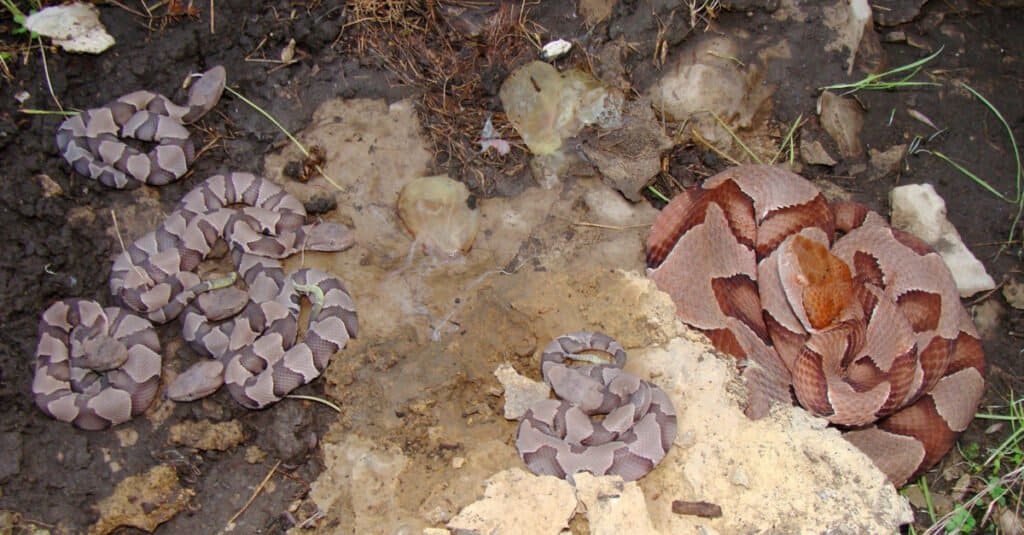
Copperheads may look scary, but their bites are almost never life-threatening.
©Matt Jeppson/Shutterstock.com
If you stumble upon a copperhead, try not to panic. Remember: the snake does not want to attack, chase, or hunt you; it just wants to be left alone. Keep a safe distance, and never try to approach or harass a copperhead. They don’t want to bite you, but they won’t hesitate to defend themselves.
Bites may not be deadly, but they’re reportedly exceedingly painful. Further, all snakebites from venomous snakes have the potential to become life-threatening, so you should do everything in your power to avoid a copperhead’s bite. If a copperhead bites you, seek medical help immediately, but do not attempt to kill the snake, as this will likely result in additional bites.