
Quick Take
- There are notable differences between female and male hermit crabs if you know what to look for.
- Primary sex organs aid in the identification of female and male hermit crabs
- Although some species of hermit crabs are terrestrial or semi-terrestrial, all species mate in water.
Found throughout the world, hermit crabs are crustaceans with over 800 species belonging to the class Malacostraca. Hermit crabs can live for several decades in the wild, with some individuals reaching up to 40 years. Male and female hermit crabs do have some differences; however, these are not readily apparent to the untrained observer. Continue reading to discover the key differences between female and male hermit crabs, including their sex organs, physical characteristics, and mating behaviors.
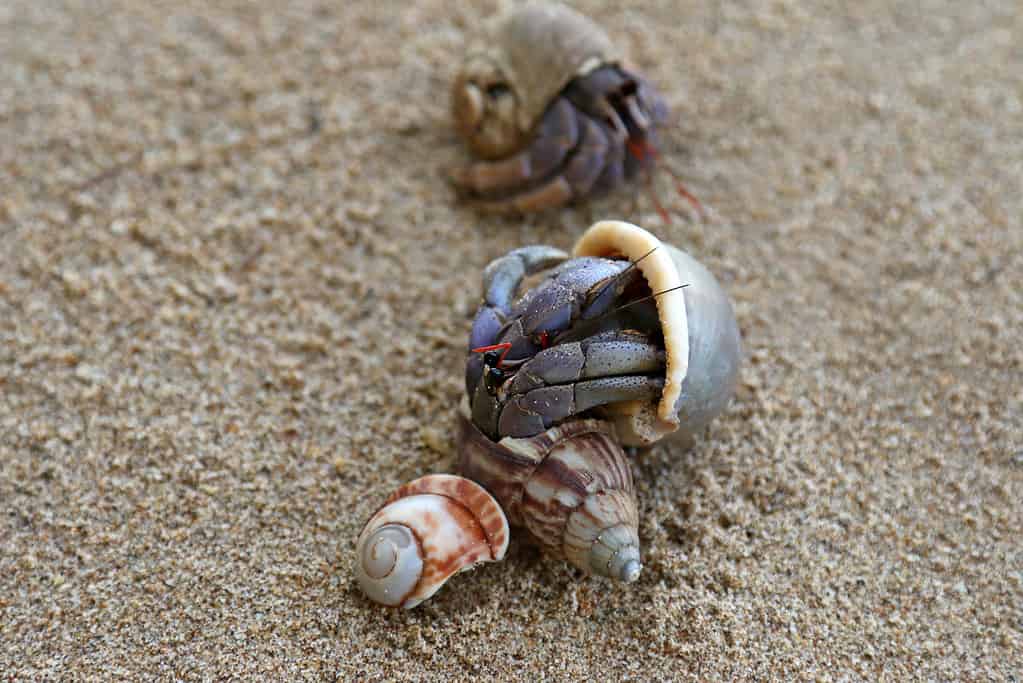
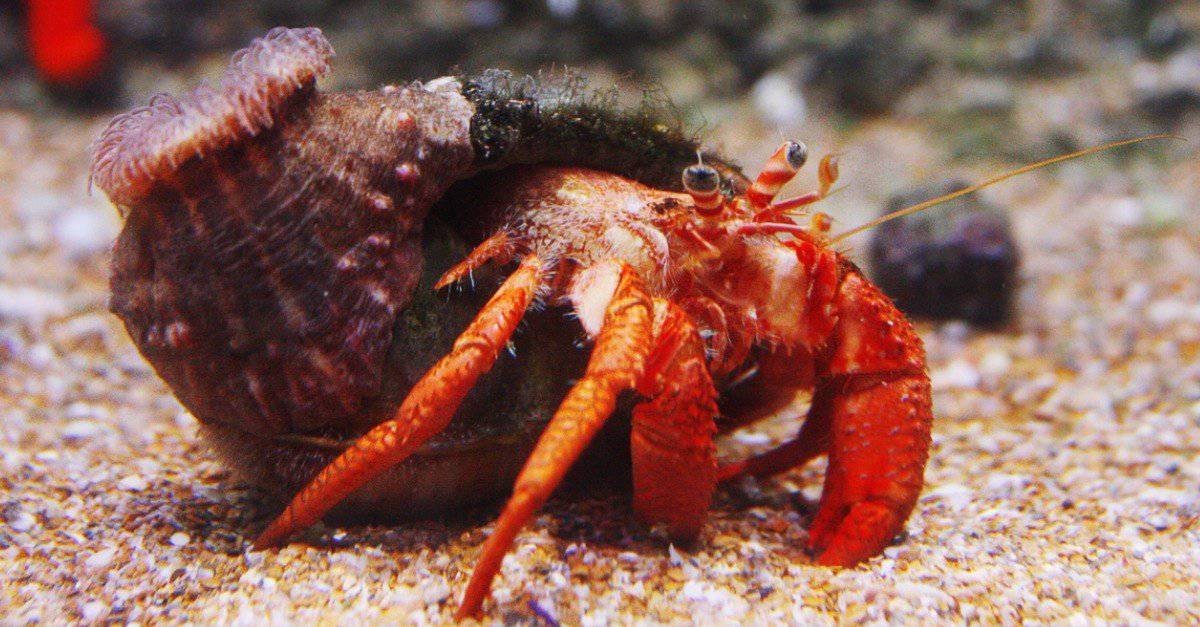
Hermit crabs live in shells.
©sasimoto/iStock via Getty Images
Physical Appearance
At first glance, it is almost impossible to determine the sex of a hermit crab. That’s because they share the same:
- Habitat: Coastal waters
- Prey: Fish, plankton, and worms
- Diet: Omnivorous
- Skin: Shell
- Weight: up to 10 pounds
- Color: Brown, Yellow, White, Blue, Red, Green, Orange, Pink.
However, despite these similarities, there are some physical differences that can help distinguish the sexes.
Sex Organs
Male hermit crabs have a penis located below their fifth pair of legs. Scientists found that the penis can be as large as 60% of the hermit crab’s body length. This has been described as an evolutionary adaptation to protect their shells. Large penises help them mate without having to leave their shells, which would likely be taken over by a rival hermit crab.
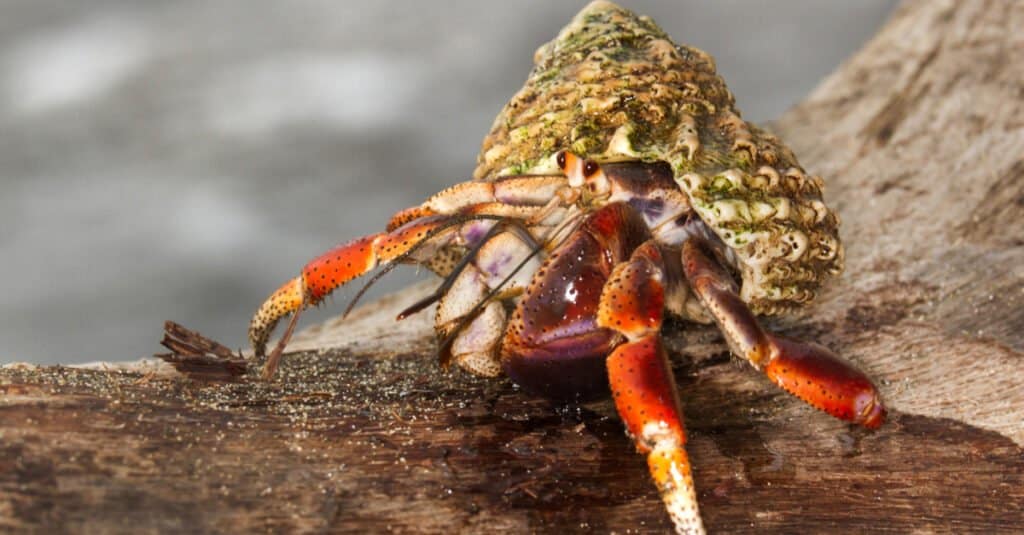
Female and male hermit crabs have different sex organs.
©Natalia Kuzmina/Shutterstock.com
Gonopores are external sex organs used to determine the sex of a hermit crab. Female hermit crabs have two tiny, dark, circular openings at the base of their third pair of walking legs, which males lack. The function of gonopores is to release eggs, which are then attached to abdominal pleopods for development.
Pleopods are specialized, feathery abdominal appendages, typically located on the left side. In female hermit crabs, they are designed for brooding eggs and circulating water for respiration within their shells. Unlike swimming decapods, hermit crabs use these modified, asymmetrical swimmerets mainly to hold thousands of eggs securely inside their shells and to generate water flow, which is essential for survival.
Behavior
Male and female hermit crabs also display some behavioral differences, although scientists often consider these unreliable for determining sex. There is limited scientific evidence to support significant differences in exploratory behavior between male and female hermit crabs. Anecdotal evidence suggests that captive male hermit crabs are less likely to explore new terrains and habitats, whereas female hermit crabs are more likely to explore new terrains and habitats.
Growth Rate
Male and female hermit crabs grow at different rates. In many hermit crab species, males tend to be larger than females, and growth rates can differ, with males often growing faster and molting more frequently. However, the specifics can vary by species.
Mating Behavior And Reproduction
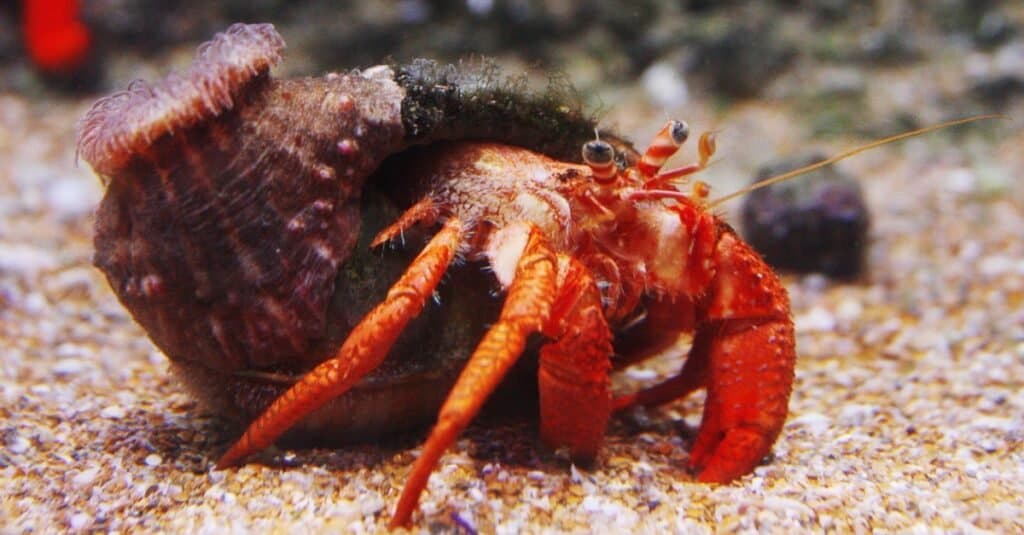
Hermit crabs tend to hide away when around other creatures that are bigger than them, so it’s best not to handle them often.
©iStock.com/MATTHIASRABBIONE
Hermit crabs typically mate during specific seasons, and during these times, males and females may exhibit distinct behaviors.
Hermit crabs rarely breed in captivity, as both males and females require very specific environmental conditions to successfully mate and reproduce
Although male hermit crabs are often eager to mate, they cannot produce sexual pheromones. Female hermit crabs, however, can produce pheromones that signal their readiness to mate.
After the female releases these pheromones, the male turns her onto her back and holds her with his claws and walking legs. He then deposits sperm into the female’s shell, where it is stored until the eggs are fertilized.
Females carry the fertilized eggs on their abdomens for about a month before eventually releasing them into the ocean to hatch.
While most of the over 800 hermit crab species are aquatic and live in oceans, reefs, and tidal pools, a significant number are semi-terrestrial and live on land as adults. However, all species must release their eggs in water, though not all species mate in water; for example, land hermit crabs mate on land and return to the ocean to release their eggs.