Quick Take
- Texas has no crabbing season, yet one 10-day window each year changes everything for trap users.
- A single weather event before your trip can empty your net. The article explains why.
- No bag limit doesn't mean no limits. Keep the wrong crab and you could be breaking the law.
- Your fishing license might not cover everything you assume, and some anglers skip it entirely legally.
Crabbing in Texas is one of the favorite pastimes of residents who live near the coast. Blue and stone crabs are found in the waters of the Gulf of Mexico. Anyone can crab. It does not cost much, and you do not need specialized equipment or experience. All you have to have is a piece of string, a piece of chicken, a dip net, a little patience, and a Texas fishing license. There are few rules and regulations governing this type of fishing in the Lone Star State. All of the details and facts you need to know to have a great crabbing experience are included here.
Season Dates
Crabbing in Texas is a year-round event. There is no specified season and no full closure on crabbing. However, there is an annual 10-day ban on using, fishing, or leaving crab traps and crab traps components in coastal waters beginning the third Friday in February. In 2027, during February 19-28, no crab traps are permitted in coastal waters for the abandoned crab trap cleanup.
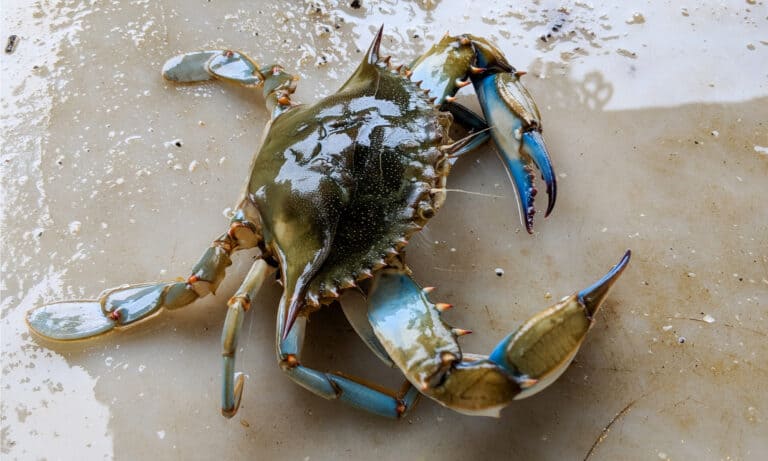
While there is no official crab season, you will catch more crabs during the summer and fall. In the summer and fall, the blue crabs are larger and present in greater numbers. If there has been a lot of rainfall in the days just before you go crabbing, you will not catch as many crabs because the amount of freshwater will drive the crabs farther into the Gulf, where the salt content is higher.
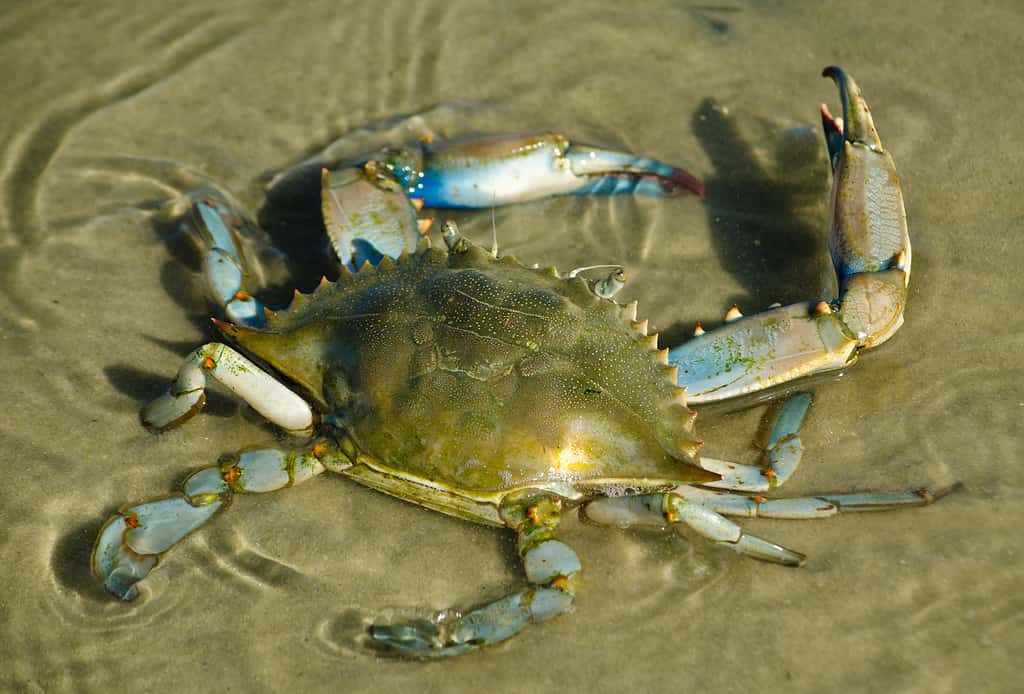
There is no crab season in Texas, where blue crabs are plentiful.
©MeliaMuse/iStock via Getty Images
Texas Crab Fishing License
Anyone 17 or older must possess a Texas fishing license to catch crab legally. A saltwater fishing stamp is required. There are several combinations of licenses and stamps to choose from. The cost of the licenses depends on whether or not you are a resident, your age, and the license type. Seniors 65 and older pay less for their licenses.
Licenses expire at the end of August, except for the year-from-purchase versions. The year-to-date license provides more fishing opportunities for the license holder. When fishing in Texas, ensure that you carry your license and a valid form of identification that shows your picture, like a driver’s license or state identification card.
If you have a commercial fishing license, you can legally use it when you are catching personal use crabs. The crabs you catch can’t be sold or traded, and you must follow all regulations for sports fishermen who are not commercially licensed.

Crabs can be seen floating in the water; if you are quick, you can catch them using a net.
©Lena605/Shutterstock.com
Resident Fishing License Cost
| License | Cost |
|---|---|
| One-day all-water fishing license | $11 |
| Resident freshwater package | $30 |
| Senior (65 and older) freshwater package | $12 |
| Special resident all-water license for the legally blind | $7 |
| Resident saltwater package | $35 |
| Senior (65 and older) saltwater package | $17 |
| Resident all-water package | $40 |
| Resident year-from-purchase all-water package | $47 |
| Senior (65 and older) all-water package | $22 |
If you are crabbing, even if you are crabbing in a bayou that is not fresh and saltwater, you must have a saltwater fishing stamp.
Resident License Exceptions
There are some exceptions to the licensing rules that apply to residents.
- Anyone who is less than 17 years of age
- Any person who was born before January 1, 1931.
- A person with an intellectual disability. (This person must be accompanied by a licensed individual. A note from a licensed medical professional stating that the individual has an intellectual disability will be required.)
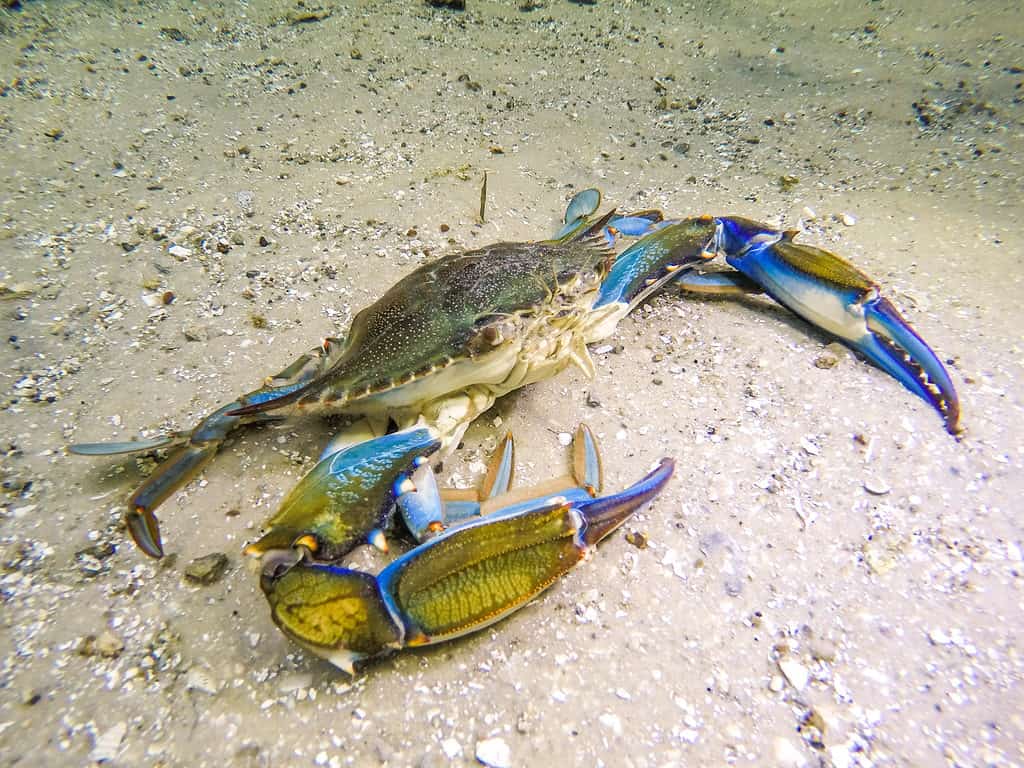
If you are crabbing in saltwater or brackish water, you must have a saltwater fishing stamp.
©Jen Helton/Shutterstock.com
Non-Resident License Cost
Non-residents have several options on the type of license they purchase.
| License Type | Cost |
|---|---|
| One-day all-water fishing license | $16 |
| Non-resident freshwater package | $58 |
| Non-resident saltwater package | $63 |
| Non-resident all-water package | $68 |
Exceptions for Non-Residents
- Anyone under the age of 17
- Oklahoma residents 65 or older.
- Louisiana residents 65 or older who have a valid Louisiana fishing license.
Bag Limits for Crabs
Texas does not have a bag limit for blue crabs or stone crabs. However, they have a size limit for both.
- Blue crabs must measure five inches across the widest portion of their body
- You may keep the right claw from the stone crab as long as the claw measures at least 2.5 inches. Stone crabs are to be caught and released.
- Egg-bearing crabs. (These are female crabs that have not laid their eggs. Their apron will feel soft or spongy, indicating a mass of eggs beneath it.
- It is illegal to keep a female crab that is missing their abdominal apron.
When crabbing in Texas it is legal to keep crabs under 5 inches for bait use. The number of less than five-inch crabs you have must be no more than 5% of your entire catch. You also must have the smaller bait crabs in a separate cooler or holding container.

You may keep the right claw from the stone crab as long as the claw measures at least 2.5 inches.
©iStock.com/connect11
Identifying Crab Genders
You have to be able to identify the gender of the crab you have caught. The male crab has a narrow apron in the abdomen, and the female has an apron covering most of her underside. It is very easy to distinguish males from females.
Learning to distinguish the male from the female crabs will help the population remain high. The spawning season for the blue crab runs from December until October. The height of the spawning season occurs during the spring and summer months.
Approved Equipment for Crabbing in Texas
Besides having a Texas fishing license, anyone crabbing in Texas waters must use the approved fishing gear. You can use your bare hands to catch these crustaceans, but you must do it quickly. Other approved equipment includes:
- Crab lines (no more than 6 for each individual with a Texas fishing license)
- Fishing rod with reel
- Crab trap
- Net, including hand-held and operated dip nets and seines
- Folding panel trap that does not exceed 16 square feet
- Sand pump designed to capture ghost shrimp (must be hand-held and hand-operated)
- Umbrella net made of non-metallic mesh
Crab Trap Regulations
Here are current regulations concerning crab traps, including crab removal, gear tagging, and trap placement and location:
- Crab traps in public fresh waters are illegal.
- Crab traps must be 100 feet apart unless tied to a pier.
- A fisherman can place no more than three traps in the San Bernard River.
- Crab traps are limited to three per angler in waters north and west of Highway 146.
- May only remove crab traps from the water or remove crabs from crab traps during the period from 30 minutes before sunrise to 30 minutes after sunset.
- Must be used with a gear tag valid for 10 days and attached within 6 inches of the buoy or pier to which the trap is tied.
There are also restrictions regarding crab trap construction and design, which can be found on the TPWD website.

Crab traps not secured to a pier or dock must be 100 feet apart.
©WoodysPhotos/Shutterstock.com
Where to Catch Crabs in Texas
Crabbing success requires fishing in the right spot at the right time. Many people say dawn and dusk are the optimum times for catching crabs, but in the Lone Star State, at dawn and dusk, the mosquitos near the coast are vicious.
Marshes, bayous, and straight into the Gulf are all places to find crabs. You will find them in estuaries and the brackish bay waters. When the tide comes in or goes out, the crabs will bite better. You will find the crabbing excellent after a hurricane or tropical storm.
Most people crabbing use raw chicken pieces as bait. Crabs also eat fish and some anglers throw cast nets to catch mullet and shad which they use in their crab traps. Chicken is the best bait if you are fishing with a string or hand-held line.

Crabbing is done in salty waters near the coast, including brackish water bayous.
©Yinan Chen, Public Domain, via Wikimedia Commons – Original / License