
Quick Take
- Wildlife biologists draft hunting season proposals and model population growth to set lengths and harvest quotas based on last year’s data.
- Adaptive Harvest Management guides the maximum days and date window for waterfowl; states select dates within the box.
- Season lengths change with calendar drift and yearly population data; stable or rising populations keep seasons, while declines shorten or close them.
Every year, hunters are given new regulations and hunting season dates that have the potential to differ vastly from what they were handed the year prior. To an outsider, it can look arbitrary and perhaps even odd. However, there’s a fairly consistent logic behind those dates and numbers, despite their inconsistent appearance.
State wildlife agencies, working with the U.S. Fish & Wildlife Service and guided by long-term management plans, spend most of the year gathering data before deciding on the details of any hunting season. Season dates and limits are specifically designed and restricted, based on local ecological statistics and other relevant factors.
So, why do hunting seasons change every year, and how do managers decide when it’s time to shorten, lengthen, or overhaul them entirely? This is everything you need to know about this fascinating process, including everything involved in setting hunting season standards and what hunters think about the constant potential for change.
Who Actually Sets Hunting Seasons?
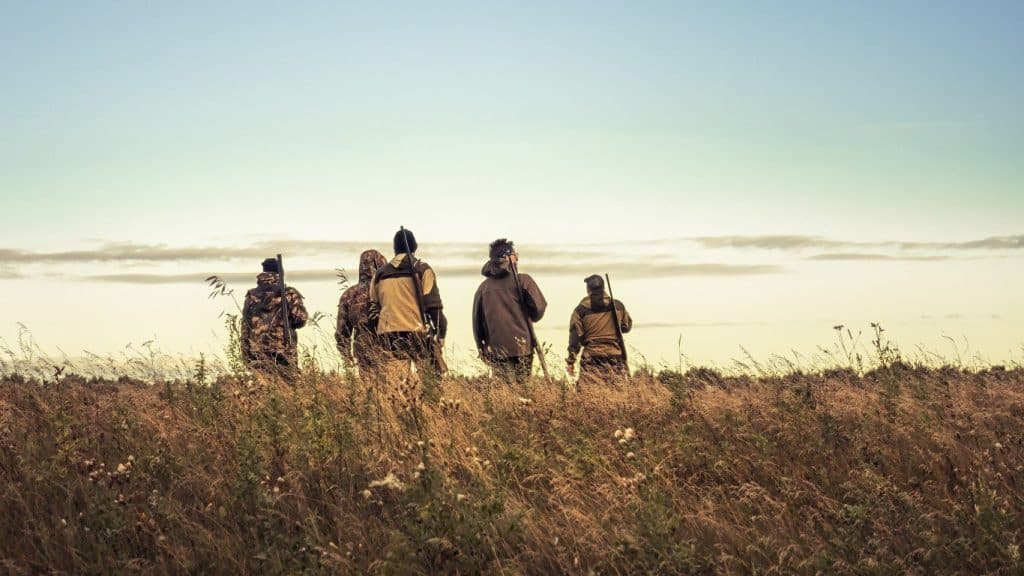
Hunting seasons are set by wildlife experts who have spent hours pouring over past hunting data and statistics.
©splendens / iStock via Getty Images
It may seem as if hunting seasons are set by state wildlife commissions and boards. However, behind the scenes, biologists in those agencies are often drafting the necessary proposals for the following year. Wildlife managers spend their time modeling animal population growth and are responsible for adjusting season length or harvest quotas based on their research and data from the previous year.
For resident big game, such as deer, elk, and bears, the timeline for figuring out a statewide hunting season usually looks like this:
- Biologists update population estimates using surveys and field observations.
- Staff compile harvest statistics from mandatory reporting, check stations, and hunter surveys.
- They compare those numbers to herd objectives laid out in long-term plans.
- Draft recommendations go to the commission, along with public comment from hunters, landowners, and others.
- The commission votes on final season dates, tag numbers, and bag limits for the coming year.
Migratory birds are more complicated, given that they cross state and national lines. For waterfowl, the U.S. Fish & Wildlife Service runs aerial breeding-population and habitat surveys each spring, then uses what’s known as an Adaptive Harvest Management system to set the maximum number of days and the earliest and latest possible dates of the season. States then pick their own dates within that window to keep their hunting season compliant.
Surveys, Harvest Reports, and Models For Setting Hunting Seasons
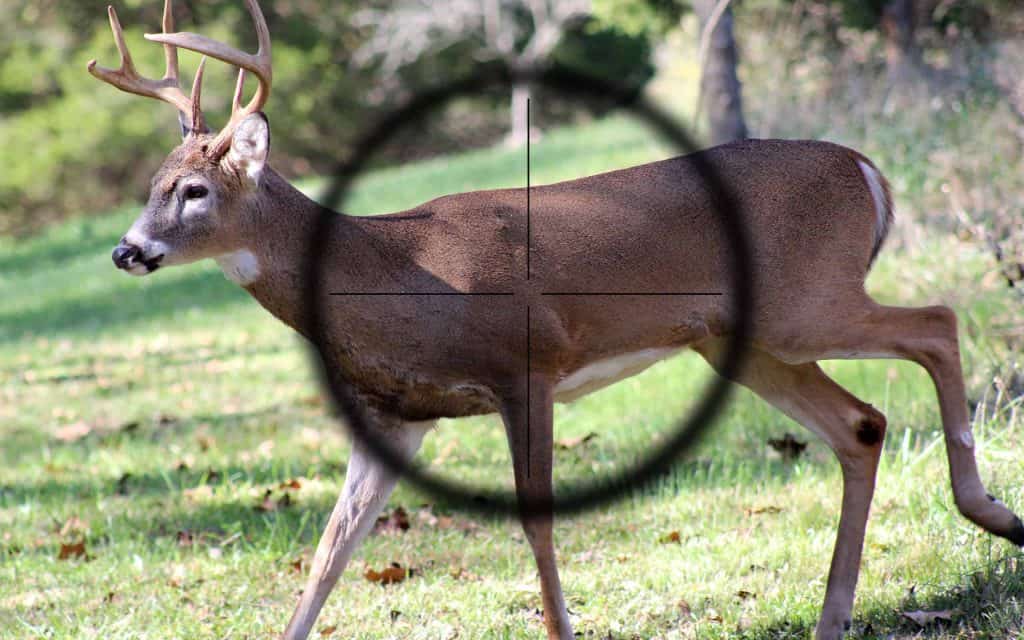
Hunting seasons are largely set using wildlife data from biologists and experts.
©AdamLongSculpture/ via Getty Images
Each year, hunting agencies and wildlife experts review big game and waterfowl population sizes, birth and survival rates, and previous harvest numbers.
Some of the key tools for working out an accurate hunting season include:
- Population surveys. Depending on the species, biologists might use helicopter or fixed-wing flights, trail-camera grids, pellet or track counts, spotlight surveys, or winter yard counts.
- Harvest data. Mandatory check-in, online reporting, and post-season surveys fill in the other half of the picture. Aerial surveys and hunter questionnaires also provide annual information on both population size and harvest levels, which is then used to fine-tune seasons, particularly when it comes to waterfowl.
- Management objectives. Many states publish herd-specific goals, such as how many deer or elk they want to keep in a given region, and what buck-to-doe or bull-to-cow ratios they’re aiming for. When a herd is below its objective, seasons may be shortened or the tags are reduced. When it’s well above its objective, managers may lengthen seasons or increase harvest to reduce damage to crops and habitat.
Once all of this data has been gathered, wildlife managers use these inputs to model how a population will respond under different season lengths and quotas, then pick the option that keeps populations at or near their targets.
But what about the specific behaviors of animals, such as how they hibernate, breed, and migrate? Here are additional factors that experts consider as they work with conservation in mind.
Breeding Cycles, Fawns, and Migration Timing
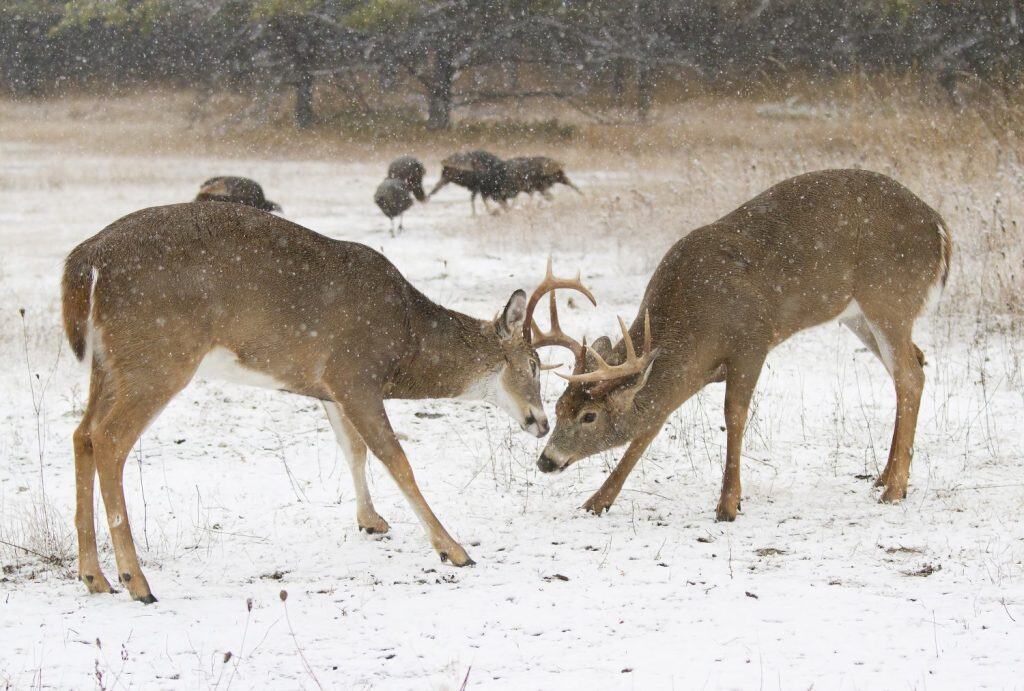
Rut times of year can be used to alter hunting seasons in very strategic ways.
©Jim Cumming/Shutterstock.com
The U.S. Fish & Wildlife Service’s history of how hunting seasons and limits are set for waterfowl mentions that one of the core goals of this season is to focus harvest on surplus birds while minimizing any potential disturbances of nesting birds. Their breeding cycles are unique and it’s important that hunters understand this before heading out on their next waterfowl hunting trip.
For big game, state plans and educational resources lay out a few more rules of thumb that help protect wildlife of all types. Some of those rules include:
- Avoiding peak fawning or calving times. Many deer and elk seasons are scheduled after young are mobile and less vulnerable, or in late fall after the breeding season, so hunters aren’t disturbing does and cows during critical, fragile periods.
- Timing hunts to migrations. Waterfowl and some upland seasons are keyed to migration corridors and typical arrival dates, which can vary by latitude and weather. The Service’s federal frameworks for migratory bird hunting build those dates and patterns into when states are allowed to open and close.
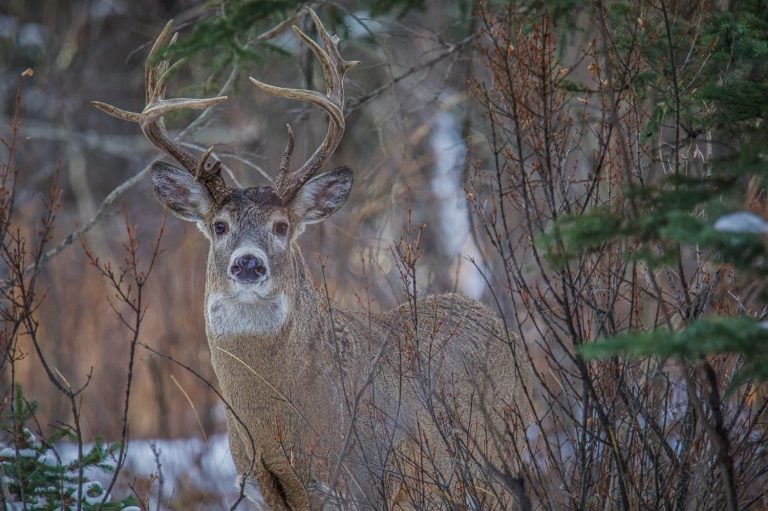
- Using the rut strategically. Many whitetail and elk seasons fall during or just before the rut because animals are more active and visible, which increases both a hunter’s success and can help reduce populations where they’re above goal. On the flip side, some states deliberately protect peak rut dates, especially for trophy-managed units, in order to preserve older-age-class males.
All of this is about aligning human activity closely with animal life cycles and habits of behavior. This approach ensures that most of the harvest comes from animals whose removal will have the least impact on the overall population. But what about when not everything goes according to plan, especially when it’s things outside of our control?
Weather, Habitat Conditions, and Hunter Surveys
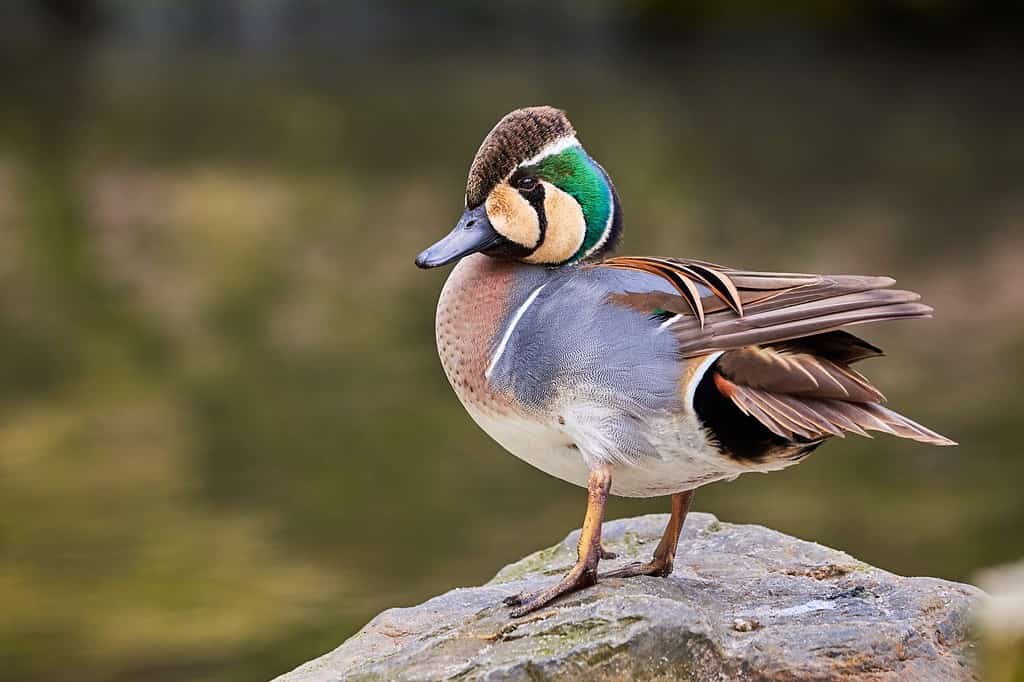
Weather can play a huge role in the setting of hunting seasons.
©Adrian Eugen Ciobaniuc/Shutterstock.com
Weather and habitat conditions can influence hunting seasons as well, even for waterfowl. The Fish & Wildlife Service’s waterfowl frameworks explicitly incorporate breeding-ground wetland conditions into their rules. And, in drought years, that can mean far shorter seasons or lower bag limits because fewer birds were produced. The same can be said for big game.
Oregon’s Fish and Wildlife Commission, for instance, noted in its 2025 big game regulation adoption that most game populations were stable to increasing, so major changes weren’t needed; only minor tweaks and date shifts were made. However, in years when populations aren’t stable, those same annual updates will mention what’s going on behind the scenes and why adjustments were made from year to year.
It may surprise you to hear that hunters, landowners, and non-hunters all weigh in when it comes to setting a hunting season. For example, Idaho’s mule deer and white-tailed deer plans were built using extensive hunter surveys about desired season timing and structure. While the data and conservationism remain the biggest determining factors for any hunting season, locals and hunters alike can tell their state their preferences.
The Obvious Reason Why Hunting Seasons Shift
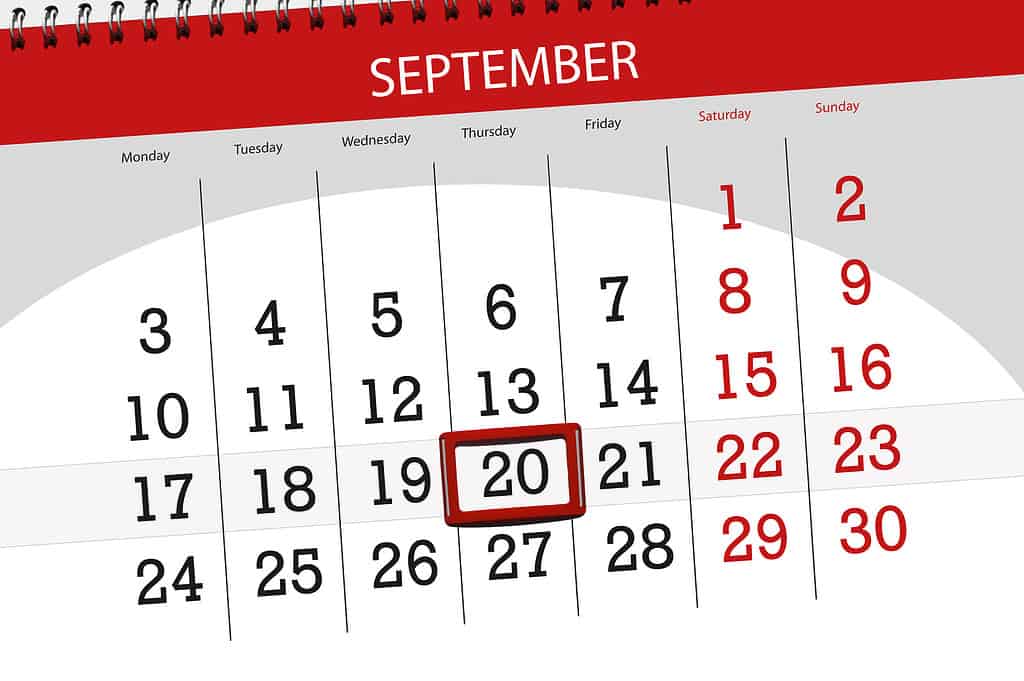
Hunting seasons are typically set by a specific calendar year, not necessarily a set date.
©iStock.com/Aliaksandr Bukatsich
There’s truly one simple reason why hunting seasons shift and are set differently year to year: calendars. Many regulations are written around patterns people tend to remember, such as second Saturdays in October, not fixed dates. Therefore, seasons shift by a day or two each year.
Beyond calendar drift, agencies revisit their data every year. A 2025 explainer on how hunting dates are set says it best: when populations are stable or increasing, seasons may stay the same or grow, but, when surveys and harvest reports show declines, seasons may be shortened, shifted, or even closed entirely. Bag limits are also changed, with limits adjusted to make sure they stay within what the population can handle.
The Most Drastically Changed Hunting Seasons In Recent Years
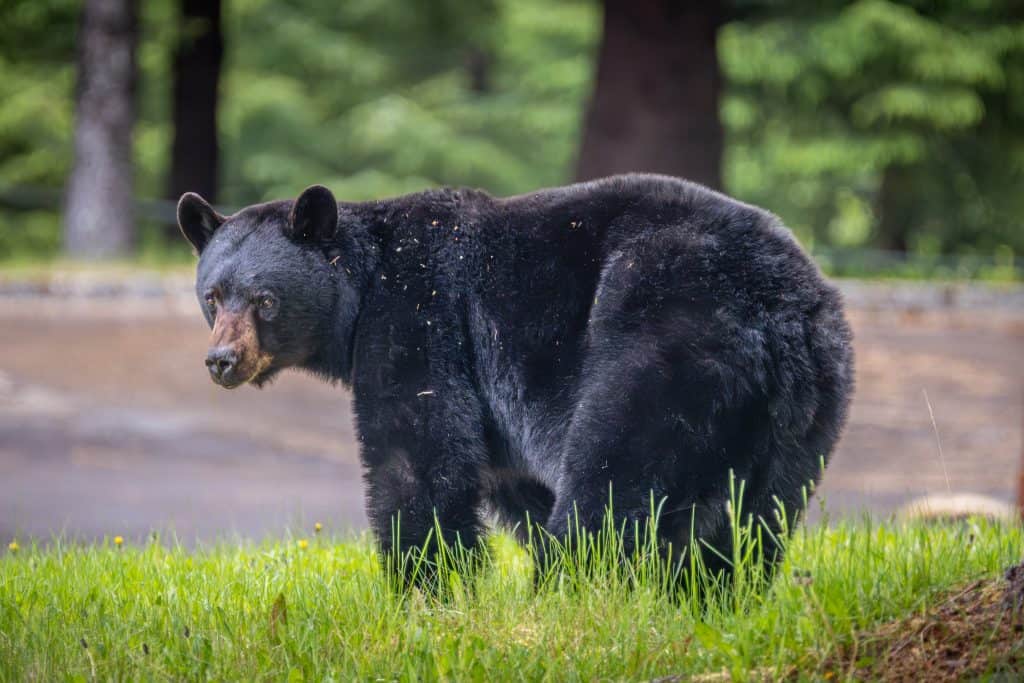
Florida’s recent black bear hunting season is causing quite a controversial stir.
©Freaktography/Shutterstock.com
There are many states with altered and drastically changed hunting season timelines and limits within recent years, with even more changes coming in 2026. In one particular state, some hunting seasons now span months. For example, Texas’s latest regulation package lengthened hunting opportunities under the Managed Lands Deer Program so participating ranches can harvest mule deer from late September into late January.
There are, of course, some hunts that are deliberately tight, and for good reason. Early teal seasons are a classic example, as migratory bird frameworks limit them to a narrow window in September. Despite its lengthened deer hunting season, Texas just shortened its teal season from 16 days to 9 due to a drop in population numbers. Other states also practice a shorter early season to protect teal populations.
Michigan’s elk hunt has proposed changes for the 2026–27 season that would increase the total number of hunting days from 21 to 45, more than doubling the current length. The main goal is to provide hunters with more flexibility, avoid concentrating hunts during holiday weeks, and distribute hunting pressure more evenly, rather than dramatically increasing the total elk harvest for the season.
Oregon has recently overhauled its mule deer hunting season structure, with major changes beginning in 2026 that will reorganize hunts by Deer Hunt Areas instead of traditional units and reduce the total number of mule deer tags by about 9% compared to 2025, following years of below-objective counts. Florida’s re-opened bear hunt is another fascinating tale; it began on December 6th, 2025, and runs through December 28th, marking the first legal bear hunting season in the state after a decade-long closure, and has generated significant controversy.
New data and shifting public attitudes forced agencies to rethink older hunting frameworks, but time will tell how these adjustments pan out.
Why It Matters to Know How Hunting Seasons Are Set
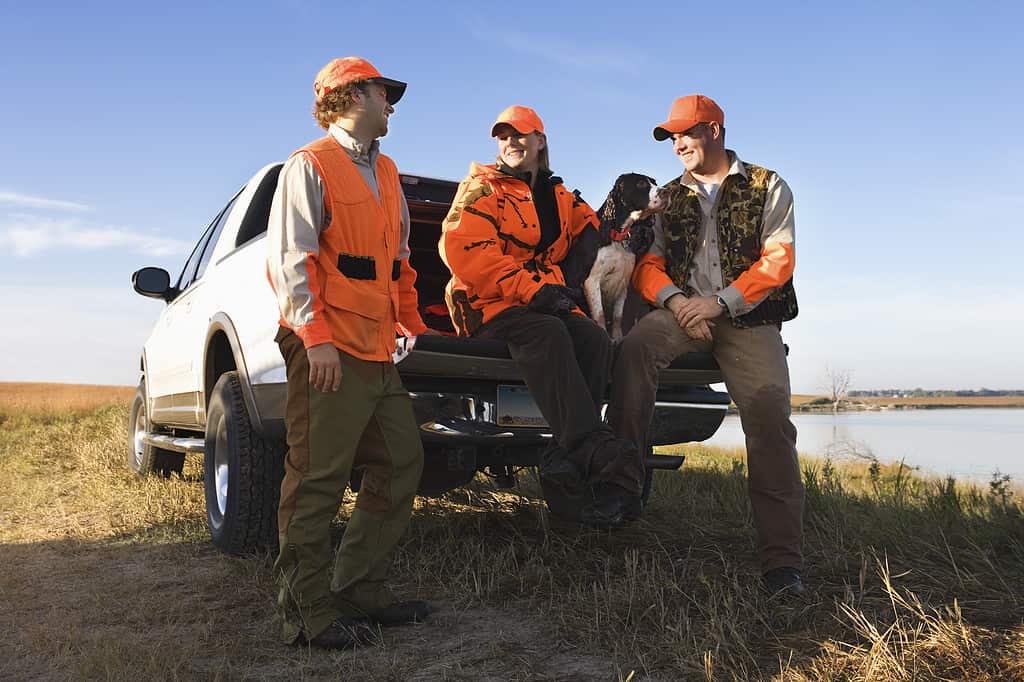
Hunters should know how their seasons are set in order to remain compliant with all of the rules.
©© Getty Images/Stockbyte via Getty Images
For hunters, understanding how their hunting seasons are built is obviously vital to avoiding breaking the rules, but it also allows them to better understand the animals they are hunting. It explains why your favorite season might be pushed back a week, why antlerless tags aren’t available during harsh winters, or why duck seasons are extremely limited during drought years.
The accurate setting of hunting seasons also puts weight behind things like harvest reporting and survey participation; if those numbers help drive decisions, skipping a survey or failing to report a harvest isn’t an option for the average hunter. In many ways, hunting seasons are one of the main tools managers use to keep multiple populations healthy and countless ecosystems balanced.
No matter the season, the dates on the calendar will keep changing, little by little. Countless reasons will lead to gentle, careful adjustments to every state’s hunting season. But, underneath all of that data and survey-backed information, hunting seasons are still built on one simple concept: take what you need, leave enough for others, and adjust your expectations to protect wildlife for all, for years to come.