
Quick Take
- Blue crabs are predators, and one of their most common prey items might surprise you. Explore their surprising prey →
- Male and female blue crabs don't share the same home, a separation that has everything to do with survival. See how habitat differs →
- These crabs vanish every winter, and where they go is stranger than you'd expect. Discover their winter hideout →
- Humans rank among blue crabs' top predators, and the scale of that harvest is difficult to overstate. See the human impact →
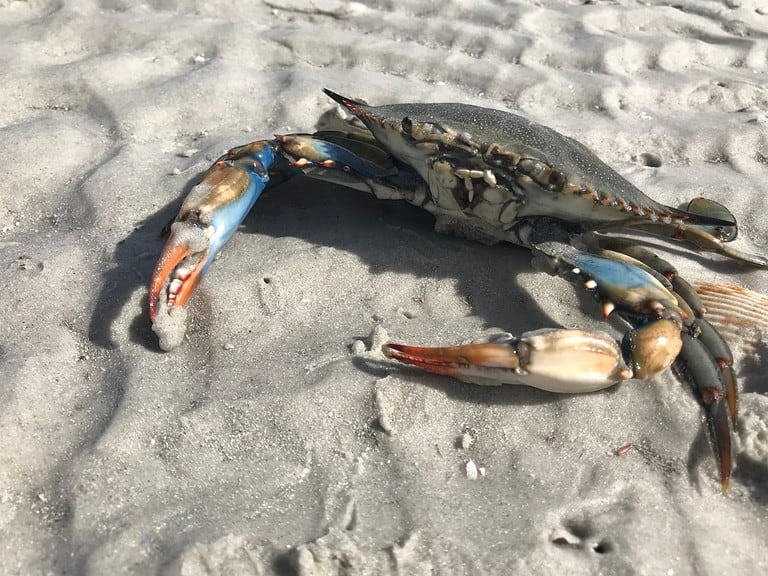
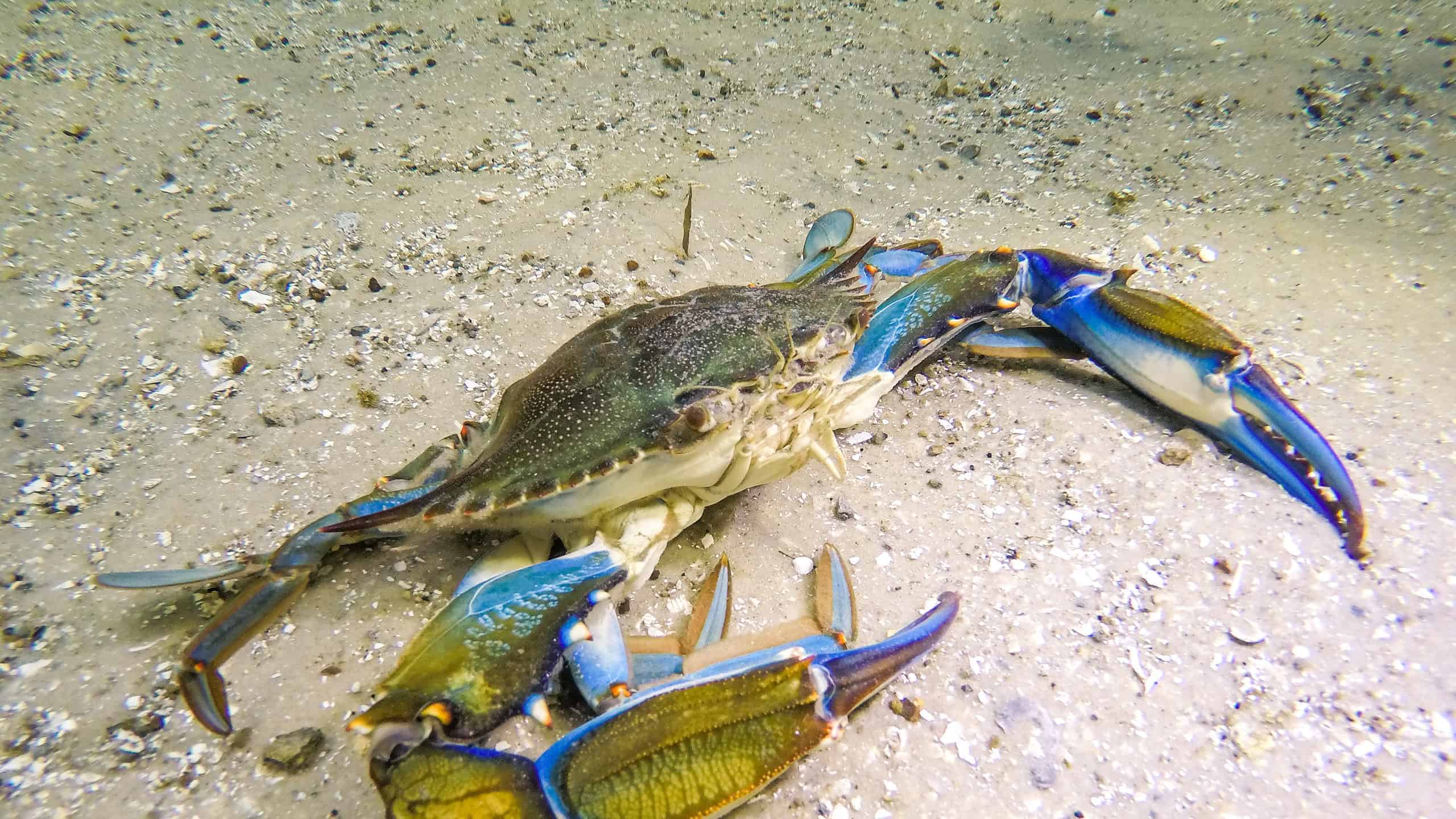
Blue crabs (Callinectes sapidus), sometimes known as Chesapeake blue crabs or Atlantic blue crabs, are found along the Atlantic coast of North America and the Gulf of Mexico. Their carapace is blue to olive green and they have bright blue claws. Adult female blue crabs also have red claw tips. Large males can grow to a width of about 9 inches. However, they average around 5–6 inches, with females being slightly smaller. In this article, we’ll talk about where these crustaceans live, what they eat, and what eats them.
Where Do Blue Crabs Live?
Blue crabs inhabit the shallow, brackish waters of the bays, estuaries, marshes, submerged grass beds, oyster reefs, and tidal creeks along the Atlantic and Gulf coasts. They can be found from Nova Scotia, Canada, as far south as Argentina. Large blue crab concentrations occur in the Chesapeake Bay, the coastal marshes of Louisiana and Texas, and the shallow estuaries and salt marshes of Delaware, New Jersey, and North Carolina.
After mating in low salinity waters, male crabs prefer to remain in fresher waters, such as those in the Chesapeake Bay’s upper tributaries. However, the females migrate to saltier waters closer to the ocean to spawn. When the weather turns colder and the water temperatures drop in the fall, blue crabs burrow into muddy or sandy substrate in deeper waters where they remain dormant for the winter.
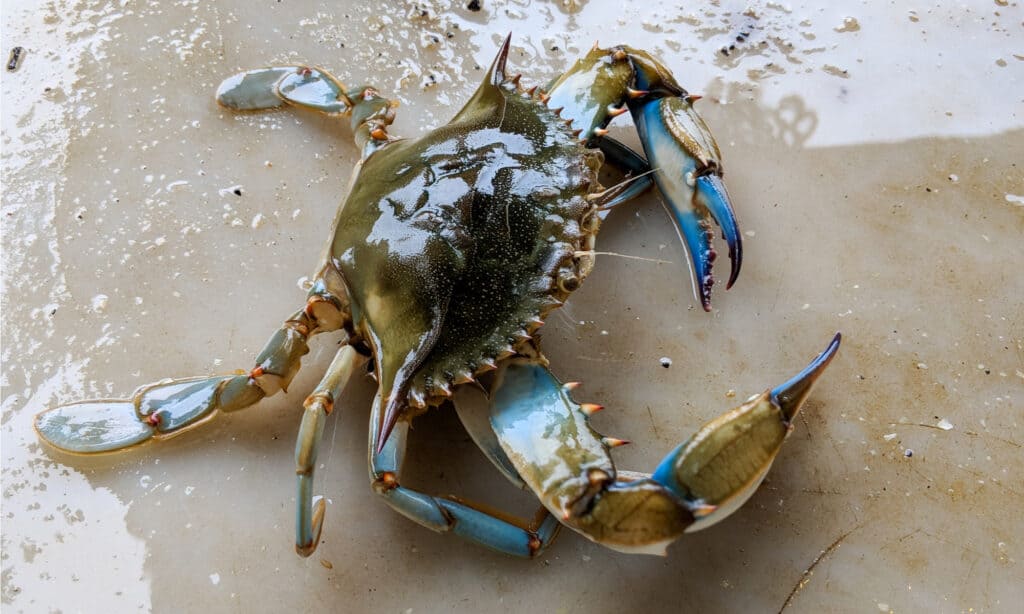
Blue crabs play an important role as both predators and prey in Chesapeake Bay’s delicate ecosystem.
©P. Dorman/Shutterstock.com
The Blue Crab Diet
Blue crabs are opportunistic carnivores, so they eat almost anything. Their diet primarily consists of oysters, mussels, clams, snails, worms, and smaller crustaceans, including smaller blue crabs and soft-shelled blue crabs, whose shells have not yet hardened after molting. Plant matter includes algae and various aquatic plants found along the substrate.
Blue crabs are also active scavengers. They eat decaying matter, including freshly dead fish, as well as plant and animal detritus. Blue crabs have an important ecological role in their habitats. By consuming dead organic material, they break down waste and cycle nutrients back into the ecosystem. They also help regulate populations of smaller organisms.
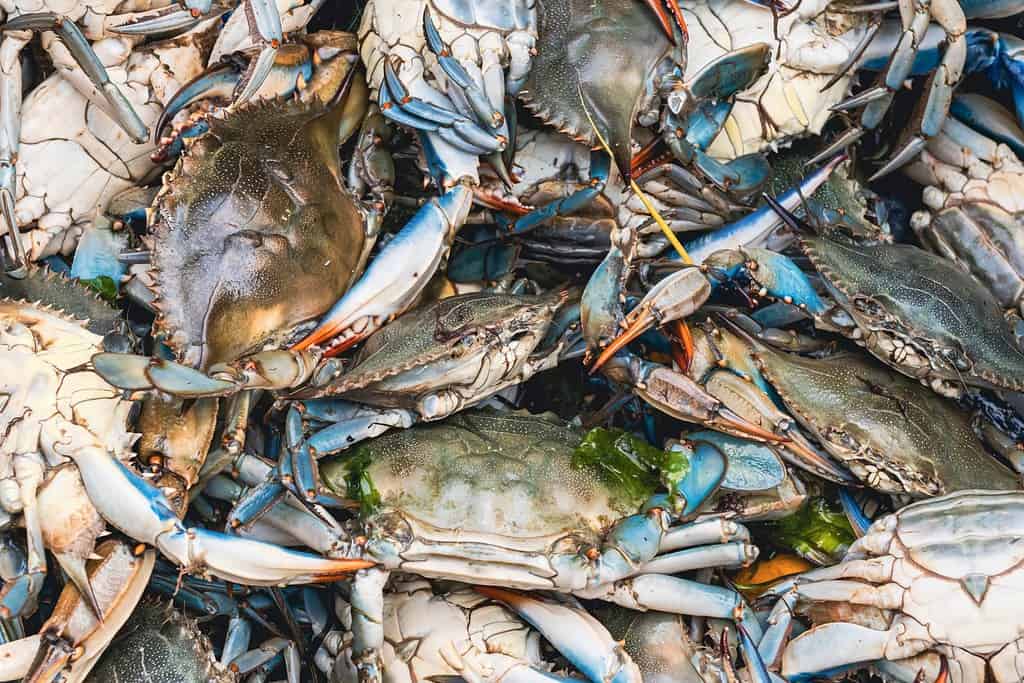
Blue crabs are one of the most important commercial fisheries in the U.S.
©Marco Lissoni/Shutterstock.com
What Eats Blue Crabs?
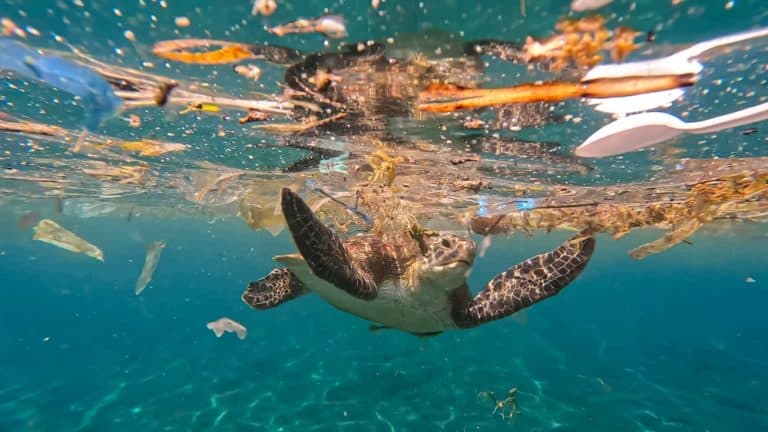
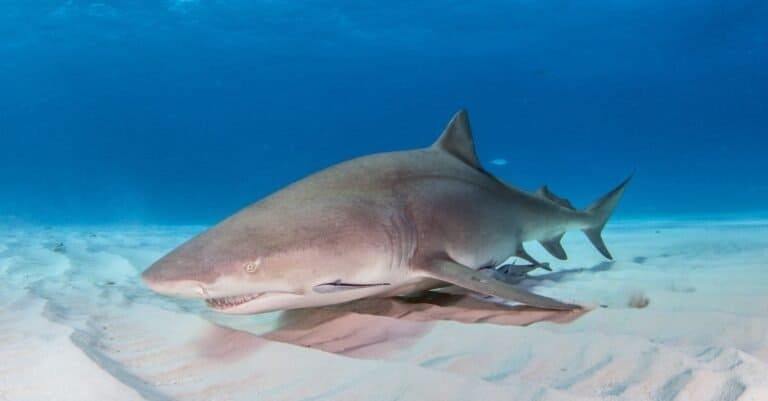
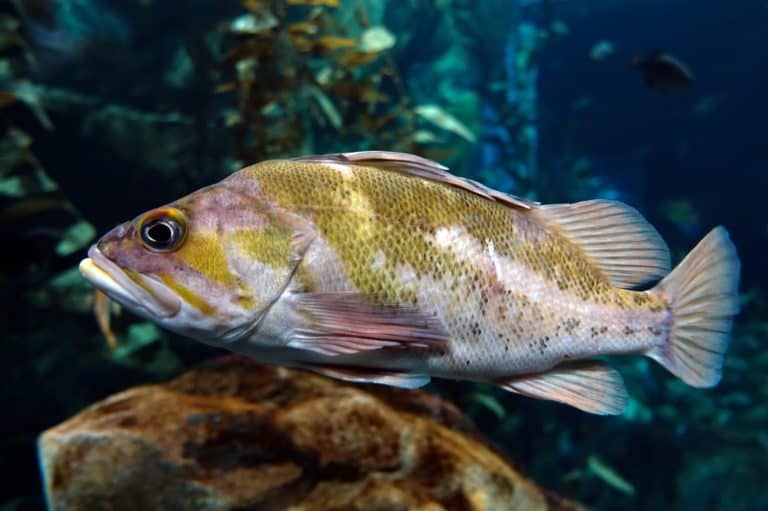
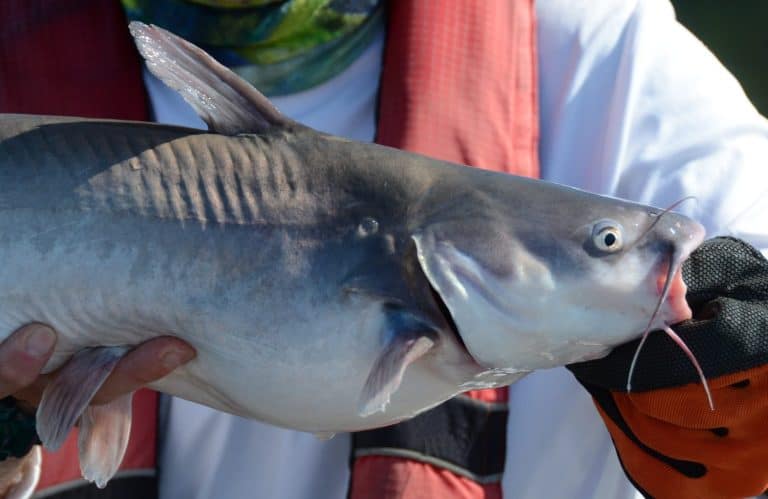
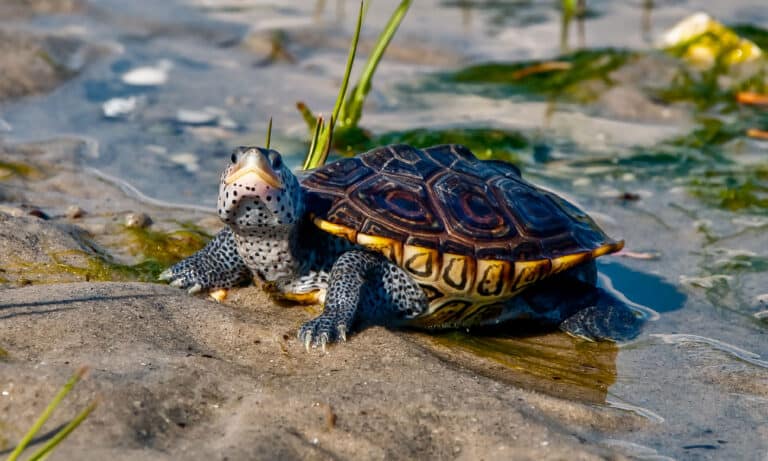
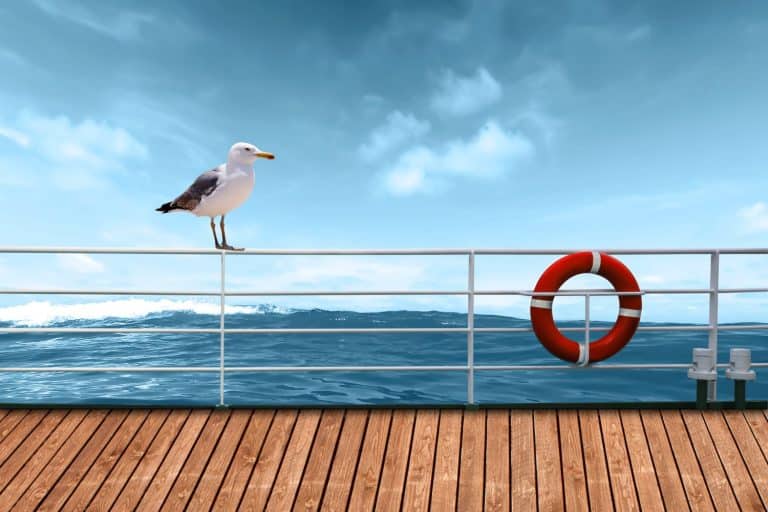
Blue crabs are preyed on by sea turtles, birds like blue herons, and large fish such as cobia, red drum, and striped bass in their estuaries and coastline lagoons. Of course, they are more susceptible to a larger range of predators when they are in their larval stage, including small fish and jellyfish. As noted above, mature blue crabs are also a major threat to smaller blue crabs and soft-shelled juveniles.
However, humans are one of their primary predators. Fisheries from Cape Cod to the Gulf Coast harvest these crabs for their flavorful meat. The blue crab fishery is the most economically important fishery in the Chesapeake Bay. It is also a major component of the seafood industry in the Gulf. Overall, the blue crab fishery is consistently ranked as one of the top 10 most valuable commercial fisheries in the U.S.