


C
Species Profile

Croatian Sheepdog

Canis lupus familiaris

Black-coated brains for busy flocks
Damir Kutlesa/Shutterstock.com

Croatian Sheepdog Distribution

Click a location to explore more animals from that region

Origin Location

This map shows the native origin of the Croatian Sheepdog. As a domesticated species, they are now found worldwide.

Loading map...

Found in 1 country

Size Comparison

Human 5'8"
Croatian Sheepdog 1 ft 7 in

Croatian Sheepdog stands at 27% of average human height.

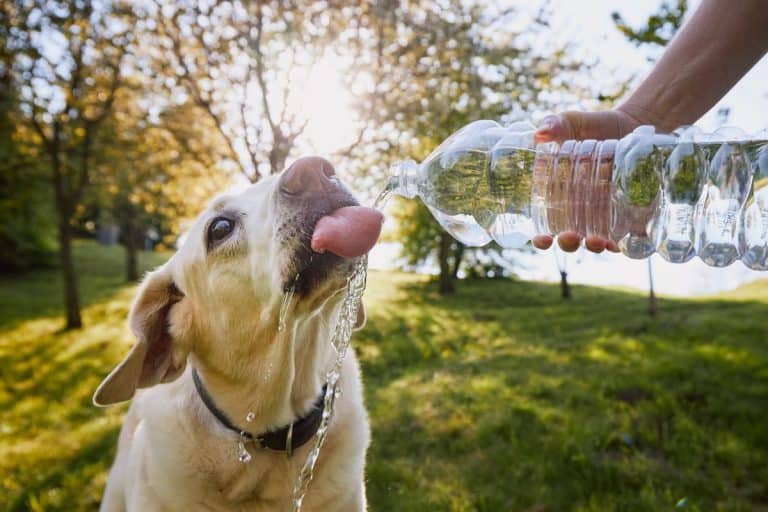
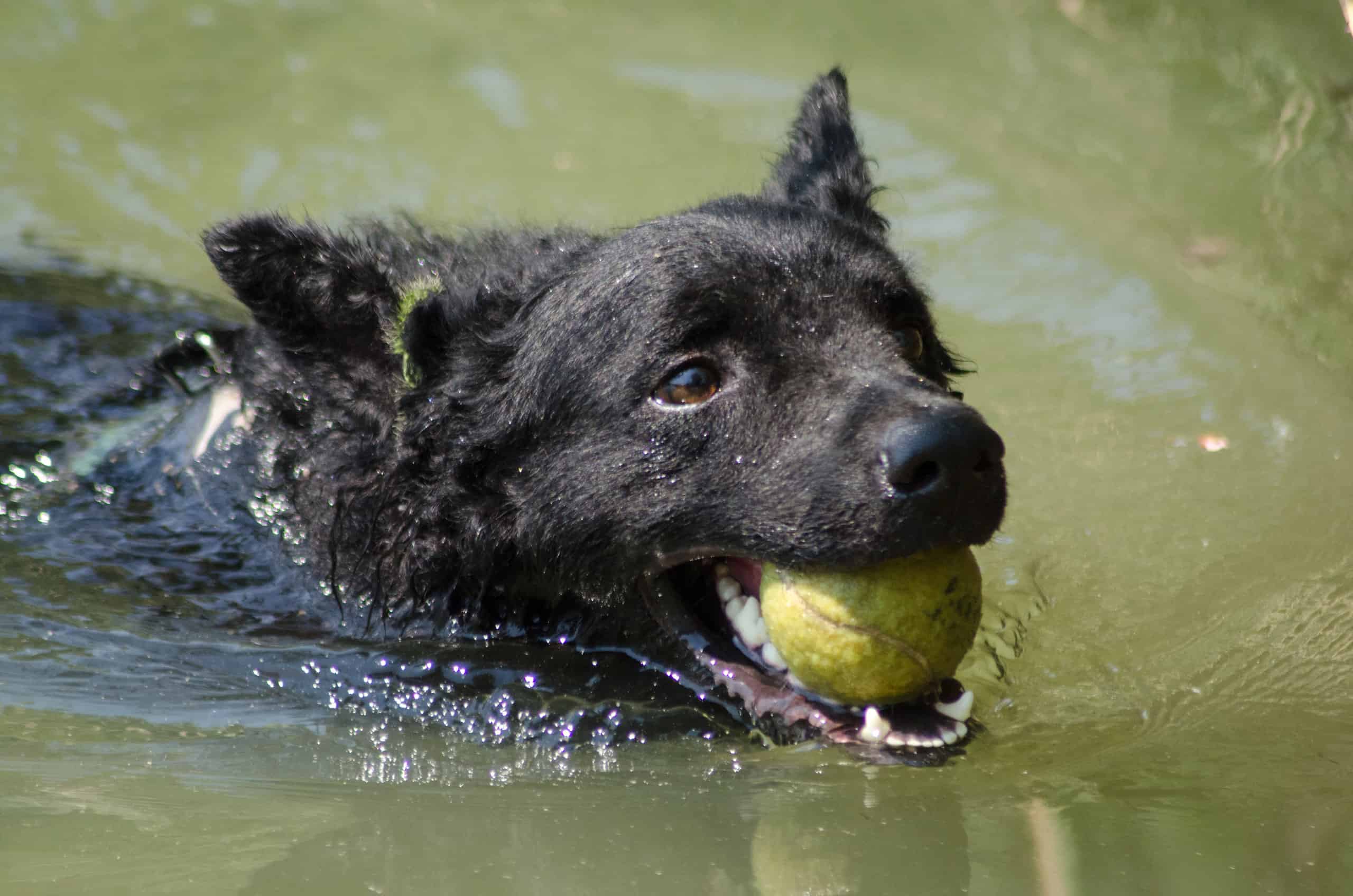
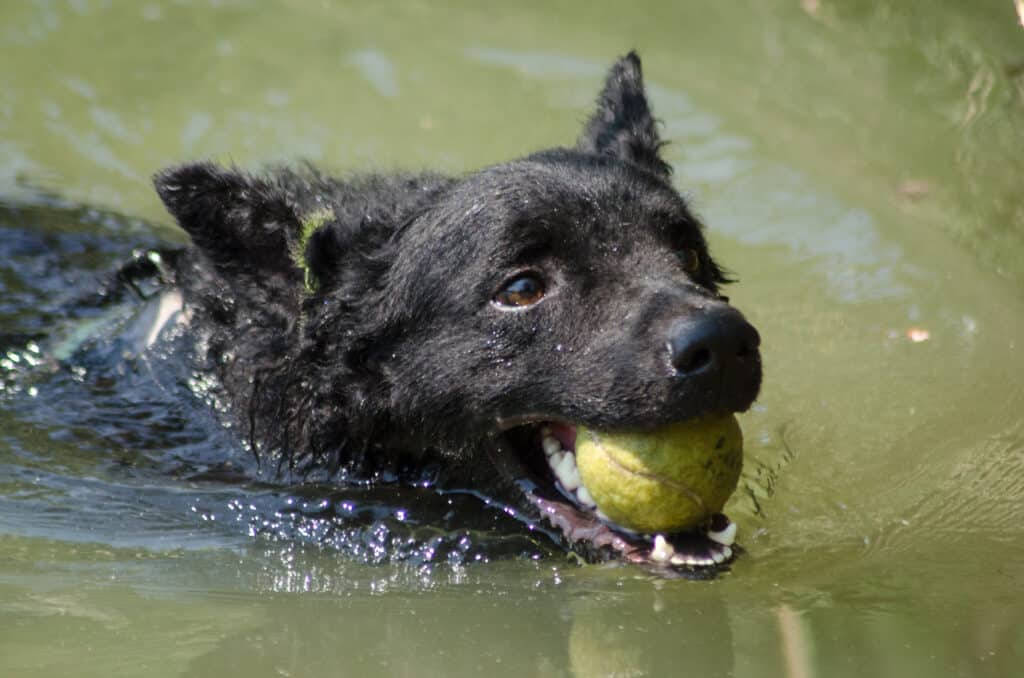
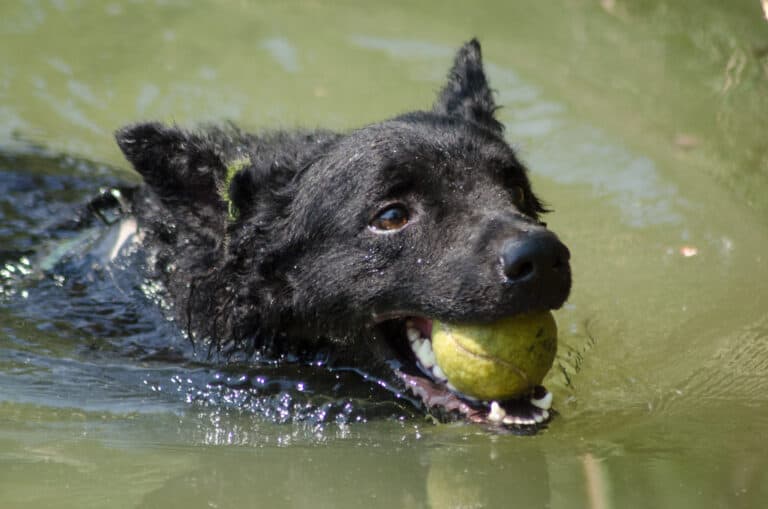
Croatian sheepdog plays in water

At a Glance

Domesticated
Also Known As Hrvatski ovčar, Hrvatski ovcar, Croatian Shepherd Dog, Croatian Shepherd
Diet Omnivore
Activity Diurnal+
Lifespan 4 years
Weight 20 lbs
Status Not Evaluated
Did You Know?

The breed is traditionally linked to Croatia's Slavonia region and is documented in written sources as far back as the 14th century.

Scientific Classification

The Croatian Sheepdog is a medium-sized herding dog breed from Croatia, historically used for managing and driving livestock (especially sheep).

Kingdom
Animalia
Phylum
Chordata
Class
Mammalia
Order
Carnivora
Family
Canidae
Genus
Canis
Species
Canis lupus

Distinguishing Features

  • Medium-sized, agile herding dog with a strong working drive
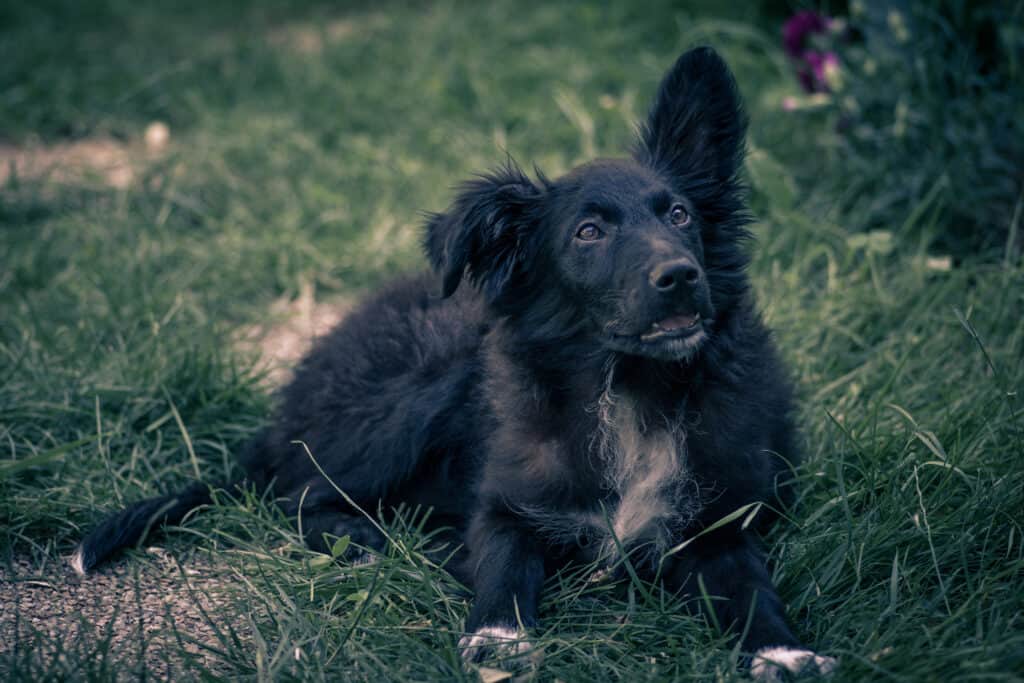
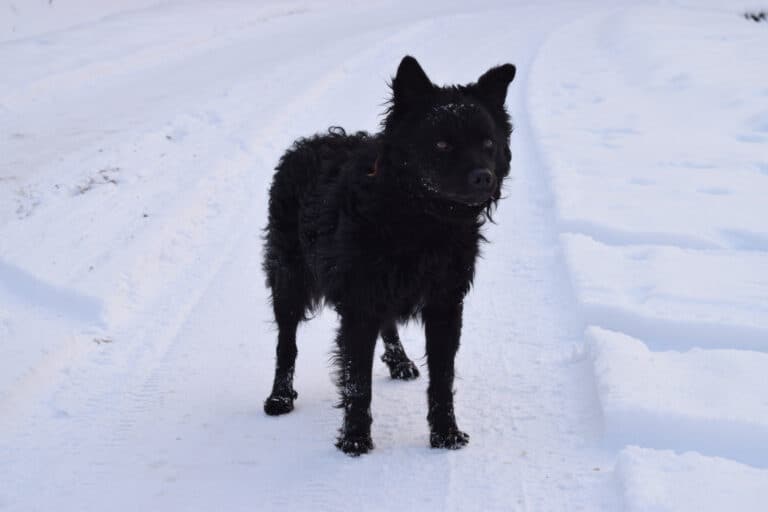
  • Coat typically black and wavy/curly, often with a dense texture
  • Traditionally a versatile stock-working dog (herding/driving and general farm utility)

Physical Measurements

Males and females differ in size

Height
1 ft 6 in (1 ft 5 in – 1 ft 8 in)
1 ft 5 in (1 ft 4 in – 1 ft 7 in)
Length
2 ft 3 in (1 ft 11 in – 2 ft 6 in)
Weight
36 lbs (29 lbs – 44 lbs)
34 lbs (29 lbs – 40 lbs)
Tail Length
8 in (6 in – 9 in)
Top Speed
28 mph
Fast, agile herding dog

Appearance

Primary Colors
Secondary Colors
Skin Type Domestic dog skin with a weather-resistant double coat: harsh-to-touch, wavy/curly outer coat with a protective undercoat. Skin is generally pigmented under dark coat; ears and paws benefit from routine checks due to coat density.
Distinctive Features
  • The Croatian Sheepdog (Canis lupus familiaris) is a purpose-bred domestic herding dog chosen for close human teamwork, easy training, and steady work with livestock — much more eager to follow and focused on tasks than wolves.
  • Croatian origin and traditional role: Developed in Croatia as a medium-sized, agile livestock herder/driver (especially sheep), valued for quick turns, endurance, and an alert, ready-to-work temperament.
  • Medium-length, dense, weatherproof coat with wavy to curly hair that gives a rough, messy shape — not corded like a Puli and not a large guard dog like the Croatian Tornjak.
  • Build and movement: Compact, athletic frame with springy, efficient gait suited to repeated bursts of speed and direction changes typical of herding work.
  • Head/ears/tail impression: Foxy, alert expression; ears commonly semi-erect to erect; tail typically carried with a curve or sickle-like carriage, often animated when working.
  • Working temperament: Highly intelligent, energetic, and responsive; tends to be vigilant and can be vocal while herding. Needs structured training, regular jobs/activities, and early socialization to channel herding instincts appropriately.
  • Needs daily active exercise and brain work (herding-style games, agility, scent work, obedience) to avoid boredom. Brush coat often to prevent mats, especially behind ears, ruff, and hindquarters; check ears and feet after field work.
  • Usually a strong working dog, but can get bone and joint problems like hip dysplasia; use good exercise, weight control, and health screening, and watch for ear irritation or infections from wet, dirty ears.

Sexual Dimorphism

Moderate sexual dimorphism typical of medium herding breeds-males tend to be slightly larger and more robust; females often appear a bit finer and lighter-framed while retaining the same overall coat type and working outline.

  • Slightly heavier bone and broader head/neck; overall more substantial outline.
  • May carry a fuller-looking coat around the neck/shoulders due to size and coat density (still wavy/curly, not corded).
  • Slightly finer head and lighter overall build; more streamlined outline.
  • Often appears a touch more refined in body proportions while maintaining the same agile movement and coat texture.

Did You Know?

The breed is traditionally linked to Croatia's Slavonia region and is documented in written sources as far back as the 14th century.

Most Croatian Sheepdogs are solid black with a wavy-to-curly, weather-shedding coat suited to outdoor work.

Though named for sheep, they were also used to drive and manage cattle and other livestock on small farms.

They're known for fast, tight turns and quick acceleration-traits prized for controlling moving animals in open fields.

Modern, organized breeding is strongly associated with 20th-century Croatian cynology, helping preserve a local working type into a defined breed.

They often excel in dog sports (agility, obedience, rally) because their herding style favors responsiveness and speed.

Outside Croatia, the Croatian Sheepdog remains relatively uncommon compared with many other European herding breeds.

Unique Adaptations

  • Selective breeding from the gray-wolf-derived domestic dog emphasized herding-related traits such as high trainability (biddability), confidence around livestock, and strong responsiveness to human cues-behavioral shifts away from a typical wolf predatory sequence.
  • Weather-ready coat: a dense, wavy/curly coat helps shed rain and resist snagging during field work, while still being relatively low-maintenance.
  • Compact, athletic frame: built for endurance plus rapid direction changes typical of close control herding.
  • Sensitivity to signals: many are highly attuned to whistles, gestures, and subtle handler movement-useful for distance work.
  • Work drive and focus: strong motivation to engage, patrol, and control motion-an adaptation of prey-chase instincts into managed herding behavior.

Interesting Behaviors

  • Gathering/circling: naturally tries to collect moving groups (people, pets, livestock) into a cluster.
  • Heeling and "push" work: may drive from behind with quick darts; can be mouthy with livestock if not guided/trained.
  • High "check-in" tendency: frequently looks back to the handler for direction, especially when well bonded.
  • Vocal herding: barking can be part of their working style, especially when driving stock forward.
  • Springy agility: quick pivots, sudden stops/starts, and occasional hopping/jumping to see over tall grass or track movement.
  • Problem-solving persistence: will repeat strategies that moved animals before, then quickly switch if they stop working.

Cultural Significance

The Croatian Sheepdog (Canis lupus familiaris) is tied to rural Croatian life, especially Slavonia. It was a tough, fast herder for small farms and open fields. As a national native breed, it is a living part of Croatian farm heritage, still valued by breeders.

Myths & Legends

A common origin story says a small black herding dog lived in medieval Slavonia, mentioned in early church records (often said 14th century), the 'black shepherd's dog' known as a local working companion.

Shepherd tales praise the Croatian Sheepdog (Canis lupus familiaris) as an almost mind-reading partner that could 'hold' a flock's edge and turn it with voice and presence, valued for working with few commands.

In Central and Southeastern European folktales, black dogs like the Croatian Sheepdog (Canis lupus familiaris) are seen as steady guards at the edge of home and wild, watching farms and pens at night.

A modern tale says early 1900s Croatian breeders and dog experts, especially organized work from the 1930s, saved the shepherd's dog of Slavonia as farming changed, turning local pride into a mission to save it.

Conservation Status

NE Not Evaluated

Has not yet been evaluated against the criteria.

Population Stable

Life Cycle

Birth 5 pups
Lifespan 4 years

Lifespan

In the Wild
2–8 years
In Captivity
10–15 years

Reproduction

Mating System Polygynandry
Social Structure Managed Domestic
Breeding Pattern Not Applicable
Fertilization Internal Fertilization
Birth Type Managed_selective

Behavior & Ecology

Social Pack Group: 3
Activity Diurnal, Crepuscular
Diet Omnivore Meat-forward complete dog food (kibble or wet) with poultry or beef as the primary protein

Temperament

High-energy working drive; needs regular daily exercise and purposeful tasks (herding-style games, training, nosework) to reduce nuisance behaviors
Highly intelligent and quick to learn; excels with consistent, reward-based training and clear routines
Strong herding/controlling instinct (breed-distinguishing trait vs many companion-line dogs); may attempt to herd children, other pets, or moving objects if not redirected
Alert and vigilant; can be reserved with strangers and quick to sound an alarm (often more vocal than many breeds)
Loyal, handler-focused, and responsive; tends to bond strongly to one or a few people while remaining biddable with the family
Can be sensitive to harsh handling; stress may increase reactivity or barking-benefits from calm structure and gradual exposure
Lively, alert, and devoted; naturally watchful (a good watchdog) and not typically aggressive or nervous.
Common management considerations: boredom can lead to excessive barking, pacing, or destructive chewing; adequate mental enrichment is key

Communication

sharp alert barking used to signal novelty/strangers; may escalate with arousal if not trained
short, repeated barks during movement control Herding-style vocal pressure
whining/whimpering when excited, anticipating work, or seeking proximity to handler
growls as distance-increasing signals during resource guarding or discomfort; more likely if undersocialized or stressed
intense gaze and head/shoulder orientation to control movement-herding-derived visual pressure distinct from typical pet-dog communication emphasis
body blocking, flanking arcs, and quick directional changes to influence other animals' paths
tail carriage and ear position changes indicating arousal/uncertainty; subtle signals may precede barking
scent investigation and marking; uses olfactory information to track individuals and novelty in territory
physical contact seeking (leaning, nudging) with bonded humans; may use pawing to request interaction/work
play bows and rapid approach-retreat to initiate play or rehearsed herding sequences

Habitat

Agricultural/Farmland Grassland Suburban Urban Woodland Deciduous Forest Coniferous Forest Mountain Alpine Meadow Steppe Shrubland Desert Wetland Coastal +8
Biomes:
Temperate Grassland Temperate Forest Mediterranean Boreal Forest (Taiga) Tundra Alpine Desert Hot Desert Cold Savanna Tropical Dry Forest Tropical Rainforest Freshwater Wetland Marine +8
Terrain:
Plains Hilly Valley Riverine Karst
Elevation: Up to 16404 ft 3 in

Ecological Role

Domesticated working omnivore (herding dog) derived from the wolf lineage; functions primarily as a human-associated predator/scavenger analogue with diet largely provided by people rather than hunted.

livestock herding and stock movement (reduces losses and improves grazing management) opportunistic rodent control around farms alerts/territorial deterrence that can reduce predator-livestock encounters links human food systems to local nutrient cycling via waste/leftovers management (historically) companion and working partnership supporting human livelihoods

Diet Details

Main Prey:
Rodents Rabbits and hares Ground-nesting birds and eggs Small reptiles and amphibians
Other Foods:
berries Fallen fruit Safe vegetables Cooked grains/starches Grasses and plant matter

Human Interaction

Domestication Status

Domesticated

Domestic dogs (Canis lupus familiaris) come from gray wolves after people bred them to be tame and useful. The Croatian Sheepdog, a landrace herding breed from Croatia, was bred for all-day stock work. It has a strong herding drive, lots of energy, a black wavy coat, barks a lot, is quick at solving problems, and needs training and activity.

Danger Level

Low
  • Herding behaviors: may chase, circle, body-bump, or nip at heels-especially with running children-if under-exercised or untrained.
  • High alertness/vocality: frequent barking can create neighborhood conflict and escalate perceived threat despite low intent to harm.
  • Mouthy play and accidental scratches/knocks due to speed and agility.
  • As with all dogs, risk increases with poor socialization, pain/illness, fear, or negligent handling; bites are uncommon but possible.

As a Pet

Suitable as Pet

Legality: Croatian Sheepdog (Canis lupus familiaris) is usually legal to own in most places but must follow local rules (license, leash, vaccinations). Rarely banned by breed laws, but housing, insurance, or dangerous-dog rules may limit it if it behaves badly.

Care Level: Experienced

Purchase Cost: $800 - $2,000
Lifetime Cost: $18,000 - $45,000

Economic Value

Uses:
Livestock management (herding/handling) Companion animal ownership Working dog breeding and kennel programs Canine sports and events (agility/obedience/herding trials) Training and professional services (trainers, behaviorists, handlers)
Products:
  • herding labor/value on farms (reduced human labor, improved stock control)
  • sale/transfer of puppies from reputable breeders
  • training services and sport participation fees
  • pet supplies (food, grooming tools, enrichment toys)
  • veterinary services (preventive care, genetic screening, treatment)

Relationships

Related Species 6

Ecological Equivalents 5

Animals that fill a similar ecological role in their ecosystem

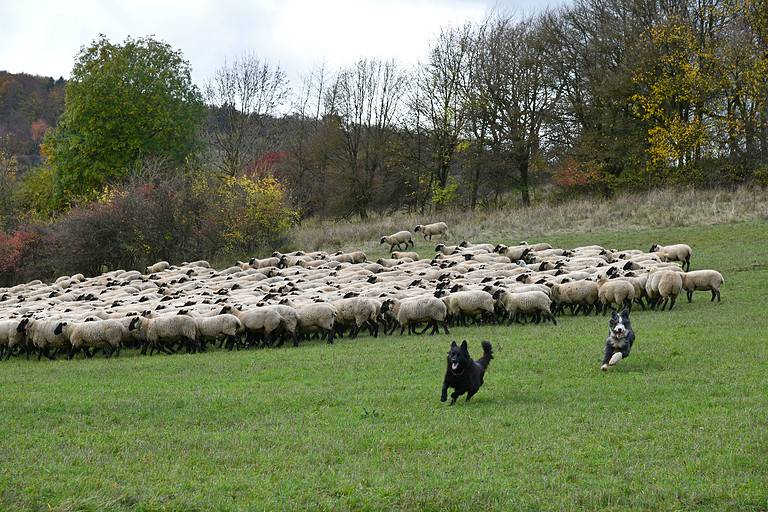
The nimble-footed and skillful Croatian Sheepdog has a natural ability to herd sheep, cattle, and even horses. However, once a task is given, their main focus is to make sure the herd of animals is in a secure area. In addition, they are responsible for keeping the animals in one group by not letting them wander off and get lost.

Even though the Croatian Sheepdog’s heritage is of ancient descent, they are still bred and used today to assist farmers with their livestock.

Fun Facts about the Croatian Sheepdog

  • They are an ancient breed dating back to the 7th century and made their way to Croatian lands, giving them the name Croatian Sheepdog.
  • These dogs are herding dogs used for their skillful and intelligent traits to move livestock and keep them safe.
  • Croatian Sheepdogs have a waterproof coat that is black in color and has a wavy hair texture.
  • They like to bark and whine as this is their way of communicating with their owners. But, unfortunately, their loud, bellowed bark can sometimes be a nuisance to others.
  • Puppies are known to be born without tails.

Pros and Cons Of Owning a Croatian Sheepdog

ProsCons
Excellent watchdog: Because they are very protective of their owners, they use their loud bark to keep strangers away.Very Vocal: They are always alert and protective, and their persistent bark can become annoying.
Trained easily: Their focused minds allow them to take a command seriously, making training effortless.Shy around strangers: Even though they are very protective of their owners, they make their bark known. They won’t show interest in meeting a new person, giving off an unfriendly feeling.
Grooming is manageable: Their coats don’t require a lot of grooming, as they don’t shed a lot of hair.High Energy: Being so active requires a lot of exercise, as they have a lot of energy to burn.

The Best Dog Food

These dogs require a healthy and balanced diet to maintain their high energy levels. Their diet must include the following:

  • Protein
  • Fats
  • Carbohydrates
  • And fiber

Their diet can have a combination of canned food and dry kibble. When incorporating wet or dry foods, ensure that the ingredients are of the highest quality. Containing whole-food ingredients such as:

  • Carrots
  • Green beans
  • Pumpkin
  • Spinach
  • Broccoli

They are a great way to add nutrients to their diets so their body can absorb all the nutritional value needed to maintain a healthy body and prevent weight gain.

Weight and Size
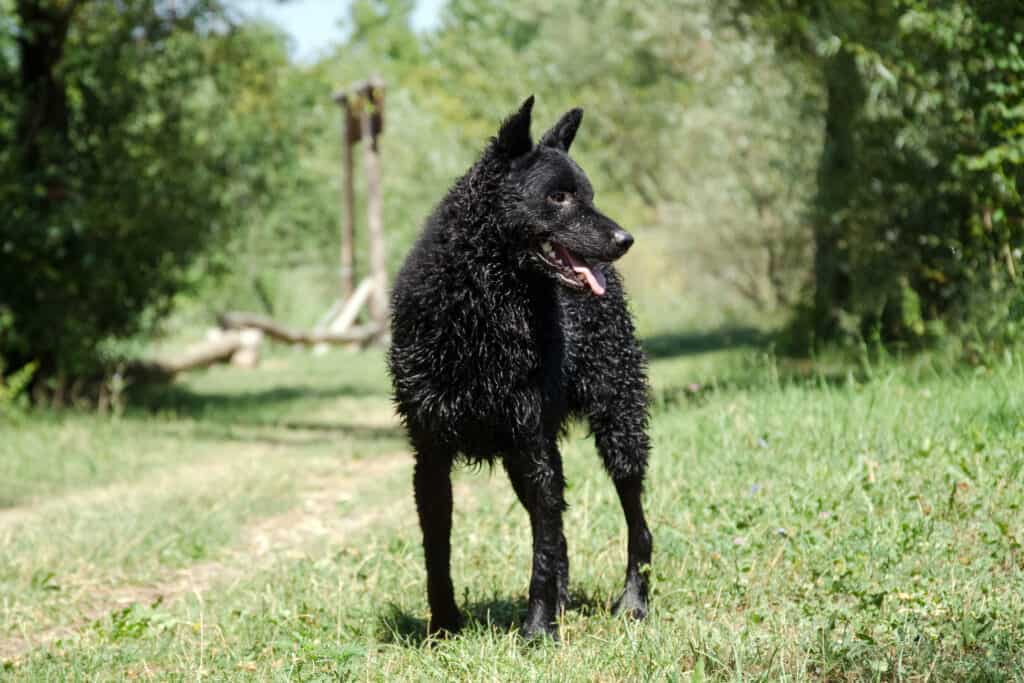
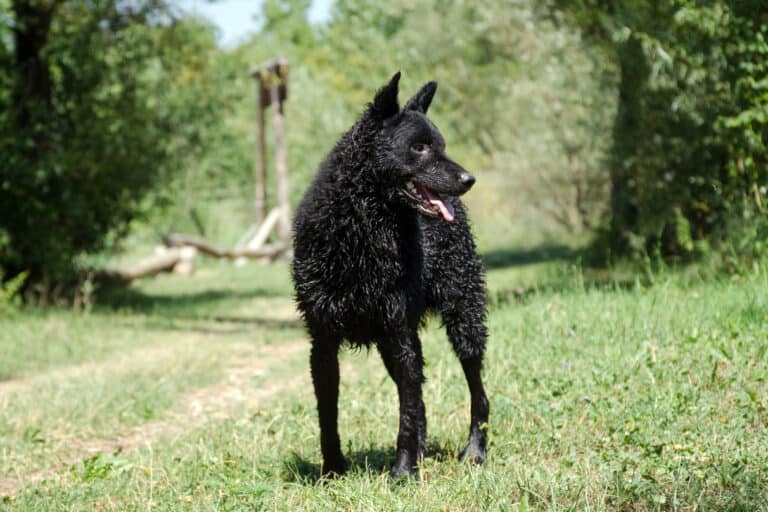
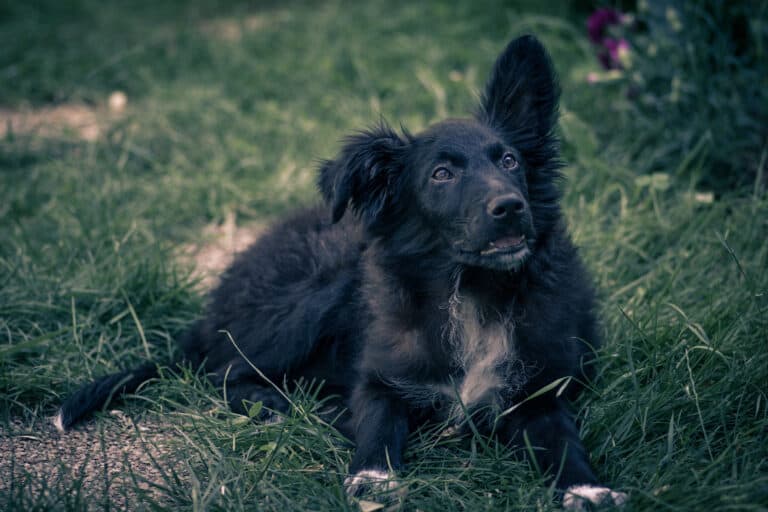
A croatian sheepdog in a field

Male and female Croatian Sheepdogs have the same average size and weight, between 29 and 43 pounds, and 16 and 20 inches tall.

Males and females are the same in size and weight. The only difference between these two genders is that females have longer bodies than males. The male’s weight is 29 to 43 pounds, and his height is 16 to 20 inches. The female’s weight is also 29 to 43 pounds, and her height is 16 to 20 inches.

Health Issues

 The Croatian Sheepdog presents itself as a very healthy breed. They can experience minor health concerns such as:

Patellar luxation means that the kneecap shifts to the side of the knee bone. When this happens, the veterinarian will move the bone back into place so the dog can adequately function when walking or running.

Unfortunately, due to genetics, Croatian Sheepdogs are prone to dislocated knees. If your dog has experienced any dislocation, take them to the vet, who will assist with the injury and decide if surgery or medication is needed to ease the pain.

They can also experience arthritis, where their joints become inflamed. As they age, the cartilage decreases, causing the bones in the joints to rub together. If you notice your Croatian Sheepdog is struggling to walk properly and doesn’t want to engage in physical activity, get them examined so your dog can have a proper diagnosis. This will assist in knowing what exercise and diet to add to their daily routine and medications, so they don’t experience any pain or discomfort.

Temperament

Their energetic and loving nature makes them the perfect family dog. They are always looking for attention and like to be close to their owner. However, because they are not friendly towards strangers, they make their presence known using their loud and persistent bark.

If you teach proper training techniques, they become friendlier towards meeting new people. As long as they get a good amount of exercise and are well taken care of, they will always show a loyal and loving side.

How to Take Care of a Croatian Sheepdog

The Croatian Sheepdog will adapt happily to a family that can provide a large land area. However, because they are a very active breed, they require a lot of exercise and a well-balanced diet. The Croatian Sheepdog does not enjoy being left alone and enjoys human companionship. If the Croatian Sheepdog does not get enough physical and mental exercise, it can become very destructive and bark a lot.

Grooming

They have a thick undercoat that does not shed often, so brushing their fur once a week is essential to detangle knots and control the shedding. Although their double-layered coat protects the skin, especially from dust, a bath is needed once a month. Keep their nails trimmed, and don’t forget to brush those teeth. Brushing teeth every day will prevent dental issues.

Training

These dogs are highly knowledgeable, making them respond well to training. When training techniques are in motion, abstain from using repetition training techniques, as they learn quickly and respond well to commands. Disciplined training and social interaction will teach them how to act around other dog breeds and family members.

Exercise

Croatian Sheepdogs require at least 60 to 120 minutes of physical activity daily, which can be split into multiple sessions. Their exercises can include walking, running, and even agility training. Exercise is essential as it keeps your sheepdog healthy and stimulated. Exercise will prevent

  • Weight gain
  • Anxiety
  • Excessive barking
  • Behavioral issues 
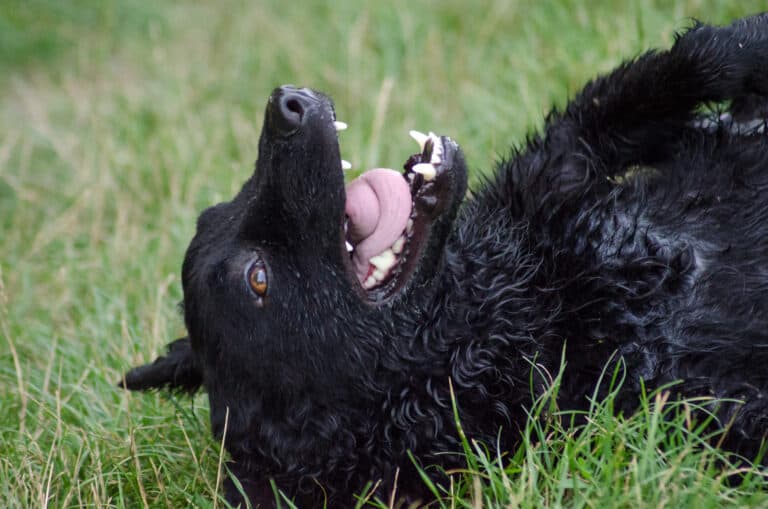
Close up view of a Croatian sheepdog playing in the green grass.

Croatian Sheepdog needs enough exercise to keep healthy.

Puppies

Sexual maturity can take place from 6 to 12 months of age. The female dog’s heat cycle happens every six months and lasts 18 to 21 days. Once mating is complete, the gestation phase takes place, allowing the puppy to develop in the mother’s womb.

Pregnancy can last up to 68 days and birth a litter of 4-6 puppies. Once the puppies are born, they will bond with the mother and stay close to her for the first two weeks, getting their nutrients through drinking milk.

 After the first two weeks after birth, these pups will start developing better eyesight and learning how to walk. The mother will guide them every step of the way so they can learn from her teaching.

Children

This breed shows very gentle and loving characteristics, making them great pets for children. They are not aggressive dogs, so they will not attempt to bite or attack. Instead, they are loyal and will share a loving bond with your children and family.

Dogs Similar to the Croatian Sheepdog

The Mudi breed shares similar traits to the Croatian Sheepdog. They both have dark, wavy textured coats. They are very energetic and share the same herding instincts. In addition, they love to play and interact in sporting activities. The only difference between the Mudi and the Croatian sheepdog is the shape of their bodies. The Mudi’s body is square, and the Croatian Sheepdog has a more rectangular body.

View all 395 animals that start with C

Sources

  1. American Kennel Club / Accessed October 12, 2022
  2. Dogtime / Accessed October 12, 2022
  3. Sprucepets / Accessed October 12, 2022
Kayeleen Parsons

About the Author

Kayeleen Parsons

Kayeleen Parsons is a writer at A-Z Animals that thoroughly enjoys writing about animals of all types. She has a love for many animals, but her Cocker Spaniel dog holds a special place in her heart. In addition to being a writer, she's also an English teacher, sharing her knowledge to help her students become excellent in the language and literature. When she's not busy writing, Kayeleen enjoys reading and spending quality time with her family in her homeland of Cape Town.

Thank you for reading! Have some feedback for us?


Croatian Sheepdog FAQs (Frequently Asked Questions)

The Croatian Sheepdog has moderate shedding.