
Quick Take
- One sex is smarter, yet harder to train. Why?
- Adding a second dog? Pairing the wrong sexes could spark fights.
- Neither sex makes a good guard dog, but one has an edge, and its alarm may not sound how you'd expect.
- Surgery can shift certain health risks, and one finding may surprise you.
Are you thinking about getting a dachshund puppy? These cute dogs have long bodies, short legs, and are known for being lovable and goofy. This makes them the perfect choice for a furry friend. However, you might be wondering if there are any notable differences between male and female dachshunds. If so, stick around and learn everything you should know in this guide. Of course, keep in mind that every dog is unique, so not everything you read here will necessarily apply to the pup you choose.
Comparing Male vs. Female Dachshunds
| Male Dachshunds | Female Dachshunds | |
|---|---|---|
| Build | Long muscular body, deeper chest, and stubby legs | More petite, may have slightly shorter legs |
| Temperament | Playful, cuddly, affectionate, joyful, energetic | Independent, reserved, relaxed, mentally mature more quickly |
| Lifespan | 12-16 years | 12-16 years |
| Weight | 16-32 pounds (Standard), 11 pounds and under (Miniature) | 16-32 pounds (Standard), 11 pounds and under (Miniature) |
| Height | 8-9 inches (Standard), 5-6 inches (Miniature) | 7-9 inches (Standard), 5-6 inches (Miniature) |

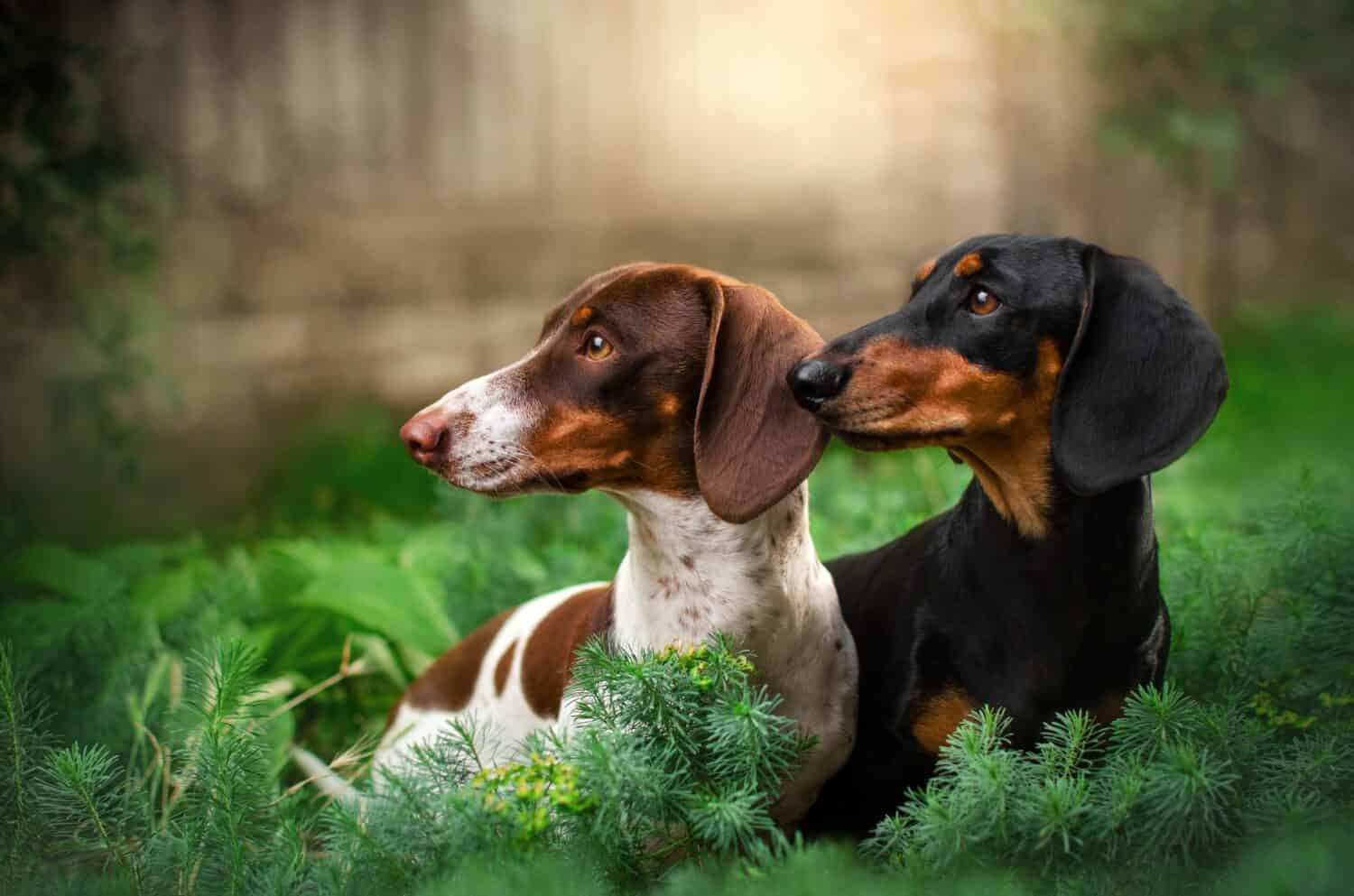
The physical differences between male and female dachshunds are usually not very noticeable.
©Hannamariah/Shutterstock.com
1. Physical Differences
Male and female dachshunds might seem identical at first glance, but there are small differences between the two, primarily when it comes to their size, build, and coat type. Male dachshunds tend to be slightly bigger than female dachshunds, who generally have a more petite build. This difference is not very obvious, as all dachshunds are small. A male dachshund will also usually have a deeper chest.
Another difference lies in their coats. Female dachshunds have the same coat types, colors, and patterns as males. However, male dogs tend to have softer fur than females, which is noticeable upon first touch.
2. Temperamental Differences
There are many lovely traits that both genders share. They are well known for their intelligence and bravery, but may also bark very loudly (and very often). As with all hunting dogs, this is rooted in their genetics. It may take some getting used to, but it will pay off.
Female dachshunds mature faster, and they’re usually more independent, focused, and less needy. They can also be stubborn, introverted, and a bit reserved around strangers, preferring the company of people they have already bonded with. They respect the time and space of “their” person and expect the same in return.
Some say that female dachshunds are also more intelligent than males. However, they can also be more temperamental and moody. Spaying can sometimes help manage their mood swings and prevent fights with other dogs. Their personality won’t change with spaying, but it can make them less aggressive and energetic.

Male dachshunds can be a bit more “chill” than females.
©Masarik/Shutterstock.com
Male dachshunds can be very affectionate and typically love cuddling. They’re also friendly, playful, highly energetic, and joyful. Most will want to play and snuggle all day long! Male dachshunds really like being around people and are very loyal. They love their human family a lot and hardly ever misbehave. With that said, female dachshunds can be just as cuddly and attached, sometimes even more! Again, keep in mind that personality traits will vary from dog to dog.
3. Trainability
Even though dachshunds are small, they need a lot of training to stay safe. They tend to get easily excited, which can lead to undesirable behaviors and potential risks in dangerous situations. However, as hunting dogs, they’re quite good at learning, so you shouldn’t struggle too much with “correcting” their behavior if needed.
As mentioned, some say female dachshunds are more intelligent. In comparison to males, they can learn tricks more easily and can be much better at staying focused. However, although they’re able to focus on their “lessons,” they won’t always want to. Female dachshunds are very independent, not easily motivated by food, and often hard to please, so getting them to listen can be a feat on its own.

Both male and female dachshunds are good at learning.
©Liliya Kulianionak/Shutterstock.com
For example, if they feel like they’ve learned enough, they might simply walk away and start doing something else. They’ll often obey your instructions only if they want to. However, because they’re less energetic than male dogs, they can be easier to teach how to walk on a leash.
Male dachshunds tend to mature more slowly, so training them can be just as challenging as training female pups — albeit, for different reasons. They get distracted easily and have a curious nature, making it tough to keep them focused on one particular task. Training will likely require you to be very patient, consistent, and firm.
Males also tend to be overly friendly; they may want to greet anyone and everyone they encounter during their walks. This can make leash training a bit more difficult than with females. On the flip side, they love people and always want to make their owners happy. They also learn well with praise and treats, so reward-based training can really pay off.
4. Guard Dogs
Dachshunds, whether male or female, aren’t great guard dogs; they simply don’t have the right traits for the job. However, what they do have is a deep and throaty bark, which might seem like it’s coming from a bigger dog. This can be useful if you want a smaller dog that can still deter unwanted intruders. If you want a more protective dog, female dachshunds are a better choice than males. Females are more confident, which makes them less likely to run off or hide in dangerous situations.

Neither male nor female dachshunds are good guard dogs.
©Daniel Humberto Umana/Shutterstock.com
They also tend to protect their territory more fiercely and be more distrustful of strangers than males. So, they’ll definitely let you know if they, for example, notice an intruder sneaking around your house. However, since they’re also more quiet around strangers, they won’t necessarily express their concern with a bark. That’s why you want to pay attention to their body language instead.
Male dachshunds will also notice strangers, but they’ll usually want to meet and greet them, not scare them away. They might bark, but more in a friendly rather than an aggressive way. However, they can also be very protective of their owners and other people they love.
5. Health Differences and Breeding
Both male and female dachshunds can live for a long time, usually between 12 to 16 years. However, just like every breed, they are prone to certain health issues. For both males and females, these include:
- Back problems, such as intervertebral disc disease (IVDD), and bowed legs, which are caused by their long spine and low height
- Hip dysplasia
- Fungal, bacterial, and other infections, which are common in long-faced dogs with more nasal lining
- Dental problems
- Eye conditions like glaucoma and cataracts
- Thyroid issues
- Skin problems
Some health issues more common in females than males, and vice versa. Let’s explore them in more depth.

Male dachshunds are, on average, slightly healthier than females.
©titov dmitriy/Shutterstock.com
Pregnancy can also cause some additional health problems for females, such as joint issues. That’s why it’s generally recommended to spay female dachshunds, especially if you’re not an experienced breeder. Spaying can reduce the risk of many other health problems, too, including mammary cancer and pyometra, which are common in unspayed female dogs, as well as rarer ovarian and uterine tumors.
Male dachshunds can also face issues like ear infections, disc damage, back injuries, and joint problems, as mentioned by the American Kennel Club (AKC). There are also some health problems that only affect male dachshunds, such as urethral prolapse, testicular tumors, and prostate cancer. Neutering eliminates the risk of testicular tumors, although studies have linked it to a higher, not lower, risk of prostate cancer.
6. Relationships With Children
It’s really important to find a dog with the right personality, especially if you have children in your family. In that case, male dachshunds may be a slightly better choice than females. With that said, you should always teach children to be cautious around dogs, regardless of their breed or sex.
Female dachshunds usually don’t show much affection to kids. In fact, they might avoid getting close. They can be picky about who they spend their time with, and children may not be their first choice. As mentioned, females are very independent and freedom-loving, so they’ll want to be the ones to decide, for example, how long playtime will last. Children may not necessarily allow them to do that, at least not as easily as most adults. That’s why some female dachshunds prefer to simply keep their distance.
Dachshunds are often treated like babies, but do they get along with actual, human children?
©Hannamariah/Shutterstock.com
Male dachshunds enjoy playing and have lots of energy, making them good companions for children. But, if a male dachshund doesn’t feel like being around people, they can become unfriendly or aggressive, just like females. That’s why kids need to be careful when playing with male dachshunds, despite their generally easygoing and playful personalities.
7. Relationships With Other Dogs
When it comes to interacting with other dogs, there are some distinctions between male and female dachshunds. These differences play a role in how they socialize and communicate with their canine companions.
Female dachshunds can be territorial and might not like other female dachshunds. They can even get into fights with other female dogs, mainly because they tend to be dominant or feel threatened by a new dog in their space. So, if you already have a girl, you might want to get a boy this time. However, some females can get jealous and act aggressively toward any dog that approaches their owner, regardless of their sex. To avoid this behavior, you should start socializing them from a young age.
Male dachshunds usually get along better with other dogs because they’re generally friendlier than females. In most cases, two male dachshunds will keep each other company and play nicely. Females will also respond well to males, and vice versa. This is especially so because males tend to be more submissive, so females won’t feel threatened by them. With that in mind, if you already have a boy, it’s totally up to you which sex you’ll go with this time. Male dachshunds will get along equally well with males and females.
8. Relationships With Other Pets
Dachshunds often happily invite other animals into their spaces because they like to play and interact with others. However, males will typically be friendlier than females.
Female dachshunds can get along well with other animals, but they can also become possessive of their chosen person. They may want “their person” all to themselves, so sharing them with others can cause them to become moody, overly cautious, and grumpy. Also, they can be slightly more selective than males.
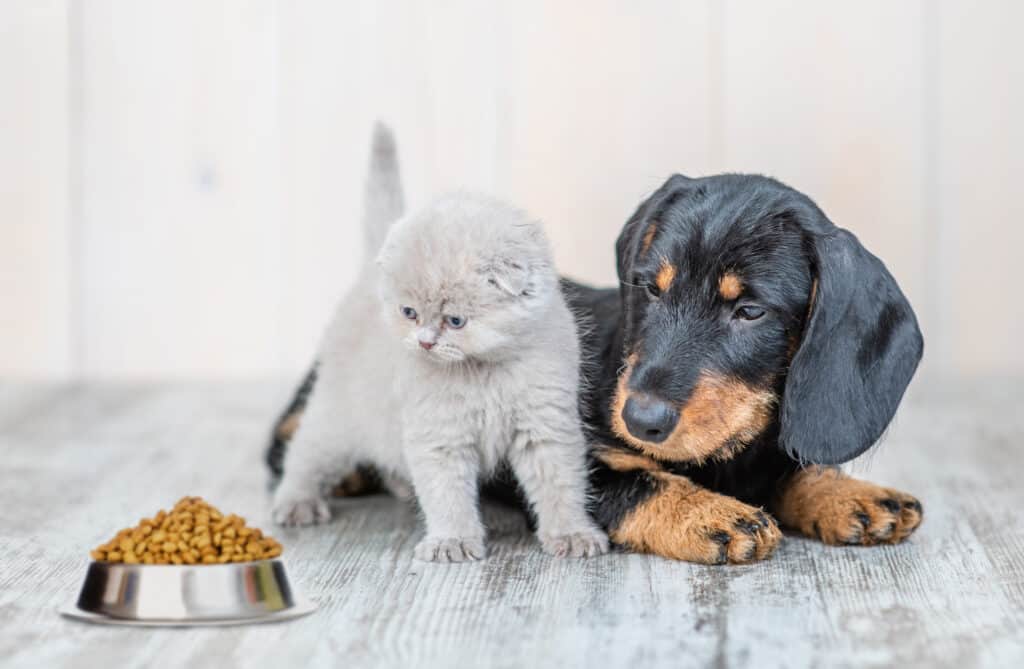
Male dachshunds get along well with other pets, even cats.
©Ermolaev Alexander/Shutterstock.com
However, if a female dachshund has been around other animals from a young age, they should have no issues adapting to multi-pet households. Male dachshunds are usually more sociable than females. They also tend to have good relationships with cats, although some cats might find them a bit annoying due to their high energy levels.
Which Is Right for Your Family?
Don’t stress too much over choosing between a male or female dachshund for your family; both are wonderful choices for any home. Thanks to their size, dachshunds are suitable for both bigger and smaller spaces. Just make sure to walk them, engage them in exercise, and take them to the dog park often.
If you live alone or have a smaller family, a female dachshund can be a great dog for you since they prefer quiet places where they have their own space. They also won’t mind occasionally being left alone since they’re very independent.
If you have a big family with kids or other pets, a male dachshund could be a better pick for you. This is because they tend to enjoy crowds and attention, and are generally more friendly and social. They are also more affectionate and cuddlier than females and adjust to hectic surroundings more easily.