



D
Species Profile

Dapple Dachshund

Canis lupus familiaris

Small hound, huge courage-dappled.
Liliya Kulianionak/Shutterstock.com

Dapple Dachshund Distribution

Click a location to explore more animals from that region

Origin Location

This map shows the native origin of the Dapple Dachshund. As a domesticated species, they are now found worldwide.

Loading map...

Found in 1 country

Size Comparison

Human 5'8"
Dapple Dachshund 7 in

Dapple Dachshund stands at 10% of average human height.

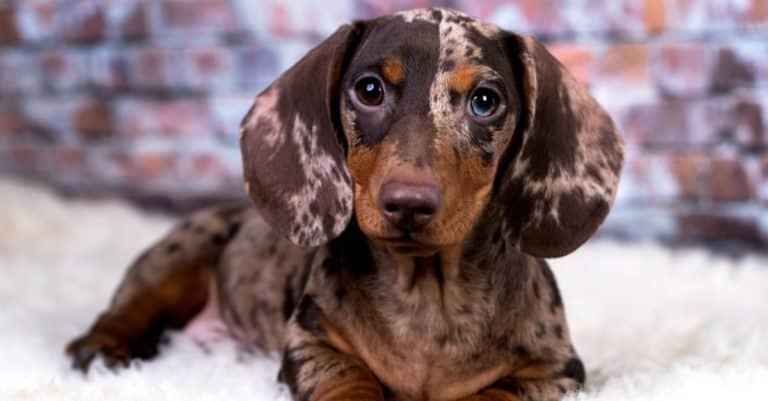
Dapple Dachshund lying on a rug

At a Glance

Domesticated
Also Known As Wiener dog, Weenie dog, Sausage dog, Doxie, Dackel, Teckel, Badger dog, Badger hound
Diet Omnivore
Activity Diurnal+
Lifespan 5 years
Weight 15 lbs
Status Not Evaluated
Did You Know?

"Dapple" in Dachshunds is the merle pattern: lighter, patchy areas over a darker base coat.

Scientific Classification

A Dachshund is a domestic dog breed characterized by a long body and short legs; “dapple” describes the merle patterning (patchy/mottled lighter areas over a darker base) found in some individuals.

Kingdom
Animalia
Phylum
Chordata
Class
Mammalia
Order
Carnivora
Family
Canidae
Genus
Canis
Species
Canis lupus

Distinguishing Features

  • Long-backed, short-legged hound body shape typical of Dachshunds
  • Dapple/merle mottling with irregular lighter patches and possible blue or partially blue eyes
  • Pattern expression varies; may include areas of diluted pigment and irregular spotting

Physical Measurements

Males and females differ in size

Height
9 in (5 in – 11 in)
7 in (5 in – 9 in)
Length
1 ft 11 in (1 ft 8 in – 2 ft 2 in)
1 ft 10 in (1 ft 4 in – 2 ft 2 in)
Weight
20 lbs (9 lbs – 26 lbs)
17 lbs (8 lbs – 26 lbs)
Tail Length
7 in (6 in – 9 in)
7 in (6 in – 9 in)
Top Speed
17 mph
Slower than many dogs

Appearance

Primary Colors
Secondary Colors
Skin Type Dachshund (dapple coat) (Canis lupus familiaris) has mammal skin with fur; dapple dogs often have mottled skin matching their coat. Smooth, longhaired, or wirehaired types change grooming needs.
Distinctive Features
  • Domesticated dog breed (Canis lupus familiaris) with extreme chondrodystrophic build compared with the base species (wolf): markedly elongated body, very short legs, low-to-ground stance.
  • Dapple/merle patterning: patchy dilution of the base coat creating a marbled look; may include mottled facial markings and unevenly colored ears/limbs; pattern can be subtle or dramatic and is not uniform across individuals.
  • Scent-hound temperament typical of Dachshunds: bold, curious, persistent, and scent-driven; may be vocal and tenacious, reflecting historical use for burrowing/ground game.
  • Proportion and structure: long back, prominent chest, short rib-to-ground distance; compact feet with strong forequarters; tail carried in line with the spine.
  • Head/face: elongated muzzle, strong jaw; expressive eyes-may be lighter in dapple dogs (including partial/blue-looking eyes), reflecting merle influence.
  • Breed-specific health concerns (not exhaustive): elevated risk of intervertebral disc disease (IVDD) due to long back/short legs; also patellar luxation, dental disease in small dogs, and obesity-related strain.
  • Dapple/merle-specific cautions: avoid breeding two dapple (double-merle risk), which increases likelihood of congenital hearing and vision defects; dapple expression can include eye anomalies and pigment-related sensory issues.
  • Care requirements: strict weight management to reduce spinal/joint load; use ramps/steps and limit jumping; support chest and hindquarters when lifting; maintain regular low-impact exercise to build core/back strength.
  • Grooming varies by coat type: smooth-occasional brushing; longhaired-regular brushing and mat prevention; wirehaired-hand-stripping or specialized grooming plus routine brushing.
  • Preventive care focus: routine dental hygiene, nail trimming (short legs can alter gait if nails overgrow), and monitoring for back pain/neurologic signs (reluctance to jump, yelping, wobbliness) requiring prompt veterinary evaluation.

Sexual Dimorphism

Sexual dimorphism is mild in Dachshunds compared with many wild canids; males often have slightly greater overall size and heavier bone/muscling, while females may be slightly smaller/finer, but overlap is common and conformation remains similar.

  • Slightly heavier head/neck and broader chest common in some males.
  • Often marginally higher body weight within the same size variety (standard/miniature) when fit.
  • Often slightly finer bone and narrower chest/neck than males of the same size variety.
  • May appear a bit more streamlined in silhouette, though conformation is largely the same.

Did You Know?

"Dapple" in Dachshunds is the merle pattern: lighter, patchy areas over a darker base coat.

The Dachshund was developed in Germany as a scent hound for burrowing game; the name links to "badger dog."

Despite their small size, many Dachshunds show classic hound traits: strong nose, persistence, and loud "big-dog" barking.

Dapple can appear on smooth, longhaired, or wirehaired Dachshunds and on many base colors (e.g., red, black & tan, chocolate & tan).

Because merle affects pigment, dapple-to-dapple matings can produce "double dapples," which carry a much higher risk of serious eye/ear defects.

Their short legs come from chondrodystrophy (dwarfism affecting cartilage), a hallmark of the breed's digging, low-to-ground design.

Dachshunds often excel at scent work and tracking-style games because they were bred to follow odor trails tenaciously.

Unique Adaptations

  • Elongated body + short, sturdy limbs: engineered to enter dens and maneuver in tight spaces while keeping the nose close to scent trails.
  • Deep chest and strong forequarters: supports digging and sustained effort; many have surprisingly powerful front-end strength.
  • Highly developed olfaction (Canidae trait amplified by scenthound selection): supports trail-following and "find it" games.
  • Dapple/merle pigmentation: a genetic pattern affecting distribution of eumelanin (dark pigment), producing the characteristic mottling and often lighter or "marbled" eyes.
  • Coat varieties as functional adaptations: smooth (easy-care), longhaired (added insulation), wirehaired (more weather/brush resistance) within the same breed type.

Interesting Behaviors

  • Scent-first exploration: they may "vacuum" the ground on walks, following trails with intense focus typical of scenthounds.
  • Digging and burrowing: many instinctively tunnel into blankets, beds, or soil-echoing their historical role pursuing animals underground.
  • Alarm barking and watchdog behavior: quick to announce visitors, unusual sounds, or wildlife movement.
  • "Stubborn-smart" problem solving: they may test boundaries, especially if training isn't consistent and reward-based.
  • Prey-chase triggers: squirrels, rabbits, and moving toys can spark pursuit; reliable recall can be challenging without training.
  • Selective cuddling: often affectionate with family but can be wary of rough handling-especially around the back and ribcage.

Cultural Significance

The Dachshund (Canis lupus familiaris) is a famous German breed, once an earthdog and now a global companion. Its shape appears in art and ads; dapple coats are popular but tied to merle health risks when two merles are bred.

Myths & Legends

Germany's "Dachshund" name ("badger dog") became part of popular lore: tales of fearless little hounds confronting badgers helped cement the breed's reputation for outsized bravery.

In 19th-century Europe, Dachshunds were sometimes described in hunting anecdotes as dogs that could "argue with a badger underground," a colorful tradition highlighting their tenacity and loud voice in tunnels.

Old hunting-country stories often portray the Dachshund as a dog that 'knows the way home through the woods,' reflecting rural beliefs in hounds' uncanny sense of direction while trailing scent.

The breed's long body inspired folk humor and affectionate superstitions-such as calling them 'sausage dogs' and treating their shape as a lucky, recognizable charm in household decor and postcards.

Historical anecdotes from German and later British dog culture describe Dachshunds as symbolically 'stubborn as a badger,' a character legend repeated in breed clubs and sporting circles.

Conservation Status

NE Not Evaluated

Has not yet been evaluated against the criteria.

Population Stable

Life Cycle

Birth 4 pups
Lifespan 5 years

Lifespan

In the Wild
2–12 years
In Captivity
10–18 years

Reproduction

Mating System Polygynandry
Social Structure Managed Domestic
Breeding Pattern Not Applicable
Fertilization Managed Selective
Birth Type Managed_selective

Dachshund (dapple/merle) breeding is managed by people: males and females may be bred to multiple partners over time. Pair bonds are not needed; breeders plan matings, use timing tests, or do insemination. Avoid merle x merle (double dapple) due to deafness and eye defects.

Behavior & Ecology

Social Pack Group: 3
Activity Diurnal, Crepuscular, Cathemeral
Diet Omnivore Meat-forward foods (beef, chicken, turkey) and high-value training treats; many individuals show strong preference for rich, fatty flavors (so portions must be controlled).

Temperament

Bold, confident, and tenacious; selected for pursuing quarry underground, often more "independent-minded" than many companion breeds (can appear stubborn in training).
Highly scent-driven and exploratory; strong digging and tracking tendencies; benefits from structured sniffing games and secure fencing/leash reliability work.
Affectionate and loyal with household; frequently a vigilant watchdog with a quick alarm bark; may be reserved or reactive toward strangers without proactive socialization.
Prey drive can be high (small animals); may chase fast-moving targets; recall can be variable if scent-locked.
Dog-dog sociability varies widely: well-socialized individuals can be friendly, but breed-typical assertiveness and vocal arousal can lead to leash reactivity if not trained early.
Care requirements (breed-specific): protect the spine-avoid repetitive jumping/rough stairs; use ramps/steps, harness over collar for pulling, keep nails trimmed for traction; maintain lean body condition.
Health concerns (breed-specific): elevated risk of intervertebral disc disease (IVDD)/back injury due to long-backed conformation; obesity increases risk.
Other common concerns in the breed: dental disease (small mouth/crowding), patellar luxation in some lines; regular dental care and weight management are important.

Communication

Sharp alarm barking and repeated "watchdog" barking Breed-typical
Howling/baying-like vocalizations when excited or scenting Reflecting hound ancestry
Whining/whimpering for attention, anticipation, or discomfort Notably with back pain-sudden vocalization warrants prompt assessment
Growling and grumbling during resource guarding or boundary-setting; requires early training and management.
Yips/squeals during high arousal play or frustration.
Scent marking (urine marking) and intense sniffing as primary information-gathering; may over-focus on scent trails compared with many pet dogs.
Body posture signaling: forward lean, stiffening, freezing, and piloerection can precede barking or snapping; important for early intervention.
Denning/cover-seeking (burrowing under blankets) as comfort behavior; can be used as a calm "safe place."
Pawing, nudging, and climbing onto laps as affiliative contact-seeking; may escalate to barking if ignored.
Digging and nose-pushing at bedding/ground as displacement or goal-directed behavior; provide acceptable outlets Dig box, scent work
Tail and ear position changes (carriage and tension) as key indicators of arousal; in long-coated varieties, subtle signals may be visually masked-observe overall body tension.

Habitat

Biomes:
Temperate Forest Temperate Grassland Boreal Forest (Taiga) Tundra Alpine Mediterranean Savanna Tropical Dry Forest Tropical Rainforest Desert Hot Desert Cold Wetland Freshwater Marine +8
Terrain:
Plains Hilly Mountainous Coastal Island
Elevation: Up to 18044 ft 8 in

Ecological Role

Human-associated domestic omnivore and companion animal; historically a specialized small-game hunter (burrow hunter) derived from gray wolf domestication.

Companionship and emotional support to humans Pest/rodent deterrence and occasional rodent control around homes/farms Alarm/alert barking as a household sentinel Participation in working roles (earthdog/scentwork) that channel predatory behavior into managed activities

Diet Details

Main Prey:
Rodents Rabbits and hares Small birds and eggs Insects and small invertebrates Carrion and food scraps
Other Foods:
Cooked grains/starches Vegetables Fruits Dog food Grass

Human Interaction

Domestication Status

Domesticated

Canis lupus familiaris—domestic dogs—came from gray wolves through long human selection. The Dachshund, bred in Germany for scent trailing and den work, has a long body, short legs, bold prey drive, strong people bonds, and can be stubborn and bark. Dapple (merle) coats are mottled; double dapple risks deafness and eye defects.

Danger Level

Low
  • Bite risk typical of small-to-medium dogs, often linked to fear/reactivity, handling discomfort, or guarding; early socialization reduces risk
  • Higher likelihood of nipping in situations involving rough handling (especially around back/neck); careful handling is important
  • Vocal alarm barking can contribute to nuisance complaints rather than direct physical harm
  • Indirect injury risk: owners can be injured lifting/handling if the dog struggles, or by tripping hazards (small dog underfoot)

As a Pet

Suitable as Pet

Legality: Dachshund (dapple) is usually legal as a pet in most places, including the U.S.; limits come from housing or home rules, anti-barking laws, or landlord and insurance rules. Breeders avoid merle-to-merle ("double dapple") pairings because of health risks.

Care Level: Moderate

Purchase Cost: Up to $4,000
Lifetime Cost: $18,000 - $55,000

Economic Value

Uses:
Companion animal market (pet ownership, supplies, training) Veterinary care demand (notably dentistry and IVDD/neurology/rehab) Breeding and sales (including premium pricing for certain coat patterns such as dapple) Sport/competition economy (conformation, earthdog, scent work) Hunting/working roles in limited contexts Rescue and sheltering services
Products:
  • Puppy sales/adoption fees
  • Veterinary services (preventive care, dental cleanings, imaging/surgery/rehab for IVDD)
  • Training services (puppy classes, behavior consults)
  • Pet insurance policies
  • Specialized equipment (ramps, harnesses, crate/rest gear, supportive beds)
  • Grooming services (coat-type dependent)
  • Sport entry fees and related equipment

Relationships

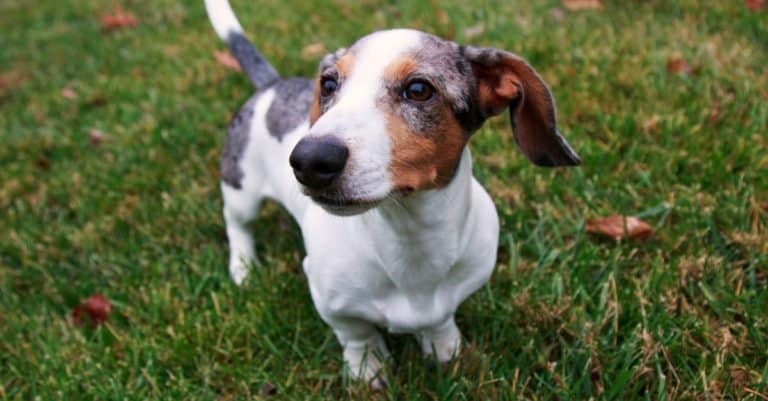
These Dachshunds are really just Dachshunds with a special coat pattern. The pattern is called a dappling pattern, and it appears as lighter markings against a darker-based coat color. A Dapple Dachshund’s dappling pattern may be just one spot, or it may be numerous spots and splashes on their coat. The reason some Dachshunds develop this dapple pattern while others do not is due to a genetic mutation.

The dapple gene, also referred to as the merle gene, is mutated in some dogs, creating the dappling pattern, which is then passed on to their offspring. This pattern first received recognition as a variation for the color of a Dachshund in 1885 from the American Kennel Club.

The dapple pattern on these dogs may be a variety of colors, including black, tan, cream, chocolate, blue, silver, red, or piebald. Since Dapple Dachshunds are really just Dachshunds with a special pattern, they share the same friendly personality and spunky nature that a Dachshund displays. Both standard and miniature Dachshunds may have a dapple pattern.

Watch A-Z-Animals on YouTube

Owning a Dapple Dachshund: 3 Pros and Cons

Pros!Cons!
Loving: These Dachshunds can be very friendly and loving with the people in their family.May bark a lot: These Dachshunds may bark quite a bit. Their bark is also very loud and deep, which can be disturbing to people in the home or neighbors.
Apartment friendly: These Dachshunds’ smaller size and lower activity needs make this dog a good choice for individuals living in an apartment.Can be jealous: Due to the very close bond these Dachshunds form with their primary owner, they can become very jealous when their owner’s attention is directed at someone else. They may snap at the people they are jealous of.
Easy to groom: These Dachshunds require minimal grooming compared to other breeds.Greater health concerns: Since the dapple pattern is caused by a genetic mutation, these Dachshunds may be more susceptible to medical problems.
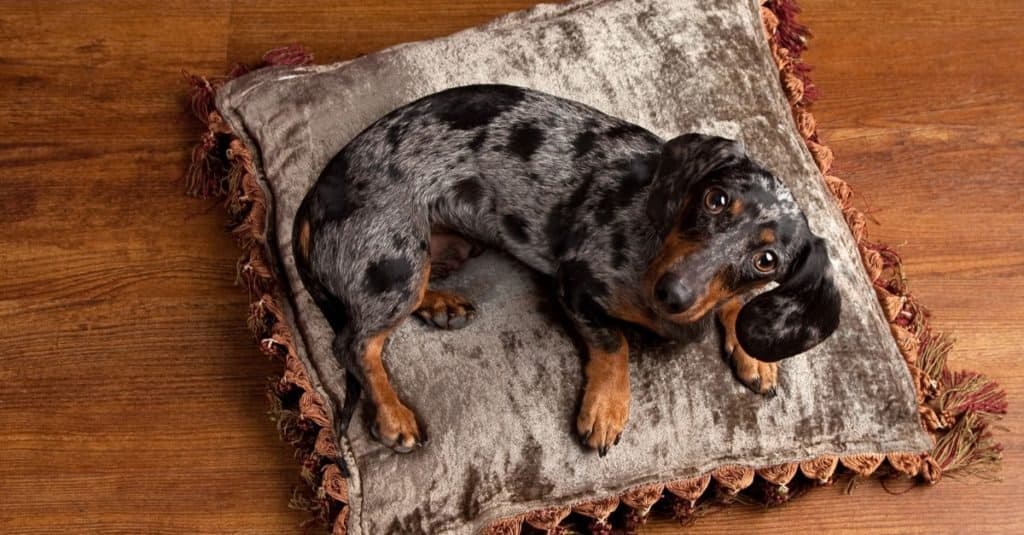
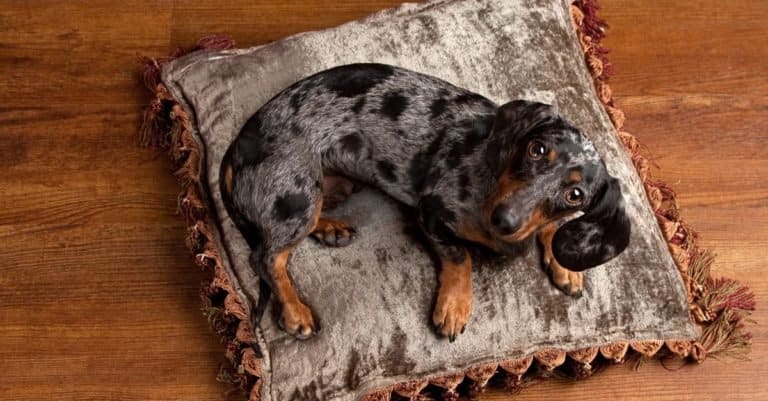
Beautiful silver and black Dapple Dachshund looks up at the camera from his bed on a silver pillow.

Beautiful silver and black Dapple Dachshund looks up at the camera from his bed on a silver pillow.

Evolution and Origins

The dachshund arrived in Germany during the 16th century, and it was there that the dapple dachshund breed was first identified. Although they were larger than the modern dapple dachshund, they were still small dogs whose purpose was to track, dig, and aggressively bark at badgers until their owners arrived.

A Dapple Dachshund is a type of Dachshund that has a distinct dapple pattern on its fur, which is the result of a genetic mutation. The color of a Dapple Dachshund’s coat can vary and may include shades such as chocolate, chocolate and tan, cream, black and cream, black and tan, piebald, red, silver, and blue.

The dachshund was originally developed in Germany centuries ago for the purpose of hunting badgers. The name “dachshund” is derived from the German words “dach” meaning badger, and “hund” meaning dog.

The three variations of a dachshund — smooth-coated, wire-haired, and long-haired — were developed at different points in history.
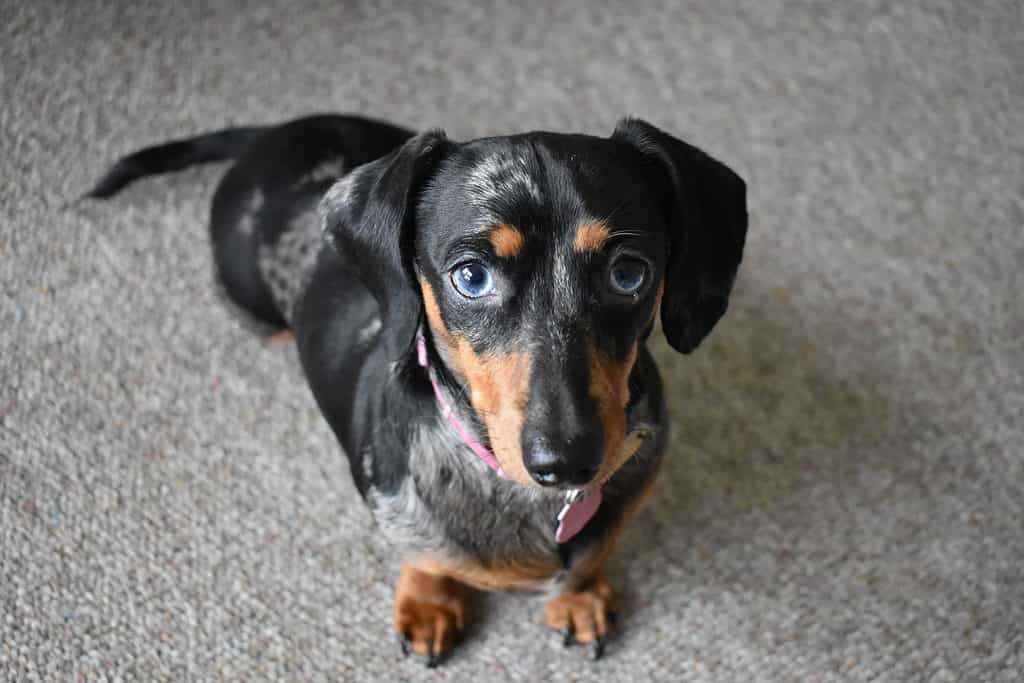
Dachshund With Blue Eyes

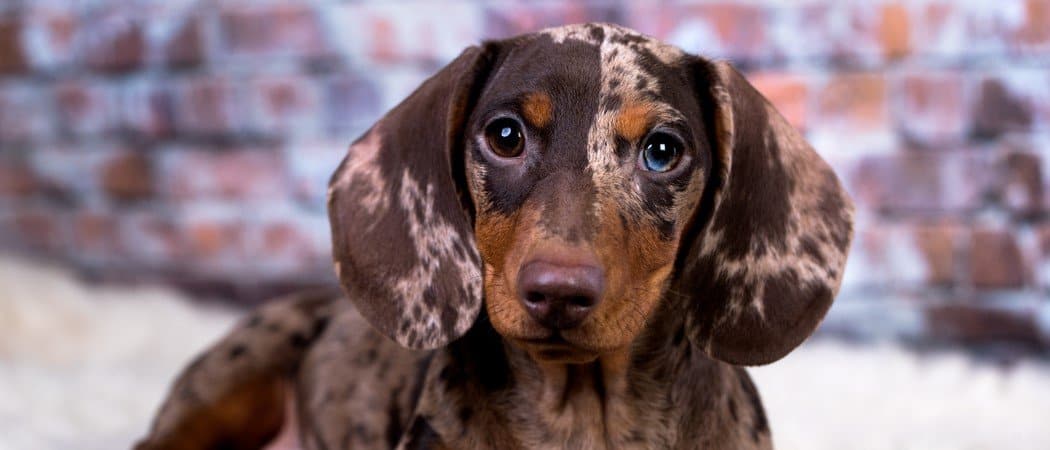
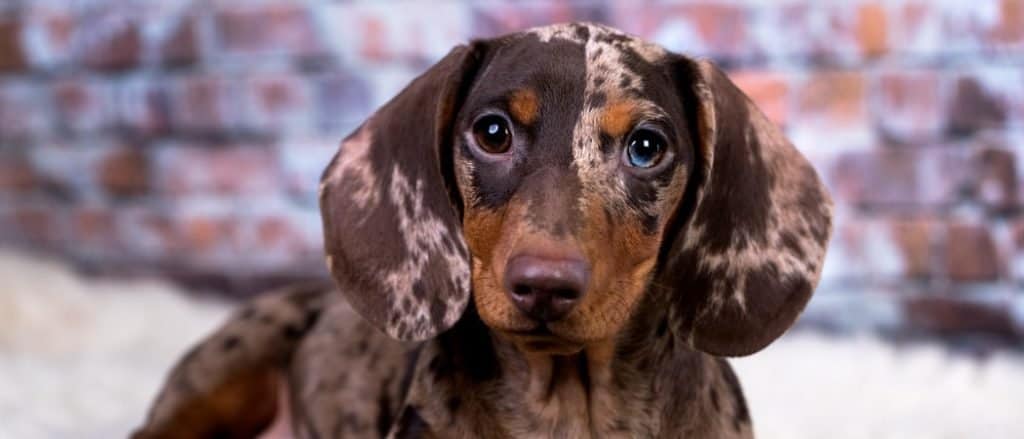
A dappled dachshund with blue eyes.

Size and Weight

Dapple Dachshunds come in two different sizes. These dogs usually weigh between 16 and 32 pounds and are between 8 and 9 inches tall. Miniature Dachshunds are much smaller and only weigh up to 11 pounds. Miniature Dachshunds are typically between 5 and 6 inches tall.

Common Health Issues
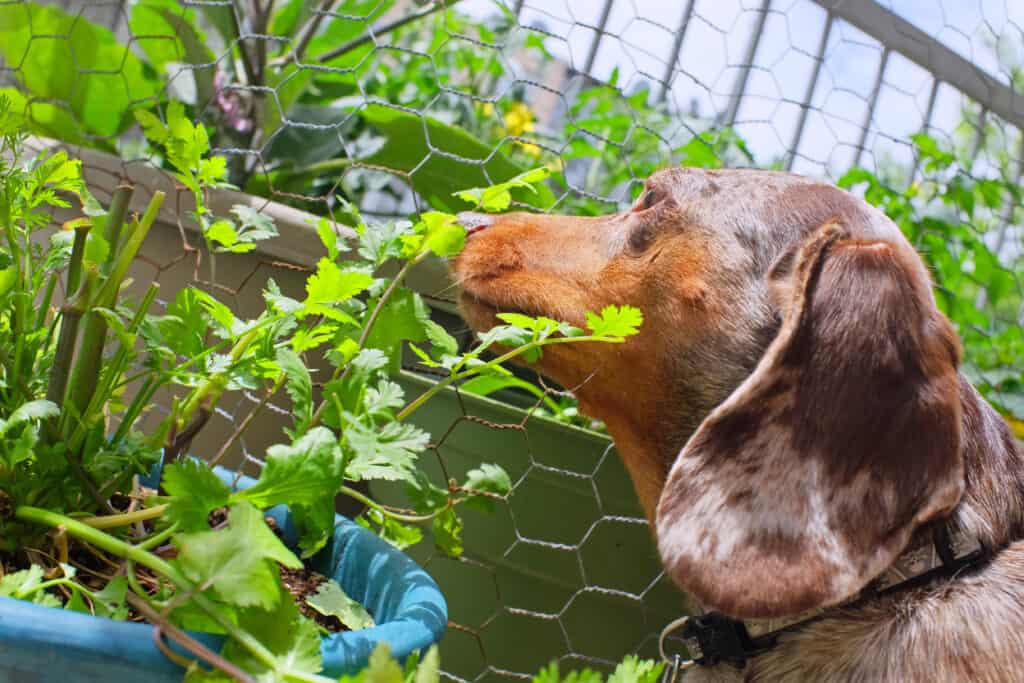
dog eating cilantro

It is important that you follow up on health issues with your dapple dachshund, as they are more susceptible to health issues.

Single Dapple Dachshunds are not generally more likely to develop health issues than standard Dachshunds, but Double Dapple Dachshunds — resulting from breeding two Dapples — are at significantly higher risk for serious health problems. The mutation that causes the dappling pattern is responsible for a number of conditions that could make a Dapple Dachshund unhealthy and result in higher vet bills and stress levels for its owners.

Some potential health concerns linked with the dapple pattern include skin cancer, eye issues, and hearing loss. Double Dapple Dachshunds, the result of breeding dapples, are at an even greater risk for these issues.

In addition to the potential problems tied to the dapple mutation, this breed may also suffer from other concerns common to genetically normal Dachshunds. A longer body shape leads to Intervertebral Disc Disease, a very painful disease that may even cause paralysis.

As a review, some potential health issues these Dachshunds may face include:

  • Skin cancer
  • Hearing loss
  • Vision loss
  • Intervertebral Disc Disease

Temperament and Behavior

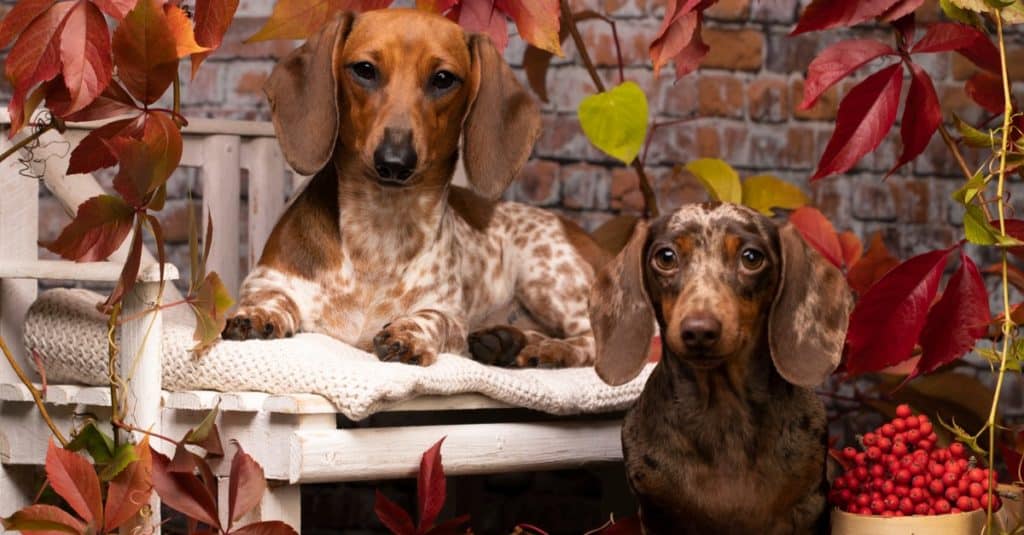
Two Dapple Dachshunds playing on a chair.

Two Dapple Dachshunds are playing on a chair.

The temperament of Dapple Dachshunds is much like any other standard Dachshund. They aim to keep their family safe from strangers and can make good watchdogs. Dachshunds often form very close bonds with one member of their family and may become jealous when that person’s attention is dedicated to someone else. In some cases, this may lead to barking or other potentially aggressive behaviors.

However, dapples also have traits that can make them very good family pets. They can be loving and playful with the members of their family. If they are raised around children, they can also make good companions for a child.

How to Take Care of a Dapple Dachshund

Keep the medical concerns, nutritional recommendations, exercise requirements, and other factors in mind as you plan to care for your Dachshund.

The Best Dog Food for Dapple Dachshunds

Dapples should be fed high-quality food. You should work closely with your veterinarian to determine the ideal food and serving size for your dog, since it is very important to make sure that this breed does not become overweight. Obesity can place excess strain on their already elongated back, causing a herniated disc, which can be quite painful.

Dapple Dachshund puppies have very small stomachs, requiring smaller meals than adults. Aim to feed puppies under six months in small quantities, three or four times each day.

Maintenance and Grooming

Dapple Dachshunds shed moderately, so they are not considered a hypoallergenic breed. The exact maintenance your dog will require can vary based on its coat type. Some of these Dachshunds have short and smooth coats that require minimal grooming, while long-haired Dachshunds will need to be brushed regularly.

It is also essential to make sure you brush your dog’s teeth to prevent plaque and tartar buildup or dental disease. Their nails should also be trimmed, and their ears should be kept clean.

Training

Dachshunds can be very stubborn and difficult to train. They are also known for being independent. So, while this breed is intelligent, they are not the easiest to train. When training your dog, choose a positive training method that uses rewards in order to achieve the best results possible. Using punishments or being overly harsh will not go over well with Dachshunds and will not yield the results you’re looking for.

Exercise

While these Dachshunds are not a very high-energy breed, making sure they get sufficient exercise is important for their health. You also want to keep their muscles strong enough to support their long backs. Aim to take at least two walks each day with your Dachshund to give them the exercise they need. You can also play with them inside the house for additional exercise.

Puppies

Before purchasing a puppy from a breeder, make sure you are working with a reputable breeder. You do not want to purchase a Double Dapple Dachshund puppy, as these dogs have more health problems. Breeders who interbreed Dapples are considered unethical.

You should also make sure your home is ready for the puppy before you pick him or her up. Puppy-proof the spaces where the dog will be allowed and purchase a crate, food, toys, treats, and all the other supplies your dog will need. You will also want to find a veterinarian and schedule a check-up shortly after the dog comes home.
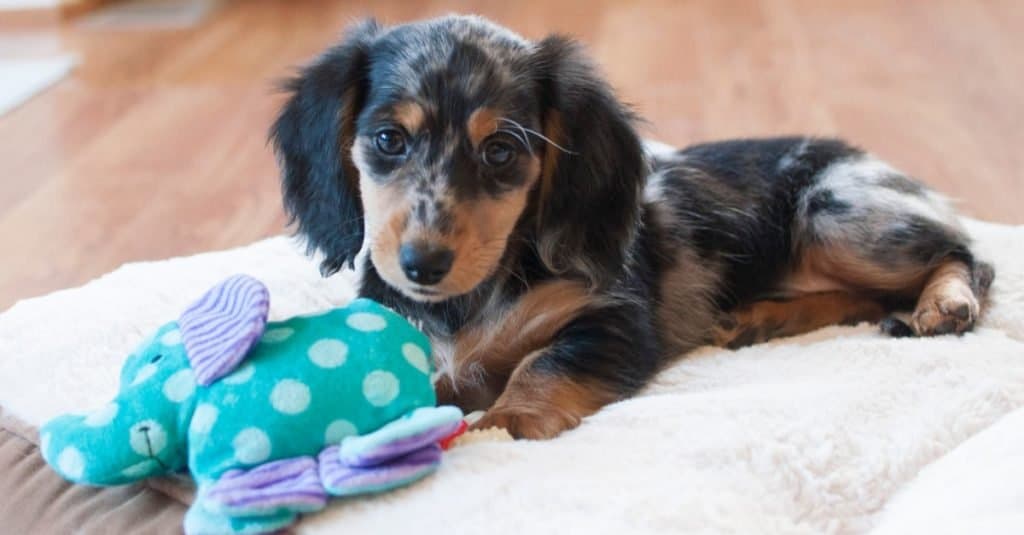
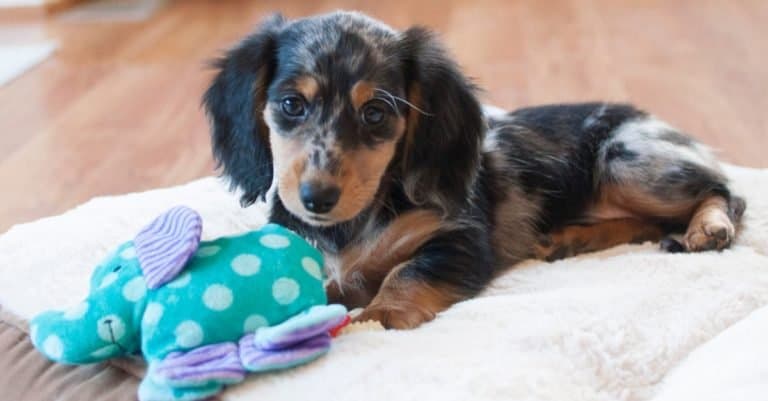
Longhaired Miniature Dapple Dachshund Puppy laying on dog bed with toy.

Longhaired Miniature Dapple Dachshund Puppy lying on a dog bed with a toy.

Dapple Dachshunds and Children

These Dachshunds can be good family pets. However, they will do best when they grow up around the children in the family, as they are playful and affectionate. However, they may not be very accepting of a child’s friends who come to visit and may bark or snap at unknown children.

You should also closely supervise any children when they are around a dog. The dog’s back could easily be injured by a child mishandling it.

Colors

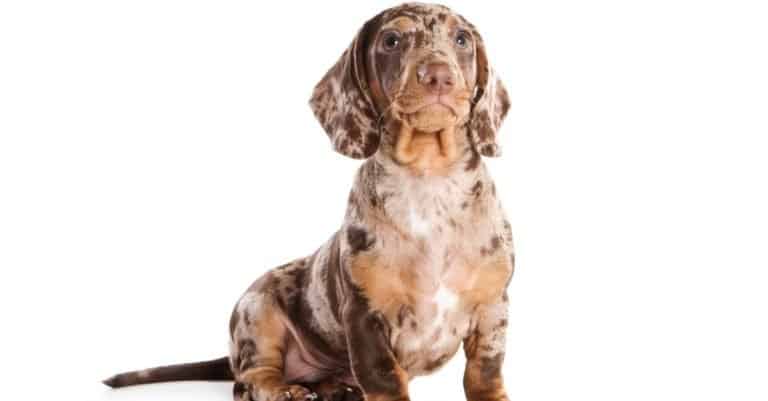
While these Dachshunds all have a dapple pattern on their fur, there is still some variability in the different colors of their coat or the dapple pattern itself. The base of the coat is a darker color than the dapple pattern. Some of the different colors you may see on these Dachshunds include:

  • Chocolate
  • Chocolate and Tan
  • Cream
  • Black and Cream
  • Black and Tan
  • Silver
  • Red
  • Blue
  • Piebald

Keep in mind that, like standard Dachshunds, Dapples may be short-haired or long-haired, all sharing color patterns.

Similar Dog Breeds

Basset Hounds, Drevers, and Teddy Roosevelt Terriers are three breeds that are similar to these Dachshunds.

  • Basset Hound: Basset Hounds and these Dachshunds both have very long bodies. Both breeds are also very easy to groom. Basset hounds are much larger than Dapple Dachshunds, though. Males have an average weight of 57.5 pounds compared to the 24-pound average weight of a standard Dapple Dachshund.
  • Drever: Drevers and Dapple Dachshunds can both be sensitive and affectionate dogs. Both breeds can also do well in living in an apartment. Drivers are often seen as more family-friendly dogs than a Dapple Dachshund.
  • Teddy Roosevelt Terrier: Teddy Roosevelt Terriers and these Dachshunds are both hunting dogs. Both breeds are also known to bark a lot and can make a good watchdog. However, a Teddy Roosevelt Terrier is much easier to train than a Dapple Dachshund.

Famous Dapple Dachshunds

Check out some of these Dachshunds who have made it ‘big’ on Instagram!

View all 450 animals that start with D

Sources

  1. American Kennel Club / Accessed June 9, 2021
  2. Dog Time / Accessed June 9, 2021
  3. The Happy Puppy Site / Accessed June 9, 2021
  4. Your Purebred Puppy / Accessed June 9, 2021
  5. Perfect Dog Breeds / Accessed June 9, 2021
  6. K9 Web / Accessed June 9, 2021
  7. All Things Dogs / Accessed June 9, 2021
Austin S.

About the Author

Austin S.

Growing up in rural New England on a small scale farm gave me a lifelong passion for animals. I love learning about new wild animal species, habitats, animal evolutions, dogs, cats, and more. I've always been surrounded by pets and believe the best dog and best cat products are important to keeping our animals happy and healthy. It's my mission to help you learn more about wild animals, and how to care for your pets better with carefully reviewed products.
Connect:

Thank you for reading! Have some feedback for us?


Dapple Dachshund FAQs (Frequently Asked Questions)

The price to purchase a Dapple Dachshund from one of the breeders in your area can vary. Breeders may charge anywhere between $400 and $1,500. Due to their unique markings, Dapple Dachshunds are often more expensive than a standard Dachshund. Take care to choose a reputable breeder and make sure they don’t breed Double Dapple Dachshunds, as this is unethical due to the health risks associated with these dogs. You may also be able to find a Dapple Dachshund up for adoption through a shelter or rescue organization. The price to adopt will likely be just a few hundred dollars.

As you are considering the price to adopt a Dapple Dachshund or purchase one from one of the breeders in your area, keep in mind that you will also need to take care of the dog for the rest of their lives. Dapple Dachshunds have a lifespan of 12 to 16 years, so you are making a long commitment when adopting one. You’ll need to budget at least $1,000 to $1,500 for the first year you own the dog to cover veterinary care, food, and all the other supplies you’ll need and at least $500 to $1,000 for each following year of ownership.