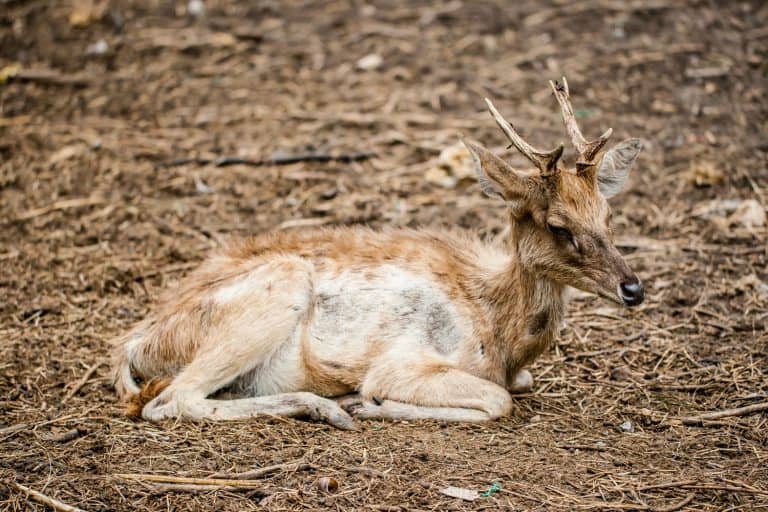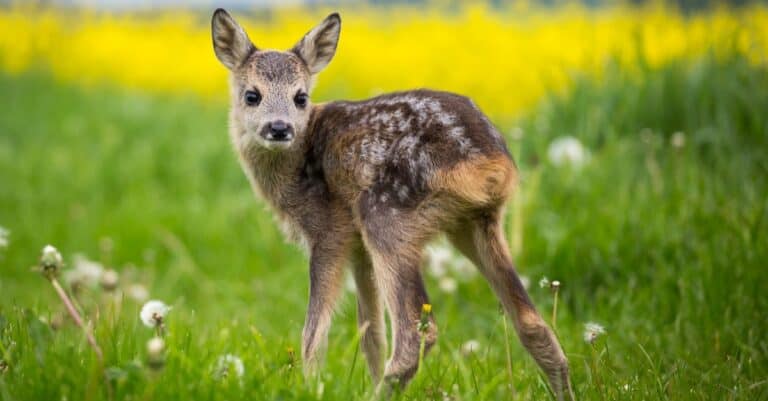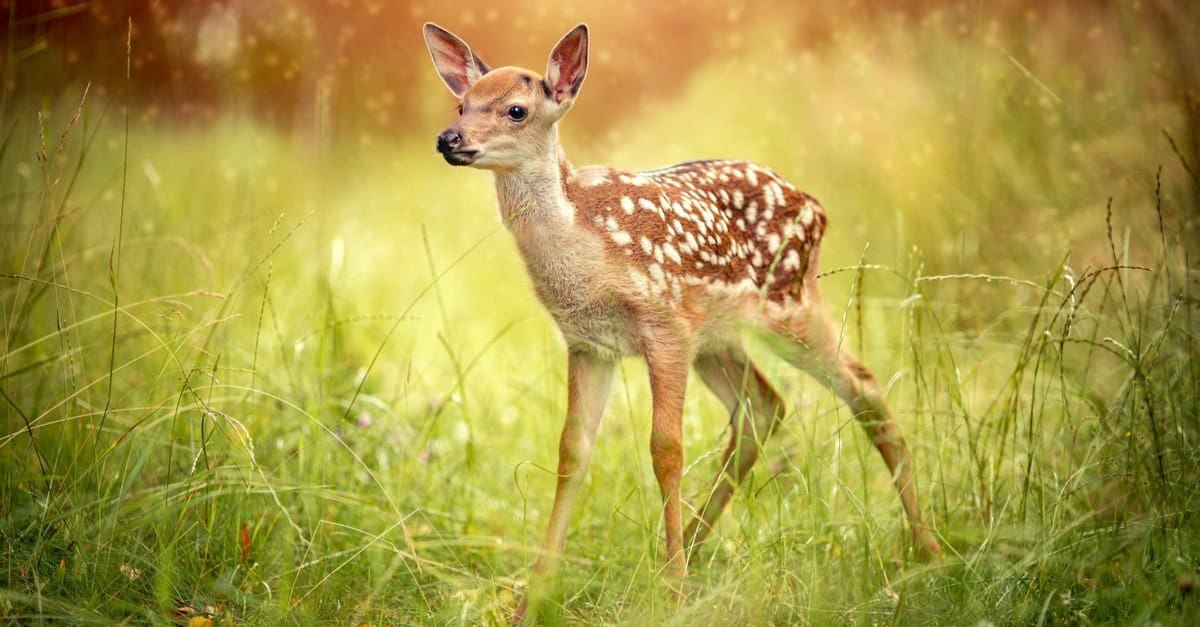

Baby deer, also called fawns, are some of the most adorable forest creatures on the planet. However, did you know that newborns only weigh as much as a human baby, or that they only have four teeth when they are born? Check out this article to learn six incredible facts about baby deer and see six sweet pictures.
#1: A Newborn Baby Deer Only Weighs Up to 8 Pounds
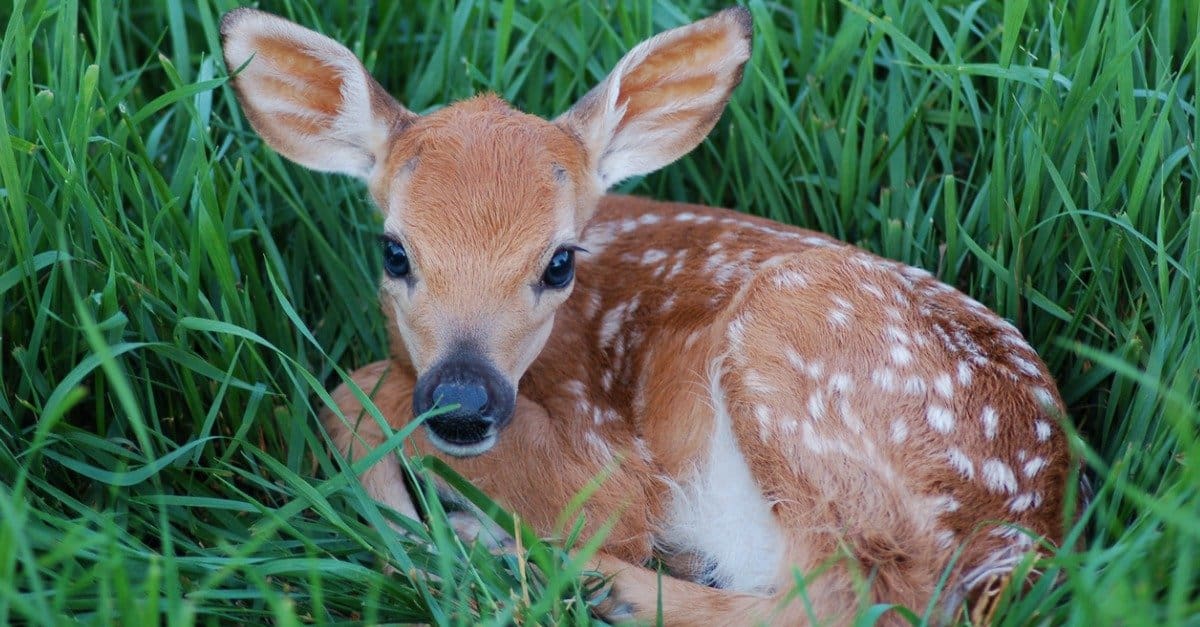
Baby deer only weigh about as much as a human baby at birth.
©iStock.com/nearandfar
White-tailed deer babies are born in May or June. They only weigh around 6 to 8 pounds at birth, which is the same size as most human babies. However, they quickly put on weight, reaching around 10 times their birth weight by their first winter.
Mothers nurse their newborn fawns about four times a day and continue nursing until the babies are around four months old. When fawns are about two weeks old, they begin browsing and learning from their mothers which vegetation to eat.
#2: Baby Deer Are Left Alone While Their Mothers Search for Food
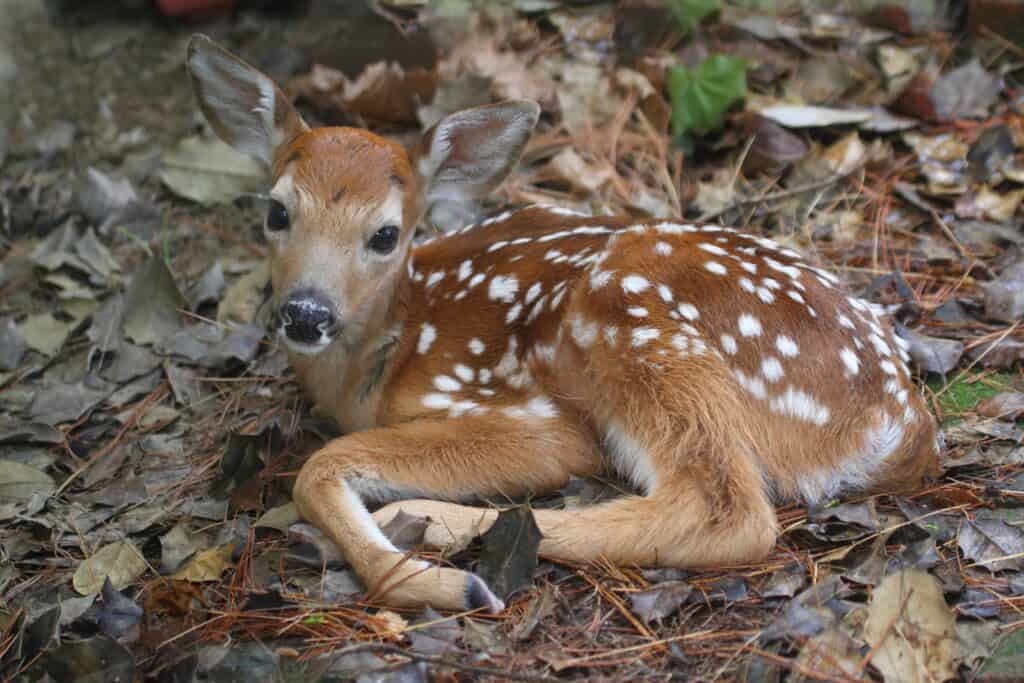
A mother deer is rarely found near her newborn, so her presence will not attract predators.
©Steve Byland/Shutterstock.com
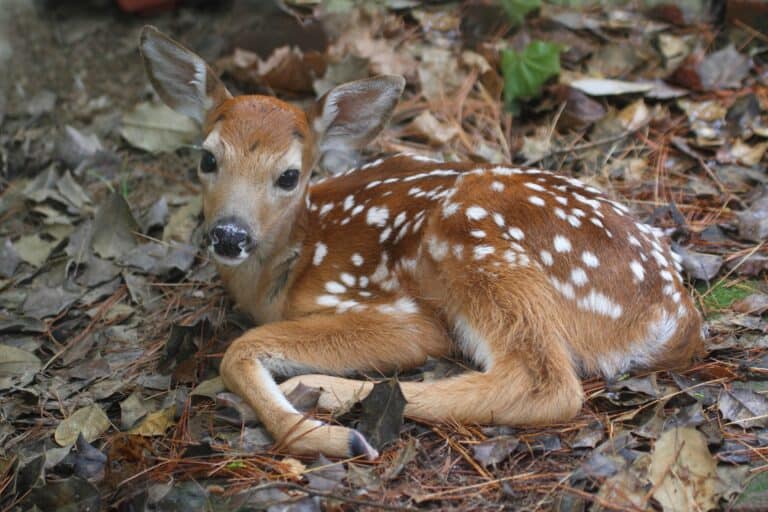
If you ever see a baby deer alone in the woods, as long as it appears uninjured and is lying quietly, no human intervention is needed. Baby deer instinctively lie motionless to avoid attracting attention. Their white-spotted, reddish-brown coats blend in with their surroundings. They also have very little scent, as their scent glands have not fully developed. This adaptation helps them to hide from predators.
Does often leave their babies in tall grass or beneath bushes where the babies can hide while the mother forages for food. The does do not remain too close in order to avoid attracting predators to their location. However, the mother returns periodically to nurse and check on her baby. Wildlife officials warn against touching baby deer, but a mother deer will not reject her baby if it smells like humans or pets.
#3: Female Deer Babies Stick Closer to Their Mothers Than Males
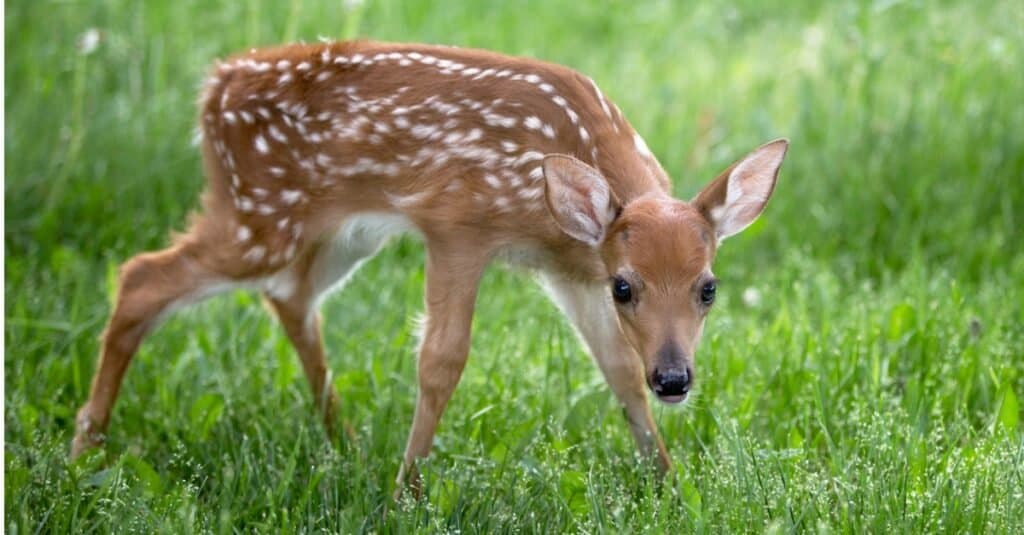
Male deer leave their mother’s territory by about one year old, while females typically establish their own home ranges close by.
©iStock.com/Lynn_Bystrom
Deer usually travel in herds consisting of related does and their offspring. Older bucks may join the herd, or they may form their own bachelor herds. While deer fawns rely on their mother for survival for their first few months of life, they must eventually venture out independently.
Male fawns generally leave their mothers to set up their own territories after about a year. However, if they do not leave on their own, the mother will usually drive them away before giving birth to new fawns. Females may also leave their mothers after about a year, but they typically stay close by, establishing their own home ranges near their mother’s while the males disperse.
#4: Deer Can Have Twins and Triplets
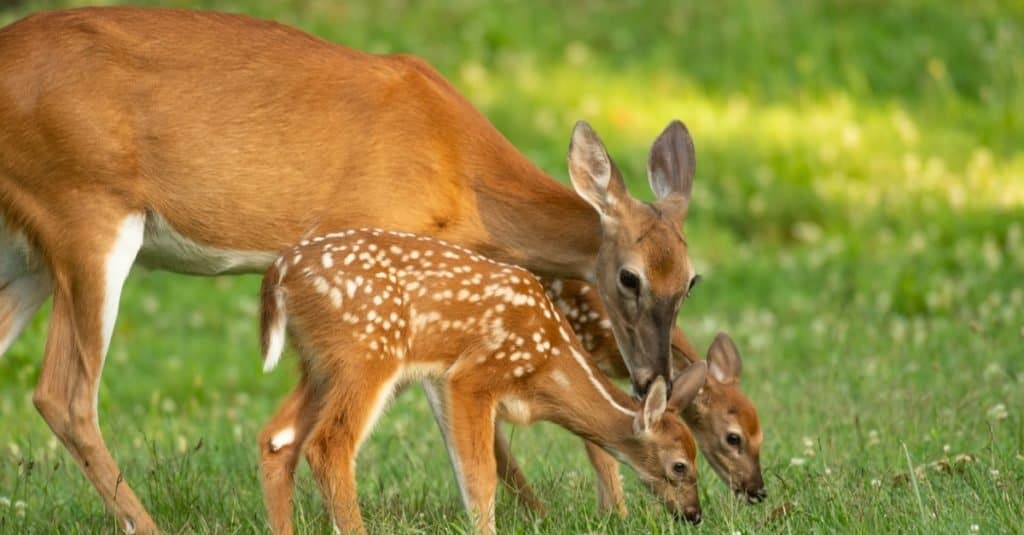
Most pregnant does over the age of two give birth to twins.
©Tony Campbell/Shutterstock.com
First-time mothers generally give birth to just one baby. However, older does give birth to twins, triplets, and rarely, quadruplets. In a study of 2,543 pregnant does, researchers found that 71% of the does were pregnant with twins, 8% were carrying triplets, and 0.47% were pregnant with quadruplets. Only one doe was carrying quintuplets.
Larger litter sizes are more common in habitats with abundant food, good soil, and proper herd management. In poor habitats or areas with higher deer populations, does that do not get enough nutrition may not be able to carry multiple fawns to term.
#5: Baby Deer Are Born with Only Four Teeth
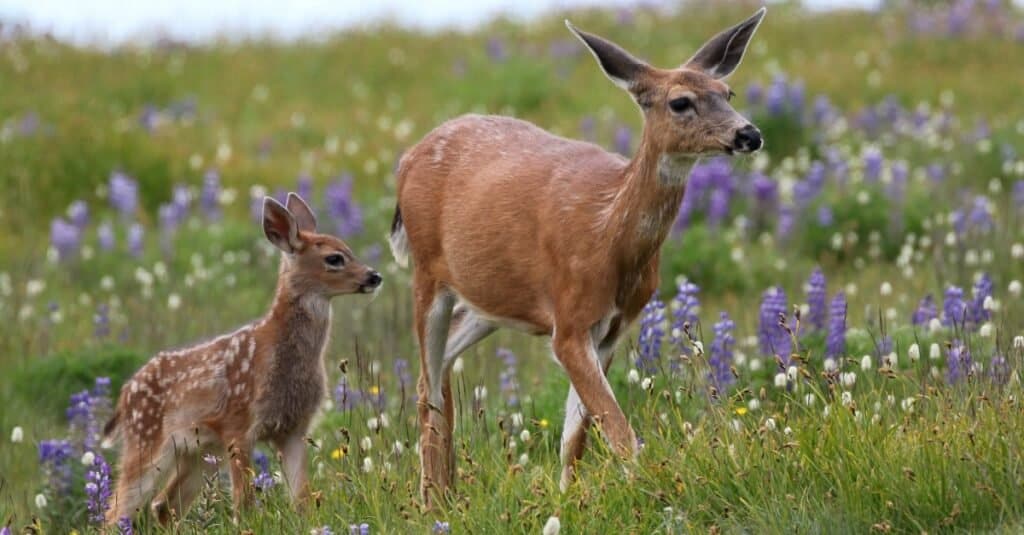
Fawns are born with four teeth in their lower jaw.
©iStock.com/randimal
When baby deer are born, they only have four teeth in their lower jaw and none in their upper jaw. They will also develop incisors and premolars, but these are baby teeth that will be replaced. By the time they reach 2.5 years of age, fawns will have a complete set of adult teeth.
However, deer never grow teeth in their upper jaw. They only chew their food enough so that it can be swallowed. Then, they regurgitate part of the food and use their molars and premolars to grind it down further to complete digestion. Since deer are herbivores, they only eat plant matter, so they don’t need sharp teeth.
#6: Baby Deer Are Surprisingly Fast
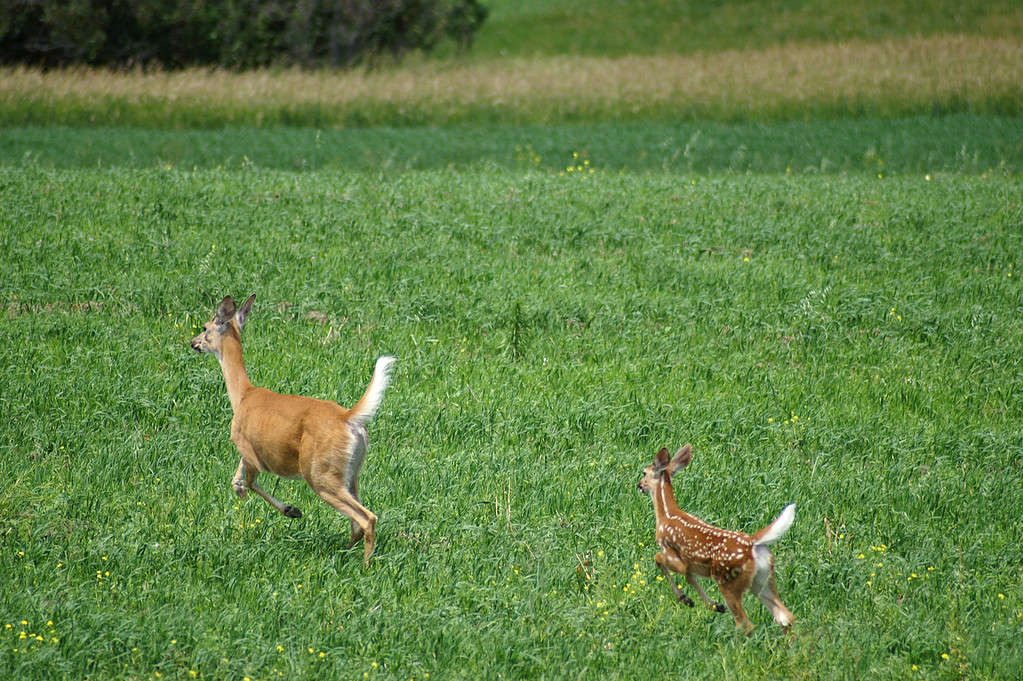
Deer can run at speeds up to 40mph.
©Mike Coddington/iStock via Getty Images
A newborn baby deer might seem completely helpless, but it can stand, walk, and slowly run within a few hours of birth. By the time it is 5 days old, it is able to quickly jump up and run from danger. However, by the time a fawn is about two weeks old, it can outrun most predators and even most human men. Adult deer can easily run between 35 and 40mph for several miles, and their little fawns are never far behind.