
Quick Take
- The same jaws that can take down large prey are also capable of an astonishingly delicate move, and the reason why has nothing to do with restraint. See the gentle jaw technique →
- A hidden structure inside a crocodile's mouth is the key to keeping up to 19 babies safe during transport, and most people have never heard of it. Discover the throat pouch →
- Mother crocodiles make only one trip from the nest to the water, and the stakes for getting it wrong are higher than you'd expect. Explore the single-trip strategy →
- Baby crocodiles actually signal their mother before she ever opens her jaws, and the way they do it might surprise you. Hear how hatchlings signal mom →
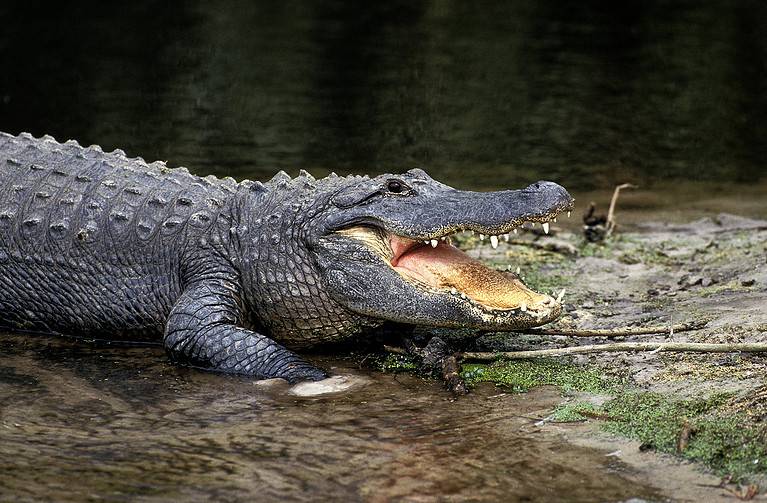
Crocodiles are not animals that many would describe as gentle. Surprisingly, when it comes to their young, female crocodiles are incredibly so. Thanks to their maternal instincts, crocodiles can carry their babies in their mouths to safety. It is truly the most delicate move any crocodile makes.
Crocodiles Have Maternal Instincts
Crocodiles are often portrayed as killing machines without feelings. This could not be further from the truth. Female crocodiles have a maternal side that is rarely seen in reptiles, and this is evident as soon as the eggs are laid.
One of the biggest demonstrations of those maternal instincts can be seen via Nature on PBS. The YouTube clip shows how mother crocodiles return to the nest after their babies call to them. Once all the babies have hatched, the mother crocodile will gather them in her mouth and carry them to the water.
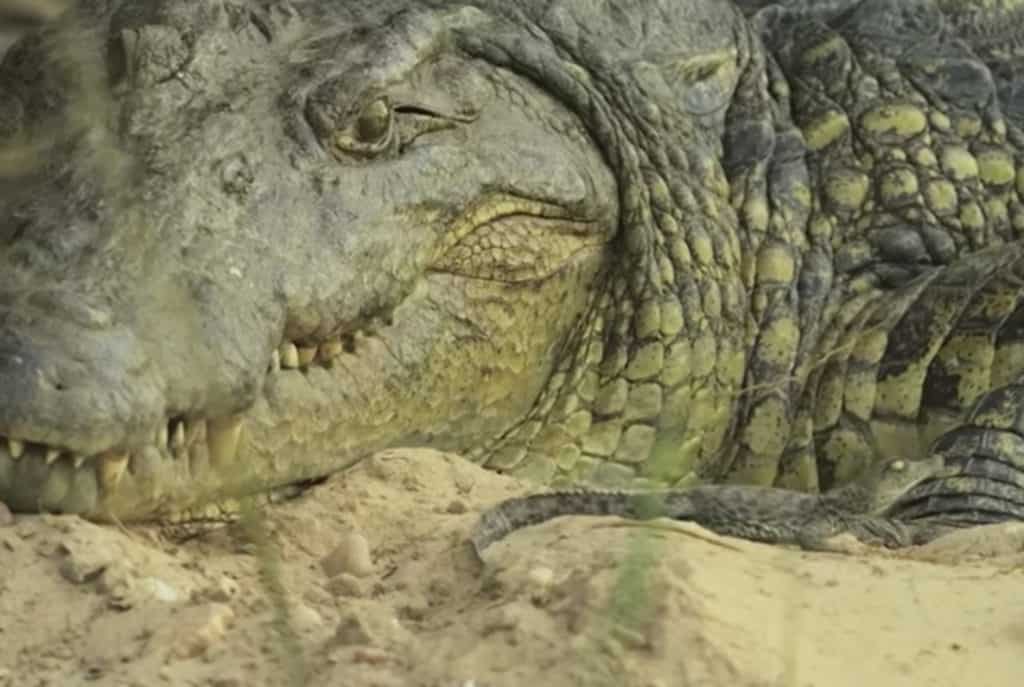
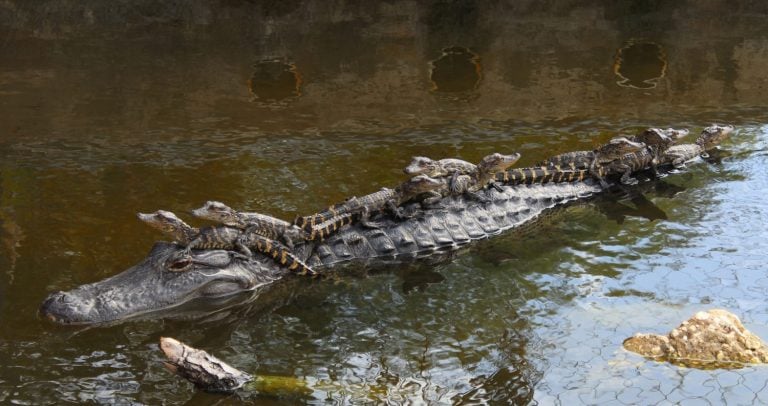
Crocodile mothers are very protective of their babies.
© – Original
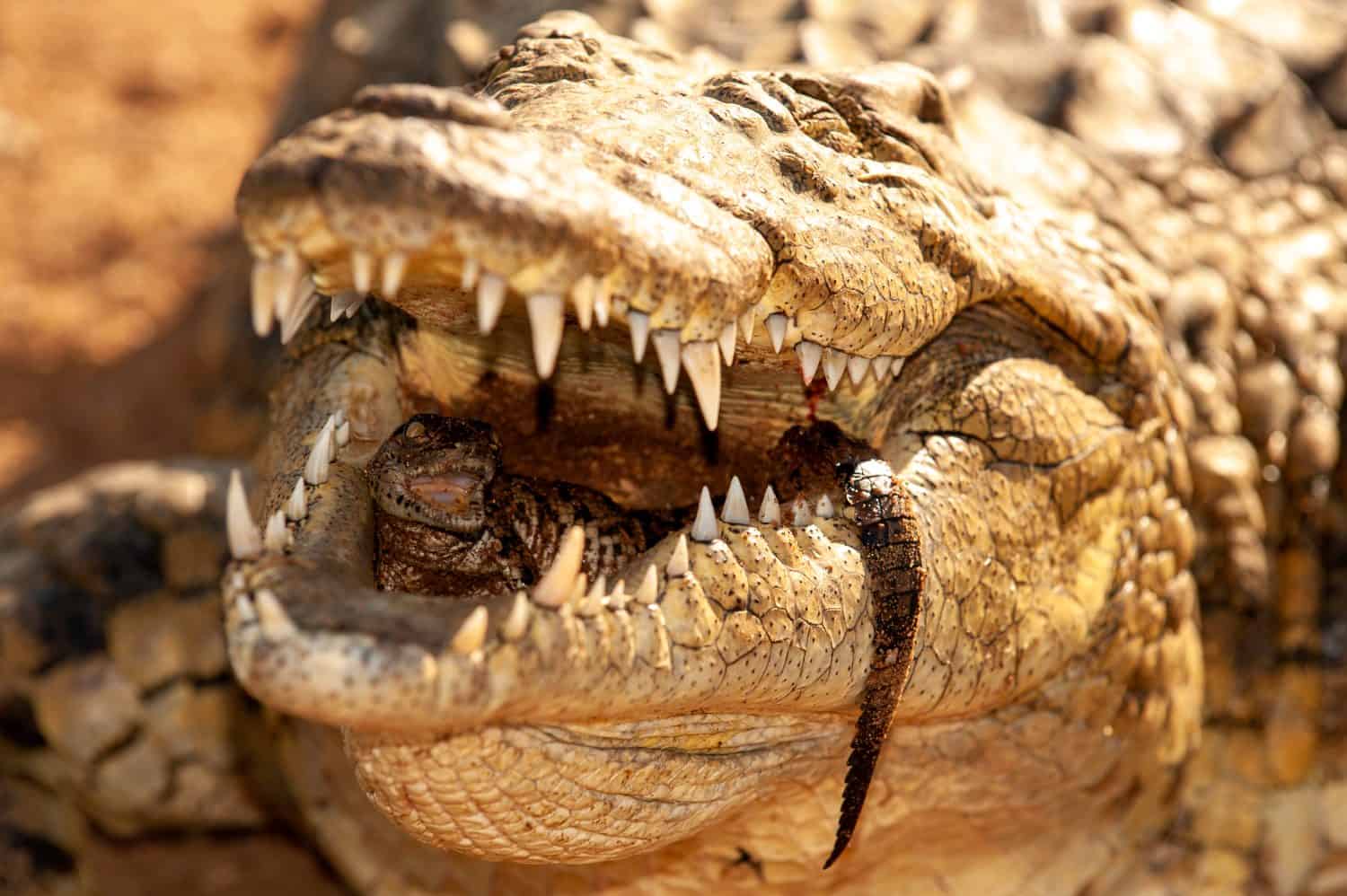
As each baby is gathered, they are kept in place in a throat pouch. This pouch expands to carry all the hatched babies at once. But keeping babies in place can be difficult. Therefore, the teeth act as a deterrent to escape.
The teeth do not harm the babies. The entire process is safe for the little ones, as they hitch a ride with their mom to begin their lives in their watery home.
How Crocodiles Gather and Carry Babies Without Harming Them
When crocodile babies hatch from their eggs, they begin to chirp. This chirping is heard by the mother crocodile, who returns to the nest to carefully dig out her babies with her snout. Once the babies are unearthed, the mother crocodile shows her gentle, maternal side.
On land, the baby crocodiles are unprotected. They need to be moved to the water. This is orchestrated by the mother, who will carry them in her throat pouch.
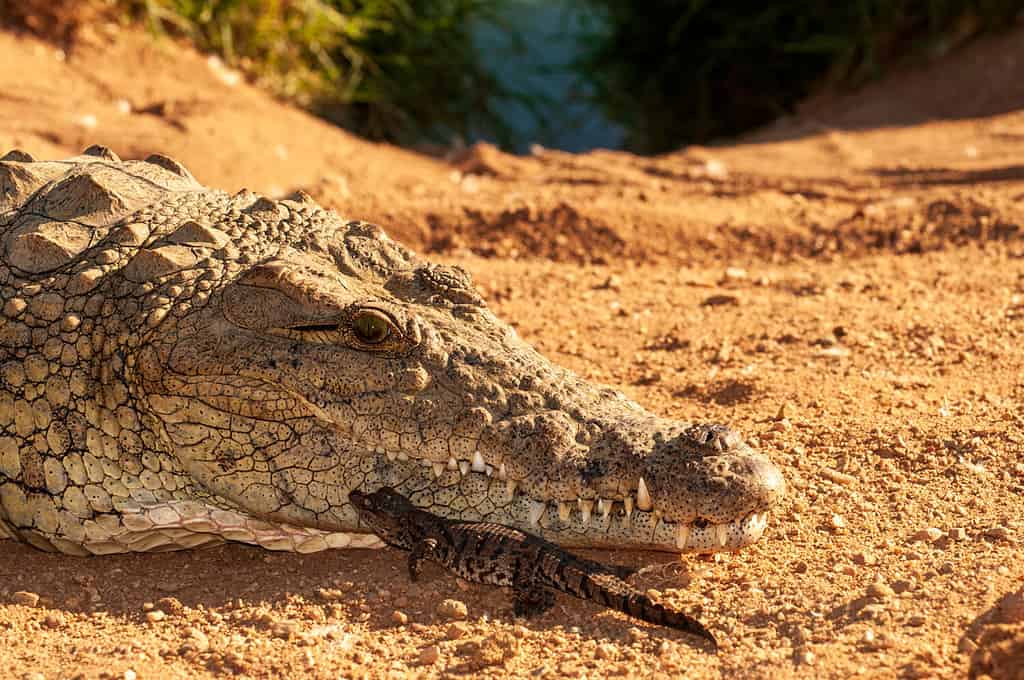
The throat pouch allows crocodiles to carry their babies without harming them.
©Catchlight Lens/Shutterstock.com
Given how strong the mother crocodile’s jaws are, it seems impossible that she can gather her babies in her mouth without harming them. But crocodiles are not harmed in the transport. This is because the throat pouch is located beneath the crocodile’s massive teeth. Her mouth remains open as she moves the babies and cannot close it while they are in the throat pouch. Then, once the mother’s mouth is in the water, she releases the babies into their watery home, where they remain under their mother’s care until they are old enough to care for themselves.
How Many Baby Crocodiles Can Be Carried in the Throat Pouch?
While crocodiles have massive mouths capable of targeting large prey such as baby elephants and rhinos, their throat pouch is smaller but still spacious enough to carry multiple babies at once. The throat pouch is smaller but still allows multiple babies to be carried at once. But just how many can be carried at one time?

It is estimated that 15 baby crocodiles can be transported in the throat pouch.
©Arunee Rodloy/Shutterstock.com
It is estimated that crocodiles can carry up to 15 baby crocodiles at a time. Some reports state that up to 19 babies have been witnessed in the throat pouch. The reason so many can be transported from land to the water at a time is that when the throat pouch is used, the jaws cannot be closed. This creates more space in the mouth, allowing the babies to be gently brought to the water, where they will learn to hunt and be protected.
Why Crocodiles Do Not Leave Any Babies Behind After They Hatch
Crocodile babies are not strong and fearsome when they hatch. Instead, they are delicate and are targeted by predators. Because of this, the mother crocodile does everything in her power to ensure their safety.
After baby crocodiles hatch, the mother’s job is to gather them in her throat pouch and bring them to the water. This process does not involve multiple trips. Instead, the mother crocodile will gather all of the babies in her pouch before leaving the nest.
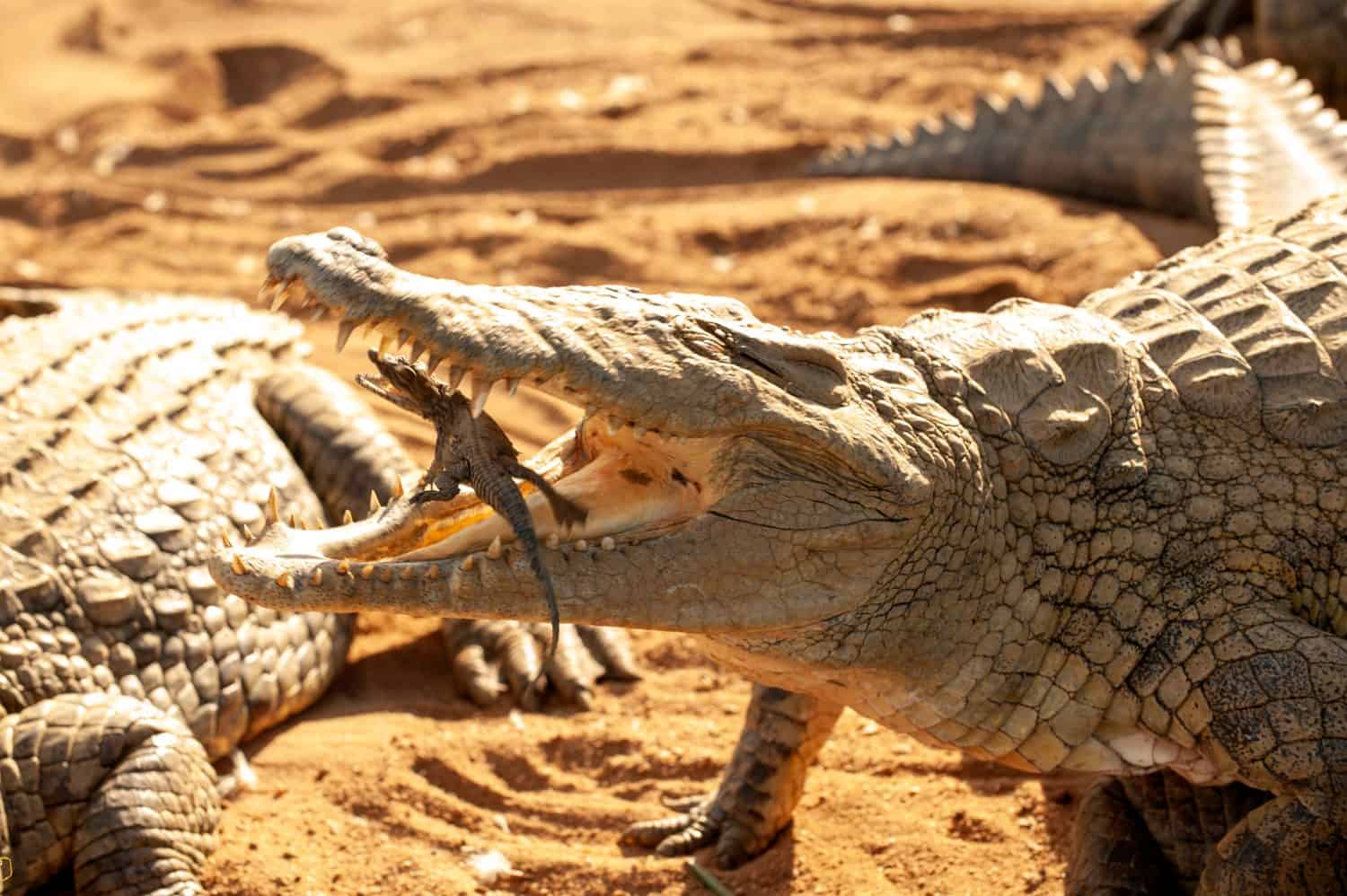
Mother crocodiles will not leave any babies behind on shore.
©Catchlight Lens/Shutterstock.com
The reason the mother crocodile does not leave any behind is that they would be unprotected. The same would happen to the babies left in the water if the mother were to leave them behind to gather more babies in her throat pouch. Therefore, the only choice the mother crocodile has is to gather her babies at once and take them to the safety of the water. Here, they have a better chance of surviving predators and will remain under their mother’s care for several months to a few years, until they can defend themselves.