
Baby chimpanzees are some of the cutest babies in the animal kingdom. Newborns are only around 4 pounds at birth, which is smaller than most human babies. Baby chimps live in family groups in the tropical rainforests, lowland forests, and mountain forests of central and western Africa. Keep reading to learn five more incredible facts and look at some adorable pictures of baby chimps.
#1: Newborn Chimpanzees Have a White Tuft of Hair on Their Bottoms

The white tufts of hair help other chimps quickly identify the babies.
Newborn chimpanzees are born with a tuft of white hair on their bottoms. According to the Brookfield Zoo, the white tuft of hair is a signal to other chimpanzees that the chimp is still young and helpless. Researchers believe this visual cue prompts older chimps to be more protective and more forgiving of mistakes. The tuft of hair generally darkens when the chimps reach adolescence at around 5 years of age.
#2: Baby Chimpanzees Are Born With Pink Skin
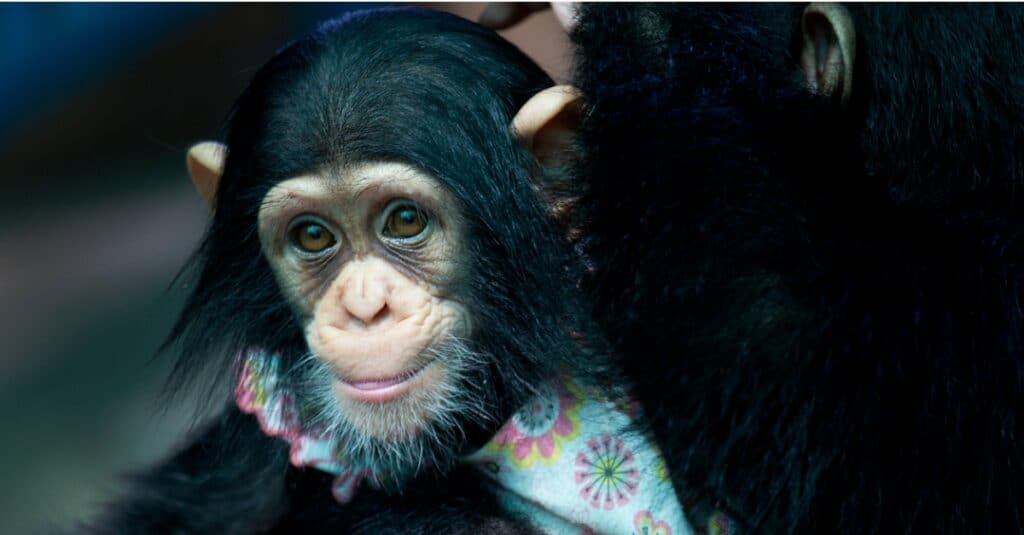
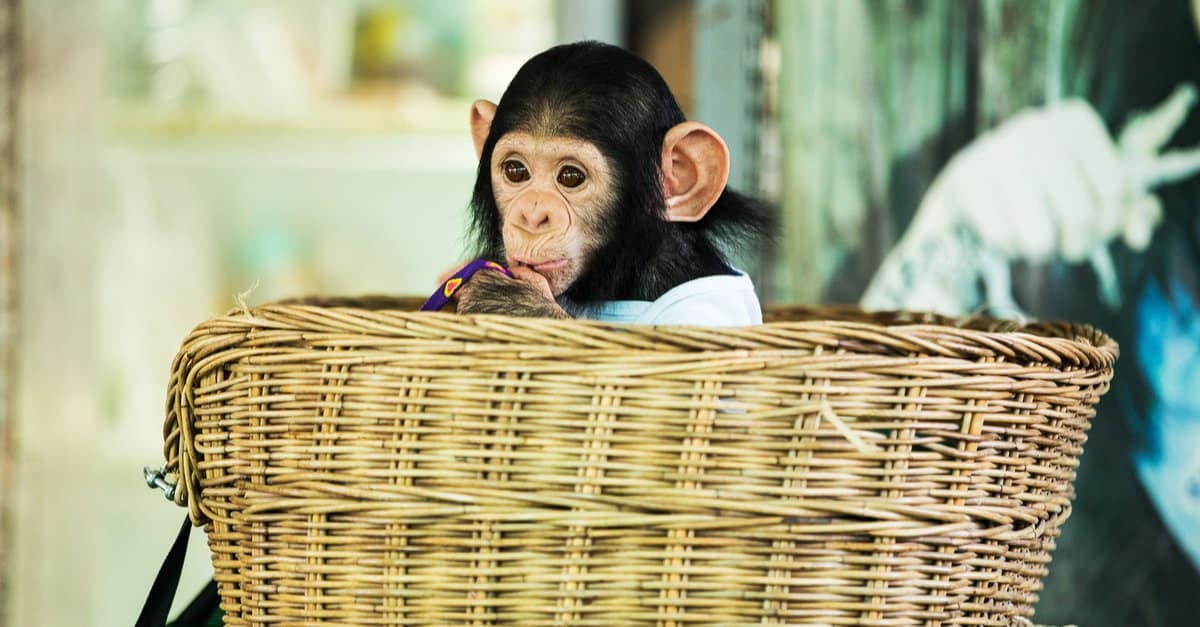
Baby chimps have pink skin visible on their faces, hands, and feet.
©iStock.com/Suthat_Chaitaweesap
Chimpanzees are born with pink skin under their hair, not black or dark brown skin like their mothers. This pink skin is especially noticeable on their face, hands, and feet, as they do not grow hair in those places, even as adults. As young chimps mature, their skin gradually turns darker, and they begin to grow a thicker coat of hair.
#3: Baby Chimps Laugh While Playing
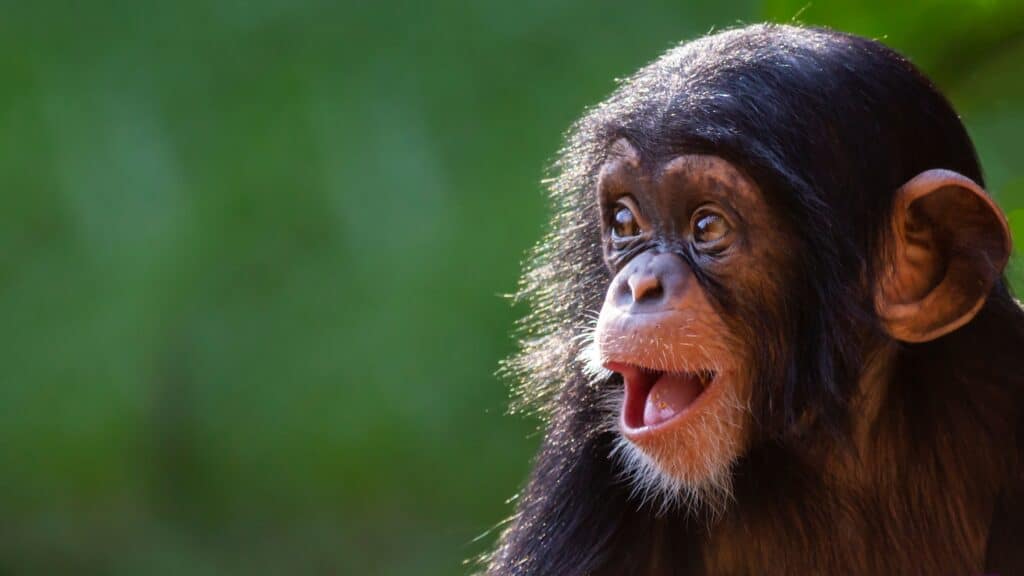
Baby chimps and human babies both laugh while playing.
©Patrick Rolands/Shutterstock.com
There’s no doubt that baby chimpanzees have many similarities to humans, and laughing is one of them. When playing with other young chimps, their mothers, or other family members, scientists have observed chimpanzee babies laughing, hugging, and hand-clapping. Researchers have found that baby chimps laugh similarly to human babies. Whereas human adults laugh on the exhale, babies laugh while inhaling and exhaling. This means that human babies’ laugh patterns are more similar to those of chimps and other apes than to those of human adults.
#4: Baby Chimps Rely on Their Mothers for Transportation Until They Are Weaned
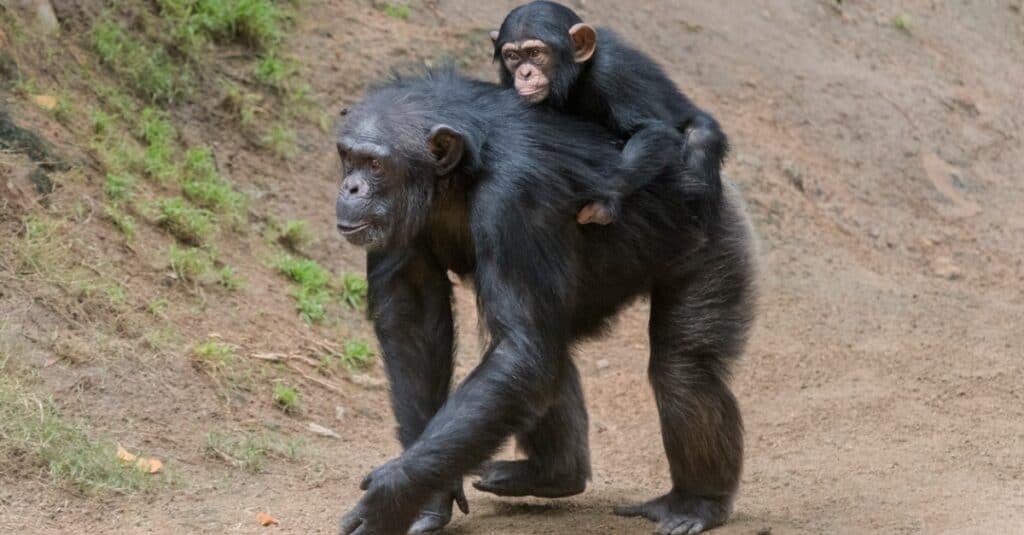
Young chimps ride on their mothers’ backs until they are at least 3 years old.
©iStock.com/JeannetteKatzir
Newborn baby chimps first begin to cling to their mother’s chest soon after birth. As they grow older, stronger, and more independent, they switch to riding on their mothers’ backs. Baby chimpanzees are able to walk quadrupedally at around 5 months old. However, they continue to depend on their mothers for transportation until they are weaned, sometime between 3 and 5 years old.
#5: Young Chimpanzees Stay with Their Mothers for Seven Years or Longer
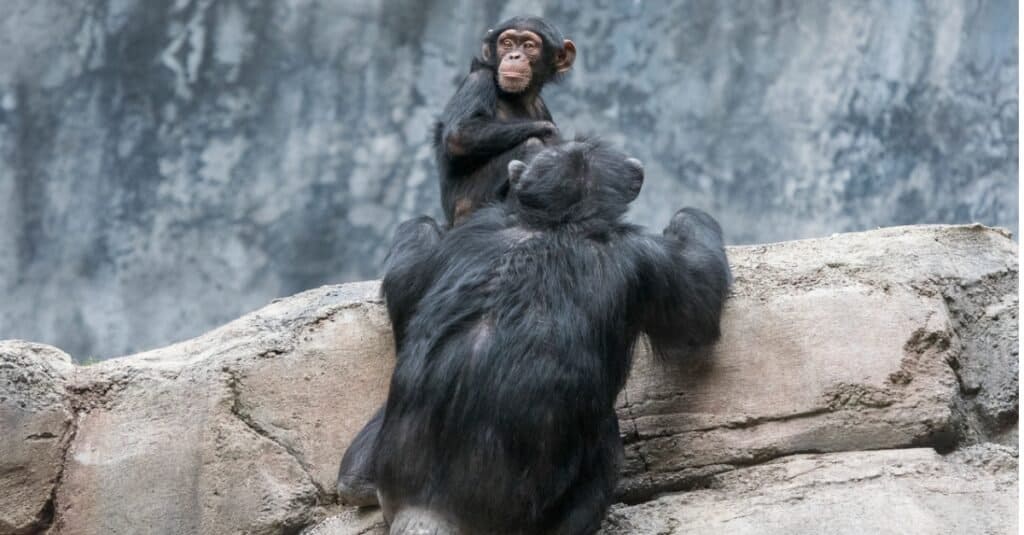
A chimpanzee generally maintains its bond with its mother throughout its entire life.
©iStock.com/JeannetteKatzir
Once baby chimpanzees are weaned, they continue to live with their mothers until at least age 7 to learn the skills they need to survive. Even when a chimp is independent, the bond between mother and child typically remains throughout an individual’s life. Female chimps sometimes remain and travel with their birth communities, while males continue to rely on their mothers for support as they establish themselves within the group. Bonds between siblings can also be strong and may remain through adulthood.