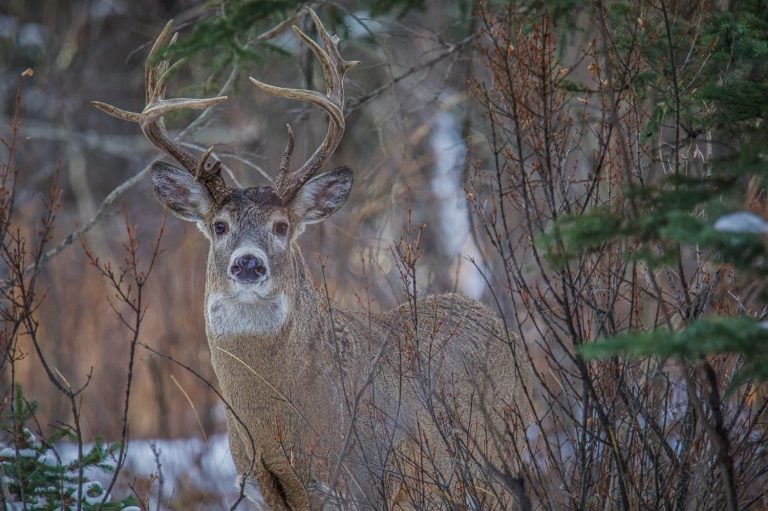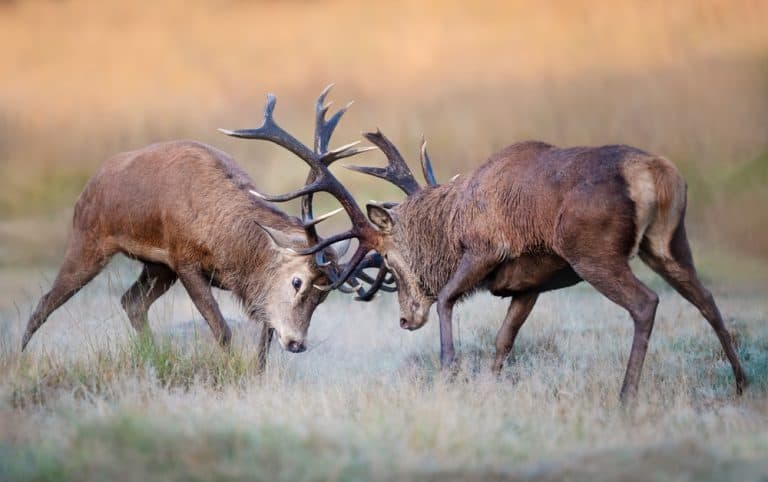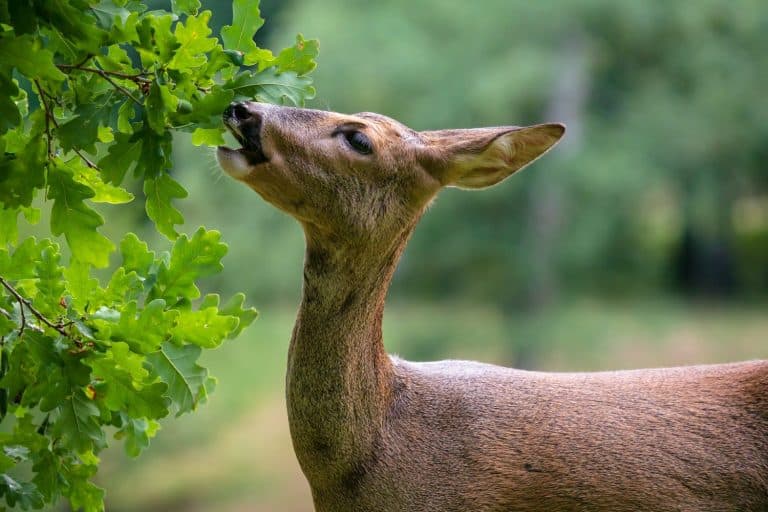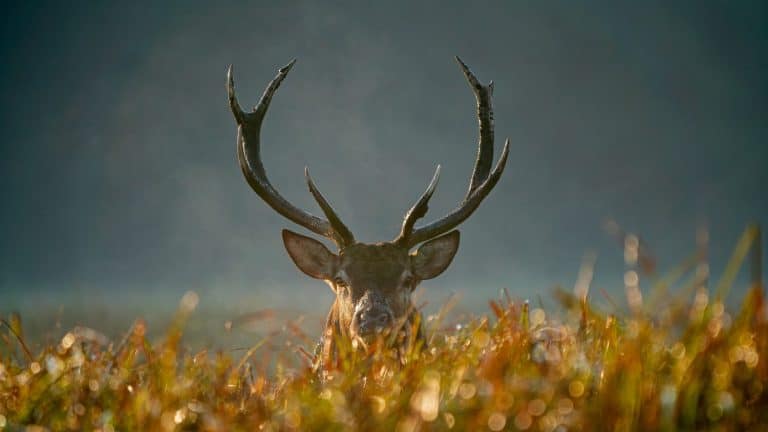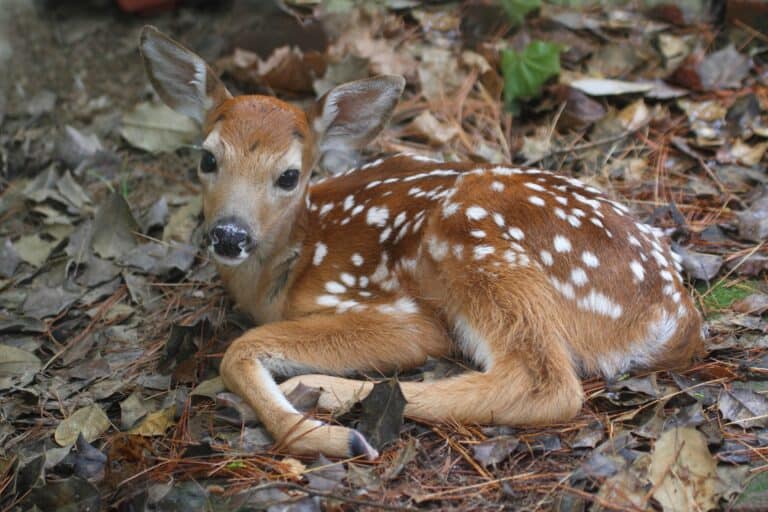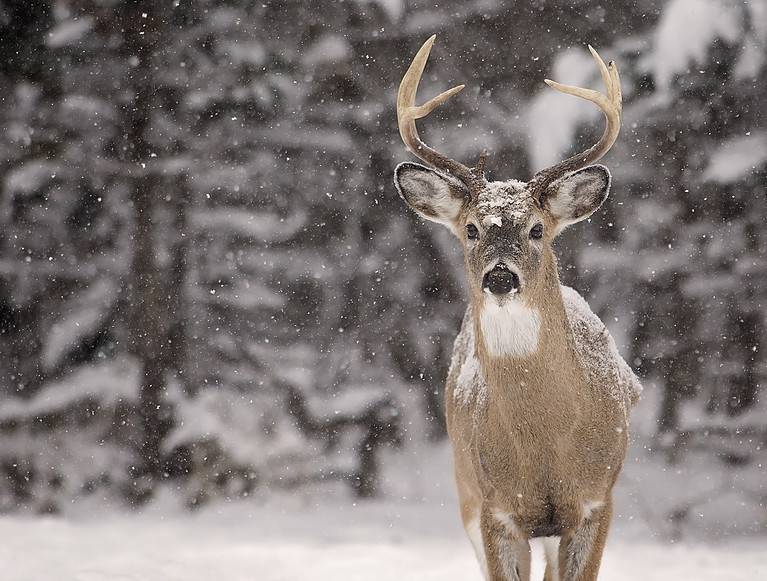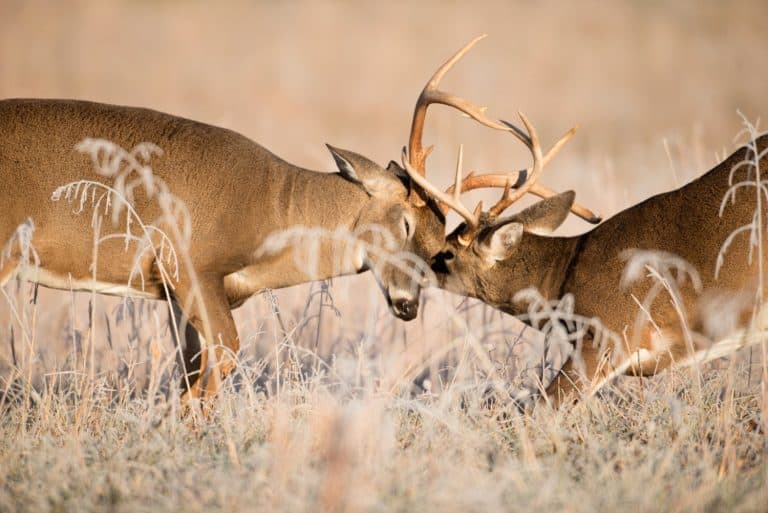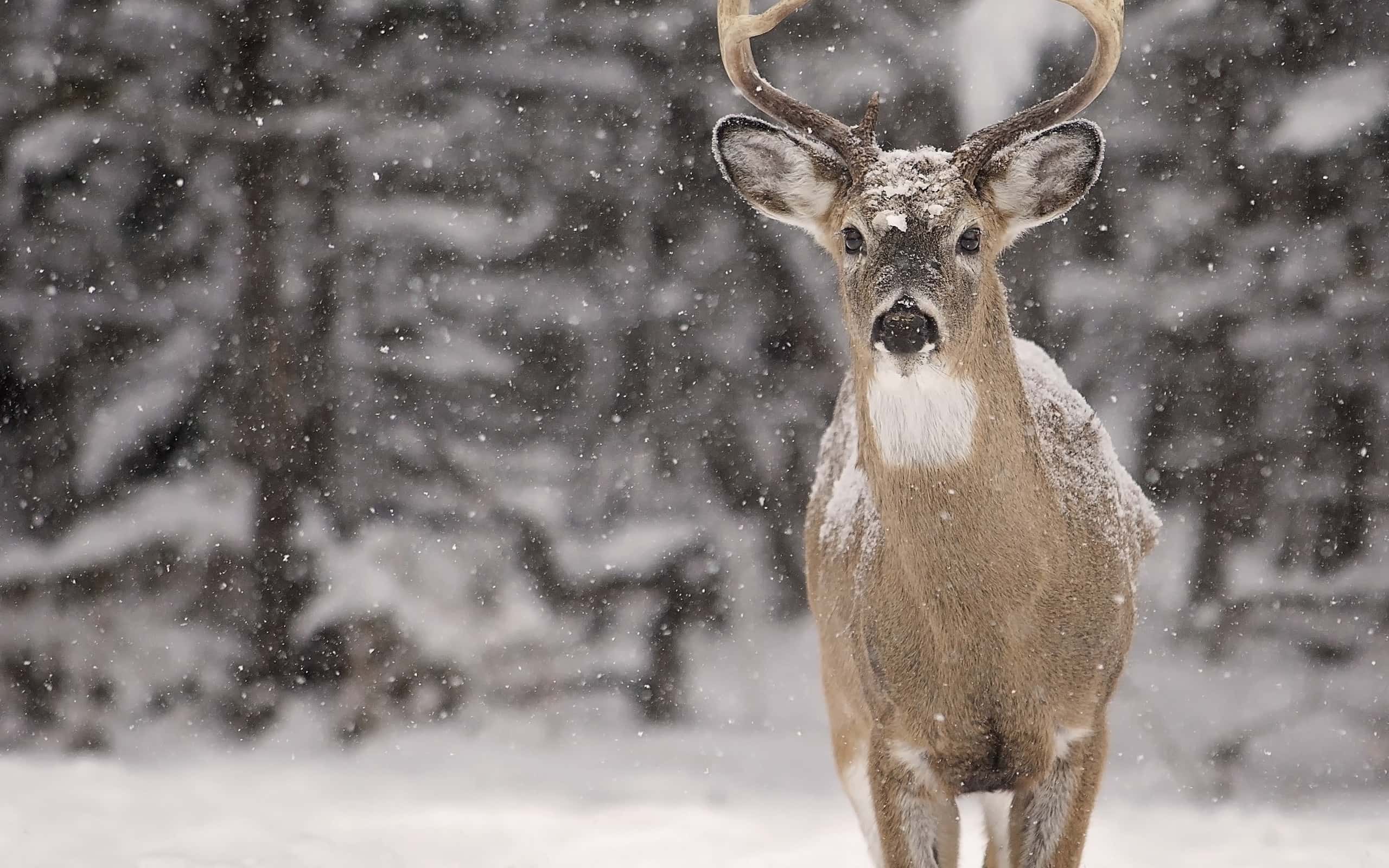

Easily recognizable by the whitetails for which they earned their name, whitetail deer are one of the most common species of deer in the entire United States. Not as large as other members of the Cervidae family, such as elk and moose, nevertheless, whitetail bucks grow to impressive sizes.
Typically, when determining what garners a trophy record for whitetail deer, the focus is not on the body size or weight of the animal but rather on the score earned by its antler size and complexity. Scores come from a scoring system devised by the Boone and Crockett Club, which accepts trophies taken by any legal hunting method. Other organizations use it as well, including Pope and Young, which gives awards for trophies taken with archery equipment.
In this article, however, we are looking at the heaviest whitetail ever harvested—and, believe me, it fed several families for many, many months. Let’s learn all about it.
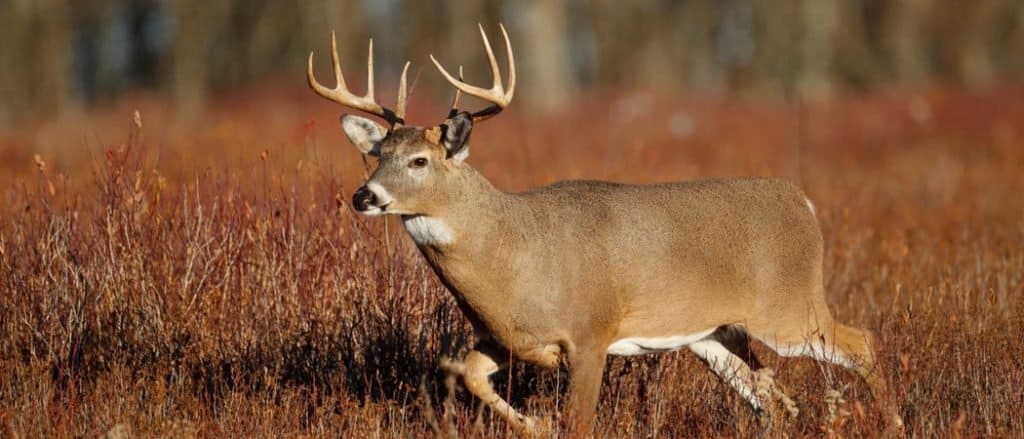
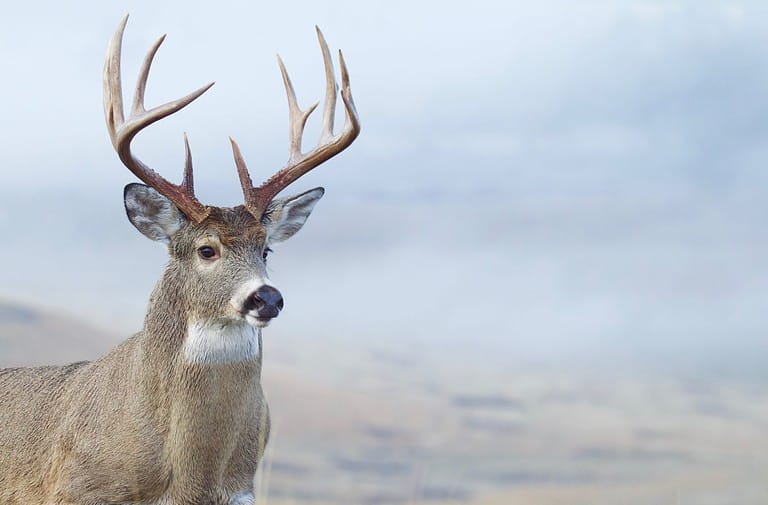
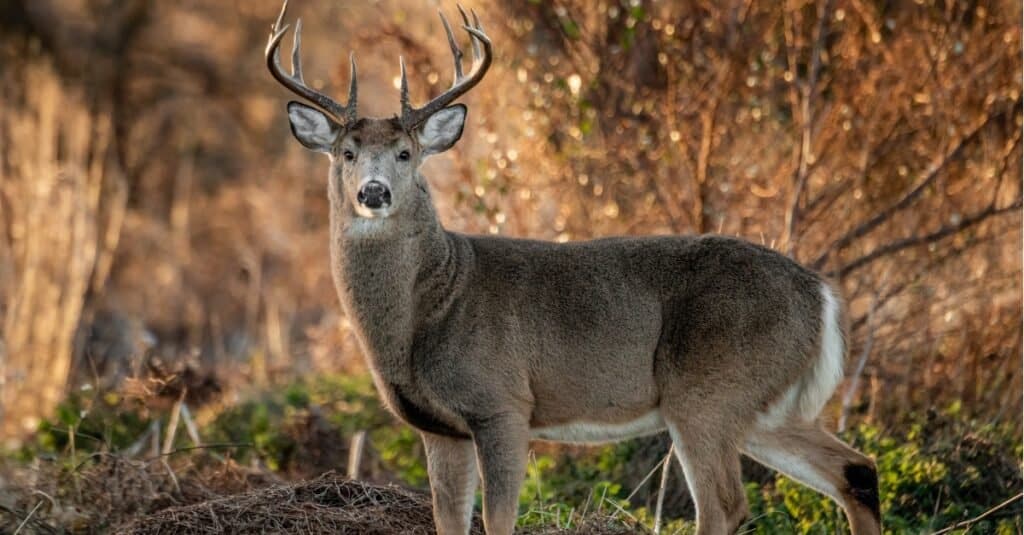
Male white-tail deer are much larger than females and have antlers.
©Paul Tessier/Shutterstock.com
Whitetail Deer Facts
Also known as Virginia deer, whitetail deer (Odocoileus virginianus) are native to North America and large swaths of South America. In fact, they are the most common deer species, and 17 of the 26 subspecies live in North America. They have been successfully introduced to several countries in Europe, New Zealand, and the Caribbean. They are extremely adaptable and live in a range of habitats, including forests, grasslands, and croplands. Whitetail deer are herbivorous ruminants and spend much of their day foraging for plants, shoots, leaves, and grass.
This species of deer is reddish-brown during the spring and summer months but turn grayish-brown during winter. However, they are best identified by their tails, which have a white underside. At disturbances, even the slightest, whitetails will run off and flash their tails, exposing the white underside in a behavior known as flagging.
A medium-size deer, their size can vary widely depending on their location. Whitetail deer stand, on average, about 38 inches to the shoulder. This equates to about the waist- or beltline of a typical man. They are usually between 60-70 inches long and weigh between 90-300 pounds, depending on sex, age, habitat, nutrition, and location. A general rule of thumb is that the farther the deer are from the equator, the larger they tend to be. Also, bucks (male deer) are larger in stature, length, and weight than does (females).
All bucks grow antlers, which they shed annually during the winter. Each spring, they grow back larger and faster and indicate general age, health, and diet of the animals.
The estimated hoof weight of the heaviest whitetail deer on record is 540 pounds.
©iStock.com/Harry Collins
The ‘Weigh’ You Are
Today, the focus on size tends to be the antlers, not the weight, of the animal, but Daniel Schmidt writing for his self-titled blog on the Deer and Deer Hunting website says that wasn’t always the case. He writes, “Antlers were adored, but they were almost secondary when it came to describing a buck’s status. ‘What did he weigh?’ was often the first question asked of a successful hunter. This infatuation hasn’t died completely. A buck’s hog-dressed weight is still a badge of honor for hunters in the Northeast, Upper Great Lakes and Canada.”
To the question, “What did he weigh?” John Annett answered, “540 pounds.” Somewhere in Ontario, Canada, sometime in 1977, some deer walked into Annett’s blind. With his bow at the ready, Annett let it fly, and his reward was several hundred pounds of meat and a record for heaviest whitetail deer ever harvested.
The animal’s field-dressed weight was 431 pounds on government-certified scales, so the buck’s hoof weight would have been about 540 pounds. Reports, however, indicate Annett butchered the animal before it could be inspected by Canadian authorities.
The Annett buck toppled the previous record, set by a 402-pound field-dressed Minnesota buck killed by Carl Lenander Jr. in 1926. Estimates place the deer’s hoof weight at 511 pounds. While Annett’s record has stood for nearly 50 years (it’ll be 50 years in 2027), Lenander held his record for 51 years before Annett bagged his.
Where is Ontario Located on a Map?
Ontario is a province in east-central Canada that borders the United States and the Great Lakes. It’s home to Ottawa, Canada’s capital. Ontario’s capital is Toronto.