
Every fall in North America, millions of deer engage in a fascinating mating ritual over the course of several months that leads to an abundance of fawns born in the spring. Indiana is no exception. Home to approximately 680,000 individual white-tailed deer (Odocoileus virginianus) after being extirpated from the state in the late 1800s, the rut happens across the state in the autumn.

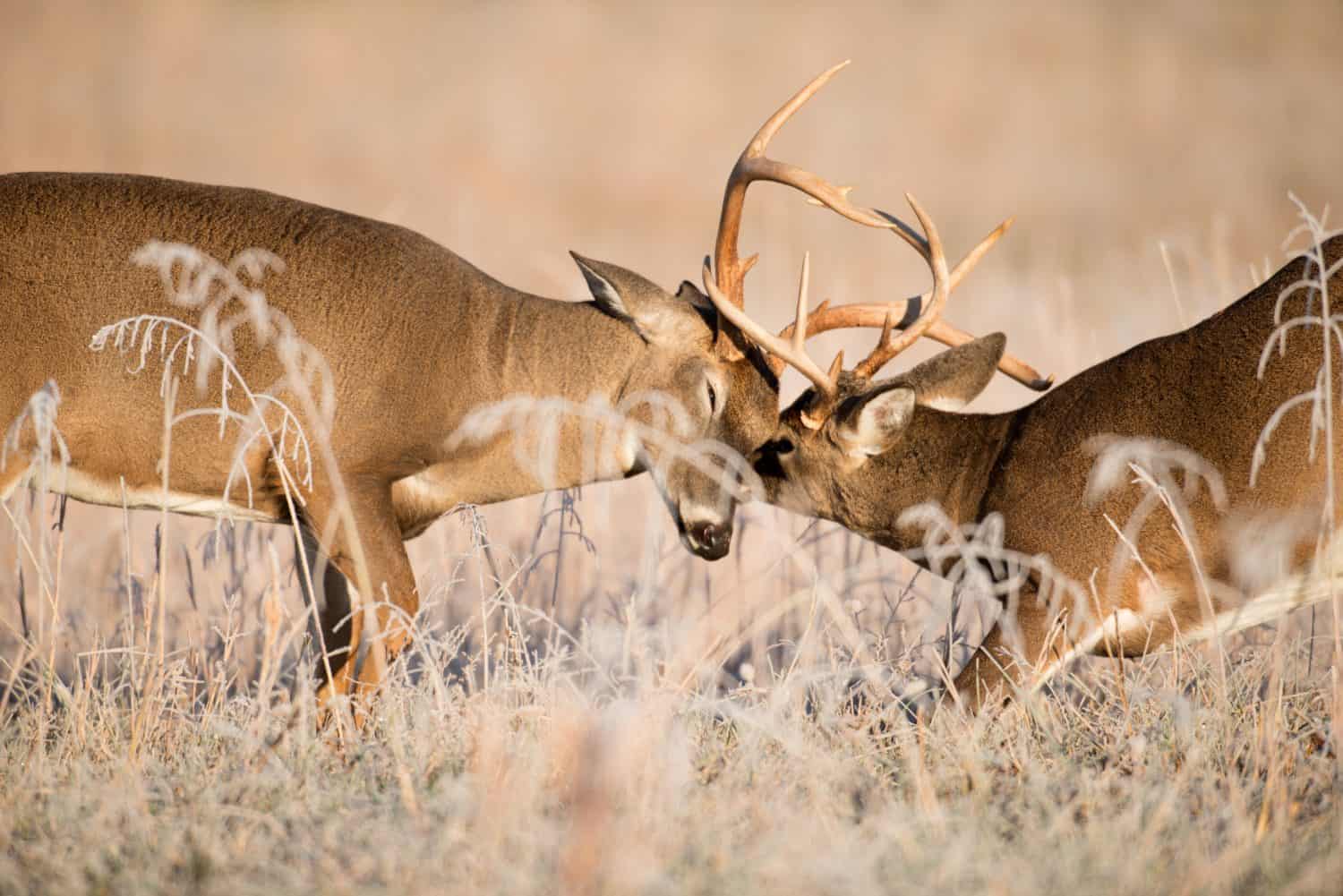
During the rut, male white-tailed deer will compete with each other over access to females.
©Jim Cumming/Shutterstock.com
But just because the deer rut is a regularly occurring behavior in an abundant animal doesn’t mean that the rut itself is easy to see. Sometimes it happens right in our backyards, yet many of us are unaware of these incredible behaviors that are taking place. In fact, Joe Caudell, Deer Program Lead of the Indiana Department of Natural Resources, says, “An average person who just wants to go see this, I think that’s probably pretty tough to do.”
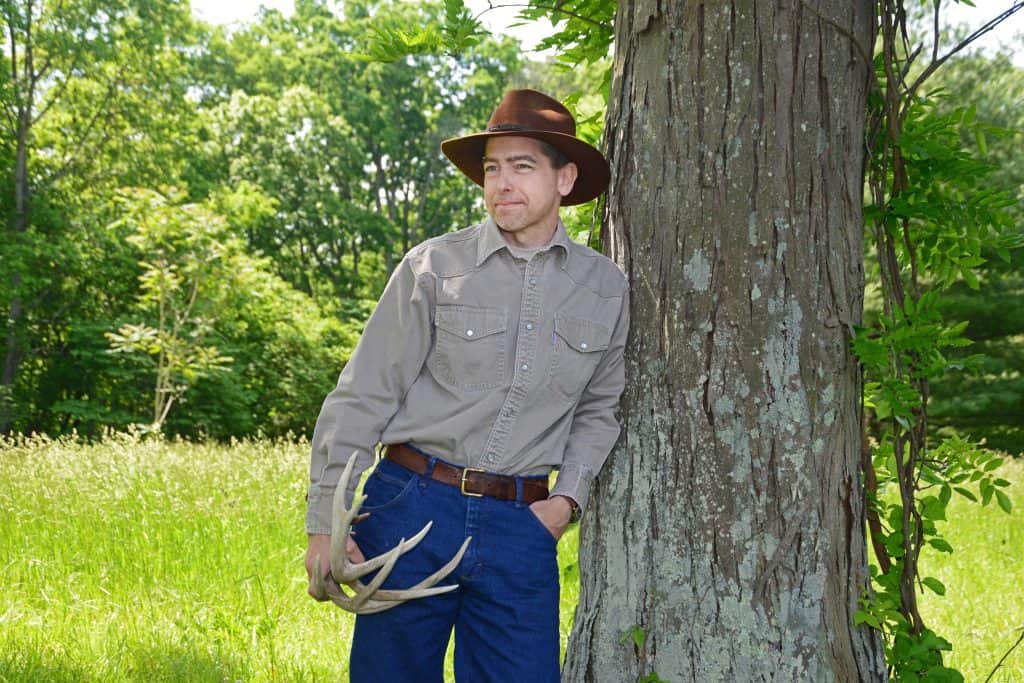
Joe Caudell, Ph.D., is the Deer Program Lead at the Indiana Department of Natural Resources.
©Joe Caudell
What Is a Deer Rut?
Rut describes a synchronized seasonal mating event that occurs in some mammal species when males are in a heightened sexual state due to higher testosterone levels. This heightened hormonal state makes them more aggressive and enables them to compete when necessary for access to females in mating. Males chase desired females in estrus, and if multiple males are seeking the same individual, they fight for the opportunity to mate with her.
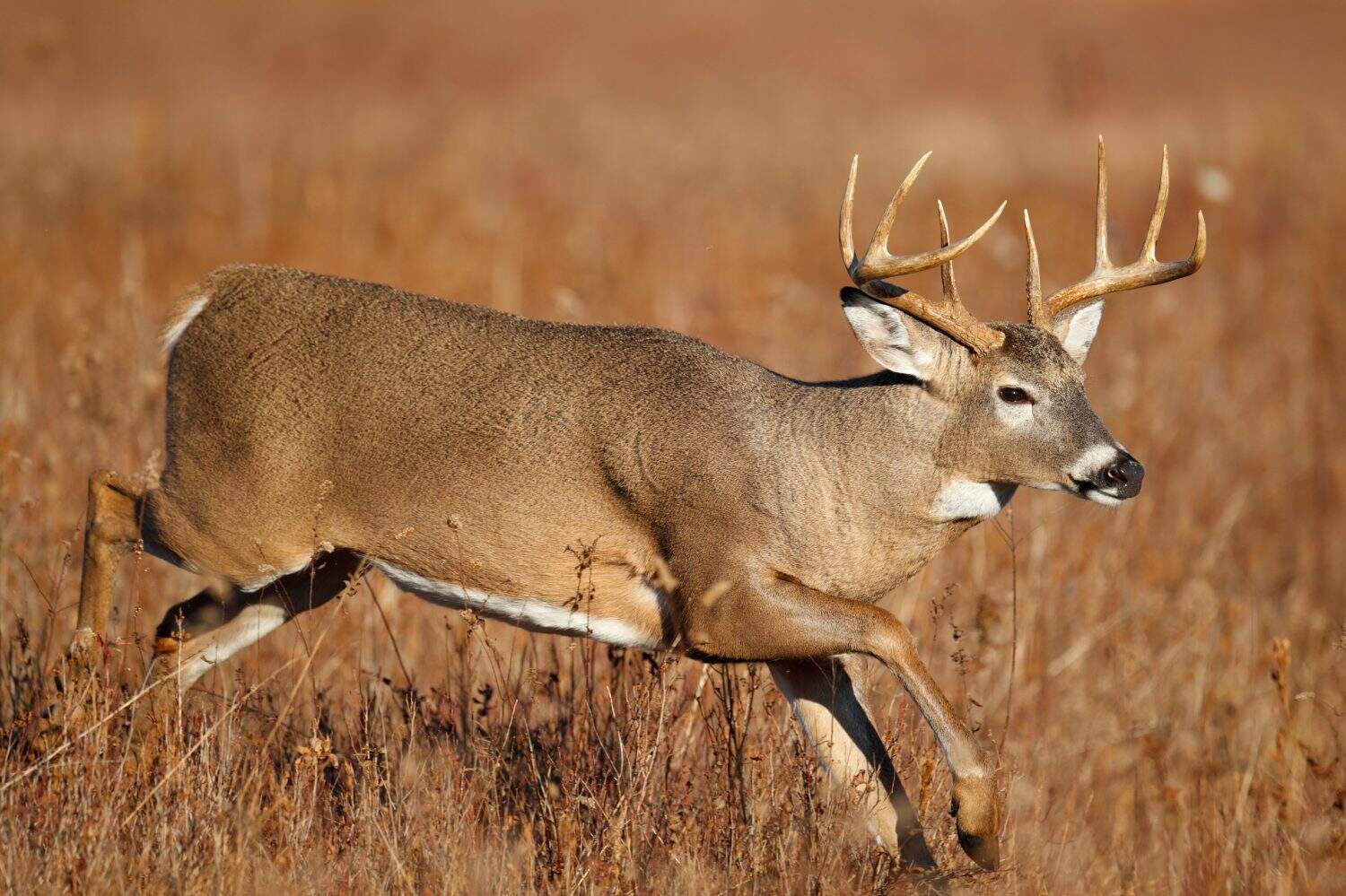
During the rut in Indiana, male white-tailed deer will chase and follow females for mating.
©Paul Tessier/Shutterstock.com
The term is most often used for ungulates (hooved mammals), and in Indiana, deer rut refers to the white-tailed deer species, their only native species.
Why Does the Deer Rut Happen?
Rut occurs because it allows for fawns to be born in the ideal conditions that are present in the spring season. During spring in Indiana and the rest of North America, the food supply is replenished, with vegetation regaining its leaves and fruits returning, providing essential nutrients for does to ensure a nutrient-rich milk supply for their fawns and therefore increasing their survival. This is especially important in more northern areas that experience harsh winters, making the contrast between the seasons more distinct. If a fawn is born too early, it has a smaller chance of survival.
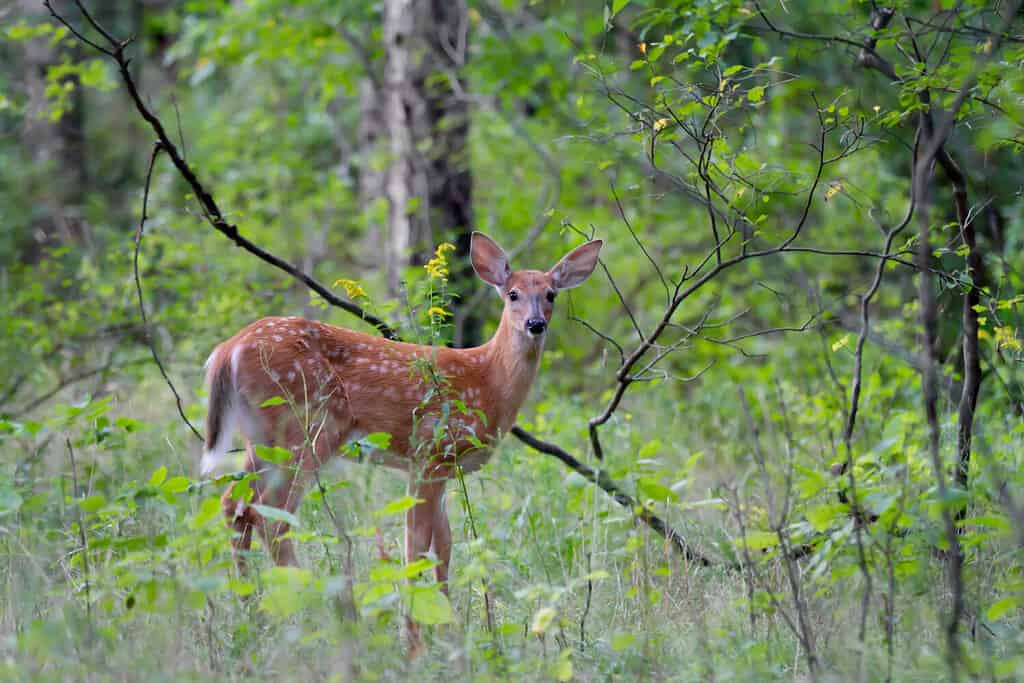
The deer rut has evolved to take place in the fall so that fawns are born in spring with ideal conditions, increasing their chances of survival.
©Jim Cumming/Shutterstock.com
To give birth to fawns in the spring, does need to become pregnant seven months prior. In Indiana, most fawns are born from late May until early June, and does have a gestation period of 6.5 months or 200 days. This means that mating must occur in the fall, which is how rut evolved. Rut is timed backwards from the nutrient-rich conditions in spring for fawns to be raised. After birth, fawns double their weight in just two weeks, necessitating an abundance of food for does to produce enough milk.
When Is the Deer Rut in Indiana?
The deer rut takes place over several stages in Indiana, starting in October and ending in January. Caudell says, “November 7th through the 14th is the peak of rut activity.”
Fewer hours of daylight increase the amount of the hormone melatonin in deer, which triggers estrus in females, making them more receptive to males and ready to mate. It also increases the amount of testosterone in males.
When to See the Deer Rut in Indiana
Caudell says, “If somebody sits in the woods long enough,” that they could probably observe rut, but goes on to say, “It also depends on what you mean by rut. Are you talking about when the bucks are fighting? Or when they’re actually breeding? It depends on those activities.”
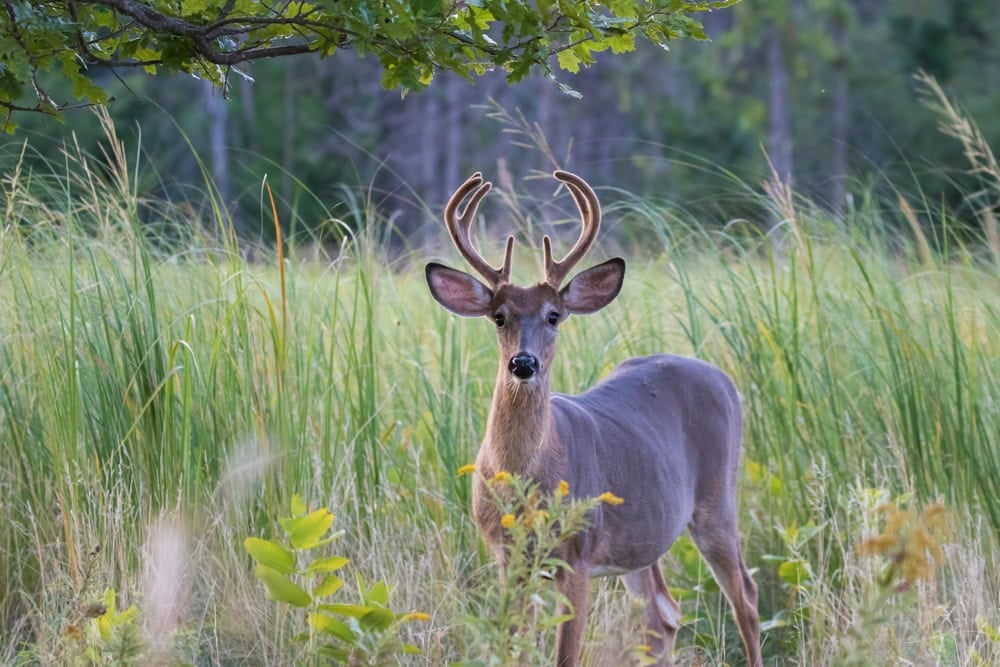
Only male white-tailed deer grow antlers, and they use them to compete with other males for access to females.
©Mircea Costina/Shutterstock.com
The deer rut does not refer to one specific activity or behavior, but rather a process of complex behaviors that take place over the course of months. These behaviors take place in stages.
With fewer does being receptive to the bucks…if there is a doe out there and a couple of bucks interested, fighting can occur as there are more limited options.
Joe Caudell, Deer Program Lead of the Indiana Department of Natural Resources
Stages of Deer Rut in Indiana
Hard Antler Transition Phase (August-September): Only male white-tailed deer have antlers, which start developing in mid-March and April and continue to grow into August and September. During the growth phase until August, the antlers are a combination of living bone and blood vessels with a furry skin covering them called velvet. During this phase, antlers start to harden due to the increase in testosterone caused by fewer hours of daylight. Males rub their antlers against trees and other surfaces called “scrapes” to rub the soft velvet tissue off and expose the hardened bone underneath. After this occurs, the buck is ready to breed for up to five months.
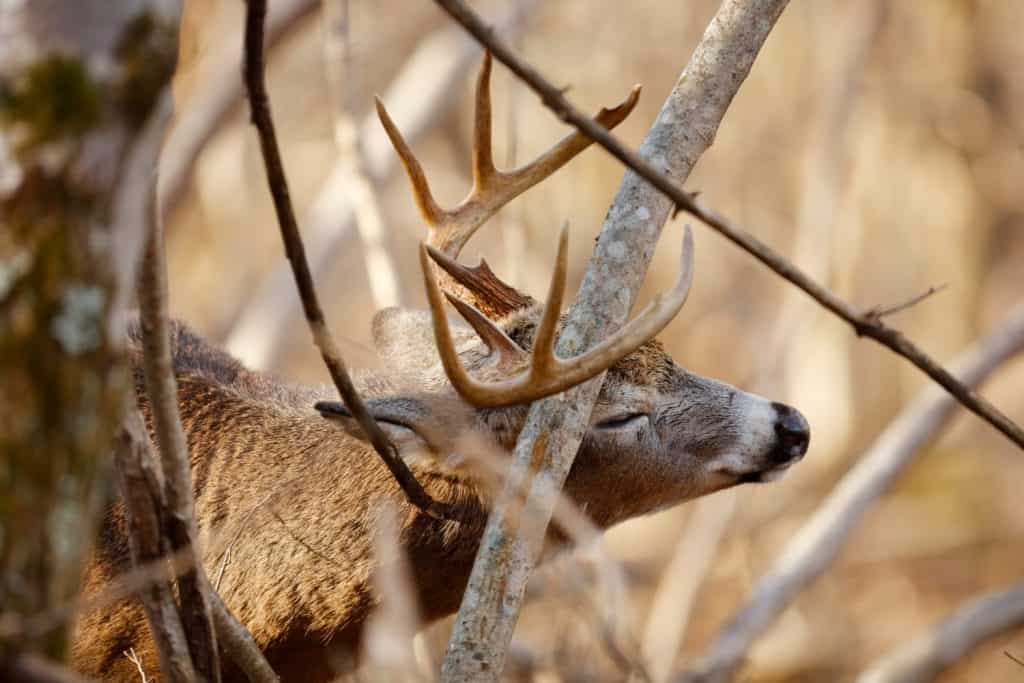
In the hard antler transition phase, males rub the velvet off their antlers in places called “scrapes.”
©Paul Tessier/Shutterstock.com
Seeking Phase (Mid-to-Late October): Males are now beginning to actively search for females in estrus by using chemical information passed on by does through pheromones in their urine and secretions from other glands. Most deer mate for the first time when they are 1.5 years old, but does can breed as young as six months of age. Some males may breed these young, too, but it is less common.
Does uses scrapes and other areas that males occupy to urinate and rub up against to inform males of their status. They will also vocalize through grunts or rattling sounds to actively call males into the area. Males will also scent mark to does using urine and glands to pass on information about their health, age, and fitness.
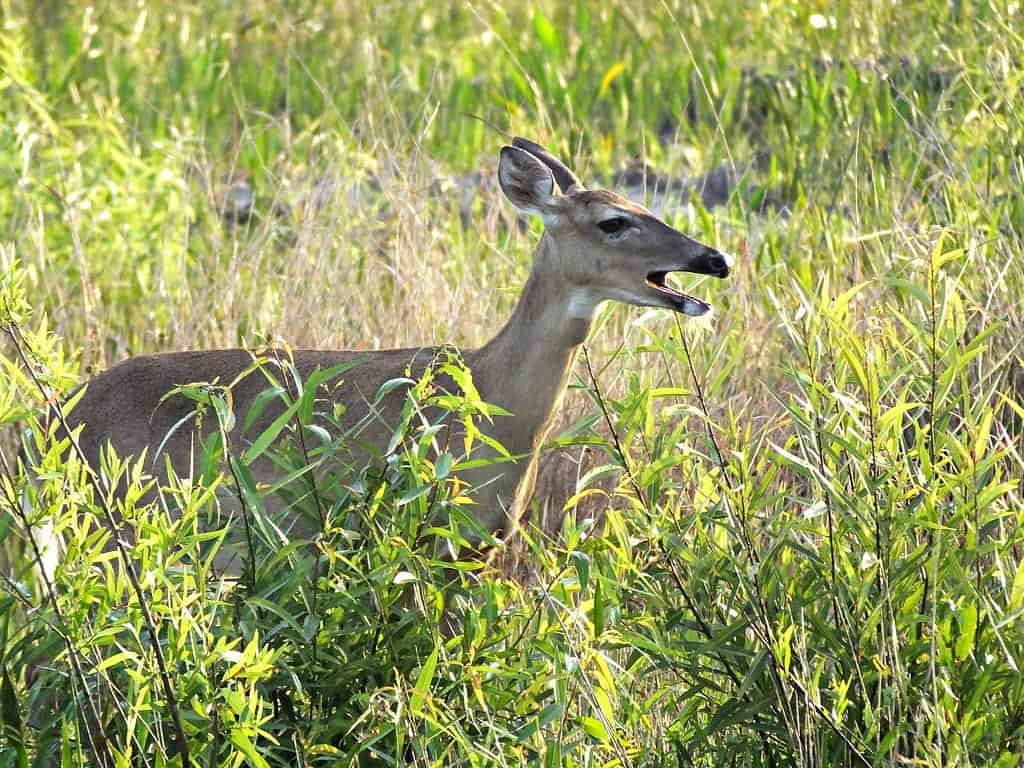
Females communicate their sexual status using pheromones and vocalizations.
©passion4nature/iStock via Getty Images
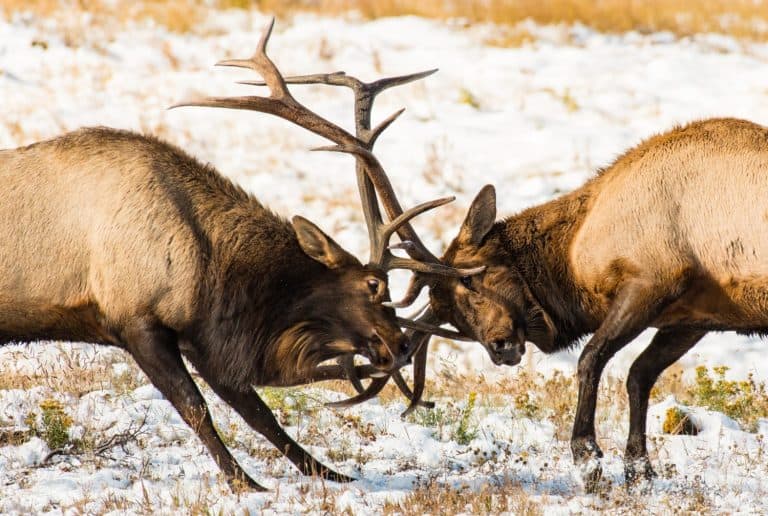
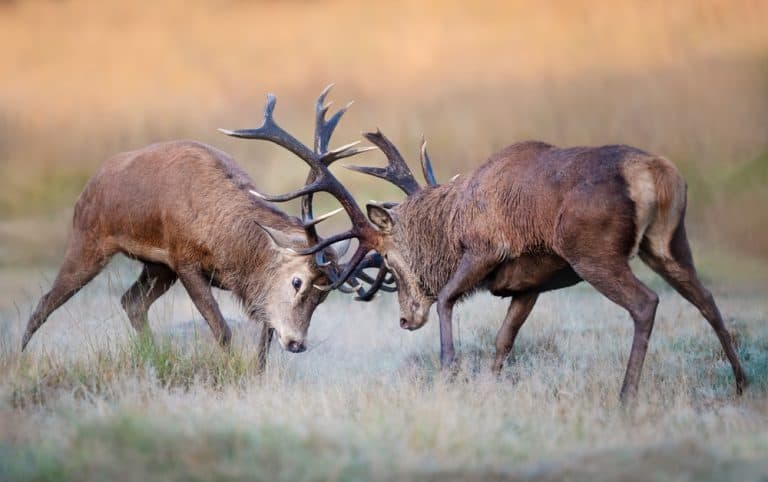
Although this is early in the overall rut season with fewer females in estrus, Caudell suggests this could actually be a great time to observe fighting between males. He says, “Maybe if somebody goes earlier in the rut when fewer does are in estrus, they may actually see more fighting. With fewer does being receptive to the bucks…if there is a doe out there and a couple of bucks interested, fighting can occur as there are more limited options.” When multiple males are attempting to breed with the same doe, they will lock antlers and spar to determine the most dominant.
Chasing Phase (Late October-Early November): During this phase, the number of does in estrus has increased, and males are actively following females. If a female in estrus is observed, within thirty minutes, a buck should be spotted behind her. Males are spending most of their time and attention on mating, even at the expense of eating and other activities.
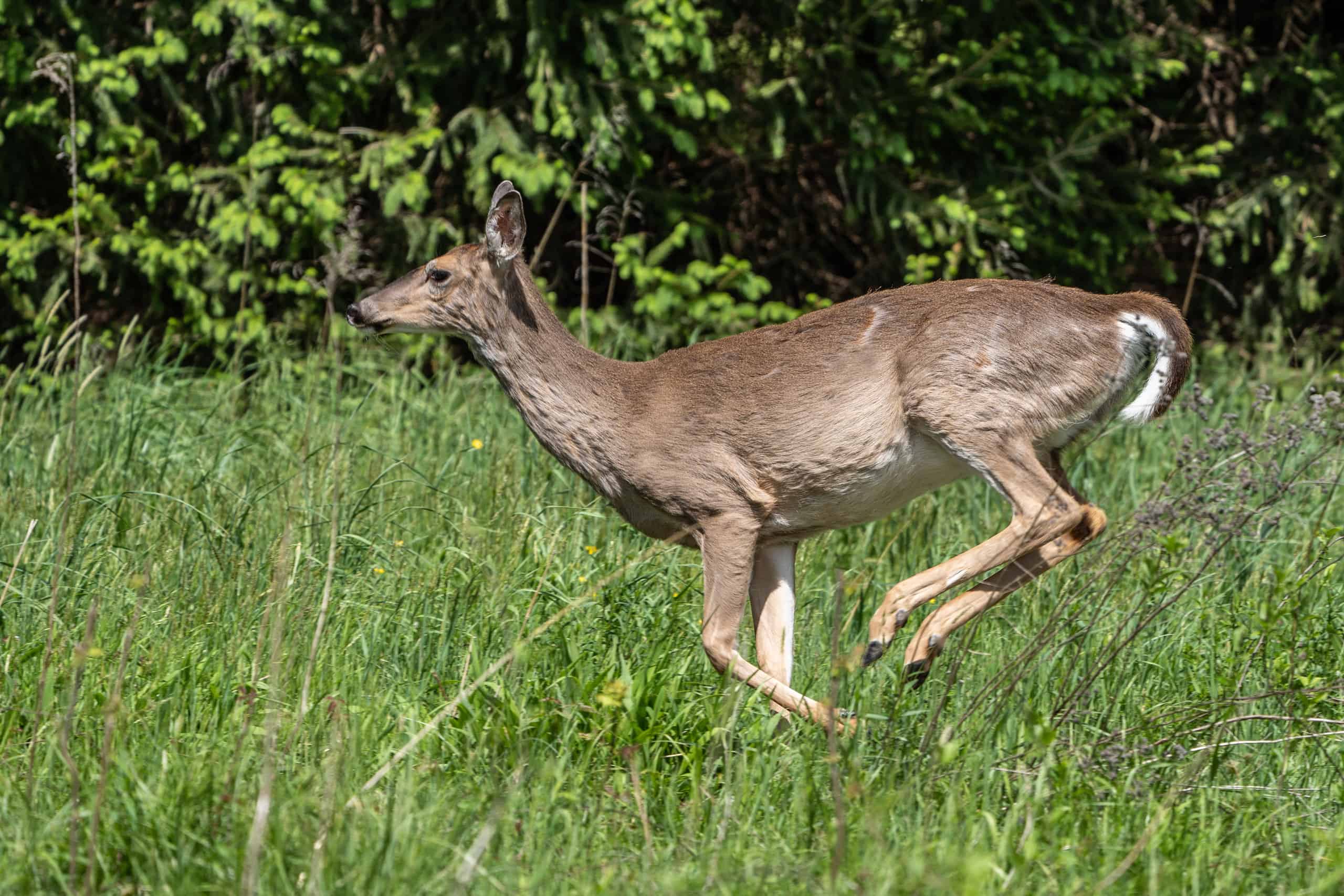
If a female white-tailed deer is spotted during the rut, a male is likely not far behind during the chasing phase.
©Amy Lutz/Shutterstock.com
Estrus Lockdown (Mid-late November): This is considered the peak rut with a majority of the counties in Indiana experiencing peak individual dates between November 8th and the 11th, and a range from the 2nd until the 16th. Most of the does are now in estrus and paired with a male. The male stays close to the doe for up to 72 hours, mating with her several times within that time frame to increase the chances of successful breeding and prevent other males from accessing her. White-tailed deer are not monogamous, and after breeding with one doe, a male will continue to search for other does in estrus to continue breeding.
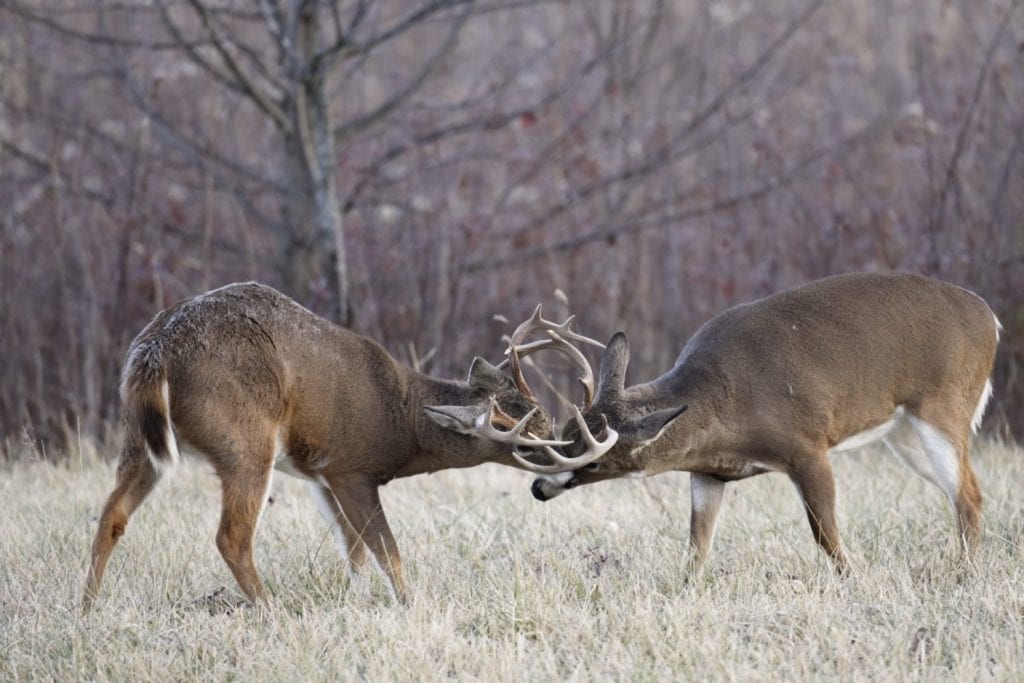
During the rut, males will spar with each other to mate with females.
©Paul Tessier/Shutterstock.com
Second Rut (Early to Mid-December): In this phase, mating continues, but activity dies down as there are fewer does in estrus. Additionally, some females will re-enter estrus if they did not breed successfully during peak rut.
Where to Watch the Deer Rut in Indiana
White-tailed deer are now abundant and widespread throughout every county in Indiana. However, this wasn’t always the case. In the late 1800s, white-tailed deer were extirpated or locally extinct from Indiana. In the 1930s, 296 deer were transported from Wisconsin, Michigan, Pennsylvania, and North Carolina and reintroduced into the state.
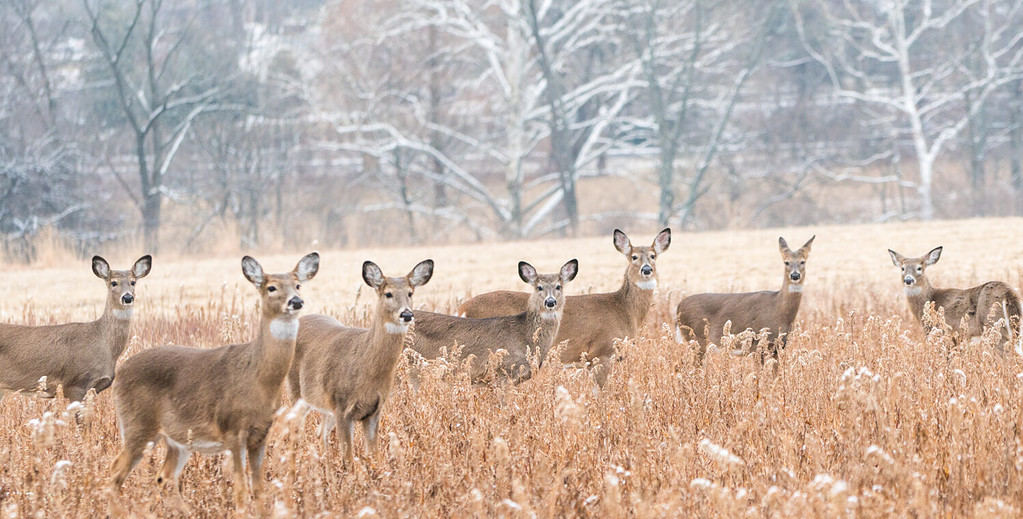
To increase your chances of seeing rut, go to an area with high deer density.
©Amy Lutz/Shutterstock.com
Now, white-tailed deer can be found in any habitat and have adapted well to suburban and even urban landscapes. Therefore, rut can technically be observed anywhere in Indiana. But even though it’s easy to see white-tailed deer in general, watching the rut in action is difficult without expert insight.
To observe the rut, Caudell suggests, “Go somewhere with high deer density, so you’re increasing your odds of seeing it. Probably somewhere that’s unhunted because then the deer are probably going to be a little less wary of people, possibly our state parks or urban areas.”
He goes on to mention, “We do have a little bit of information on deer density in our 2023 deer report. We don’t have the whole state completed yet, but we’ve got about a third of our state. Somebody could actually look in there to see what parts of the states have like fairly high deer density and then use that for their planning.”
Even with going to an area of higher deer density, there are still many things to consider to actually get a chance to see the rut.
Ways to Watch
In addition to understanding where the deer are, you also want to understand where you are in relation to the deer so that you do not affect them. White-tailed deer have a good sense of sight, smell, and hearing, and it’s important not to scare them off.
Caudell explains, “You would want to be either elevated or far enough away from the deer that you’re not influencing their behavior because even for urban deer, once you get within a certain distance of them, they’re going to move off.” Therefore, using a tree stand or climbing stand would work best, but it needs to be acceptable in your location. He stresses the importance of asking permission if it is private land and knowing the park rules if it is public land to make sure it is permissible, as well as letting people know what you are doing.

In order to see rut, it’s a good idea to be high in a tree stand so that you do not alter deer behavior.
©Petr Bonek/Shutterstock.com
Safety Tips
Another tip Caudell shares is to go with hunters, who know the rut well, and to even act like hunters, but using your camera instead of a gun. Caudell says, “As a photographer or somebody wanting to observe this, basically follow the same procedures (as hunting) because it’s probably going to be a lot of time out in the woods from this elevated platform, just like a hunter would be, waiting for these encounters.”
This tip also lends to the importance of watching deer rut safely and understanding any risks during this time. He adds, “I would highly recommend first going through hunter education. They go over basic safety in the woods, including how to stay warm from a tree stand and making sure you’re using a harness and are properly attached to the tree, so if you were to fall out, you would be safe. You would probably want to take the same safety precautions, like wearing orange, and these kinds of things.”
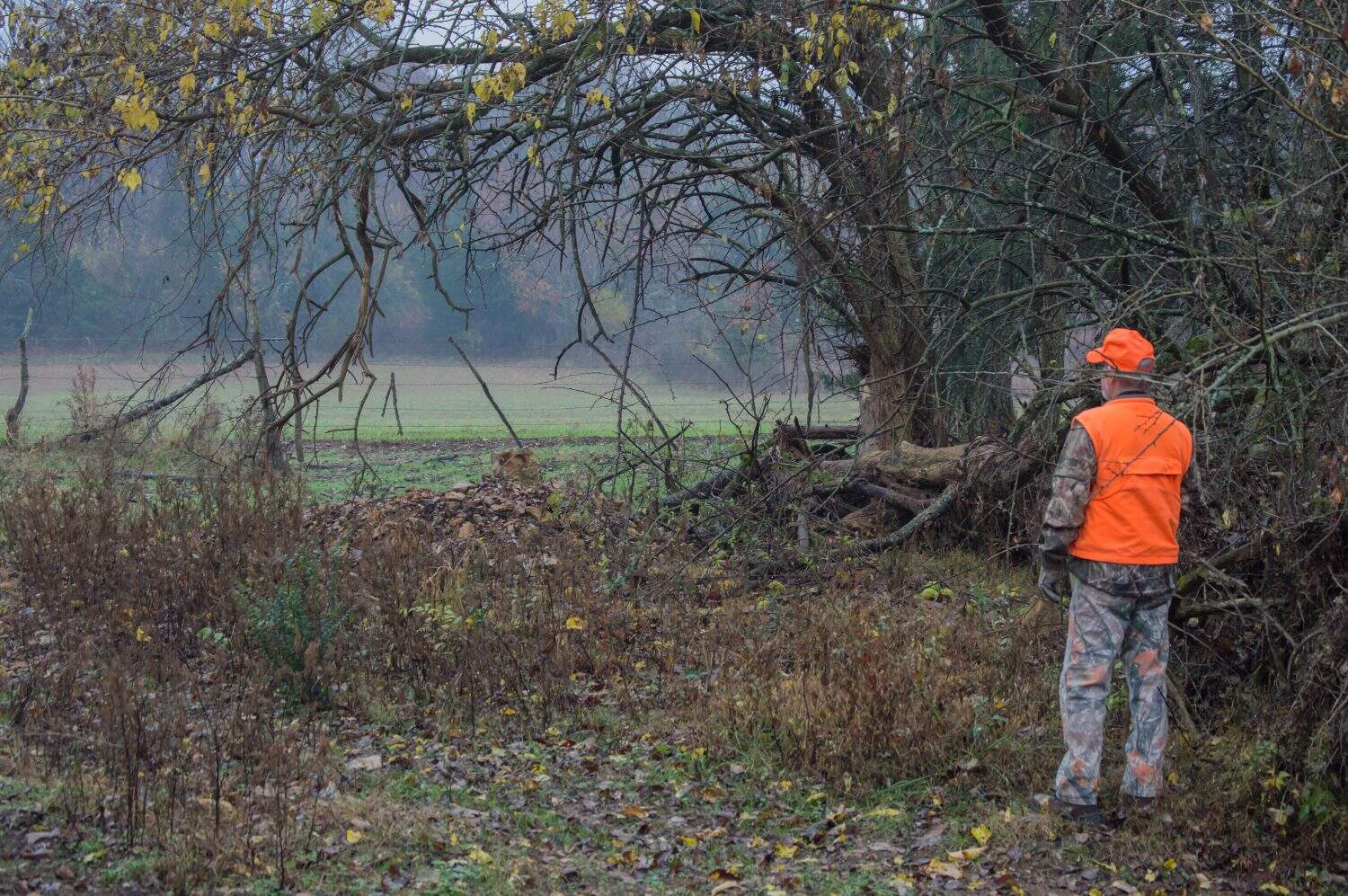
To increase your chances of seeing rut, consider going with a hunter who understands rut well.
©Picunique/Shutterstock.com
As rut takes place during the hunting season, and deer themselves are large animals with the males weighing 175 lbs and having sharp antlers, watching deer rut is a potentially dangerous activity. During this time, the elevated levels of testosterone in males can make them more aggressive. If one were to come between a male pursuing a female in estrus, the male could become dangerous to the observer.
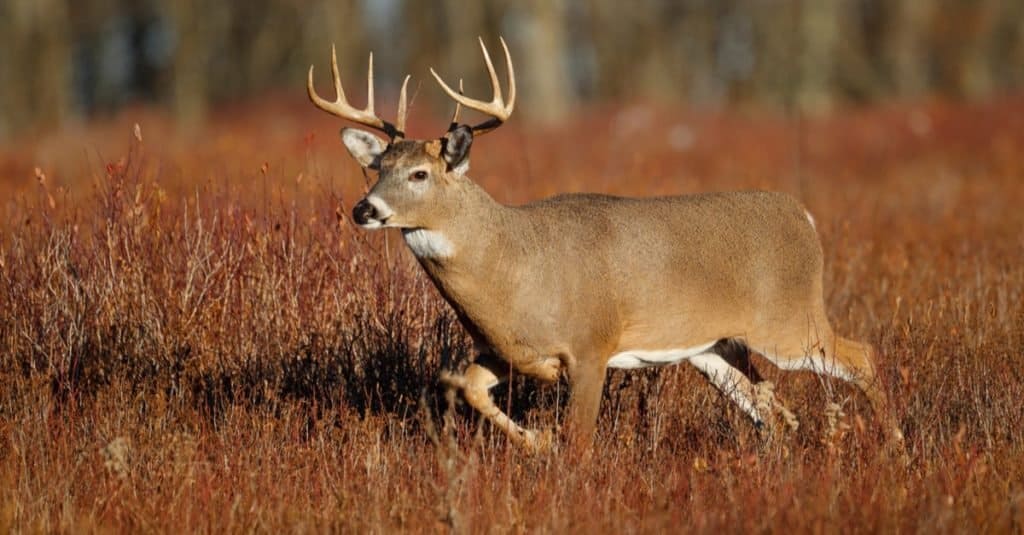
Male white-tailed deer are large and potentially dangerous during the rut due to their heightened testosterone, making them more aggressive and less aware of their surroundings.
©Paul Tessier/Shutterstock.com
In fact, to estimate peak rut dates in Indiana, the state uses the average number of deer-vehicle collisions for each day of the year for every county. The date with the highest deer-vehicle collisions represents the peak date for each county. Because males are so focused on mating, they are less aware of their surroundings and more likely to cross roads without paying as much attention, thereby increasing deer-vehicle collisions.

During rut, males are so focused on females that they become less aware of their surroundings, and deer-vehicle collisions increase.
©Amy Lutz/Shutterstock.com
Although deer are everywhere and the rut is an ongoing activity that occurs over months, to witness any actual action, whether that is fighting between the males or mating with a male and a female, would take impeccable timing, and it’s not a common thing for most people to see. Caudell says, “ I think it would take hours and hours in the woods. To see it, you would need to be like a professional wildlife photographer who was waiting and waiting and waiting for that moment. For an average person who just wants to go see this, I think that’s probably pretty tough to do.” He goes on to say, “Being in an area that has a high number of deer and being there at peak rut would probably increase the odds of actually seeing something like this.”