
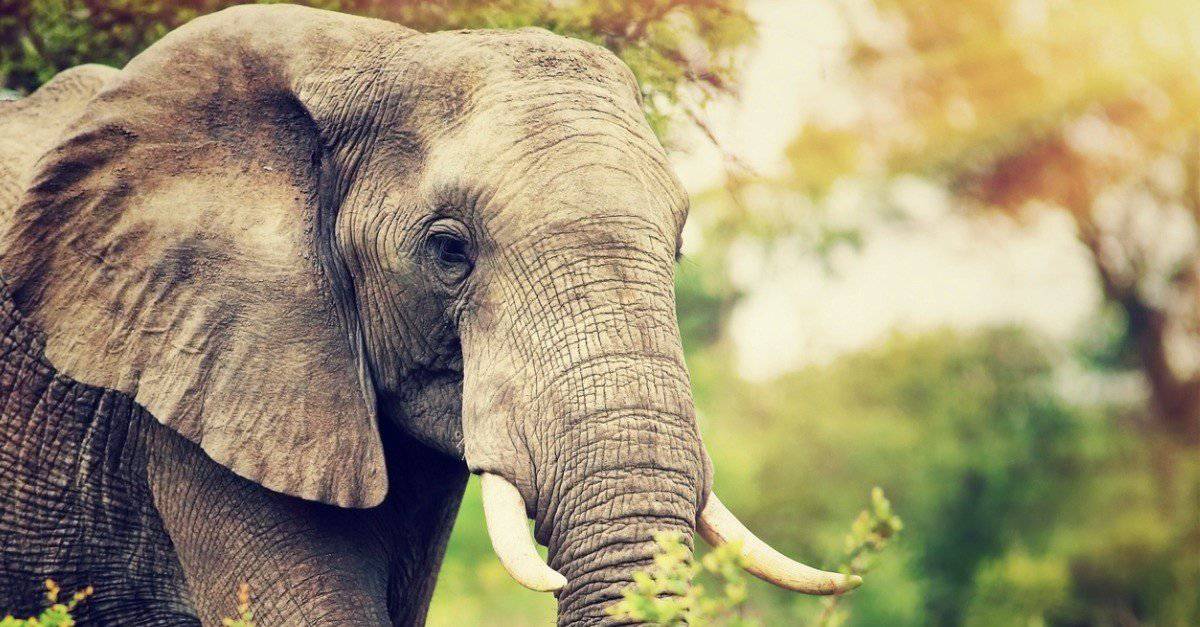

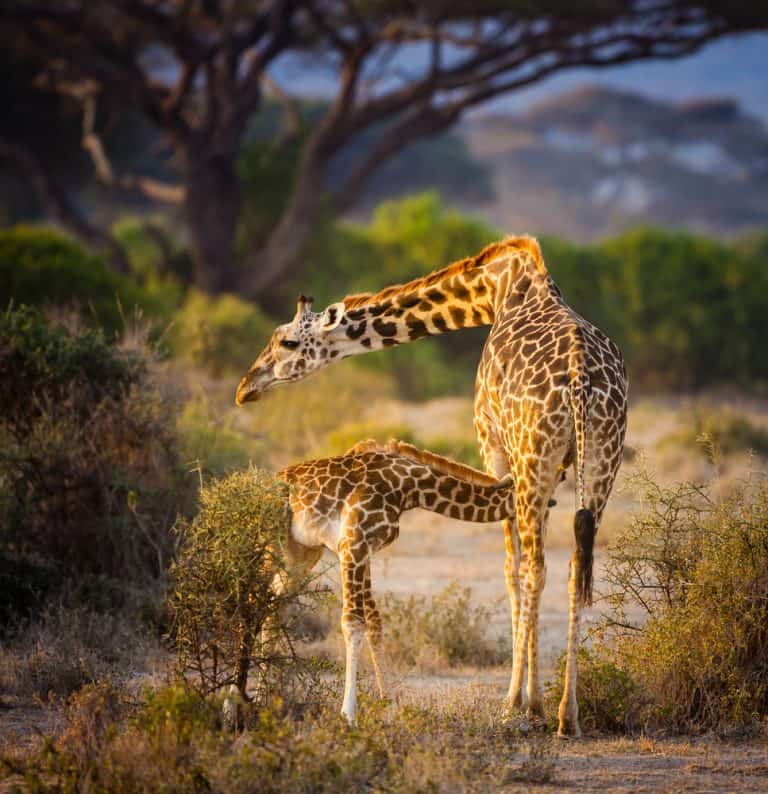
Have you ever wondered what the world’s largest land animal might be? While some land animals (giraffes) might be taller, and some marine life (blue whales) might be heavier, one animal stands alone as the biggest land animal on earth, and that is the African elephant. Continue reading to discover everything you need to know about these colossal creatures.
African Elephants by the Numbers
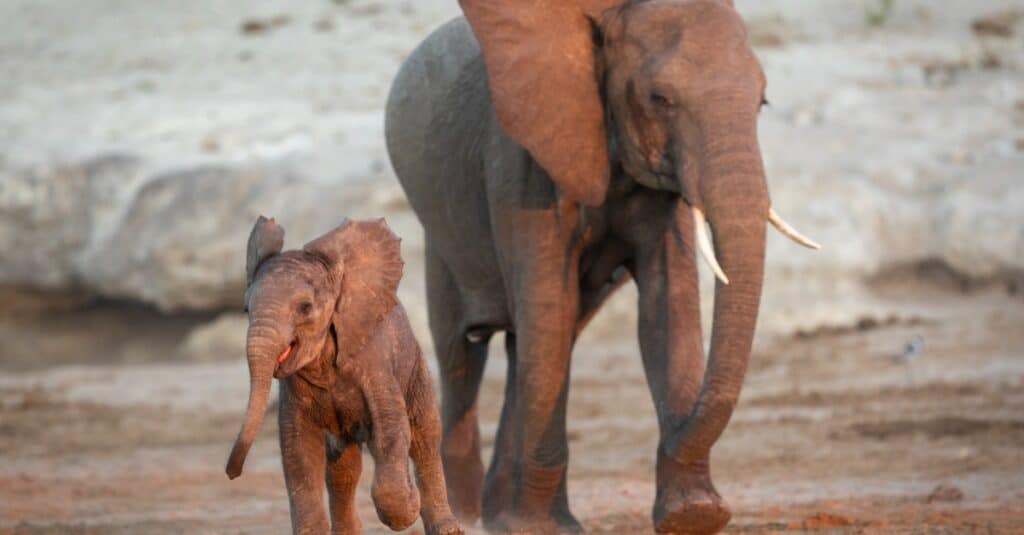
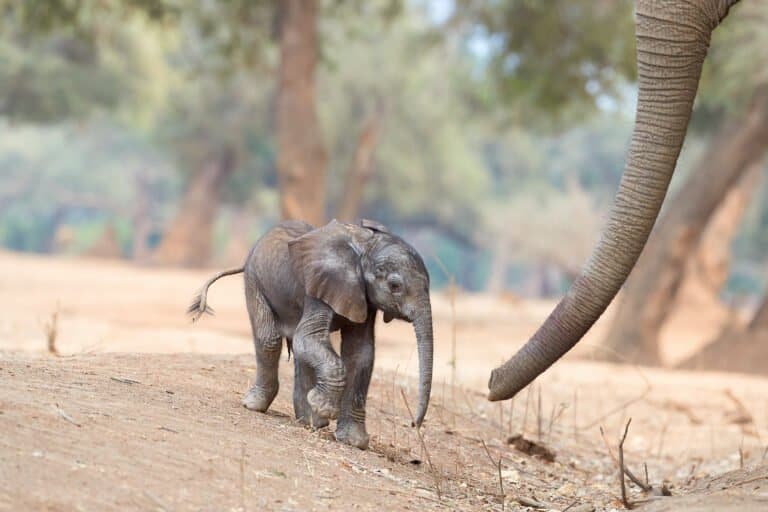
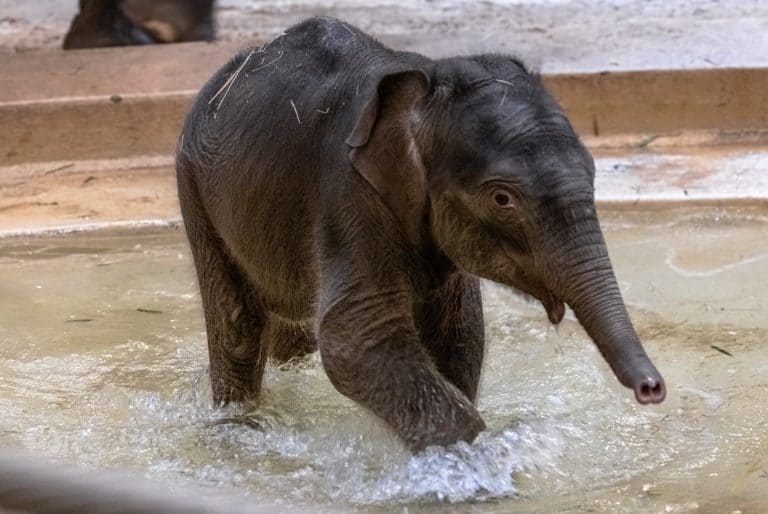
Baby African elephants stand 3 feet (1 m) tall and weigh 264 pounds (120 kg).
©iStock.com/StuPorts
The African Elephant is the largest land animal on Earth with adult males attaining heights of 11.5 feet (3.5 m) and weighing more than 13,000 pounds (5,000 kg). Their tusks can grow to 8 feet (2.5 m) long and weigh up to 100 lbs. (45 kg). African elephants have 4 molars that are a foot (30 cm) long and weigh 11 pounds (5 kg) each! Baby African elephants stand 3 feet (1 m) tall and weigh 264 pounds (120 kg).
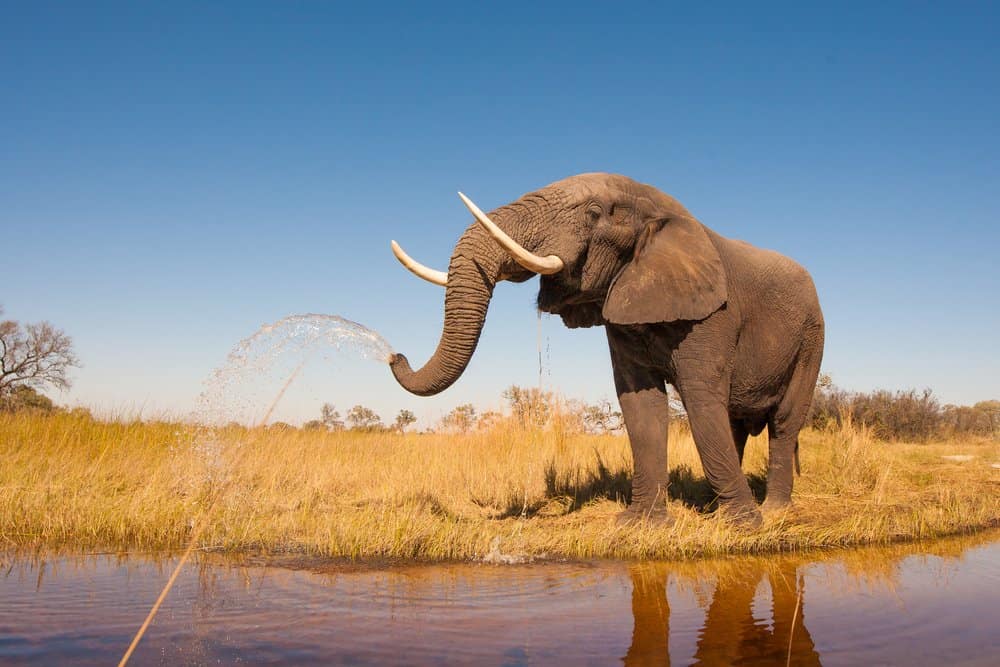
African Elephants can hold as much as two gallons (8 L) of water in their massive trunks which are 7 feet (2 m) long. An individual African elephant can drink up to 50 gallons (200 L) of water daily. These mammoth beings spend up to 16 hours a day foraging in which they can ingest nearly 500 pounds (227 kg) of bark, fruits, grasses, leaves, roots, seeds, and twigs.
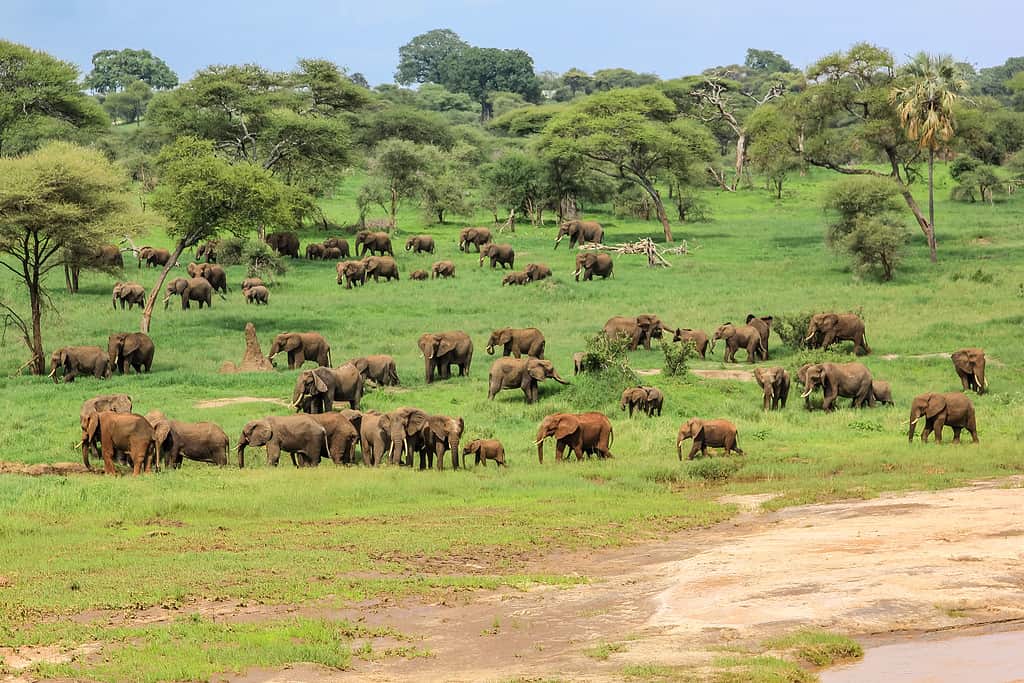
Though millions of elephants once roamed Africa, their numbers have dwindled to fewer than 500,000.
©Benny Marty/Shutterstock.com
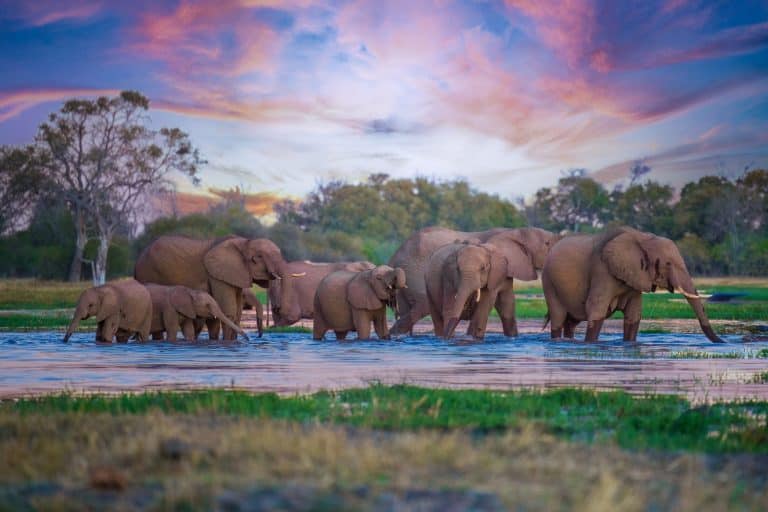
Their range once extended throughout much of Central and Southern Africa, although they are now confined to much smaller areas. In 1976 it was estimated that 1.34 million African elephants roamed the continent, but their numbers have now dipped to fewer than 500,000. African elephant clans can include hundreds of members, especially when they are on the move, though they tend to break up into smaller family groups when they are foraging.
African Elephants on the Move
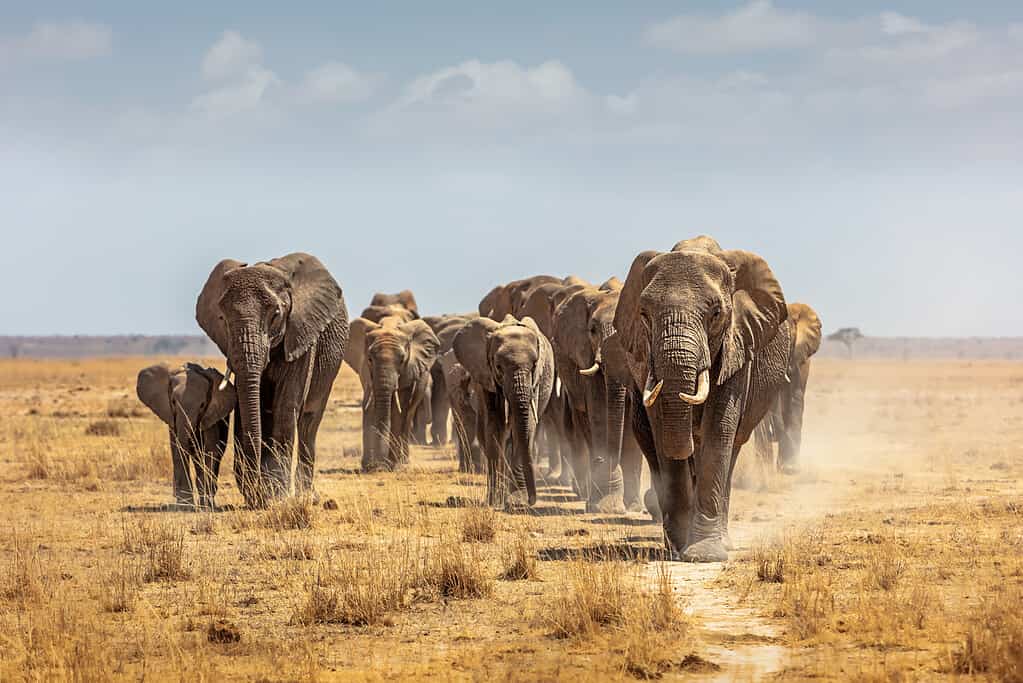
A large herd of African elephants walking forward along a path in the dry lake bed of Amboseli National Park.
©adogslifephoto/ via Getty Images
Found in forests, savannahs, and plains African Elephants are nomadic animals that spend the majority of their time migrating across the African wilderness in search of food and water. African elephants are herbivores, meaning that their diet consists solely of plant matter. African elephants don’t have fixed territories. Instead, they migrate along routes that provide the necessary resources for an adequate diet. This nomadic lifestyle allows them access to essential resources year-round. However, it is becoming increasingly difficult for their environment to support these beautiful behemoths. Humans have encroached on the African elephant’s habitat and continued unmitigated growth will result in fewer of the majestic mammals.


Leave a Reply