
Quick Take
- Bulldogs are diphyodonts with two sets of teeth: their deciduous (baby) teeth and their permanent (adult) teeth.
- Bulldog puppies have 28 teeth, while adult bulldogs possess 42.
- Proper dental hygiene can lengthen the lif of a bulldog.
The bulldog (Canis lupus familiaris) originated in England, where it was bred for bull-baiting before the practice was outlawed in the 19th century. The breed is easily recognized by its stocky, muscular build, broad head, short muzzle, loose skin, and distinctive wrinkled face. Despite its tough appearance, bulldogs are known for their gentle, calm, and affectionate temperament. Like other domesticated dogs, bulldogs are diphyodonts with heterodont teeth. Continue reading to discover everything you need to know about bulldog teeth.
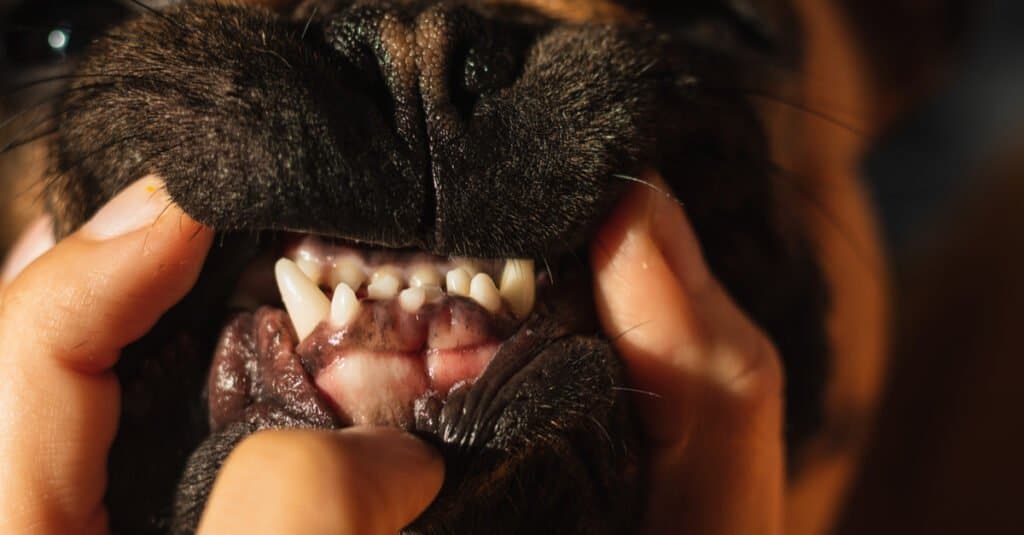
Bulldog teeth are sharp enough to tear and cut through flesh.
©Pau Novell Aran/Shutterstock.com
What Kind of Teeth Do Bulldogs Have?
Like all domesticated dog breeds, bulldogs are diphyodonts, meaning that they have two sets of teeth: deciduous (baby) teeth and permanent (adult) teeth. These teeth are heterodont, which means they have different types (incisors, canines, premolars, and molars) with specific functions.
Deciduous Teeth
The deciduous teeth or baby teeth erupt at about two to three weeks. This process is known as teething. Puppies will generally have a full set of 28 deciduous teeth at eight weeks of age. Puppies do not have molars, which are only present in the permanent dentation. At approximately 12 weeks old, the bulldog’s baby teeth will start to fall out as its adult or permanent teeth begin to erupt. By the time the pup is seven months old, the bulldog will have its complete set of permanent teeth.
Several signs indicate the puppy has begun teething include excessive drooling, constant chewing, flopped ears, and sore gums. Due to their swollen gums during the teething stage, bulldog puppies will often chew and bite on things, including hands or fingers, to relieve their discomfort.
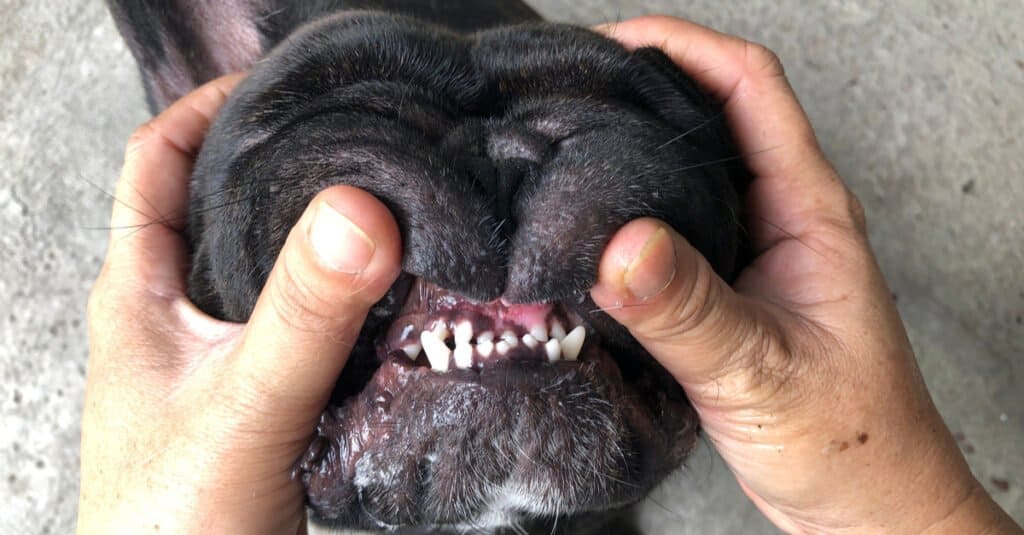
Bulldogs have 42 teeth.
©praditkhorn somboonsa/Shutterstock.com
How Many Teeth Do Adult Bulldogs Have?
Like all adult dogs, bulldogs have 42 teeth: 20 teeth in the upper jaw and 22 teeth in the lower jaw. Adult bulldogs have a total of 12 incisors, 4 canines, 16 premolars, and 10 molars. The typical bulldog dentition is: Incisors 3/3, Canines 1/1, Premolars 4/4, Molars 2/3 = 42. These numbers indicate the number of teeth in each quadrant of the mouth: upper and lower, left and right.
Incisors: Bulldogs have a total of 12 front teeth, six each in both the upper and lower jaws. The first two incisors in the upper jaw are somewhat pointed, while the remaining incisors are small and have flat edges.
Canines: Bulldogs have one pair of sharp, fang-like canines adjacent to their incisors, in both the upper and lower jaws. Bulldogs use their canine teeth to grasp and tear food, and they are sharp enough to puncture flesh.
Premolars: Bulldogs have 16 premolars lining their upper and lower jaws, directly behind the canines. There are four premolars in each quadrant of the mouth. The edges of the bulldog’s premolars are sharp. Called carnassial teeth, they are designed for cutting and shredding.
Molars: Adult bulldogs have 10 molars in total: four in the upper jaw and six in the lower jaw. These teeth have flat crowns and are used for grinding and mashing.
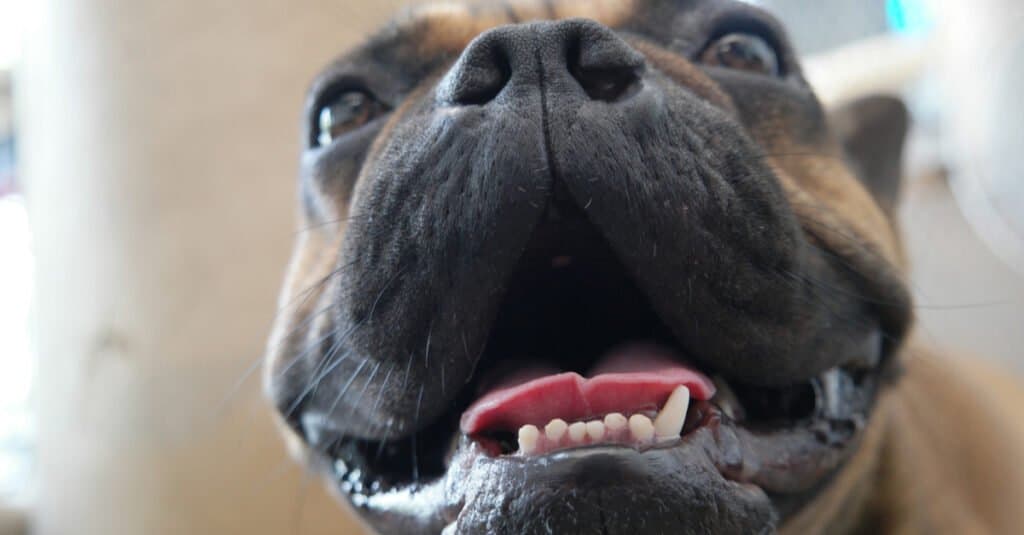
As diphyodonts, bulldogs grow two sets of teeth in their lifetime.
©praditkhorn somboonsa/Shutterstock.com
Bite Force
The American bulldog has a bite force of approximately 305 pounds per square inch (PSI). Compared to the average human bite force of approximately 160 PSI, bulldogs have a relatively strong bite. A PSI of 300 is strong enough to kill small-to-medium-sized prey and can cause significant injuries to humans, such as bone fractures and severe internal damage.
Common Dental Issues in Bulldogs
English Bulldogs are susceptible to dental issues because of their brachycephalic (flat-faced) structure and small jaws, which result in severely crowded, misaligned teeth. This creates hard-to-clean pockets, which can foster plaque and tartar buildup.
Daily at-home care is the most effective way to prevent plaque and tartar buildup and should be started as early as possible. Starting early helps establish a routine, making the process easier and less stressful for both the dog and owner as they age. Along with home care, regular professional dental cleanings with a veterinarian are recommended. Maintaining a proper dental hygiene routine is likely to result in fewer dental problems and may even lengthen the life of your pup.