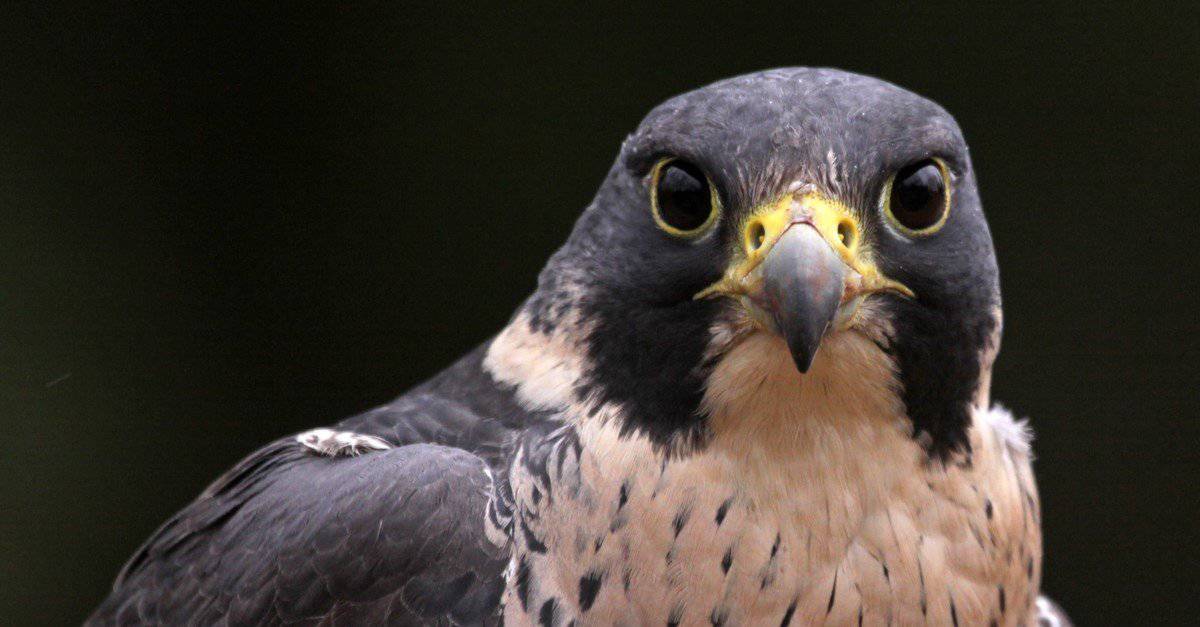

If wide population distribution is a sure sign of an animal’s evolutionary success, then the falcon is a clear winner. The roughly 40 types of falcons are distributed across every continent except Antarctica. While there’s a lot of variety among them, they all share some deadly characteristics. Most notable are their thin, tapered wings, which allow them to hit flight speeds of nearly 200 miles per hour. Such incredible speeds enable them to use their razor-sharp talons and viciously hooked beaks with maximum effectiveness. Keep reading to learn about different types of falcons and what makes these birds so special.
1. Peregrine Falcon: The Ultimate Aerial Predator
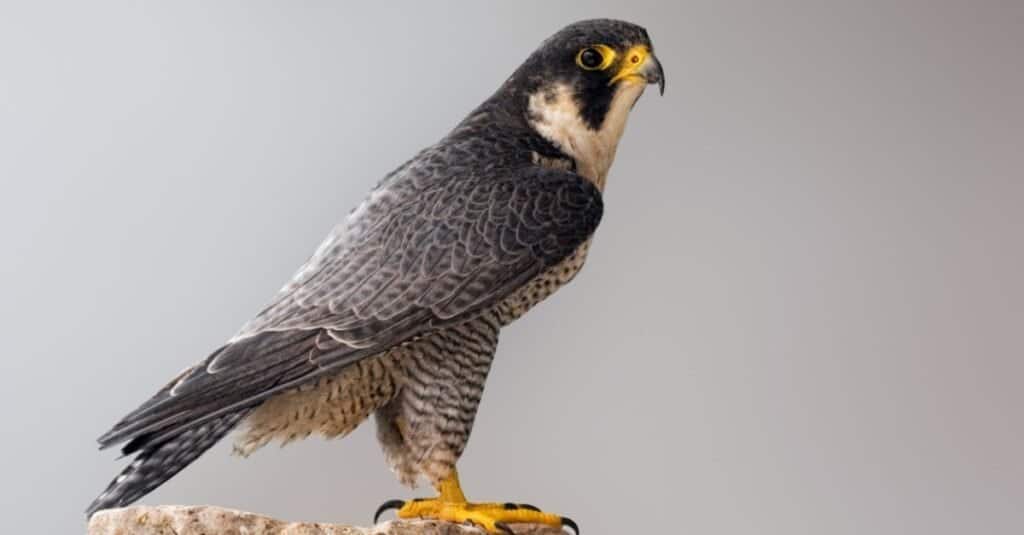
The peregrine falcon is the fastest animal in the world, diving at speeds in excess of 200 mph.
©iStock.com/hstiver
The peregrine falcon (Falco peregrinus) is the most populous and widely dispersed raptor in the world, an accomplishment that underscores how deadly and effective these birds of prey really are. Regardless of the environment they find themselves in, the peregrine falcon is always an apex predator. Researchers have even documented potential prey species like the western sandpiper employing generational adjustments to their migration patterns to avoid sites with prevalent peregrine falcon populations.
It’s no wonder smaller birds would want to avoid the territory of a peregrine falcon. The dive speed of a peregrine falcon is 200 mph, with one report of a falcon reaching 242 mph. At that rate of speed, they are able to swiftly maneuver to capture the most agile prey. Pigeons are the most common prey for peregrine falcons, but they’ve been known to snatch up waterfowl and songbirds as well.
2. Grey Falcon: The World’s Rarest Falcon
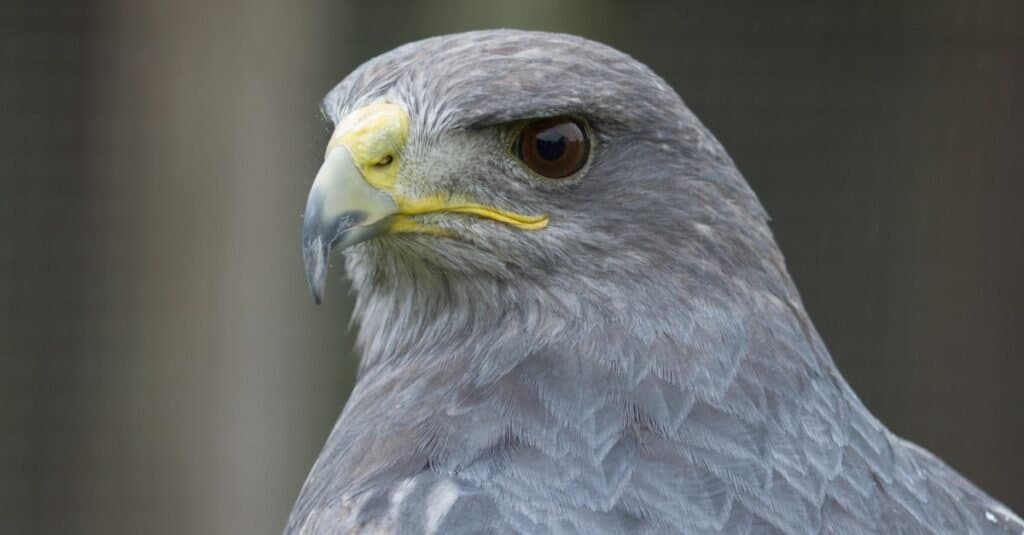
The endangered grey falcon is only found on mainland Australia.
©Rob Francis/Shutterstock.com
Recent estimates suggest there are around 1,000 mature grey falcons (Falco hypoleucos) remaining, all of which are found in mainland Australia. Although it’s a bit smaller than the peregrine falcon, this species has a very similar build and employs similar hunting tactics. They tend to prefer wide-open prairies, deserts, and grasslands where they can swoop in on unsuspecting prey.
Smaller birds — particularly songbirds, budgerigars, and pigeons — make up roughly 88% of a grey falcon’s diet. However, they’ve been known to feast on small mammals and reptiles as well. Some grey falcons have also been seen along the coast plucking prey from the surface of the water.
3. American Kestrel: The World’s Smallest Falcon
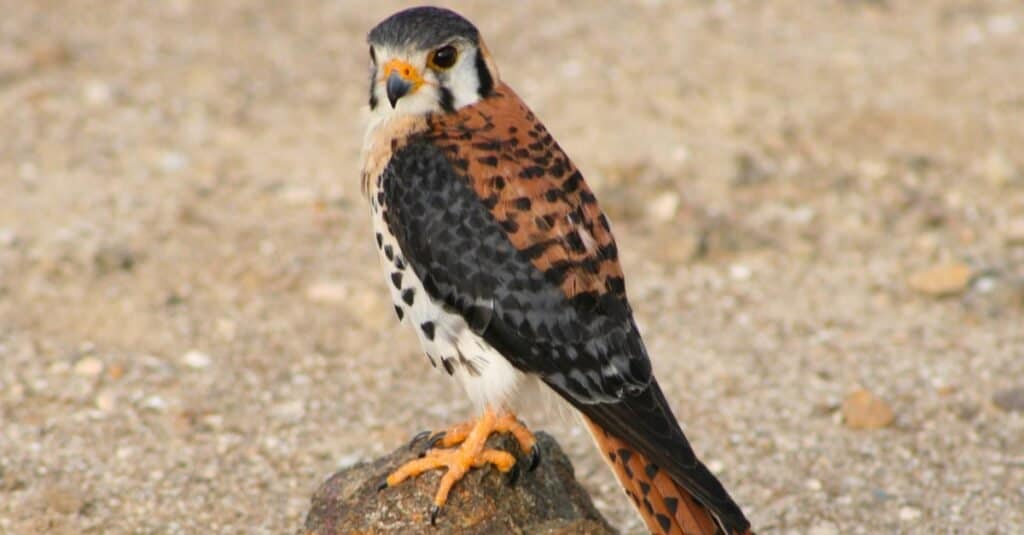
The American kestrel is the most common and smallest falcon in North America.
©Megan M. Weber/Shutterstock.com
The average American kestrel (Falco sparverius) is roughly the size of a blue jay, but it hasn’t lost an ounce of the killer instinct that its larger kin are known for. They’re also one of the most successful birds of prey on the planet and are currently recognized as the most common falcon in North America.
To compensate for their small size, these birds take on significantly smaller prey than the standard falcon. Large insects like caterpillars and grasshoppers are regularly on the menu. The American kestrel also feeds on smaller birds, frogs, reptiles, and small mammals like voles and mice.
4. Gyrfalcon: The World’s Largest Falcon
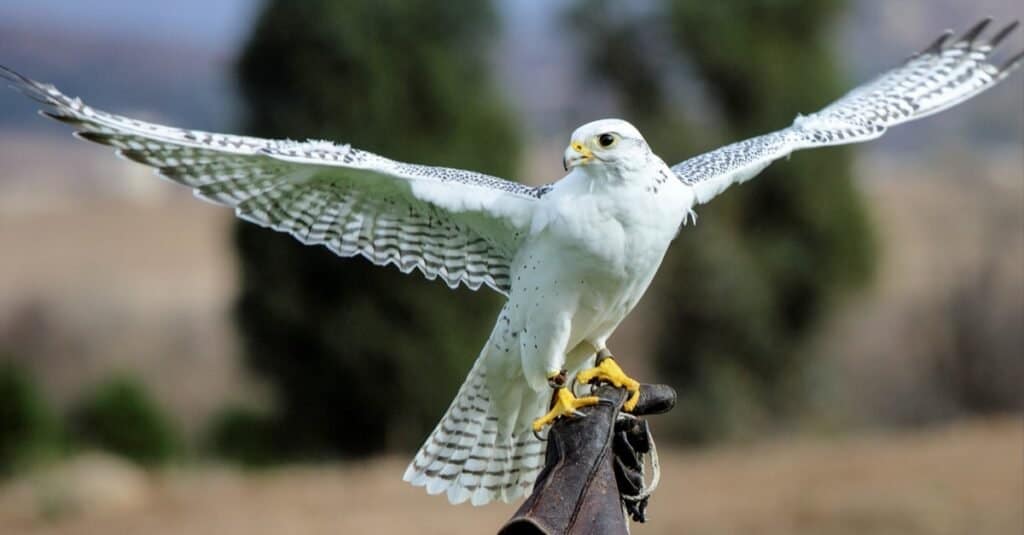
Gyrfalcons can fly at very high altitudes where only eagles can fly.
©John Hancock/Shutterstock.com
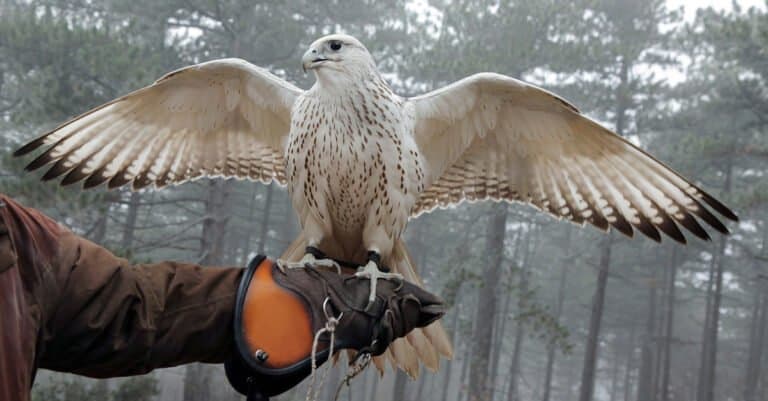
Among the different types of falcons, the gyrfalcon (Falco rusticolus) has the notable reputation of being the largest. The wingspan of the typical gyrfalcon is roughly 2 feet, and this bird weighs approximately 3 pounds. The bulk of a gyrfalcon’s nutrition comes from the roughly one-pound rock ptarmigans that share their habitat.
The preferred habitat for the gyrfalcon is the High Arctic. Taiga and tundra provide open and expansive areas for spotting prey, while cliffs and deciduous trees offer ideal perches for preparing an attack. These birds are rarely seen in populated areas, but some migrate far enough south to be seen in the northern United States and Canada.
5. Prairie Falcon: A Popular Choice for Falconry
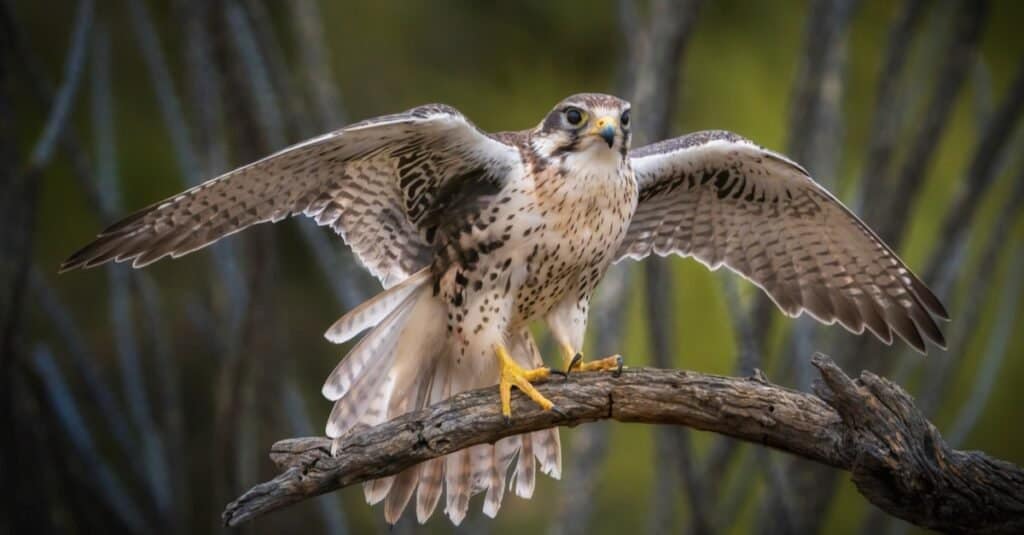
Currently, 19 states allow prairie falcons to be caught and trained for falconry.
©JayPierstorff/Shutterstock.com
Found throughout the Western and Southwestern American states, the prairie falcon (Falco mexicanus) will typically perch on sheer cliffs that protect it from potential predators and offer it a wide perspective on the plains and flatland below them. It has a similar dive-bombing hunting style to the peregrine falcon, which it resembles.
The prairie falcon further distinguishes itself from other falcons due to its diet. While many falcons tend to prioritize smaller birds that they simply pluck from the sky, prairie hawks prefer to prey on mammals. Ground squirrels make up the majority of this falcon’s diet, but they also feed on cottontail rabbits and kangaroo rats. These birds are a popular choice for falconry, with 19 states currently allowing them to be caught and trained.
6. Aplomado Falcon: A Sophisticated Hunter
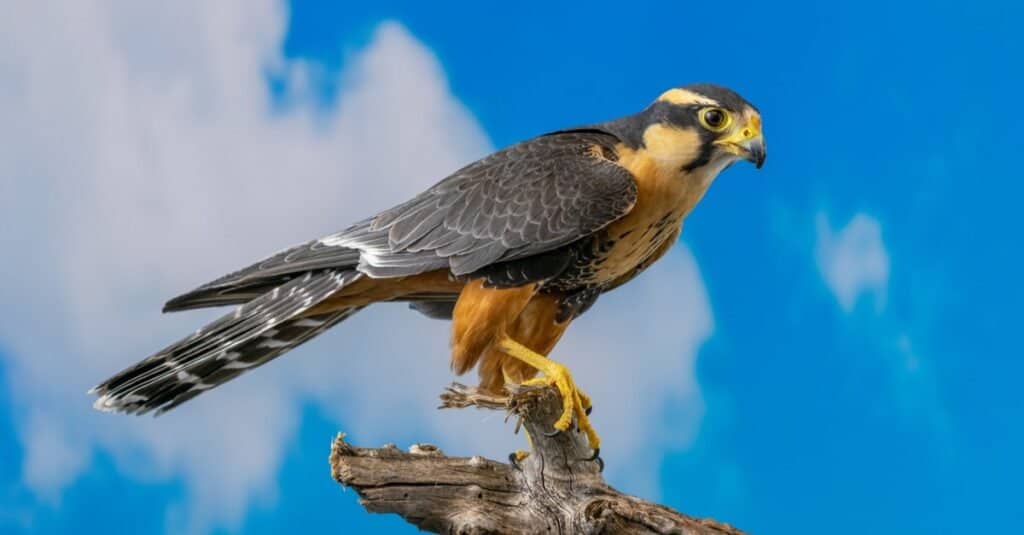
While hunting, Aplomado falcon pairs often pass food to each other in flight.
©JayPierstorff/Shutterstock.com
The U.S. population of the Aplomado falcon (Falco femoralis) is found primarily in southern Texas and southern New Mexico, where it has been reintroduced. It is currently classified as a non-essential experimental population under the Endangered Species Act, rather than being fully listed as endangered. The majority of these birds are now found throughout densely forested areas in Central and South America.
Aplomado falcons have been forced to develop more sophisticated strategies than falcons that inhabit open plains and valleys. Aplomado falcons hunt in pairs or family groups, flushing out potential prey so that their partners can capture it. Mating pairs hunting together will even share food mid-flight. Males are usually the ones to deliver the kill, and they’ll pass meat to their partners with their sharp talons. Tropical birds and insects constitute the majority of an Aplomado falcon’s diet, but they’re also not above eating crabs and small rodents when the opportunity presents itself.