
Quick Take
- A peregrine falcon half the heron's size is chasing it down mid-flight, and there is a specific reason it isn't backing off. See the size contrast →
- The heron carries a weapon capable of injuring predators, yet in this moment it's completely screaming in panic. The environment it's in changes everything. Watch the mid-air panic →
- Peregrine falcons don't normally hunt prey this large. So what pushes one to break that rule? Why this rule gets broken →
- Catching this encounter on film was almost impossible, and the slow-motion footage makes it even more unsettling than you'd expect. See the slow-motion footage →
Hunting is a natural part of the wild. Larger predators usually hunt smaller prey, which is often how the natural world works, but sometimes there are exceptions to this rule. One example is a falcon pursuing a heron mid-flight with dangerous intent. This YouTube Short by @randy_simplelife shows the pursuit as it plays out, and it’s an amazing sight. Read here to learn more about why the falcon might be hunting the heron.
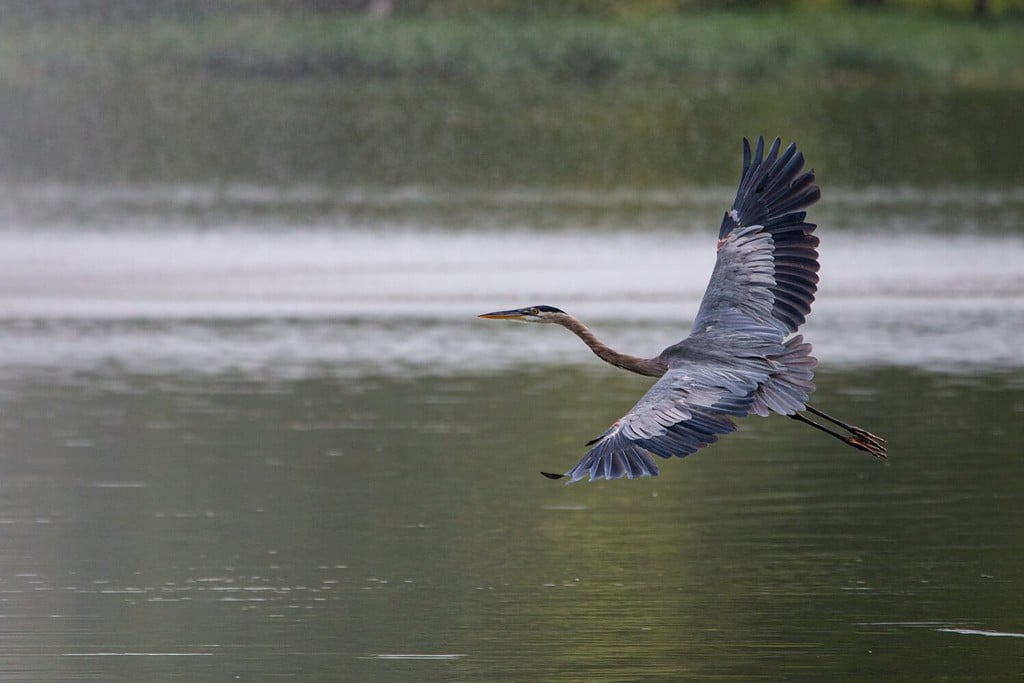
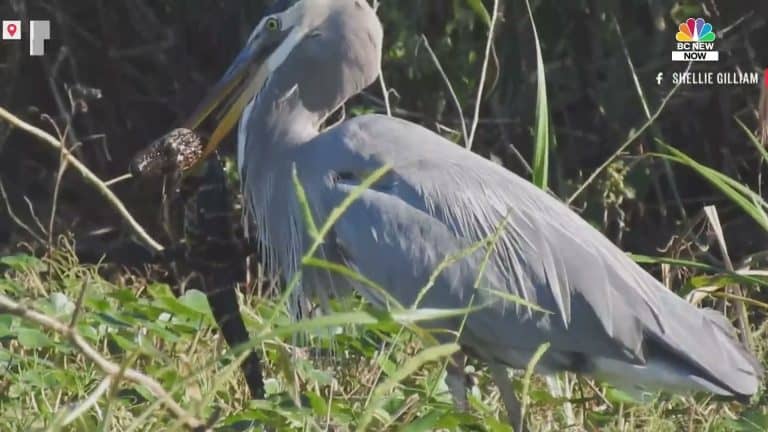
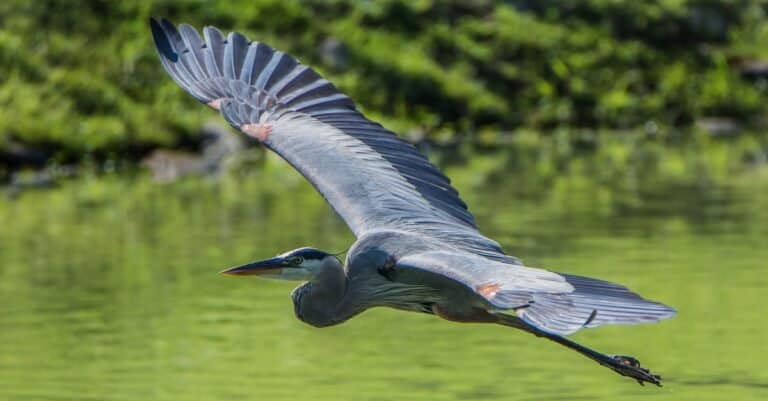
Great blue herons have a six- to seven-foot wingspan.
©Michael Munster/Shutterstock.com
Falcon Versus Heron
The video above is an intense, in-flight encounter between a peregrine falcon and a great blue heron. The slow-motion clip shows the heron desperately trying to escape by flying quickly toward the ground with the falcon on its tail. The falcon is making every effort to catch the heron, seemingly intent on causing harm or possibly killing it. Out of fear, the heron lets out a scream that sounds even more disturbing in slow motion, highlighting its desperation to escape.
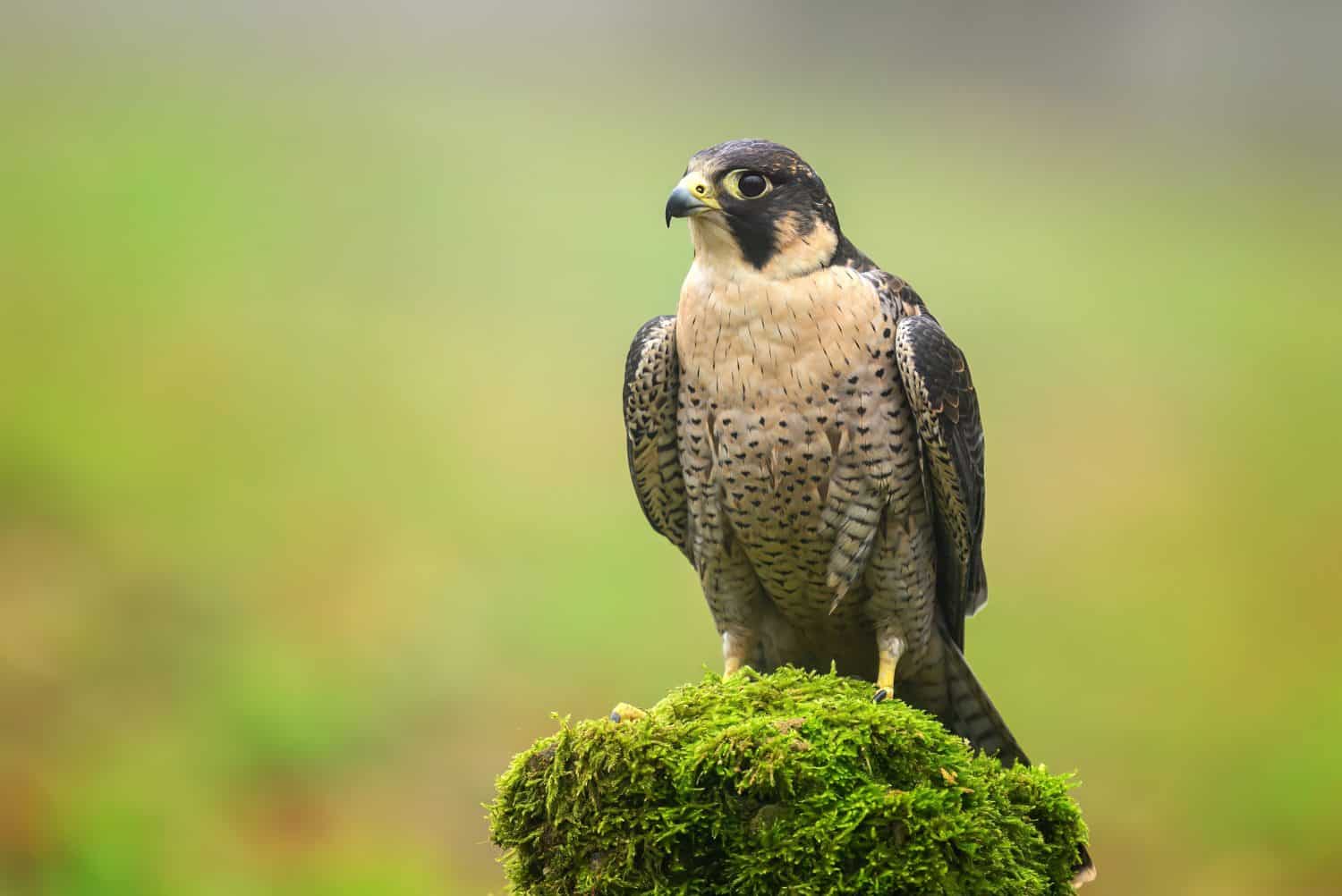
This amazing and unique sight left many viewers shocked, with some questioning if this is a normal encounter in the wild. With the sheer size difference alone, it seems unlikely that a peregrine falcon would risk its own life to hunt a great blue heron. These herons have a six- to seven-foot wingspan and spear-like bills that they use to injure predators. In comparison, peregrine falcons have a wingspan of about three to four feet. Peregrine falcons typically hunt by climbing above their prey and diving at speeds of around 150 to 200 miles per hour! Their narrow yet powerful build and exceptional eyesight make them remarkable hunters. Peregrine falcons typically hunt medium-sized birds like pigeons and doves, so why might one hunt a heron?

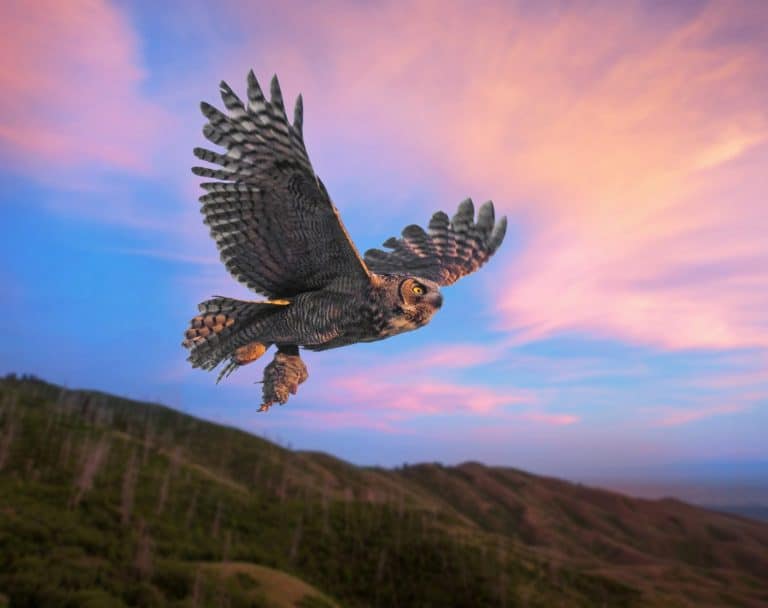
Peregrine falcons can dive through the air at up to 200 miles per hour, allowing them to quickly grab prey.
©DawnKey/iStock via Getty Images
Is This a Normal Encounter?
Great blue herons are not a typical prey for peregrine falcons. They are skilled hunters themselves, equipped with incredibly sharp beaks. They use these beaks to hunt frogs, snakes, rodents, and fish and to defend against predators. However, they mostly do this while standing in the water, using their long necks to strike like a spear. In the air is a different story, where they are a bit more defenseless.
The falcon is most likely attacking to defend its territory, as peregrine falcons can be aggressive with large birds that approach their nests. Peregrine falcons are extremely aggressive, especially when defending nesting sites. If a heron were to accidentally fly near one, it would be no surprise if the falcon chased after it. Great blue herons also feed on small birds, which overlaps with the falcon’s diet and may prompt the falcon to drive away potential competition. Even with all these reasons, a sight like this is extremely rare, and it’s incredible that it was caught on film.