
Quick Take
- The Luxor Sky Beam in Las Vegas is one of the strongest beams of light on the planet and is visible 250 miles away.
- It has created its own artificial ecosystem with many insects, such as moths, attracted to the light.
- Brazilian free-tailed bats arrive to feed on the insects, and they, in turn, are preyed on by raptors such as American kestrels and barn owls.
The Luxor Sky Beam pierces the night sky above the Luxor Hotel and Casino in Las Vegas. It attracts thousands of visitors each year to marvel at the spectacle, but it also has a profound effect on the local wildlife. So much so that a brand-new ecosystem, albeit an artificial one, has developed around it. Here’s how it happened.
What Is the Luxor Sky Beam?
Situated above Las Vegas’ iconic Luxor Hotel and Casino, the Luxor Sky Beam looks like a single, very powerful light. In fact, it is made up of 39 Xenon lamps working together to generate over 42.3 billion candlepower of light. This is one of the strongest beams of light on the planet and is achieved with the use of computer-designed, curved mirrors. It can be seen 250 miles away at cruising altitude by aircraft on a clear night. To stop it from blinding passing pilots, bright strobe lights are turned on before the beam is fully powered up. So, you can hardly expect wildlife not to notice it!
Why Are Insects Attracted to the Luxor Sky Beam?
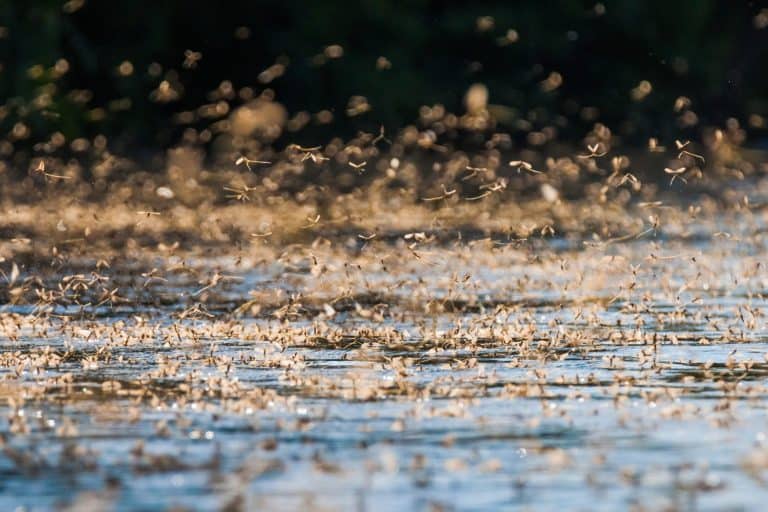
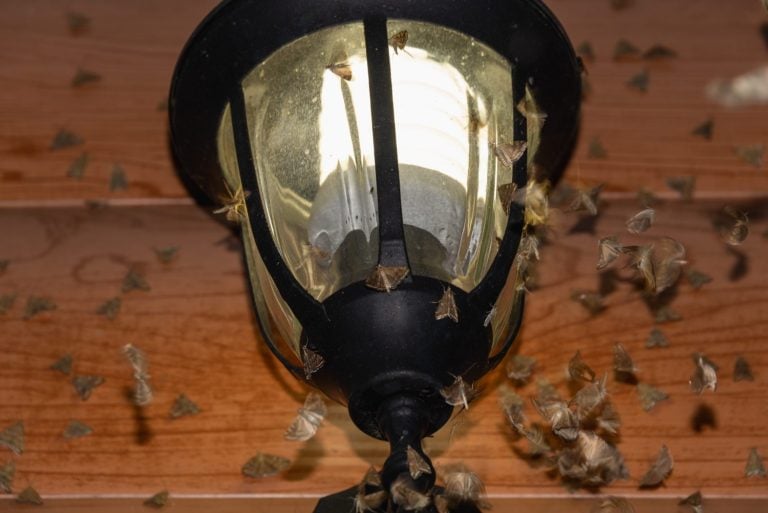
Soon after the light was first turned on in 1993, large numbers of flying insects, such as moths, were attracted to it. It’s no secret that many flying insects are drawn to artificial light, and there have been many theories as to why this is. However, research published in 2024 concluded that insects instinctively turn their dorsum (upper sides) toward the light.
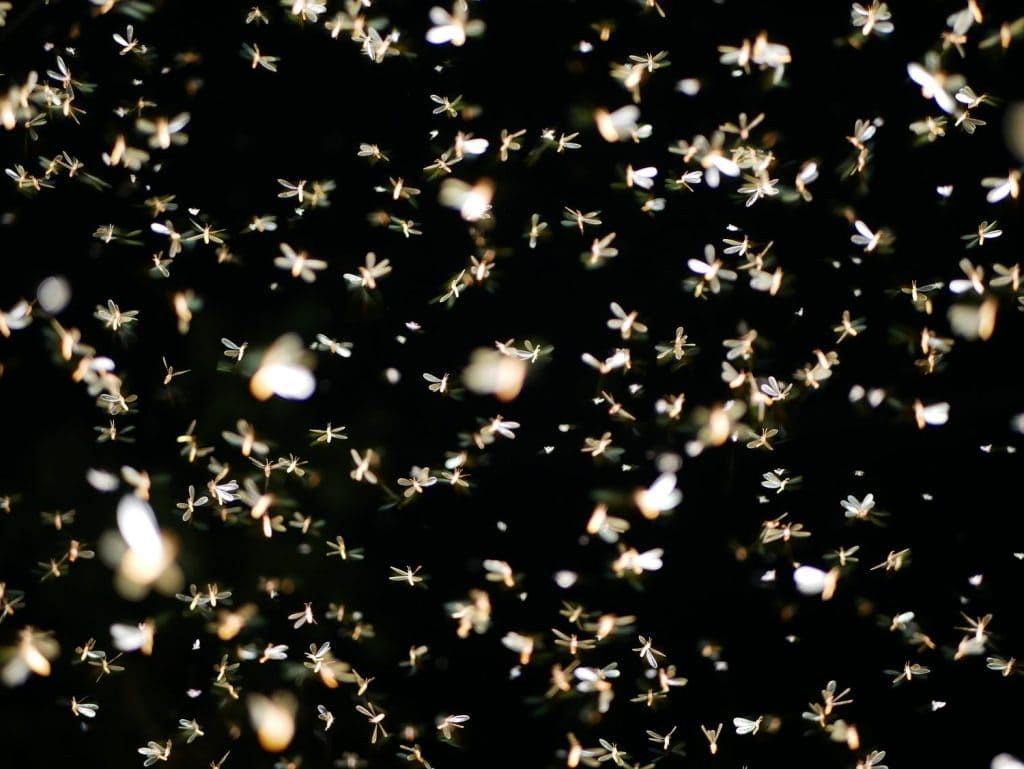
Moths are attracted to the Luxor Sky Beam.
©buddhawut/Shutterstock.com
As a result, insects constantly try to fly perpendicular to the light source. When only natural light is present, this helps them maintain proper flight orientation and control. However, when an artificial light source is introduced, they end up circling around it and effectively become trapped by the light. This is why you see so many insects around artificial light.
Building an Artificial Ecosystem
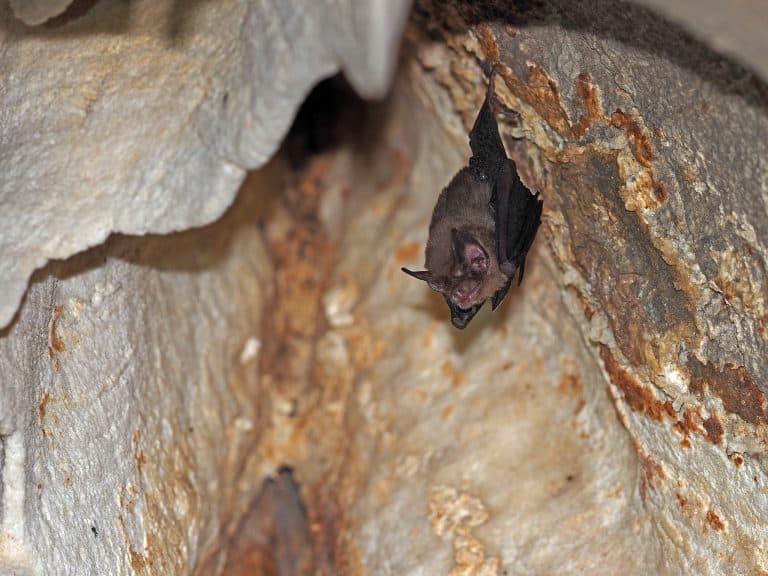
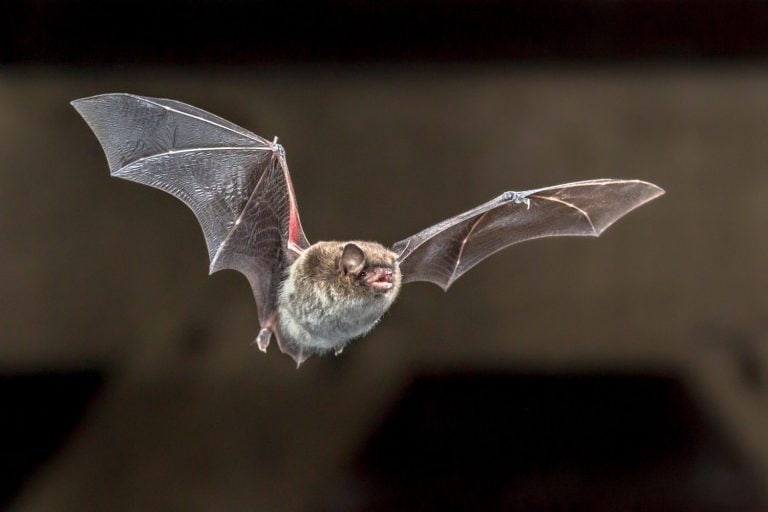
When so many insects are effectively trapped in one place, they become an attractive source of food for flying carnivores, and that is exactly what has happened at the Luxor Sky Beam. Brazilian free-tailed bats are willing to travel up to 20 miles from Red Rock Canyon to feast on these insects.
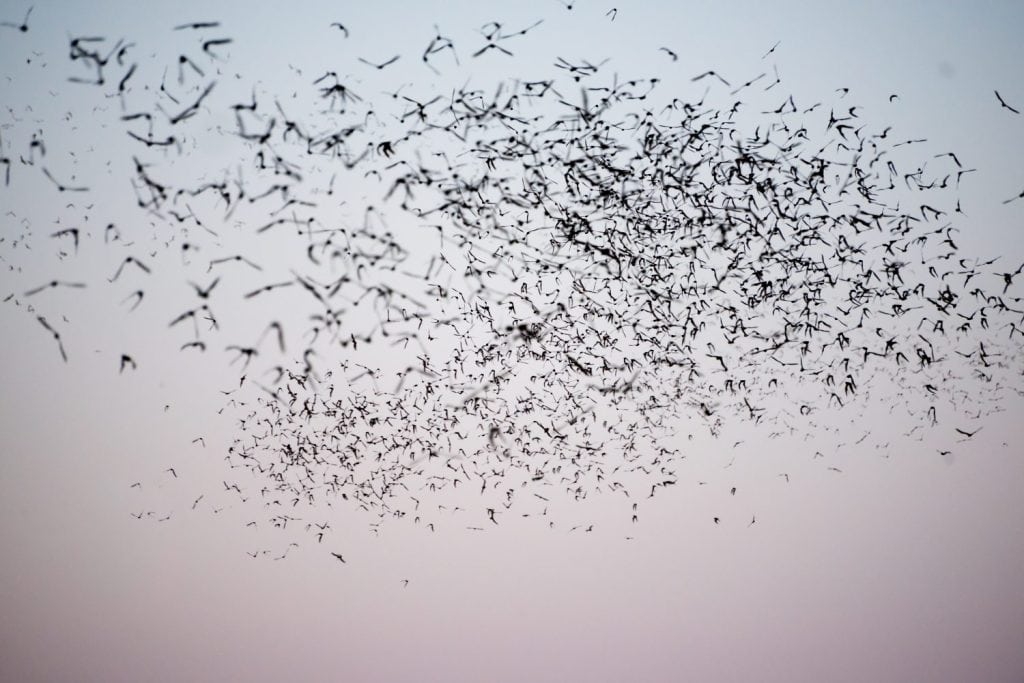
Brazilian free-tailed bats are attracted to the insects at the Luxor Sky Beam.
©GizmoPhoto/Shutterstock.com
Also called Mexican free-tailed bats (Tadarida brasiliensis), these guys feed on agricultural pests such as the cotton bollworm moth and many other flying insects, including beetles, flies, true bugs, and ants. They are aerial insectivores that use echolocation to find and consume their prey while they are in flight.
These bats are very fast and can reach speeds of over 60 miles per hour, and have been spotted at altitudes of over 9,000 feet hunting for migratory moths. Their colonies are large, reaching hundreds of thousands or even millions of bats. When large numbers of bats gather at the Luxor Sky Beam to feed on insects, their predators also seize the opportunity to hunt.
Completing the Food Chain
Brazilian free-tailed bats are hunted by several avian predators, which are therefore also attracted to the Luxor Sky Beam. Their predators include red-tailed hawks (Buteo jamaicensis), which are among the most commonly spotted raptors in the Red Rock Canyon area. These are large birds with a wingspan of up to 52 inches. They can often be seen perched on power poles searching for prey.
The bats are also hunted by American kestrels (Falco sparverius), which are fairly common both in the desert and in the town. These are small falcons that can be recognized from other birds of prey by their long, narrow, pointed wings.
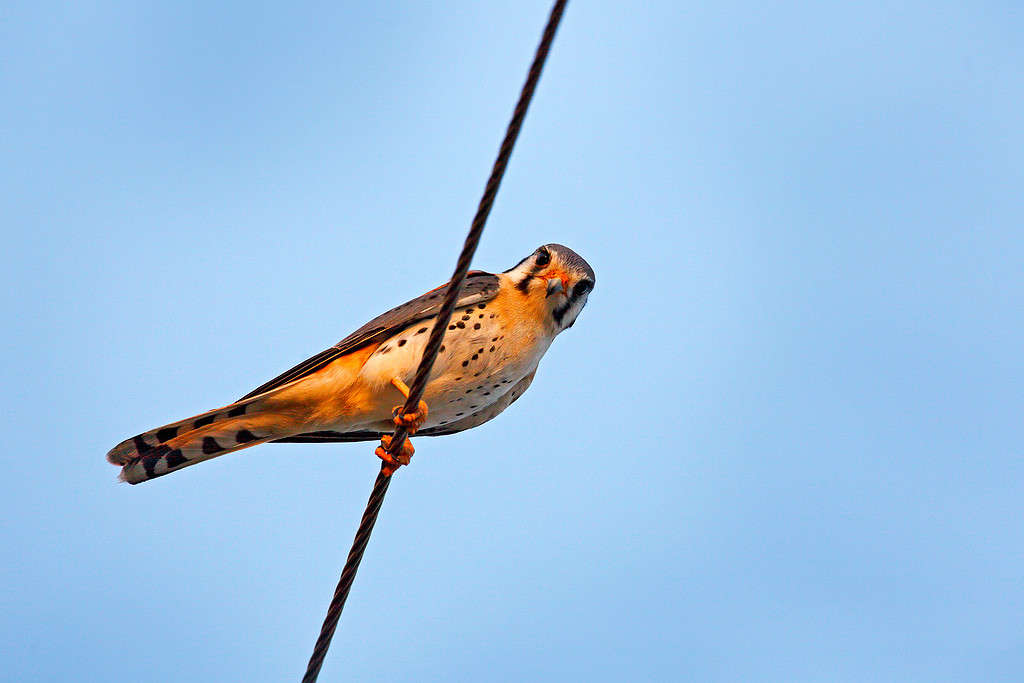
American kestrels are on the lookout for bats at the Luxor Sky Beam.
©Ondrej Prosicky/Shutterstock.com
Owls are not going to allow themselves to miss out on the feast! Both great horned owls (Bubo virginianus) and barn owls (Tyto alba) hunt Brazilian free-tailed bats. Great horned owls are usually found in rural areas on the outskirts of town, where you may spot them perched in trees. Barn owls roost in caves, crevices, or rural areas with old buildings and barns.
Invasion of Grasshoppers
As is the case with all ecosystems, unexpected visitors sometimes appear. In July 2019, the other Luxor Sky Beam wildlife were joined by a large number of grasshoppers. What was described by media reports at the time as an “invasion” of pallid-winged grasshoppers (Trimerotropis pallidipennis) took over the Strip and several other popular tourist areas. The Sky Beam had acted as a magnet to the grasshoppers, which were attracted to the ultraviolet light. Also, 2019 was an unusually wet year, and the grasshoppers migrated from southern Nevada and possibly from as far as Arizona.
The grasshoppers stayed in Las Vegas for weeks, and their numbers rose to over 45 million!
These phenomena demonstrate that when human activity dramatically alters landscapes with artificial light, it can profoundly affect animal behavior, which in turn impacts other species.