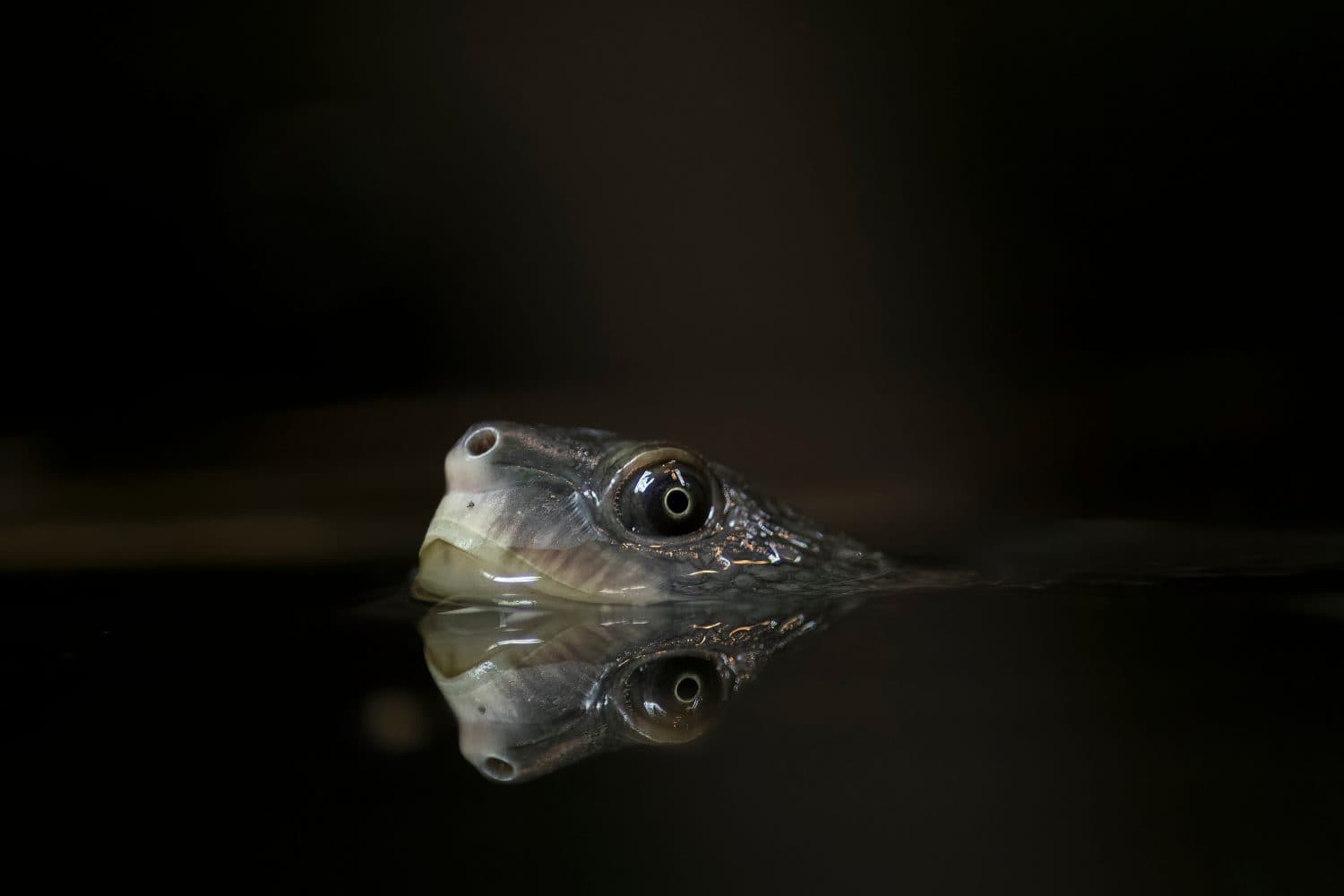

There is a lot more to river turtles than those still, dark creatures you may have spotted basking on a log. They play a vital role in the ecology of freshwater habitats and make a unique contribution to biodiversity. Here we will dive under the surface and enter the fascinating world of the river turtle.
Turtles at a Glance
Freshwater turtles are reptiles that need access to both land and water to complete their life cycle. Their defining feature is their shell, which is actually made from fused ribs and vertebrae (backbones). Turtles have been on the Earth for at least 220 million years and are found in diverse habitats. In the US, they are found in rivers, streams, marshes, bogs, and ponds. There are over 50 different species of turtles resident in the US, and these include the Eastern mud turtle, the pond slider, and the midland painted turtle.
Freshwater Turtle Habitat Use
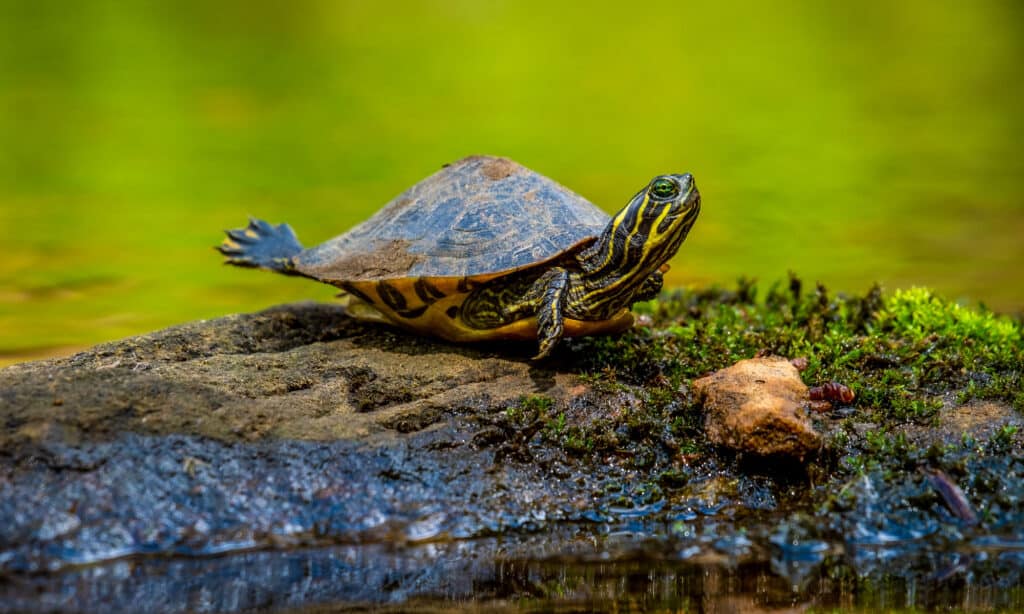
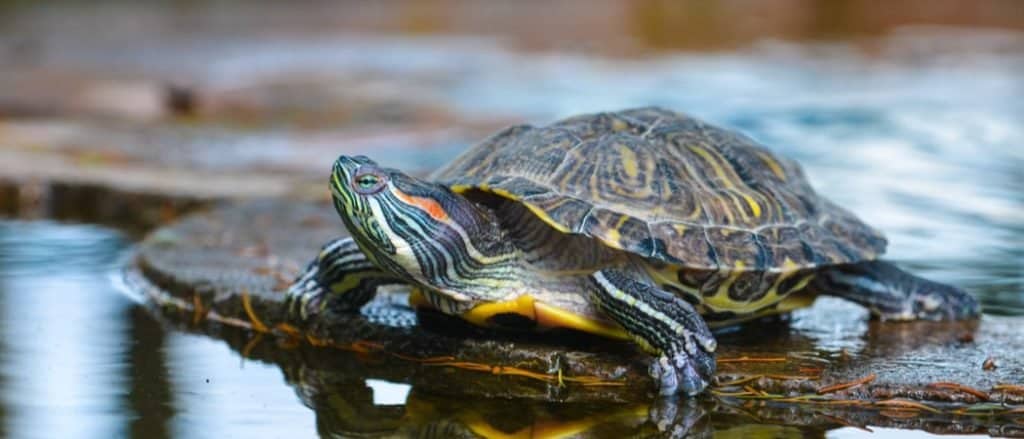
Turtles live in water and on land.
©samray/Shutterstock.com
Typically, freshwater turtles are active during the summer months. At this time, they spend their day resting, basking, and foraging. You have probably spotted them basking on logs and other surfaces around the water or at the surface of the water itself. They are ectothermic (cold-blooded) creatures and need to bask to regulate their body temperature. They also bask because it is beneficial for their skin and shells, and it speeds up their metabolism.
Overall, freshwater turtles favor shallow water with a slow current, with soft mud at the bottom and plenty of aquatic vegetation. Not all of them are good swimmers, so these species need a harder riverbed on which they are able to walk.
Some use the land surrounding the water only for egg laying. Others, such as the wood turtle (Glyptemys insculpta), spend a lot of time out of the water for both nesting and foraging. Many of them have fixed routes and terrestrial territories that they constantly return to. During the winter, however, they retreat into the water to hibernate.
Freshwater Turtle Feeding
River turtles do not have teeth, so they depend on their powerful jaws, beaks, and front claws to tear food apart. Smaller morsels are swallowed whole, and larger morsels are chewed. As omnivores, freshwater turtles eat a wide range of both plant and animal material. The exact diet depends on the species and location, but it typically includes snails, slugs, worms, crayfish, and insects. Some eat more plant material, and others scavenge on dead animals. In turn, turtles are a source of food for animals such as birds, snakes, and raccoons.
Understanding Biodiversity and Ecosystems
To truly appreciate how important turtles are, we first need to explore the concepts of biodiversity and ecosystems. Biodiversity refers to the variety of living things in a region. An ecosystem is a community of organisms that all interact with each other and the environment. Every ecosystem relies on nutrients, which need to be recycled, and this can only be achieved if the system is biodiverse enough. If an area becomes less biodiverse, nutrients cannot be recycled properly, and the ecosystem is less productive and resilient.
Why Turtles Are Essential
River turtles distribute nutrients.
©Orhan Cam/Shutterstock.com
Turtles play a crucial role in ecosystems thanks to their unique lifestyle. Because many of them scavenge on dead matter in the water, they act like a garbage disposal crew. They reduce the number of harmful bacteria that would otherwise proliferate on this dead matter. They also pick up nutrients from the water and carry them onto land when they spend time there. Purely aquatic organisms cannot do that. A combination of their diet and unique digestive system means they deliver seeds, bacteria, and nutrients from one habitat to another. In doing so, they help new plants grow and provide them with the fertilizers they need to thrive by depositing their droppings.
At the same time, they act as little storage containers for nitrogen and phosphorus, which are fixed in their bones. As turtles age and grow slowly, they no longer need these minerals, so they are gradually released into their territories. This process benefits the plants that live there.
Turtle Conservation
This role as a ‘delivery animal’ between water and land is essential for the survival of ecosystems. If turtles are lost from a habitat, this role cannot be fulfilled by any other animals. This has a cascading effect on all the plants and animals that live there. Sadly, our river turtles are under pressure. They face challenges from road traffic and misinformed persecution (people think they are a threat to fish populations). For example, the Pearl River map turtle (Graptemys pearlensis), a freshwater turtle species from the Pearl River drainage in Mississippi and Louisiana, has been designated as a threatened species under the Endangered Species Act in July 2024. It is only by protecting river turtle populations that the ecology and biodiversity of our rivers and streams and the areas around them can be preserved.