
Quick Take
- Maryland's feistiest freshwater game fish isn't its biggest, and most anglers don't see that fight coming until the line goes taut. Meet Maryland's feisty fighter →
- Miss a specific two-hour window on the water and your striped bass chances drop dramatically. What triggers it is something most anglers never figure out. Discover the feeding window →
- One Maryland city holds a global fishing title that draws competitors from around the world every August, and the target species might just surprise you. Explore Ocean City's world title →
- The so-called 'beginner' fish on this list has one behavioral trait that even seasoned anglers wish every species shared. See the beginner fish's secret →
Maryland offers world-class sportfishing from freshwater species in the Chesapeake Bay to offshore, pelagic fish in the Atlantic. The state is known for offering some of the best fishing opportunities on the East Coast. Whether you’re an experienced angler or you’re just starting out, take a look at some of the best fish you can catch in Maryland before you plan your next fishing trip.
Smallmouth Bass
Sometimes referred to as green, brown, or black bass, the smallmouth bass is a terrific game fish. This is one of the feistiest North American freshwater game fish. If it’s your first time reeling in a smallmouth, you’ll be surprised by how much of a fight they can put up. Stream smallmouth are especially feisty when you hook them on a light line.
Even though these are one of the most challenging freshwater game fish, they’re not the largest. On average, a smallmouth bass weighs between 1 to 2 pounds. A four-pounder qualifies as a real trophy, but it will take a 5- to 7-pound smallmouth to earn bragging rights.
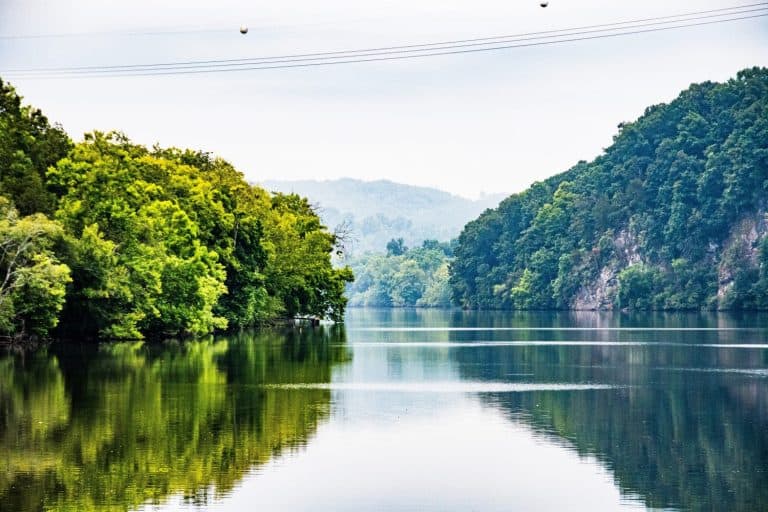
The best times to fish for smallmouth bass in Maryland are April to May and September to November. Smallmouths are self-sustaining in Maryland, with healthy populations especially in the western and central watersheds. Some of the top hotspots include the Upper Potomac River, the Monocacy River, Deep Creek Lake, and the Susquehanna River and Conowingo Reservoir.
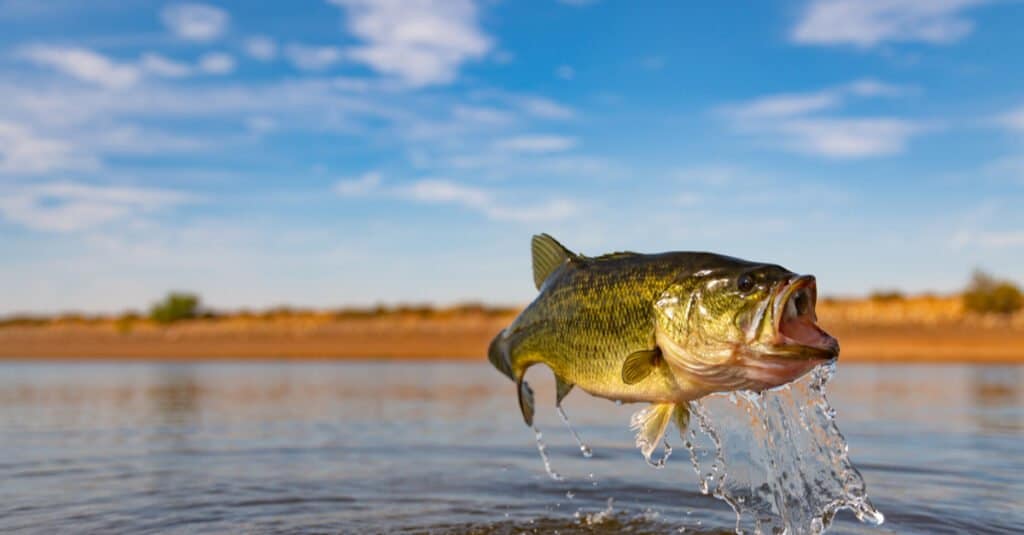
Smallmouth bass are are self-sustaining in Maryland.
©Ryno Botha/Shutterstock.com
Striped Bass
Are you looking for a fish that roams in massive schools, is a voracious feeder, and can reach large sizes? Then you should set your sights on the striped bass, also called stripers or rockfish. These fish can weigh over 50 pounds in saltwater environments and get somewhat smaller in land-locked lakes, but most measure 2 to 3 feet long and weigh 10 to 30 pounds. You’ll find that landlocked stripers like to hang out in deep waters, whereas sea-run striped bass will roam coastal waters, entering both deep and shallow areas. Both sea and landlocked striped bass feed in quick spurts.
If you want to tip the odds in your favor, you’ll need to focus your efforts at peak feeding times. The best time to fish for freshwater stripers includes low light conditions, such as early morning and late evening. Are you fishing coastal waters? Then fish two hours before and after a tide change. If you fish two hours before and after a tide change during low-light conditions, you’ll have the most success.
The Chesapeake Bay and its tidal rivers are considered the best places to fish for stripers. As of 2026, open season to harvest striped bass in the Chesapeake Bay is May 1–July 31. Anglers can also harvest striped bass September 1–December 5. Fishing is closed from August 1–31, and the rest of the year is open only to catch and release. Landlocked freshwater populations can also be found in Liberty, Piney Run, and Rocky Gorge reservoirs.
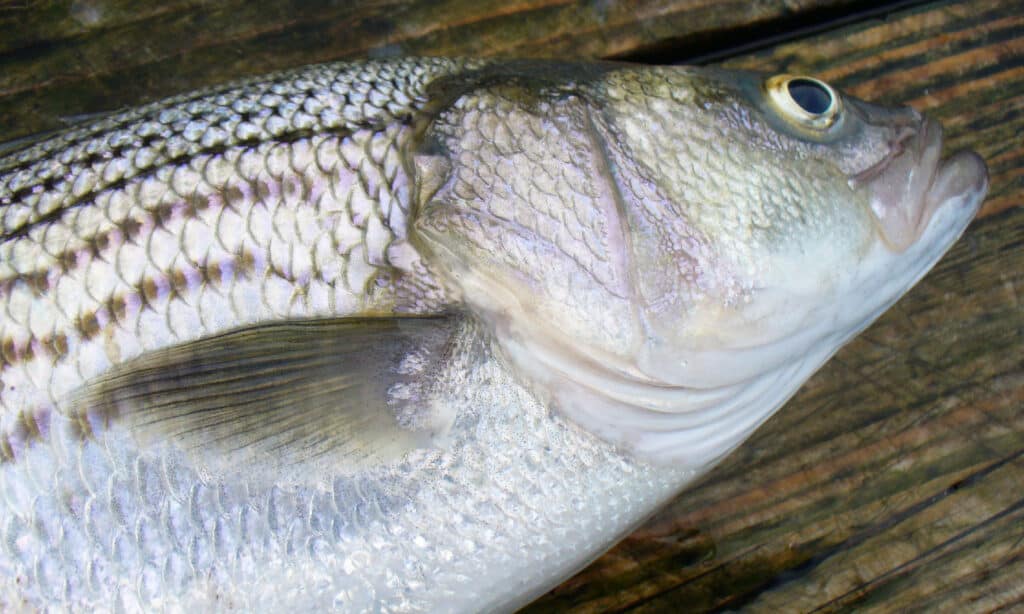
Striped bass is among the most popular recreational fisheries in Maryland.
©iStock.com/Coast-to-Coast
Pumpkinseed Sunfish
Pond perch, sunny, and punkie are all common names for the pumpkinseed. This is one of the most common sunfishes and is easy to recognize. Unlike bluegills, this fish is a mix of orange, blue, green, yellow, and red. It has an olive-colored body, noticeable black center, yellow rim, and vibrant red spot on its gill cover. On average, a pumpkinseed sunfish grows 4-6 inches long and weigh about half a pound, rarely exceeding one pound.
Pumpkinseed sunfish are on our list of the best fish to catch in Maryland because they’re abundant and fun to catch, especially for young or new anglers. Pumpkinseeds have a reputation for always being willing to take the lure or fly. These fish also make good table fare. Efforts to remove excessive aquatic vegetation have helped pumpkinseed fish thrive in Maryland. These native fish are self-sustaining and do not rely on hatchery stocking.
The best time of year to fish for pumpkinseeds is when they spawn in May–July, as they move to shallow water to lay their eggs, but they can be caught near the shore even in the height of summer. These fish can be found in most rivers, lakes, and ponds, but they are very common in the freshwater tributaries of the Chesapeake Bay watershed.
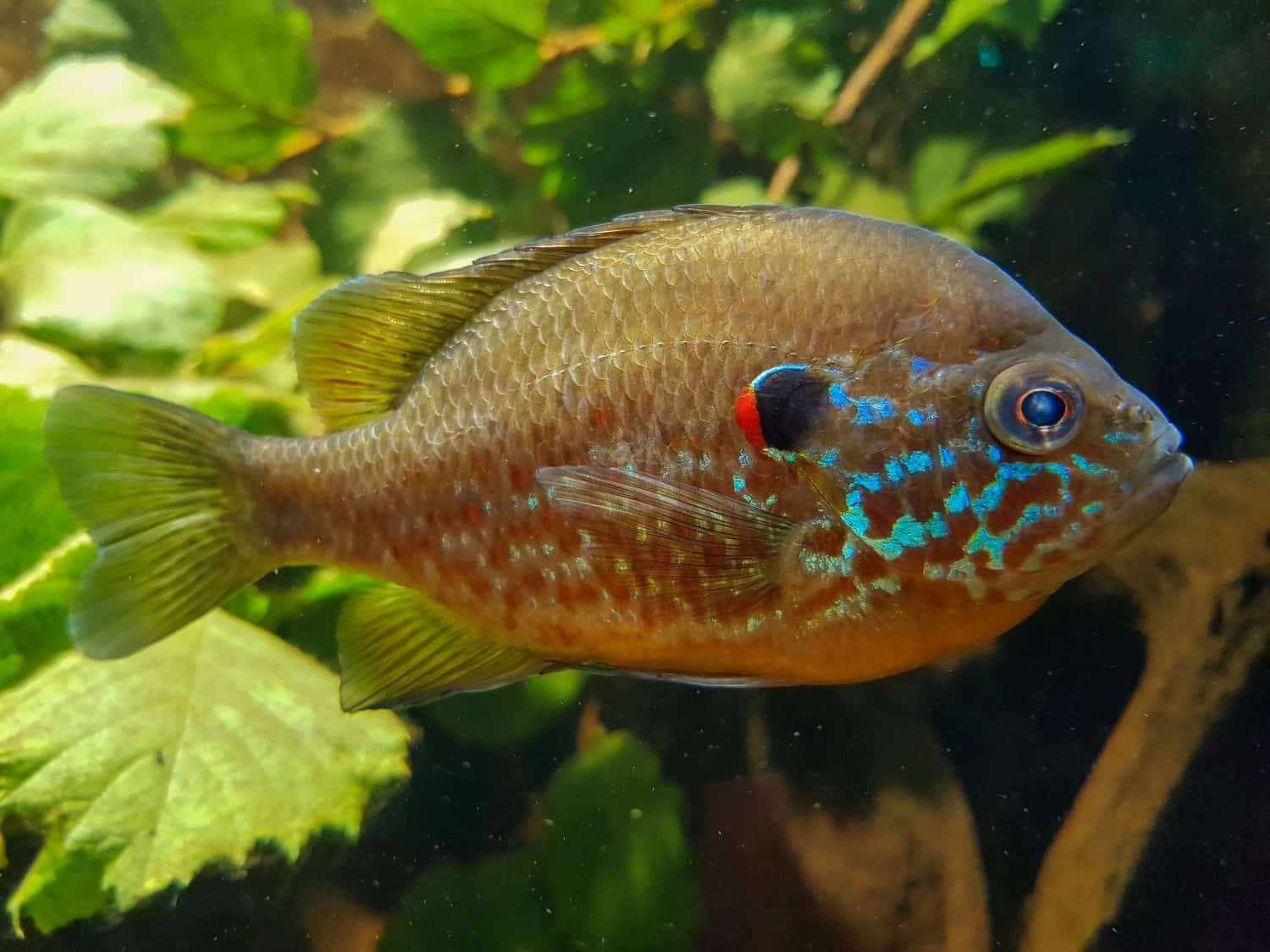
Pumpkinseed sunfish are easy to catch and good to eat.
©Fabian Junge/Shutterstock.com
Walleye
Walleyes are a perennial favorite among anglers. These strong, muscular fish can grow to be quite large. The world record walleye was caught in Tennessee and weighed an incredible 25 pounds. In Maryland, a typical walleye measures about 15 to 22 inches long and weighs 1 to 4 pounds. Trophy-sized fish can reach over 30 inches and weigh over 10 pounds.
Walleyes are freshwater fish, rarely wandering into brackish waters. These fish can thrive in many environments, but they prefer shallow lakes with cloudy or even turbid water. The larger the lake, the better. The cloudy water is suitable for the walleyes’ light-sensitive vision. If you’re fishing in clear water, you’ll have to wait for low-light conditions to get any bites.
Walleye fishing is best during their spawning run in March–April. They frequently congregate near river dams like the Conowingo Dam on the Susquehanna River or Potomac River dams, with high numbers near Harpers Ferry. Deep Creek Lake is also a popular location for walleye. As noted above, low-light conditions are best, so early morning and late evening fishing is the most productive.
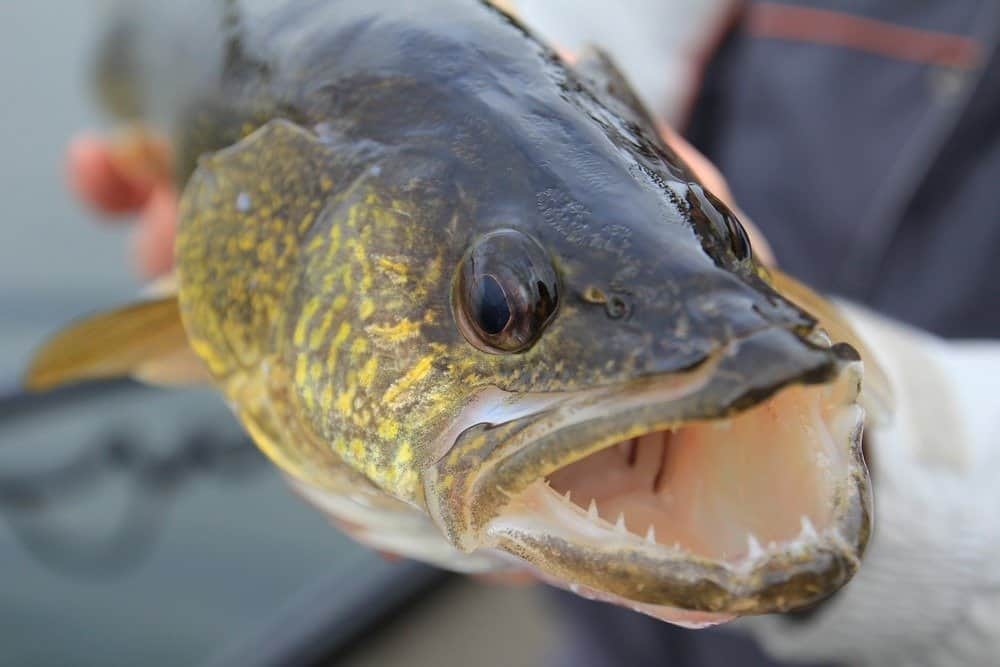
Walleyes prefer low-light conditions, so early morning and late evening are the best times to fish.
©ElvK/Shutterstock.com
White Marlin
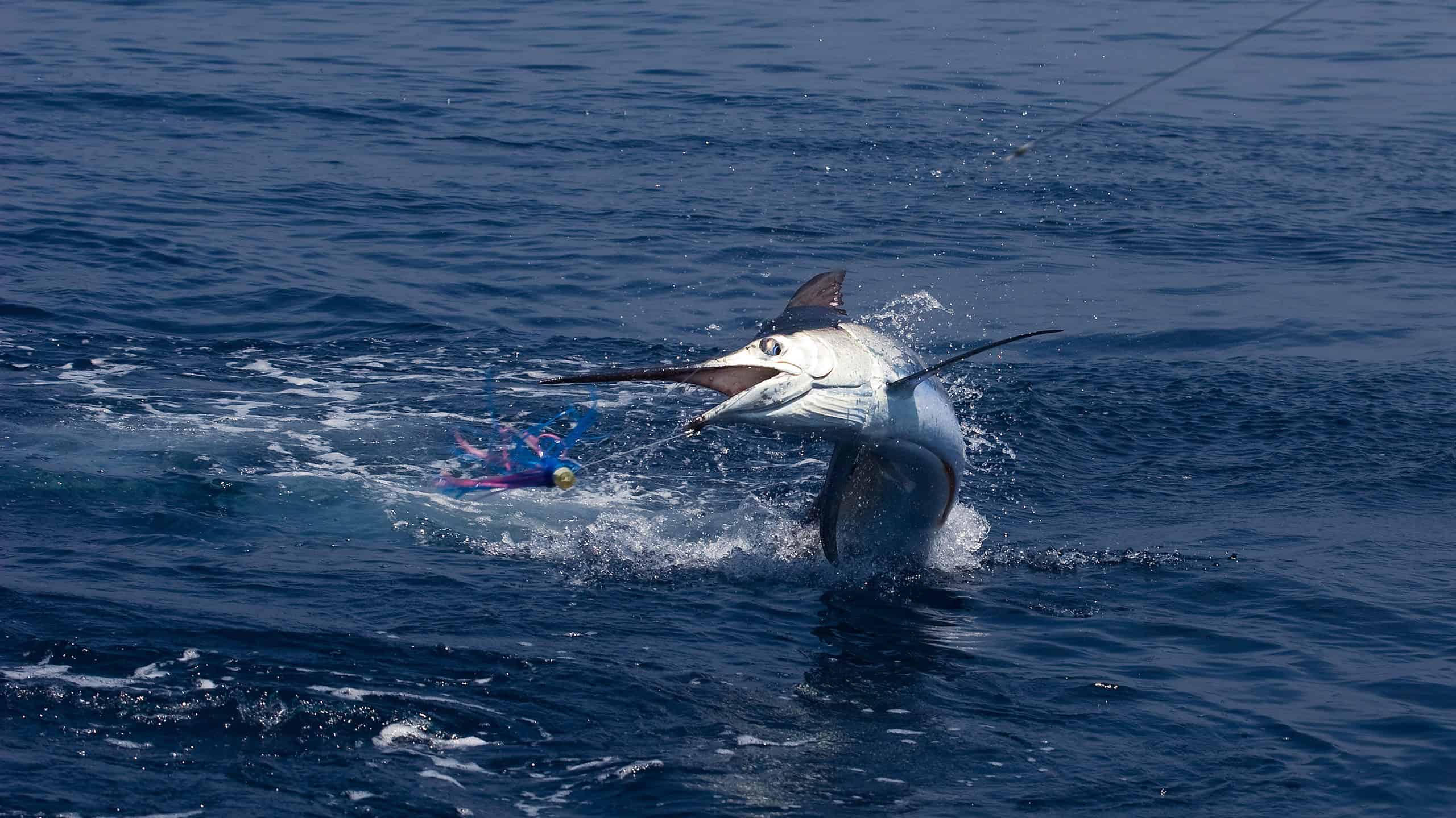
The white marlin is widely considered one of Maryland’s signature ocean sportfish. In fact, Ocean City is called the “White Marlin Capital of the World.” The white marlin is a billfish with a long spear-like upper jaw. They are dark blue-to-brown on top with silvery bellies. They also have rounded fin tips. White marlins can reach up to 9 feet long and typically weigh between 50 and 180 pounds.
White marlin live in the open waters of the Atlantic Ocean, typically staying closer to the surface during the day. They prefer warm surface temperatures above 70°F. White marlins migrate north to the Mid-Atlantic coast during the summer, when warm Gulf Stream waters push schooling fish closer to continental shelves and offshore canyons where marlins hunt.
Due to their migration pattern, white marlin are common targets of deep-sea summer and fall fishing in Maryland. A global tournament is also held each August in Ocean City called the White Marlin Open. Other popular offshore fishing areas include Baltimore Canyon, Washington Canyon, and Poor Man’s Canyon.
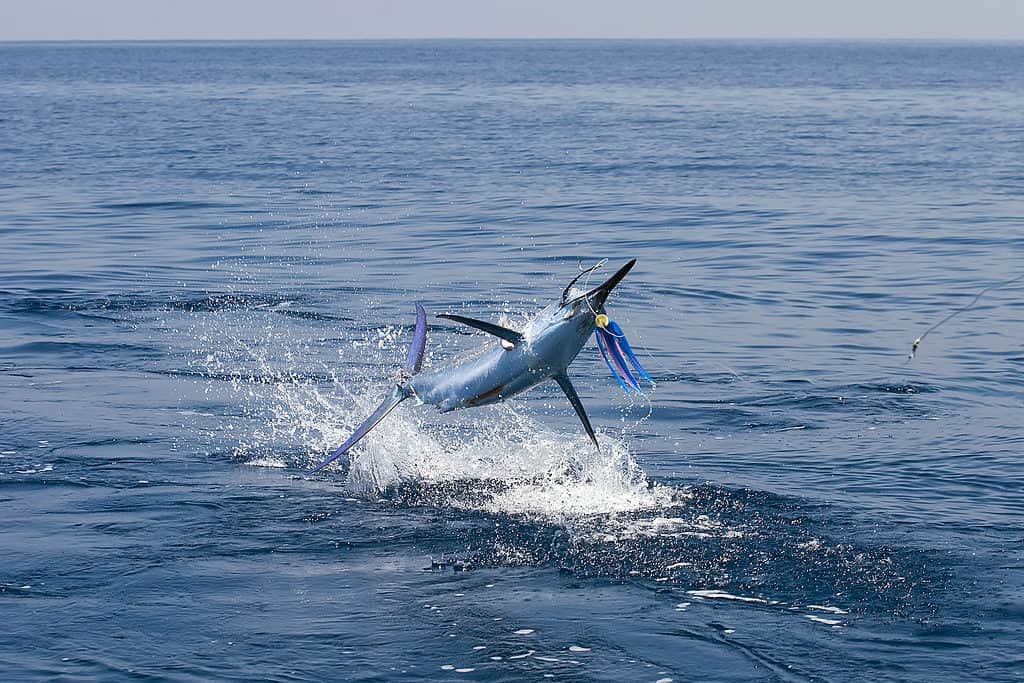
The white marlin is among Maryland’s most sought-after ocean sportfish.
©Neophuket/Shutterstock.com