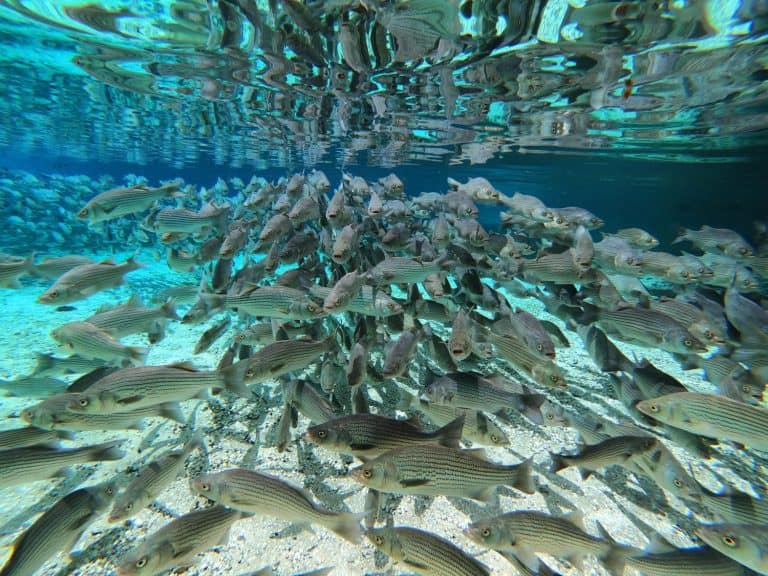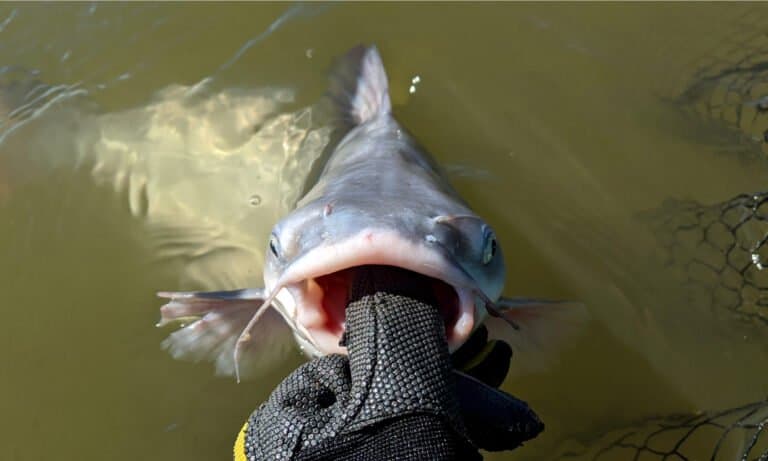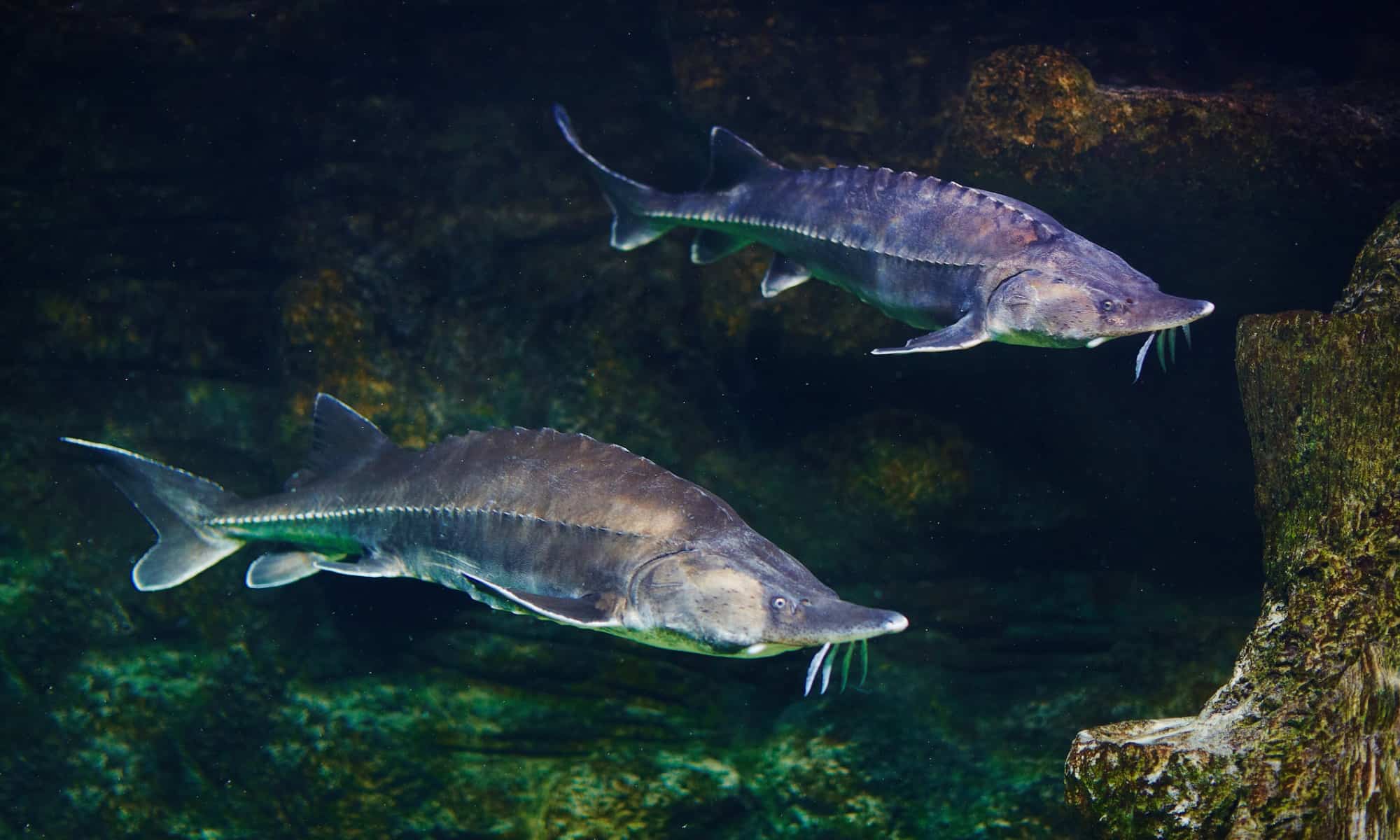

The Hudson River estuary and its watershed provide habitat to more than 200 species of fish. Different types of walleye, gizzard shad, sturgeon, channel catfish, white catfish, and eels have been recorded during the annual counts. The river offers a diverse range of habitats for these fish to thrive, meaning that some get to be pretty large. But just how big do they get? Let’s have a look at the biggest fish ever caught in the Hudson River!
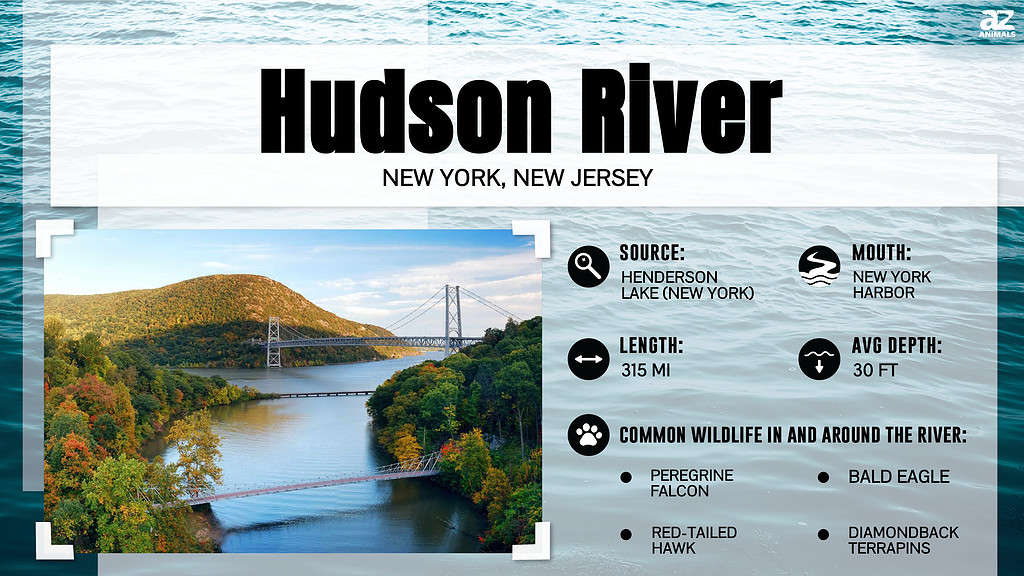
What is the Biggest Fish Ever Caught in the Hudson River?
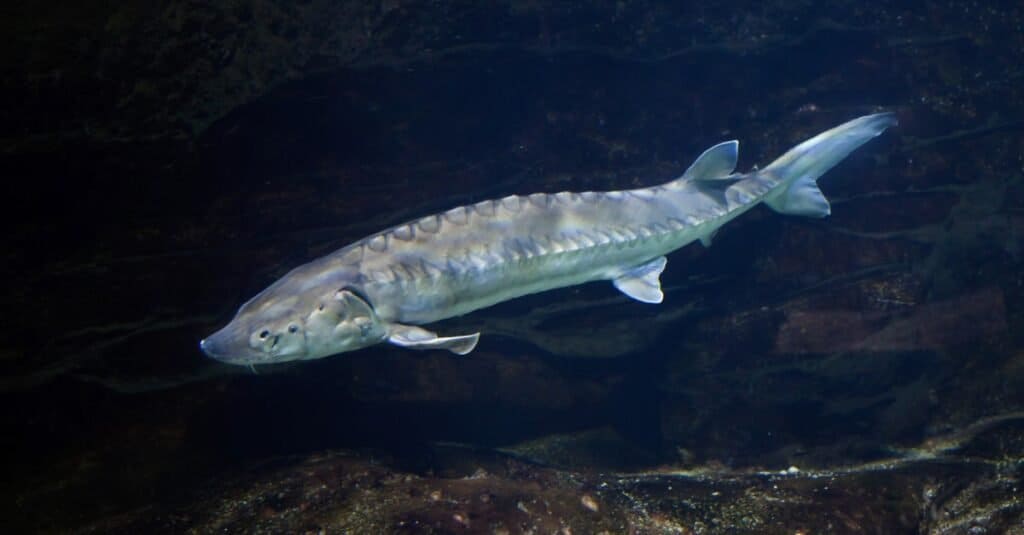
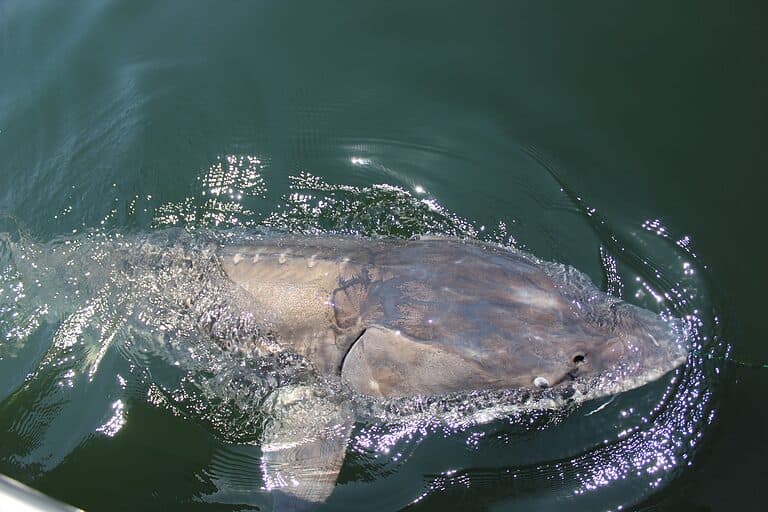
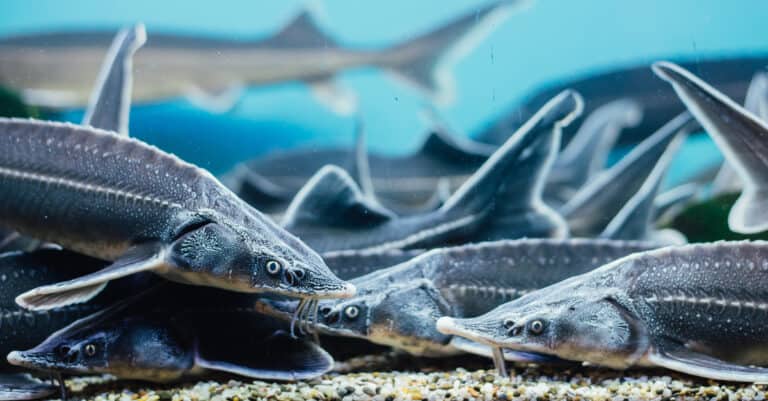
A very old, 14-foot Atlantic sturgeon was found in the Hudson River in 2019.
©Vladimir Wrangel/Shutterstock.com
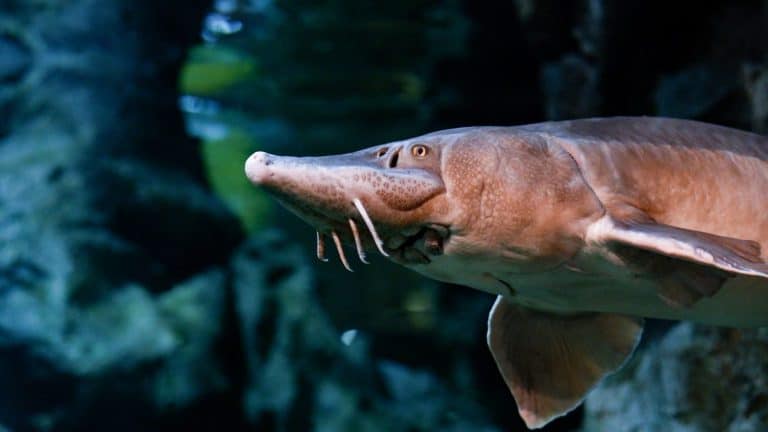
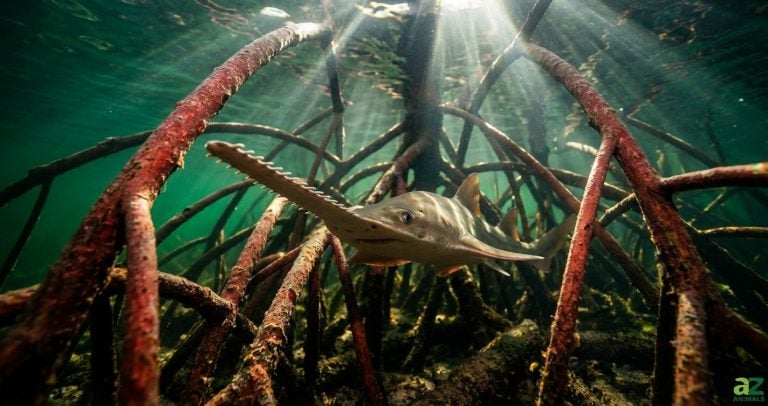
The largest fish ever caught in the Hudson River was a 14-foot Atlantic sturgeon, which was caught in 2019. Researchers had placed sonar equipment on the river near Hyde Park in Dutchess County and spotted a sturgeon lurking deep below the surface. The 14-foot sturgeon probably weighed about 800 pounds and was approximately 80 to 90 years old.
The University of Delaware geologist, John Madsen, who was running the sonar, said he could not believe it when the readings showed up on his equipment. According to Madsen, it’s very rare to see a sturgeon that large because they are usually about three to 10 feet long.
The state Department of Environmental Conservation was working tirelessly to bring back the endangered sturgeon population; that was when the discovery was made.
About Atlantic Sturgeons
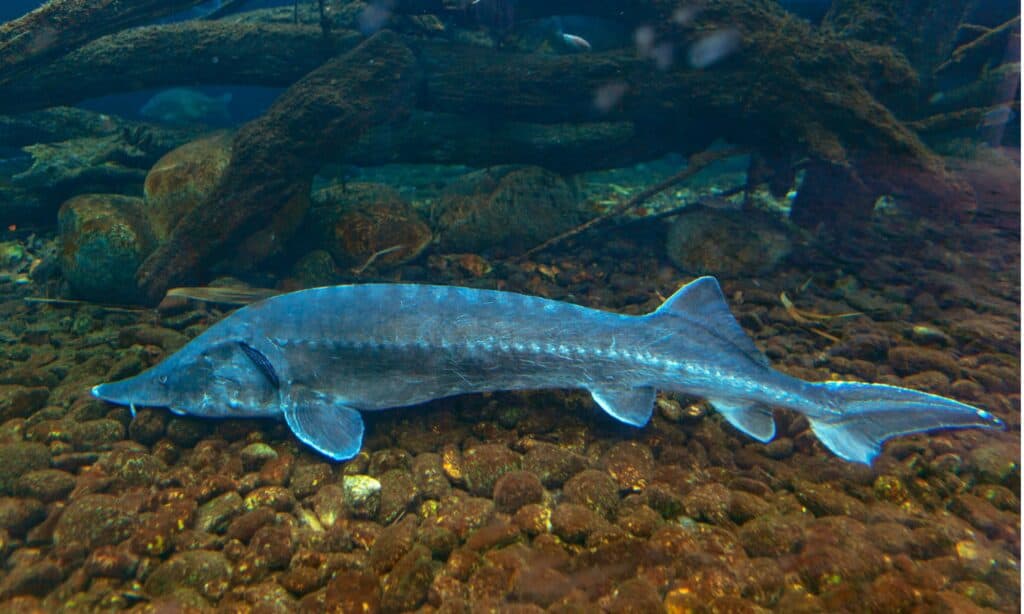
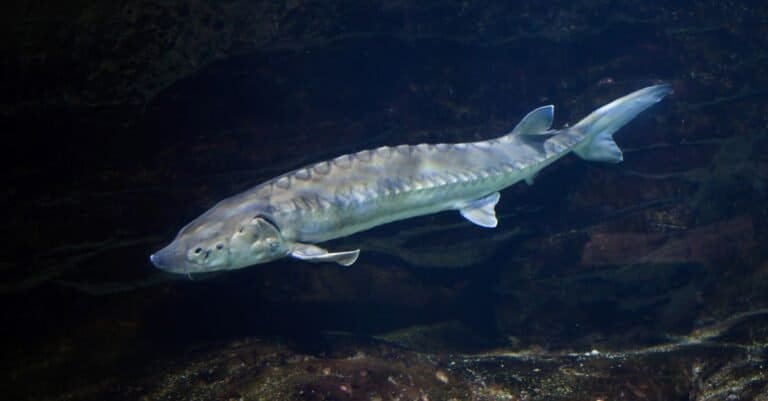
Atlantic sturgeons inhabit rivers and coastal waters from Canada to Florida.
©iStock.com/RussieseO
Atlantic sturgeons are living dinosaurs. They are considered prehistoric fish since they have been around for around 120 million years. They existed during the Cretaceous period when dinosaurs roamed the earth. Atlantic sturgeons are also considered primitive fish because they have undergone very few significant changes for millions of years.
Atlantic sturgeons inhabit rivers and coastal waters from Canada to Florida. Young ones are hatched in the freshwater of different rivers and head out to the sea as sub-adults. When they reach adulthood, Atlantic sturgeons return to their birthplace to spawn or lay eggs. A separate population is found in the Baltic region of Europe.
Their population has declined in many of their original habitats and is now considered threatened with extinction. The Atlantic sturgeon was officially listed under the Endangered Species Act by the National Oceanic and Atmospheric Administration in 2012. In 2018, the National Marine Fisheries Service designated thirty-one rivers along the United States’ Atlantic shores as endangered habitats that require more attention to conserve this species. Water pollution, poaching, overfishing, damming, and the destruction of natural watercourses and habitats are some of the major contributing factors to the decline of these incredible species.
Diet
Atlantic sturgeons are bottom feeders. They feed primarily on invertebrates such as mollusks, worms, crustaceans, and numerous bottom-dwelling fish like sand lance. They feed by extending their siphon-like mouths to suck food from the assemblage of organisms inhabiting the sea floor.
In turn, Atlantic sturgeons are occasionally preyed on by lampreys and sharks. Lampreys parasitize them, causing harm or death.
Reproduction and Lifespan
Female Atlantic sturgeons lay between 800,000 and 3.75 million eggs a year, but not all are ultimately fertilized. Females travel back downstream after laying the eggs, while males are left to fertilize the eggs. The gestation period lasts about eight to 15 days.
Juveniles stay upstream for six years before moving into the sea. Females reach sexual maturity in 20 years, while males become sexually mature in at least ten years. Atlantic sturgeons live for an average of 50 to 60 years. Some may even exceed 100 years of age.
What Other Fish Live in the Hudson River?
Here are a few of the other fish that inhabit the Hudson River’s murky waters:
Weakfish
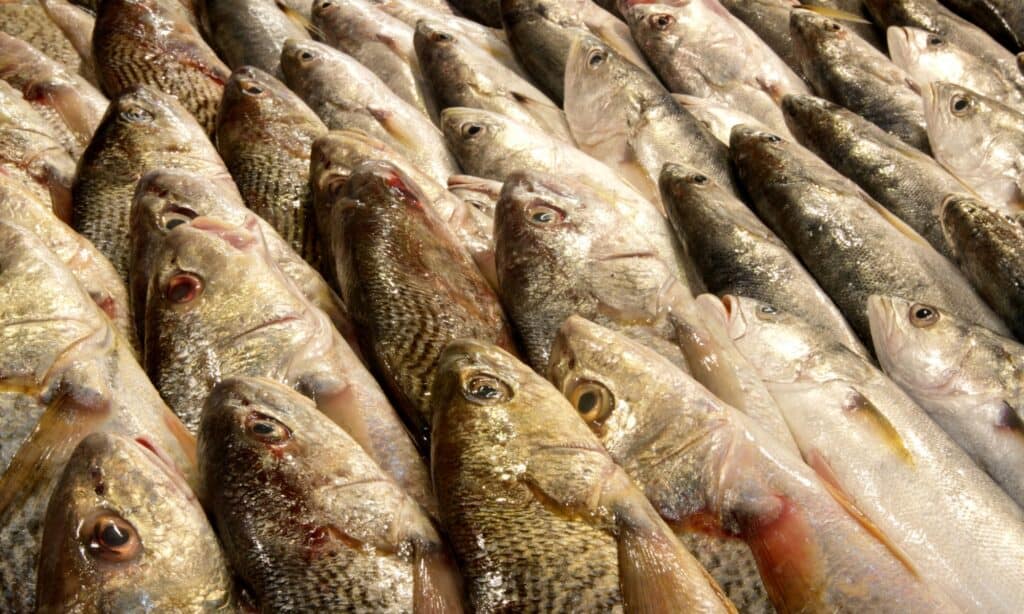
The weakfish is a saltwater fish found in the Hudson River, along Manhattan.
©iStock.com/luoman
The weakfish is a saltwater fish found in the Hudson River along Manhattan. They are slim, long fish with distinct dark spots and yellow fins. Adults range from 12 to 18 inches and weigh between six and 18 pounds. Their average life expectancy is nine to 12 years, though some can live up to 17 years.
Striped Bass
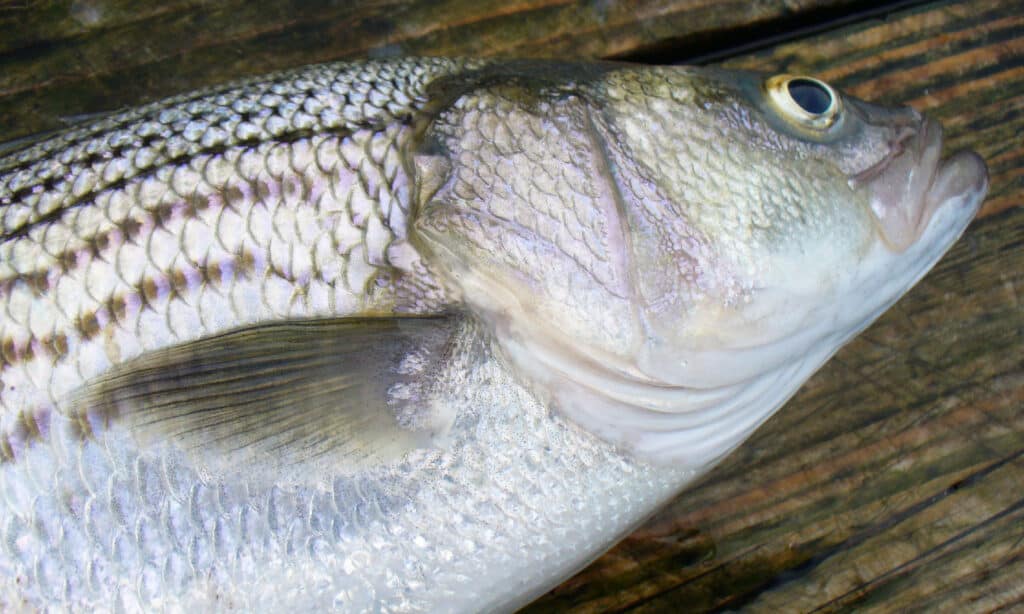
Striped bass are found primarily near piers’ pilings and around the Hudson River’s rocks.
©iStock.com/Coast-to-Coast
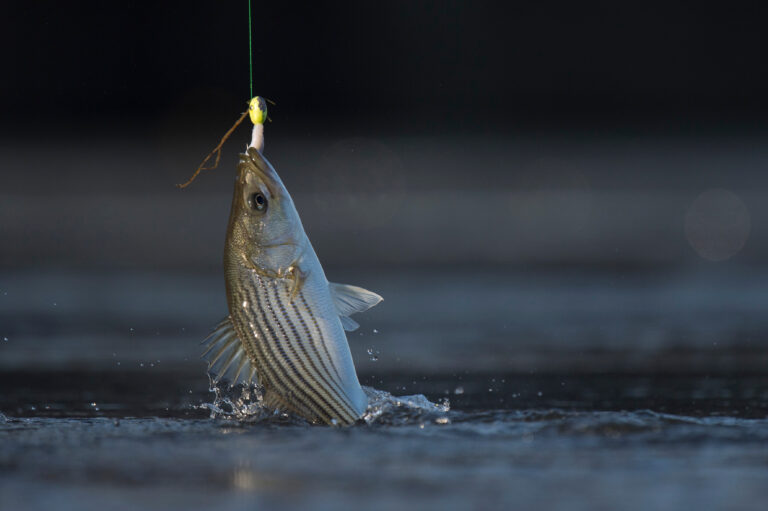
Also known as the rockfish or linesider, the striped bass is an anadromous fish of the family Moronidae. They are found primarily near piers’ pilings and around the Hudson River’s rocks.
Striped bass can weigh three to 40 pounds and measure 20 to 35 inches in length. The biggest striped bass was caught in the Hudson River in 2014. It weighed 60 pounds and measured 53 inches long and 33 inches in girth, making it a remarkable new record catch. Striped bass have an average life expectancy of 30 years.
Bluefish
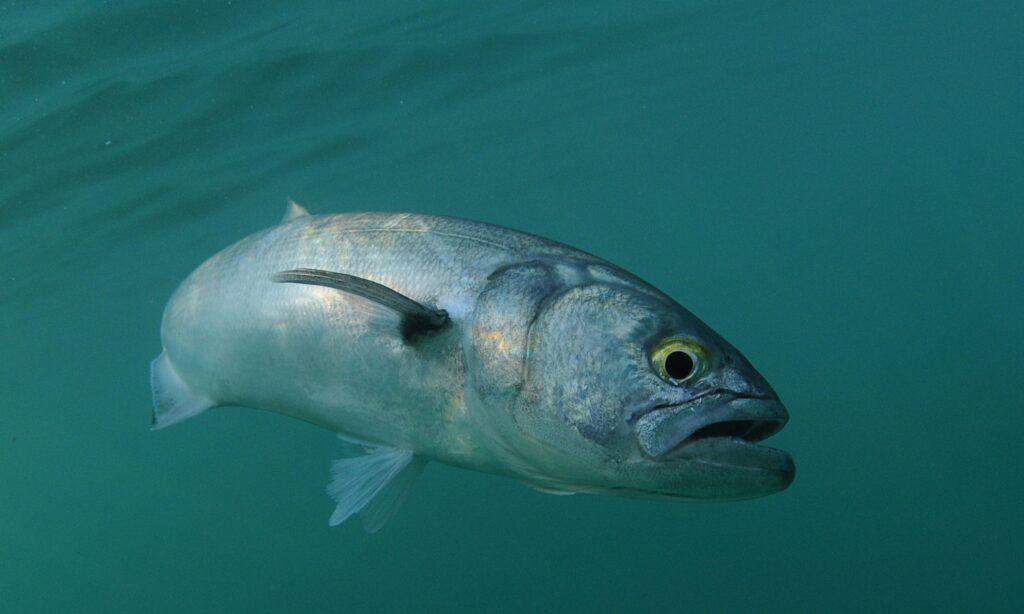
The bluefish can grow as big as 20 pounds.
©iStock.com/FtLaudGirl
The bluefish is a marine pelagic fish found in the Hudson River. It’s also the only extant species of the family Pomatomidae. They can grow as big as 20 pounds and are typically 0.5 to two feet long, with a maximum reported size of four feet and 31 lbs. Bluefish reproduce during spring and summer and can live up to nine years.
Summer Flounder
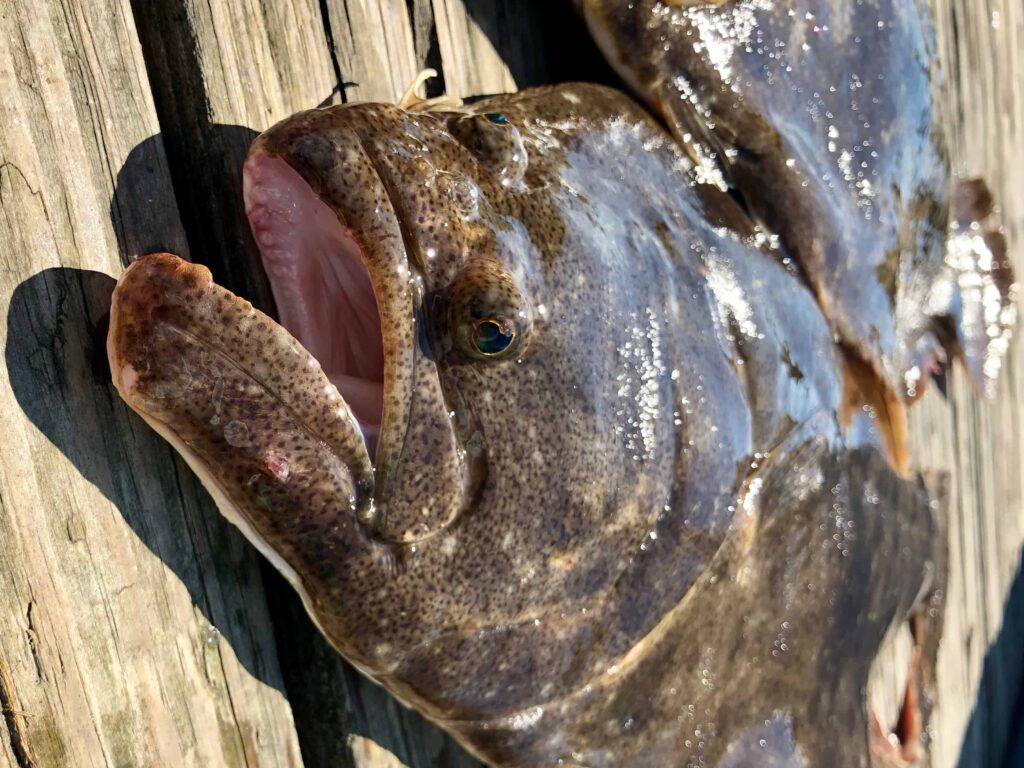
The summer flounder is also known as fluke fish.
©Shutterstock Media/Shutterstock.com
The summer flounder is a marine flatfish found in the Hudson River. It’s also known as fluke fish. They are usually found hunting at the bottom of the water, but they have been seen gathering near structures such as piers. This fish rarely exceeds 20 pounds and is typically 15 to 20 inches long. Their average lifespan is between 15 and 17 years.
Porgy
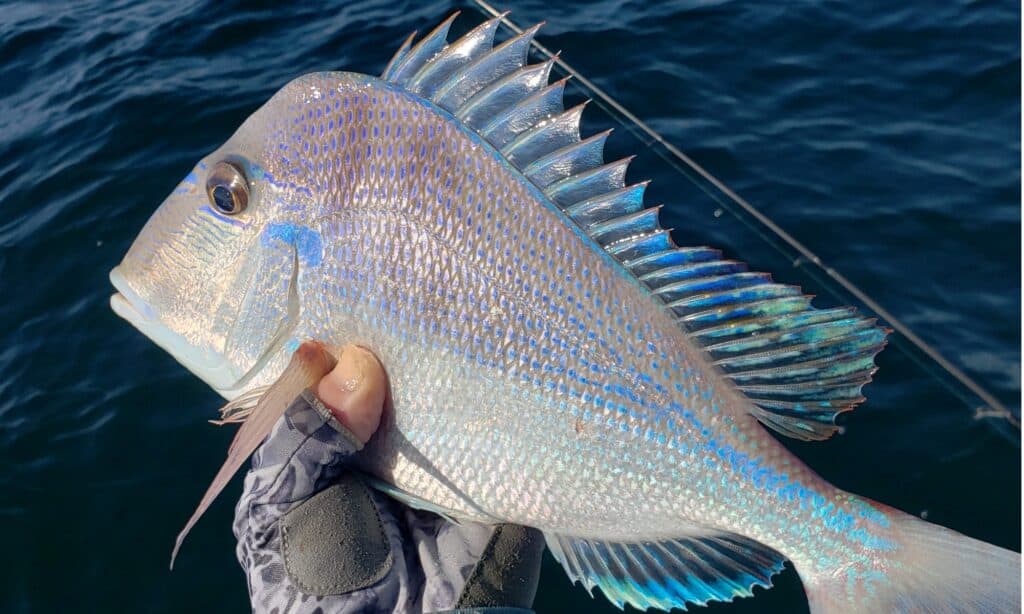
Although they are sometimes called scups or breams, porgy is the common name for fish in the family Sparidae.
©iStock.com/Glen Richard
Porgy is a common name for fish in the family Sparidae. They are also called scups or breams. Most of them have sharp spines and dull coloring. Others have faint stripes on their sides. They can be seen swimming around artificial reefs and rocks in the Hudson River. They weigh up to four pounds.