
Quick Take
- Alligators are more prevalent in the southern part of Alabama, but the state is within their natural range.
- Reintroducing 50 alligators to the Wheeler National Wildlife Refuge was an essential step in restoring the local environment.
- Federal protection and the enforcement of anti-poaching laws have helped Alabama gator populations rebound.
- Authorities estimate the alligator population in Alabama is now ten times higher than it was in the 1970s.
Back in the 1960s, the population of American alligators was so depleted that they were on the verge of becoming extinct. However, since the 1970s, conservation efforts have led to a stable alligator population. In many states, alligator hunting season was closed to allow populations to rebound. Now, warmer temperatures have resulted in the alligator expanding its range northward into North Carolina, Virginia, and Tennessee. But why are there so many gators in Alabama? Keep reading to find out why alligator populations are booming in Alabama.
Alligator Population Recovery
In the core parts of the American alligator’s range, such as Texas, Florida, and Louisiana, the population boom began decades ago. Alligator populations have grown so much in these areas that they have become a nuisance in some locations. In these states, authorities have taken them off the list of endangered species and now allow controlled hunting of these giant reptiles. Louisiana is estimated to have around 2 million alligators, Florida has over a million, and Texas is believed to have over 500,000.
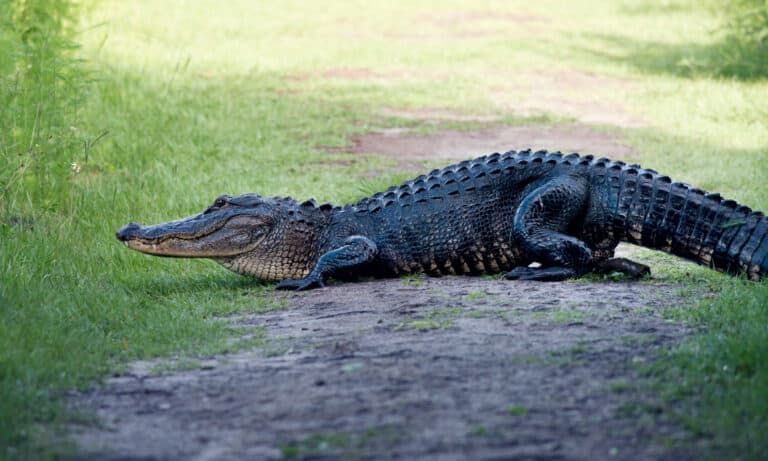
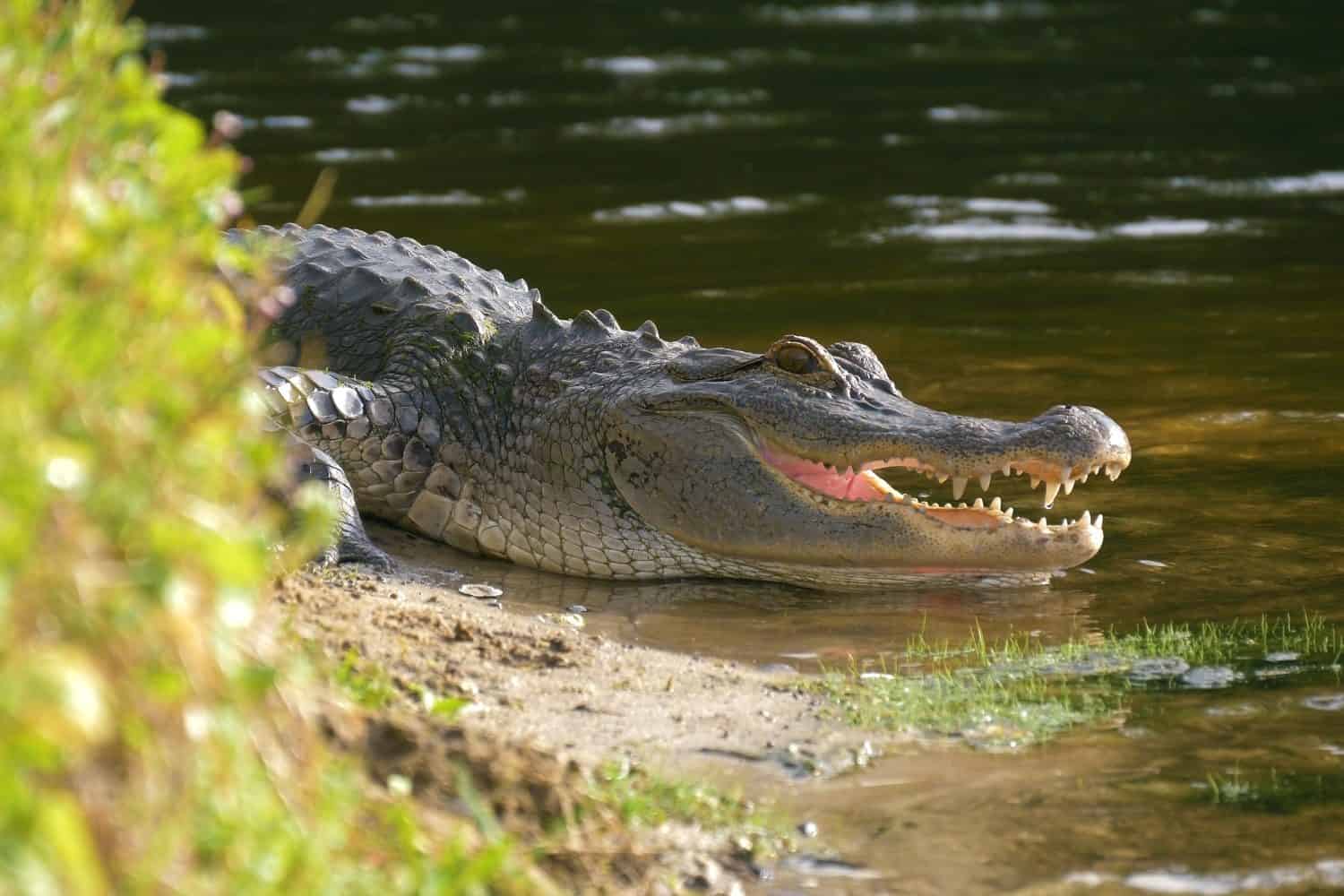
Estimates say the alligator population in Alabama is now ten times higher than it was in the 1970s.
©iStock.com/mrolands
Alligators are more prevalent in the southern part of Alabama, but the state is within the alligator’s natural range. In recent years, the alligator population has increased throughout the South. In places like South Carolina, the population is now estimated to be around 100,000 alligators. Estimates put the population in Alabama at around 70,000 alligators.
Alligators are quickly becoming a permanent part of Alabama’s wildlife. In May 2021, a train struck an alligator on Kauloosa Avenue in Tuscaloosa. A month later, a car struck another large gator on the same road. There have been many more sightings in Alabama’s waters and even on land as far north as Huntsville up to the Tennessee state line.
The Alabama Alligator Population Boom
Although alligators have lived in Alabama for many years, their populations now appear to be rapidly increasing across the state. This is due to the rigorous application of anti-poaching laws, the migration of alligators to the state, efforts to reintroduce them to the ecosystem, increased sightings during the summer breeding season, and a delay in legalizing alligator hunting. Below, we examine each of these reasons in greater detail.
Federal Protections and Enforcement Of Anti-Poaching Laws

State and federal restrictions gave alligator populations time to rebound naturally.
©iStock.com/Casanowe
One major factor that has allowed the population of alligators in Alabama and other southeastern states to rebound is federal protection and the enforcement of anti-poaching laws. Even as early as the 1960s, American alligators had federal protection under the Endangered Species Preservation Act of 1966 and then under the Endangered Species Act of 1973. Prior to that time, hunters actively killed the species for their hides, and gators were on the brink of extinction. These protections allowed the population to naturally increase over the past 50 years. Reports of alligator sightings increased so much that scientists recommended reinstating controlled hunting in Alabama as far back as 2006.
The American alligator was removed from the federal endangered species list in 1987 and is currently listed as “threatened by similarity of appearance” nationwide, which allows for controlled hunting and management. With this designation, the government can also reimpose tighter controls without going through a lengthy reclassification process.
Active Reintroduction
Besides restricting hunting, authorities also actively reintroduced alligators into the ecosystem because of their important ecological role. Scientists consider alligators a “keystone” species because they help control the population of many prey species. They also create peat and dig holes that benefit other species. For instance, red-bellied turtles incubate their eggs in old alligator nests. Because of these benefits, the government gradually reintroduced alligators into Alabama’s ecosystem.
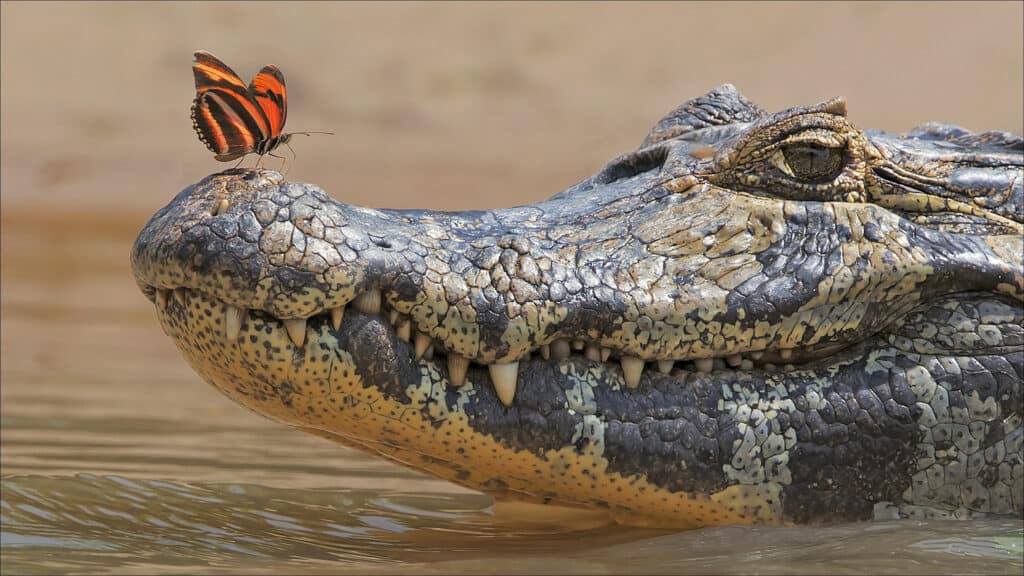
Scientists consider alligators an essential species in the overall ecosystem.
©iStock.com/Maryna Rayimova
In the 1970s, at least 50 alligators were introduced to the Wheeler National Wildlife Refuge. Alligators were also relocated from southern Alabama, which has further contributed to their spread in other parts of the state. Additionally, scientists believe alligators have been migrating into the region on their own. The Tennessee River makes it easy for them to navigate from one part of Alabama to another.
Seasonal Activities
Although Alabama’s alligator population is clearly increasing, scientists believe the growth is slow and steady rather than exponential. The increased sightings may be a result of their seasonal activities.
Alligators are generally more active during the late spring and summer. Alligator courtship typically begins in April, with mating occurring in May and June. This likely explains why people encounter them more often during these times. Major rain events and heavy flooding can also displace alligators from their usual habitats. This explains why you might see them on streets and in other areas where they are not usually found.
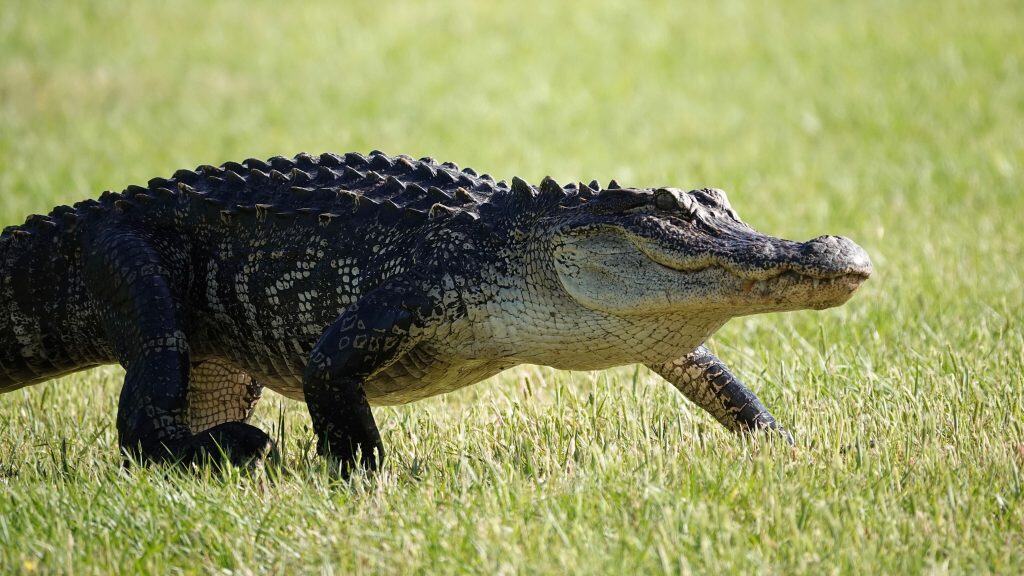
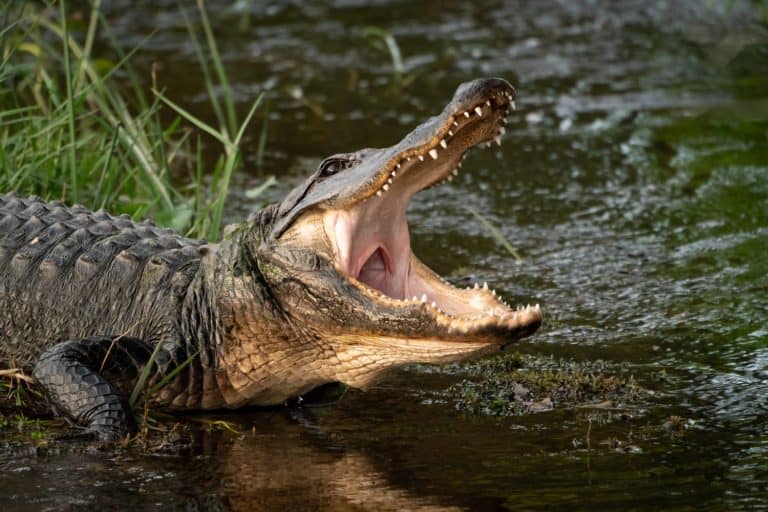
Populations also appear to be growing because of increased sightings during the summer breeding season.
©Chris Klonowski/Shutterstock.com
Late Entry Into Controlled Hunting
Alabama’s late adoption of legal alligator hunting is likely one of the main reasons the population has grown so much. Alabama was among the last of the Gulf States to introduce an alligator hunting season. In 2006, legal hunting was reinstated when biologists determined that the alligator population in Alabama was stable enough to allow limited alligator hunting.
The delayed reinstatement of hunting may also explain why some alligators in Alabama are exceptionally large. In 2014, a 15-foot, 9-inch-long alligator was captured in Mill Creek, which was declared an official Safari Club International world record. There are still size restrictions on alligator hunting in some parts of Alabama, such as the Lake Eufaula Zone. In this zone, licensed hunters can only harvest alligators with a minimum length of eight feet.
Should You Be Worried?
Generally, there is no need to worry about the increase in the alligator population. Alligators rarely attack humans, especially on land. Unlike crocodiles, alligators try to avoid conflict with humans. However, people should remain aware of their surroundings, especially near bodies of water or in areas where alligators have recently been seen.
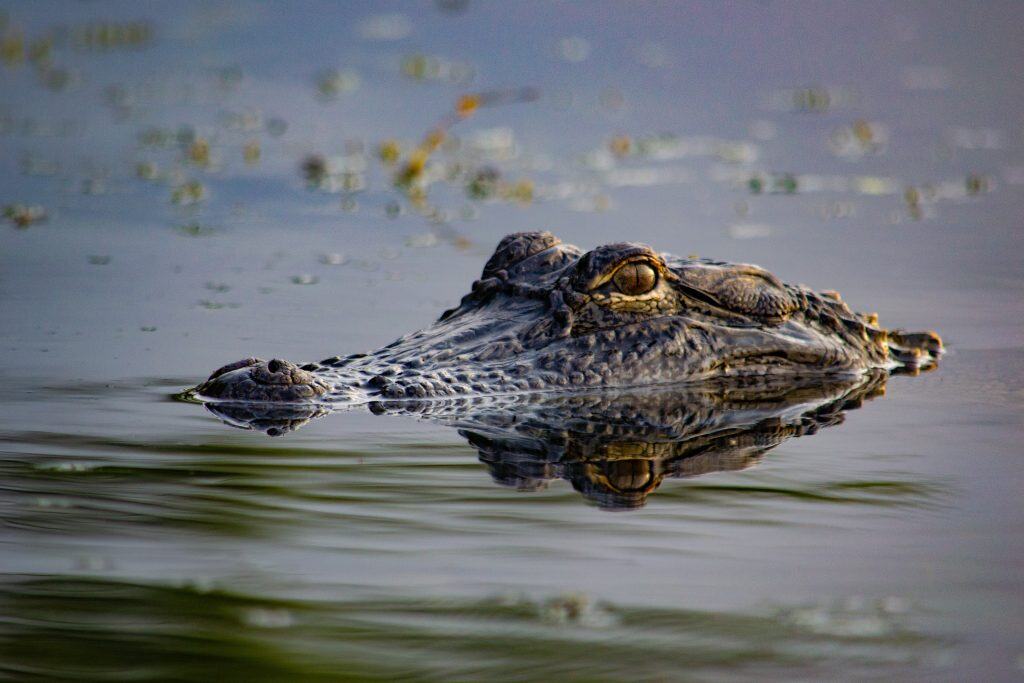
Although controlled hunting is now legal in Alabama, it is unlikely to harm the state’s stable gator population.
©SomervilleArts/Shutterstock.com
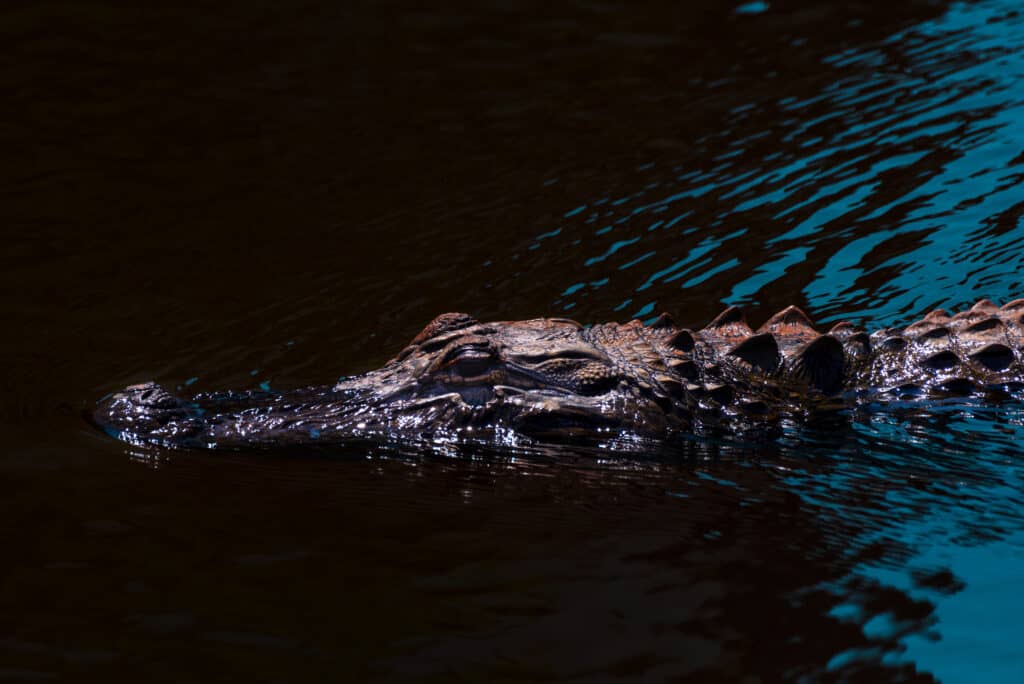
If you’re fishing late at night or early in the morning, your chances of seeing an alligator are fairly high. They may look somewhat like logs floating in the water. You may also spot them by their glowing, reddish-pink eyes if you are out at night.
Alligator attacks on land are rare and usually occur only if the animal is provoked. If you see an alligator, the best course of action is to leave it alone. Contact local authorities to have the alligator removed instead of attempting to handle it yourself.