
Quick Take
- One fly on this list barely eats as an adult, and knowing the reason why makes its larval diet even more disturbing. See the crane fly's diet →
- Cluster flies look like ordinary pests, but their larvae have a parasitic habit that will change how you see your garden. Discover the parasitic larvae →
- The fly most likely living in your home dissolves its food before eating it, and what counts as "food" is worse than you'd expect. See what houseflies consume →
- Female horse flies don't just bite. They're equipped with something that makes most other flies look toothless by comparison. Explore the female's jaws →
There’s nothing more annoying than having a fly continuously buzz around you. Whether you’re enjoying a sunny afternoon in the summer or relaxing inside on a rainy day, flies don’t seem to know how to leave us alone! There’s a common belief that flies love to hang around picnics, as if they enjoy human food as much as we do.
However, with over 110,000 types of flies in the world, their diets can be quite varied. One species’ feeding habits may be completely dissimilar from another’s. For instance, while horse flies require a blood meal, house flies prefer decaying organic debris. Let’s take a closer look at what flies eat, based on seven common species.
Houseflies
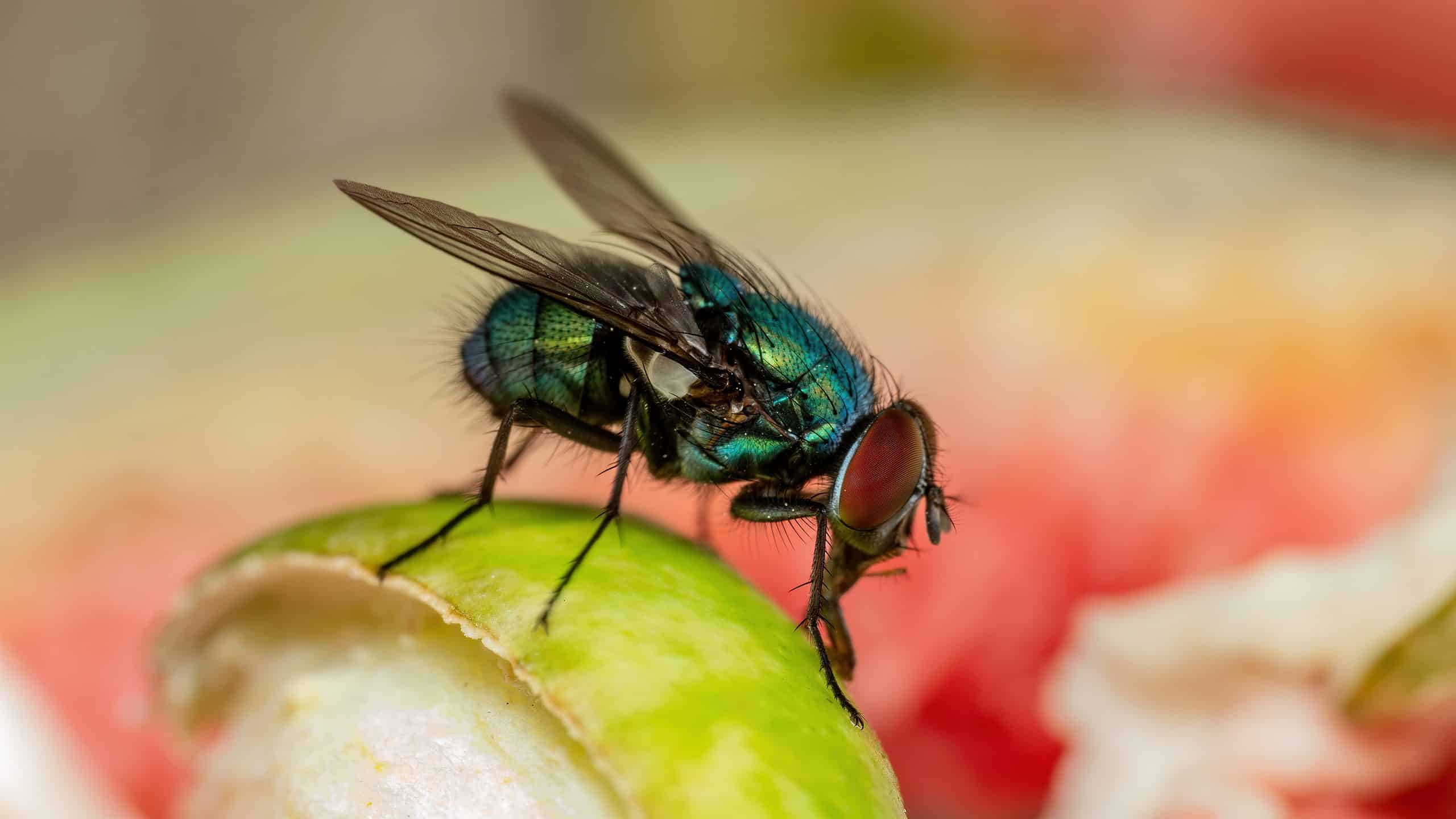
Adult house flies lack chewing or piercing mouthparts, but they have a sponging proboscis that they use to absorb liquids. They typically consume decaying organic materials, overripe fruits and vegetables, animal feces, and human food. In order to eat solid food, they spit digestive juices onto it to break it down into a liquid. Housefly larvae also consume organic debris. The female lays her eggs in rotting materials so that the larvae have a nearby food source upon hatching.
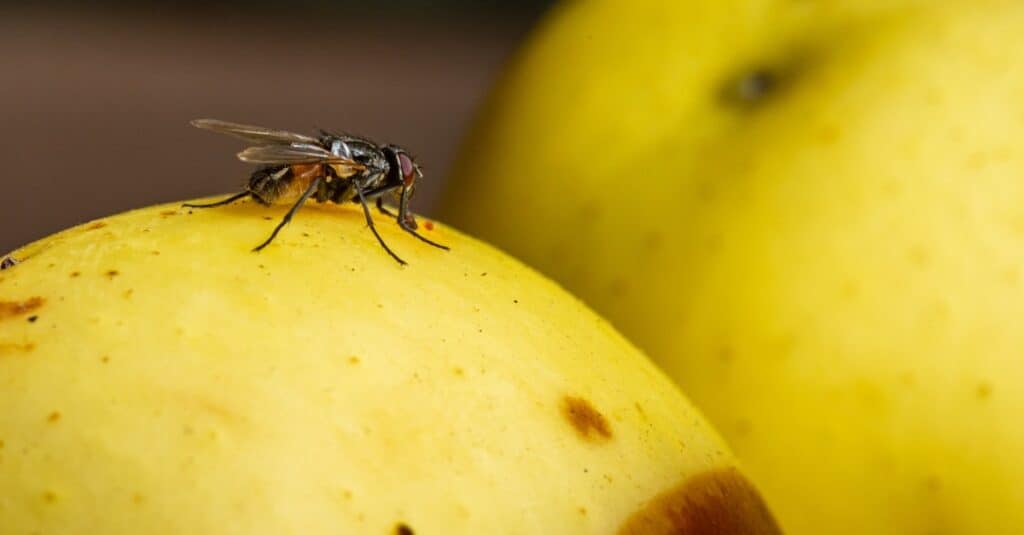
Houseflies feast on decaying materials, such as this rotting apple, as well as sugar and nectar from flowers.
©iStock.com/heckepics
Bottle Flies
The first insects to assault a dead animal’s body are typically blowflies, also known as bottle flies. Bottle flies prefer to consume fresh or rotting flesh most of all. They are also known for nesting within animal carcasses to deposit their eggs. Adult blowflies also eat feces, in addition to carrion. Blowfly larvae live on rotting flesh and other nearby decomposing materials.
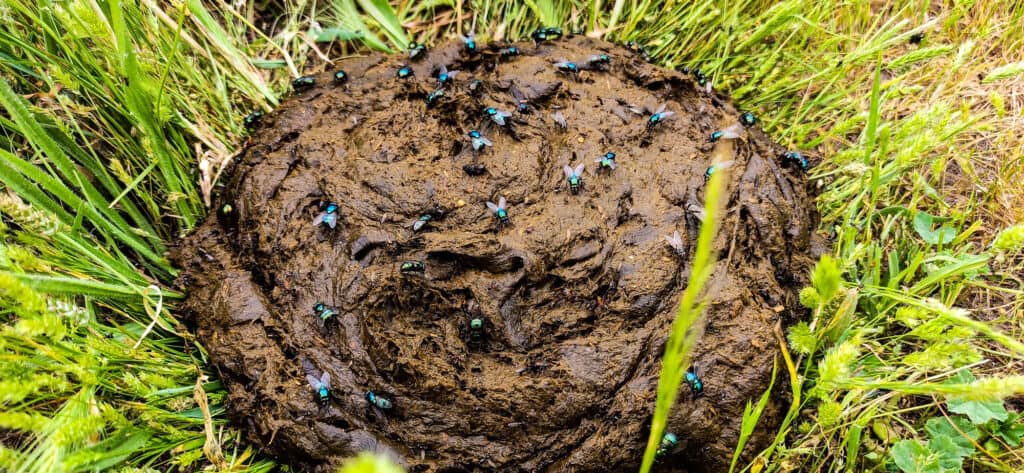
Bottle flies, also known as blowflies, largely feed on rotting flesh as well as feces.
©iStock.com/Tirex
Cluster Flies
Cluster flies feed on the nectar of flowers and other plant juices. They may also eat decaying organic matter such as fruit. Cluster flies lay their eggs in soil fissures, particularly wet ones. Cluster fly larvae display parasitic behavior. They burrow into earthworms’ bodies to feed on them.
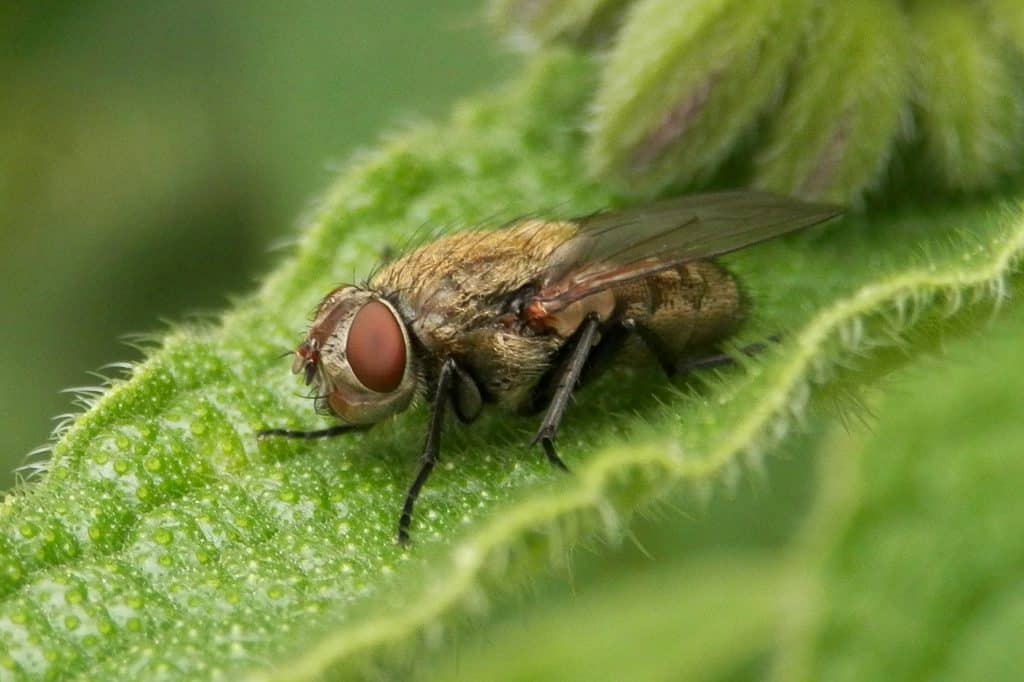
Cluster flies have golden-yellow hairs on the thorax.
Fruit Flies
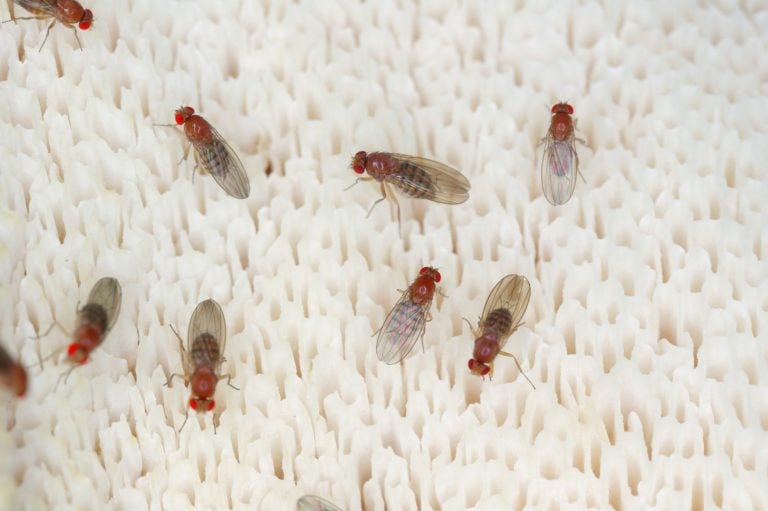
Despite their name, fruit flies will actually eat all kinds of plant matter. They are often observed consuming decaying fruits, vegetables, and other sweet substances. Adult fruit flies also consume fermenting liquids and alcoholic drinks. Among fruits, they frequently feast on bananas. Adult fruit flies pierce overripe fruit’s skin and lay their eggs there. Fruit fly larvae eat the decaying fruit as well.
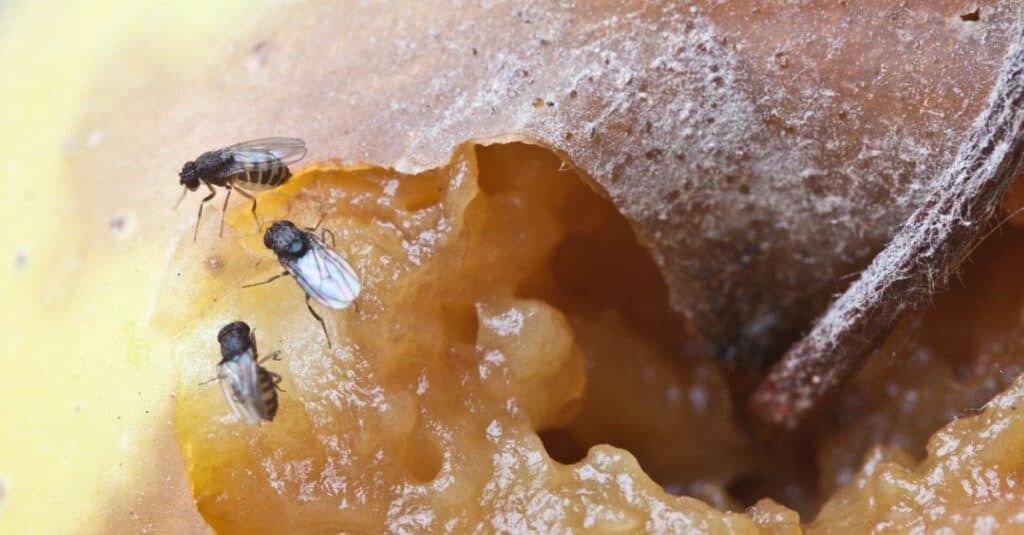
As the name suggests, fruit flies feed on decaying fruits, vegetables, and or other sources of sweetness.
©iStock.com/hoja_viva
Drain Flies
Drain flies, also known as moth flies, consume decaying organic waste. Lacking chewing mouthparts, drain flies feed on bacteria, algae, fungi, and the slime found in drains. This can also include grease, soap residue, and the gelatinous film inside pipes. The larvae of drain flies also feed on decaying organic matter found in the slimy film that builds up inside pipes and drains.
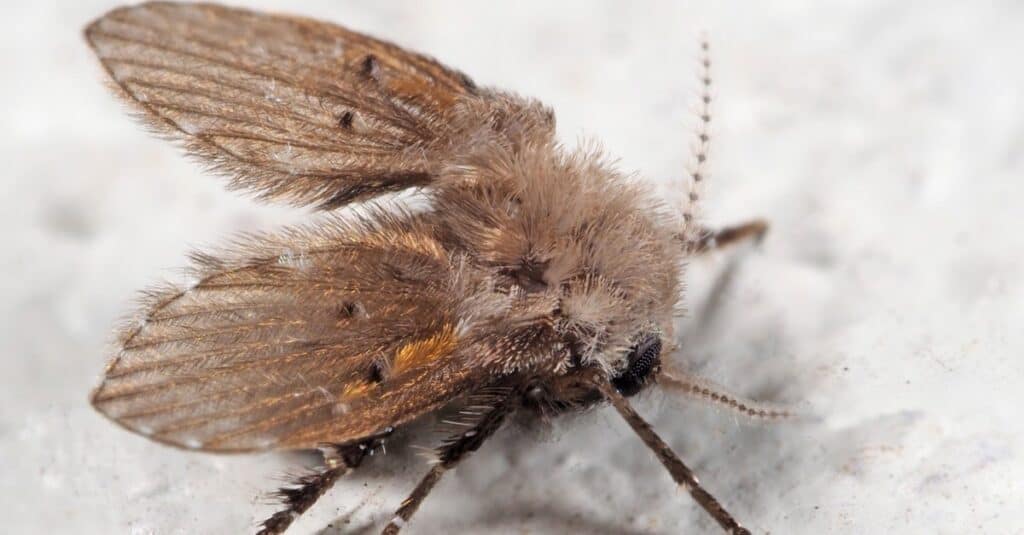
Drain flies do not have the ability to chew, so they feed on gelatinous content.
©Cherdchai Chaivimol/Shutterstock.com
Crane Flies
The average lifespan of adult crane flies is only a few days. Once they reach the adult stage, they spend most of their time mating and laying eggs, and are rarely seen eating. However, they do occasionally consume flower nectar and pollen. Larvae of terrestrial crane flies may consume the roots of grasses and crops, rotting wood, fungus, flowers, and seedlings. Aquatic crane fly larvae eat decomposing plant matter, algae, and leaf debris. Some crane fly larvae also consume mosquito larvae and other small invertebrates.
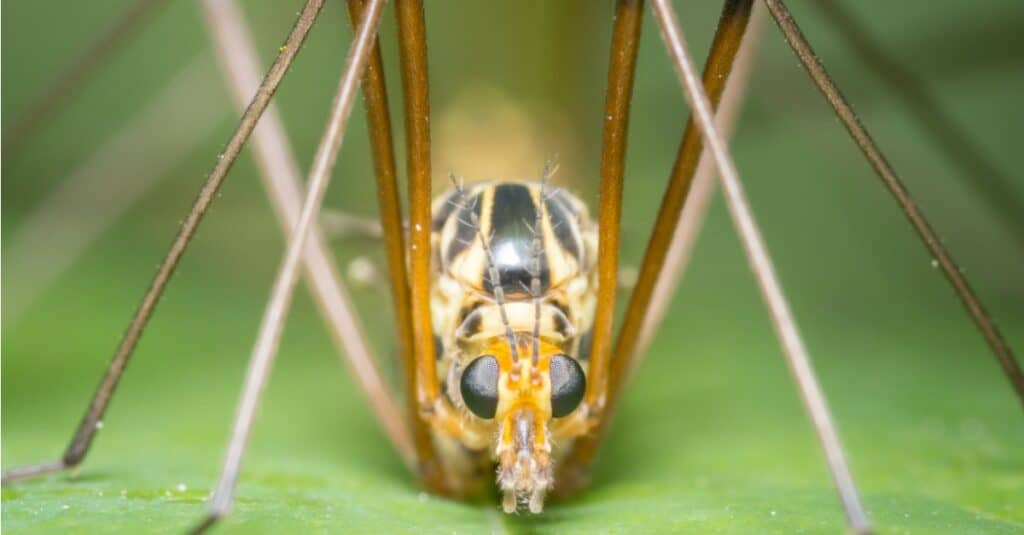
While they’re rarely observed eating, adult crane flies typically consume flower nectar and pollen.
©iStock.com/peter bocklandt
Horse Flies
One of the rare fly species with mouth parts capable of tearing and cutting is the horse fly. A horse fly’s bite can be very painful, as horse flies can rip flesh with their scissor-like jaws. Fortunately, the bite is usually harmless. Female horse flies require a blood meal so that they have adequate protein for egg-laying. Horse flies bite livestock or people in order to obtain the blood. Some horse fly larvae eat insects, worms, snails, beetle larvae, and even small fish. Male horse flies typically eat honeydew, plant juices, nectar from flowers, and other liquids found in plants.
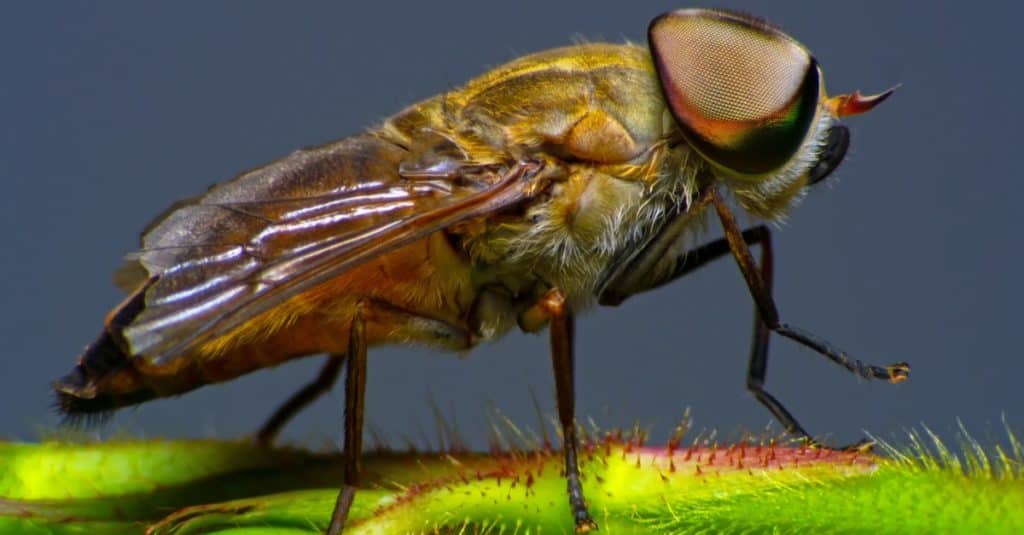
Male horse flies typically eat fruit and plant juices while females require a blood meal.
©ploypemuk/Shutterstock.com