
Quick Take
- Guinea pigs are native to the Andes Mountains in South America.
- Guinea pigs are beloved pets all around the world.
- A healthy guinea pig excretes up to 100 cylindrical droppings per day.
- Guinea pigs defecate while eating and sleeping.
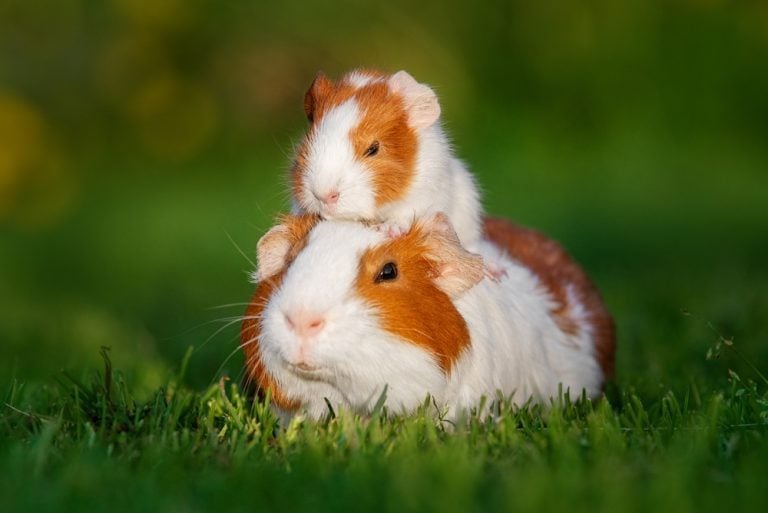
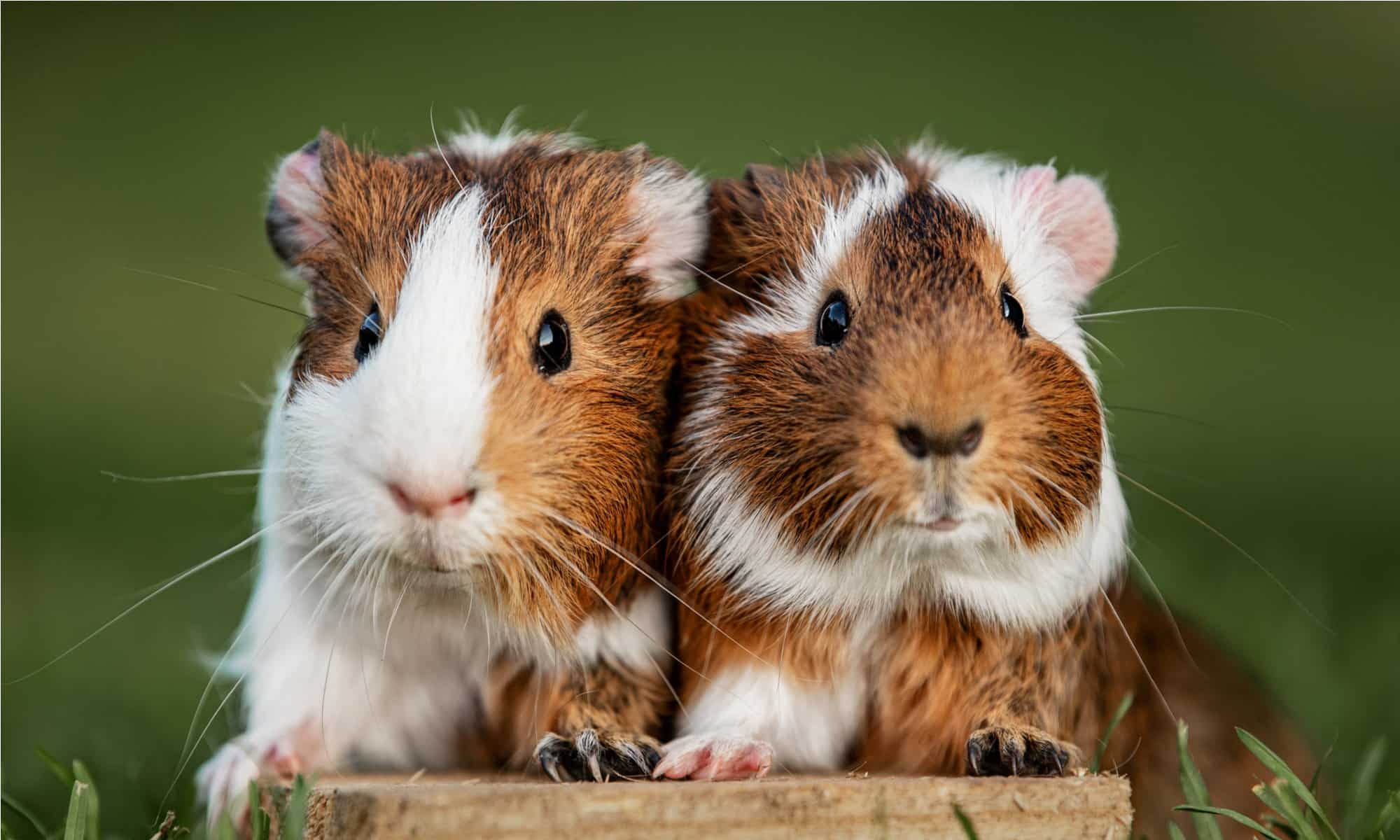
Guinea pigs (Cavia porcellus) are small, adorable rodents with furry bodies. Native to the Andes mountains in South America, guinea pigs were domesticated around 5,000 B.C. They are now globally popular pets loved for their gentle nature, vocalization, and being relatively low-maintenance. Although guinea pigs can be trained to use a specific corner or tray for most of their urine, they cannot be fully house-trained due to their frequent, uncontrollable defecation. Like most rodents, guinea pigs are high-metabolism herbivores that defecate while eating and sleeping, often over 100 times per day. Continue reading to discover everything you’ve ever wanted to know about guinea pig poop.
What Does Guinea Pig Poop Look Like?
Normal guinea pig droppings are small, firm individual pellets that are dark brown or green. They are smooth, elongated ovals, with tapered or rounded ends. These droppings typically measure 0.4 to 0.8 inches in length. They are about 0.25 inches wide. The pellets are smooth and slightly moist when fresh, becoming dull and dry with age.
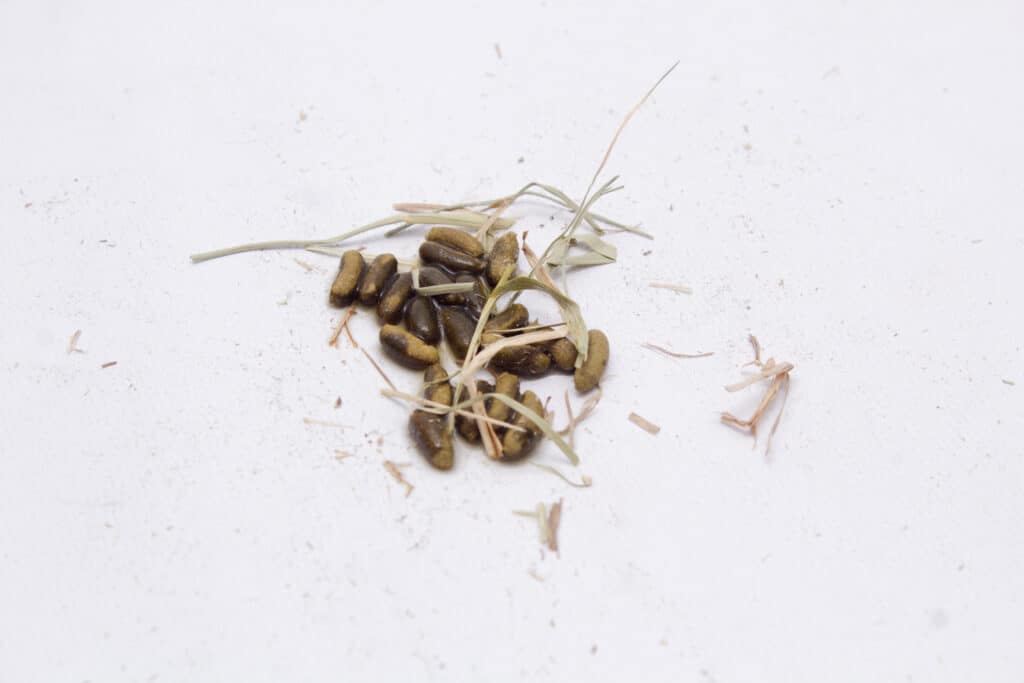
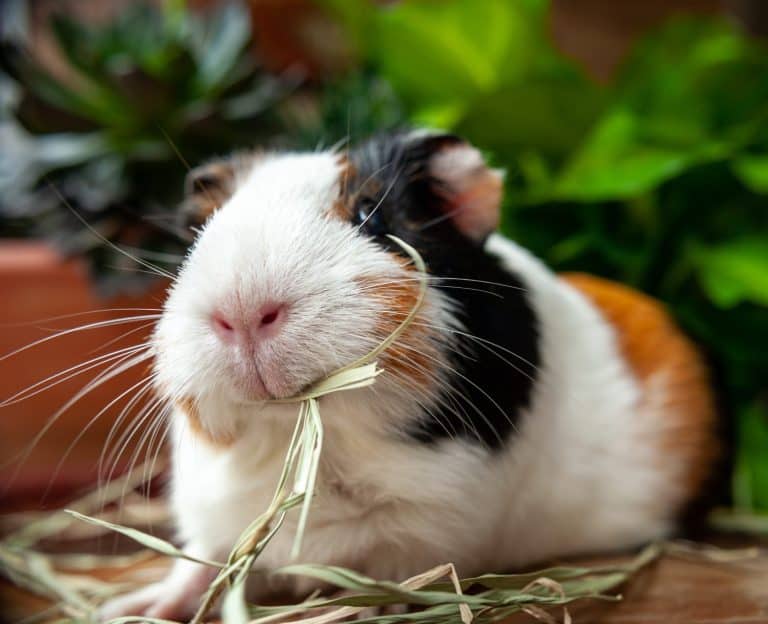
Guinea pig poop is brown and oval-shaped.
©MidgardCreations/Shutterstock.com
How Frequently Do Guinea Pigs Poop?
Guinea pigs defecate almost all of the time. They are grazers with fast metabolisms that essentially poop as much as they eat. This high-frequency output is normal and a key indicator of good digestive health.
Guinea pigs leave a constant trail of poop while walking and being active, but they also create concentrated piles of poop in their favorite hiding spots, corners, and even in their hay-eating areas. Healthy guinea pigs produce up to 100 small, solid pellets of scat per day.
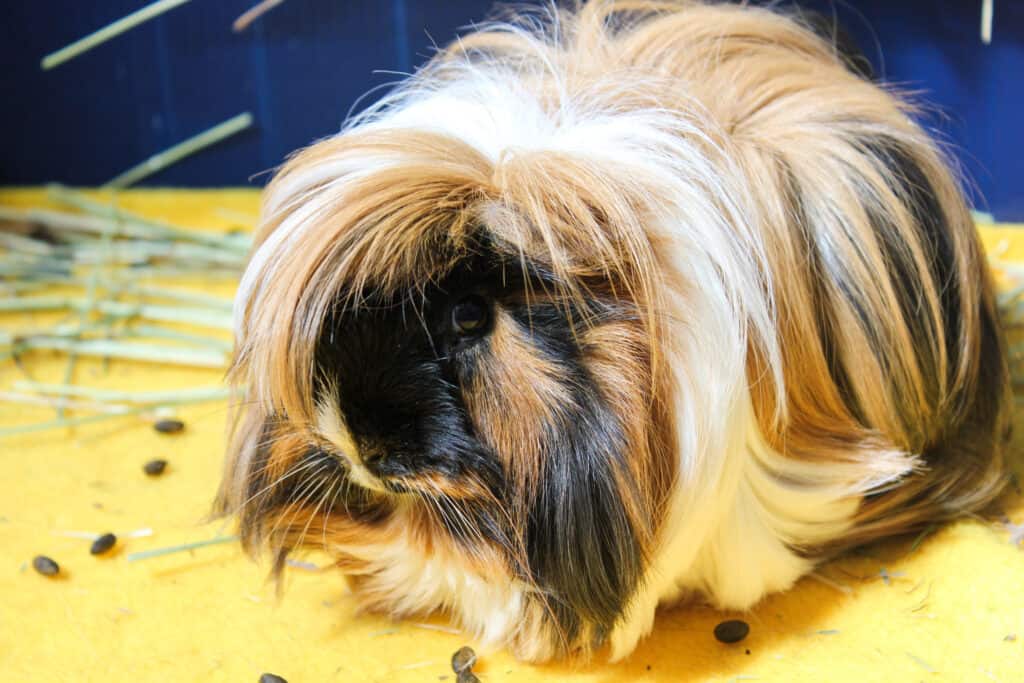
An average guinea pig can poop up to 100 times in a day.
©Nicole Glass Photography/Shutterstock.com
Does Guinea Pig Poop Have an Odor?
Healthy guinea pig poop generally has little to no odor, typically smelling only faintly of hay. Because they produce up to 100 pellets daily, a large accumulation can cause a mild, earthy smell. However, if the poop is very soft, runny, or smells strong, it might indicate a diet issue or illness.
Is Guinea Pig Poop Harmful?
Guinea pig droppings can occasionally contain bacteria, like Salmonella, that are harmful to humans. When cleaning up guinea pig poop, it is best to avoid direct contact. Thorough hand washing is advised after cleaning the animal’s bedding.
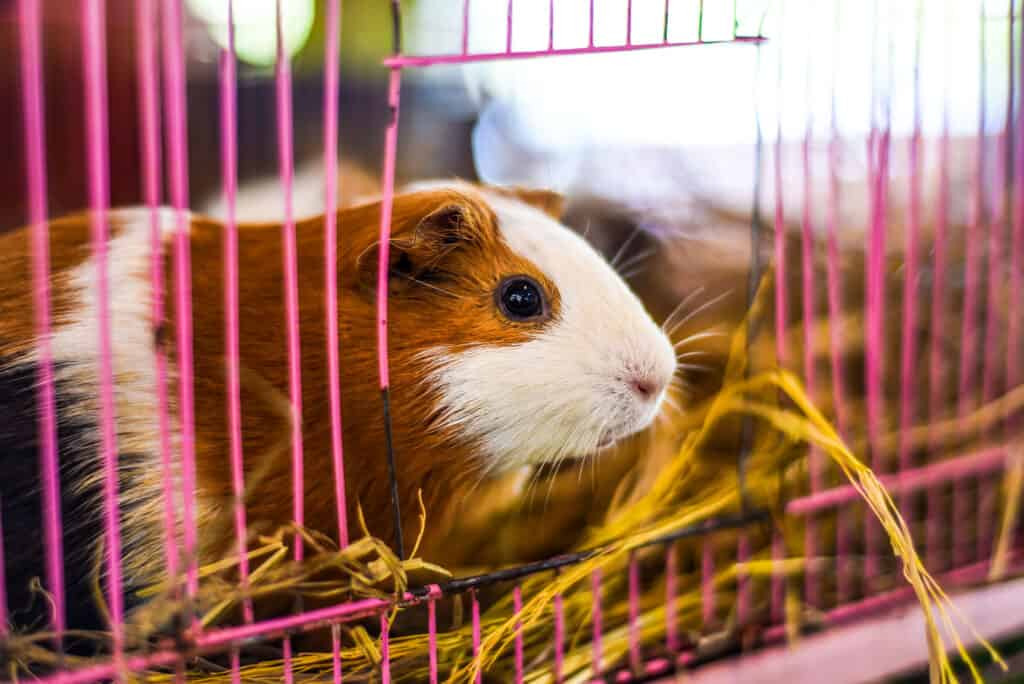
Wearing gloves when cleaning out your guinea pig’s cage can help stave off illness.
©iStock.com/Tatiana Terekhina
How Does the Guinea Pig Poop Indicate Sickness?
Guinea pigs are very good at hiding sickness. They also do not display common symptoms of illness, such as vomiting or malaise. Interestingly, changes in guinea pig poop are one of the best and earliest indicators of illness.
Tear-shaped pellets could indicate dehydration, while mushy, diarrhea-like excrement might be a sign that the guinea pig is having intestinal issues. If a guinea pig isn’t producing much solid waste, this could also signal health issues.
Immediately seek a professional opinion from a veterinarian if you notice significant changes in your guinea pig’s solid waste. Because guinea pigs are prey animals that hide illness, changes in poop size, texture, frequency, or color are often the first signs of health issues.
What Do Guinea Pigs Eat?
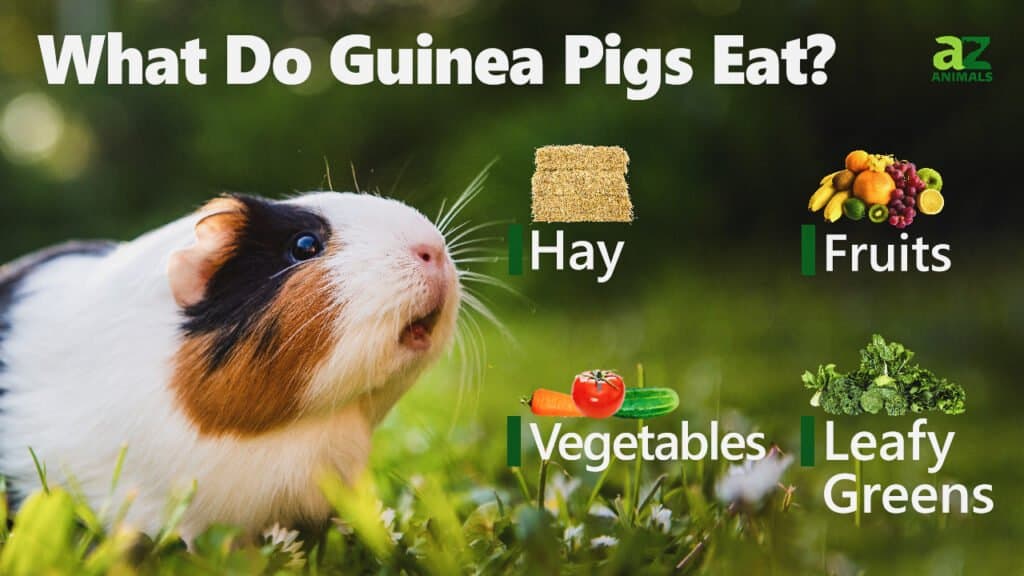
Guinea pigs are herbivores that consume hay, fruits, and vegetables. Their teeth are developed for their diet. A constant supply of hay with good fiber quality is what you need to raise a guinea pig. A guinea pig can drink water equal to up to 10% of its body weight each day.
Guinea pigs are coprophagic. This means they eat their poop as part of the normal digestive process. However, this type of scat is different from their regular droppings. It is green and still contains nutrients.