
Quick Take
- One horse color isn't actually a color at all. It's a structural quirk of the hair shaft that makes these horses look dipped in liquid metal.
- Some horses carry two completely different sets of DNA, and this can visibly show up in their coat.
- Genetically, horses only produce three base colors, and yet dozens of distinct coat colors exist. The reason involves some surprisingly simple gene interactions.
- The rarest horse color wasn't even identified by scientists until 2014, a discovery complicated by the fact that both parents must carry a specific gene for it to appear.
Ever wondered just how many horse colors there are? Genetically, horses have only three functional base colors: Bay, Black, and Chestnut. While mammals only produce two physical pigments: black (eumelanin) and yellow-red (phaeomelanin), the interaction of these genes dictates how these pigments are expressed. Continue reading to learn about every color, variation, pattern, and marking, from the rarest to the most common.
Mushroom
Possibly the rarest horse color of all, mushroom is formed from a base color of chestnut or bay, with any skin color and dark eyes. The dilution gene has only been identified since 2019, but it results in a lightening of red tones in the horse’s base coat, giving the horse an almost sepia appearance. The horses are born in pale beige, and as they mature, the coloration may remain or may dissipate. When adult, they may have a gray or pinkish tint as well. In order to produce a mushroom coloring, both parents must carry this dilution gene. The gene may appear in black horses, as well, but it won’t affect their coloring.
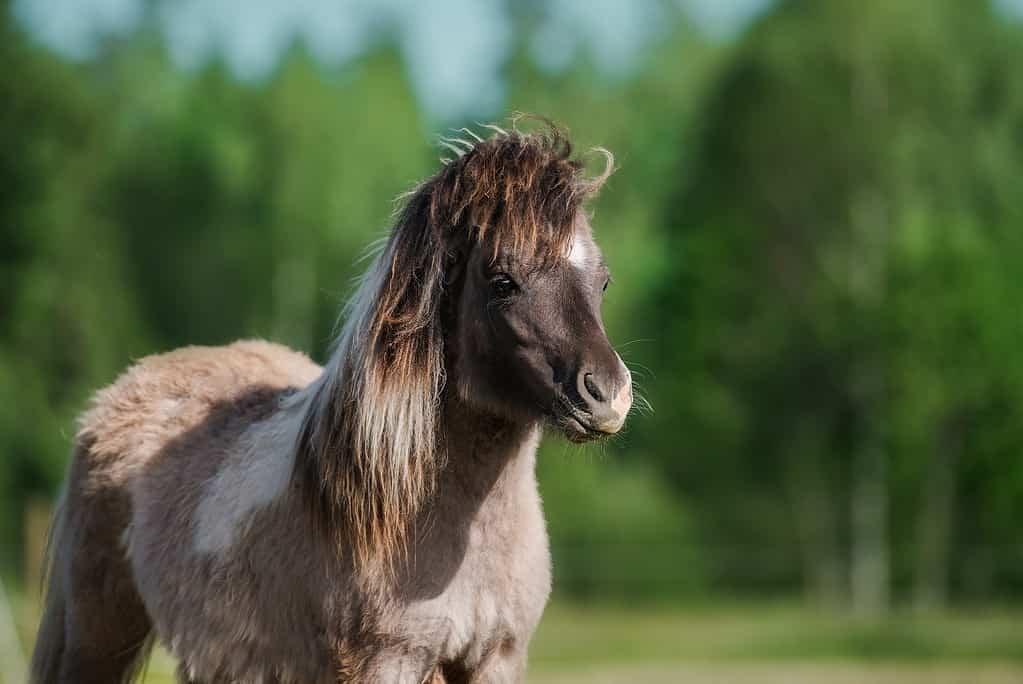
Mushroom horse color
©Rita_Kochmarjova/Shutterstock.com
Chimera
Rather than being a specific color, chimera coloring is the result of a rare DNA error when non-identical twins fuse within the womb. Both sets of DNA appear in the coat colors of the horse at birth. The combination could be any two horse colors, with patterns based on what the two horses would have produced individually had the fusion not occurred. This condition is not passed from one horse to its offspring.
Brindle
Brindle coloring can result from chimerism or, in some cases, from a heritable genetic mutation. This particular coloring is more common in dogs, but in horses, the brindle stripes are exceptionally rare. The pattern may appear on any base coat color, resulting from the same fusion of two embryos as in any other chimera horse.
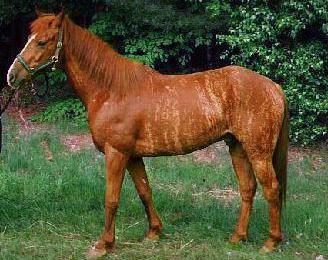
Brindle horse
The stripes may be the same or differently textured to the rest of the horse’s coat, but they are irregular and vertical and are found along the neck, back, hindquarters, and upper legs. Unlike other chimerisms, which are not considered inheritable, one identifiable gene, Brindle1 or BR1, was identified within a specific American Quarter Horse family and has an X-linked dominant inheritance pattern, meaning it can be passed from parent to offspring.
True White
True white horses are quite rare, with full white coats and pink skin beneath. These horses may have brown or blue eyes.
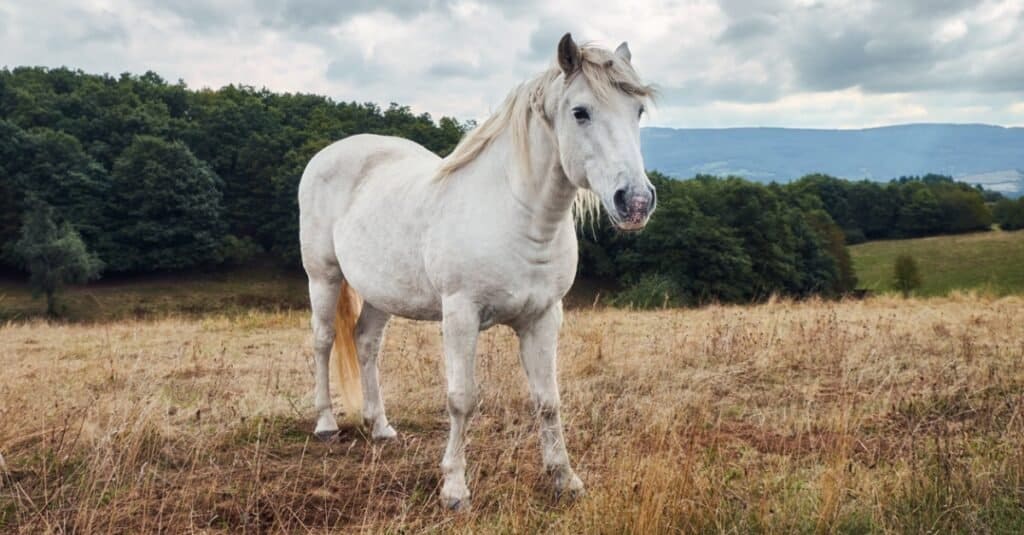
True white horse
©iStock.com/Margarita Solianova
Most horses that look white are actually gray horses that have dark skin but a coat that lightens over time. True white horses are exceptionally rare because they are born completely white with unpigmented pink skin and retain that color for their entire lives. True white horses are exceptionally rare because they are born completely white with unpigmented pink skin and retain that color for their entire lives
Cremello
A homozygous cream chestnut, the cremello horse comes in the rare cream coloring over pink skin, with blue eyes. Cremello horses are often mistaken for albinos or white horses, but the genetics are different. The cremello has a chestnut base color with two dilution genes that lighten the hair to nearly white.
Perlino
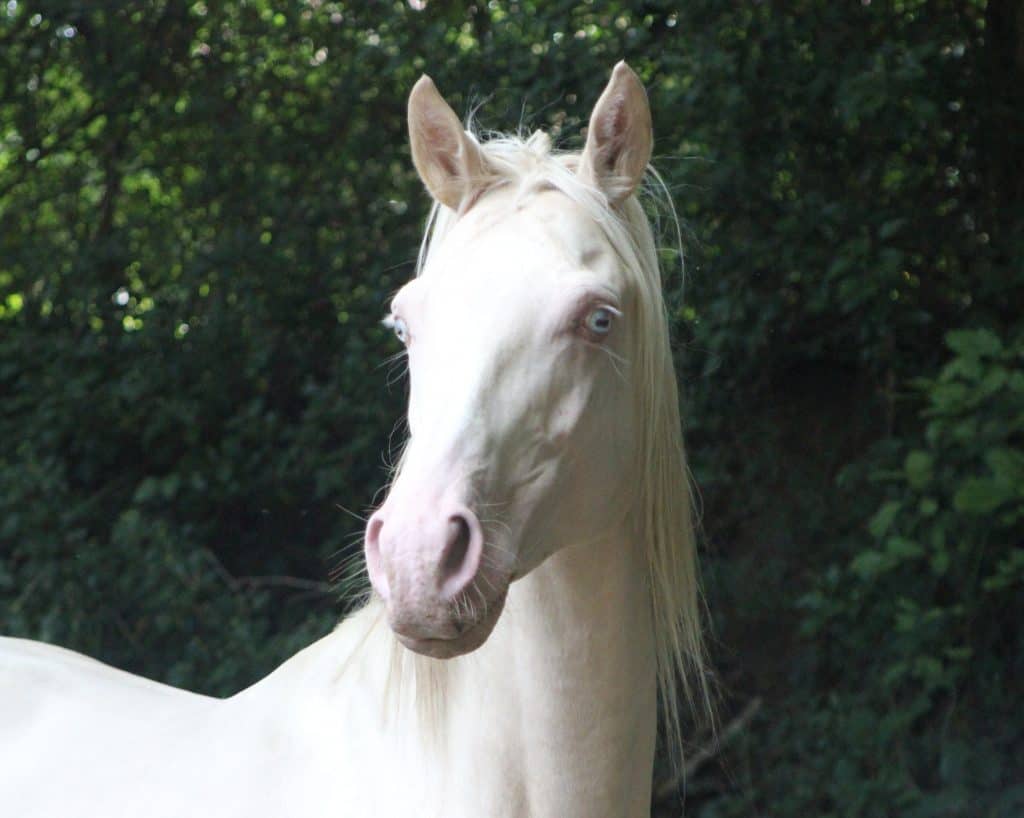
Perlino horses have a very pale coat, typically in champagne or cream, that rests over perlino colored horses. They typically have blue or amber eyes. Underneath the pale coats, pink skin shines through, adding a sort of pinkish shade to the coat. Perlinos are sometimes called pseudo-albino horses. However, the specific gene mutation required to produce true albinism is not present in horses. The pale cream coloring may vary from pale off-white to pale coffee brown with that pink undercoat, particularly in summer.
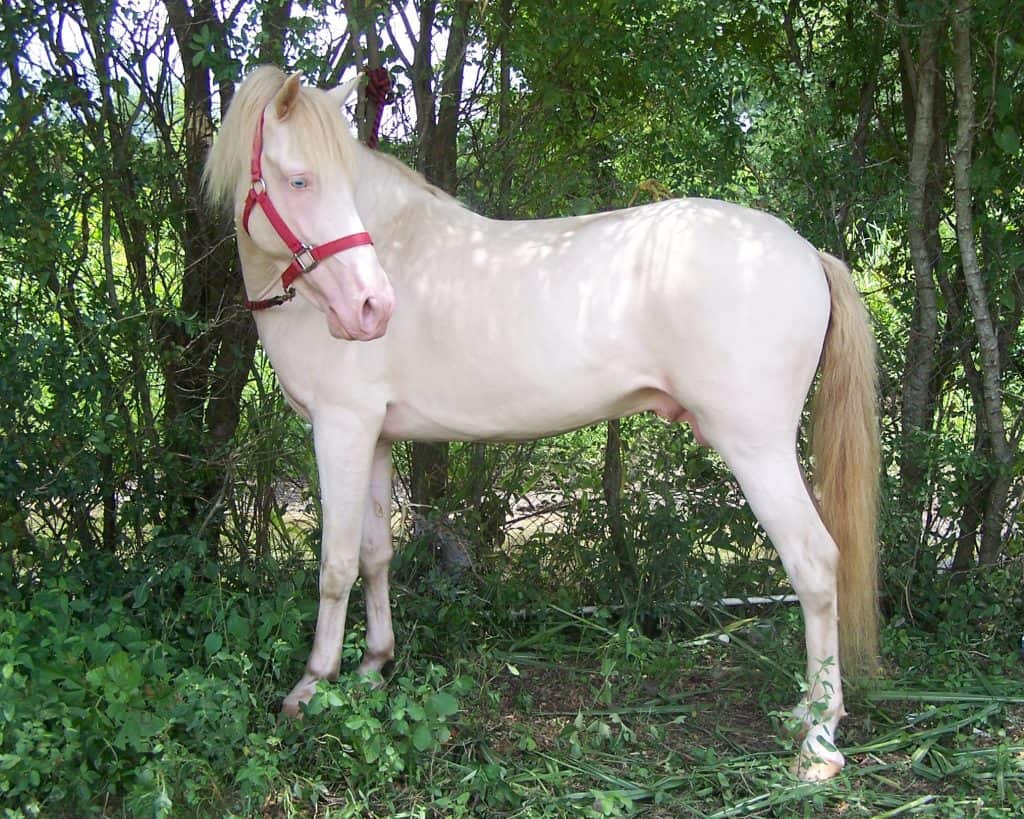
Perlino horse
Sorraia
The Sorraia horse is a rare, ancient Iberian breed recognized by its dun and grullo (mouse-gray) coloring. The breed is defined by its primitive markings, including a bold dorsal stripe down the spine, zebra-like leg barring, a dark face mask, and dark-tipped ears.
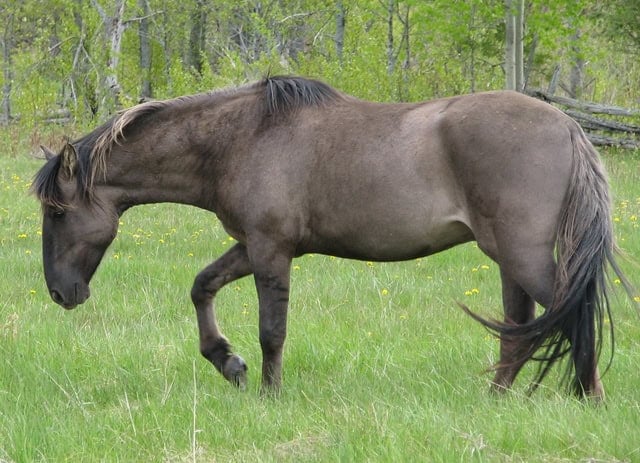
Sorraia horse
Sorraias have black manes and tails with lighter, frosted outer edges. Foals are frequently born with striking, full-body camouflage stripes that eventually fade into their signature solid grullo or dun coat as they mature.
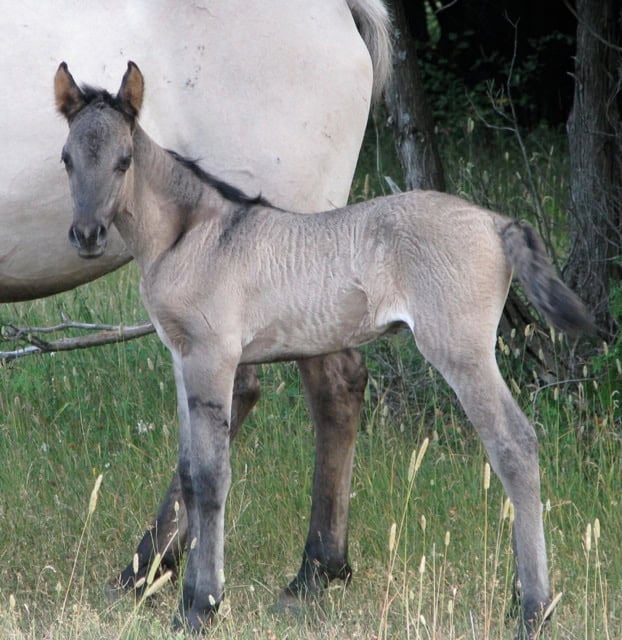
Sorraia foal with visible stripes.
Camarillo White
The Camarillo white horse is a true, all white horse with pink skin beneath the coat. The horses are born in light colors that don’t darken as they age. The bright white appearance sticks with the rare Camarillo horse their entire lives, including through the mane and tail.
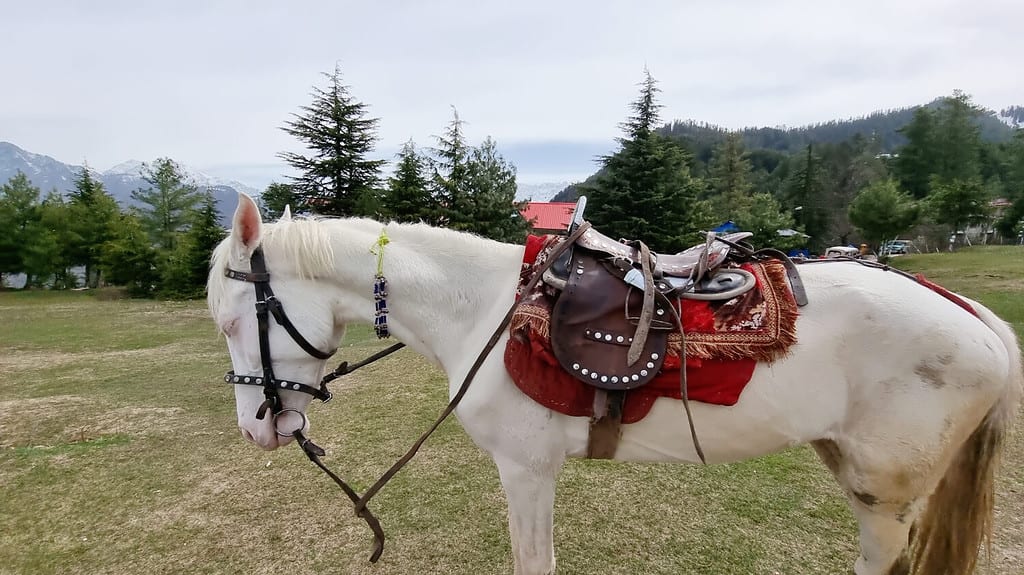
Camarillo White horse
©Jrs Jahangeer/Shutterstock.com
Silver Buckskin
A true silver buckskin horse carries the silver gene, which only affects black hair pigment. The result of this gene is the rare color form of dark points and silver overall coat on the horse. The rare gene lightens the otherwise dark hairs over the horse’s body, producing this silvery sheen. The mane and tail will also come out silver, though the black points on ears will remain.
Metallic Sheen
Not technically a color but rather a structural modification, the metallic sheen gives a distinct optical effect to some horses. The horses with this trait look as if a shimmery, molten metal has been poured over them. This rare trait is most prominent in the Akhal-Teke, which has earned them the nickname golden horses, and it’s no wonder why when you see one.
This unique metallic look comes from the internal structure of the hair shaft rather than specific pigment types. In a typical horse hair, a dense, opaque layer called the cortex surrounds an inner core called the medulla, absorbing or scattering light. In horses with a metallic sheen, the cortex is smaller or absent, allowing the medulla, a transparent, hollow channel, to act like a light pipe, bending and refracting light through the hair shaft. This refraction is most visually noticeable when paired with cream or champagne dilute coat colors, such as cremello, palomino, and buckskin.
Silver Dapple Pinto
The unique coloration of the silver dapple pinto combines the silver dapple coat with the unique pinto pattern. Silver dapples occur in several breeds. The horses have a black base color with a silver gene lightening the color, providing the white and gray spots of the pattern.
Buckskin Pinto
Another rare pinto coloring is the buckskin pinto. This horse coloring has bay buckskin coloring as the base, with cream or gold as the overlaying sheen. Black points on the mane, tail, and legs shine through as well with these unique buckskin pinto patterns.
Sabino
Sabino coloring in a horse is more of a pattern than specific coloring. Most sabino horses have partial or fully white legs with belly spots of various sizes in white. The spotting also appears on their faces and other body parts. Some sabinos are completely white.
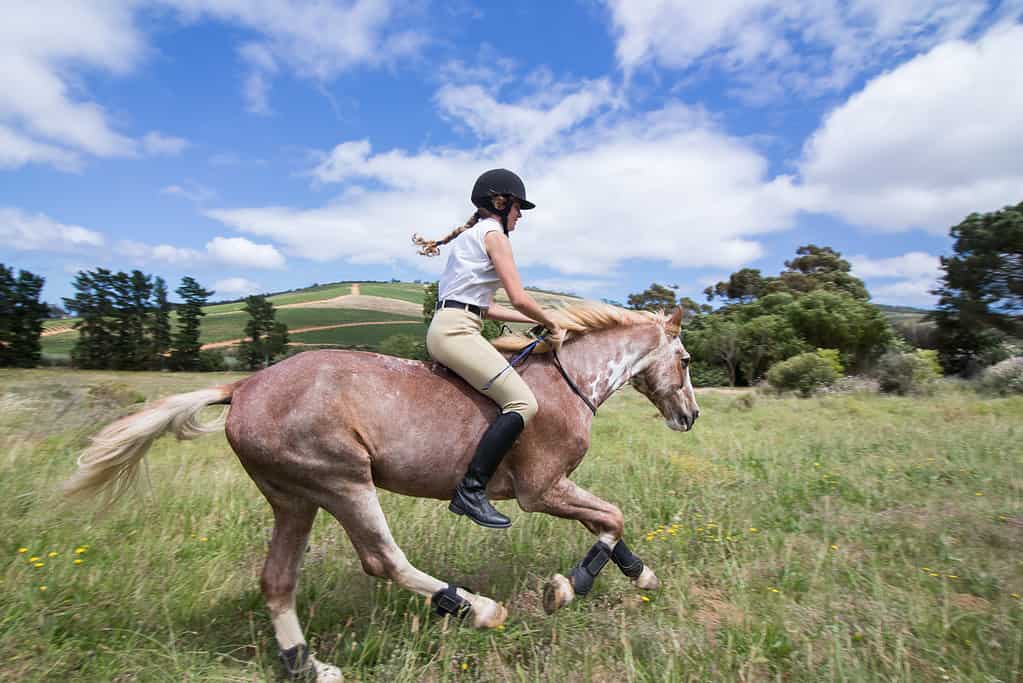
Sabino horse
©Madelein Wolfaardt/Shutterstock.com
This color may appear on any base color, with one of the more unique combinations being a chocolate sabino on a brown and white coat with red mane.
Chocolate Flaxen
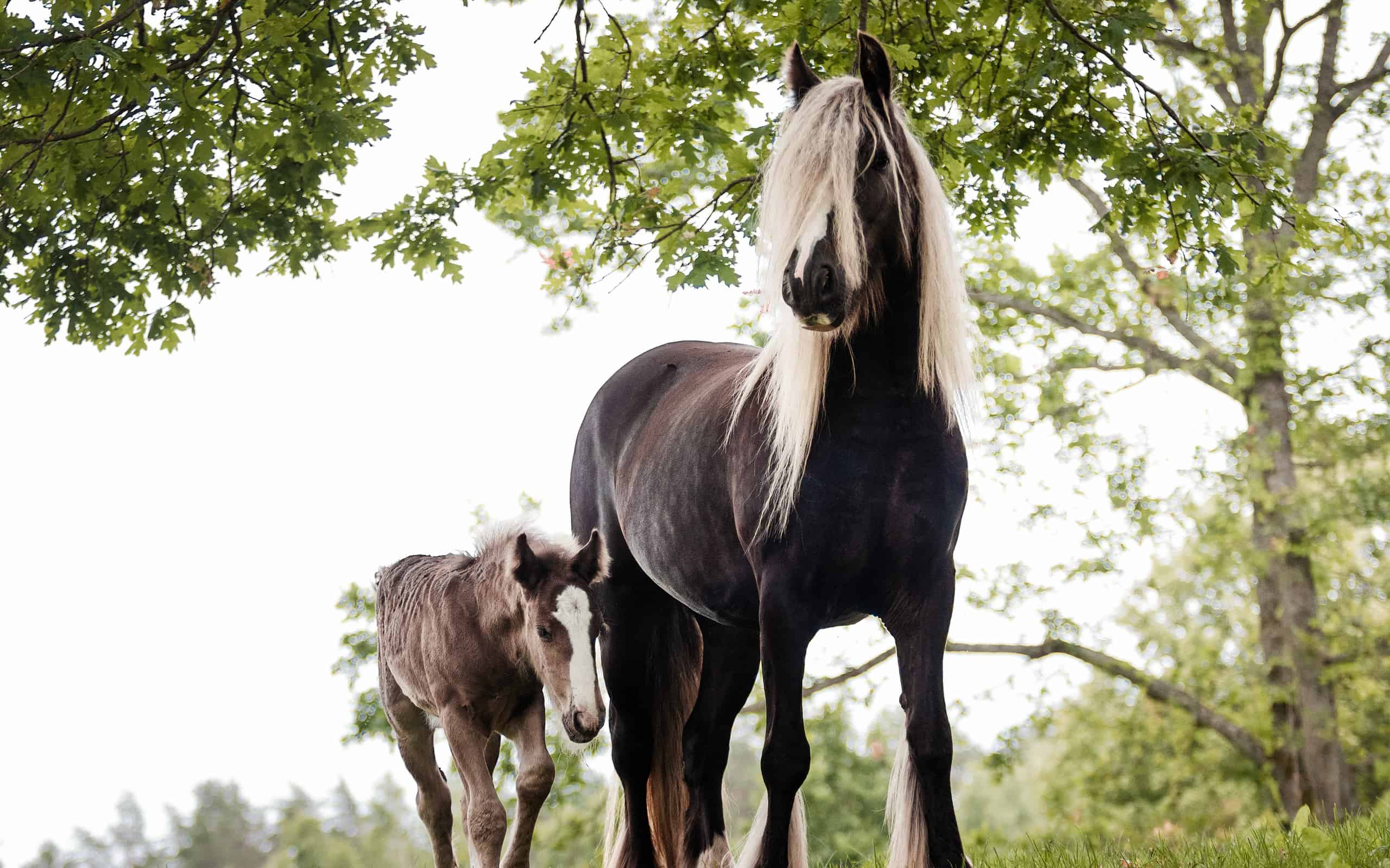
Chestnut base coats may produce the chocolate flaxen horse in Rocky Mountain or Morgan horses, with Black Forest horses almost always coming in chestnut with a flaxen mane and tail, ranging from pale to very dark chestnut, though black, bay, and grey are occasionally seen. A dark chocolate coat overlays the chestnut, with a flaxen tail and mane. This coloring comes from a flaxen modifier gene.
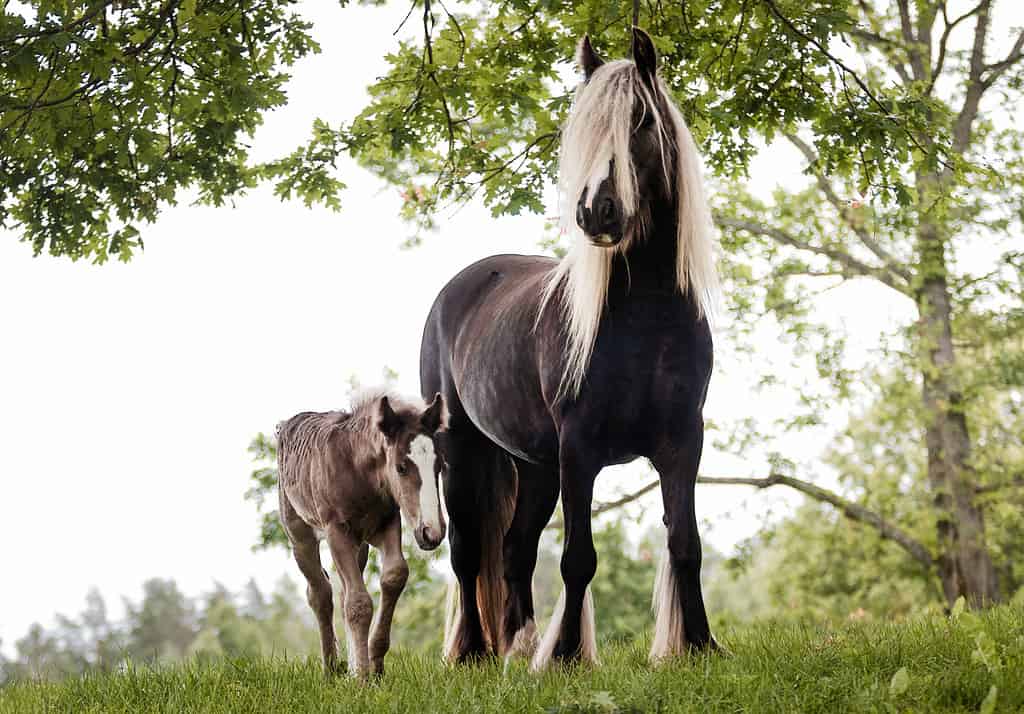
Chocolate flaxen horse
©Au_Cr/Shutterstock.com
Champagne: Classic, Gold, or Amber
A rare shade in horses, champagne may exist with any base coat color. The coloration results in pink or light lavender skin and horses are born with blue or blue-green eyes that later turn amber, hazel, or light brown. The coloration comes in three shades: gold, amber, or classic champagne, due to the champagne gene.
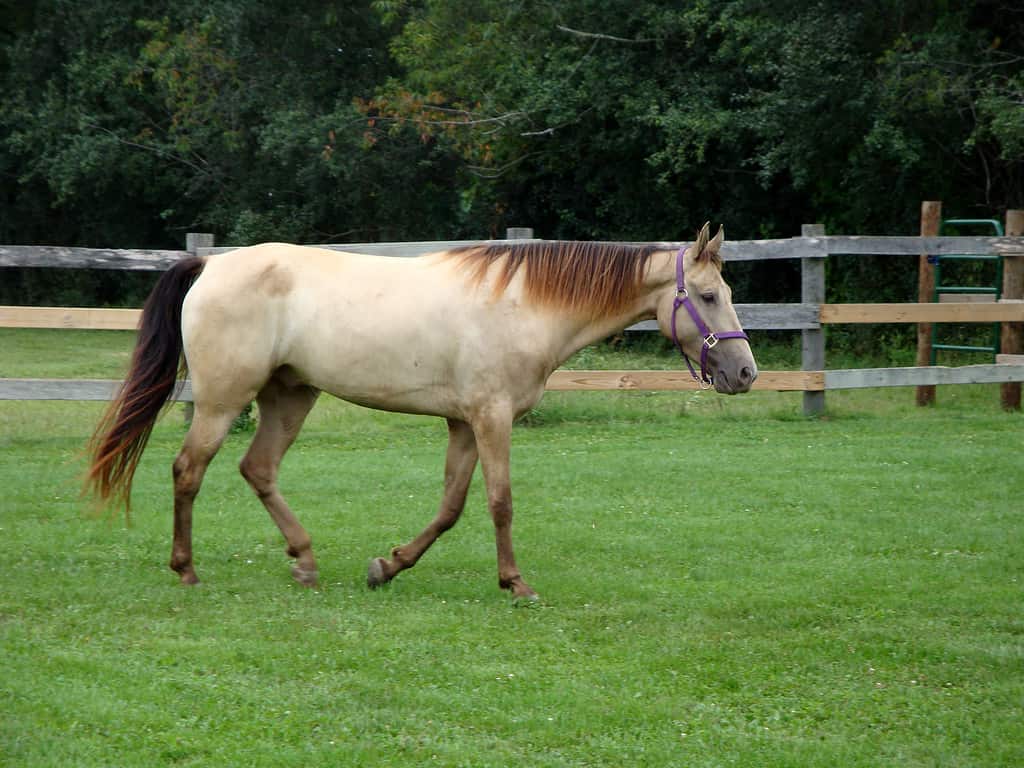
Gold champagne horse
©JP Stock Images/Shutterstock.com
When horses with a chestnut base carry the champagne gene, they develop a gold champagne color. Black base horses with the champagne gene develop the classic champagne coloring. Bay horses with the gene produce amber champagne coloring.
At least one parent with the champagne gene is required to create the champagne horse. A heterozygous champagne horse has a 50 percent chance of passing the gene on to their offspring, while a homozygous champagne horse will pass it on to all offspring.The result is a horse born with bright pink skin with some freckles developing over time, around the muzzle, sheath, eyes, and under the tail. Sometimes, champagne horses develop a metallic sheen to them. They have a 50 to 100 percent chance of passing the gene on to their offspring.
Smoky Cream
Another rare color is the smoky cream. These horses have black as their base coat, with dark pink skin coloring and blue or glass eyes. The smoky color comes from a double cream dilution gene. The result is a pale, coffee-to-cream hue with manes and tails in smoky blue, yellow, sooty, or coffee-brown. Lower legs tend to be darker than the body, as well. These smoky creams are often confused with cremellos and perlinaos, but the base black usually shines through on the creams to help distinguish them.
Smoky creams may come in American Quarter, Saddlebred, Tennessee Walking, Missouri Fox Trotter, Andalusian, or American Paint horse breeds.
Chocolate Palomino
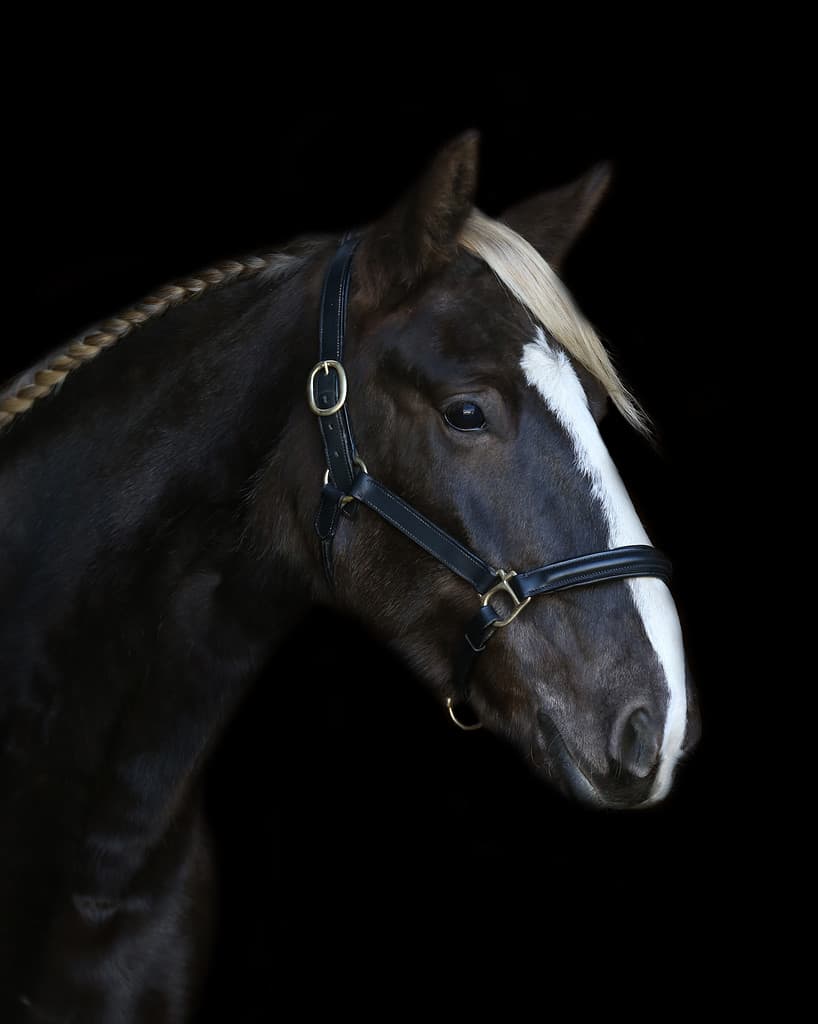
Chocolate palomino mare
©Allyssia Timberlake/ via Getty Images
The unique chocolate palomino horse usually results from pairing a liver chestnut horse with a palomino colored horse. The extremely rare result has dark skin coloring, brown eyes, and a chestnut base coat. The chocolate palomino has an overall deep, dark golden color as deep as dark chocolate in shade, with a few strands of black or brown in their manes and tails.
Pearl
The pearl dilution gene is an extremely rare trait most commonly found in Iberian breeds such as Andalusians and Lusitanos. Because it is a recessive gene requiring two copies to show visibly, true “double pearl” horses are highly prized for their scarcity. Homozygous pearl horses display a pale, uniform apricot or cream-like gold coat with a distinct iridescent, metallic sheen.
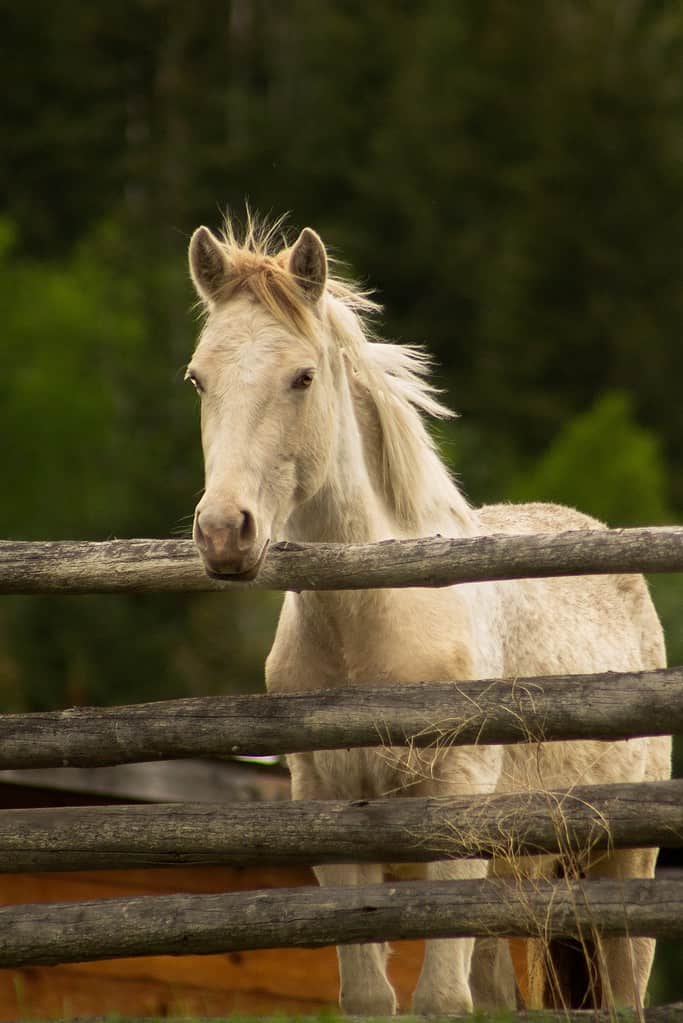
Pearl horse
©Prism Acres Rebecca Young/Shutterstock.com
Sooty Buckskin
The sooty buckskin has black hairs spread across the horse’s shoulders, thighs, and topline, resulting in a sooty looking coat over the standard color of the horse. Most horse breeds can occur in this coloration, but it is uncommon.
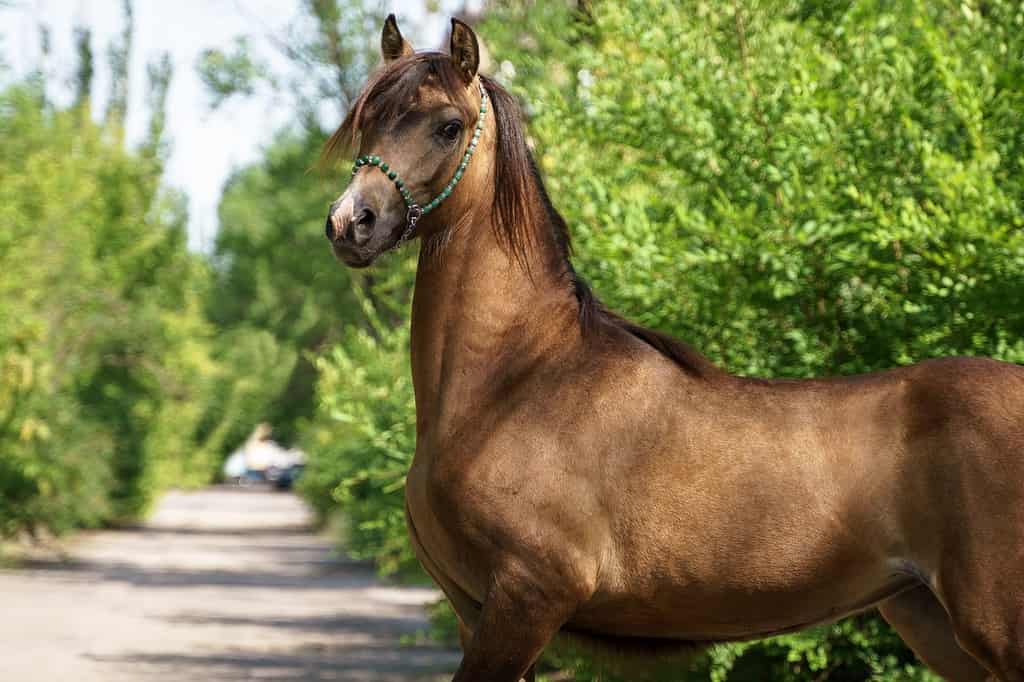
Sooty Buckskin horse
©Ashur_Ro/Shutterstock.com
Rabicano
Rabicano is also more of a pattern in white than a specific coloring. However, this white pattern comes with darker shade horses so rarely that the gene which causes it has become a focus in genetic studies. The white hair appears on various parts of the horse’s coat, including at the tail base and barrel. The pattern isn’t a solid one like that of a sabino or pinto, but rather a “spotting” of white hairs in the dark coat that gives a unique white dry-brushed look to the animal.
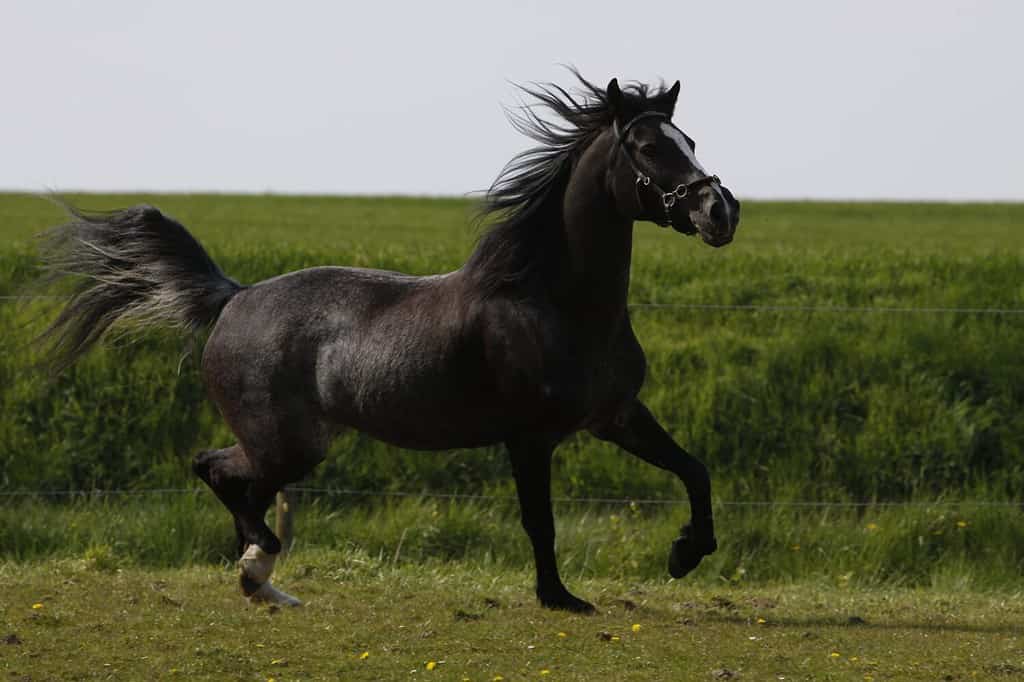
Rabicano color horse
©Sabine Hagedorn/Shutterstock.com
Red Rabicano
A Red Rabicano comes with a chestnut base color and sparse roaning coloration on the underbelly, tail, legs, flanks, and head. Basically, this coloration leaves the horse’s back in its base color and touches the other areas with red. Most often, this coloration occurs in black, bay, and chestnut horses.
Bay
The most common color in the majority of horse breeds, the bay is a brown to auburn body with black points at lower legs, muzzles, ear rims, manes, and tails.
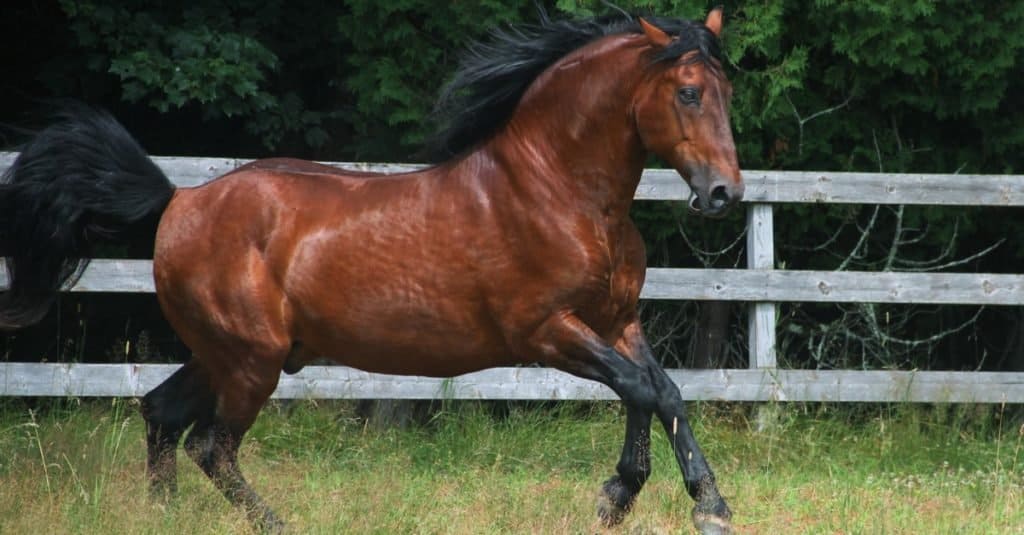
Bay horse
©Liia Becker/Shutterstock.com
Dark Bay
Dark bay horses have the classic black tail, mane, and ears, but their base coat is much darker than the auburn-brown coloring of the standard bay. In some cases, dark bay horses are so dark that folks mistake them for black horses. However, the lighter points at the muzzle, foreleg, and flanks can help identify them as dark bays.
Chestnut
The chestnut horse has a flaxen tail and mane, with reddish brown coats. Chestnuts may come in sorrel to dark or light red-brown shades. Chestnuts don’t have the dark or black points like a bay, however, so may be distinguished this way.
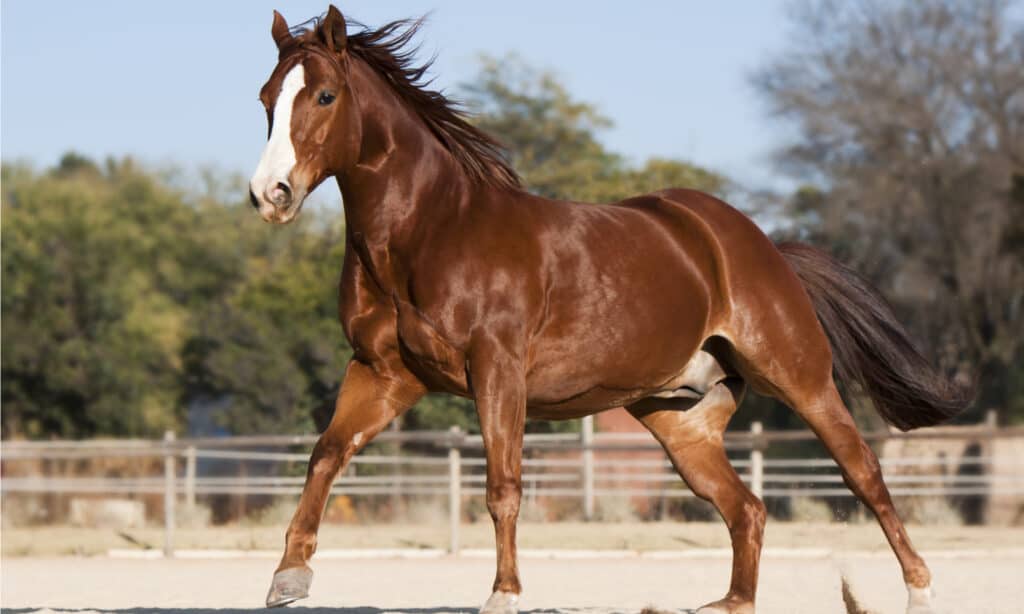
Chestnut horse
©Jaco Wiid/Shutterstock.com
Liver Chestnut
Some chestnuts come in darker shades, almost black or deep chocolatey brown. These have reddish manes and tails and are known as liver chestnuts.
Brown
Brown horses differ from chestnuts and bays with a dark brown color or dark seal color. The horse will have black points on the legs, mane, and tail, with a reddish-tan or light brown coloring around the muzzle, eyes, front of the stifle, and at the elbows.
Dun
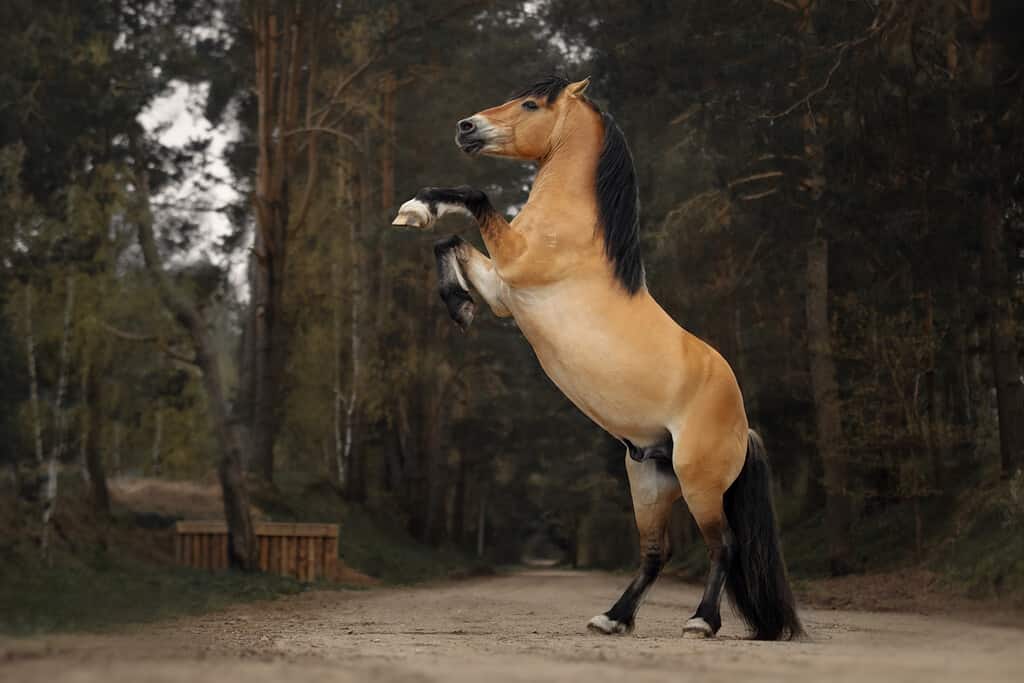
Dun harness horse
©Julia Siomuha/Shutterstock.com
Coming in creamy golden hues, dun horses have black tails and manes, with a distinctive black dorsal stripe. The horse may come in a number of golden to yellow shades, but they always have that dorsal stripe and black points. They may also have shoulder stripes, mane frostings, or cob webbing on their coats. In many cases, the stripes are thought of as zebra-esque coloring.
Buckskin
The unusual buckskin horse may come in a dark, creamy golden color to lighter shades of cream with dark or black points on the manes, tails, ears, and legs. The horse has similar zebra coloring to the dun coloring without the dorsal stripe.
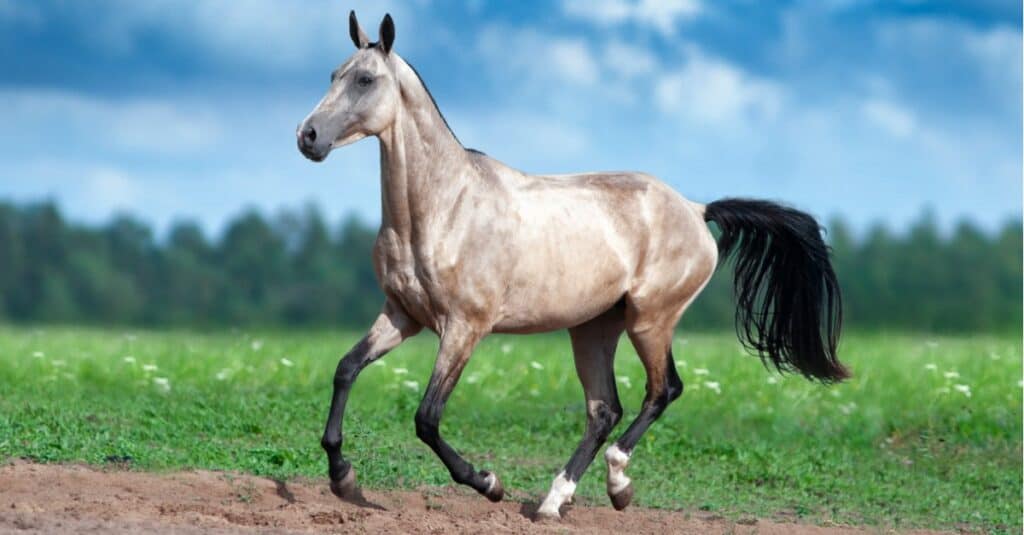
Metallic bucksin horse
©iStock.com/olgaIT
Palomino
Palomino horses may either be the breed known as palomino or a coloring. In the case of coloring, the term refers to creamy or golden-coat horses with white to cream manes and tails. The base color for these horses ranges from a dark golden yellow to a pale yellow-white.
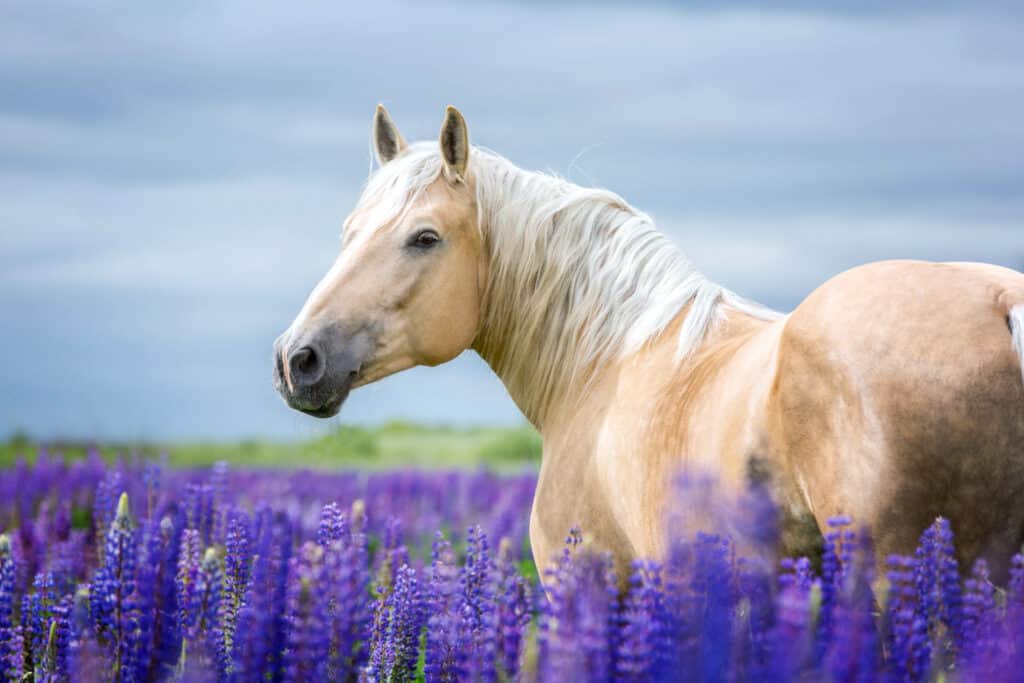
Palomino horse
©Osetrik/Shutterstock.com
Gray
Gray is a fairly common horse coloring, though folks often mistake the lighter shades for the rare white horse. The gray horse is usually born with dun, palomino, bay, or chestnut coloring, but turns gray over time. The gray coloring in horses may range from a pale, almost white shade to deep gray.
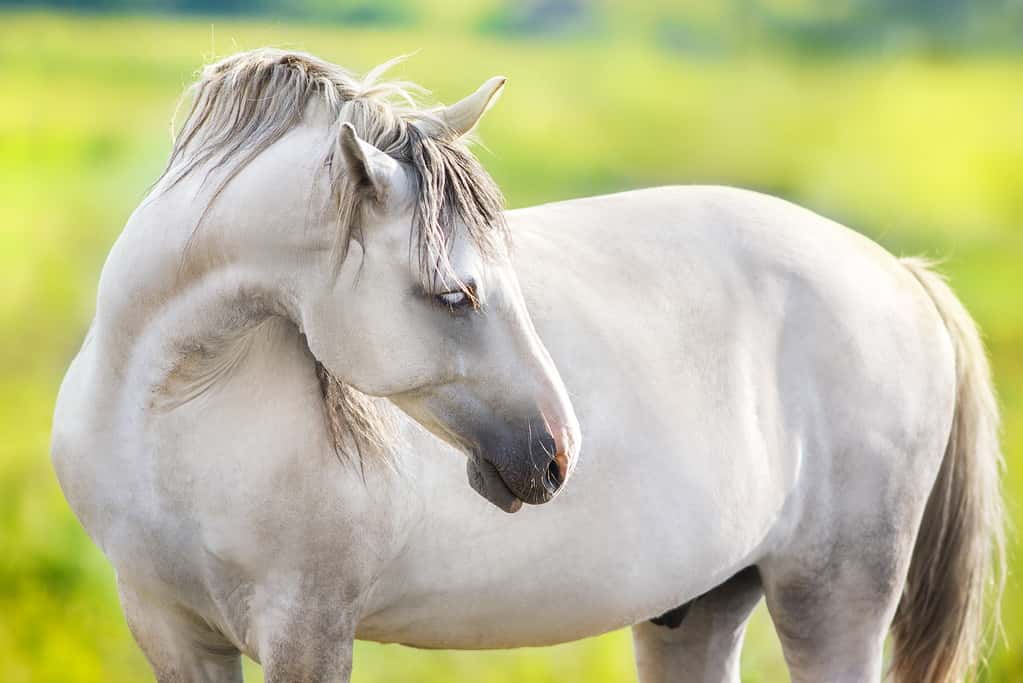
Gray horse
©Callipso88/Shutterstock.com
Flea-bitten Gray
Sometimes, the gray horse has a white coat with dark gray dots or freckles spotting on the coat. This is known as a flea-bitten gray horse.
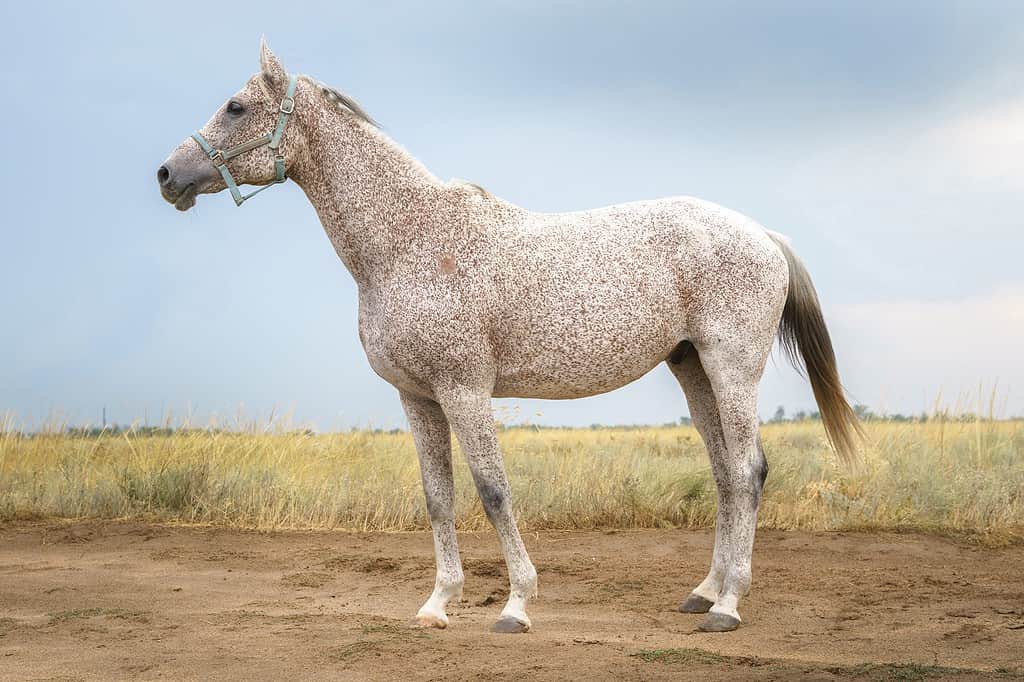
Flea-bitten gray horse
©Ashur_Ro/Shutterstock.com
Roan
A roan pattern, or “varnish” shows up as white hairs appearing through the base coat color of the horse. Roan horses are born with this coloring. The variation usually occurs in bays, in several patterns.
- Blue roan — A dark coat with white hairs that makes the horse appear almost blue in color. This comes from a black base and usually has black points.
- Red roan — A chestnut base color with white hairs showing through produces a red to brown coloration.
- Strawberry roan — Strawberry roan comes from a reddish base color with white hairs showing through.
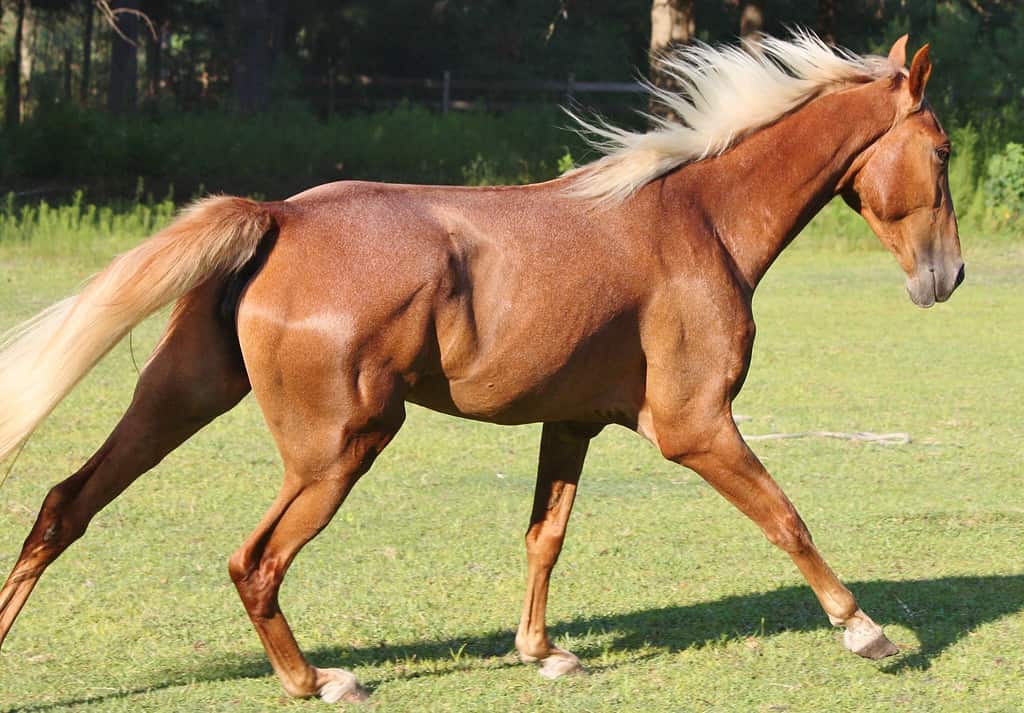
Red roan horse
©aleigha blakley/Shutterstock.com
Appaloosa
The term Appaloosa applies to both color patterns and a specific breed of American horse. The colorful, spotted coat is the foundation for the coloring, with the breed largely displaying this pattern.
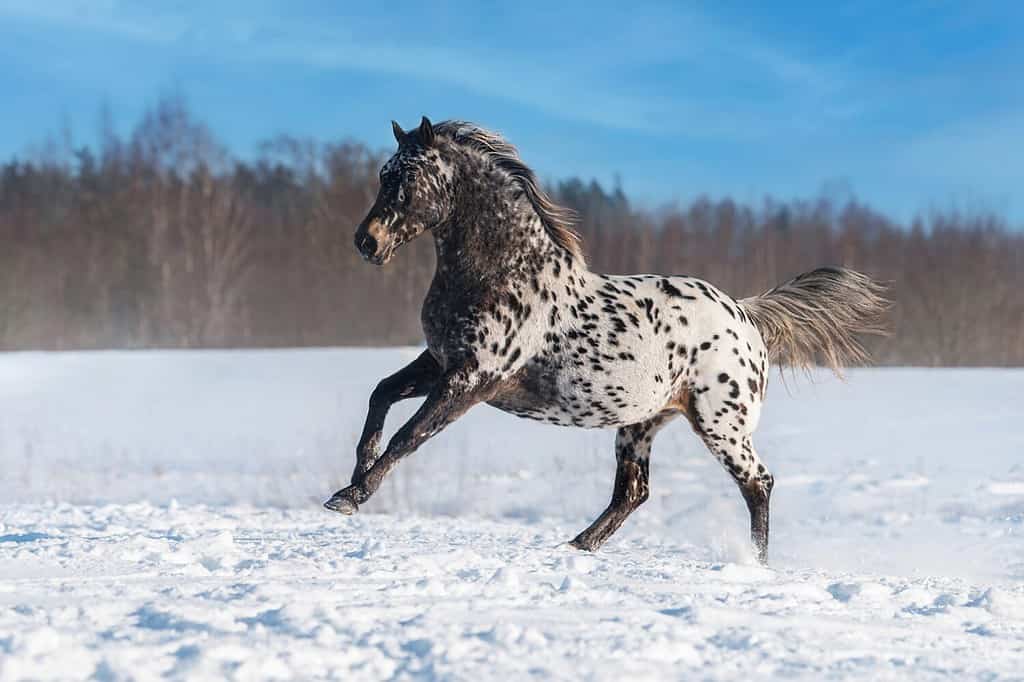
Appaloosa horse
©Rita_Kochmarjova/Shutterstock.com
Multiple breeds created the horse, genetically speaking, resulting in the unusual patterning. Several varieties of Appaloosa patterns exist.
- Appaloosa Roan — A speckled white “blanket” covers the darker base color in a roan pattern. The pattern changes throughout the horse’s lifetime.
- Blanket Appaloosa — White spots over the hips pair with a contrasting base color, like white over black, with distinctive white markings on the horse’s rump.
- Snowcap Appaloosa — Nearly identical to blanket coloring, snowcap coloring has white over the hips or haunches in pure white, with no spotting.
- Leopard Appaloosa — A white coat with black or brown dots speckling throughout creating a leopard-like pattern.
- Frost Appaloosa — Coloring falls between roan and appaloosa, with a solid colored neck and check and roan-like patterns on the belly and haunches.
Pinto
Pinto horses have dark base coat colors, such as black or bay, with white patterns looking a bit like splattered paint on them. The patches or white are usually large. Overall, the pinto horse may bear any variety of combination and colors.
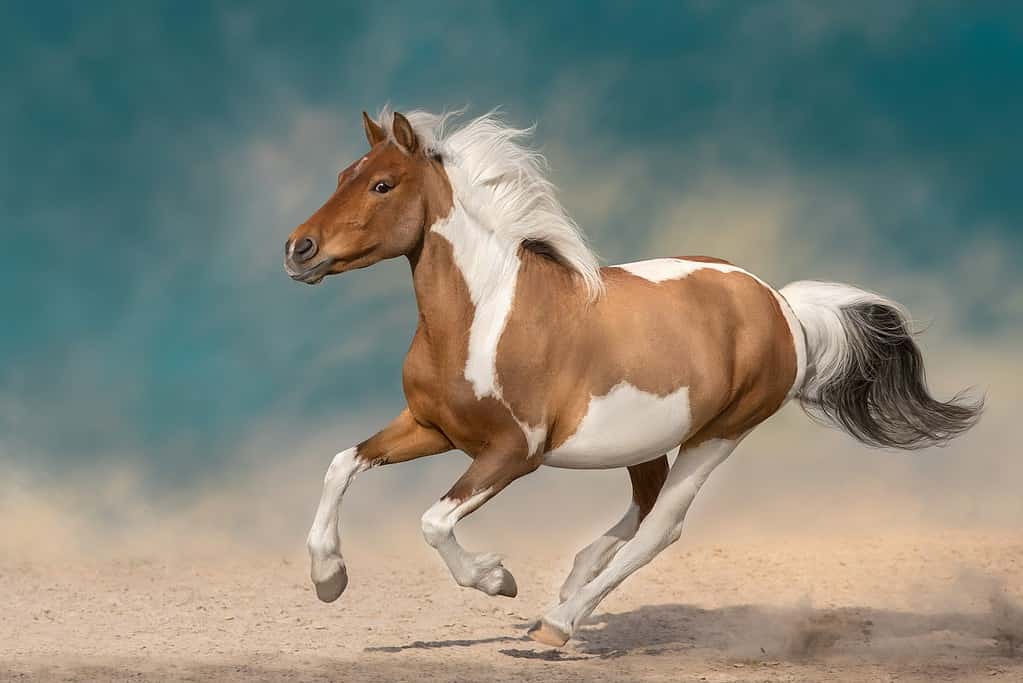
Pinto horse
©Kwadrat/Shutterstock.com
Sorrel
A sorrel horse belongs to the chestnut horse color family. The reddish hue of a sorrel stands out from other chestnuts with a browner sheen. Sorrel horses have light reddish coats with blond tails and manes, earning them the nickname of “light” chestnuts.
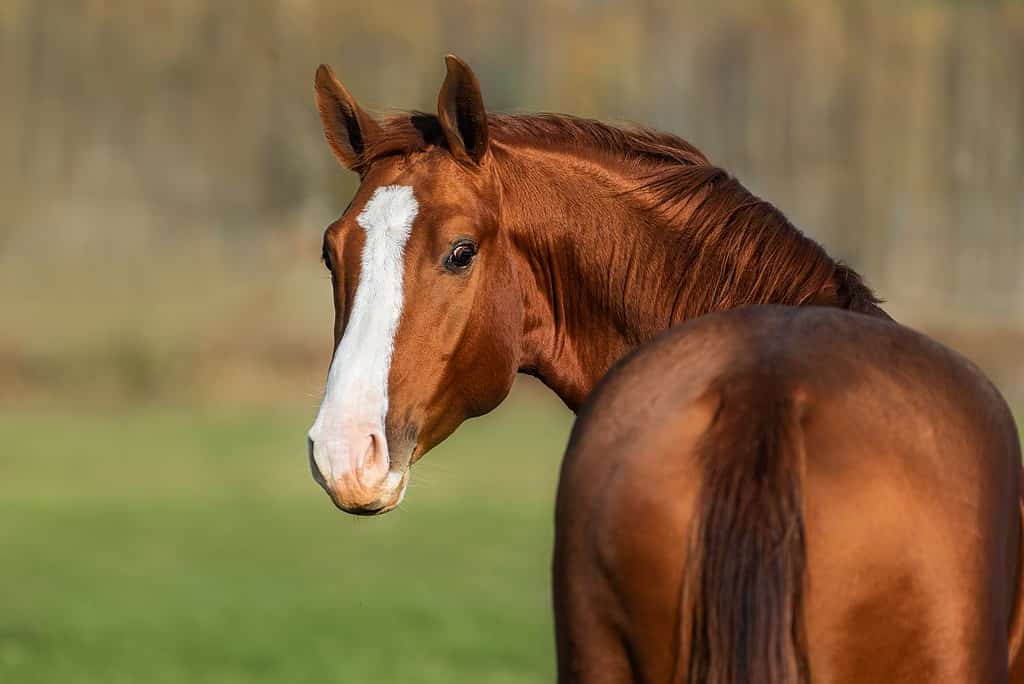
Sorrel chestnut horse
©Rita_Kochmarjova/Shutterstock.com
Overo
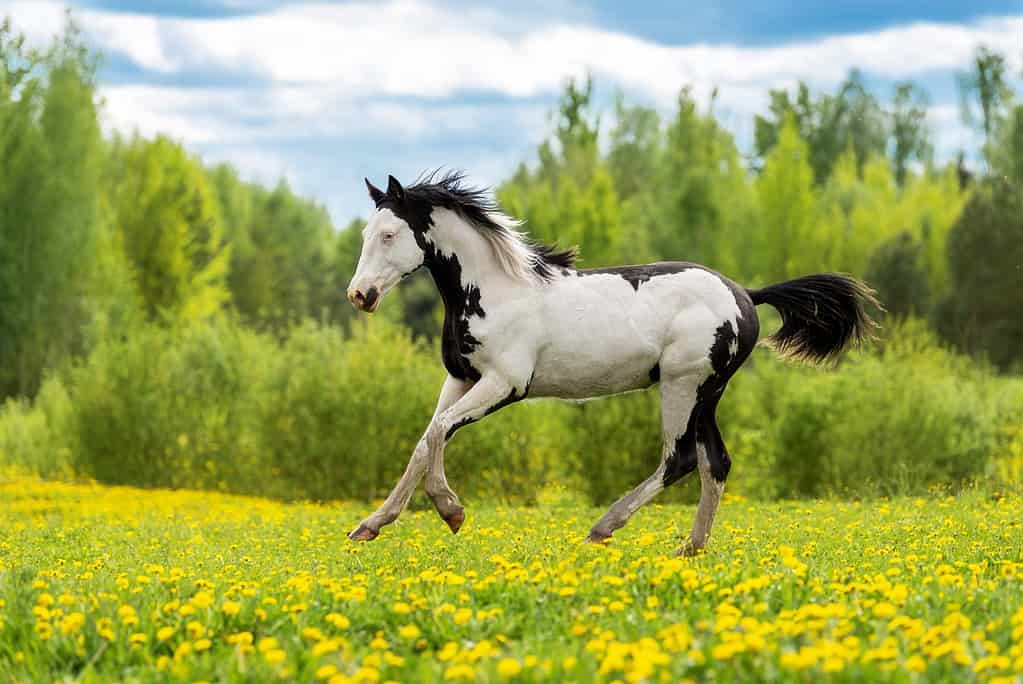
Overo horse
©Rita_Kochmarjova/Shutterstock.com
When a darker base coat color horse develops a white pattern stemming from their bellies, these are known as overo-colored horses. The pattern may combine with any base color to create the unique coloration.
Splash Overo
The splash overo horse bears a white head, blue eyes, and white markings on the legs and belly. Their backs usually bear their base color in solid.
Cream
Bays, chestnuts, and black horses may create a cream coloring thanks to a cream dilution gene. This gene makes the base color lighter, producing the cream shade. Often, palominos or buckskin horses with the cream dilution gene appear even lighter than others with the gene.
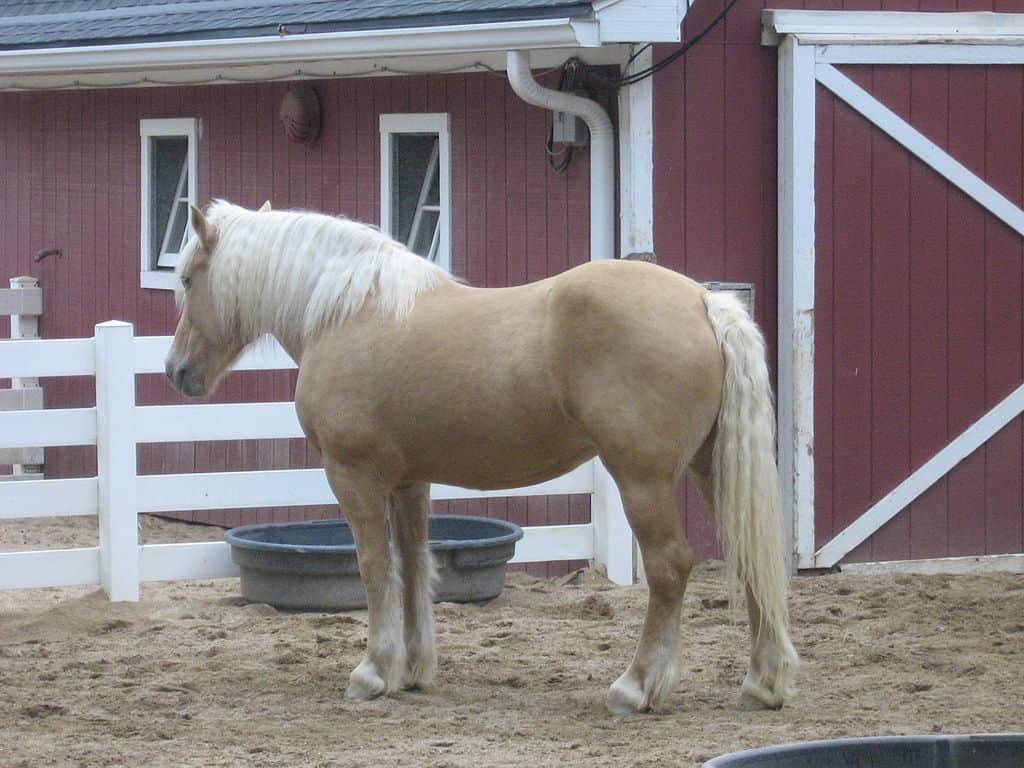
Cream horse
Dapple Gray
A gray base coloring, created by black with white coloring, creates the dapple gray horse. Splatters or white spots appear throughout their gray coloring, with black points on some horses. Sometimes, the dapple gray with black points may be confused with a blue roan.
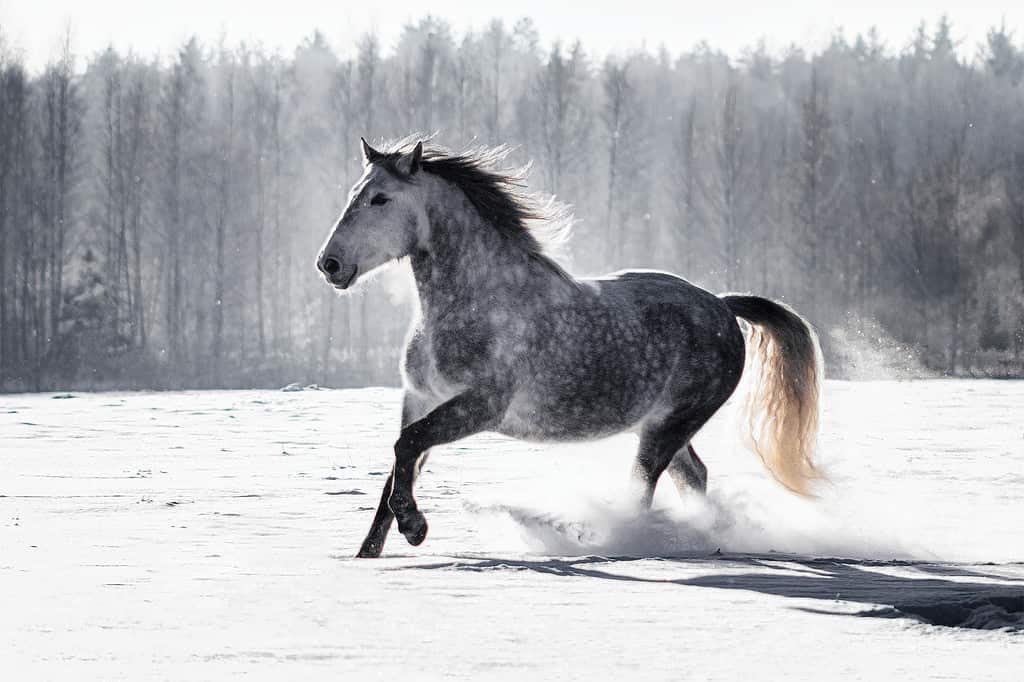
Dappled grey Andalusian horse
©Au_Cr/Shutterstock.com
Grullo
To create the grullo coloring, a horse must have a dun overlay on a mousy black base color. They have dorsal stripes and stripes on their legs. Sometimes, they have a darker face.
Tobiano
Spotted color patterns with pink skin patches and white hair mingled into the base color coat creates the tobiano coloring in horses. This is most frequently seen in Pinto horses. You’ll notice white legs and solid-colored heads in this pattern. Base coat colors could be any of the four main base shades.
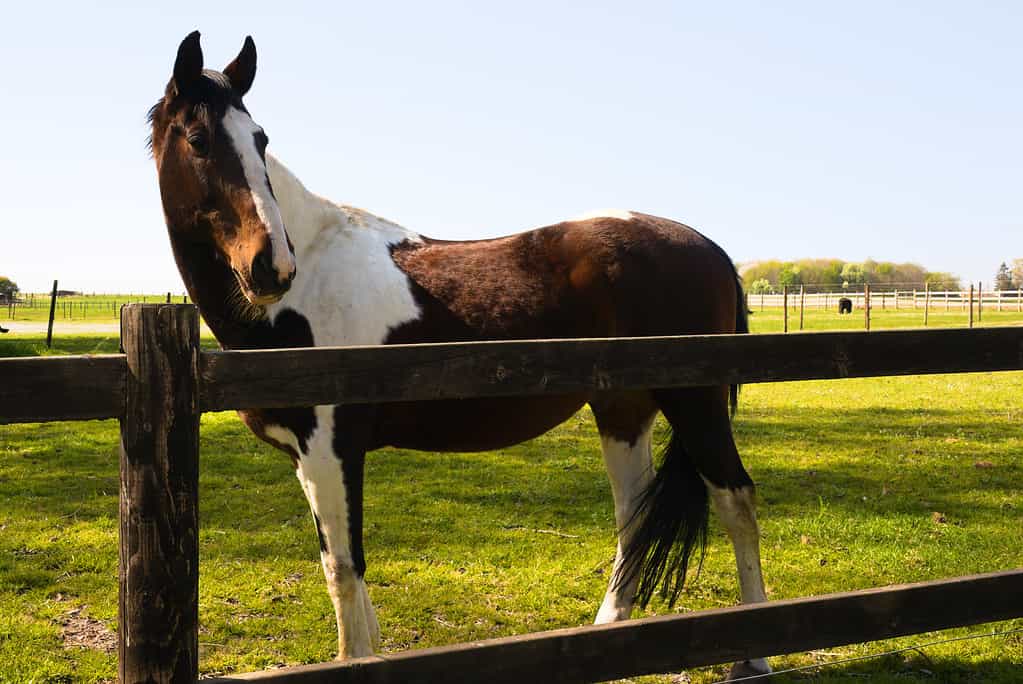
Tobiano horse
©ldc_foto/Shutterstock.com
Skewbald
The skewbald horse may be any color horse with an overo or tobiano pattern, or combination of the two, over a base color in patches, without black coloring.
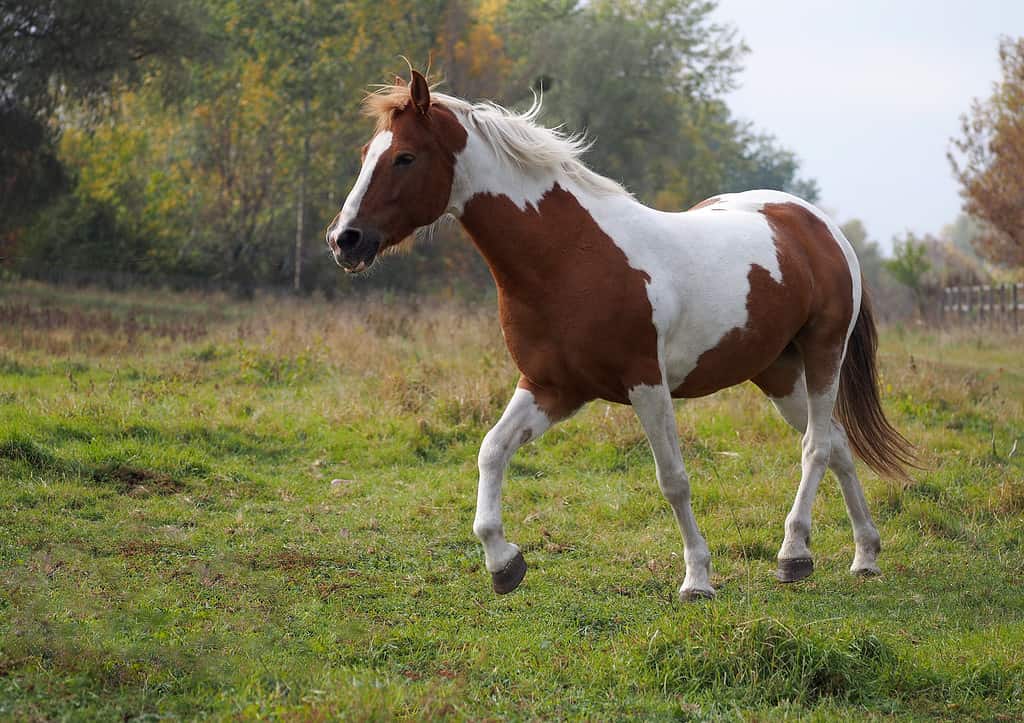
Skewbald pony
©Plotitsyna NiNa/Shutterstock.com
Piebald
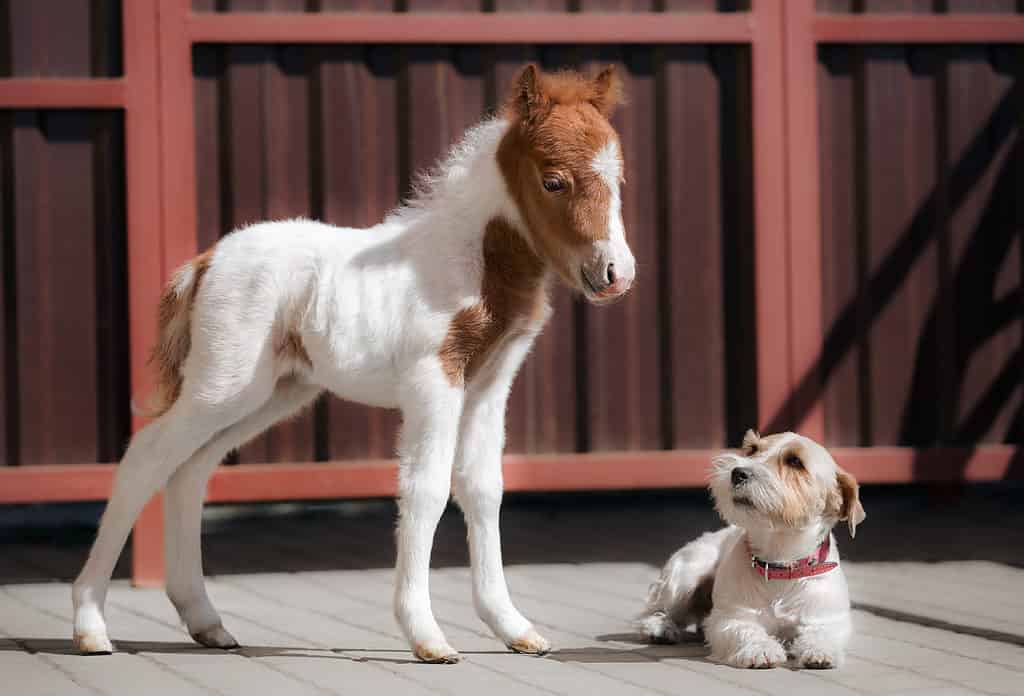
Miniature piebald horse
©OlesyaNickolaeva/Shutterstock.com
Piebald coloring in horses features tovero, overo, or tabiano patterns with a black base coats.
True Black
True black horses have a solid black coat with black points. Sometimes true black horses have white markings like stars or socks. They have brown eyes, black skin, and no brown or reddish hair. On some occasions, they have a blue sheen to their black coats. They’re not particularly rare horses, but some breeds are far less likely to contain true black horses than others.
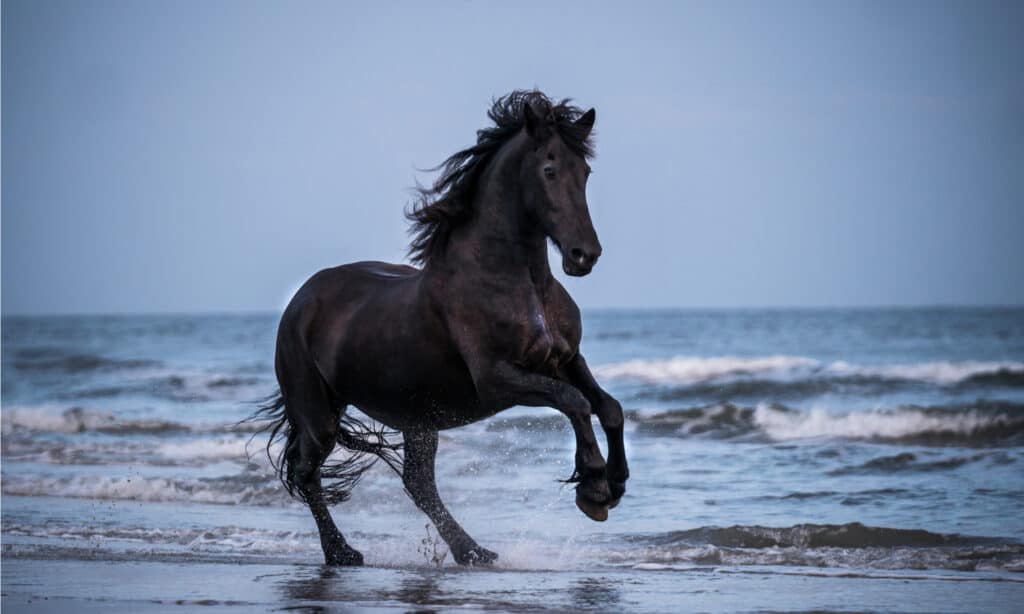
True black horse
©Kira Felicitas/Shutterstock.com