
Quick Take
- White lions look like they'd struggle to survive in the wild, but the reality of their hunting success might surprise you. See the hunting reality →
- They're not albino, and the difference actually matters more than you'd think. Understand the difference →
- A recessive gene is behind the pale coat, and both parents have to be involved in a very specific way for a white cub to ever appear. Explore the genetics →
- The number of white lions still roaming free is smaller than most people imagine, and the reason isn't what you'd expect. See how few remain →
African safaris can deliver some unforgettable wildlife sightings, but even experienced guides can go years without seeing a white lion. These striking cats are not a separate species or albinos. Instead, they are an extremely rare color variant of the African lion, with naturally pale coats caused by a recessive genetic trait.
The lion in the video above does not appear particularly impressed by all the attention. After getting to his feet beside a safari vehicle, the big cat stretches, lets out an enormous yawn, and soon decides that resting sounds like the better option.
A Rare White Lion in South Africa
The footage takes us to South Africa, one of the few places on Earth where white lions have occurred naturally in the wild. These remarkable cats are particularly associated with the Greater Timbavati and Greater Kruger region of northeastern South Africa.
Despite their unusual appearance, white lions are not a separate type of lion in the biological sense. They live and behave much like their tawny relatives. What makes them so extraordinary is the genetic combination that produces their pale coats, making a wild sighting especially memorable.
The Lion Seems Ready for Another Nap
Early in the clip, the white lion rises from the grass with a safari vehicle nearby. Rather than showing much interest in the people watching him, he opens his jaws for an enormous yawn and casually looks around.
By about the 24-second mark, apparently satisfied that there is nothing particularly urgent happening, the lion lowers himself back to the ground. Lions naturally spend large portions of the day resting, so seeing one trade activity for another comfortable spot in the grass is hardly unusual. Seeing a white lion do it, however, is another story.
Why Are White Lions So Rare?
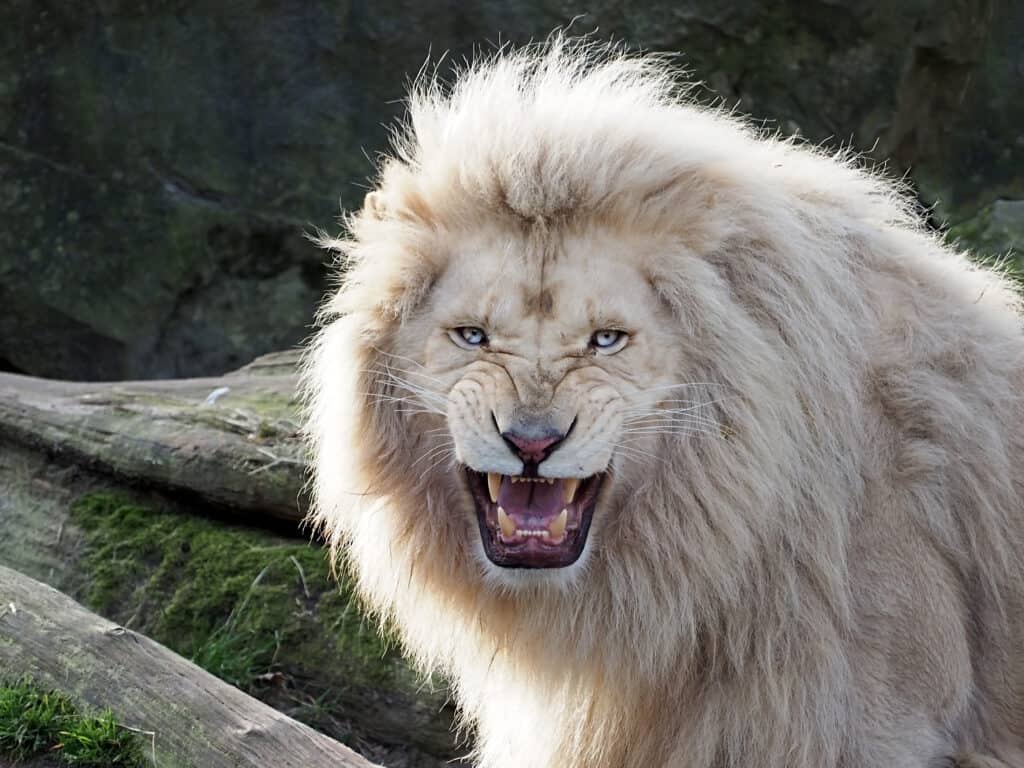
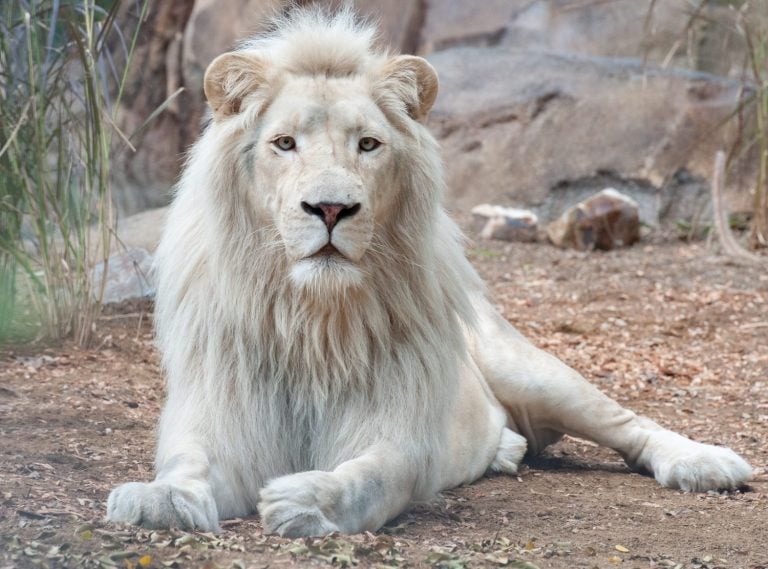
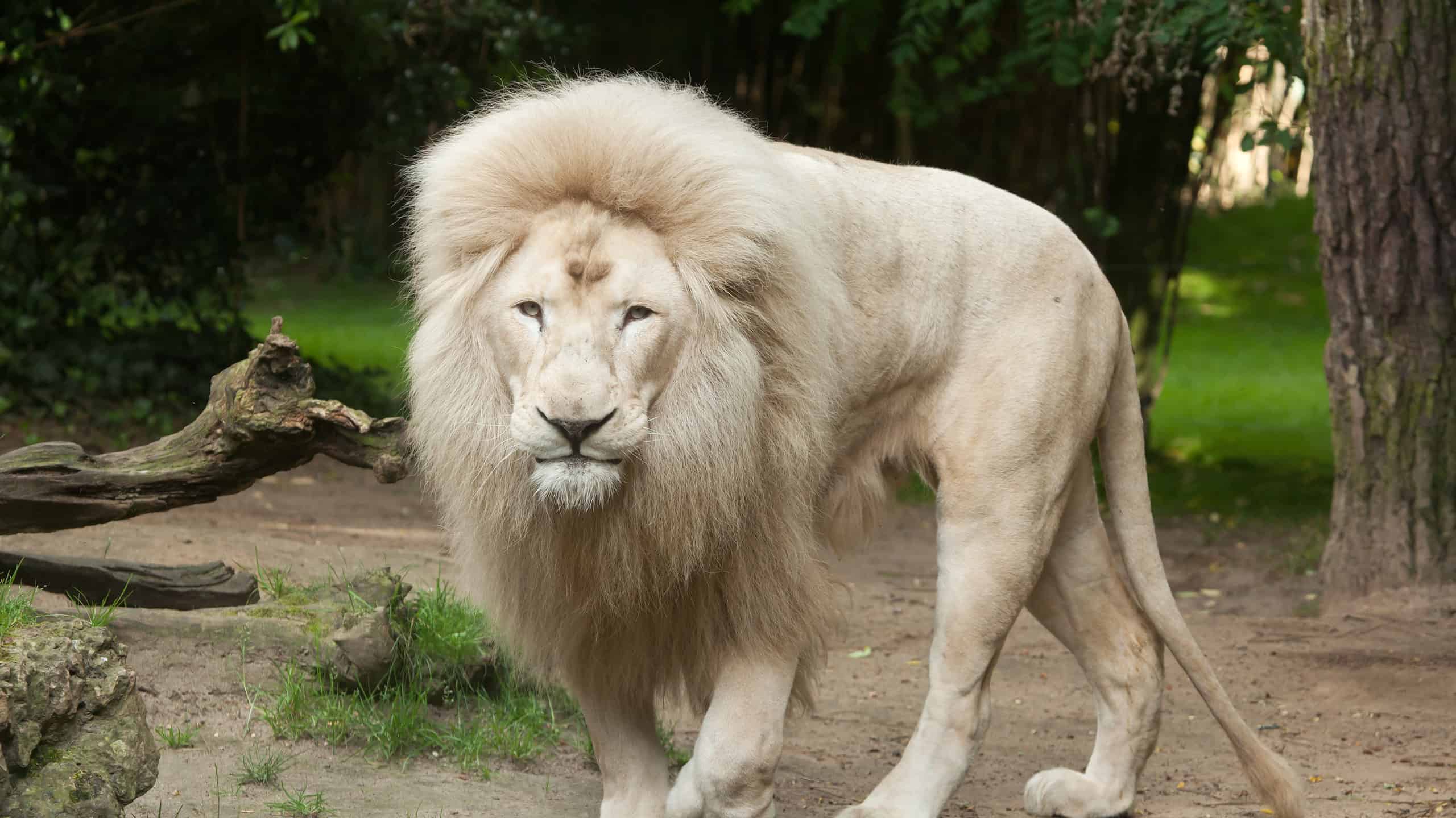
White lions retain pigment in their eyes and other parts of the body, distinguishing them from true albino animals.
©Edwin Butter/Shutterstock.com
A white lion is still an African lion, Panthera leo. Lions in southern Africa are generally classified within the subspecies Panthera leo melanochaita. White lions are simply a rare color variant within that population rather than a separate species or subspecies.
Their unusual coloring is caused by an inherited recessive trait affecting pigmentation. Genetic research has identified a mutation in the TYR gene associated with the white coat. Because an animal must inherit the necessary genetic variant from both parents for the trait to appear, white cubs can occasionally be born to normally colored lions carrying the gene.
Are White Lions Albino?
No. White lions are commonly described as leucistic, meaning their coloration is greatly reduced without the complete loss of pigment associated with albinism. Their eyes can remain brown, blue, or green, while pigmentation is also visible around areas such as the nose and lips.
The Global White Lion Protection Trust, a South African conservation organization, currently estimates that fewer than 13 white lions remain free-roaming in their natural range. Exact numbers are difficult to establish, however, and white lions do not have a separate conservation classification from other African lions.
Does the White Coat Make Hunting Harder?
It seems logical to assume that a bright coat would make sneaking through the African bush more difficult, but research has challenged that idea. A study comparing reintroduced white lions with tawny lions found no significant difference in their hunting or feeding success under managed free-roaming conditions.
Researchers have also found that reintroduced white lions can establish territories, move through their habitat, hunt, and display other behaviors comparable to tawny lions. Their rarity appears to have much more to do with genetics and the history of human removal from their natural range than an inability to survive simply because they are white.