
Quick Take
- The armored rat's spines look like a weapon, yet scientists believe their real job has nothing to do with fighting off predators. Discover the spines' real purpose →
- City rats leap at their attacker's face, so it raises the question of why this rainforest cousin evolved a completely different survival strategy. Compare city vs. rainforest rats →
- Its 'armor' has a surprising connection to the wettest forests on Earth, and what it reveals about how small mammals stay alive there is quite unexpected. See the wet forest connection →
- This rat will sacrifice its own tail to escape danger, and that's not even the strangest thing about how it behaves. Explore its survival behaviors →
People are right to be wary of city rats. These urban dwellers carry disease and have impressive defense behaviors, which include shrieks and ‘jump attacks,’ which are leaping bites directed at the head of their opponent! But another rat species has taken a very different approach to defending itself. Meet the little-known armored rat – a rainforest dweller with a spiny coat!
Continue reading
Introducing the Armored Rat
The armored rat (Hoplomys gymnurus) belongs to the rodent family Echimyidae. It is found in Central and South America, with a range that covers southern Honduras to northwestern Ecuador, and never east of the Andes Mountains. Similar to its city-dwelling cousin, the armored rat can also harbor diseases like equine encephalitis and cutaneous leishmaniasis.

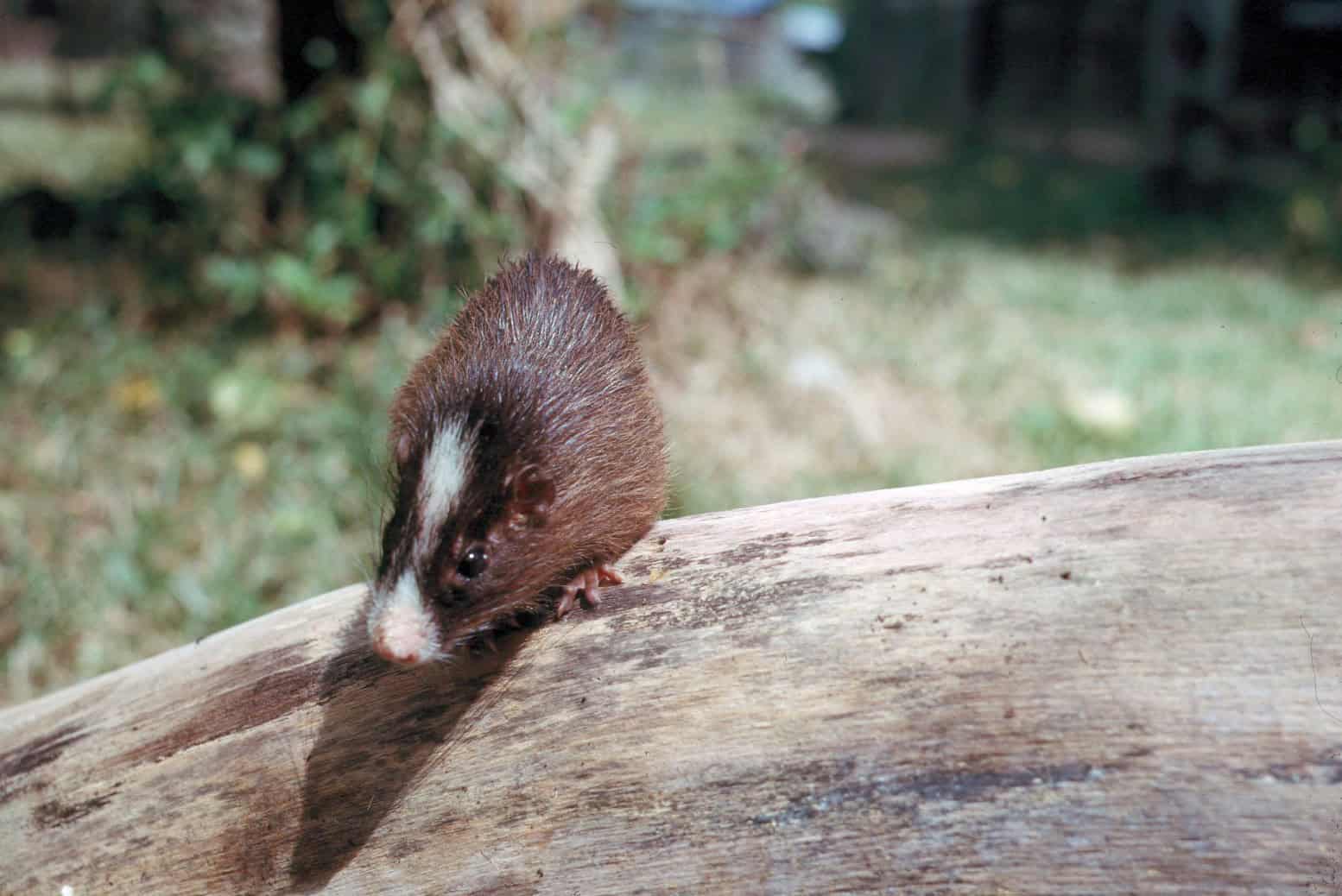
Armored rats live by rainforest streams.
©Dennis van de Water/Shutterstock.com
In terms of habitat, these rats like to live in forests but are also found in abandoned farmlands and palm swamps. They tend to prefer wet habitats, including lowland rainforests and stream margins. By living on stream sides with rocky banks, they evade competition from other local rodent species and have become habitat specialists for wet microhabitats.
Armored Rat Feeding and Behavior
Armored rats are both nocturnal and terrestrial. They create burrows in the sides of streams, which have a nest chamber where they raise their young. This is kept dry using vegetation. There is also another chamber where they poop! These are territorial animals with a small home range around their burrows. If they are disturbed, they race back to their tunnel for safety. They can also shed their tail to confuse predators. When they run, however, they have a gait that is more like a rabbit than a rat. Because they do not like dry areas, they do not wander far from the stream.
The rats spend most of their day in their burrows but come out at night to forage for food. To do this, they use paths they have made through the vegetation. As frugivores, they eat mostly fruit (wild figs, bananas, mangoes) but will consume the occasional insect in the Coleoptera order (beetles) or Orthoptera order (locusts, grasshoppers, crickets). They will also eat soft seeds.
Some animals also consider the armored rat prey! They are hunted by ocelots, jaguarundis, and snakes such as bushmasters. Armored rats play an important role in the ecosystems where they reside. They disperse seeds of the palm Attalea butyracea. Also, they change habitats with their burrows, which form new microhabitats for small organisms. Some other animals, including lizards, take over their burrows when they have left.
How Different Is the Armored Rat From City Rats?
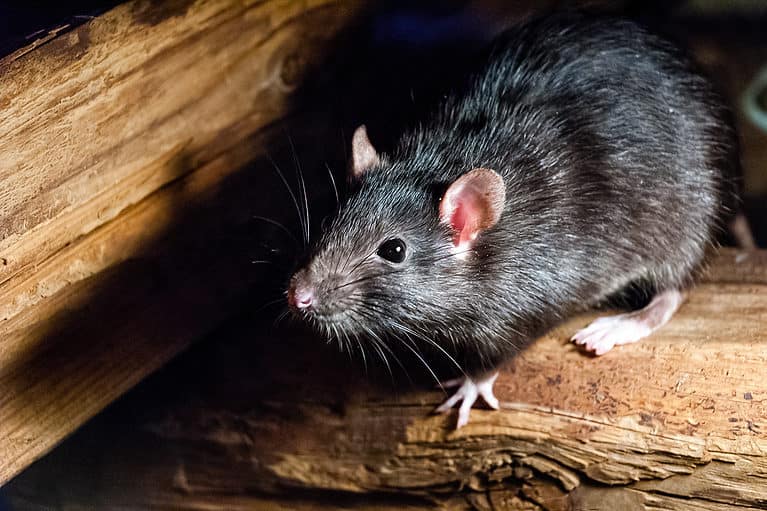
The two rat species we regard as pests in the US are roof rats (Rattus rattus) and Norway rats (Rattus norvegicus). Roof rats typically thrive near humans, are agile climbers, and eat a wide variety of food. They weigh between 5 and 10 ounces. They typically nest in enclosed elevated spaces such as roofs. Norway rats are generally larger, stockier, and burrow along building foundations and woodpiles. These rats weigh between 7 and 18 ounces.
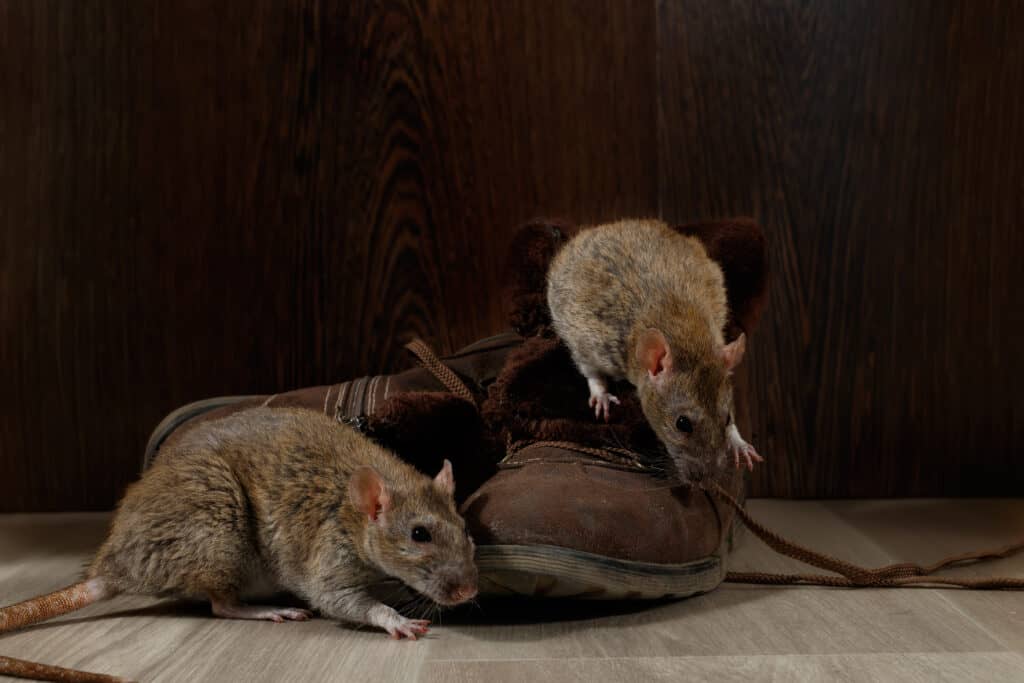
City rats do not have spines.
©torook/Shutterstock.com
Armored rats have large, stout bodies, short and thick legs, and long tails. They have erect ears and are a cinnamon-brown to dark brown color. Their most distinctive feature, however, is the backward-pointing spines covering the front part of their body. These keratin spines can be over an inch long and 1/16 inch thick and are white at the base but black at the tip. Underneath the spines, they have soft underfur.
Why Does the Armored Rat Have Spines?
Spines are a method of defense and help to protect an animal against attack. They are sharp and can puncture the skin and inflict pain on attackers, putting them off so that the animal can escape. The spines of the armored rat, however, are nowhere near as impressive as those of the porcupine, for example. Unlike a porcupine’s quill, the rat’s spines are flattened and more easily bent. They may offer minimal protection during an attack by a predator, but that is unlikely to be their main purpose.
Some scientists have suggested that the spines protect against rain by keeping the insulating guard hairs beneath them dry. The armored rat has the largest and best-developed spines among the echimyid rodents, and it also lives in the wettest habitats. Staying dry here is essential for maintaining body temperature. Smaller mammals can lose body heat quickly when they get wet. The so-called ‘armor’ of this rat may actually be more of a raincoat!