
As one of the U.S.’s southernmost states, Florida is home to a wide variety of tropical plants and fantastic creatures. But did you know that the largest iguana found in Florida is not only the state’s largest, but also one of the most massive iguana species on Earth? The stunning green iguana makes a visual splash with a spine of protruding orange spikes and a gigantic, hanging gullet. Read on to learn about Florida’s green iguana and discover exciting facts about this reptilian giant.
The Largest Iguana in Florida
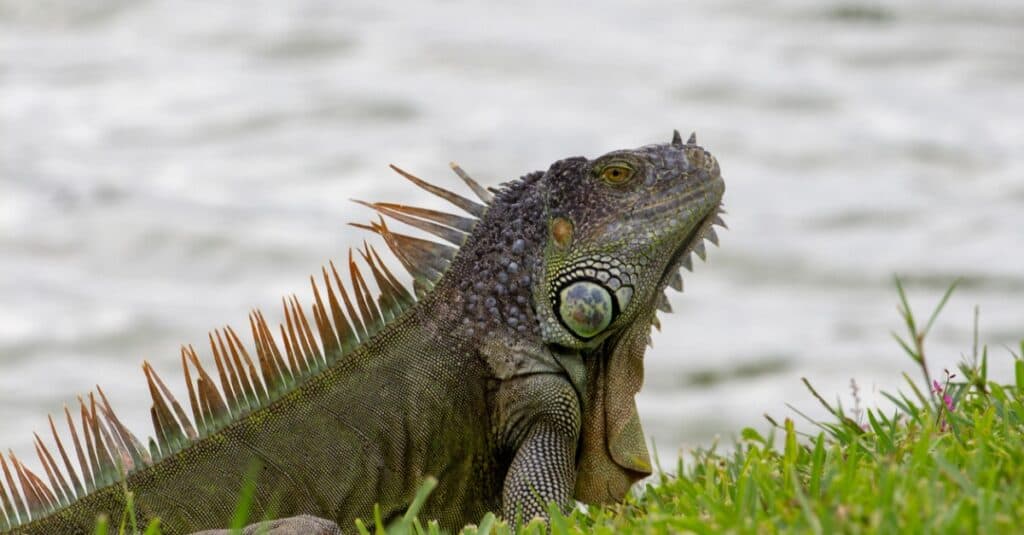
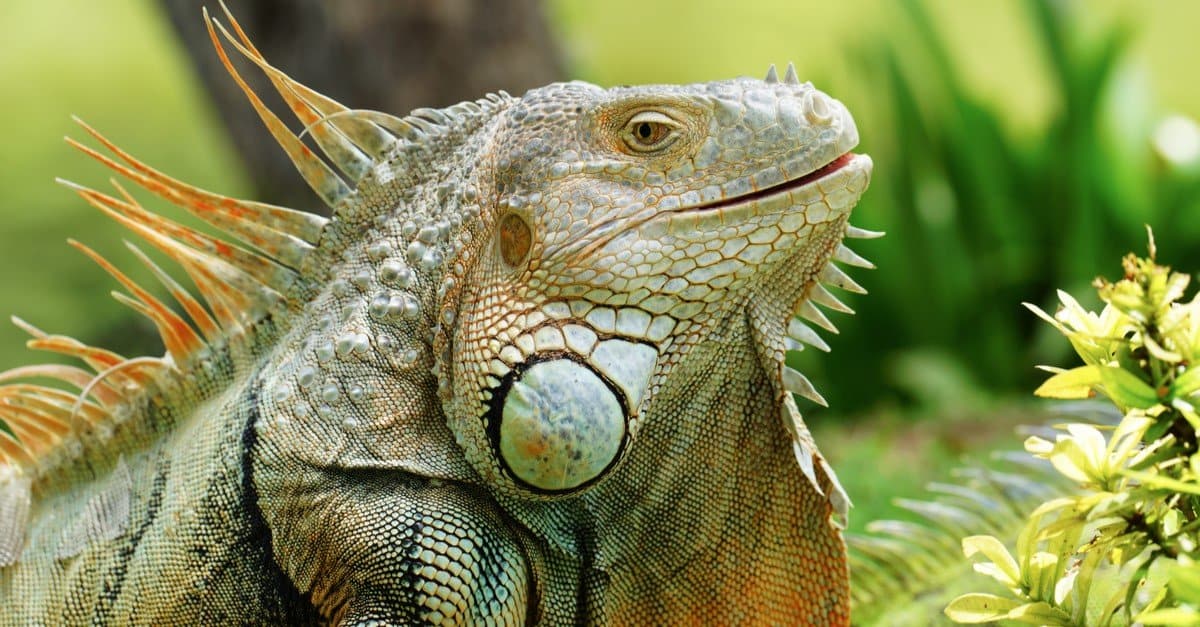
Green iguanas are widespread throughout Florida.
©iStock.com/Stacie Acevedo
The green iguana (Iguana iguana) is the largest in Florida, but it makes its home in a number of tropical climates across North, Central, and South America. These reptiles can be found from Mexico down to Brazil and Ecuador. They are also found in the US. states and territories of Florida, Texas, Hawaii, Puerto Rico, and the U.S. Virgin Islands. The green iguana is listed as Least Concern by the IUCN, reflecting its widespread distribution and large population. These reptiles aren’t going anywhere anytime soon.
Green iguanas can be olive, grey, or even black. They have spikes down the center of their backs from the neck to the upper part of the tail, which has dark bands. Mature male lizards have heavy jowls and a dewlap, which is a loose fold of skin hanging from their throat. Green iguanas can live in both terrestrial and arboreal habitats in urban, suburban, rural, or agricultural areas. They are also excellent swimmers and can tolerate both freshwater and saltwater.
How Big Is the Largest Iguana?

Green iguanas usually average between 9-12 pounds as adults.
©Vinod Ulahannan/iStock / Getty Images Plus via Getty Images
Most iguanas exhibit signs of sexual dimorphism, with males displaying greater length and mass than females. Green iguana males can stretch over 6 feet long and weigh up to 17 pounds. However, they average between 9 and 12 pounds. Females are typically shorter and lighter, measuring about 5 feet in length and weighing no more than 7 pounds.
According to The Green Iguana Manual by Philippe de Vosjoli, Dr. Roger Klingenberg, Dr. Susan Donoghue, and David Blair, the largest green iguanas ever recorded weighed 20 pounds. While there are reports on the internet of larger green iguanas, most of these are based on speculation and haven’t been scientifically verified.
How Large Are Most Iguanas?
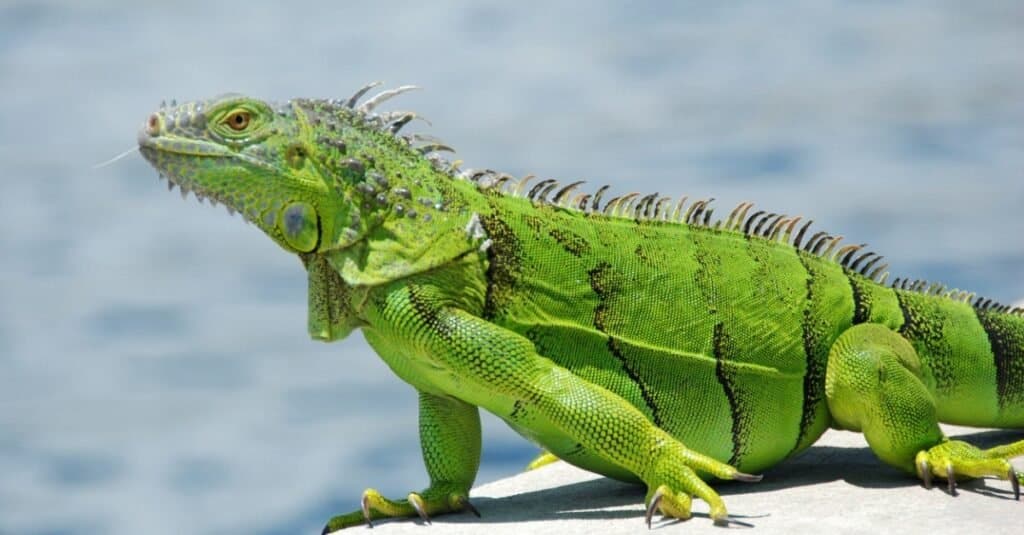
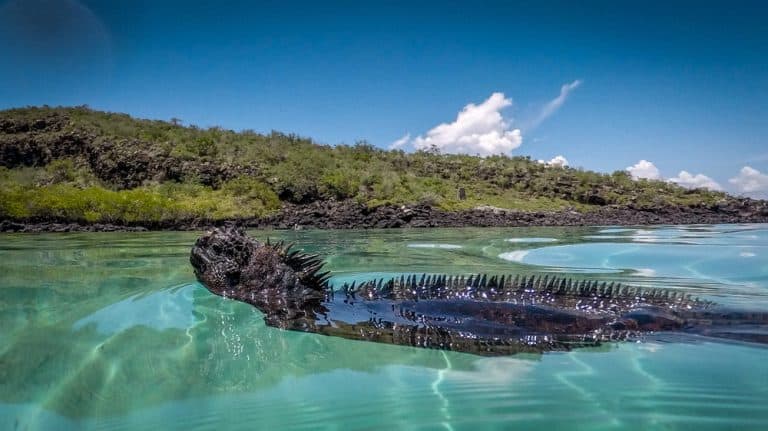
Iguanas are some of the largest lizard species.
©iStock.com/Travel_Bug
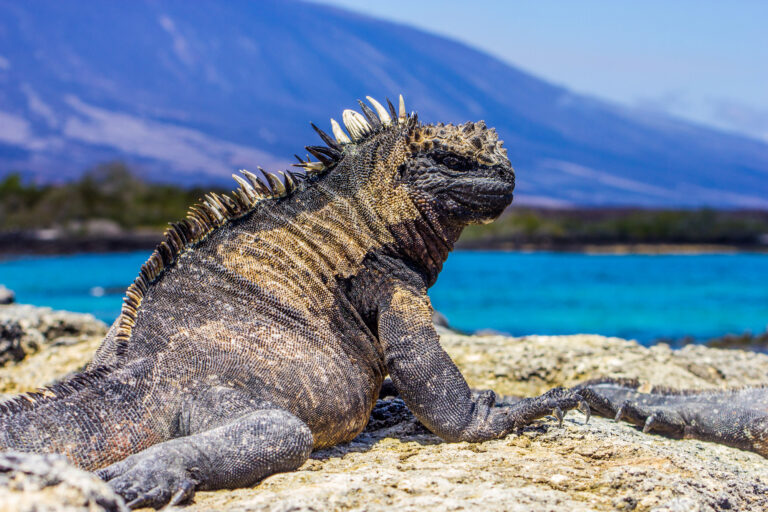
Iguanas are among the largest lizards in the reptile family. Of course, the exact lengths and weights are determined by species, as well as genetics and the resources available in their habitats. Green iguanas are the longest species, but there are iguanas that weigh more. The blue iguana (Cyclura lewisi) and the Galápagos land iguana (Conolophus subcristatus), can weigh 30 pounds and nearly 29 pounds, respectively.
Other iguanas are much smaller, such as the Yucatan spiny-tailed iguana (Cachryx defensor), which only reaches an average length of 7–9 inches and weighs around 2 ounces. The desert iguana
(Dipsosaurus dorsalis) grows 10-16 inches in length and weighs between 2-3 ounces. Additionally, captive iguanas are almost certainly going to be larger than their wild counterparts.
The Green Iguana’s Arrival in Florida
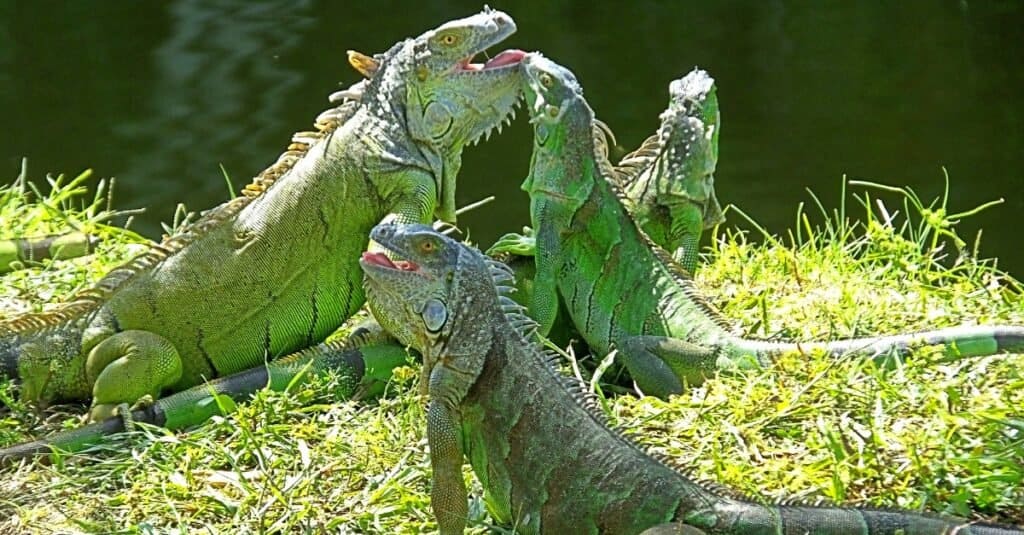
Green iguanas are an invasive species in Florida.
©iStock.com/passion4nature
There are no iguana species that are native to Florida. The green iguana was one of three main species brought to Florida by humans from nearby islands. They came via cargo ships or independent releases, most of which occurred in the 1960s and 1970s. Green iguanas have also spread to the U.S. through the pet trade.
Given a lack of natural predators and plenty of territory to roam, green iguana populations exploded into uncontrollable and indeterminate numbers. Florida’s tropical climate and swampy environment are perfect for these massive reptiles, with plenty of diverse food and animal life on which to feast.
Green iguanas are beautiful, but unfortunately, they are also invasive nuisances. The diets of these largest iguanas have incurred severe damage to Florida’s native flora and fauna, while their feces and burrows harm both natural and man-made structures. Florida government agencies have urged residents to try and cull populations by humanely hunting or trapping them to decrease the serious damage they cause.