
Quick Take
- The lizard species you'd least expect near water turns out to be one of nature's most capable swimmers. Meet the aquatic lizards →
- Lizards don't swim the way any four-legged animal does, and their technique makes them faster than most people realize. See how lizards swim →
- An invasive reptile has quietly settled into American backyards, and water is exactly where it wants to be. Spot the invasive species →
- For certain pet lizards, a swimming pool isn't a novelty. It solves a problem most owners never think about. Swimming benefits for pet lizards →
Many of us are taught to swim at young ages, but for many animals in nature, it seems that swimming comes naturally to them. While dogs are a common example, have you ever seen a lizard swim? Surprisingly, many species can swim far better than you might expect. This Instagram post by @the_modernmedusa shows a man exercising with a lizard by making it swim around. Read here to learn more.
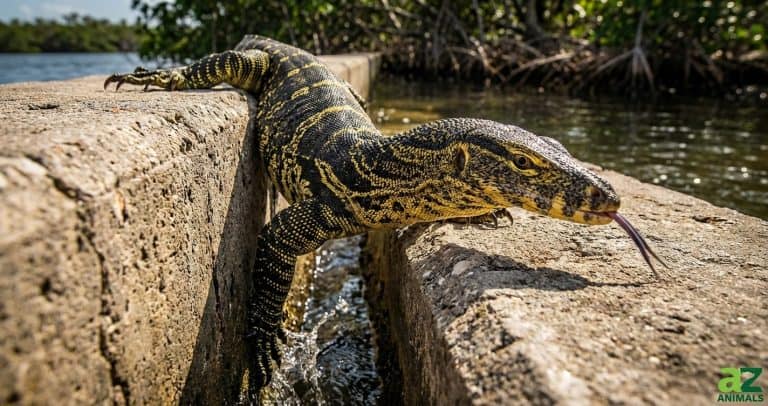
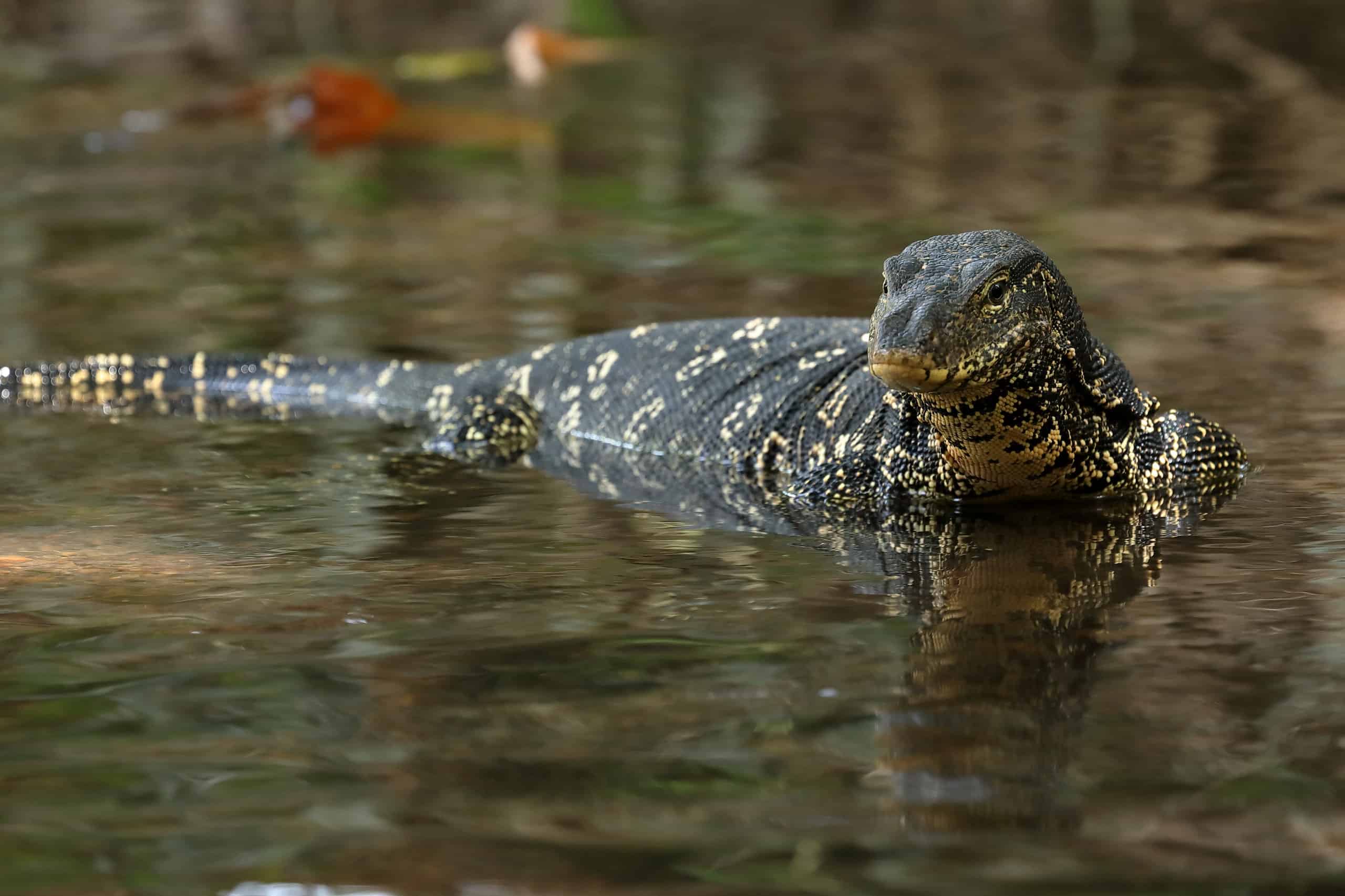
Asian water monitors are among the best swimming lizards and can live in almost any environment that contains a body of water.
©A-Z Animals
Swimming Lizards
Lizards are extremely diverse, with each species having its own unique traits. While some lizards are built for arid climates, others are built for the water. One example is the Asian water monitor lizard, like the one shown in the video above. In the video, the massive lizard is swimming across a pool chasing down a treat. The monitor lizard is just one example among many. Other swimming lizards include marine iguanas and basilisks. Unlike humans, swimming comes easily to these reptiles. Their bodies are specifically adapted for swimming. They use their large, powerful tails to propel themselves forward by swishing them side to side, while tucking in their legs. This makes them as quick as a torpedo, and they can even stay underwater for up to 30 minutes, depending on the species.
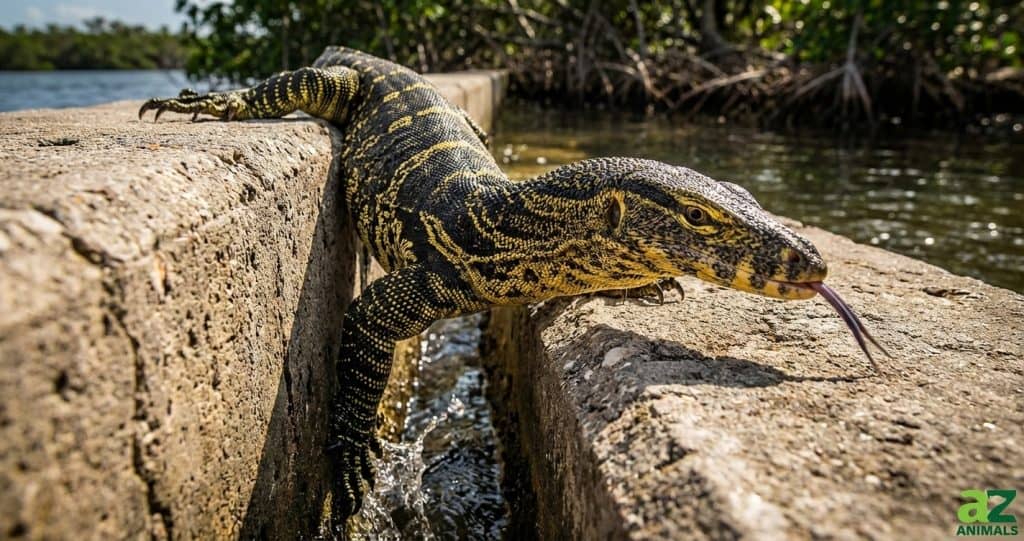
In the wild, lizards such as monitor lizards swim for many reasons. These reasons include crossing bodies of water, hunting, escaping predators, or simply cooling off. However, in the United States, the Nile monitor, an African species, is an invasive lizard in Florida, where it is not native and has established populations. For larger pet lizards like those in the video, a swimming pool can provide a safe environment for them to spend time in the water and exercise. Although they are unconventional pets, monitor lizards are intelligent—especially when compared to many other reptile species. So keeping them active is a great way to maintain their health.