
Quick Take
- Centipedes are venomous arthropods; most bites are not life-threatening and feel similar to a bee sting.
- House centipedes help control indoor pests by preying on insects without chemicals.
- Centipedes are fast, solitary hunters found worldwide except Antarctica. They prefer damp, dark habitats.
It’s happened to most of us. You lift up a rock in your garden or an old carpet in your basement and…YIKES! Centipede. A tiny monster with dozens of legs comes scurrying at you. And as if their appearance isn’t unsettling enough, you might have heard they’re also poisonous!
In actuality, the centipede’s reputation far outweighs its actual threat level. Their many legs, rapid movements, and preference for dark corners have made them the subject of many household horror stories. But what’s true, and what’s myth? In reality, centipedes are fascinating, ancient arthropods that play useful roles in ecosystems and sometimes even in our homes. In this article, we’ll separate fact from fiction, explain their biology and behavior, and put their danger level into perspective.
What Centipedes Are—and What They Aren’t
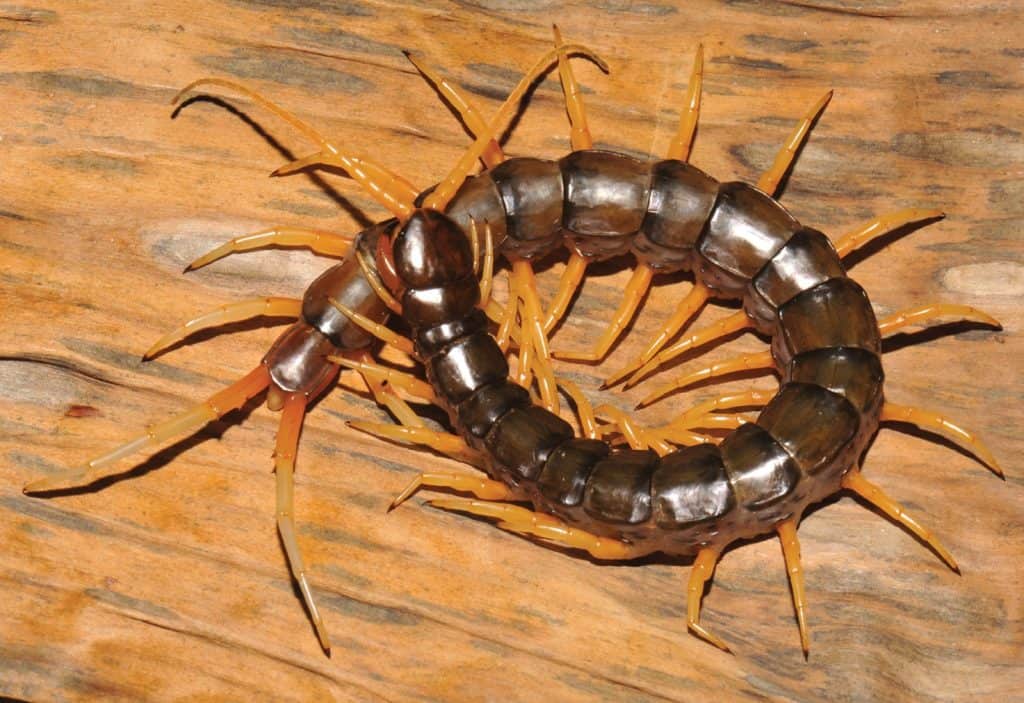
Despite the name, centipedes do not have exactly a hundred legs.
©Warut Siriwut, Gregory D. Edgecombe, Chirasak Sutcharit, Piyoros Tongkerd, Somsak Panha / CC BY 3.0 – Original / License
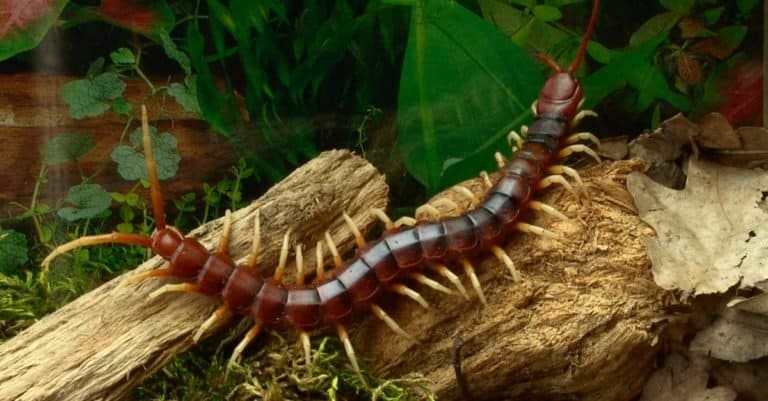
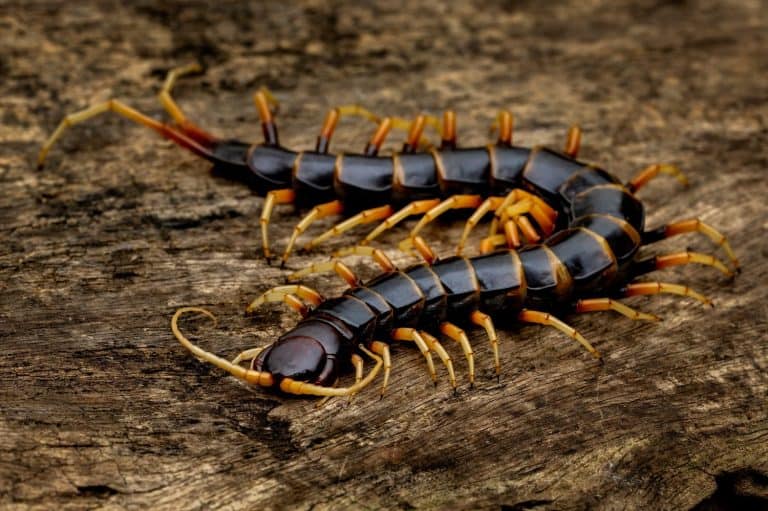
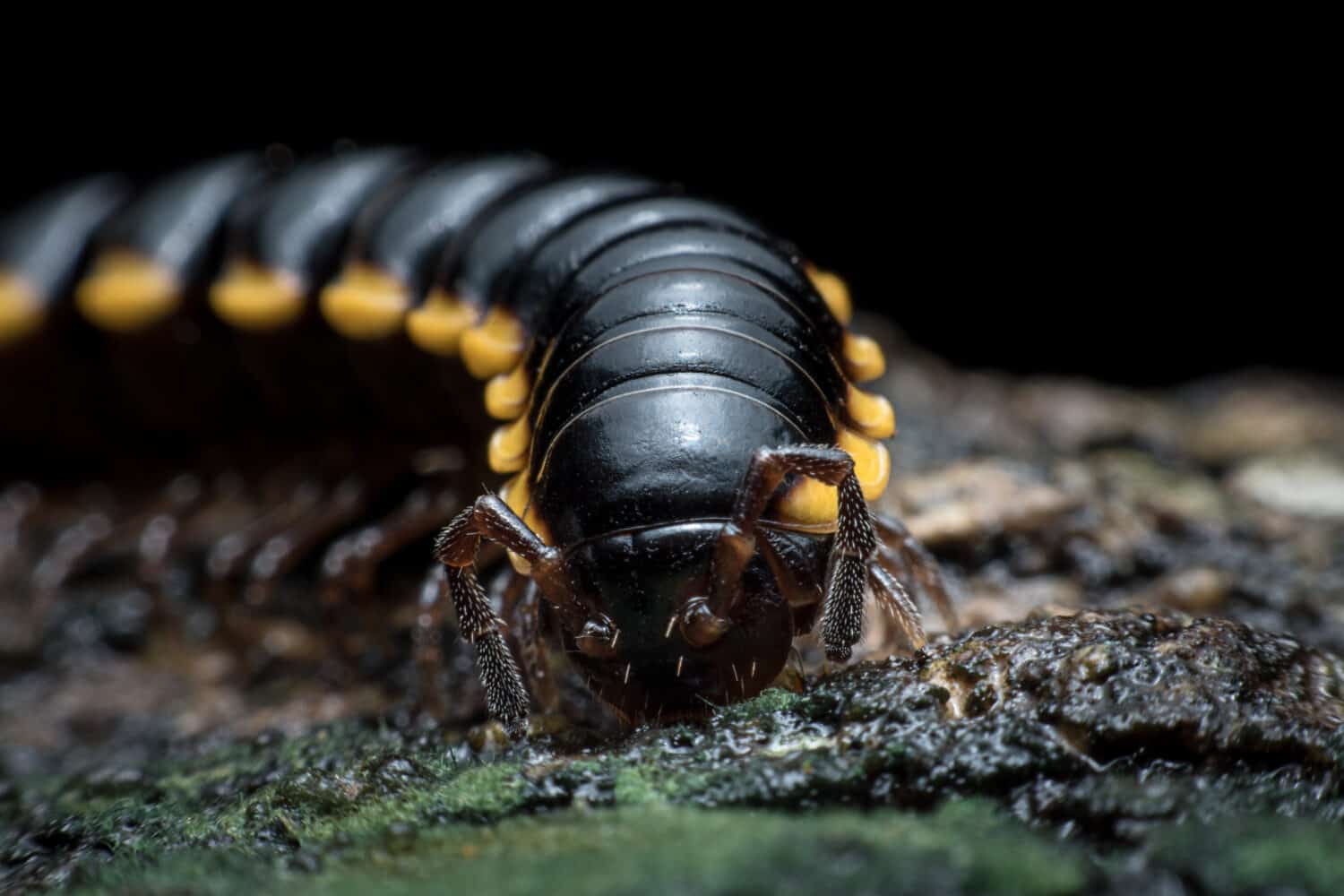
Centipedes belong to the class Chilopoda, a group of fast-moving, predatory arthropods that have been around for over 400 million years. They are not insects; insects have six legs, centipedes have far more, though not necessarily the 100 that the cent prefix in their name would suggest. Instead, they have an odd number of leg pairs, ranging anywhere from 15 to more than 150 pairs, depending on the species. They also shouldn’t be confused with millipedes. Millipedes are slow, harmless decomposers, while centipedes are agile hunters equipped with venom-delivering structures called forcipules, which are modified front legs that act like fangs.
Centipedes are found almost everywhere except in Antarctica. Most centipedes are nocturnal and prefer dark, humid conditions. They favor environments that are damp (such as under logs, leaf litter, mulch, or rocks), dark (like soil layers, basements, crawl spaces, and cupboards), and sheltered (such as cracks in walls, loose bark, or cluttered areas). Different species occupy different niches. House centipedes prefer indoor spaces where they can hunt insects. Soil-dwelling centipedes live underground or under debris outside, and large tropical species live in forests and grasslands in warm climates.
From a pest-control perspective, centipedes are pretty good to have around, as they reduce populations of harmful or annoying insects. House centipedes are natural exterminators that require no chemicals or traps. That said, not everyone wants them sprinting across the wall at midnight. And if you’re encountering a lot of centipedes, it often means there’s a larger population of insects they are feeding on. If you prefer not to share your living space with them—and we can’t blame you—sealing cracks, using dehumidifiers, and managing other pests will help keep centipedes away.
Centipedes are skilled predators. Their diet varies by species and size, but commonly includes spiders, insects (such as cockroaches, ants, termites, flies, and silverfish), worms, and small arthropods. Larger tropical species can take down surprisingly robust prey, occasionally including tiny rodents or small lizards—though this is rare and limited to the largest centipedes. House centipedes are especially beneficial indoors because they prey on unwanted pests. A single house centipede may consume dozens of cockroaches, flies, or moths over its lifetime.
Centipedes themselves are prey for birds, frogs and toads, small mammals such as shrews and rodents, lizards, ground beetles, and certain spiders like tarantulas or wolf spiders.
Are Centipedes Venomous? Dangerous? Deadly?
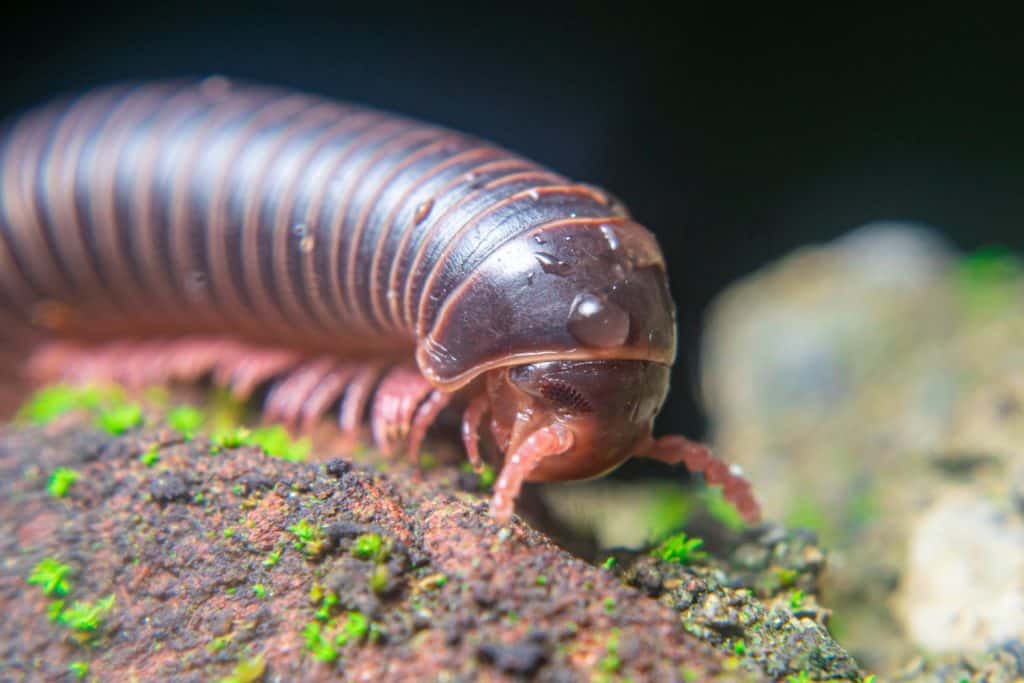
Centipedes don’t bite, but they do sting, and that sting is venomous.
©Fawwaz Media/Shutterstock.com
As for venom: yes, all centipedes are venomous. Their forcipules inject venom into their prey to subdue it. This venom is quite effective—at least if you happen to be a cricket or spider. Very few centipedes pose any danger to humans. Most species are too small to puncture human skin. Their venom is designed for small arthropods, not large mammals. If a centipede does happen to bite you—which technically is not a “bite” but rather a forcipular sting—in most cases it will feel similar to a bee sting: sharp, quick pain; possible redness or swelling; mild inflammation, etc. Symptoms usually resolve within a few hours to a couple of days. It should also be noted that severe allergic reactions are possible, but very rare.
However, larger species—especially members of the Scolopendra genus—can cause more intense pain, longer-lasting swelling, temporary numbness, and localized heat or redness that can last up to 48 hours. These bites are extremely uncomfortable, but almost never life-threatening. There are no confirmed modern cases of a human dying solely from a centipede bite. Larger tropical species can deliver significant pain, but even these bites are not considered medically deadly except in extremely unusual circumstances involving allergic hypersensitivity, infection, or secondary complications.
Is It Safe to Pick Up a Centipede?
Mmm…we don’t recommend it. While house centipedes are not aggressive, they can bite if they feel threatened or trapped. Outdoor centipedes may be even more likely to defend themselves. In general, centipedes don’t seek out humans and won’t attack unless physically handled. If you need to remove one from your home, the safest method is to use a cup and a piece of paper, a container with a lid, or to gently guide it outside without touching it directly.
So, What Do You Do If a Centipede Does “Bite” You?
If a centipede does sting you, most of the time it requires only basic care: wash the area with soap and water, apply a cold compress, take an over-the-counter pain reliever if needed, and monitor for signs of infection. Seek medical attention if the swelling spreads significantly, pain persists longer than two days, you develop difficulty breathing (which is rare), or you suspect an infection. But again, serious complications are very uncommon.
Myth vs. Reality: Common Centipede Misconceptions
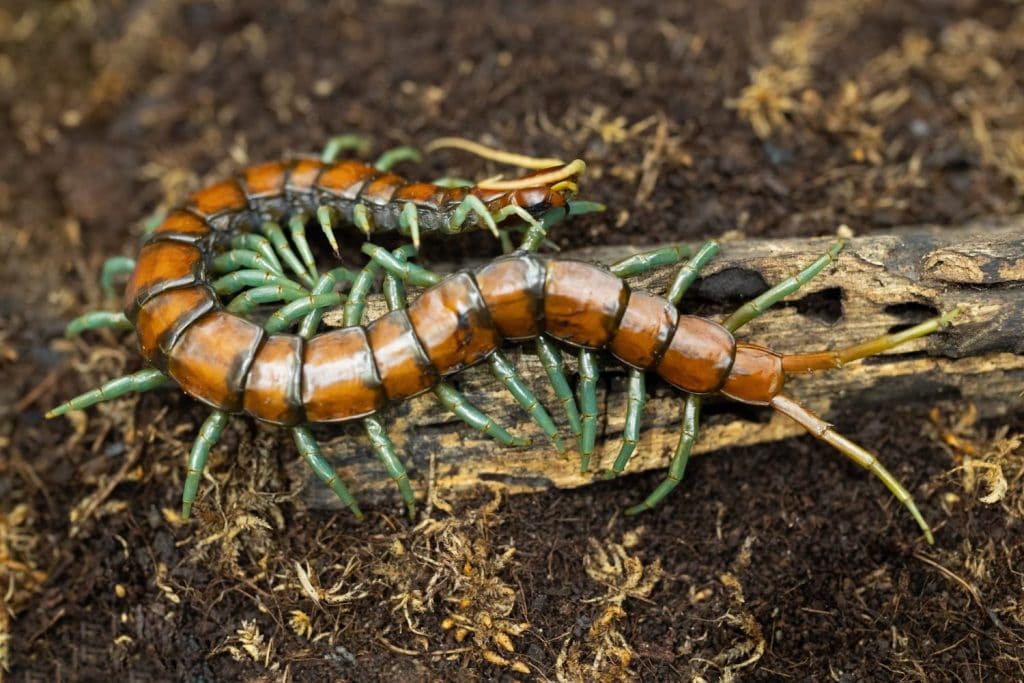
Centipedes can regrow lost legs, but it takes a while.
©Cherdchai Chaivimol/Shutterstock.com
Myth 1: Centipedes chase people.
They don’t. If a large centipede appears to be running toward you, it isn’t. It’s simply navigating quickly in a confined space or looking for shelter.
Myth 2: All centipedes live in houses.
Nope. Most species are actually outdoor dwellers. Only a few, such as the aptly-named house centipede, prefer indoor habitats.
Myth 3: Centipedes are always a sign of a dirty home.
Not always, but maybe. Centipedes are actually a sign that your home has moisture and insects—conditions that can exist even in very clean environments.
Myth 4: Centipedes can regrow lost legs immediately.
Some species can regenerate legs, but only slowly and usually over multiple molts.
Myth 5: Centipedes are related to worms.
Nope. They are arthropods, closely related to insects and crustaceans, not worms.
More Fun Facts About Centipedes
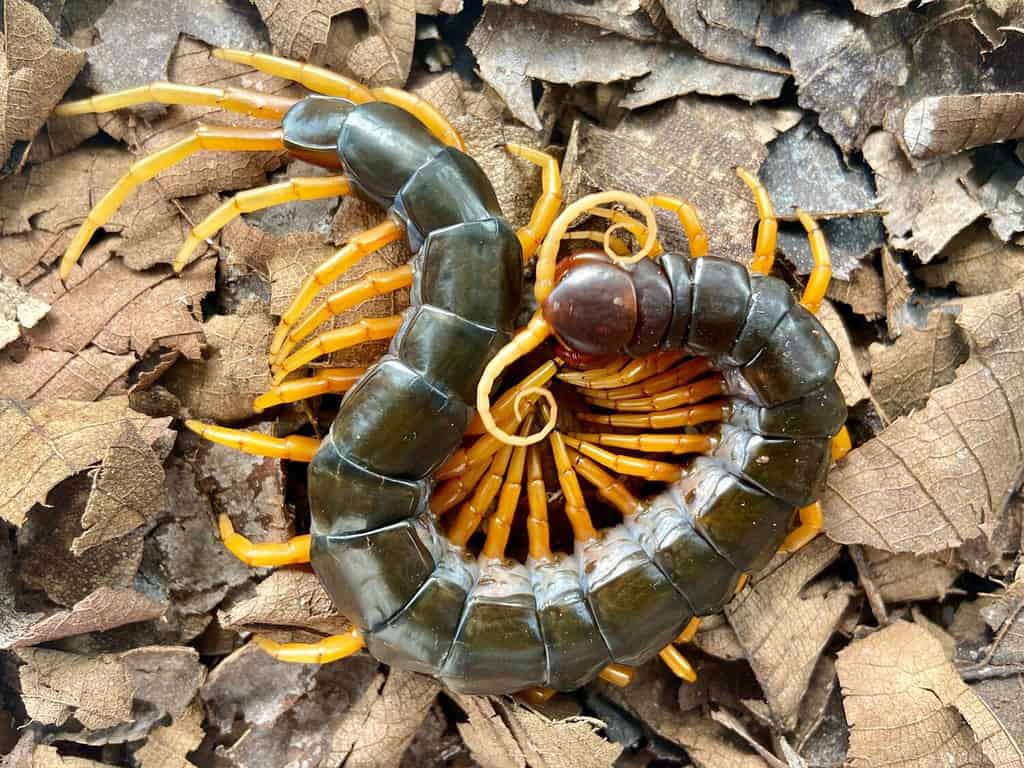
As if they weren’t creepy enough standing still, they are also quite fast.
©Alkis Agatha/Shutterstock.com
They Are Surprisingly Fast. House centipedes are some of the fastest arthropods on foot. Their long legs allow them to dart across floors and walls in a blur, which contributes to their spooky reputation.
They Have Excellent Hunting Skills. Centipedes use their antennae to “taste” the world around them, detecting chemical cues and vibrations. Many species actively stalk prey, while others ambush from hiding.
They Grow Larger in Warm Climates. The largest known centipedes come from tropical regions. Some species in the Scolopendra group can reach over a foot in length!
They Aren’t Social. Centipedes are solitary creatures. They don’t form colonies or nests and generally prefer to interact only for mating.
They Have Simple Yet Ancient Bodies. Their overall body design—flattened bodies, many legs, venomous forcipules—has remained relatively unchanged since long before the dinosaurs.
Startling But Not Scary
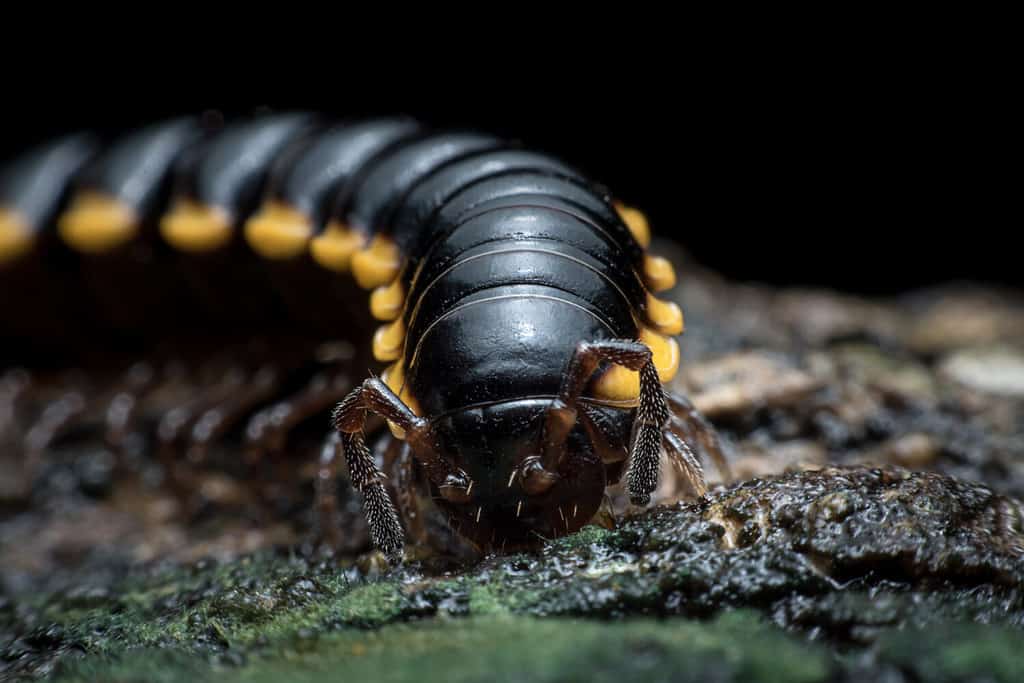
Keep in mind, they want even less to do with you than you do with them.
©Sunshine Studio/Shutterstock.com
Centipedes may seem creepy, but they are remarkable, ancient predators that play important roles in ecosystems. They even help keep our homes free of pests. While all centipedes possess venom, most are harmless to humans, and even bites from larger species are rarely more serious than a painful sting. Understanding their behavior, habitat, and capabilities helps separate the myths from reality.
Far from being dangerous monsters, centipedes are just another small (if very fast) part of the natural world—one that may startle humans, but doesn’t pose any real threat. So the next time you see one scuttle across the bathroom floor, you’ll know exactly what it is and what it isn’t. And you can take additional solace knowing that while you want nothing to do with that many-legged little critter, the feeling is quite mutual—the centipede wants nothing to do with you either.