
No matter your measurement style, you’ll find that the American Robin is the most abundant land bird in North America. Approximately 370 million individual robins traverse the continent, wintering throughout regions from Alaska to Mexico. Though it’s named after the European Robin due to its similar reddish-orange breast feathers, the American Robin (Turdus migratorius) belongs to the true thrush genus. In many cultures, robins are considered symbols of good luck, happiness, and new beginnings. Even if they don’t make great pets, there’s plenty to love about American Robins.
A glance at these magnificent birds would make you think that there’s not much that distinguishes males from females. There are several key differences, however, between the genders when it comes to American Robins. However, there are pronounced differences in markings, size, temperament, and roles between males and females. Let’s explore what makes males and females of this bountiful bird stand apart.
About the American Robin
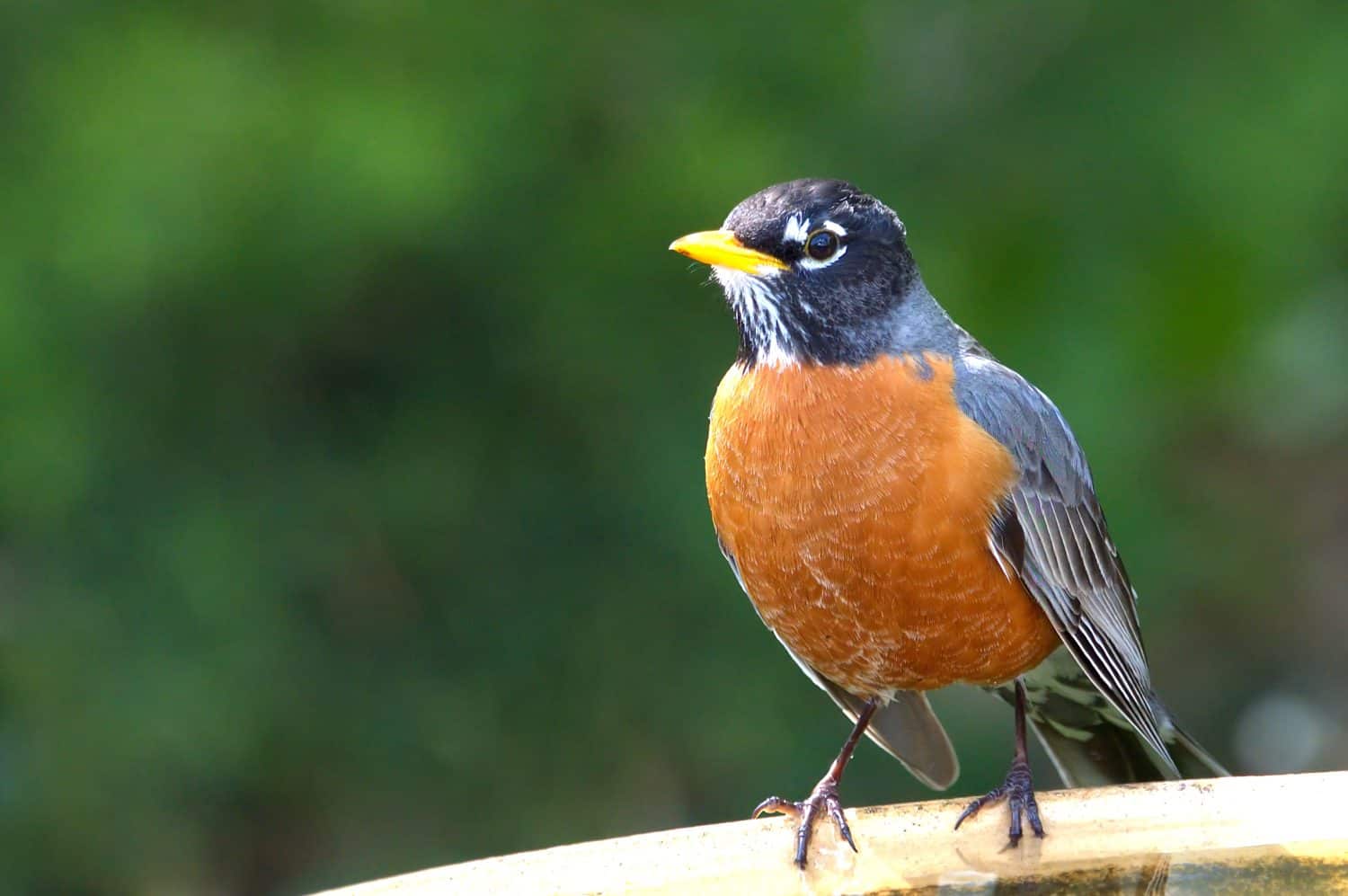
American Robins are the most common bird found in North America, with some 370 million individuals living on the continent.
©Ray Geiger/Shutterstock.com
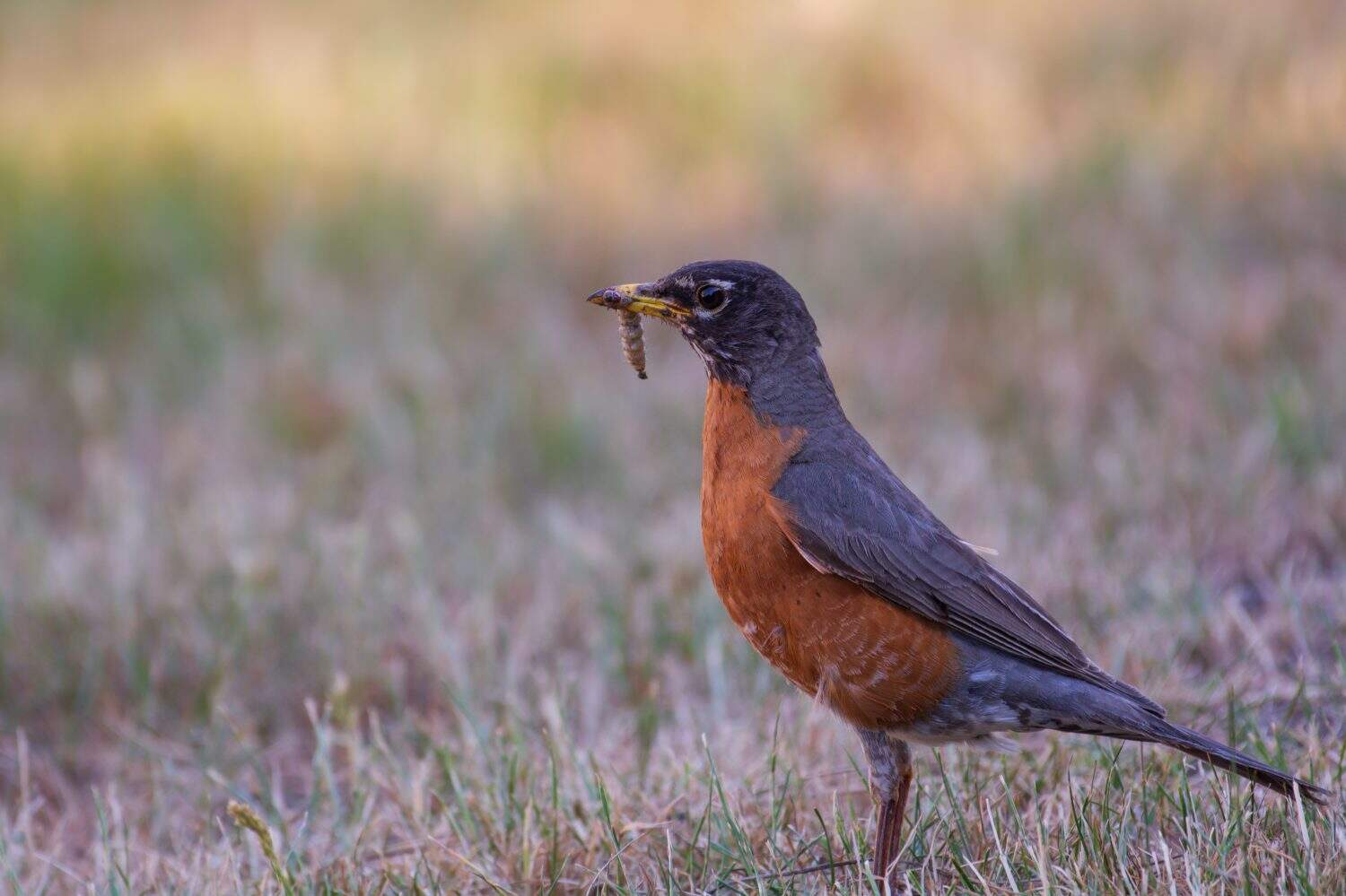
The American Robin was first described in 1766 by Carl Linnaeus, the father of modern taxonomy. IIts scientific name, Turdus migratorius, combines the Latin words “thrush” and “to migrate.” It’s a fitting description for this small but eye-catching bird, as it has a slender bill like other thrush birds and migrates with the seasons. American Robins are also characterized by roundish bodies, long legs, and relatively long tails. Their colors range from gray on their backs and yellow on their bills to their characteristic reddish-orange coloring on their breasts. American Robins also have white marks above and below their eyes.
During breeding months, American Robins prefer woodlands, unobstructed farmland, and even urban areas. In the winter, they choose similar environments but typically include more expansive areas. Wherever they go, American Robins prefer to look for food on the ground. Their diet consists of invertebrates like beetles and caterpillars, as well as fruits and berries. Come nightfall, robins assemble in large flocks. The early bird gets the worm, and robins are no exception. Not only are they one of the earliest bird species to lay their eggs, but they are also one of the earliest birds to sing at dawn. In urban areas with more light and noise pollution, their songs can commence in the middle of the night.
American Robins may be the most common bird in North America, but they are not without their foes. Their main predator is the domestic cat. They are also hunted by hawks and snakes. There is safety in numbers, however, and American Robins are known to be vigilant watchmen, observing how other birds react to nearby predators.
Males and Females
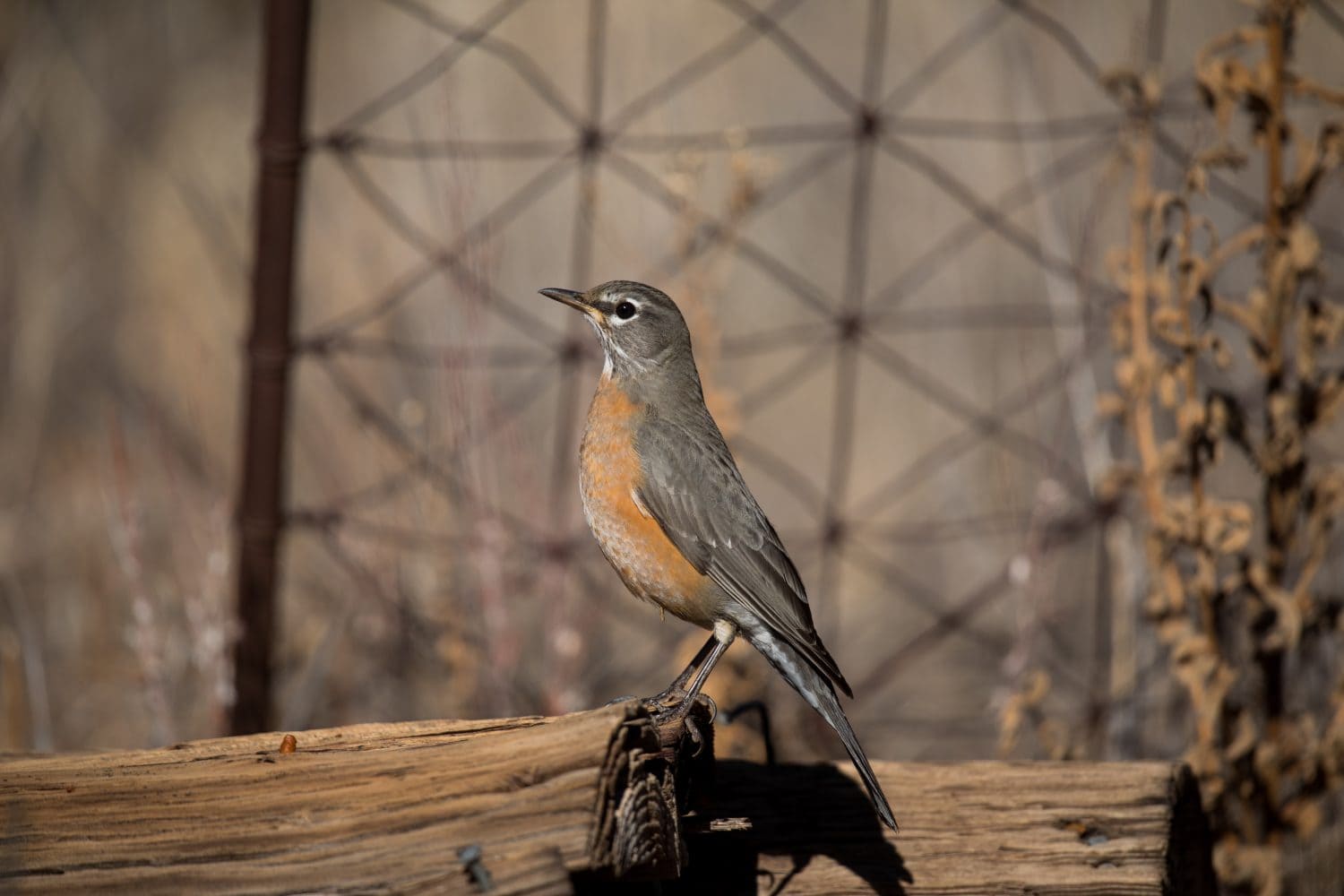
There are several key differences between male and female American Robins.
©Nicole Glass Photography/Shutterstock.com
While male and female European Robins are nearly identical in plumage, American Robins exhibit more pronounced sexual dimorphism. There are several key differences between males and females in terms of coloring, size, temperament, and activities.
Size
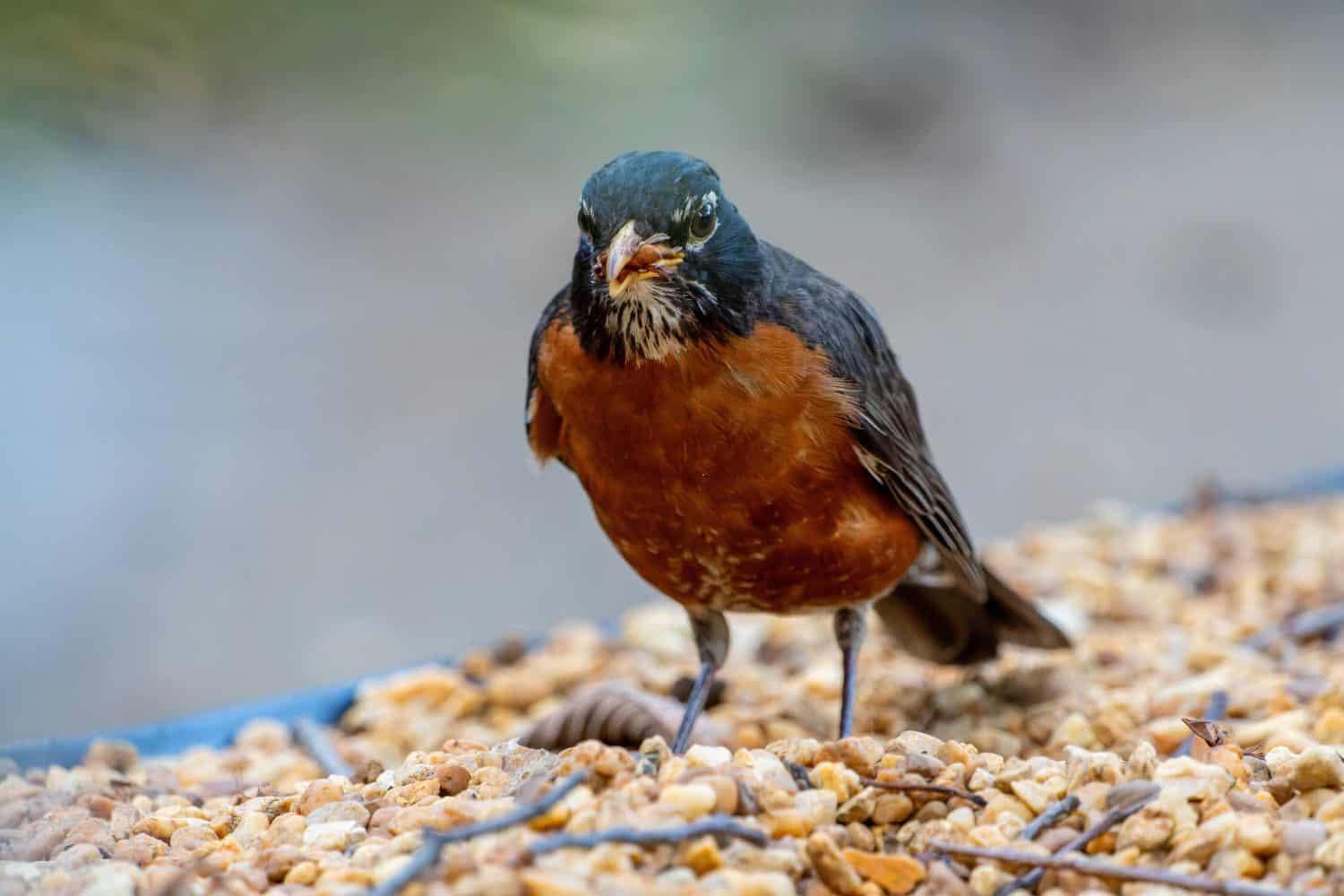
Males are usually bigger than females, but females can get quite large while carrying eggs.
©yassine bahammou/Shutterstock.com
On average, American Robins reach about 25 centimeters in length and weigh between 2.5 and 3.5 ounces. Males of the species, however, are a bit bigger than females, weighing up to three or more ounces. Females are smaller, typically weighing between 2.5 and 2.7 ounces. While females may appear larger while carrying eggs, males are typically the larger gender.
Coloring
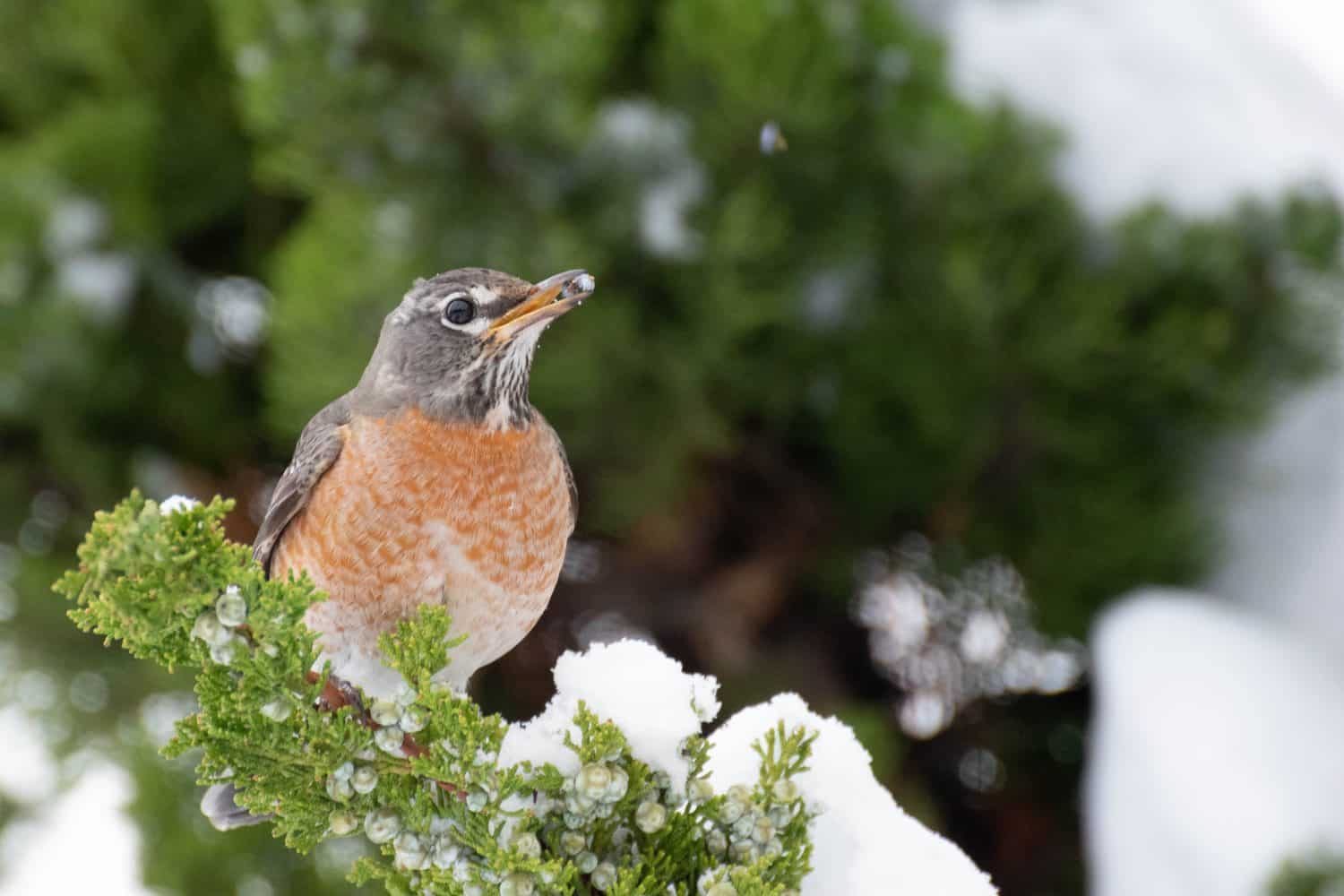
Female American Robins almost look like European variants due to their washed-out coloring.
©Caleb Jones Photo/Shutterstock.com
The easiest way to tell the difference between male and female American Robins is by their color/markings. Males are the more vibrant-looking gender, with stark eye rings, black-colored heads, white collars, and vivid reddish-orange breast feathers.
Females, on the other hand, have considerably more muted colors. On the whole, female markings are dustier, paler, and less vivid than those of males. Whereas males have vibrant gray wings, females have faded gray wings. This is also true for their breast feathers, as females’ orange breasts are paler. These muted colors help females avoid predators while nesting and laying eggs.
Temperament
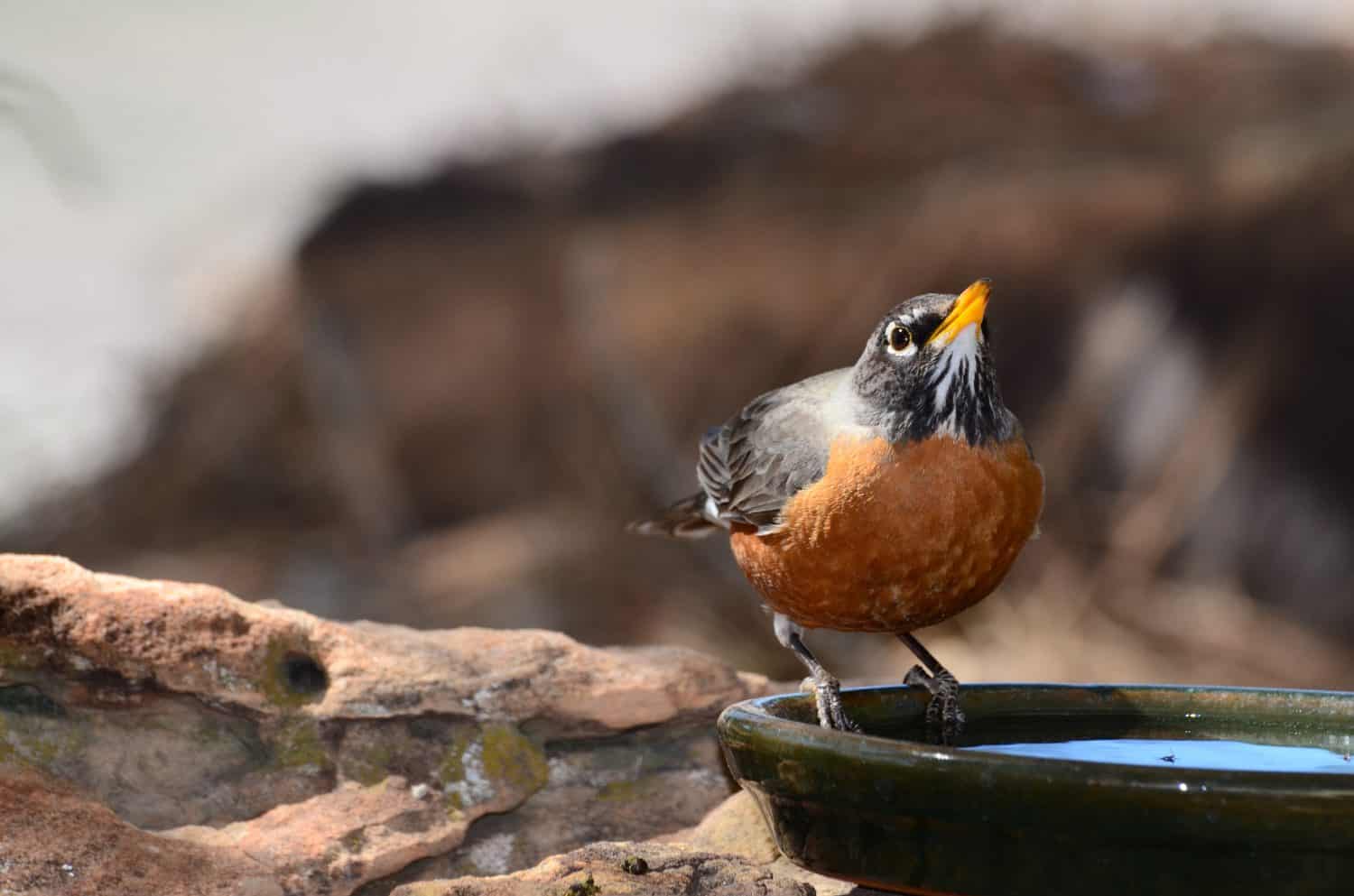
Male American Robins are known to fight and kill each other over territory.
©rwkc/Shutterstock.com
They may look harmless and adorable, but robins can be combative. Male American Robins in particular are known to engage in combat, going so far as to kill rivals. When mating season arrives, males flaunt their plumage as a warning to potential mating competitors. Usually, males arrive at breeding and nesting grounds first, where they sing and fight off suitors to defend their territory. Females aren’t as aggressive, but will defend their offspring. As territorial birds, American Robins usually avoid each other except during breeding season. If you see two robins together, they are probably a male and a female pair.
Duties
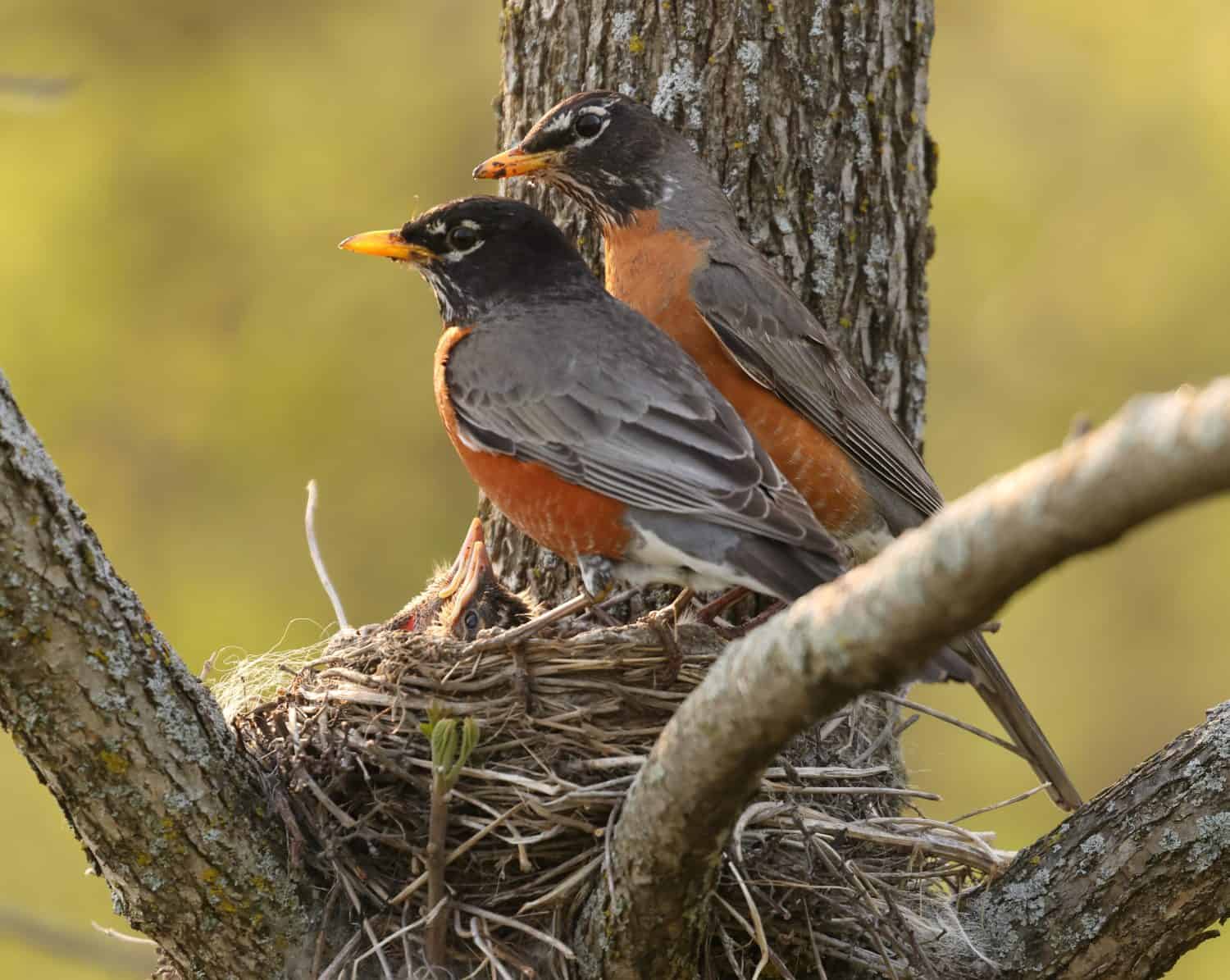
During breeding season, males and females form strong connections to breed, build nests, and raise young.
©Caleb Jones Photo/Shutterstock.com
Despite their territorial tendencies, male and female American robins form strong connections during the late spring to mid-summer breeding season. To herald the arrival of offspring, females build nests out of twigs, grass, feathers, and a cement-like layer of mud. These nests are usually in the crotch of a tree between five and twenty feet off the ground. Females do most of the nest-building, but males are known to help out.
Once the offspring arrive, males will put aside their warlike ways to care for the young at night. Females, however, take this time to incubate another round of offspring. During the day, they return to feed and care for the young. Despite their differences, both male and female American Robins share a strong commitment to raising their young.