
With over three million lakes, 12,000 rivers, and numerous ponds and creeks, Alaska has everything it needs to be named the world’s most magnificent destinations for freshwater, sea, fly, and ice fishing. Alaska’s waterways are home to more than 600 species of fish. Among the most popular freshwater species is the lake trout, nicknamed the “tyrant of the lakes” for its predatory behavior. Keep reading to learn more about this “tyrant” and discover the largest lake trout ever caught in Alaska.
About the Lake Trout
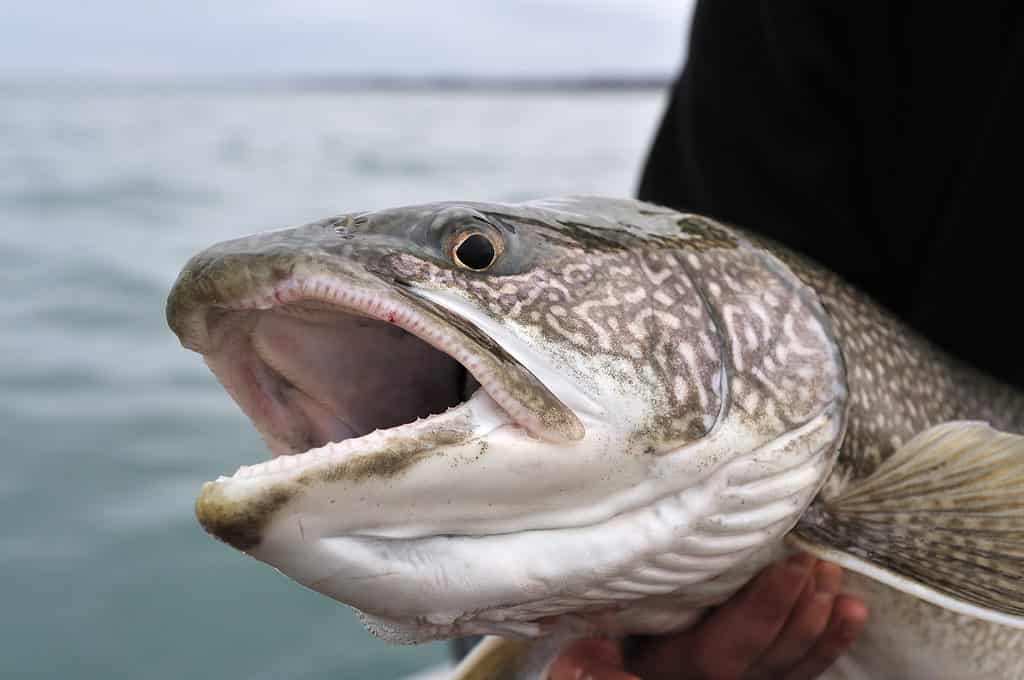
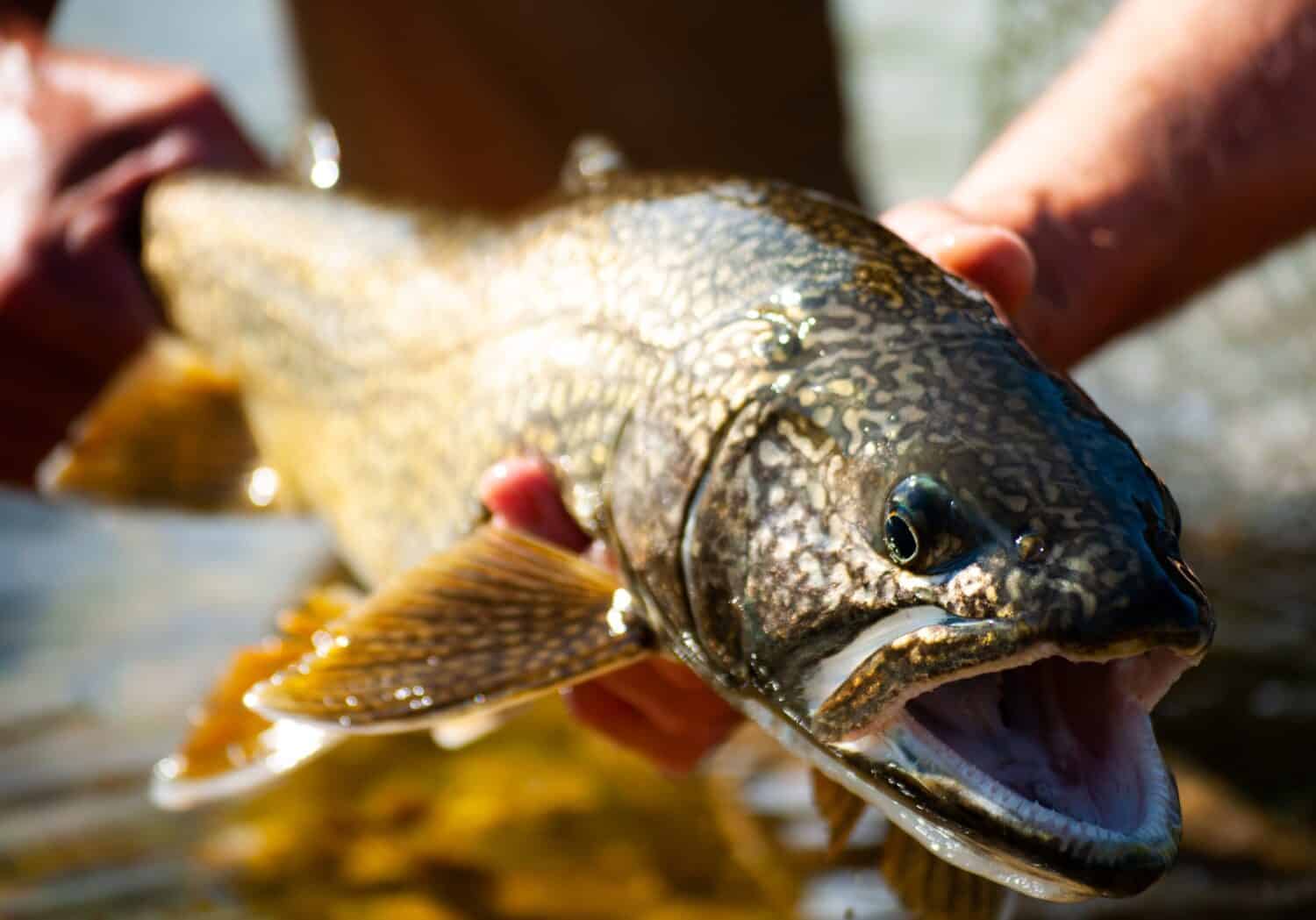
Lake trout have irregular, light-colored spots on the upper part of their bodies.
©iStock.com/glxedwards
The lake trout (Salvelinus namaycush) is not actually a trout. It is a species of freshwater char primarily found in lakes in the northern regions of North America. In Alaska, they are referred to as lakers, and they are the largest freshwater fish in the state. These fish are commonly sought after as food and sport fish.
The lake trout is the largest species in the char group. These salmon-like fish have dark or silvery scales, a light-yellow belly, and irregular, light-colored spots all over the upper part of their bodies. However, their color can vary significantly depending on the season, habitat, and population. The absence of pink markings on the lake trout’s forked tail helps to distinguish them from other chars.
The “tyrant of the lakes” nickname comes from the fact that lake trout are one of North America’s top predators and, in some lakes, may even be the largest predatory fish due to their enormous size and aggressive feeding behavior. The diet of lake trout varies depending on the fish’s size, age, location, and available food. Lake trout prey on other fish, zooplankton, insect larvae, crustaceans, tiny aquatic insects, snails, mice, and occasionally young birds. Adult lake trout are even known for eating their young when resources are scarce.
How Big Do Lake Trout Grow?
Lake trout typically weigh from 5 to 15 pounds and measure from 20 to 30 inches long. However, larger trout weighing up to 40 pounds are not uncommon. Because they have a long lifespan, the size of lake trout depends on their habitat and the availability of prey. In some Canadian lakes, lake trout have been reported to live as long as 70 years.
Lake trout also have an interesting growth pattern. Juveniles grow very quickly, sometimes gaining as much as two to three inches per year. However, as they mature, their growth rate slows considerably. Lake trout are considered adults between 6 and 8 years old. Adults grow slowly, with a growth rate of about an inch per year.
The Largest Lake Trout Ever Caught in Alaska
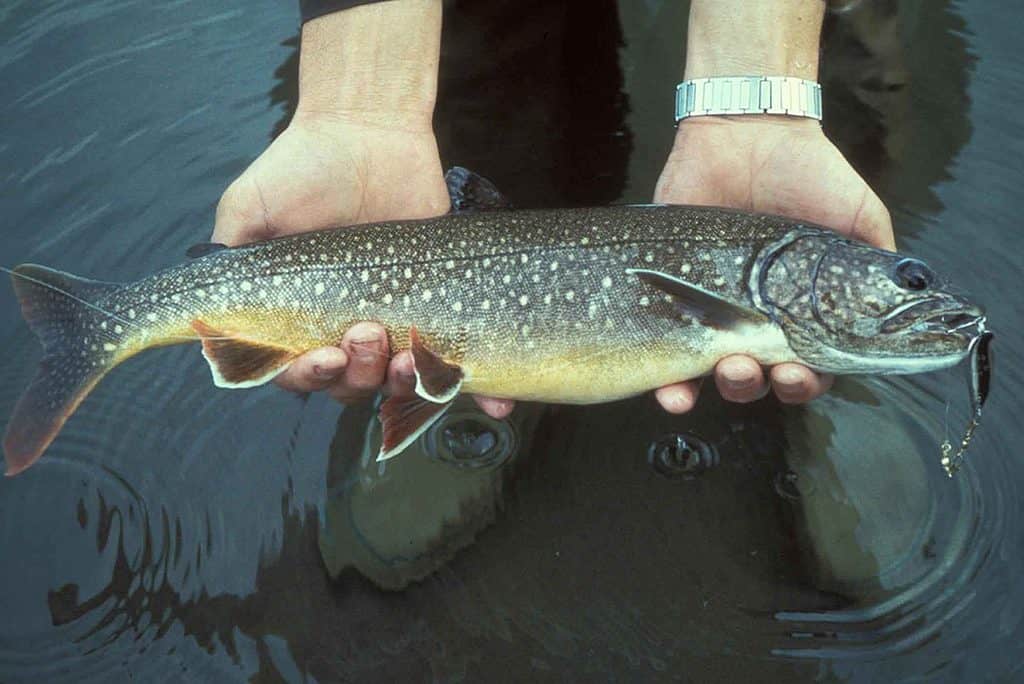
The largest lake trout ever caught in Alaska weighed 47 pounds.
©U.S. Fish and Wildlife Service / public domain – Original / License
In a place known for lake trout that grow to massive sizes, the largest lake trout ever caught in Alaska was a record-breaking 47-pound fish caught in 1970. Twelve-year-old Daniel Thorsness caught this massive fish in Clarence Lake, a fly fishing lake in the Talkeetna Mountains, northeast of Talkeetna. The Alaska Department of Fish and Game claims that a healthy population of naturally reproducing lakers is still present in Clarence Lake.
The Largest Lake Trout in the World
The largest lake trout ever caught in the world was captured in 1961 in Lake Athabasca in the Saskatchewan region of Canada. The laker, measuring 60 inches in length and weighing 102 pounds, was caught by two anglers. Unfortunately, since it was captured in a gill net, this catch is not considered a sport fishing world record.
The International Game Fish Association (IGFA) world record for the largest lake trout is held by angler Lloyd Bull. He caught the 72-pound fish with a rod and reel in Great Bear Lake in the Northwest Territories, Canada in 1995. The same lake also produced the record holder for the longest lake trout in the world. Since 2022, however, the world record for length has been tied. Michael J. Sader caught a 52.5-inch-long fish in 2014, and in the same lake, John M. Wyman caught a trout just one centimeter longer than Sader’s record. According to the IGFA angling rules, to break the previous record, a new catch must be at least two centimeters longer.
Lake Trout Fishing in Alaska
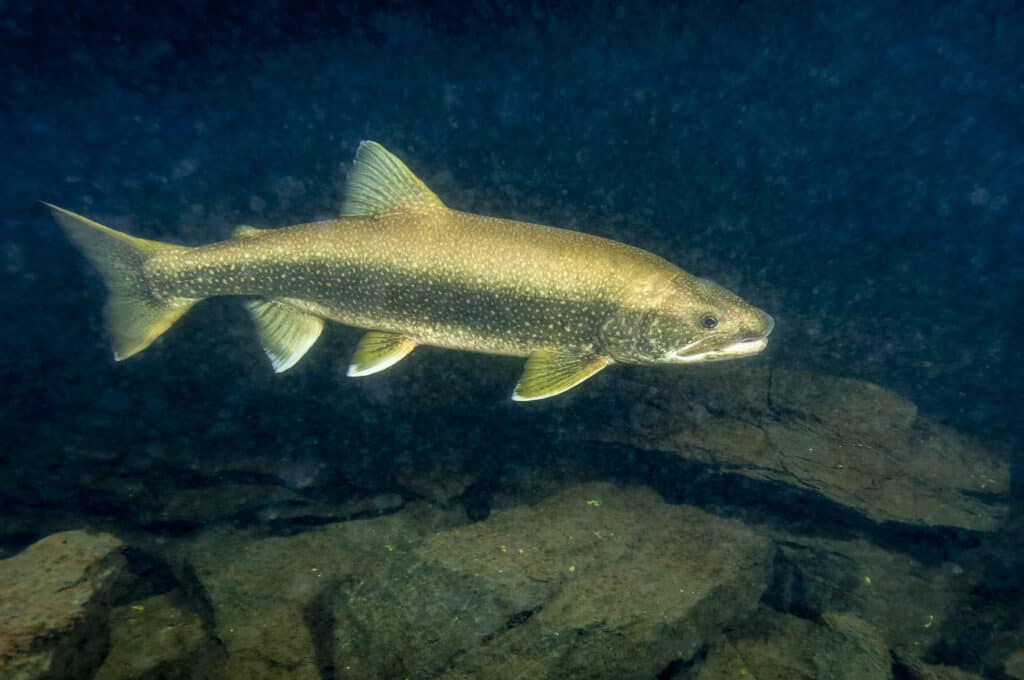
Some experts recommend that the best time to catch lake trout in Alaska is during the summer.
©iStock.com/LaSalle-Photo
Lake trout can be found in deeper lowland lakes around the central Arctic coastal plain, as well as in the waters in the Brooks Range and Alaska Range in Alaska. These fish thrive in cold environments and are commonly found in waters with temperatures between 40°F and 55°F. Lake trout prefer shallow water during spring. You may find them at a depth range of 10 to 30 feet throughout the spring and fall. However, when the weather becomes warmer, they’ll move to deeper parts of their habitat. So anglers need to follow the fish to deeper waters as the seasons change.
Anglers often catch these massive fish using spoons, flashers, and flies. In the fall, they spawn and cluster on shoals and reefs, but some migrate upstream, giving fishermen more angling opportunities. During winter, anglers ice fish, with many catching fish that weigh up to 20 pounds. The preferred method for ice fishing for lake trout is to jig brightly-colored lures with whitefish, fresh herring, or smelt on them. Popular fishing locations for lake trout in Alaska include deep, cold lakes such as Lake Louise, Crosswind Lake, Tanada Lake, and Summit Lake. There are also a number of lakes and creeks along the Denali Highway that the Alaska Department of Fish and Game recommends for lake trout fishing.