
Quick Take
- The alligator's razor-sharp body parts seem like the obvious culprit, but the real reason the python split open is far more mechanical and unsettling than that. See the real cause →
- Captive pythons are fed under a strict size rule that wild pythons have no way of knowing, and ignoring that rule turns a meal into a death sentence. Explore the size rule →
- This wasn't a freak accident. Burmese pythons have died the same gruesome way after attempting prey you'd never expect a snake to target. See other documented cases →
- A python's jaw can open wider than most people realize, and that fact makes it even harder to explain why this particular alligator proved fatal. Learn about jaw flexibility →
Burmese pythons have proven to be formidable foes to large wildlife. Consequently, in habitats where the pythons live, there is truly no animal safe from being hunted.
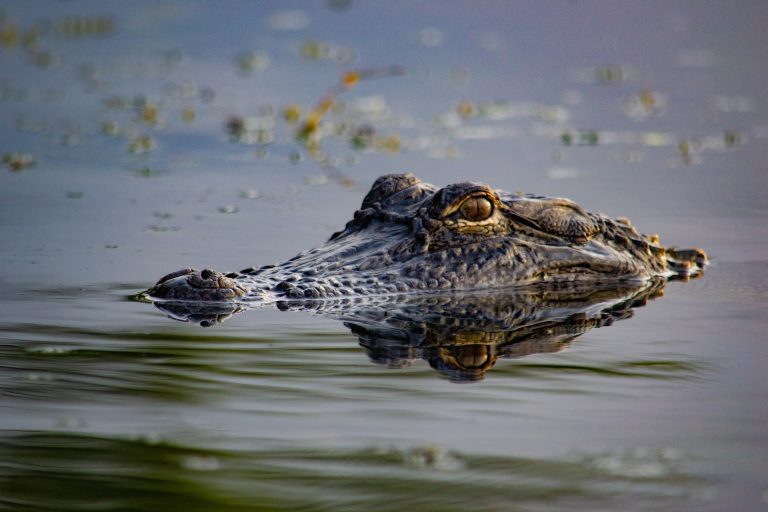
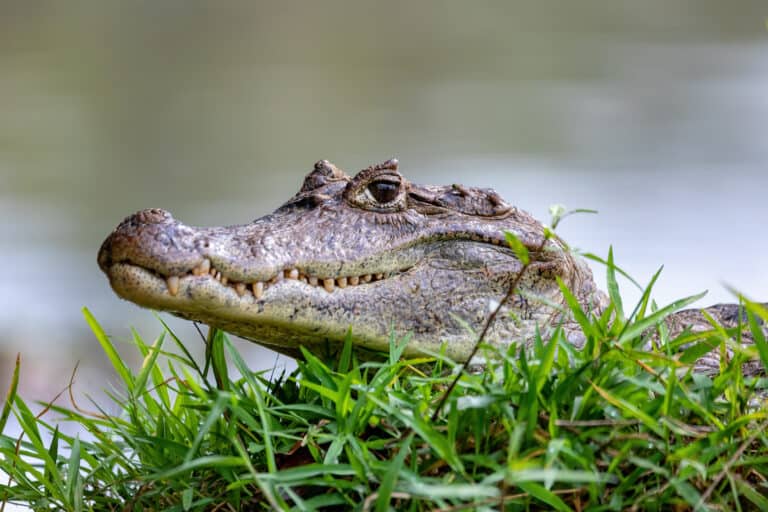
However, sometimes pythons attempt to eat prey that is too large for them to handle. This occurred the day a massive Burmese python literally split open after trying to swallow a six-foot alligator whole, causing both creatures to perish.
Burmese Python Could Not Stomach an Alligator – Literally
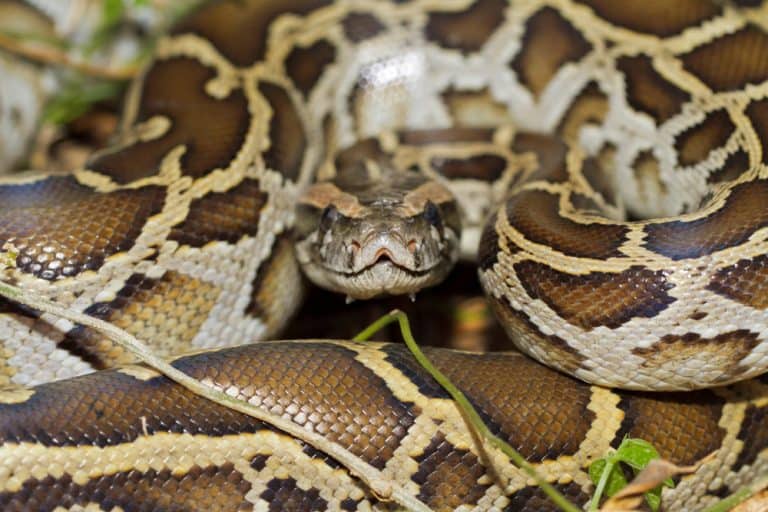
Burmese pythons can grow to impressive sizes. The average size of a Burmese python is just under 11 feet. The largest confirmed python was recorded in 2023 in Florida, measuring 19 feet long. Because of their impressive size, Burmese pythons can consume large prey.
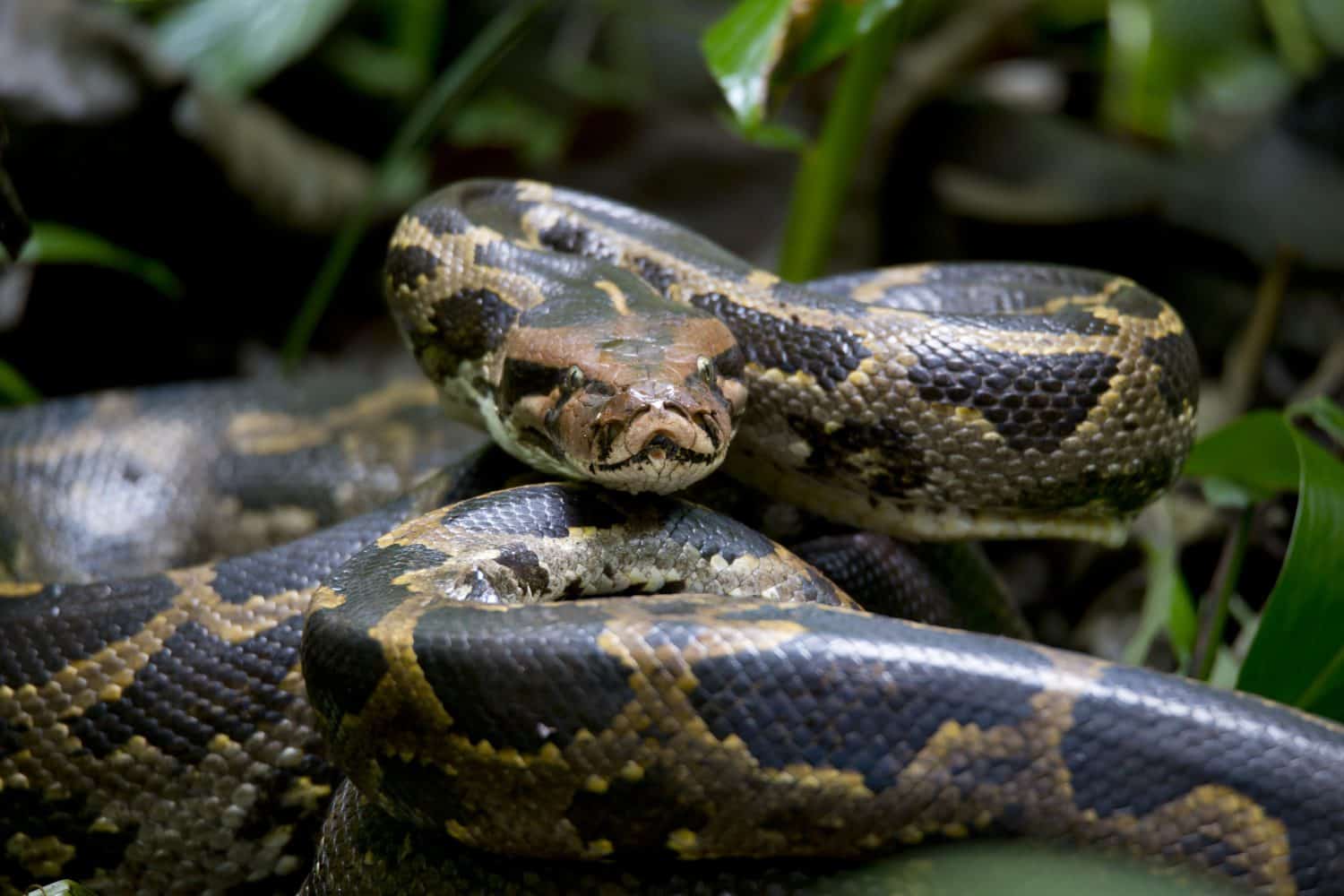
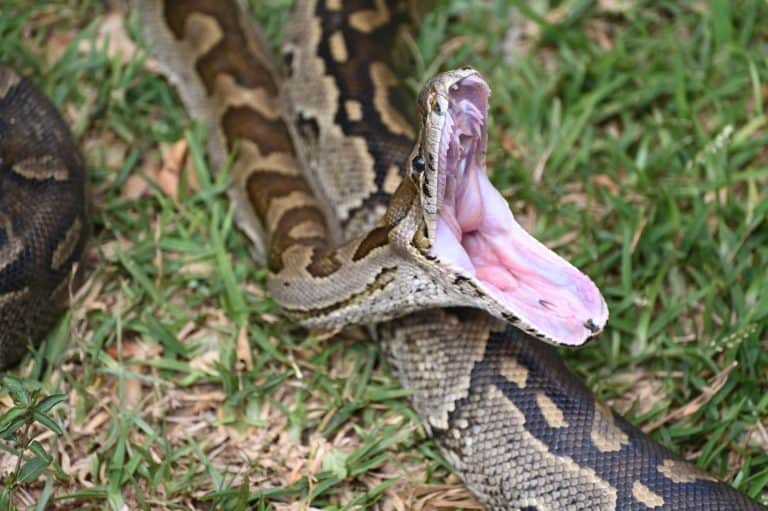
Burmese pythons swallow large prey, but occasionally, that prey is too large, leading to their deaths.
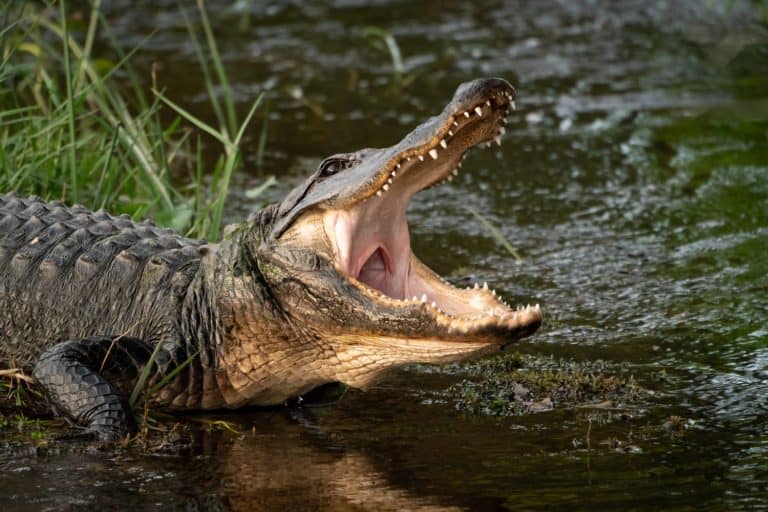
©Girish HC/Shutterstock.com
Everglades National Park is home to approximately 100,000 to 300,000 Burmese pythons. In 2025, there was one less after a 13-foot python attempted to swallow a six-foot alligator. Instead of swallowing a meal that would have sustained the snake for up to two weeks, the snake was found deceased, with the alligator being wholly undigested.
When officials discovered the Burmese python, it had been literally ripped in two. The alligator, which also died, had the lower half of its body sticking out from the python’s carcass. It appeared that the Burmese python’s stomach had ruptured, which then caused its body to split open.
What Caused the Burmese Python’s Stomach to Rupture?
When Burmese pythons are kept in captivity, the recommended prey size is no larger than 1.5 times their size. This will ensure the pythons do not experience digestive problems and can safely consume prey without fear of their stomachs rupturing.
In the wild, it is up to the Burmese pythons to determine if the prey they are stalking is size-appropriate. If the prey is too large and stretches the python to its limit, the stomach can rupture. In some cases, if the prey also has sharp body parts, as the alligator does, the Burmese python can sustain damage, such as internal bleeding. This would slow the digestive process because the body would redirect energy toward healing. However, slowed digestion alone would not cause the stomach to rupture; it is primarily the result of the python attempting to consume prey that is too large.
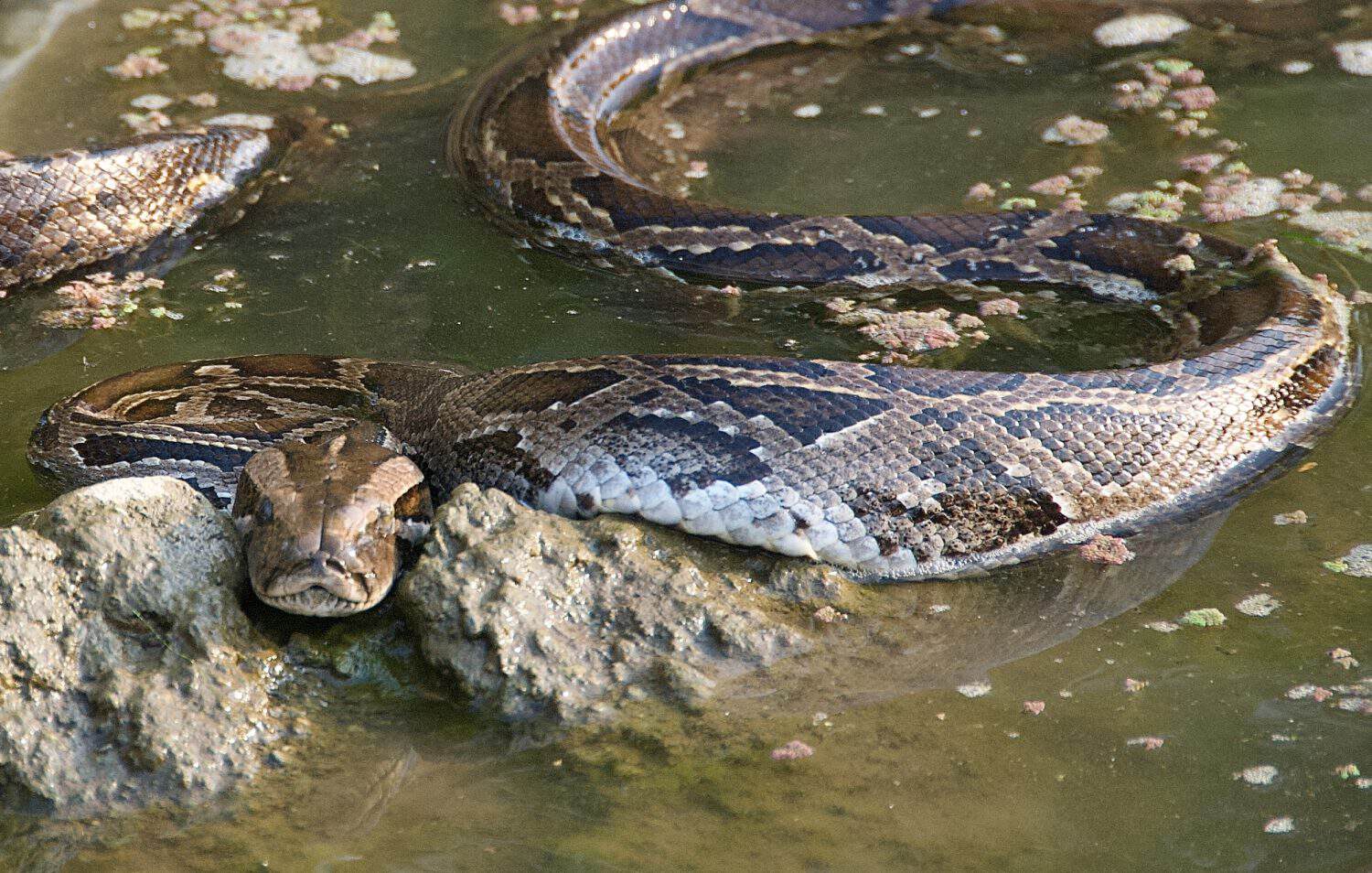
The Burmese python’s stomach ruptured because the alligator was larger than the girth of the snake.
©Marcel Hamonic/Shutterstock.com
The Burmese python in Everglades National Park is not the first to have attempted to capture and eat prey that is too large for it. Other recent documented cases of Burmese pythons dying from ruptured stomachs include:
- In 2018, a Burmese python attempted to swallow a 35-pound white-tailed deer
- In 2021, a Burmese python swallowed a cow, and its stomach ruptured
Although pythons can swallow large prey, there is a limit to the size they can safely consume. If Burmese pythons are not careful, attempting to eat prey that is too large can be fatal.
Typical Size of Burmese Python Prey
Burmese pythons are capable of consuming rather large prey thanks to their flexible skin and jaws. However, as demonstrated by the python that died after its stomach ruptured, there is a limit to what the massive snakes can consume safely.
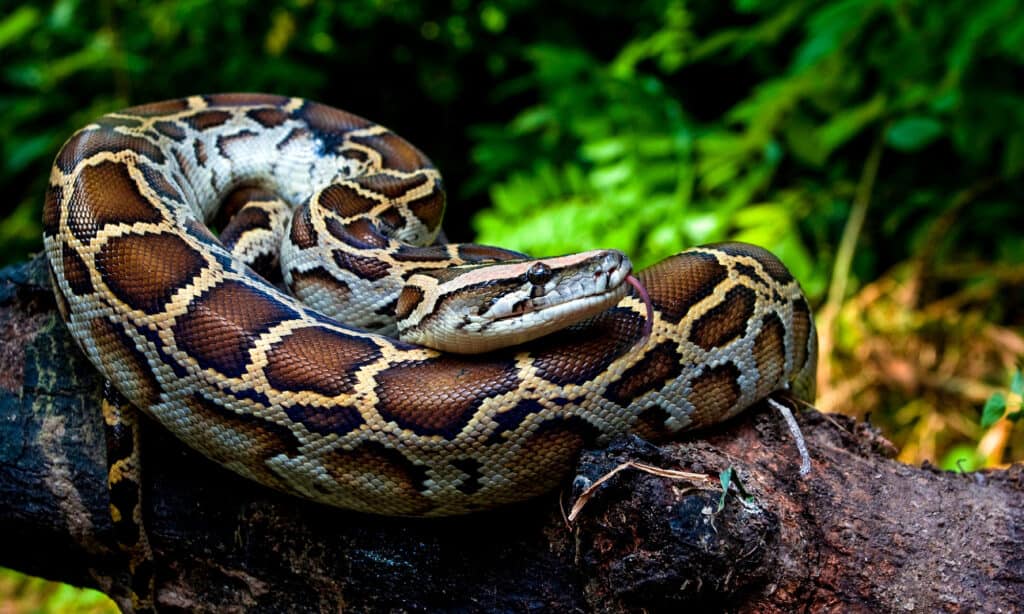
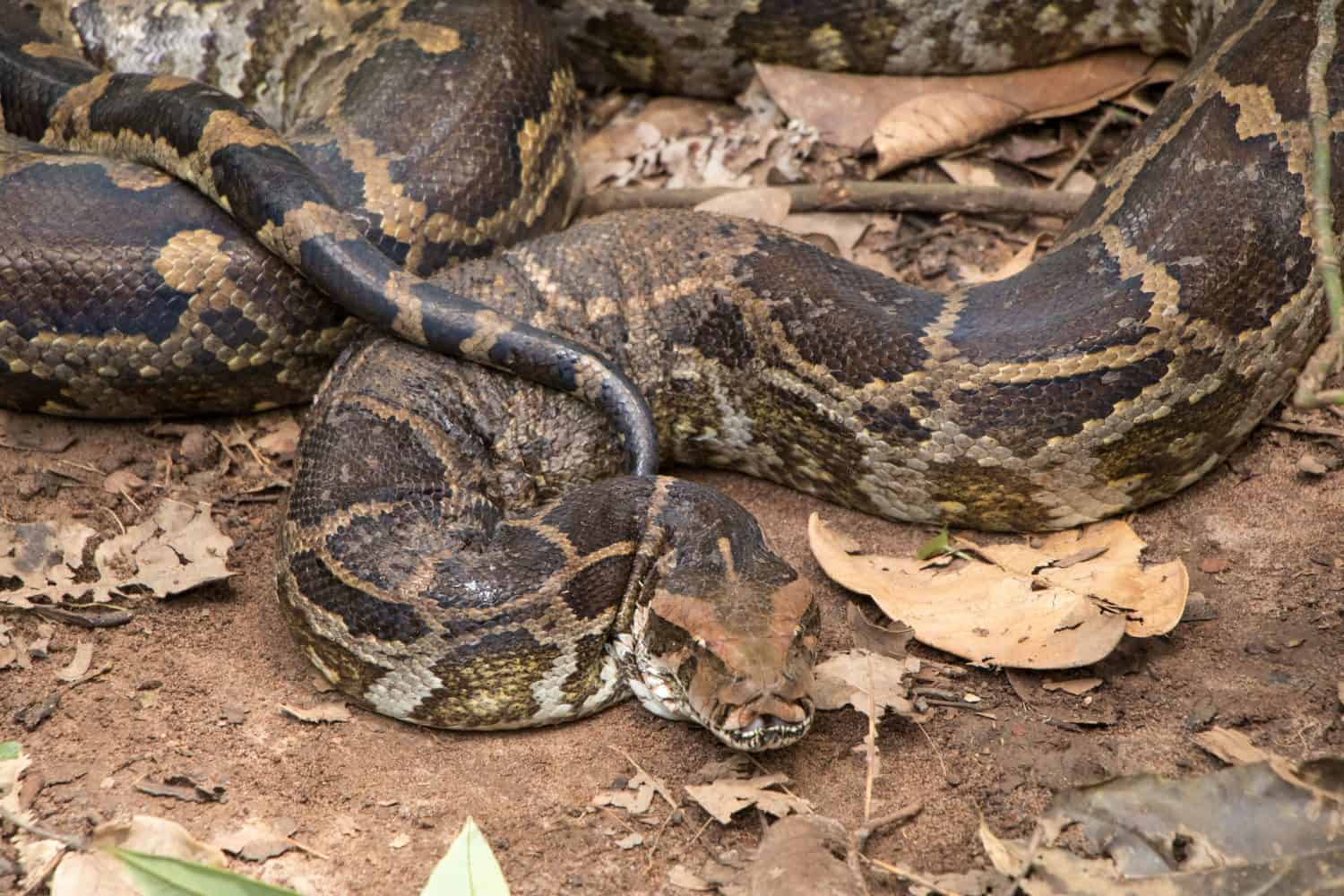
Burmese pythons are typically just under 11 feet long, with some reaching larger sizes.
©dwi putra stock/Shutterstock.com
The typical prey that large Burmese pythons consume includes:
- White-tailed deer
- Goats
- Cows
- Pigs
- Alligators
- Crocodiles
Burmese pythons can tackle this large prey because their jaws have a gape of over 10 inches. As long as the size of the prey does not exceed the python’s own girth, the python will have no problem swallowing it whole.
In the case of the alligator eaten by the Burmese python in Everglades National Park, it is clear that the alligator matched or even exceeded the python’s girth. As a result, although the python was able to swallow the alligator, its size ultimately killed the snake by causing it to be ripped apart from the inside.