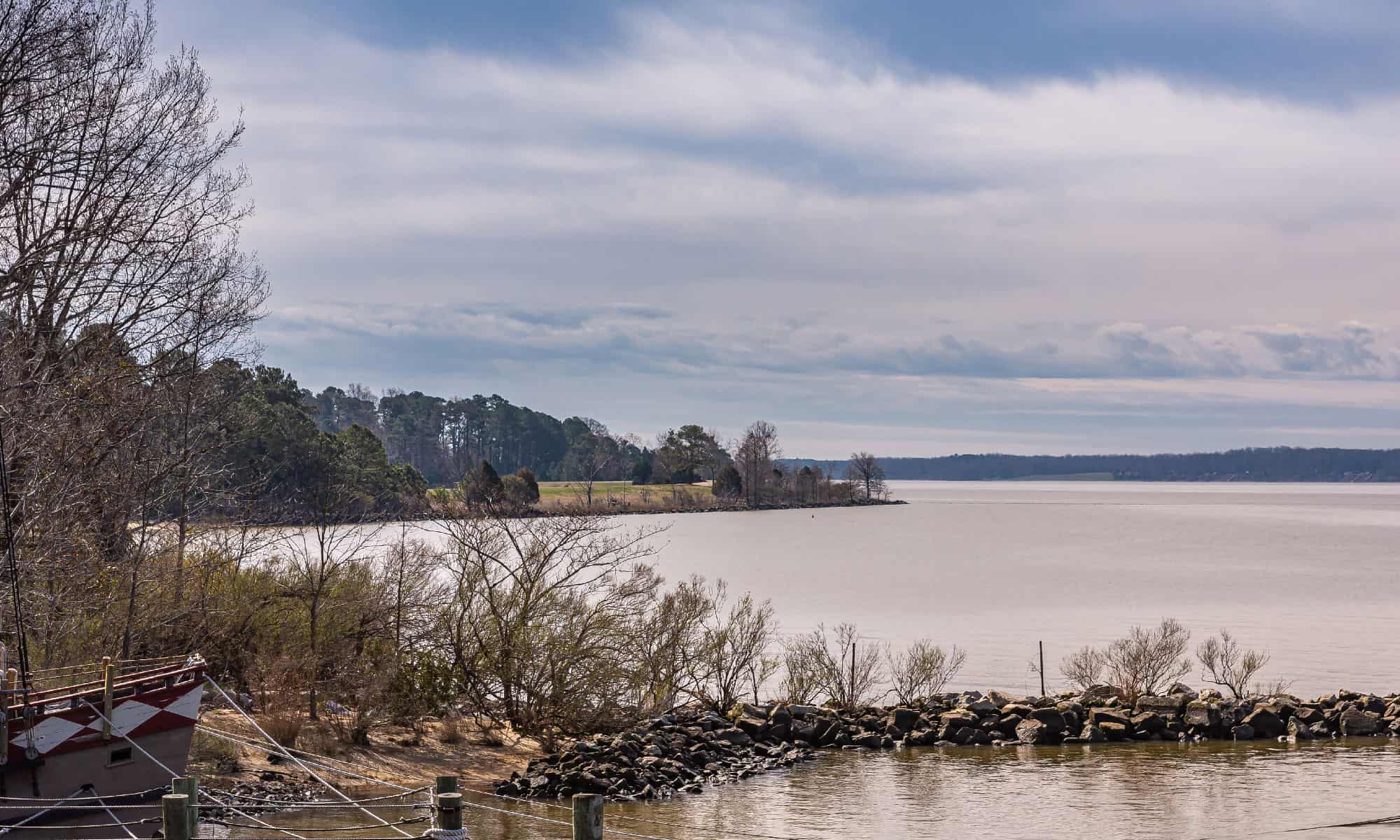

Virginia’s James River begins in the Appalachian Mountains and flows 348 miles from the confluence of the Cowpasture and Jackson Rivers to the Chesapeake Bay. 2.7 million people live along the river’s watershed, which provides hydroelectric power, transportation, recreation, and other resources. The James River is home to at least 350 species of animals. Continue reading to learn about the five largest species found in the James River.
5. Muskellunge
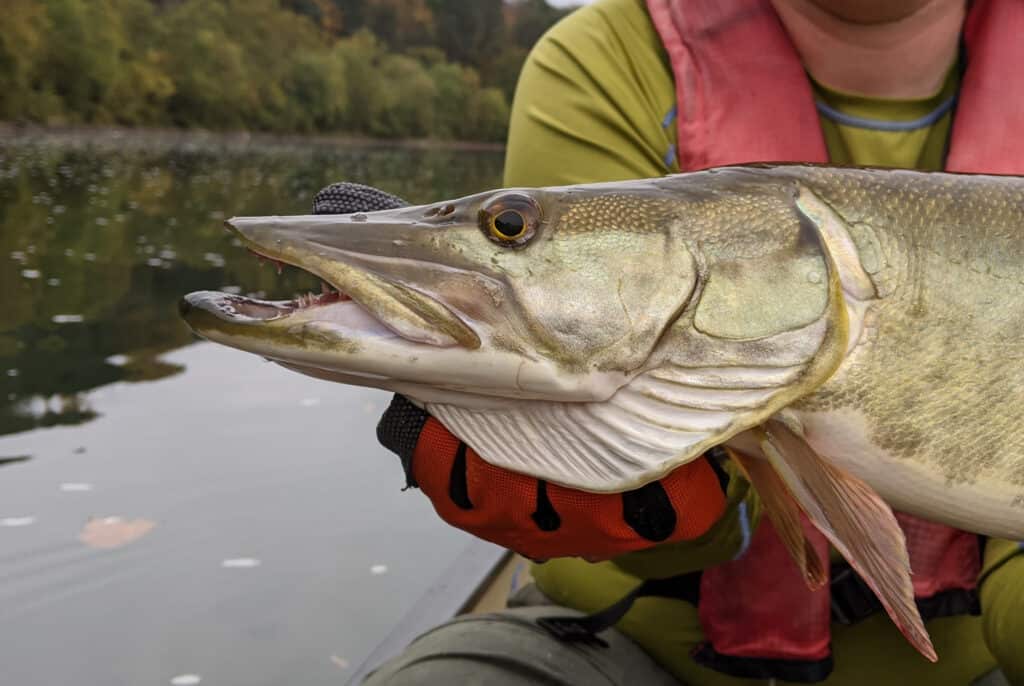
Muskies are popular targets for anglers on the James River.
©M Huston/Shutterstock.com
Muskellunge (Esox masquinongy), also known as Muskies, are the largest members of the pike family. They measure 2 to 4 feet in length and weigh 15 to 35 pounds as adults. The largest muskie ever caught in Virginia weighed 45 pounds 8 ounces and measured up to 56 inches long. They are ambush predators that prey on various aquatic animals in their ecosystems and are even known to engage in cannibalism. Adult muskies are apex predators, with only humans and large birds of prey, such as bald eagles (Haliaeetus leucocephalus), posing a threat. However, juveniles are often preyed upon by adult muskies and other large fish.
4. Longnose Gar
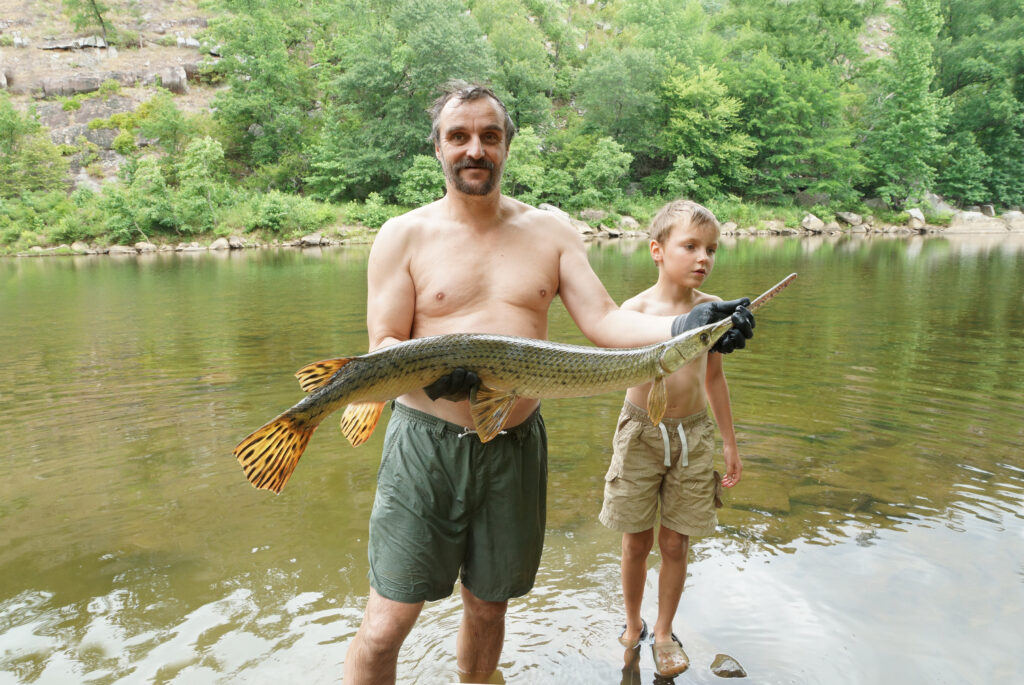
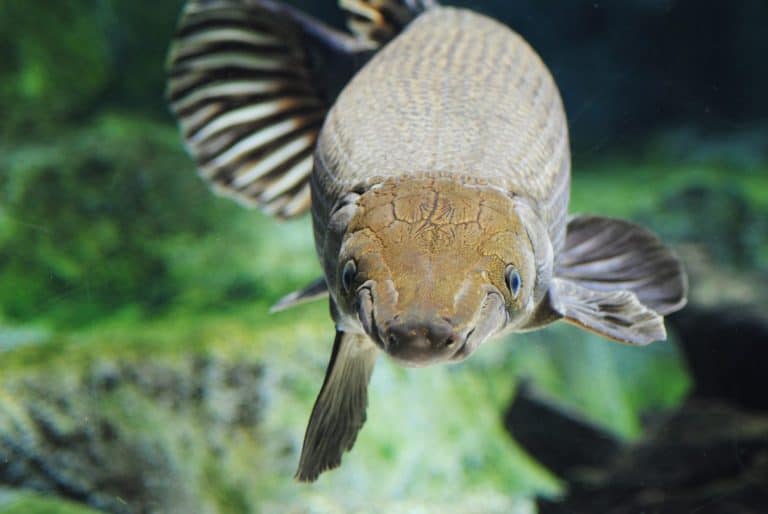
The longnose gar is a popular game fish among recreational anglers.
©IrinaK/Shutterstock.com
The longnose gar (Lepisosteus osseus) is a ray-finned fish commonly found throughout the Eastern United States. These fish measure 6 feet 8 inches long and weigh up to 35 pounds. Longnose gar can breathe both air and water, allowing them to inhabit hypoxic waters, also known as dead zones. The largest longnose gar ever caught in Virginia weighed 25 pounds 2 ounces. Longnose gar are apex predators whose prey varies depending on location. In Virginia, they prey on white perch, menhaden, crayfish, crustaceans, and insects.
3. Flathead Catfish
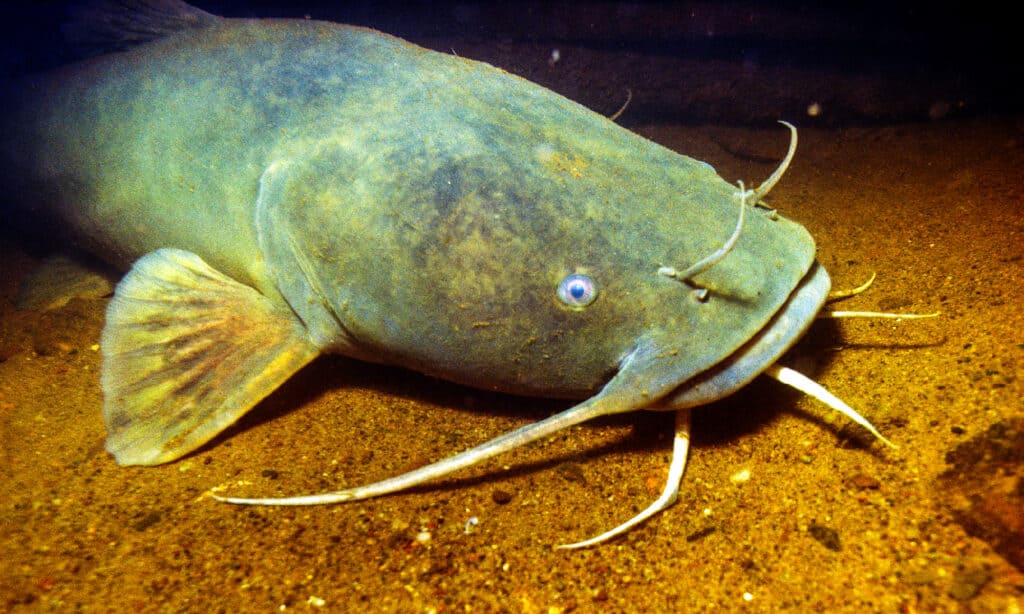
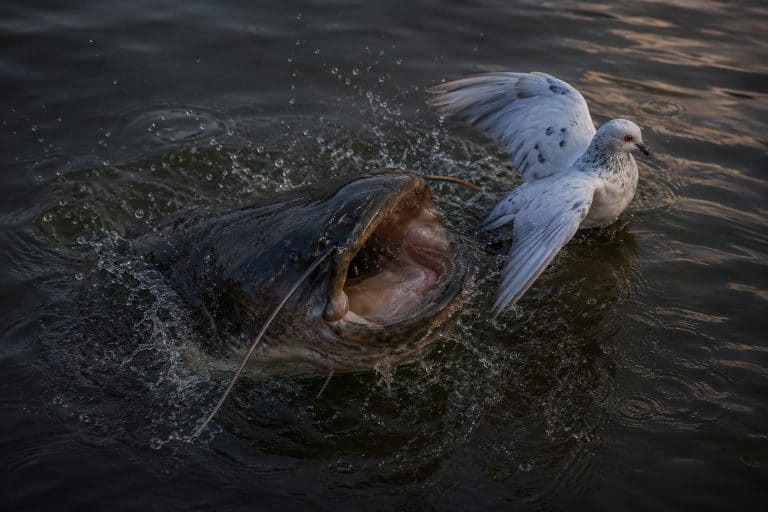
Flathead catfish, Pylodictis olivaris, are also called shovelhead catfish.
©iStock.com/stammphoto
The flathead catfish (Pylodictis olivaris) is known for its broad, flat head. They typically measure 3 to 5 feet long and weigh 4 to 60 pounds. The largest specimen ever caught weighed 123 pounds. Flathead catfish are benthic fish that dwell on the bottom of lakes and rivers. They prey on crayfish, channel catfish, American gizzard shad, green sunfish, carp, and annelid worms.
2. Blue Catfish
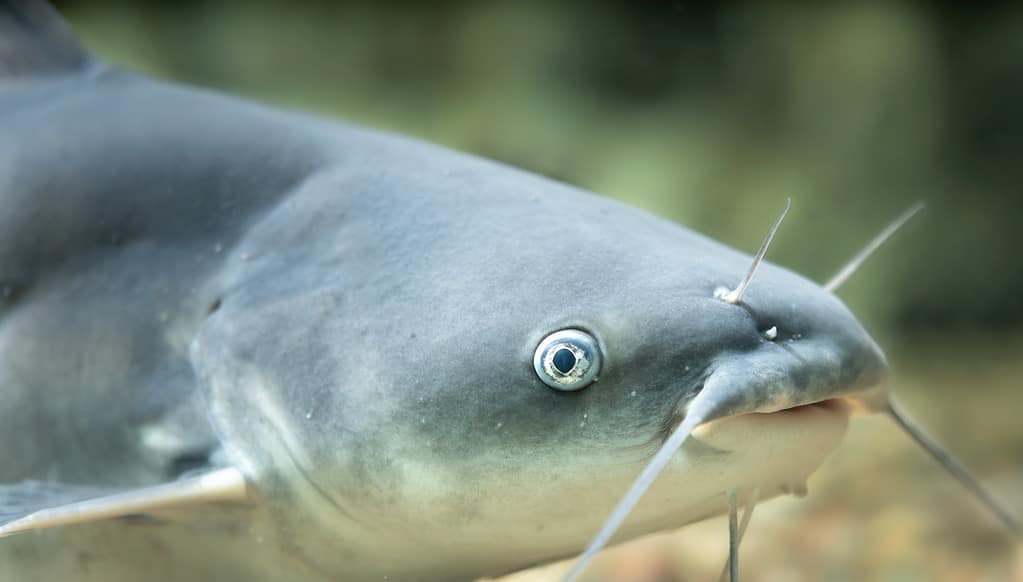
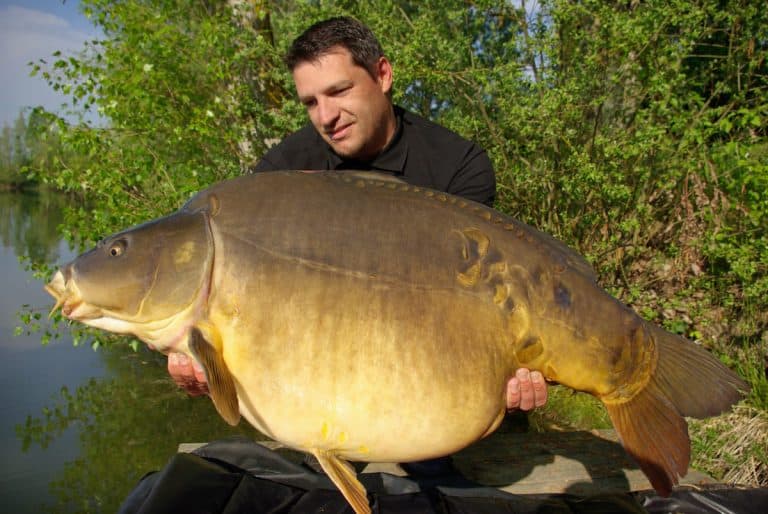
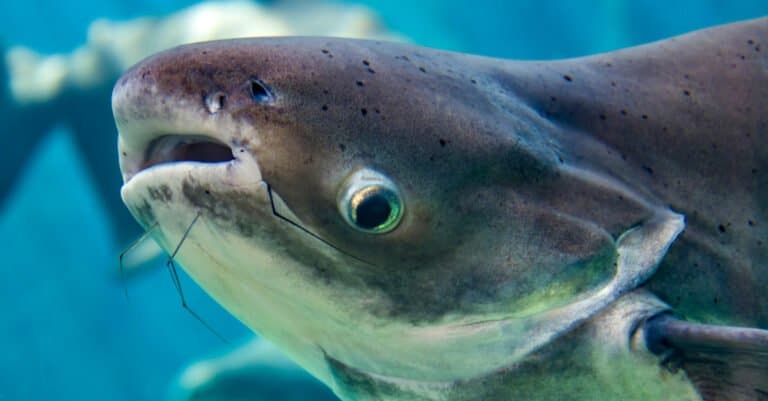
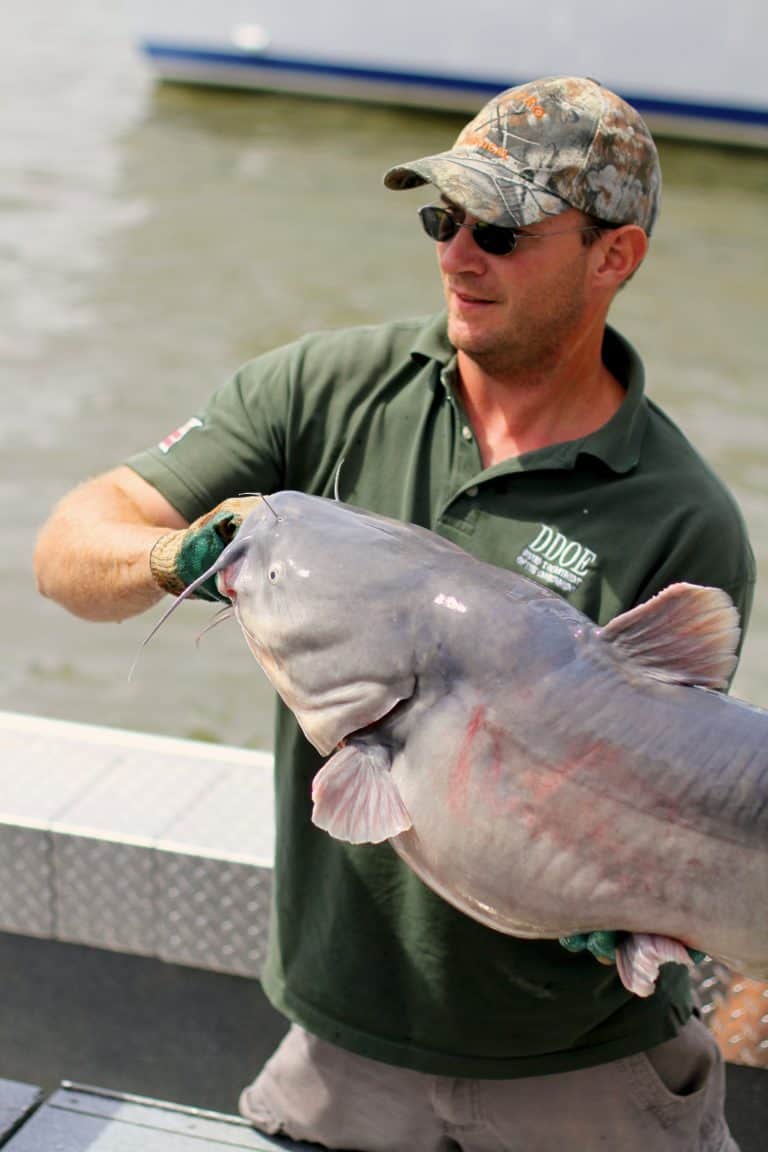
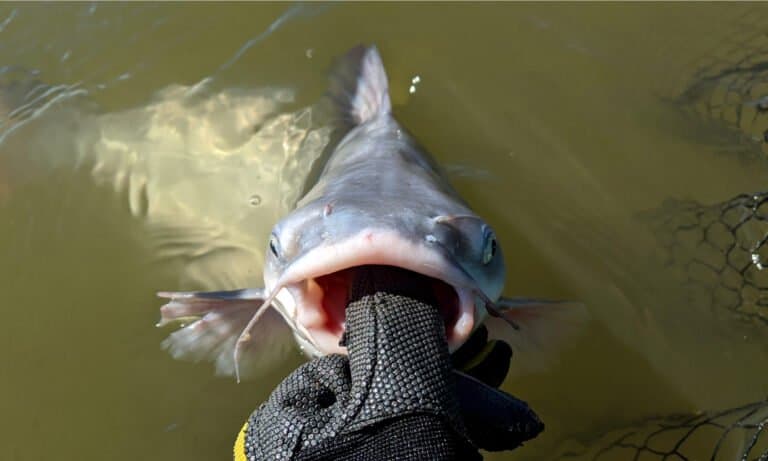
The blue catfish is not native to the James River.
Blue catfish (Ictalurus furcatus) measure 25 to 46 inches and weigh 30 to 70 pounds. They are the largest species of catfish in North America. The largest blue catfish specimen in the Chesapeake Bay area weighed 102 pounds and was caught in the James River, but the Virginia state and world record is 143 pounds from Kerr Lake. While native to North America, this species is not native to the James River. Blue catfish were introduced into the James River in 1974 by the Virginia Department of Wildlife Resources, with additional stockings in the 1970s and 1980s to create a new recreational fishery. However, the species is now considered invasive in the river, as its population growth has greatly exceeded expectations and it competes with local species for prey. Some studies suggest their population has decreased since 2011.
1. Atlantic Sturgeon
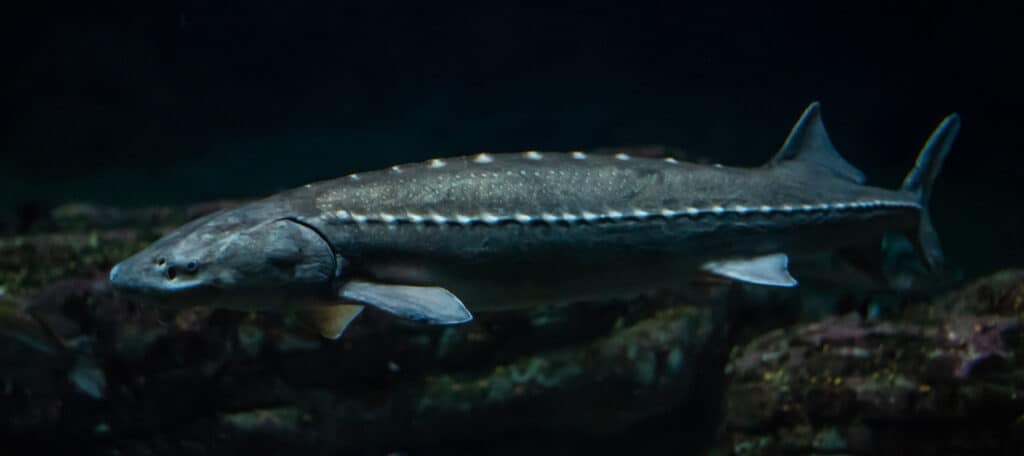
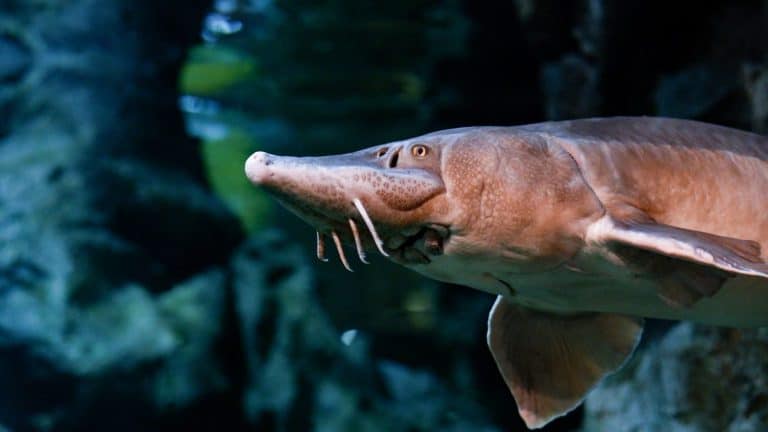
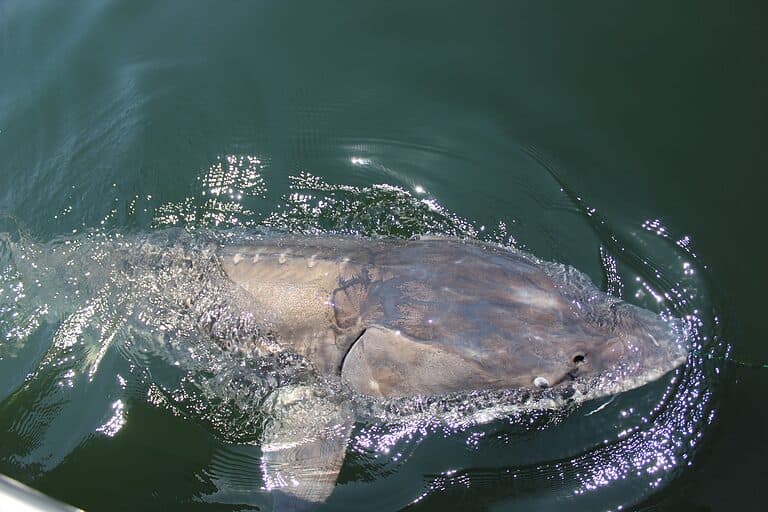
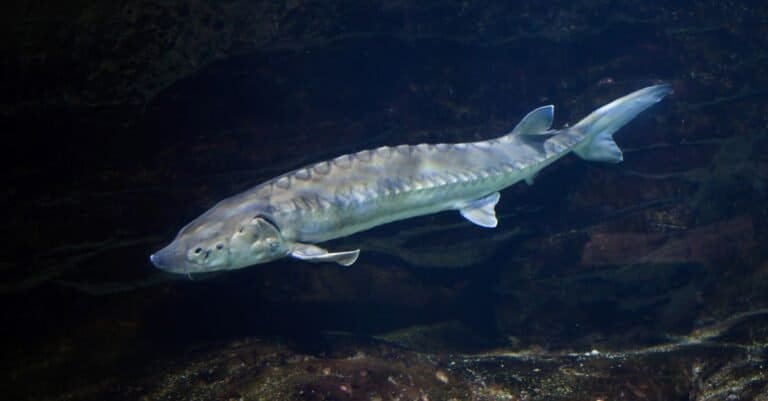
The bony body armor on Atlantic Sturgeons is called scutes. They offer additional protection to the fish.
©David A. Litman/Shutterstock.com
The Atlantic sturgeon (Acipenser oxyrinchus) measures up to 14 feet long and weighs up to 800 pounds. They are often considered the largest fish in the James River, despite being uncommon in the river today. Atlantic sturgeon were a crucial food source for European settlers in Virginia. However, overfishing has decimated the population. In the late 19th century, the United States exported 7 million pounds of Atlantic sturgeon annually. Fishing for Atlantic sturgeon has been illegal in Virginia since 1974.