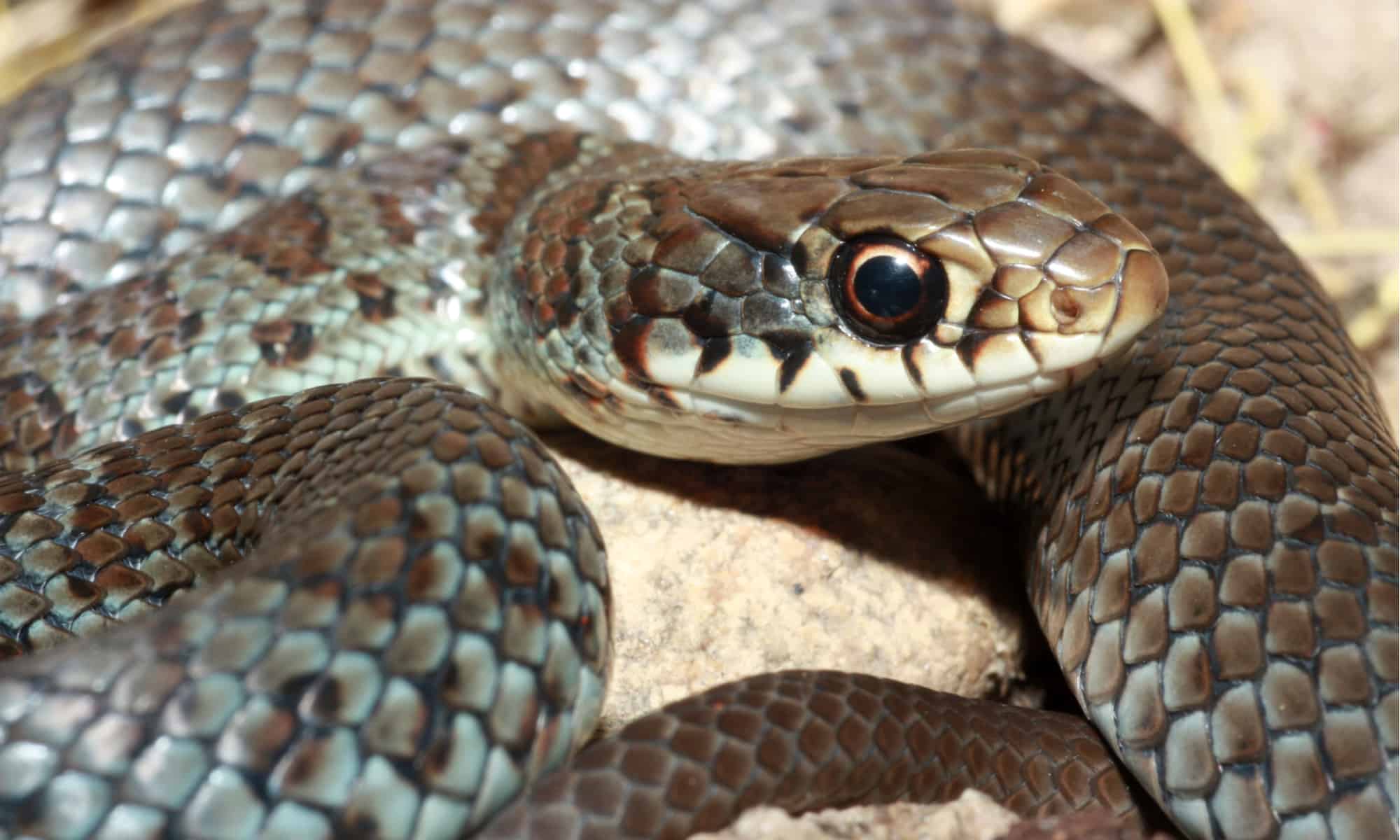

Quick Take
- One of these seven Wabash River snakes is venomous enough to be fatal, and most people would be surprised to learn which one it is. Meet the venomous one →
- Pollution has driven most snake species away from the Wabash River, but a handful have found ways to survive. Where they hide might surprise you. See which species survived →
- Two of these snakes look nearly identical as juveniles but quite different as adults, a distinction that could completely change how you identify them in the wild.
- One Wabash River snake shifts from day-active to nocturnal based on weather, and knowing when it's most active is key to spotting it. Learn its active hours →
Throughout U.S. history, Indiana’s Wabash River has served as a transportation channel for Native American tribes, British settlers, and modern commercial trade. It is a treasure trove for fishermen and hunters and plays a vital role in generating hydroelectric power. Unfortunately, this once mighty river is filled with pollutants. However, over the past few years, conservation organizations have been working to preserve and protect the river and its wildlife, including the snakes of Indiana’s Wabash River. Discover seven snakes that live near the Wabash River.
Snakes of the Wabash River
Unfortunately, many snake species have fled the Wabash River and the surrounding area because of the high levels of pollution in the water. However, some snakes still inhabit the riverbanks. These include Kirtland’s snake, the common garter snake, the common ribbon snake, the common watersnake, the North American racer, the grey rat snake, and the Eastern Massasauga rattlesnake. Read on to learn more about each of these snakes.
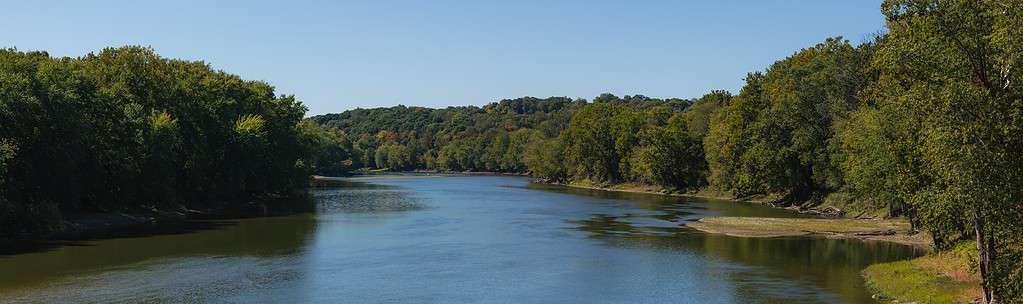
The Wabash River flows through Indiana, eventually emptying into the Ohio River.
©Brian C. Gossard/Shutterstock.com
1. Kirtland’s Snake
The Kirtland’s snake (Clonophis kirtlandii) is a small to medium nonvenomous snake. It is brown, grey, or rusty red, with a dark head and rows of black markings on its body. Its underbelly is red, orange, or pink, with a row of dark spots on each side. The average length for an adult Kirtland’s snake is approximately 14 to 18 inches, but some may reach lengths of just over 24 inches. Their habitat includes open, moist meadows, marshes, and wet prairies. They can also be found in developed areas with wet habitats. These snakes are primarily nocturnal and generally avoid conflict with humans.
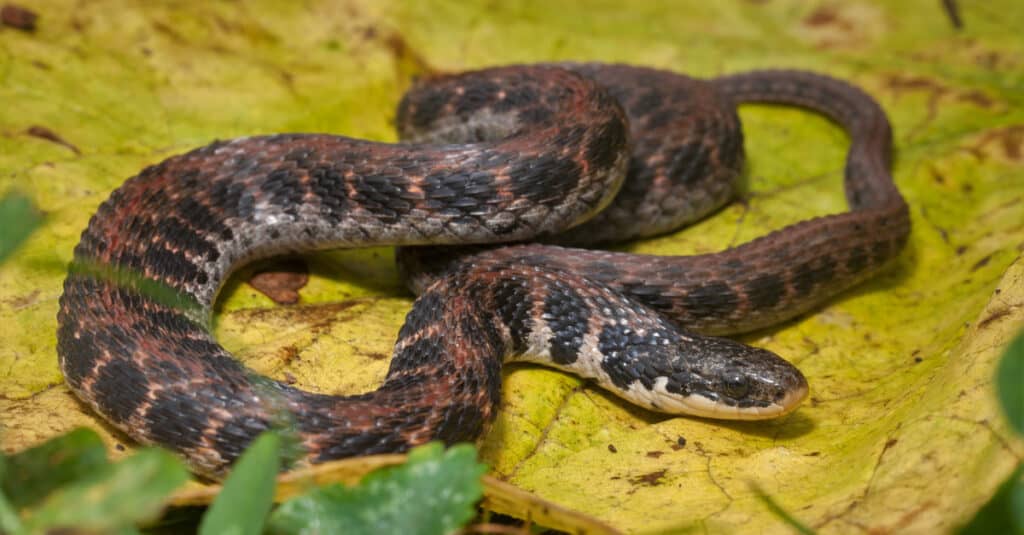
Kirtland’s snakes average 14 to 18 inches in length.
©Mike Wilhelm/Shutterstock.com
2. Common Garter Snake
The common garter snake (Thamnophis sirtalis) grows to around 18 to 54 inches and varies in color. However, their typical pattern consists of three light stripes running down their brown, olive, or tan bodies. Some of these snakes have a checkered pattern. Common garter snakes occur in a wide range of habitats, including fields, riverbanks, and woodland edges, but they are primarily found in open, wet grasslands. Common garter snakes are mostly active during the day, but during extremely hot weather, they become nocturnal to avoid the heat. These snakes are nonvenomous but excrete a foul odor when threatened.
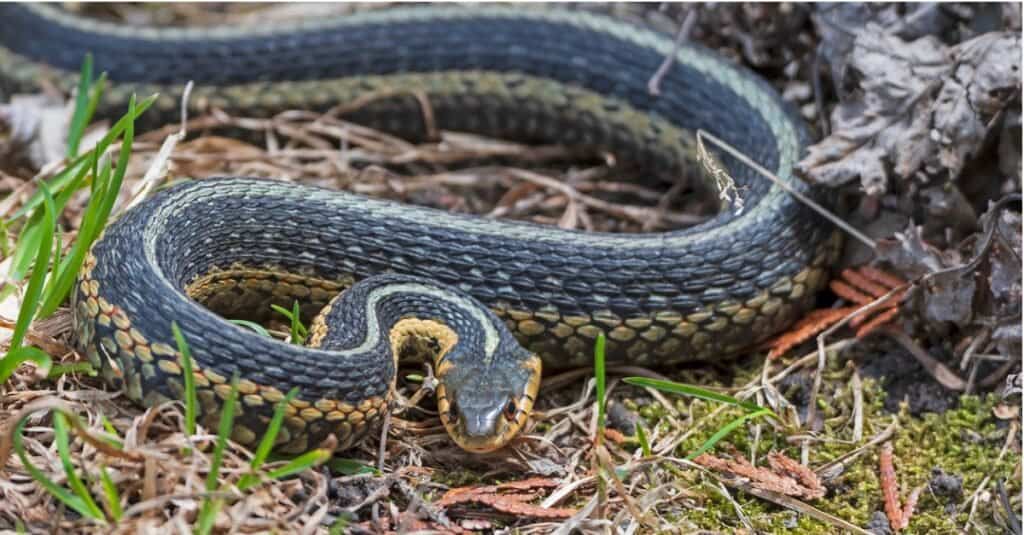
Common garter snakes occur in a wide range of habitats but are primarily found in open, wet grassy areas.
©iStock.com/Wildnerdpix
3. Common Ribbon Snake
The common ribbonsnake (Thamnophis sauritus) is a nonvenomous species of garter snake. It gets its name from its elegant stripes and slender, elongated form. These snakes are black or brown with bright yellow stripes running down their bodies. They can grow to 36 inches in length, with a long tail that makes up about one third of their total body length. Common ribbonsnakes typically occur along the edges of rivers, lakes, streams, ponds, and marshes. They are most active during the daytime in sunny weather. Like common garter snakes, ribbonsnakes may excrete a foul odor when threatened.
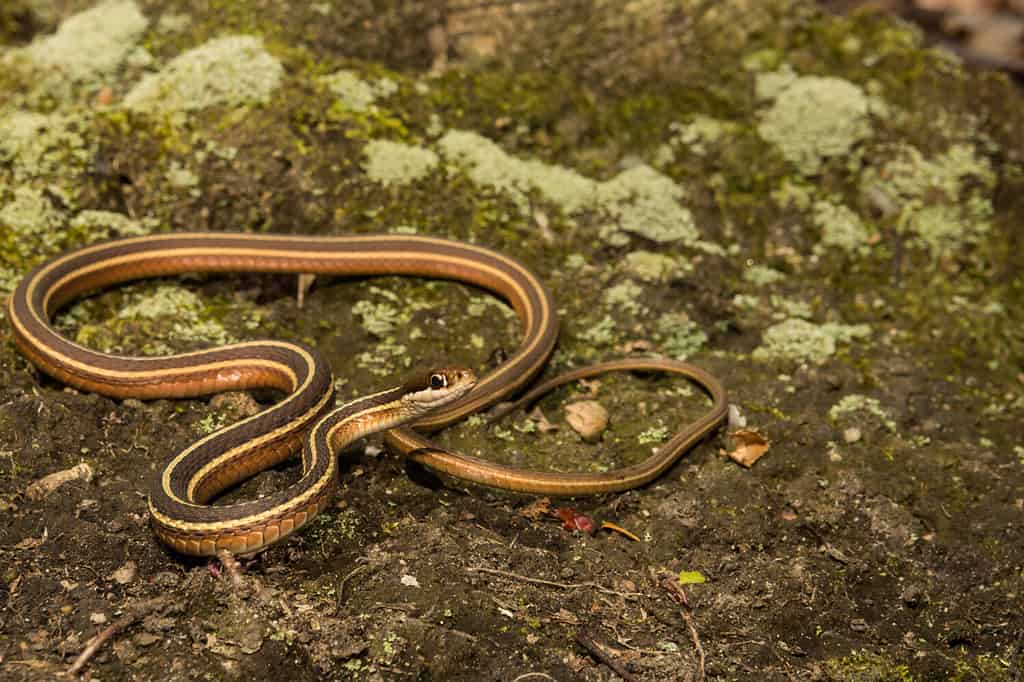
Common ribbonsnakes occur along the edges of rivers, lakes, streams, ponds, and marshes.
©Jay Ondreicka/Shutterstock.com
4. Common Water Snake
The common watersnake (Nerodia sipedon) is a large snake that can reach 25 to 40 inches long. They are grey to dark brown with dark brown to black bands. Their bellies are usually cream or reddish in color. This snake is the most abundant aquatic snake species in Indiana, so it can be found in almost any aquatic habitat, including rivers, lakes, ponds, streams, swamps, and even backyard ponds. However, they prefer permanent, warm, shallow water that has access to places where they can bask in the sun, like logs, rocky ledges, and bridge piers. They occur in urban and rural areas and move away from the water during winter to find hibernation spots.
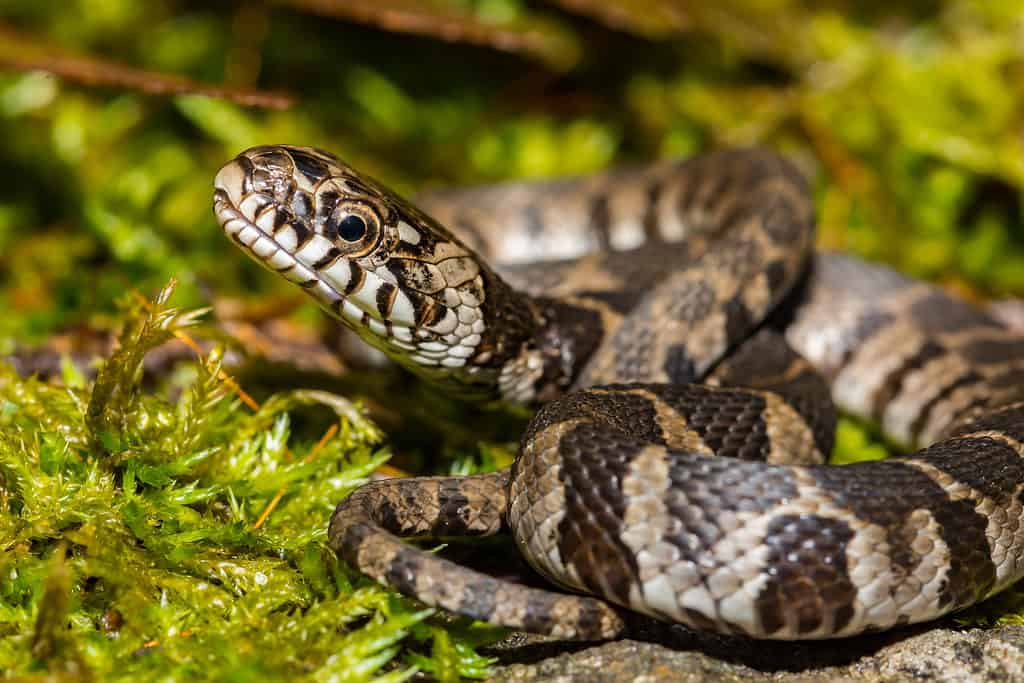
The common watersnake is the most abundant aquatic snake species in Indiana.
©Jay Ondreicka/Shutterstock.com
5. North American Racer
Adult North American racers (Coluber constrictor), specifically Northern black racers (Coluber constrictor constrictor) and sometimes blue racers (Coluber constrictor foxii), live around the Wabash River. Racers typically measure between 36 and 60 inches, but some may grow larger. These snakes have several subspecies, so their patterns can vary. However, most are solid black, bluish-black, or brownish-olive. North American racers are quick movers and are mainly active during the day. These nonvenomous snakes favor open, sunny areas, but can also be found in damp places such as marshes.
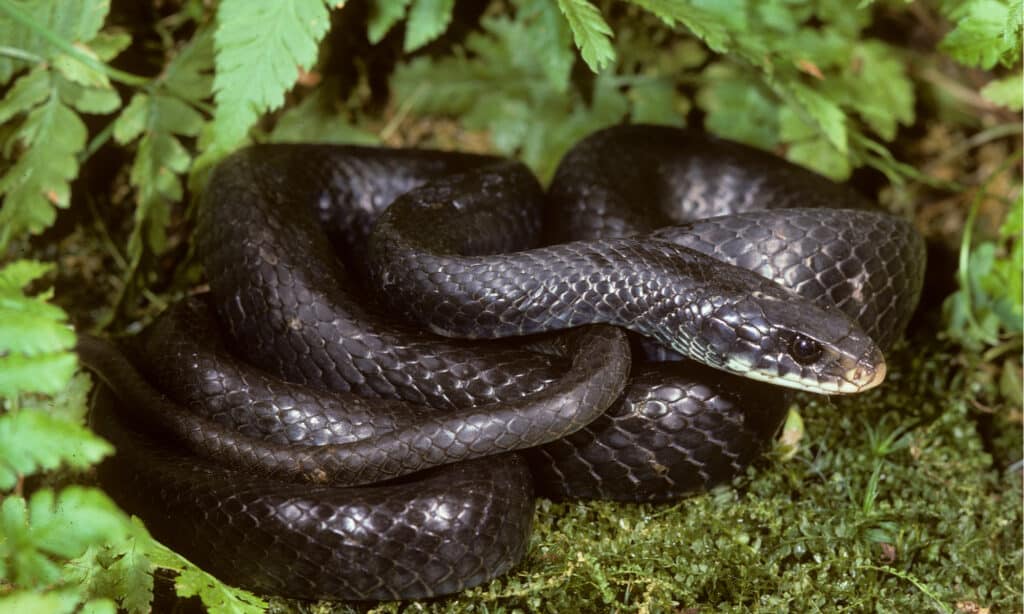
Northern black racers are fast-moving snakes.
©Breck P. Kent/Shutterstock.com
6. Grey Rat Snake
The grey rat snake (Pantherophis spiloides) has a thick body measuring 42 to 72 inches long. Juveniles do not look like adults, as they have a conspicuous color pattern of dark blotches on their pale gray bodies. Adults usually appear solid black, but some may retain the darker blotching pattern on a light background. Another identifying feature is the square blotches on their light-colored bellies that resemble checkered patterns. Their preferred habitats are prairies, deciduous woodlands, rocky hillsides, and stream valleys. These nonvenomous snakes are primarily active during the day but also forage in the evening if the days are too hot during the summer.
An identifying feature of the grey rat snake is the square blotches on its light-colored belly.
©Vladislav T. Jirousek/Shutterstock.com
7. Eastern Massasauga Rattlesnake
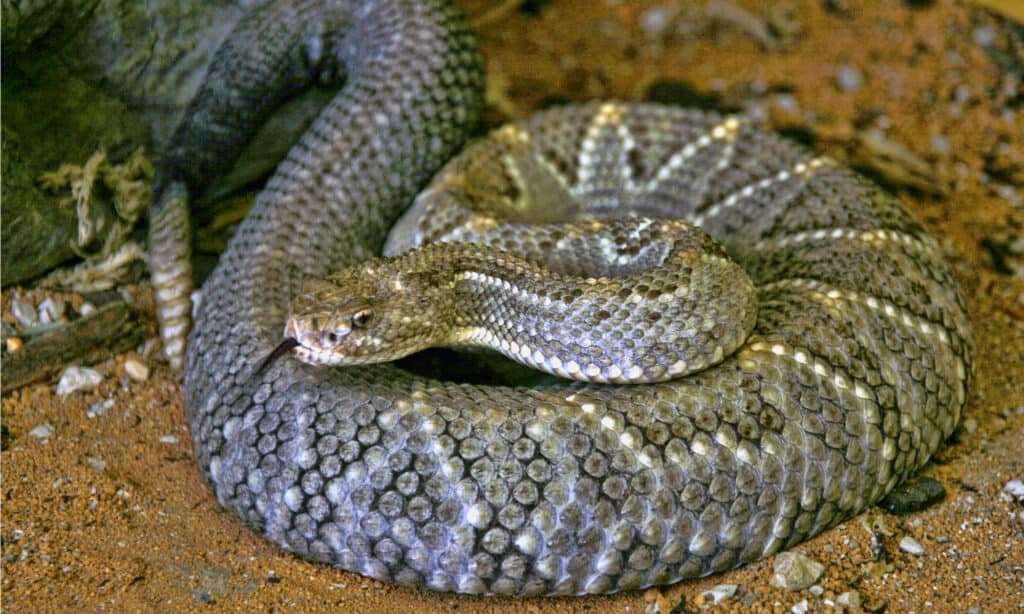
The Eastern Massasauga is a small to medium-sized rattlesnake, reaching between 18 and 30 inches long. Their appearance can vary, as some have grey bodies with brown blotches, while others are almost solid black. The rattle at the end of their tails distinguishes them from all the other snakes of Indiana’s Wabash River. These snakes inhabit wetland areas but may also occur in drier environments. They are most abundant in dry prairie and woodlands, marshy grasslands, lake edges, fens, and forested swampland. Although primarily diurnal, they become more active at night during hot summers. These snakes are venomous, and their bites can be fatal if left untreated.
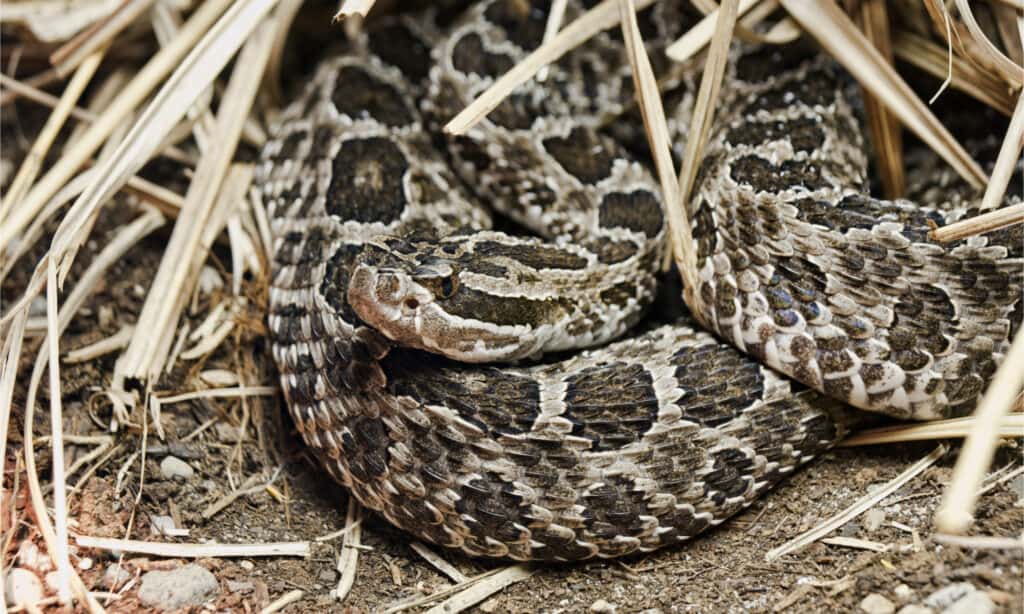
The Eastern Massasauga is most active between the months of April through as late as November.
©DnDavis/Shutterstock.com