

M
Species Profile

Midget Faded Rattlesnake

Crotalus concolor

Small snake. Serious rattle.
Rusty Dodson/Shutterstock.com

Midget Faded Rattlesnake Distribution

Click a location to explore more animals from that region

Endemic Species
Loading map...
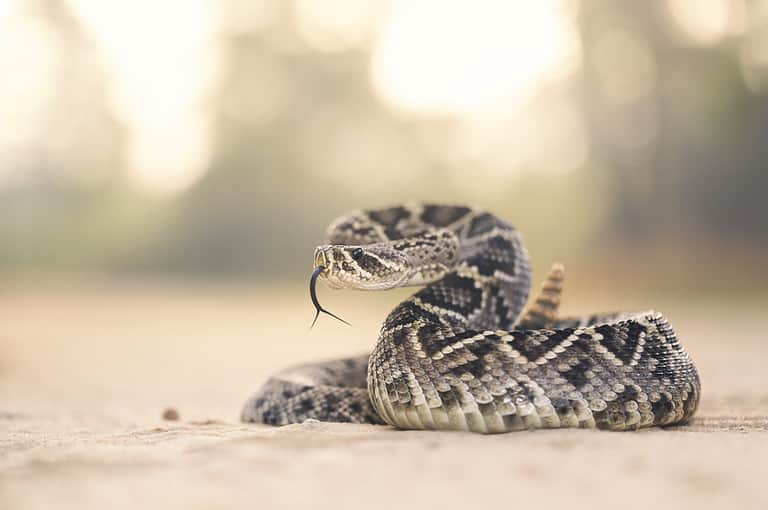
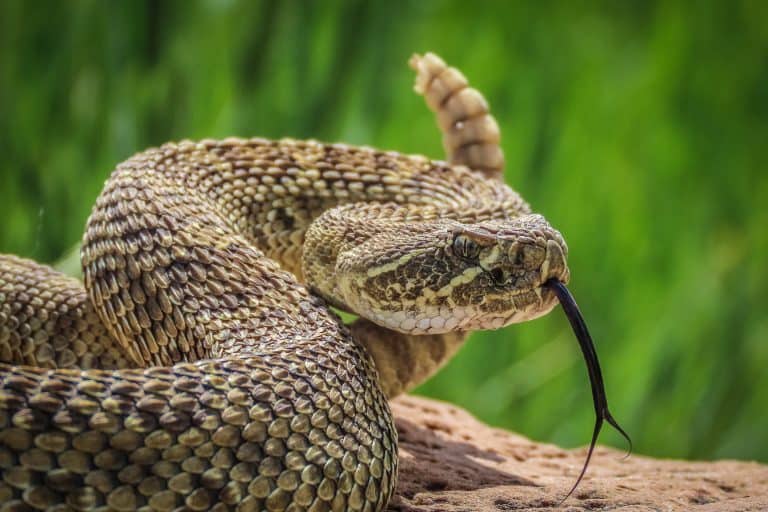
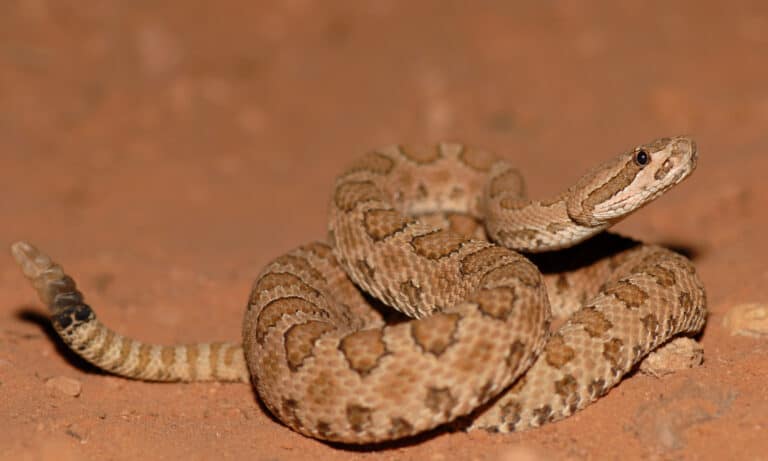
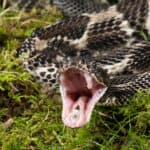
Midget Faded Rattlesnake showing rattle

At a Glance

Wild Species
Diet Carnivore
Activity Diurnal+
Lifespan 12 years
Weight 0.25 lbs
Status Not Evaluated
Did You Know?

Adults are typically ~50-66 cm total length; maximum reported about ~76 cm (Klauber 1972; Ernst & Ernst 2012).

Scientific Classification

A small-bodied North American pit viper subspecies noted for its pale, 'faded' coloration and potent venom, belonging to the Western Rattlesnake complex.

Kingdom
Animalia
Phylum
Chordata
Class
Reptilia
Order
Squamata
Family
Viperidae
Genus
Crotalus
Species
Crotalus oreganus

Distinguishing Features

  • Relatively small size compared with many other rattlesnakes
  • Pale gray/tan coloration with subdued dorsal patterning ('faded' look)
  • Rattle at tail tip; heat-sensing facial pits characteristic of pit vipers
  • Typical rattlesnake head shape with vertical pupils

Did You Know?

Adults are typically ~50-66 cm total length; maximum reported about ~76 cm (Klauber 1972; Ernst & Ernst 2012).

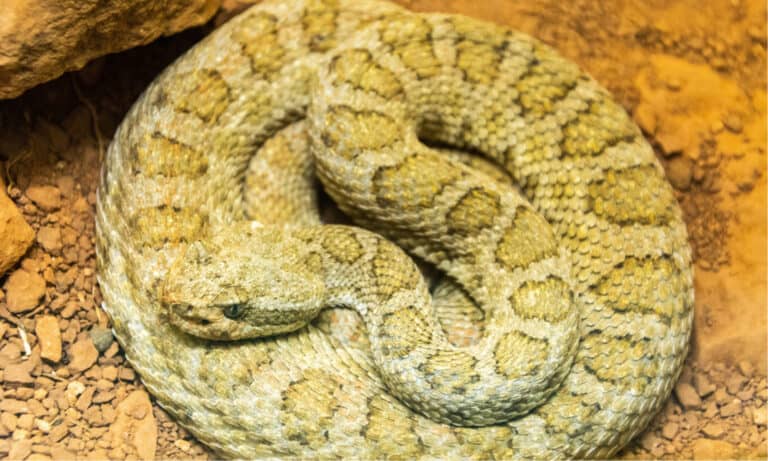
Its muted gray-tan pattern is so characteristic that "faded" is part of the common name-excellent camouflage on pale shale/sandstone slopes (Stebbins & McGinnis 2018).

It's historically been treated as a subspecies of the prairie rattlesnake (Crotalus viridis concolor) and is still taxonomically debated; many modern sources treat it as its own species, Crotalus concolor (e.g., Ernst & Ernst 2012; recent checklists vary).

Like other pit vipers, it "sees" heat with facial pit organs, helping it target warm-blooded prey in low light (Campbell & Lamar 2004).

Reproduction is live-bearing (viviparous); reported litters are small-commonly about 2-7 neonates (Klauber 1972; Ernst & Ernst 2012).

Despite its small size, it is medically important: its venom is noted for strong neurotoxic activity compared with many other North American rattlesnakes (Campbell & Lamar 2004).

Unique Adaptations

  • "Faded" coloration and reduced contrast blotching that blends into pale, rocky substrates typical of its arid interior-west range (Stebbins & McGinnis 2018).
  • Exceptionally high neurotoxic effects for a small-bodied rattlesnake: venom composition is often described as more neurotoxin-forward than many other North American Crotalus, increasing medical risk even from a small animal (Campbell & Lamar 2004).
  • Efficient low-light hunting toolkit: infrared-sensing pit organs plus a sit-and-wait strategy reduce energy and water demands in dry, prey-patchy landscapes (Campbell & Lamar 2004).

Interesting Behaviors

  • Ambush predation: typically coils beside rodent runways, rock edges, or shrub cover and waits motionless for long periods, striking when prey passes within range (general Crotalus behavior; Campbell & Lamar 2004).
  • Seasonal activity shifts: more diurnal in cooler spring/fall weather and more crepuscular/nocturnal during hot summer periods in exposed, arid habitats (pattern widely reported for interior-west rattlesnakes; Stebbins & McGinnis 2018).
  • Denning/overwintering: retreats to deep rock crevices/hibernacula to survive freezing winters; individuals often show fidelity to traditional den sites used across years (common in many Crotalus; Campbell & Lamar 2004).
  • Defensive signaling: relies on crypsis first; when approached closely it may rattle, posture in a tight coil, and deliver rapid defensive strikes if harassment continues (Klauber 1972).
  • Short-distance movements tied to shelter: frequently uses talus, ledges, and rodent burrows as daytime refuges, emerging to hunt along edges and benches where prey travel (Stebbins & McGinnis 2018).

Cultural Significance

Folklore usually talks about rattlesnakes in general, not just the midget faded rattlesnake (Crotalus concolor). In the interior West it stands for wild, rocky country and appears in cautionary tales, outdoor education, conservation, and frontier images in the Rockies and Colorado Plateau.

Myths & Legends

In Hopi tradition, the Snake Dance treats snakes as powerful messengers of rain and fertility. Rattlesnakes are honored as "snake people," handled with care and released to carry prayers.

In many Southwestern and Plains Indigenous stories, the Midget Faded Rattlesnake (Crotalus concolor) appears as a powerful, dangerous being, often a guardian of springs or sacred places whose presence demands respect and good behavior.

Plains and Great Basin stories say Snake or rattlesnake once had great power and taught people to be humble and careful. The rattle is a built-in warning to avoid needless killing and fighting.

During the American Revolution, people used the rattlesnake as a symbol of being watchful and defense (for example, 'Don't Tread on Me'), creating a long-lasting idea that rattlesnakes warn before they attack.

Conservation Status

NE Not Evaluated

Has not yet been evaluated against the criteria.

Population Unknown

Protected Under

  • Not listed under the U.S. Endangered Species Act (ESA) as a distinct subspecies; management is primarily via state wildlife regulations governing take/collection and through land-management policies on public lands.
  • U.S. Lacey Act (prohibits interstate commerce in wildlife taken/possessed/transported in violation of state laws), which can apply to illegal collection.

Life Cycle

Birth 5 hatchlings
Lifespan 12 years

Lifespan

In the Wild
6–18 years
In Captivity
10–24 years

Reproduction

Mating System Polygynandry
Social Structure Solitary
Breeding Pattern Seasonal
Fertilization Internal Fertilization
Birth Type Internal_fertilization

Adults are mostly solitary; during seasonal breeding, males roam widely, engage in male-male combat, and attempt to mate with multiple females. Females may accept more than one male (sperm storage possible). After live birth, females provide no parental care.

Behavior & Ecology

Social Den aggregation Group: 1
Activity Diurnal, Crepuscular, Nocturnal
Diet Carnivore Lizards-especially Sceloporus spp. (with a common ontogenetic shift toward small mammals such as Peromyscus as body size increases).
Seasonal Hibernates

Temperament

Cryptic and generally avoidance-oriented; relies on camouflage and remaining motionless when approached.
Defensive escalation typically: stillness → rattling/buzzing → striking if harassed or stepped on.
Seasonal activity shifts: more diurnal in cooler conditions; more crepuscular/nocturnal in hot weather.
Males may engage in ritualized combat during the breeding season, as seen in many rattlesnake species.

Communication

Rattle buzz (keratin segments vibrated at high frequency), used as a defensive warning signal.
Chemical signaling via pheromone trails for mate location; tongue-flicking delivers cues to Jacobson's organ.
Tactile courtship (male chin-rubbing, body alignment) and cloacal contact during copulation.
Postural displays (coiling, head elevation, body inflation/flattening) that signal defensive intent.
Male-male combat involves elevated bodies and pushing; functions in dominance/competition for females.

Habitat

Biomes:
Desert Cold Temperate Grassland Temperate Forest
Terrain:
Rocky Hilly Plateau Valley Riverine
Elevation: 3280 ft 10 in – 7874 ft

Ecological Role

Small-bodied pit-viper mesopredator in arid shrub/rock habitats; regulates small-vertebrate communities and transfers energy from abundant small mammals/lizards to higher predators.

Rodent suppression (reduces local small-mammal abundance and associated seed predation/disease risk) Population regulation of common lizards in shrub-steppe/rocky ecotones Prey base for raptors and larger predators (e.g., hawks/owls; also kingsnakes) Supports nutrient cycling via carcass deposition from uneaten prey remains

Diet Details

Main Prey:
Lizards Small rodents Small shrews Nestling and juvenile birds and small snakes

Human Interaction

Domestication Status

Wild

The Midget Faded Rattlesnake (Crotalus concolor) is not domesticated. It is kept only in accredited zoos, permitted research collections, and some licensed private keepers. Classification has shifted—treated as Crotalus concolor or a subspecies of C. viridis or C. oreganus. It is listed as Threatened under the U.S. ESA, limiting holding, transport and trade. Refs: Campbell & Lamar; Ernst & Ernst.

Danger Level

High
  • Venomous bite with potentially severe systemic effects (viperid envenomation risk including pain, swelling, coagulopathy/bleeding abnormalities, and potential organ effects); despite the snake's small body size and relatively low venom yield, published accounts consistently describe this taxon's venom as notably potent within the Western Rattlesnake complex.
  • Highest risk scenario is close-range interaction (handling, attempting to kill/relocate, hiking/fieldwork encounters); defensive strikes can occur when surprised or cornered.
  • Secondary risks include dangerous attempts at private keeping (escape, improper handling, lack of immediate access to appropriate antivenom/critical care) and legal risk due to protected status.

As a Pet

Not Suitable as Pet

Legality: Usually not legal as pets. Federally protected as ESA Threatened (Crotalus concolor), so taking, possession, transport, or sale needs federal permission. State laws and venomous-snake rules often ban private ownership; only approved institutions or research/education permits may allow it.

Care Level: Expert Only

Purchase Cost: Up to $800
Lifetime Cost: $3,000 - $20,000

Economic Value

Uses:
Ecosystem services (rodent control) Scientific research (venom/physiology/ecology) Education/zoos Public health cost (envenomation treatment) Conservation management
Products:
  • venom used in research settings (protein/toxin characterization; not a general consumer product)
  • non-consumptive wildlife value (education exhibits, limited ecotourism in range states)

Relationships

Predators 9

Red-tailed Hawk Buteo jamaicensis
Golden Eagle
Golden Eagle Aquila chrysaetos
Common Raven
Common Raven Corvus corax
Great Horned Owl Bubo virginianus
American Badger Taxidea taxus
Coyote
Coyote Canis latrans
Bobcat
Bobcat Lynx rufus
Common Kingsnake Lampropeltis getula
Gopher Snake
Gopher Snake Pituophis catenifer

Ecological Equivalents 6

Animals that fill a similar ecological role in their ecosystem

Great Basin Rattlesnake Crotalus lutosus Occurs in overlapping Great Basin and Colorado Plateau arid-semiarid habitats; employs ambush foraging on small mammals and uses rock outcrops and rodent burrows for thermoregulation and refugia.
Prairie Rattlesnake
Prairie Rattlesnake Crotalus viridis Occupies grassland and shrub–steppe mosaics and rocky breaks; has a similar prey base (small mammals) and faces comparable predation pressures from raptors and mammalian mesopredators.
Mojave Rattlesnake
Mojave Rattlesnake Crotalus scutulatus Ecologically comparable ambush pit viper in open desert scrub; relies on rodent prey, uses crevices and burrows for shelter, and is similarly subject to persecution near human development.
Sidewinder
Sidewinder Crotalus cerastes Another small-bodied desert rattlesnake that employs a sit-and-wait foraging strategy and is heavily dependent on small vertebrate prey. Niche overlap occurs where sandy/arid microhabitats interface with rocky desert scrub.
Western Yellow-bellied Racer Coluber constrictor mormon In portions of the Intermountain West, it overlaps open shrubland and rocky habitat; it may compete for small lizards and juvenile rodents and can prey on juvenile snakes.
Western Coachwhip Masticophis flagellum Fast, active-foraging snake of arid and open habitats that can overlap spatially with rattlesnakes and prey on juvenile rattlesnakes, sharing the general desert-scrub community structure.

The Midget faded rattlesnake is one of the most venomous rattlesnake species.

These diminutive rattlesnakes hide in crevices and under scrub brush, waiting for their next meal. Midget faded rattlesnakes live in the Colorado and Green River basins, where their sand-colored bodies and faded patterns perfectly conceal them from predators and prey alike.

3 Amazing Facts About Midget Faded Rattlesnakes

  • Unlike most rattlesnakes, midget faded rattlesnake venom contains a neurotoxin that affects the nervous system and a myotoxin that destroys muscle tissue.
  • This species doesn’t typically exceed 2 1/2 feet in length, and most are around two feet long.
  • Females use communal thermoregulation, sharing basking spots and dens until they give birth.

Where to Find Midget Faded Rattlesnakes

This snake inhabits a limited area in the Colorado and Green River basins in Wyoming, Colorado, Utah, and possibly a very small area in northeast Arizona. It inhabits high-elevation canyons in those states and has a short period of activity each year. While not extremely rare, midget faded rattlesnakes are vulnerable to habitat destruction for infrastructure development, illegal pet trade collection, and recreational vehicles.

The midget faded rattlesnake uses its den more heavily than other rattlesnake species. In October and November, the snake travels to its communal den for several months of hibernation. Because of the long cold season in its home range, it can spend six months of the year hibernating in groups of up to 100, using dens created by rocky outcrops where sage is prevalent.

Then, when the days lengthen and warm, it comes out to bask, eat, and mate.

In April or May, depending upon temperatures, this snake comes out of hibernation. It most often doesn’t leave the hibernaculum for two to three weeks; males and non-pregnant females travel the farthest, often moving up to 2,200 yards from their den. This is the longest migration of any rattlesnake species. Pregnant or postpartum females and juvenile snakes generally stay within about 20 yards of the den.

Females mate every two to four years and when they are pregnant stay very close to the den in which they hibernate, sharing basking space with other females. After about 4 months, they give birth to approximately 5 babies that are between 7.5 and 8.5 inches long.

This species is a generalist that prefers lizards and smaller rodents until it grows big enough to swallow mice and other rodents. It spends most of its time waiting for its prey so it can ambush it with a quick strike. After the snake strikes its prey, it follows until the venom takes its deadly toll and the rattlesnake can swallow it whole.

Midget Faded Rattlesnakes’ Scientific Name

Until about the early 2000s, scientists classified midget faded rattlesnakes as a subspecies of the western rattlesnake. Genetic, morphologic, and toxin studies revealed that they are a true species on their own and now their scientific name now reflects this.

Crotalus concolor is their scientific name, and it describes this species as a plain or consistently-colored (concolor) rattle (Crotalus). While concolor isn’t an entirely accurate description, the adults’ markings do become very faded as they age.

Midget faded rattlesnakes are pitvipers in the subfamily of Crotalinae. They are one of over 30 rattlesnake species, all of which inhabit the Americas; scientists consider them one of the more venomous rattlesnake species.

Population and Conservation Status of Midget Faded Rattlesnakes

Midget faded rattlesnakes are most vulnerable to human expansion, whether it’s infrastructure development like roads or energy development. So far they appear to be stable, and they’re not listed at a federal level. However, due to their general rarity, the states in which they occur have protected them.

This highly specialized species inhabits areas that are regularly used for recreation; mountain bikers, hikers, and off-road enthusiasts are more likely to encounter one than anyone else. However, energy companies also want to use the areas where the snake lives for energy development.

To help balance the need for more energy with the snake’s preservation, Wyoming sponsored a study to model the species’ denning and behavioral habits. This study suggested that the midget faded rattlesnake population is becoming fragmented, limiting the genetic diversity.

Scientists know relatively little about its actual population despite efforts to preserve the species. They’re notoriously difficult to observe and blend into their environment so well that you may be standing next to one and not see it. It’s rare enough that Colorado considers it a Species of Special Concern. Wyoming calls it a Sensitive Species, and Utah includes it in its list of Species of Greatest Conservation Need.

Midget Faded Rattlesnake Appearance & Description

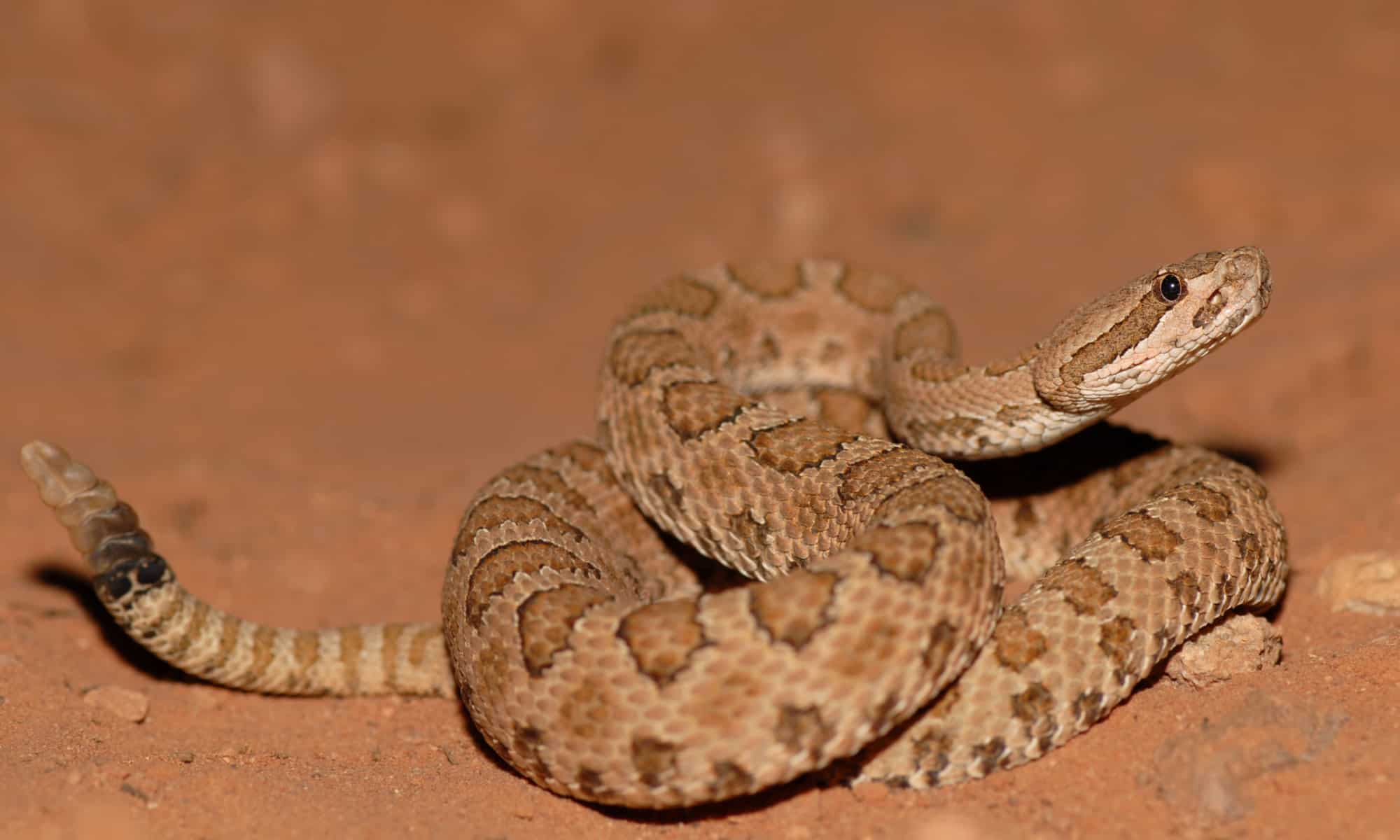
Like other rattlesnakes, midget faded rattlesnakes are pitvipers and have heat-sensing organs called loreal pits between their nostrils and eyes. Their pupils are elliptical, and their eyes are hooded with an extra scale. Most individuals of this species are around 24 inches long, but sometimes one will reach 30 inches in length.

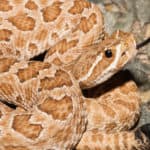
They have dark stripes extending back from their eyes, downward towards the back of their mouths, and dark-ringed liver-shaped dorsal (back) blotches. These snakes have a light brown base color (almost like that of beach sand), but can also be yellow, peach, or reddish. Their dorsal patterns are often difficult or impossible to see in older individuals, but this species is born with vivid markings that fade as the snake matures. Midget faded rattlesnakes have dark-rimmed blotches on their backs that almost become bands towards the tail which ends in a rattle. They also have blotches on their sides which aren’t always outlined.
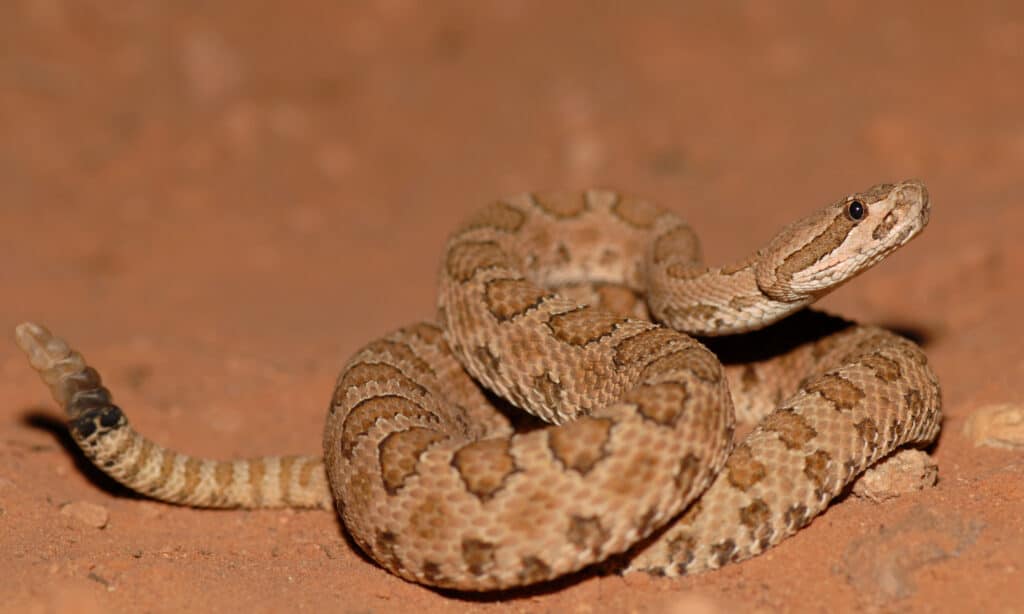
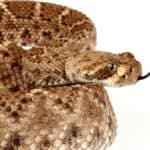
Midget Faded Rattlesnake showing rattle

Midget faded rattlesnakes aren’t aggressive and try to hide before biting.

Pictures and Videos of Midget Faded Rattlesnakes
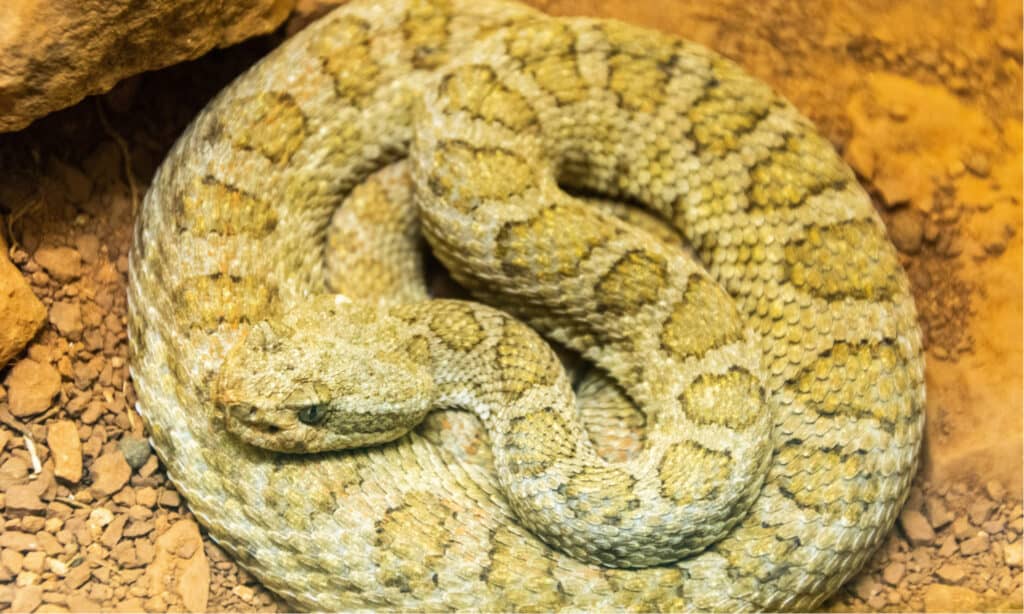
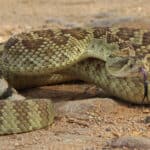
Coiled Midget Faded Rattlesnake

This species has a couple of nasty toxins. One attacks the nervous system, and the other attacks muscle tissue.

https://youtu.be/3X6SJ7lP2bw?t=170
Midget faded rattlesnakes aren’t aggressive at all and will attempt to escape before biting.

Venom: How Dangerous is the Midget Faded Rattlesnakes

According to Wyoming Fish & Game, faded midget rattlesnakes are one of the most dangerous of all rattlesnakes. The LD50 of their venom suggests it is more toxic than a few of the Old World cobras. This being the case, they have some potent venom.

Midget faded rattlesnakes carry concolor toxin, a neurotoxin unique to the species, and a potent myotoxin. Interestingly, even though their preferred prey changes as they mature, these snakes’ venom toxicity doesn’t appear to change.

Wyoming Fish and Game rightly points out that most bites occur because the individual did something to the snake. This is not an aggressive species and the general public has no business handling it. A bite from one will send you to the hospital. While this snake is small for a rattlesnake, its venom is highly toxic, and symptoms of envenomation can include intense pain, swelling, blistering, nausea, and vomiting.

Midget-Faded Rattlesnakes Behavior and Humans

This shy little rattlesnake hides in crevices created by rock outcrops and under sagebrush. They’re exclusively found in the Green River Formation, which extends across Colorado, Wyoming, and Utah. There’s some speculation that there could be a population of midget faded rattlesnakes in far northeast Arizona, but it’s not confirmed.

Unless you’re out exploring Moab or other similarly remote areas, you’re unlikely to ever see one. Even so, they’re so reclusive that you could be standing near one and not know it. This species does rattle but is more likely to use its excellent camouflage to stay hidden.

Still, if you encounter one of these rare reptiles, give it some space and it will happily go along its way without bothering you.

View all 329 animals that start with M

Sources

  1. Midget Faded Rattlesnake Bite | DovMed / Published March 18, 2019 / Accessed April 13, 2022
  2. Save the Buzztails / Accessed April 13, 2022
  3. Wyoming Fish & Game / Accessed April 19, 2022
  4. Colorado Partners in Amphibian and Reptile Conservation (COPARC) / Accessed April 19, 2022
  5. Orianne Society / Accessed April 19, 2022
  6. Utah Species of Greatest Conservation Need List / Accessed April 19, 2022
  7. CONSERVATION AND MANAGEMENT OF MIDGET FADED RATTLESNAKES STATE WILDLIFE GRANT / Accessed April 19, 2022
  8. Wyoming Fish & Game / Accessed April 19, 2022
Gail Baker Nelson

About the Author

Gail Baker Nelson

Gail Baker Nelson is a writer at A-Z Animals where she focuses on reptiles and dogs. Gail has been writing for over a decade and uses her experience training her dogs and keeping toads, lizards, and snakes in her work. A resident of Texas, Gail loves working with her three dogs and caring for her cat, and pet ball python.
Connect:

Thank you for reading! Have some feedback for us?


Midget Faded Rattlesnake FAQs (Frequently Asked Questions)

Yes, and studies suggest that its venom may even be more dangerous than that of some of the Old World Cobras.