
Monkeys come in all shapes and sizes and live all over the world. Most monkeys live in Africa, Asia, Central America, and South America. While many hang from branches and leap from tree to tree, several monkey species are terrestrial. Some wild monkeys even spend their time in human-populated areas. Monkeys are incredibly social animals that compete, communicate, and cooperate in many fascinating ways. Although we commonly think of monkeys as being relatively small, some monkeys can weigh over 100 pounds. Read on to learn about the world’s 10 largest monkeys based on maximum weight.
#10. Tibetan Macaque
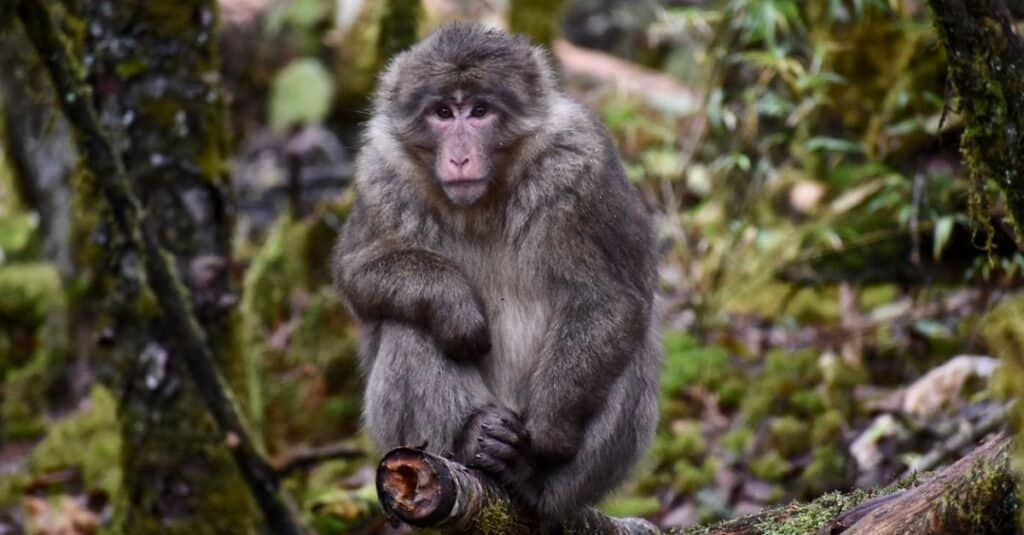
The Tibetan macaque is the largest macaque species.
©PhotoZeli/Shutterstock.com
Tibetan macaques are the largest macaque species and one of the largest monkeys in Asia. Males weigh up to 40 pounds, while females weigh up to 28 pounds. These monkeys can be found in Tibet and northern China. The conservation status of Tibetan macaques is near threatened, which means they are at risk of becoming endangered in the future.
Tibetan macaques also have very interesting behavior. Scientists have documented distinct communications that each serve a different purpose, including a coo, squeal, squawk, scream, growl, bark, weep, and pant. They also use different facial expressions to communicate and are considered to have a more diverse variety of communication than any other macaque. Competition between males is also particularly fierce. Males are known to viciously fight other males in the dominance hierarchy for access to better food resources and mates.
#9. Gelada
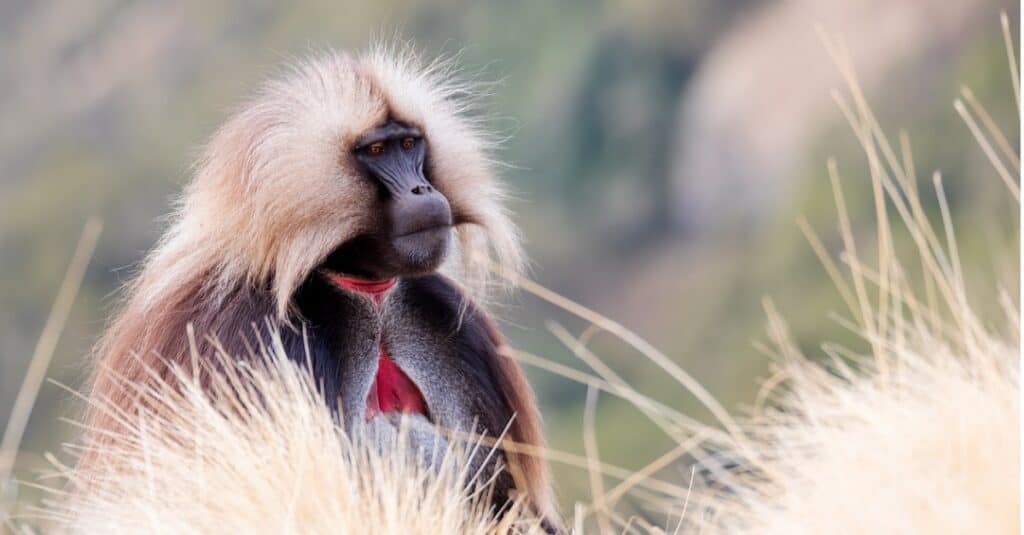
Gelada monkeys are sometimes called bleeding-heart monkeys because of the patch of red skin on their chests.
©Artush/Shutterstock.com
The gelada, sometimes called the bleeding-heart monkey due to the patch of red skin on their chests, can weigh up to 45 pounds. This monkey is a terrestrial species that inhabits the grasslands of Ethiopia. Their diet consists almost entirely of grass. Geladas currently have a conservation status of least concern and are only threatened by human-induced habitat destruction.
Geladas have an incredibly complex, multi-tiered social system and unique social behaviors. When a gelada is threatened or displays aggressive behavior, it will flip its upper lip over its nose to expose its large teeth. This posturing is common between competing males and can result in a physical confrontation. Males also demonstrate their quality as mates with the vibrant red patch on their chests. This red, hairless area becomes brighter in males as hormone levels rise, signaling when they are most fertile. Females also have this red patch, but it is duller. Blisters will form on the female’s red chest when she is most receptive to mating.
#8. Proboscis Monkey
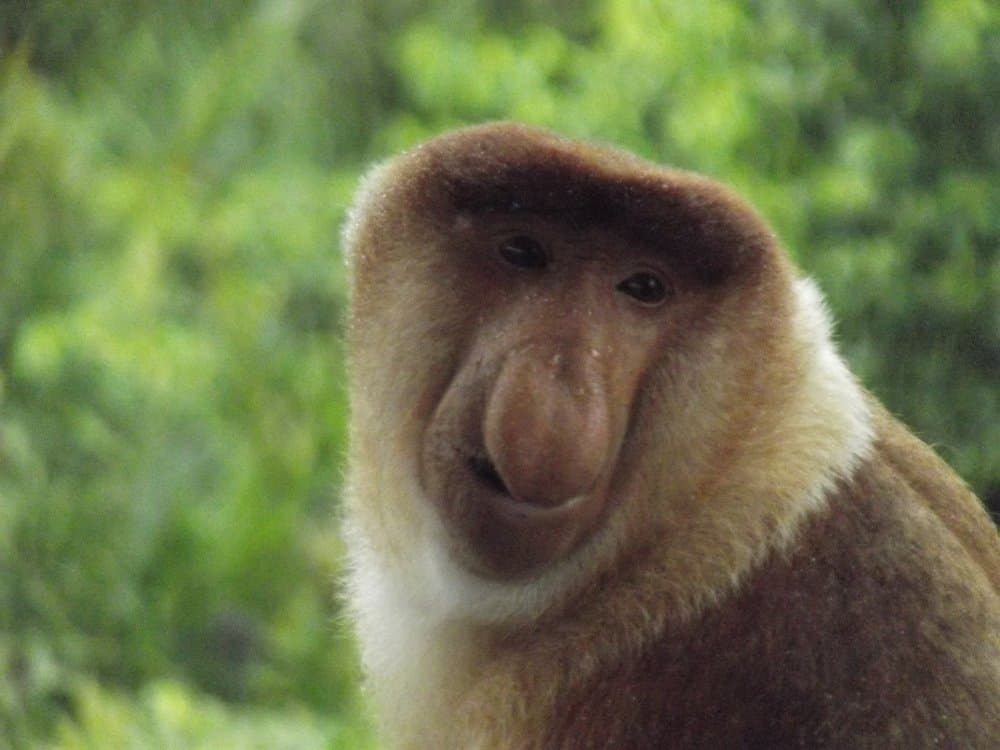
The male proboscis monkey’s large nose helps its calls resonate.
©Wendy Bird – Copyright A-Z Animals
Proboscis monkeys, appropriately nicknamed long-nosed monkeys, are only found in Borneo, Malaysia, and Indonesia. The males can reach up to 50 pounds, but the females are much smaller, with a maximum weight of just 22 pounds. These monkeys are classified as endangered, largely due to habitat loss from logging, oil palm plantations, and hunting.
The proboscis monkey is well known because of its incredibly unique nose. It is theorized that females prefer males capable of producing louder vocalizations. The larger nose facilitates emitting louder calls, which may make males more attractive mates. This one-of-a-kind nose can exceed 4 inches in length and often hangs below the mouth. Female noses are also large relative to other monkeys, although they are not nearly as large as the noses of the males.
#7. Yellow Baboon
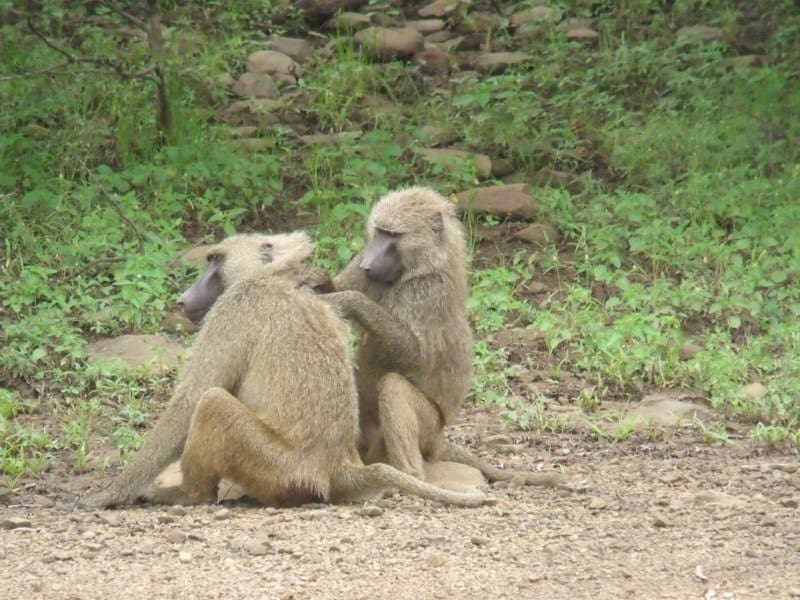
The yellow baboon lives in troops of up to 200 members.
©Florence Bond – Copyright A-Z Animals
Yellow baboon males can weigh up to around 57 pounds, while females weigh up to 24 pounds. The yellow baboon is named for its distinctive yellow hue and can be found in savannas in eastern Africa including Kenya, Tanzania, Zimbabwe, and Botswana. The conservation status of the yellow baboon is least concern. Yellow baboons have a diverse diet, eating many different plant species, as well as meat.
Yellow baboons live in a social hierarchy where there is a dominant male and inferior males that must compete. Each troop can consist of 8 to 200 baboons and includes males and females. Rank in the hierarchy greatly impacts the reproductive opportunities available to an individual, so competition is fierce. One interesting behavior documented in yellow baboons is lower-ranking males will approach higher-ranking males while holding an infant above their heads. This is a way of showing they do not intend to attack or fight.
#6. Nepal Grey Langur
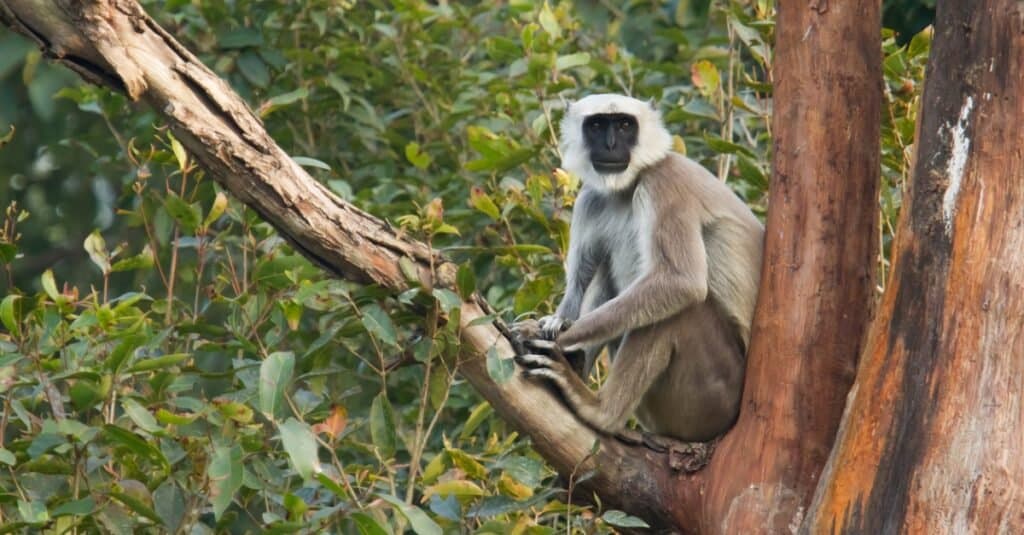
Nepal grey langurs spend time on the ground and in the trees.
©iStock.com/Utopia_88
The largest Nepal grey langur ever recorded was 58 pounds; however, males typically weigh around 40 pounds and females weigh up to 35 pounds. These langurs live in the Himalayan region in Nepal, Tibet, India, and Pakistan. They typically inhabit forests at 1,500 to 4,000 feet in altitude. Leaves make up most of their diet, but they also consume other parts of plants, including roots, flowers, and fruit. These monkeys have a conservation status of least concern.
Nepal grey langurs are both arboreal and terrestrial which means they spend time on the ground and in trees. They frequently run on all fours and can even leap up to 15 feet. They are common in developed areas populated by humans and sometimes sleep on telephone poles instead of high up in a tree. Nepal grey langurs are also known to bark, scream, and hiccup as forms of communication with others of the same species.
#5. Hamadryas Baboon
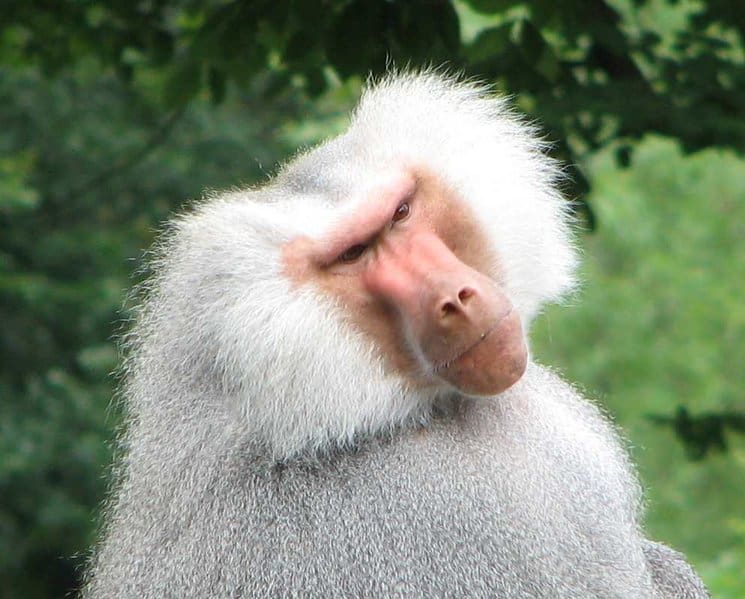
Unlike many other monkey species, hamadryas baboons have a patriarchal hierarchy.
In the wild, male hamadryas baboons typically weigh up to 46 pounds. However, in managed care, they can reach up to 66 pounds. Females, however, only reach a maximum weight of 33 pounds. These baboons primarily live in Eritrea, Ethiopia, Djibouti, and Somalia. The habitats of these terrestrial monkeys consist of dry, arid savannas and rocky areas. Hamadryas baboons appear frequently in ancient Egyptian art and were considered sacred. Unfortunately, they are now extinct in Egypt. However, their conservation status is currently least concern.
The hamadryas baboon is different from other baboons and macaques because of their unique social structure. Many monkeys, including other baboon species, have a matriarchal hierarchy where females hold positions of power. Hamadryas baboons, however, only have a patriarchal hierarchy. Males of this species frequently get into violent fights over the females they control and will even attempt to steal females from other groups.
#4. Olive Baboon
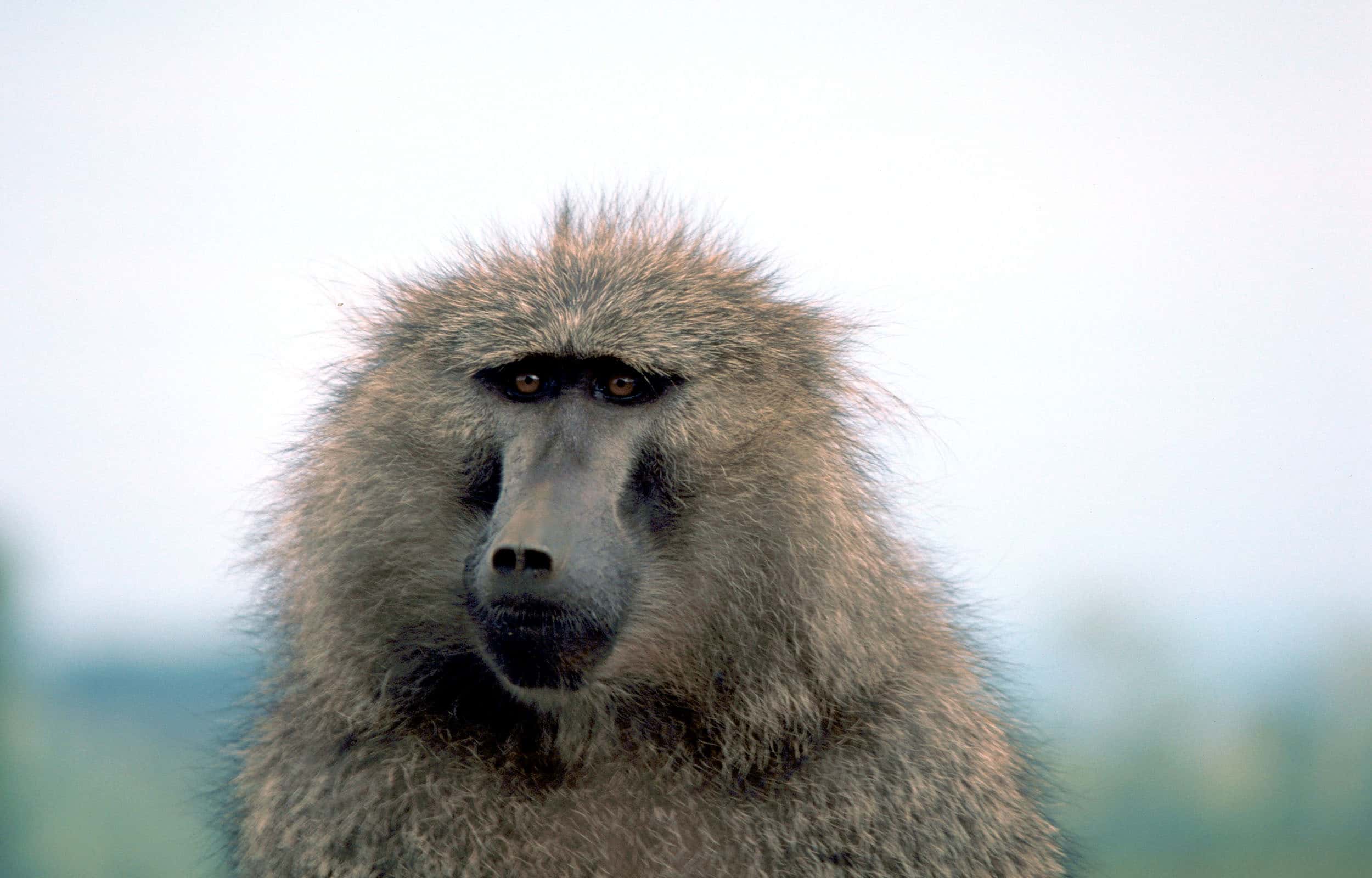
Olive baboons live in a wide variety of habitats, from savannas to tropical forests.
The male olive baboon can weigh an impressive 82 pounds. However, female olive baboons typically only weigh around 35 pounds. Olive baboons have the largest geographical range of the baboon species and inhabit 25 African countries. They typically live in savanna or forest-type ecosystems in large groups of up to 150 individuals. The conservation status of this baboon is least concern.
As the most widespread species of baboon, olive baboons are highly adaptable. Although they are most commonly found in savannas, they are also known to inhabit temperate grasslands, riparian forests, rocky cliff regions, evergreen forests, and even tropical forests in Uganda. These conditions in these regions range from drought to abundant rainfall, mild, 50°F temperatures to scorching 104°F temperatures, and dense tree cover to intense direct sunlight.
#3. Chacma Baboon
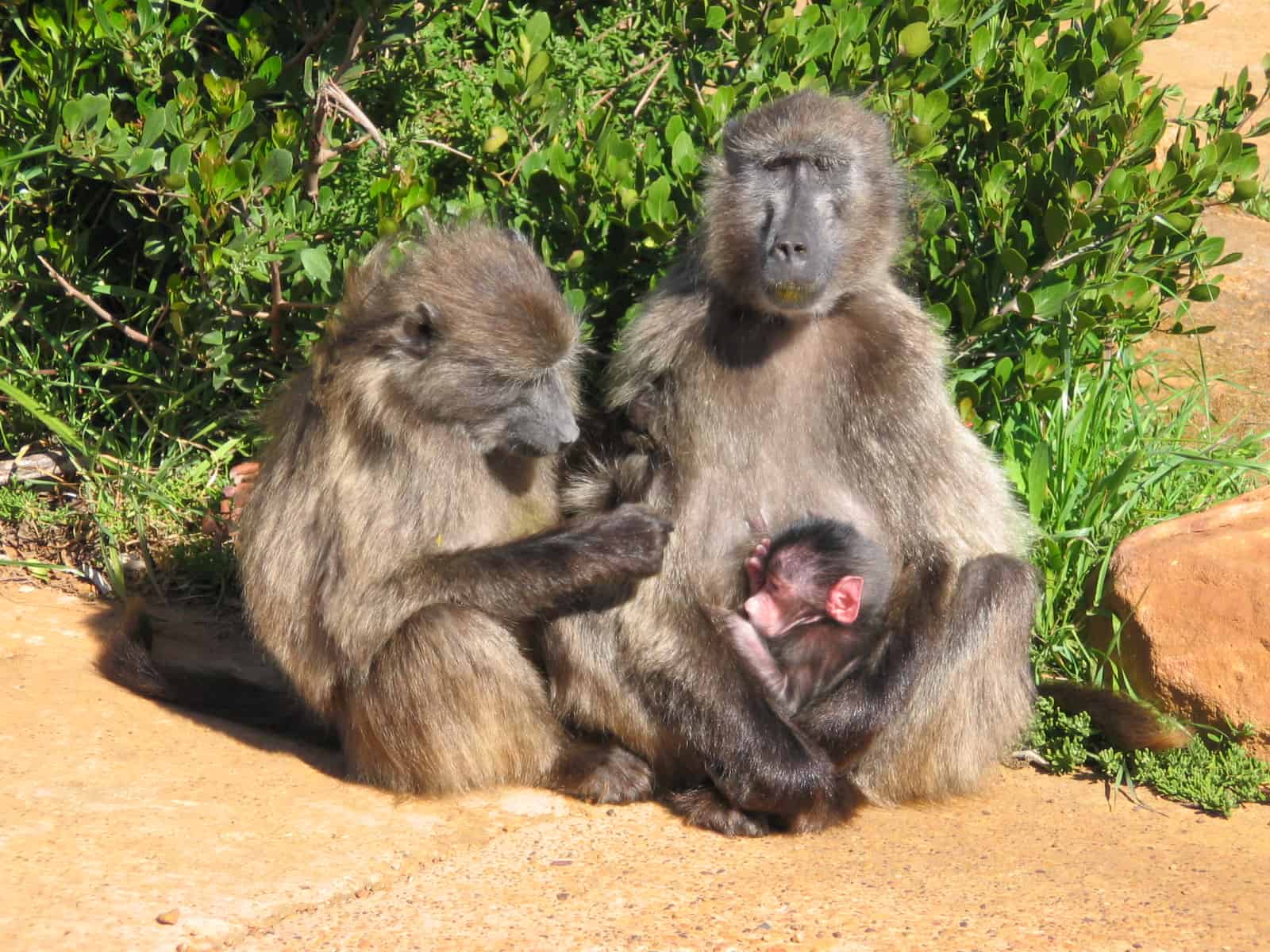
The chacma baboon is found across southern Africa.
Male chacma baboons can weigh a massive 97 pounds, but females are much smaller at a maximum of 37 pounds. Chacma baboons are the largest species of baboon and are the largest monkey in the world by length. An adult baboon’s body length can be up to 45 inches with a tail length of up to 33 inches. This baboon is found in southern Africa including South Africa, Angola, Zambia, Botswana, Zimbabwe, and Mozambique. The chacma baboon has a conservation status of least concern.
Despite their incredible size, chacma baboons are popular prey. A common predator of the chacma baboon is the leopard. Studies have shown that just over 20% of leopard kills are chacma baboons. The baboons use the trees as cover and for sleeping. They generally travel only about a mile from their sleeping sites, but may rotate between different locations.
#2. Drill
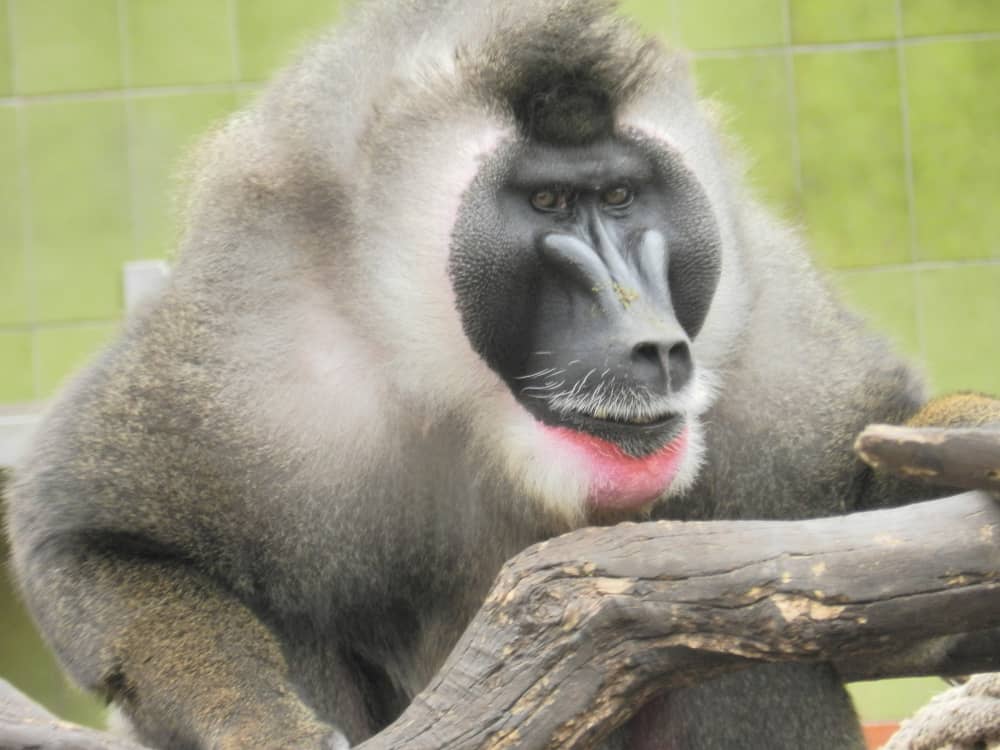
Drill monkeys are one of Africa’s most endangered animals, with less than 4,000 individuals left in the wild.
©Millie Bond – Copyright A-Z Animals
The drill monkey is the second largest monkey in the world, weighing up to 110 pounds. However, the females typically weigh much less at up to only 28 pounds. Drills are regarded as one of Africa’s most endangered mammals, with less than 4,000 existing in the wild. They are found in small areas of rainforest in Nigeria, Cameroon, and Equatorial Guinea.
Drills are less well known compared to the closely related mandrill, but they have similarly interesting features. A male drill’s buttocks are incredibly colorful, displaying shades of lilac, red, blue, and purple. The intensity of this coloration indicates a male drill’s social rank within the troop. A male’s genitals are also shades of red and lilac. Females, however, are less vibrantly colored. They lack the pink coloration on the chin and have a plain, grey-brown coat.
#1. Mandrill
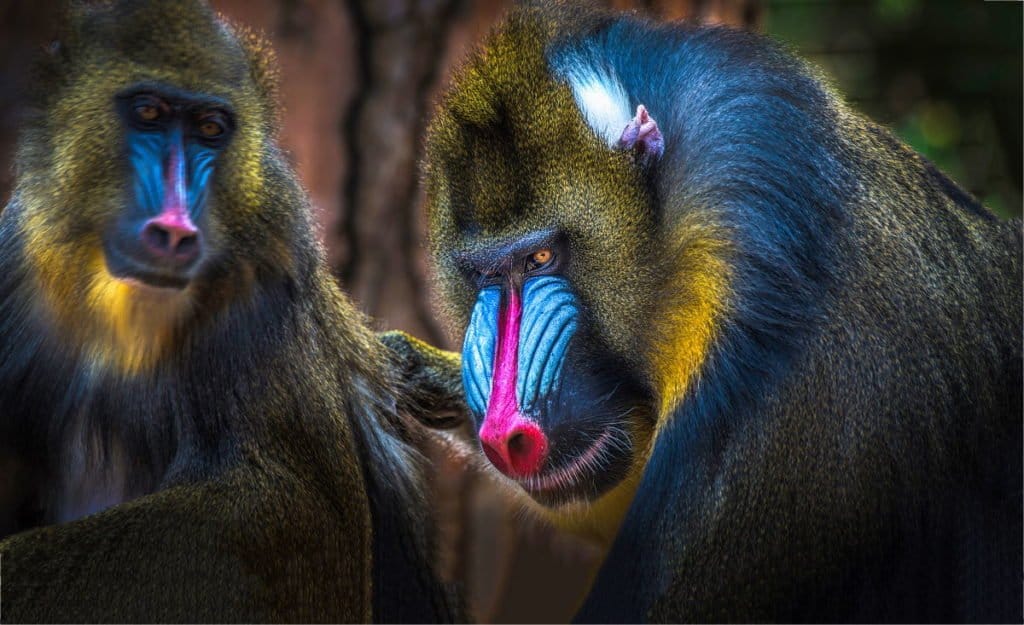
A male mandrill has distinctive face and body coloration.
©Nikolay 007/Shutterstock.com
The world’s largest monkey is the mandrill which can weigh up to an incredible 119 pounds. The mandrill is easy to identify from its distinctly colorful face. These beautiful and intimidating monkeys can be found in the tropical rainforests of Equatorial Guinea, southern Cameroon, Gabon, and Congo. The mandrill is currently listed as a vulnerable species. Mandrills are among the most sexually dimorphic mammals in the world. While the males can weigh over 100 pounds, the average adult female only weighs around 27 pounds. The male’s bright facial colors are also absent in females.
Mandrills live in exceptionally large groups called “hordes.” A horde averages about 620 monkeys but can reach as many as 845. The largest horde on record — and the largest group of nonhuman primates ever recorded — was documented in Lopé National Park in Gabon and consisted of over 1,000 individuals. Hordes typically consist of females and their dependent offspring. Males are solitary and only join hordes when females are receptive to mating. Conflicts between males are infrequent, but when they do occur, they can be deadly.