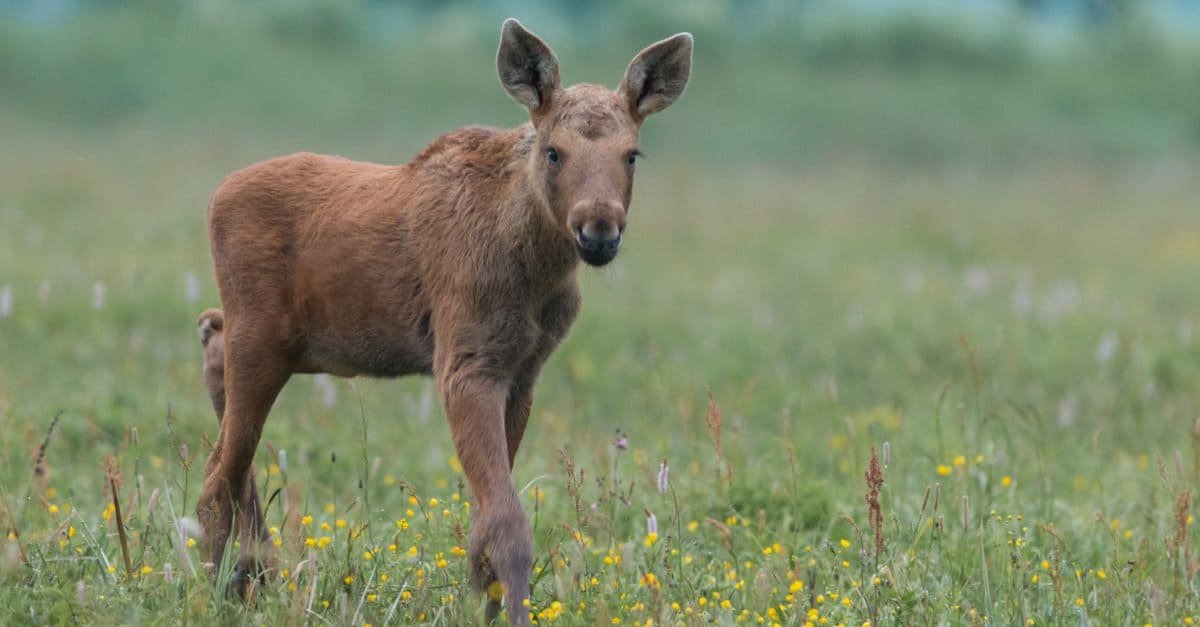

Moose are the largest members of the deer family. Moose babies are not only adorable; they are miraculous mammals that can run faster than humans at just three days old. Did you know that all moose babies are born nearly color blind? Keep reading to discover eight incredible facts about baby moose and check out some adorable pictures of these cute animals.
#8: A Week-Old Moose Baby Can Outrun a Human
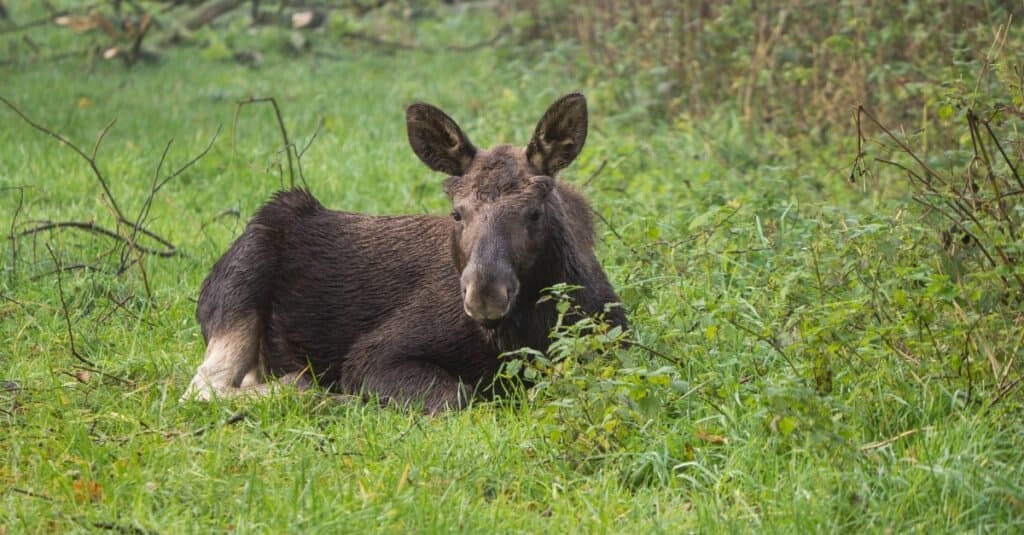
A moose baby can run faster than a man within a week of birth.
©iStock.com/hipproductions
If you tried to race a moose baby, you wouldn’t have a chance of winning. A newborn moose baby can run faster than an adult human male by the time they are a week old. Moose can also jump anywhere from 8 to10 feet high.
#7: Baby Moose Are Good Swimmers
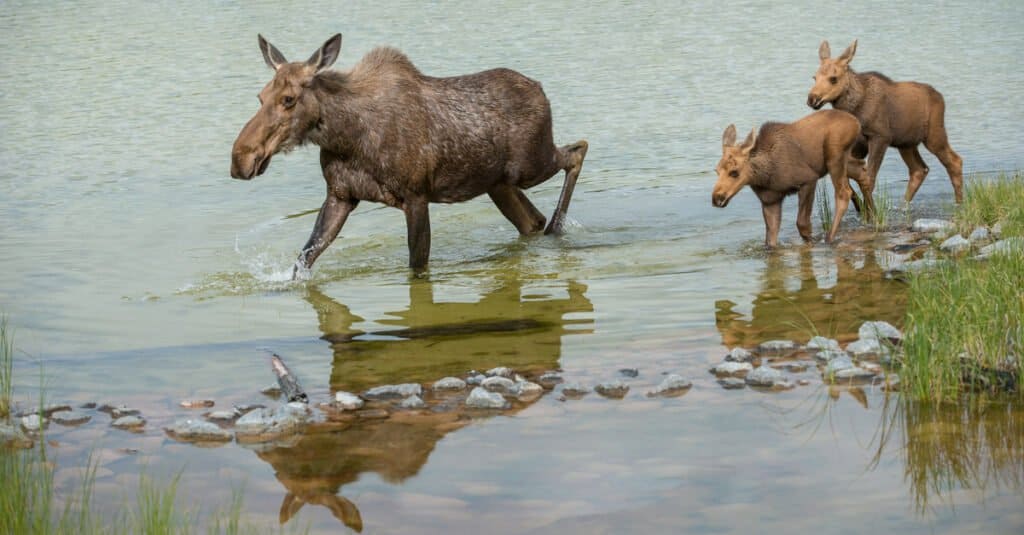
Mothers lead their babies into the water to avoid predators.
©Ghost Bear/Shutterstock.com
Did you know that moose calves are also excellent swimmers? Adult moose can swim up to 6mph, and their calves are always close behind. Moose can even dive underwater. Mother moose, called cows, are known to take their babies into the water to evade predators.
#6: A Baby Moose Weighs Up to Thirty-Five Pounds at Birth
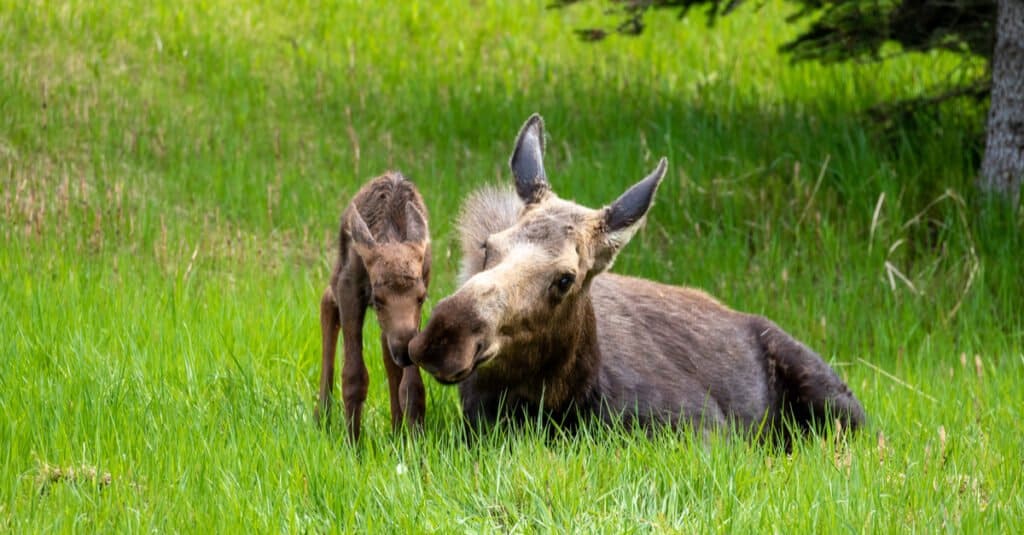
Moose gain more than 10 times their birth weight in the first five months.
©Mark A. McCaffrey/Shutterstock.com
Moose are born weighing around 28 to 35 pounds. On rare occasions, some large individuals can weigh as much as 45 pounds. Moose twins usually weigh approximately 14 pounds each. During their first five months, moose gain more than 10 times their birth weight, with some calves reaching as much as 500 pounds.
#5: Young Moose Have Bad Eyesight
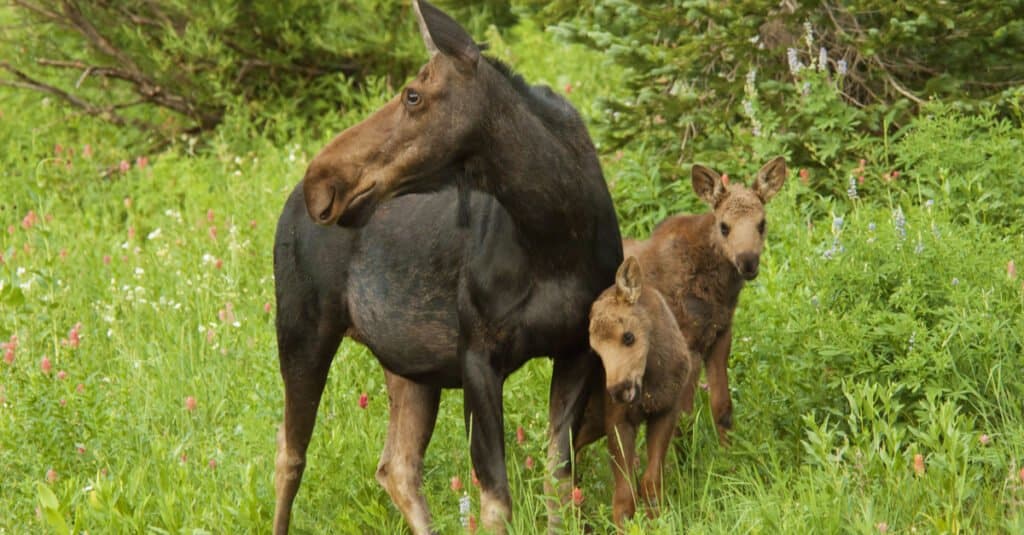
Baby moose rely on their senses of smell and hearing.
©MintImages/Shutterstock.com
When moose are born, they have poor eyesight. They are nearsighted, which means they cannot see very well at a distance. Luckily, they are born with excellent senses of smell and hearing, so they can navigate the world around them using these senses. Moose eyes are also thought to have a shortage of cone cells, which are responsible for detecting and interpreting colors. This means that all moose have limited color vision.
#4: Moose Babies Cry Like Human Babies
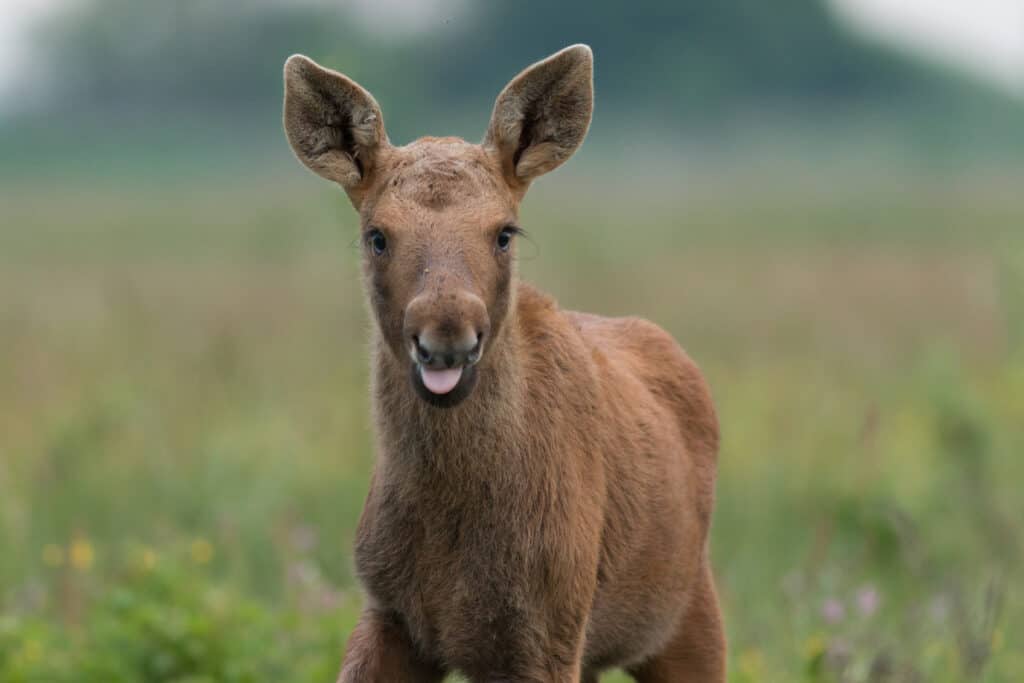
Moose calves cry for their mothers when in distress.
©Szczepan Klejbuk/Shutterstock.com
Baby moose are quick to vocalize when they need help or support from their mothers. When they are newly born, moose make a grunting sound to get their mother’s attention. As they grow older, they learn to make a wailing sound similar to a baby’s cry. Like human babies, moose babies cry when they are hungry, lonely, distressed, or otherwise upset. Moose babies may also call when they lose sight of their mothers.
#3: Moose Aren’t Born with Antlers
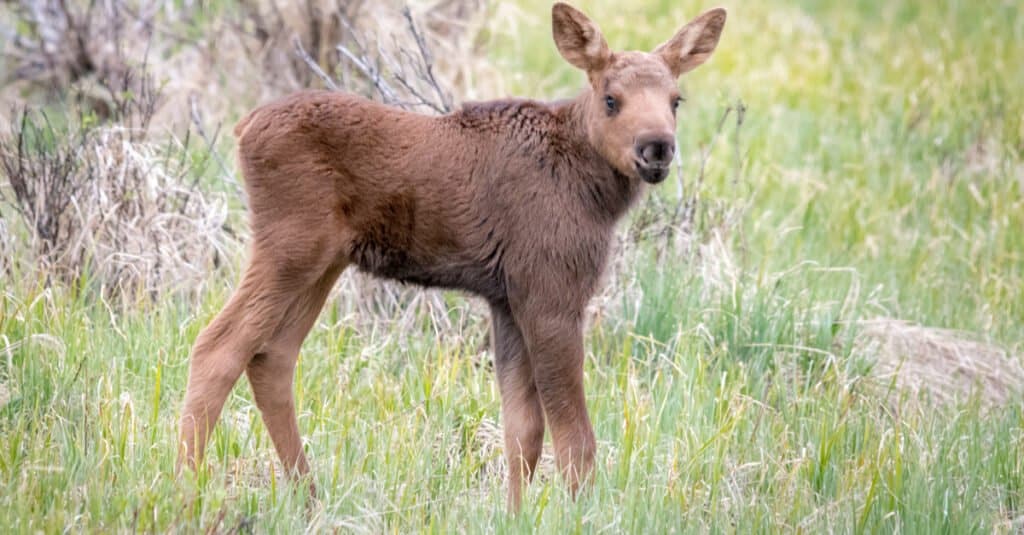
Male moose calves don’t have antlers until they are around a year old.
©Eivor Kuchta/Shutterstock.com
Perhaps one of the most distinctive features of a bull moose is its antlers. However, did you know that moose calves are not born with antlers? Male moose don’t start to grow their antlers until their first birthday. Until then, young moose have “buttons” on their heads where their antlers will come in. Male moose also grow and shed their antlers every year.
#2: Baby Moose Are Born in the Spring
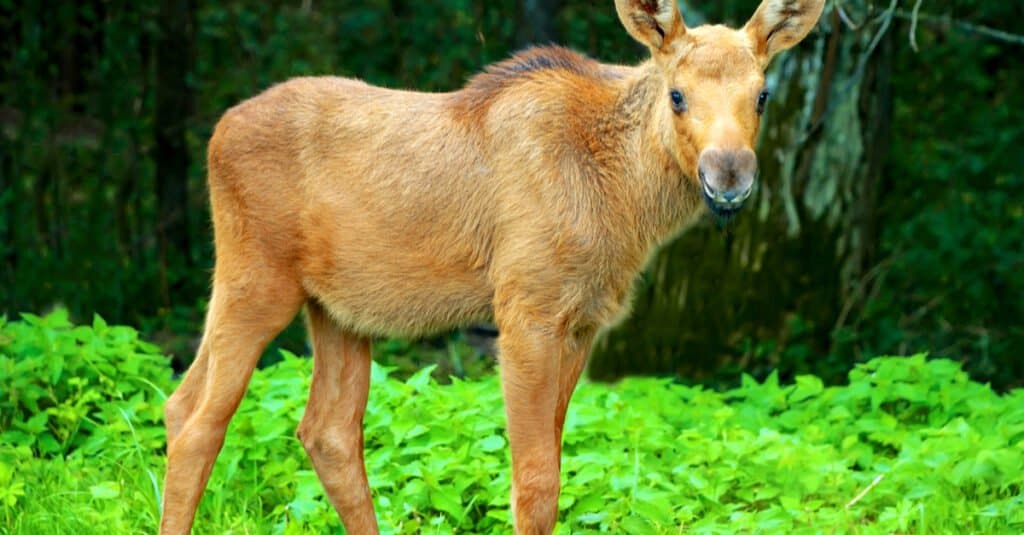
All moose calves are born in the spring because they were conceived the previous fall.
©Volodymyr Burdiak/Shutterstock.com
All moose calves are born in the spring. Their mothers mate to conceive them during the breeding season, which occurs in mid-September through mid-October. After a gestation period averaging about 230 days, the mother gives birth to one or two calves in May or June. Twins are common if the mother is healthy.
#1: Moose Are Solitary Except When They Have Babies
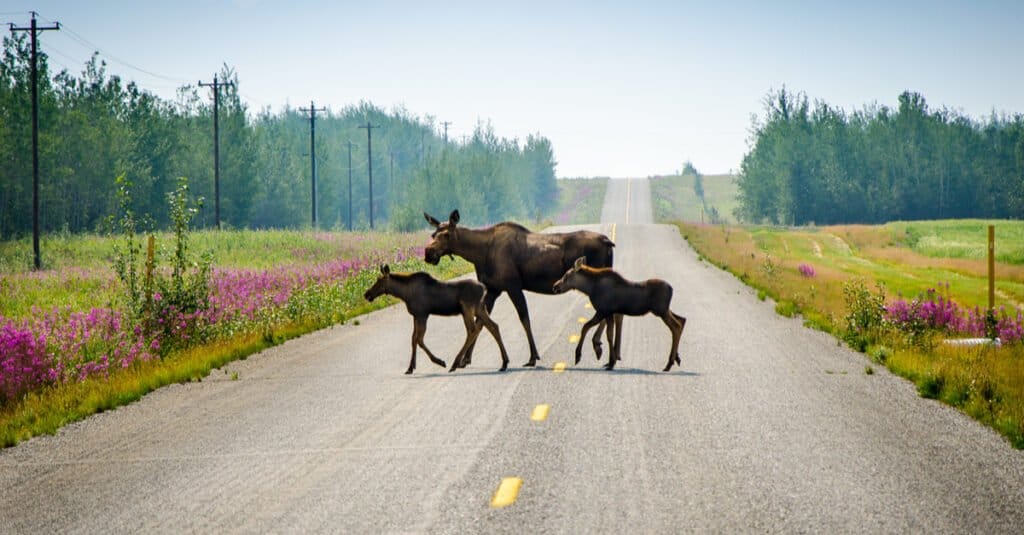
Female moose will chase off their male calves before the next mating season.
©Tracey Mendenhall Porreca/Shutterstock.com
The only group of moose you’ll see in the wild is a mother with her moose babies. Since moose are solitary animals, they only travel together with their babies to protect them from predators and teach them how to survive. Before the next mating season, the mother will start to push away the male yearlings. However, female moose calves are known to stay with their mother for several years.