Quick Take
- The 'black panther' isn't a species at all. So what is it?
- One panther trait defies what you'd expect from a cat. It may surprise you.
- Why does a rainforest favor dark coats? Nature has a surprising logic.
- Stories of a certain panther roaming North America abound. Experts say something else is going on.
Although the term black panther is a fixture in the lexicon, it is not a single species. Panthera is a genus of big cats, containing lions, tigers, jaguars, and leopards. A black panther is, rather, a dark-colored (melanistic) variation of any wild cat species, commonly jaguars and leopards. Panthers are solitary animals. They are stealthy hunters that prey on medium- to large-sized herbivores. Continue reading to discover 6 interesting facts about panthers.
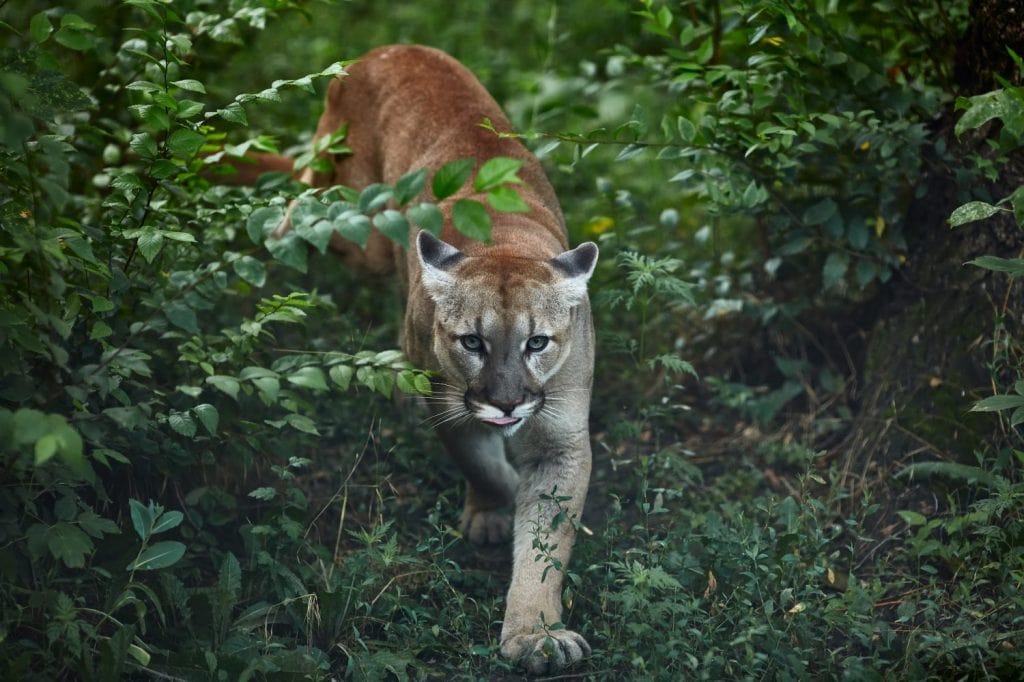
Panther is a regional name used for pumas/cougars (Puma concolor) in North America.
©Evgeniyqw/Shutterstock.com
Panthers Love Water and Are Great Swimmers
Unlike most domestic cats, panthers are strong swimmers. Both leopards and jaguars are excellent swimmers and often cross rivers to hunt or chase prey. Along with tigers, jaguars are the most aquatic big cats. They actively swim to cool off, play, cross wide rivers, and hunt aquatic prey such as caimans, fish, and capybaras.

Panthers are excellent swimmers compared to most house cats.
©iStock.com/Shannon Mullen
Leopards are strong swimmers that will cross rivers or wade in to cool down, but they generally prefer hunting on land or in trees.
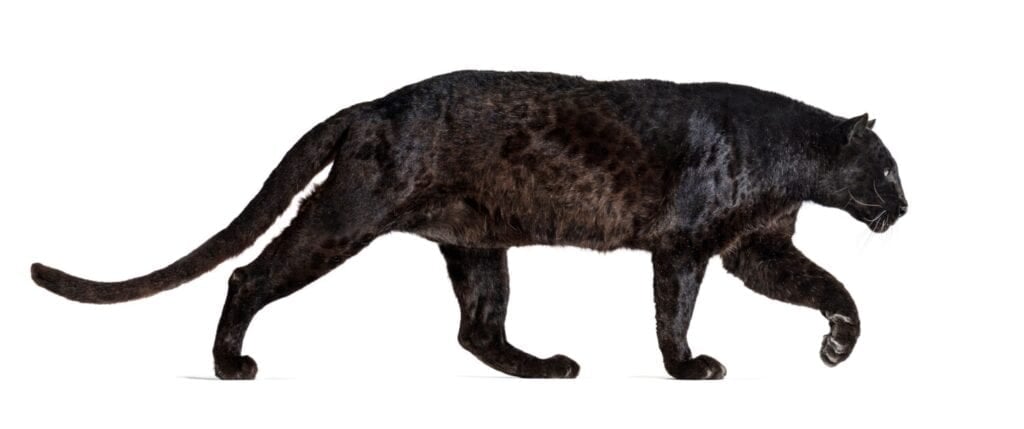
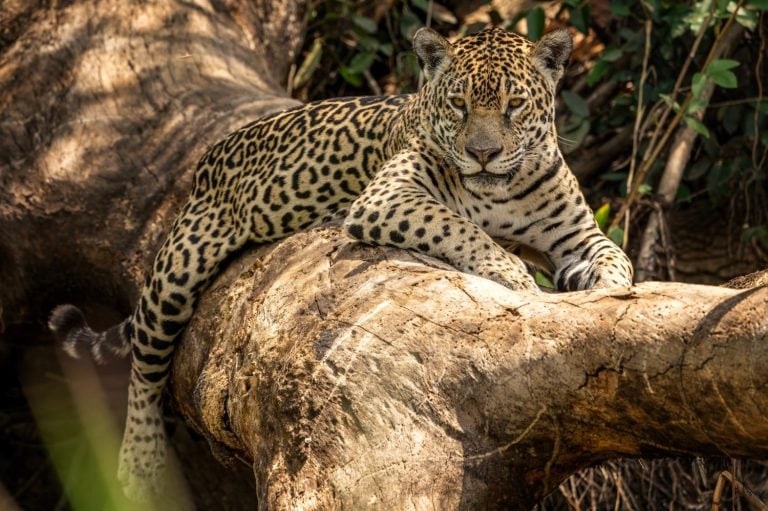
Some big cats, especially those that live in the understory of dense rainforests, produce excessive dark pigment (melanin) that causes a dark coat, on which spots or rosettes are only visible in bright or angled light.
©Eric Isselee/Shutterstock.com
A Panther’s Dark-Colored Hair Is a Genetic Mutation
Black panthers are regular leopards or jaguars. Their black color is the result of a genetic mutation called melanism. Panthers with melanism produce excess dark pigment (melanin), giving them black or nearly black fur.

Melanism is a genetic mutation.
©Eric Isselee/Shutterstock.com
Melanism is strongly correlated with, and naturally selected for, panthers that live in dense, moist rainforests compared to those that live in open habitats. While the underlying genetic mutations that result in melanism happen randomly, natural selection favors dark-coated big cats in shaded rainforest understories, making the trait far more common there.
Panthers Are Stealthy Carnivores
Panthers are carnivores that prey on medium- to large-sized herbivores. However, where they live determines their diet. Leopards feed on a wide variety of animals, including deer, rabbits, antelopes, warthogs, wild boars, and birds. Jaguars eat over 85 different animal species, ranging from large mammals to armored reptiles and fish.

Panthers are apex predators.
©J.A. Dunbar/Shutterstock.com
Panthers Are Fast
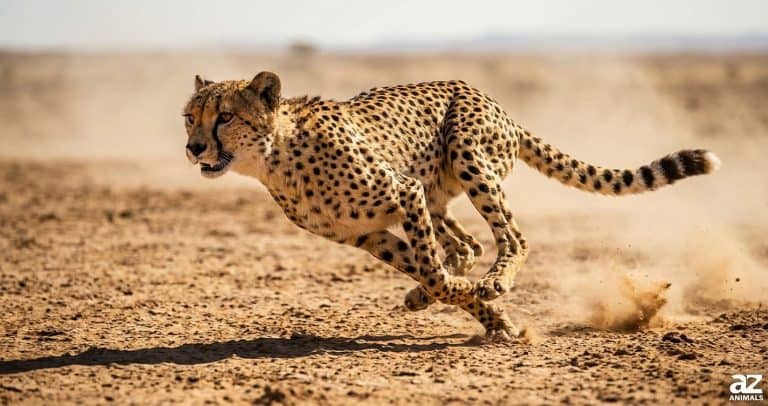
In addition to their ability to blend in, panthers can achieve bursts of speed up to 35 miles per hour (mph), which allows them to catch prey like antelopes and deer. Because panthers are ambush predators rather than endurance runners, they only maintain these speeds for a few seconds during a final pounce.
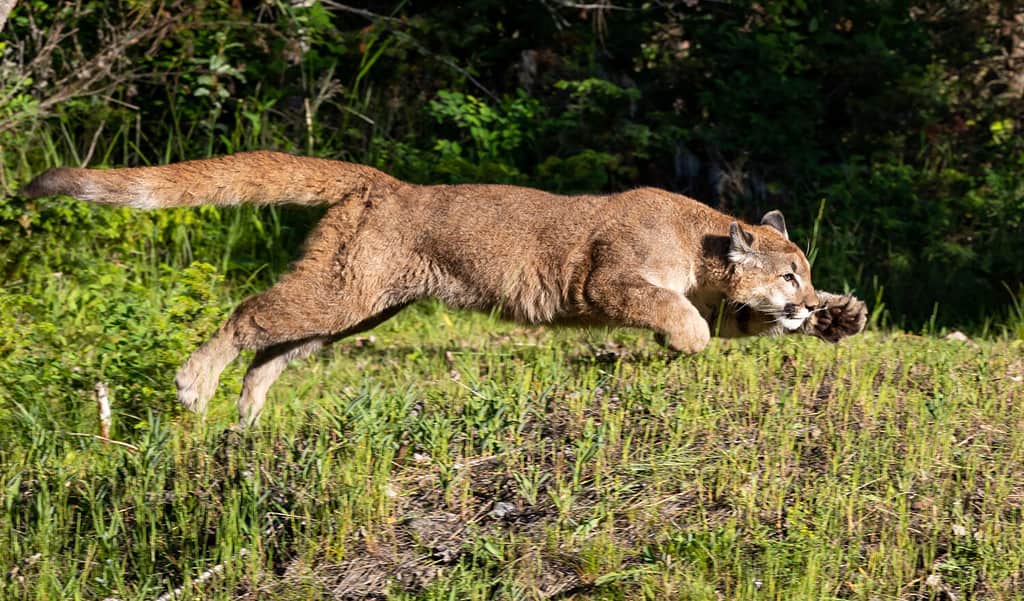
Panthers use their great speed to chase down their prey.
©Holly S Cannon/Shutterstock.com
Panthers (particularly leopards) are also excellent climbers. Their powerful jaws allow them to drag prey into tree branches.
Panthers Are Solitary Except in Mating Season
Panthers are solitary creatures that prefer to hunt, travel, and live alone, except when they are mating. When a panther is ready to mate, an adult female panther leaves a scent trail for the male to follow. She also makes a rasping sound to notify the male of her location. Once they have mated, they will go their separate ways.
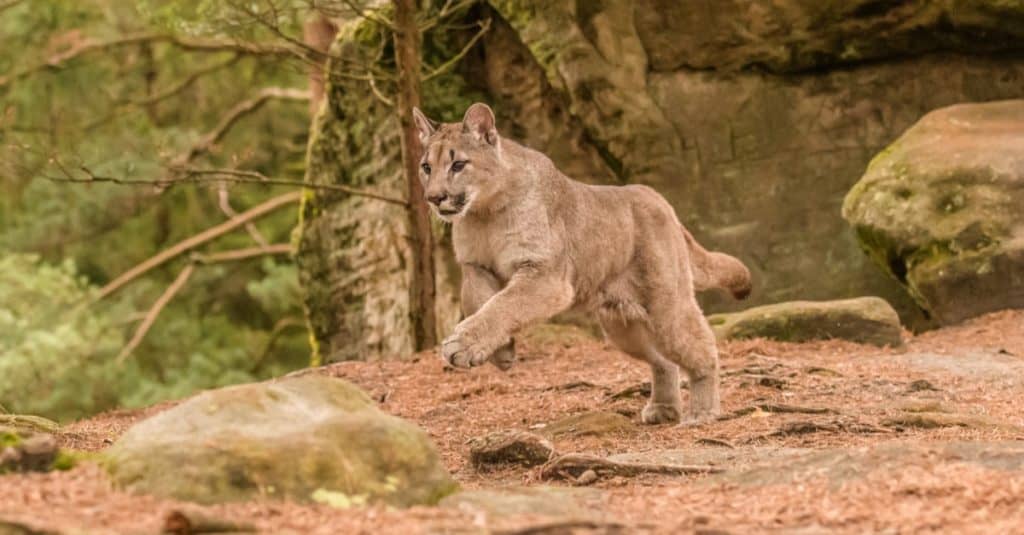
Panthers have a gestation period of approximately three months.
©Vaclav Sebek/Shutterstock.com
Panther cubs typically stay with their mother for 1.5 to 2 years before leaving to establish their own territories. Because fathers play no role in raising the young, the mother handles all feeding, protection, and hunting lessons alone.
There are No Records of Black Panthers in North America
As many fascinating facts as there are about panthers, these dark, stealthy animals also generate a lot of controversy. Many encounters with black cats have been reported throughout history. In the United States and Canada, however, no wild black panther has ever been confirmed, and no black cougar has ever been documented.
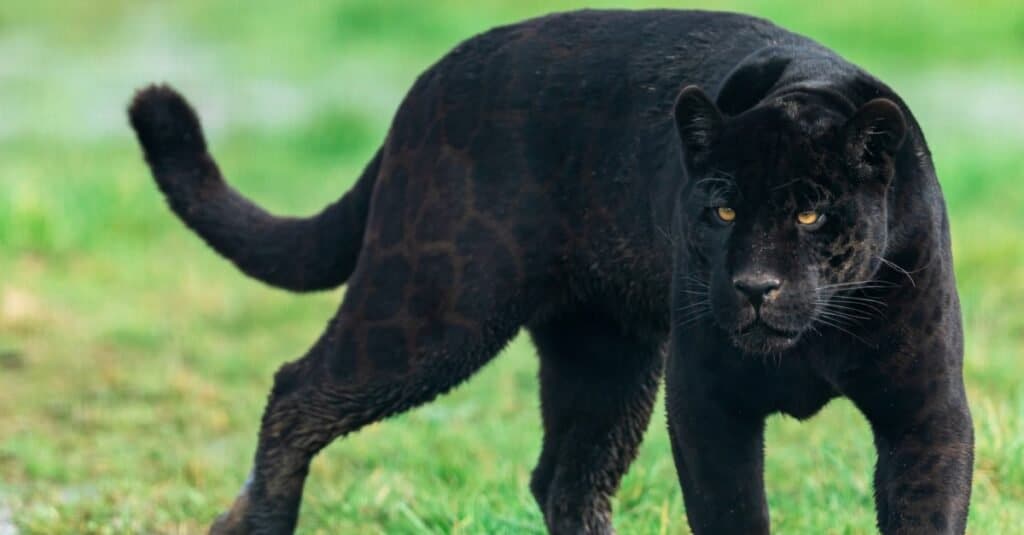
The North American black panther is classified as a cryptid.
©AB Photographie/Shutterstock.com
Therefore, experts concur that they are not present in the United States or Canada. Any related stories are attributable to a mix-up in identity or a misinterpretation of the animals’ size. In response to this, the North American black panther is classified as a cryptid, or a creature whose presence is yet to be verified.