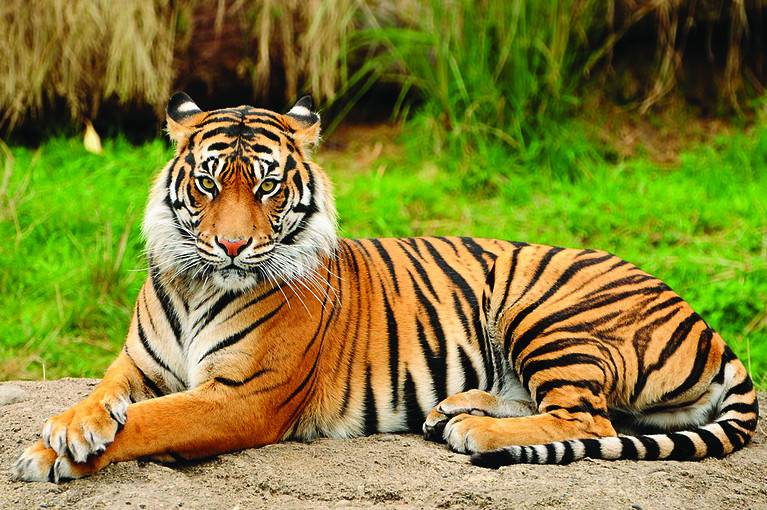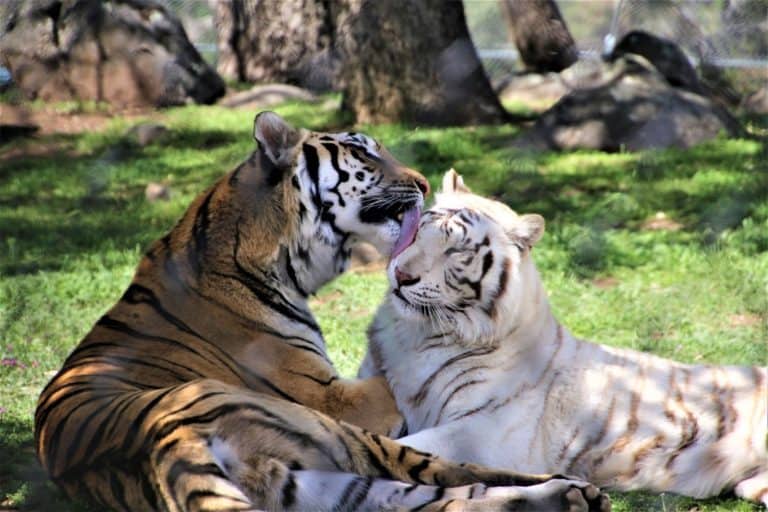

Tigers are among the most iconic and awe-inspiring big cats, instrumental figures in mythologies, cultures, and histories across the globe. Yet their numbers have dwindled dramatically over the past few centuries, with fewer than 5,000 remaining in the wild today due to habitat loss and poaching. While tigers are not native to Africa, the vast continent is home to a handful of other remarkable big cats. We’ll explore Africa’s big cats and whether these species face threats similar to vulnerable tiger populations.
This post was updated on September 30, 2025 to clarify big cat origin, tiger evolution, and geographical ranges.
Are There Tigers in Africa?
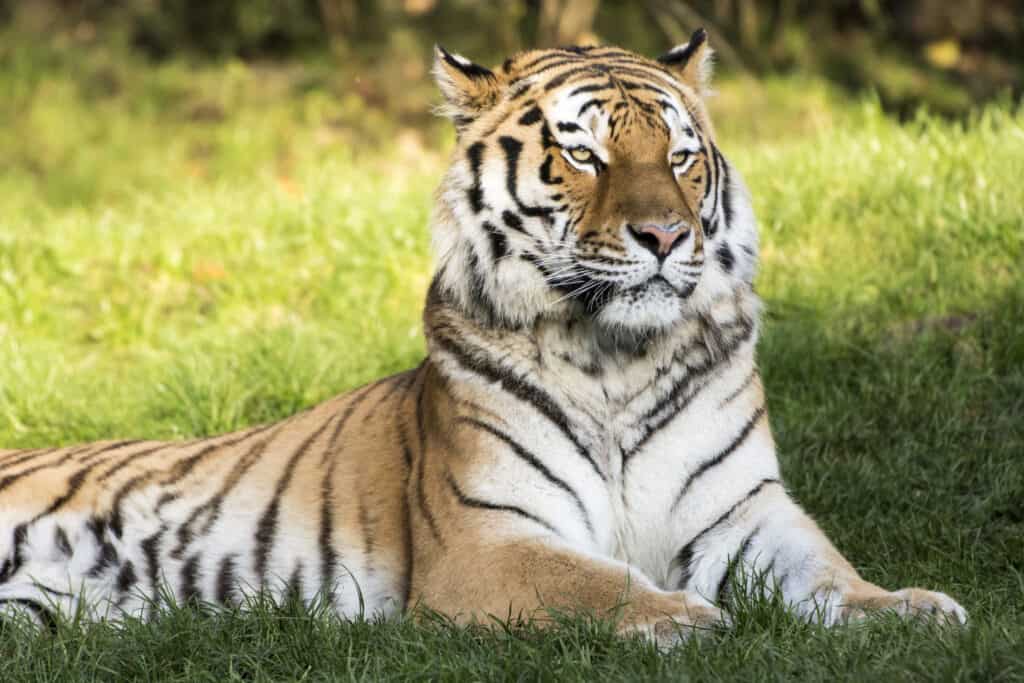
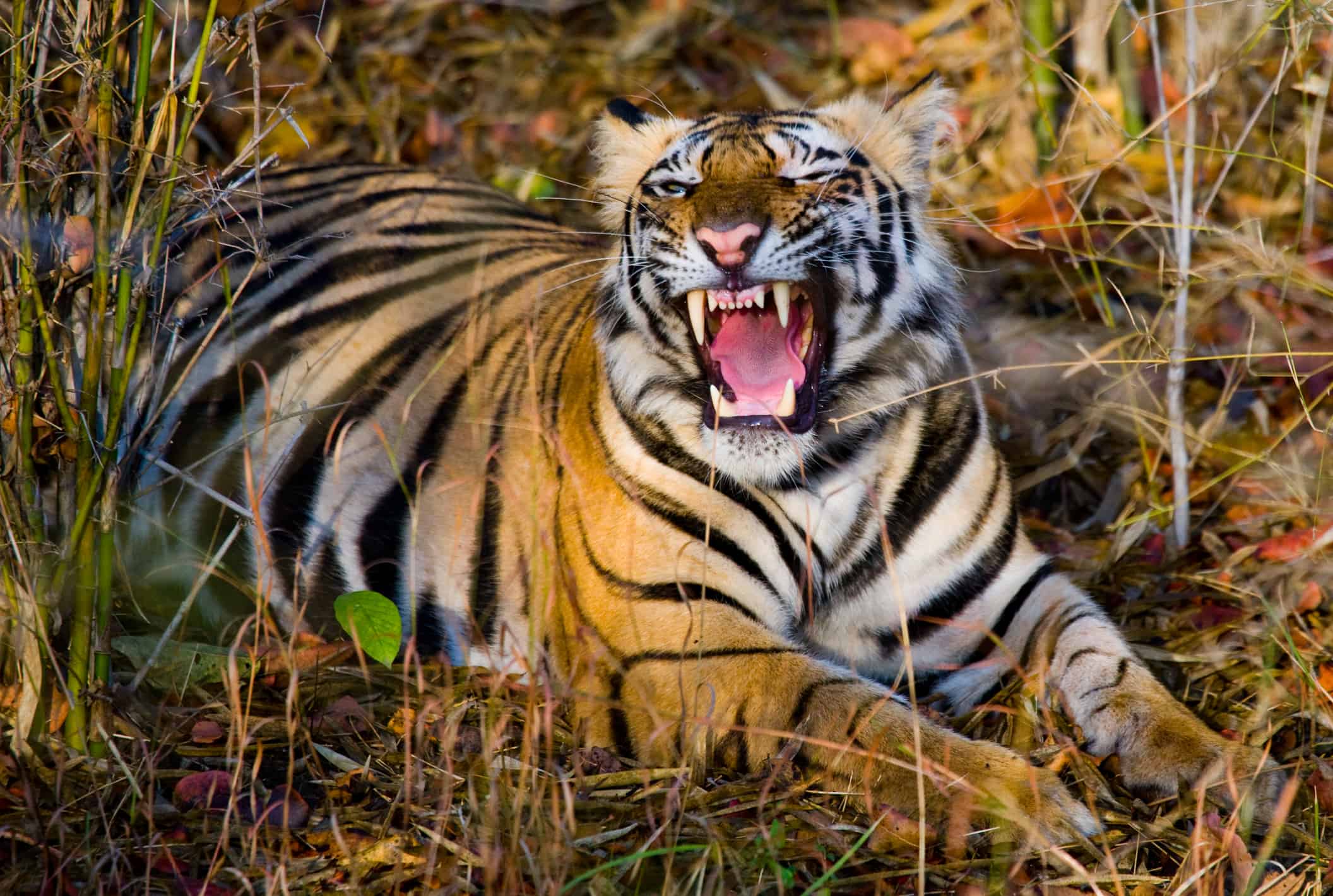
There are no wild tigers in Africa.
©Gerckens-Photo-Hamburg/Shutterstock.com
The African continent completely lacks wild tiger populations. While the cat family Felidae originated in Africa, the Panthera genus (which includes lions, leopards, and jaguars) originated in Asia 2 million years ago. Over the next 2 million years, those big cats evolved into the tigers we know today. The Panthera genus diverged later, with lions and leopards eventually dispersing into Africa. Researchers believe that geographic boundaries and glacial fluctuations during the Pleistocene period probably prevented the tigers from traveling to Africa.
Where Do Tigers Live?
Tigers are found in four distinct areas today; the Russian Far East, the Indian subcontinent, the Indochinese Peninsula, and Sumatra. Historically, tigers occupied the forests of much of Asia. But, centuries of expanding human activity and population have led to the rapid decline of tigers in all their former habitats. Today, tigers occupy less than 5% of their historic range. But, even at the height of their days, tigers never lived in Africa.
3 Big Cats in Africa
Africa is home to a wide range of animals, including elephants, giraffes, crocodiles, black mambas, Gaboon vipers, and many, many more fascinating creatures. But, it’s also home to three species of big cats: cheetahs, leopards, and lions. Let’s take a closer look at the big cats of Africa.
1. Cheetah
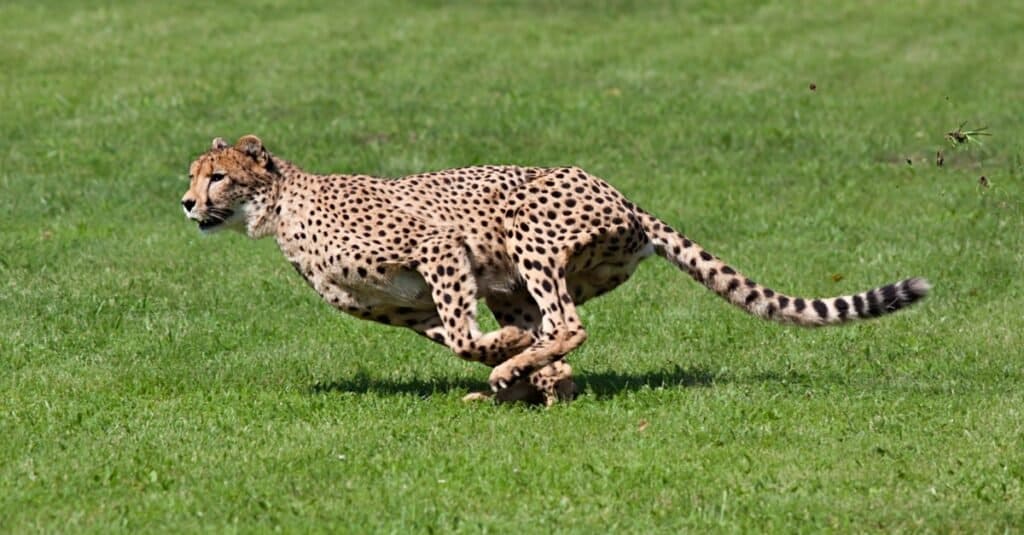
Cheetahs are the planet’s fastest land animals and are built for super speed, rather than stamina.
©Maros Bauer/Shutterstock.com
Cheetahs are the fastest animals in the world; they can run up to 60 miles per hour in short bursts of 20-30 seconds. Today, 1/3 of the world’s cheetahs live in southern Africa, where they hunt fleet-footed prey like gazelles, impala, and springbok. Currently listed as Vulnerable to extinction, today’s cheetah population is less than 10% of what it was a century ago. Cheetahs are vulnerable to habitat loss, poaching, and irresponsible hunting practices.
2. Leopard
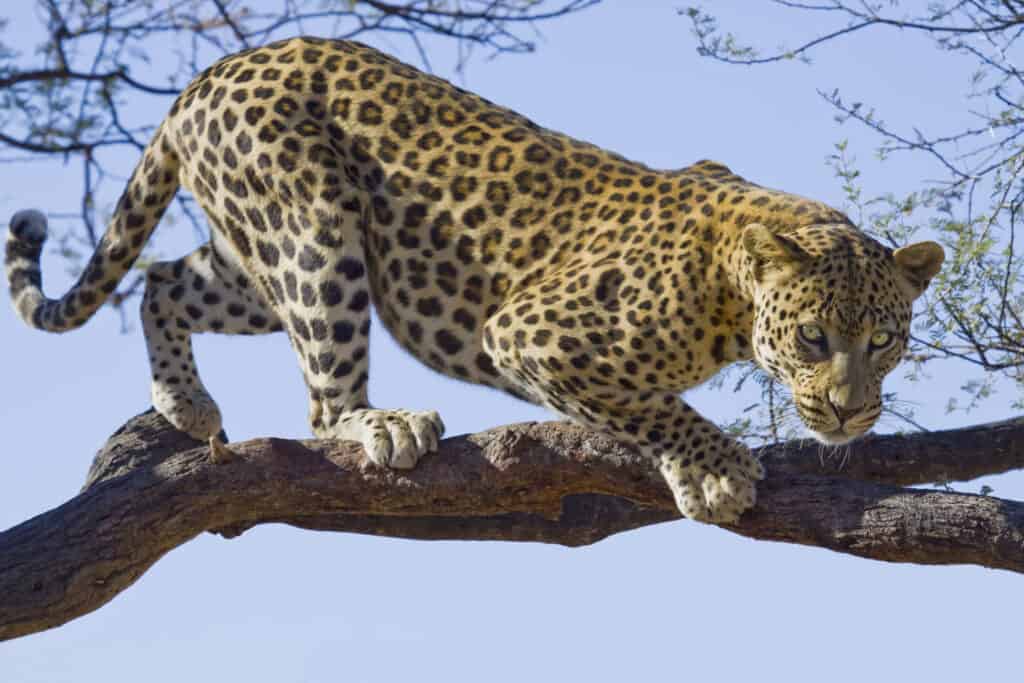
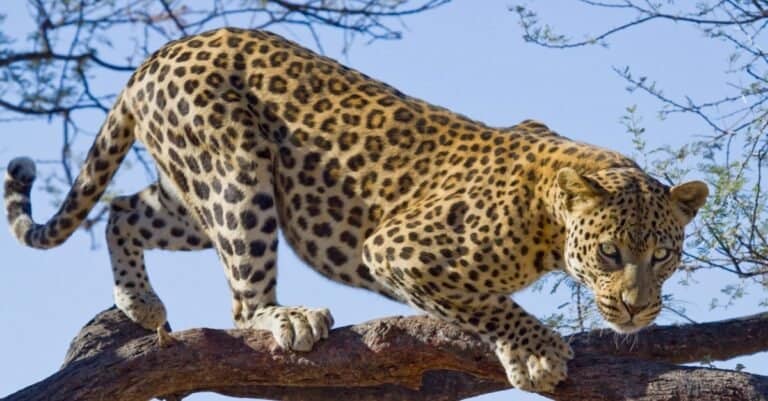
Leopards can pull prey bigger than their own bodies high up into trees to be eaten at their leisure.
©iStock.com/lightstock
Though not the largest of African big cats, leopards are certainly some of the most feared. There are no tigers in Africa, but leopards are just as famous and scary. These powerfully muscled cats can pull prey bigger than their own bodies high up into the trees to be eaten at their leisure. Leopards live in various habitats, including savanna, rainforest, and even desert and urban areas. Adult leopards face few threats, aside from humans. They’re currently listed as Vulnerable. Some of the biggest threats to leopards include habitat fragmentation, loss of prey due to the bushmeat trade, and human-wildlife conflict.
3. Lion
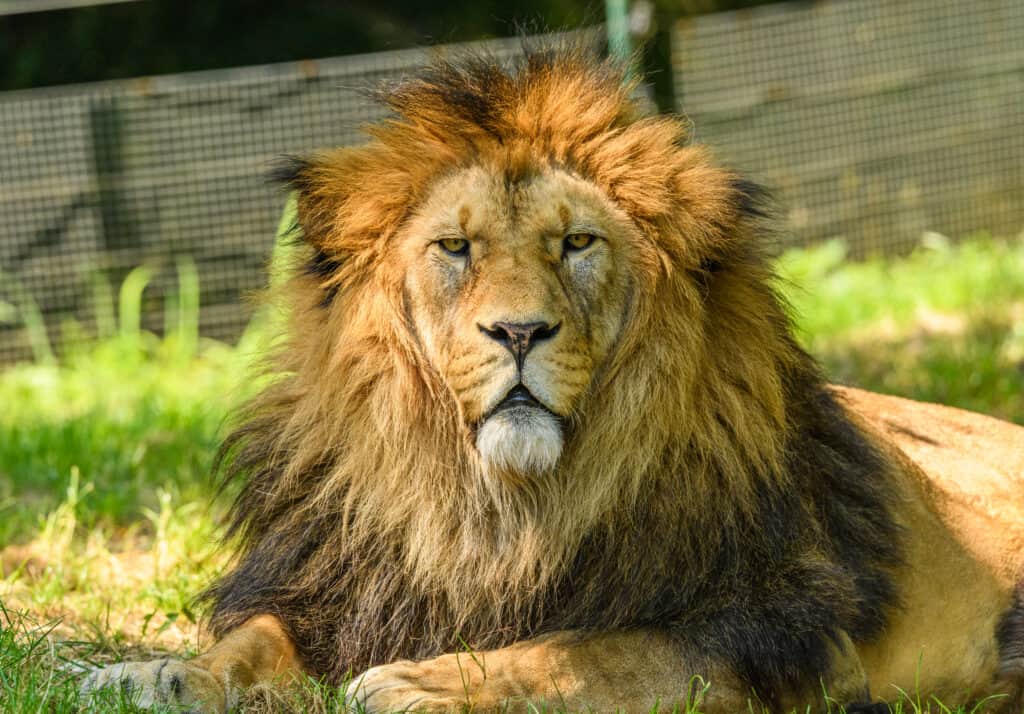
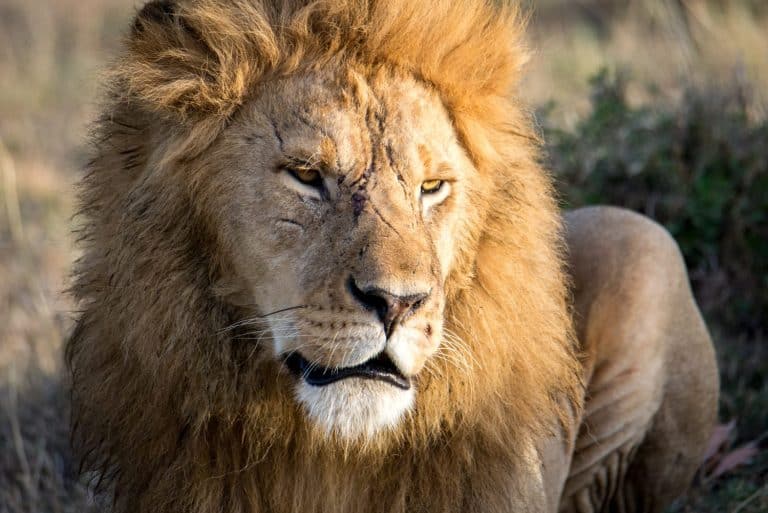
Male lions can grow up to 10 feet long and weigh up to 550 pounds.
©Petr Ganaj/Shutterstock.com
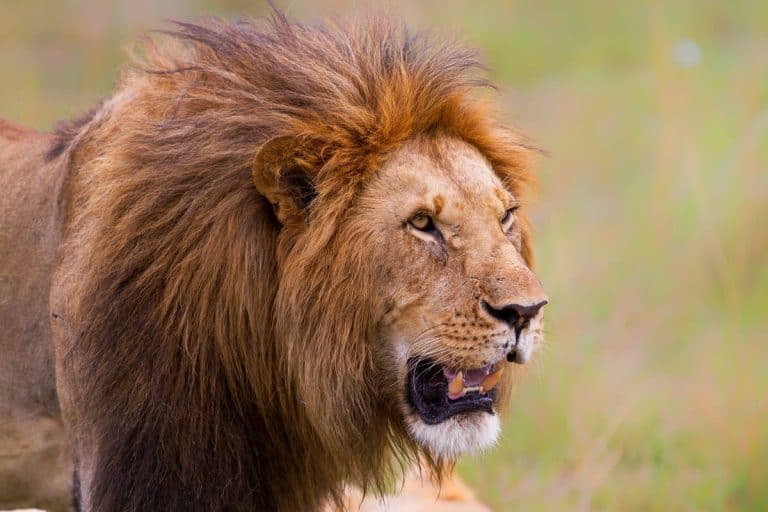
The largest of all African big cats, male lions can grow up to 10 feet long and weigh up to 550 pounds. Only the Siberian and Bengal tigers are bigger than the lion. Lions are social animals and live in prides of up to 30 individuals. Historically, they occupied most of Africa, as well as parts of the Middle East and Central Europe. Lions mainly survive in protected reserves and national parks, but small populations still persist outside them, where human-wildlife conflict is common. They’re listed as Vulnerable to extinction. Their primary threats are habitat loss and fragmentation, poaching, and prey loss.