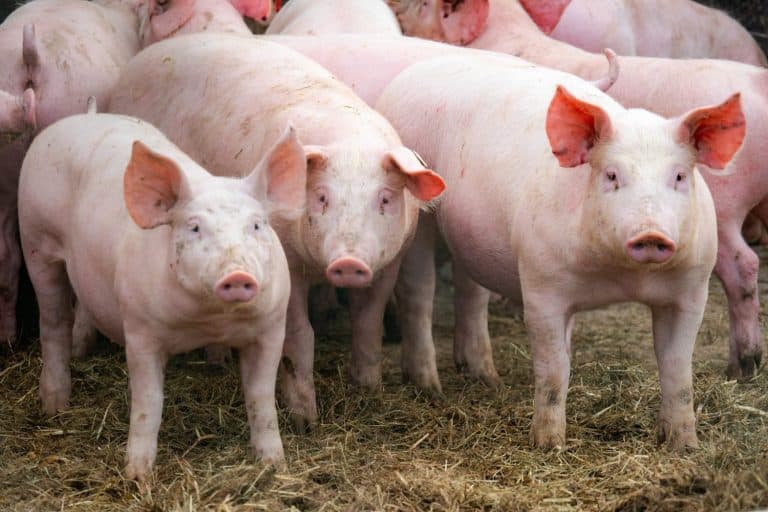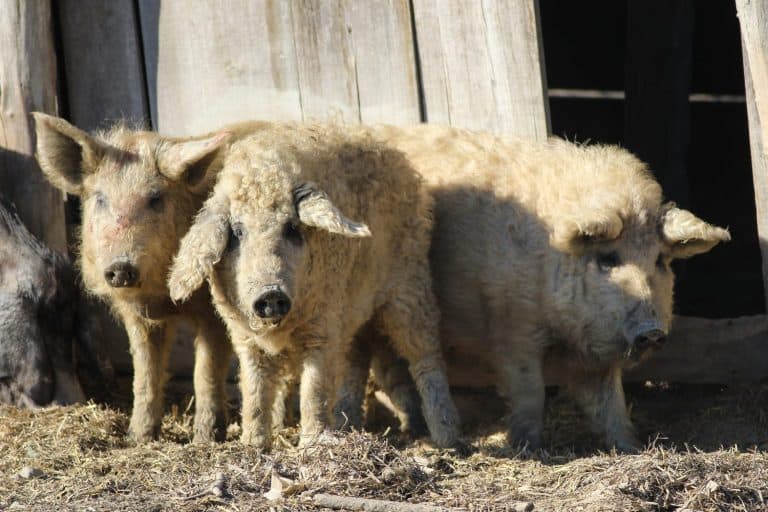

There’s no denying that baby pigs are adorable, but did you know they are also incredibly intelligent? Some experts believe they are smarter than dogs. Pigs are also very clean animals, despite their reputations for being messy. All of that wallowing in the mud plays a very important role in a piglet’s well-being. Learn more about baby pigs with these unforgettable facts and check out five precious pictures of piglets.
#1: Piglets Can’t Sweat
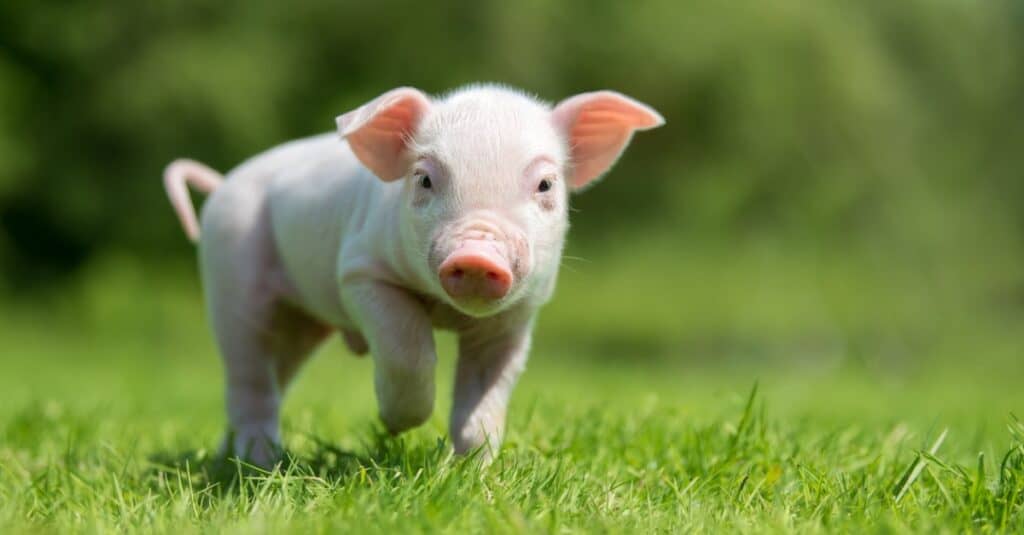
One way piglets control their body temperature is by wallowing in mud.
©iStock.com/Byrdyak
Unlike humans, pigs are not able to help cool themselves off by perspiring. Pigs can experience dangerous levels of heat stress when temperatures exceed 80°F. However, growing piglets, large pigs, and lactating pigs may be more susceptible due to high metabolic activity. Pigs have few functional sweat glands, so, similarly to dogs, they depend on evaporative heat loss. A pig pants to increase its respiratory rate, which causes water in the lungs to evaporate and releases heat from its body.
Pigs can also wallow in mud or water and eat less food to help regulate their body temperature. When the mud and water evaporate from the pig’s body, it cools them down, similar to how sweat works in humans. Eating and digesting less food also produces less body heat. Piglets can typically tolerate higher temperatures than adults because they lose more heat due to a higher surface area-to-body-volume ratio. However, when sows eat less due to heat, their milk production decreases, which can lead to reduced growth rates in piglets.
#2: Baby Pigs Can Learn to Do Tricks
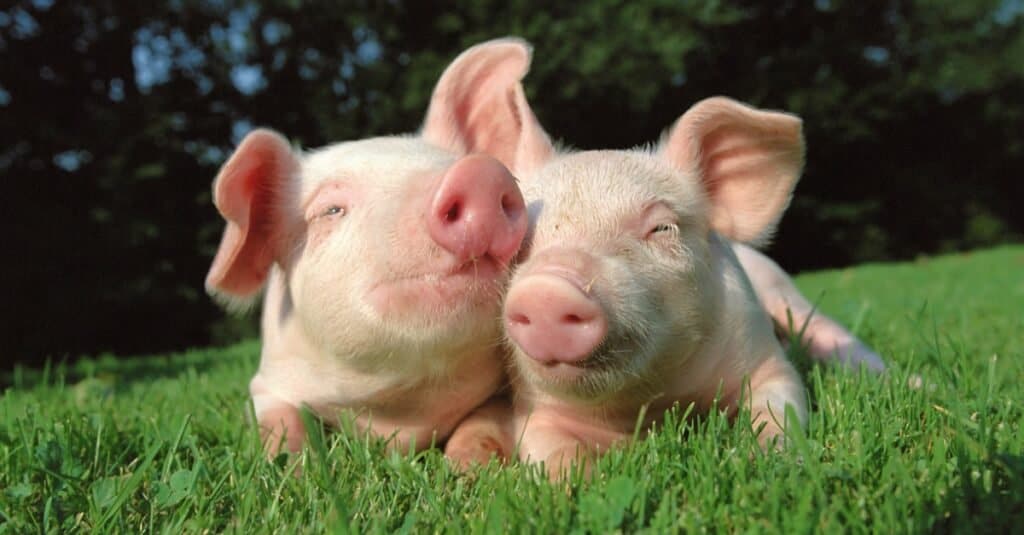
Piglets are said to be easier to train than dogs.
©iStock.com/anopdesignstock
Pigs have a reputation for being one of the most intelligent animals, but did you know they can learn tricks? This is especially true of minipigs, which behavioral studies have shown are capable of performing complex learning and memory tasks. Veterinarians even recommend training miniature pet pigs as early as possible. Some animal experts believe that pigs are more easily trained than cats or dogs.
Some popular tricks to teach your baby pig include shaking hooves, spinning, sitting, and staying. Pigs are highly motivated by food, so training should ensure the pig learns to associate the training activity with something pleasurable. Vets also note that it is important to accustom piglets to wearing a harness and walking on a leash from a young age.
#3: Piglets Recognize Their Mother’s Voices
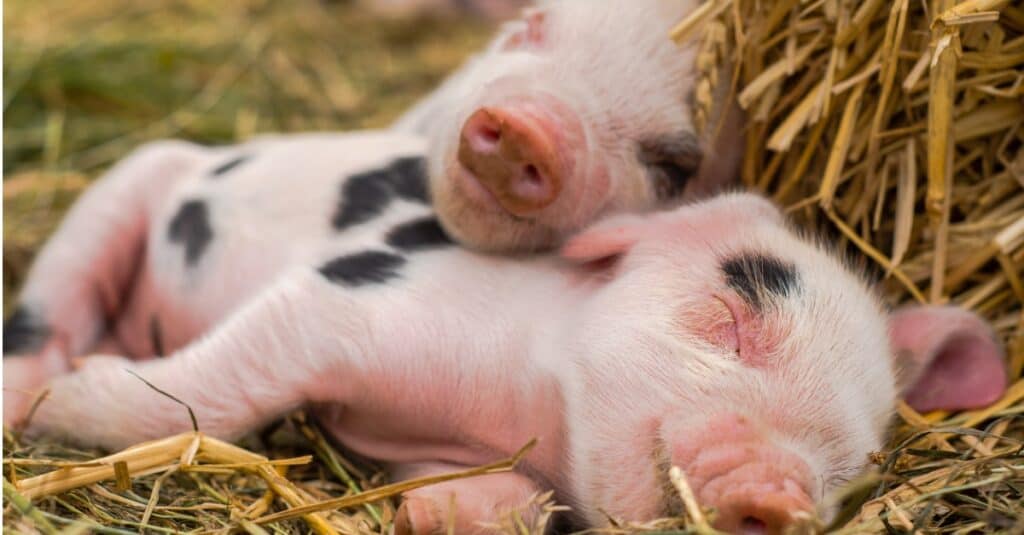
Piglets can recognize their mother’s voices as young as one day old.
©iStock.com/Ian_Redding
Researchers found that piglets can recognize their mother’s voices when they are just days old. They tested the piglets using recordings of the piglets’ own sows and an unfamiliar sow. Nearly 30% of piglets recognized their mother’s voices by one day old. At two days old, 87% of piglets responded to their mother’s voices. Nursing piglets also run directly to their mothers in response to her nursing calls.
Scientists also found that piglets changed their vocalizations depending on how close their mother was. The piglets called for their mothers more frequently when she was nearby but inaccessible than they did when alone. The farther the mother moved away, the more the piglet screamed to get her attention, as opposed to grunting, which is more common during normal mother-piglet interactions.
#4: Baby Pigs Are Neat Freaks
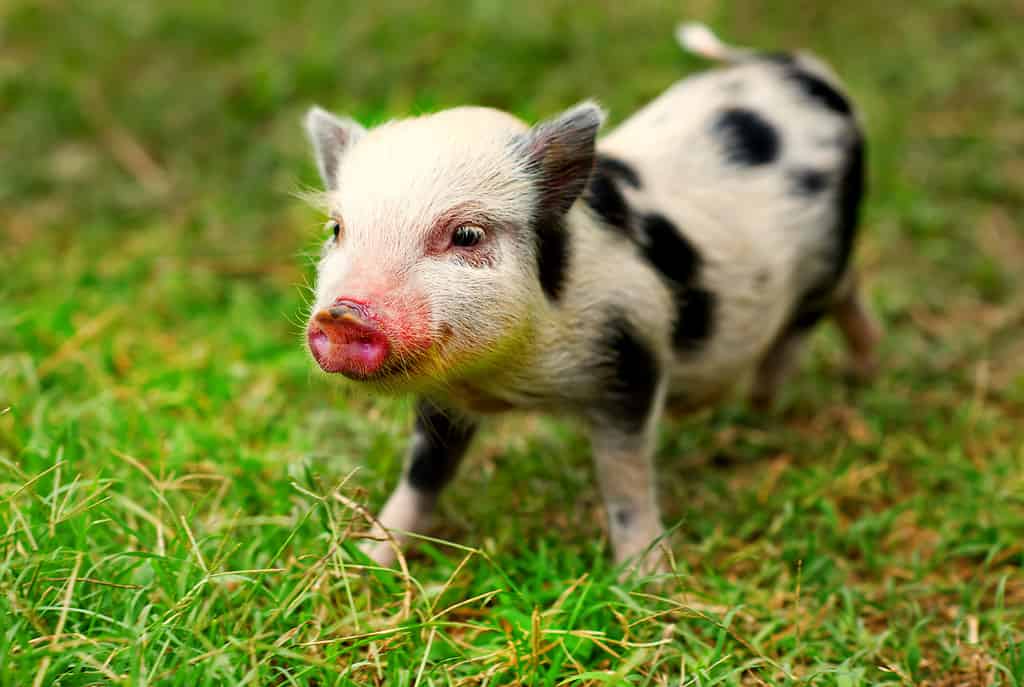
Piglets are some of the cleanest animals on the farm.
©Joe Herlong/Shutterstock.com
Have you ever described a messy space as a pigsty? The need to wallow in mud to cool down has given pigs an undeserved reputation for being messy animals. Pigs actually prefer to keep their living areas clean. In fact, if their living area is large enough, they will keep their sleeping and eating spaces separate from their toilet area.
Despite the phrase “pig out,” many pigs are also very clean eaters. Pigs can be nibblers or slow eaters, taking their time to savor their food rather than scarfing it down. Some wild pigs have even been documented to wash their food before eating it.
#5: Piglets Wag Their Tails
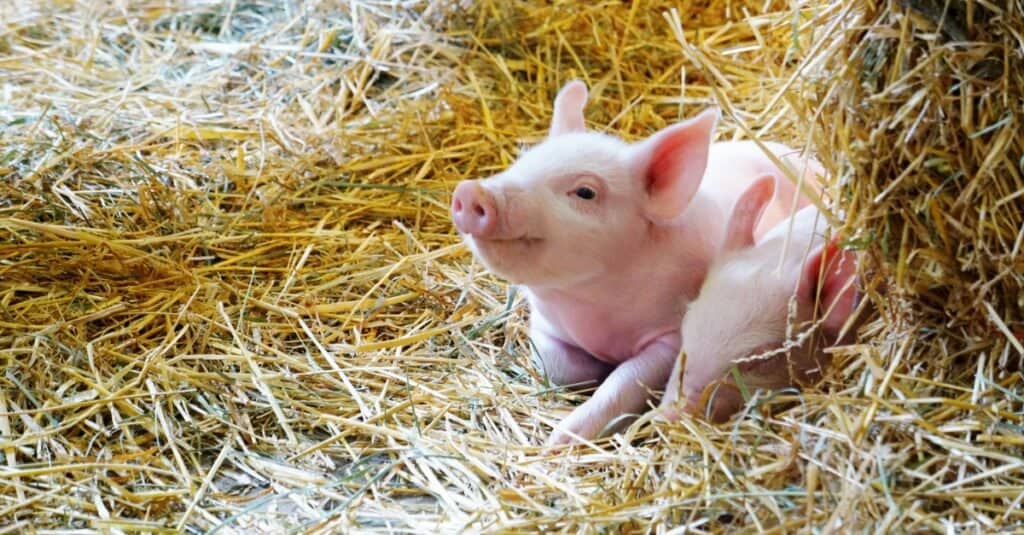
Piglets sometimes wag their tails when they’re happy and content.
©iStock.com/NalinneJones
Researchers believe that tail posture in pigs is an important indicator of their emotions. Although tail wagging is relatively infrequent, pigs loosely wag their tails during feeding, locomotion, and non-aggressive social interactions. This suggests that a wagging tail means a pig is happy, relaxed, and content.
A fully curled tail, which is 10 times more likely to occur in piglets, also indicates that the pig is excited or experiencing positive emotions. Fully curled tails were recorded during locomotion, excavation, foraging, and non-aggressive social interactions. Studies have also shown that a fully curled tail is indicative of a playful and happy mood.