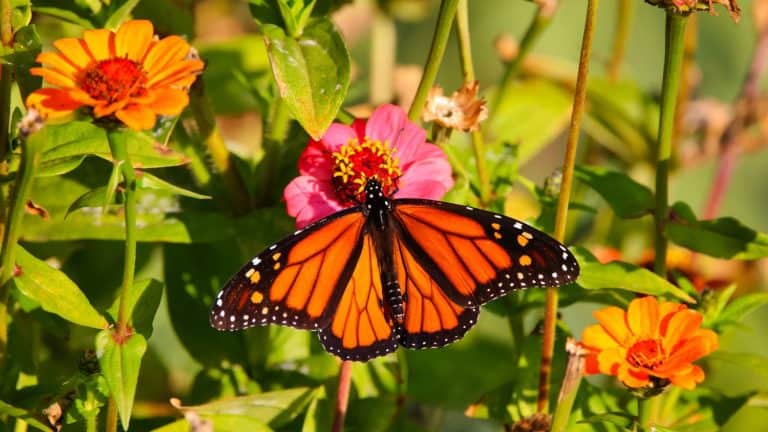

There are nearly 20,000 butterfly species in the world today. About 750 species inhabit the U.S. alone. With so many butterflies in the world, one would think they would band together to improve their odds of survival. This is what migratory birds do. However, butterflies are more solitary than birds. Most butterfly species generally live and migrate alone, although some species, such as the monarch butterfly, join together when they stop along their migration route. So, when they do gather, what is a group of butterflies called?
What Is the Collective Noun for a Group of Butterflies?
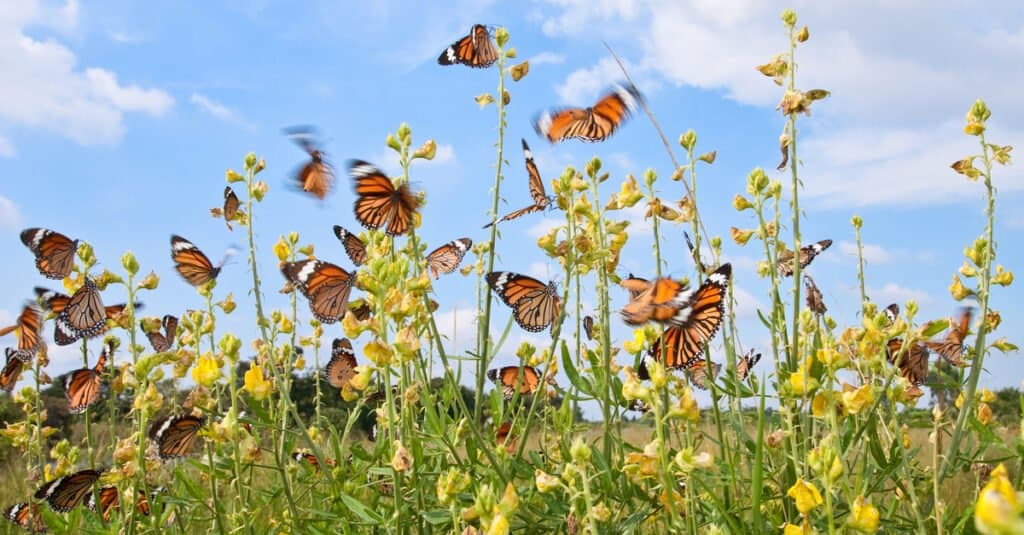
A group of butterflies is sometimes called a flutter.
©Santi S/Shutterstock.com
There are multiple collective nouns for a group of butterflies. The first collective noun is “kaleidoscope.” It was inspired by the beautiful array of colors and patterns that many fluttering wings create. This group name comes from the optical instrument called a kaleidoscope, a device that creates a beautiful, colorful display using mirrors. Similarly, the wings of butterflies feature thousands of colorful, reflective scales, so this name certainly makes sense.
Another collective noun for a group of butterflies is “flutter.” There is no doubt that this descriptive name refers to the fluttering motion of their wings as they fly. Similar avian-sounding names include “flight,” “wing,” and “flock.”
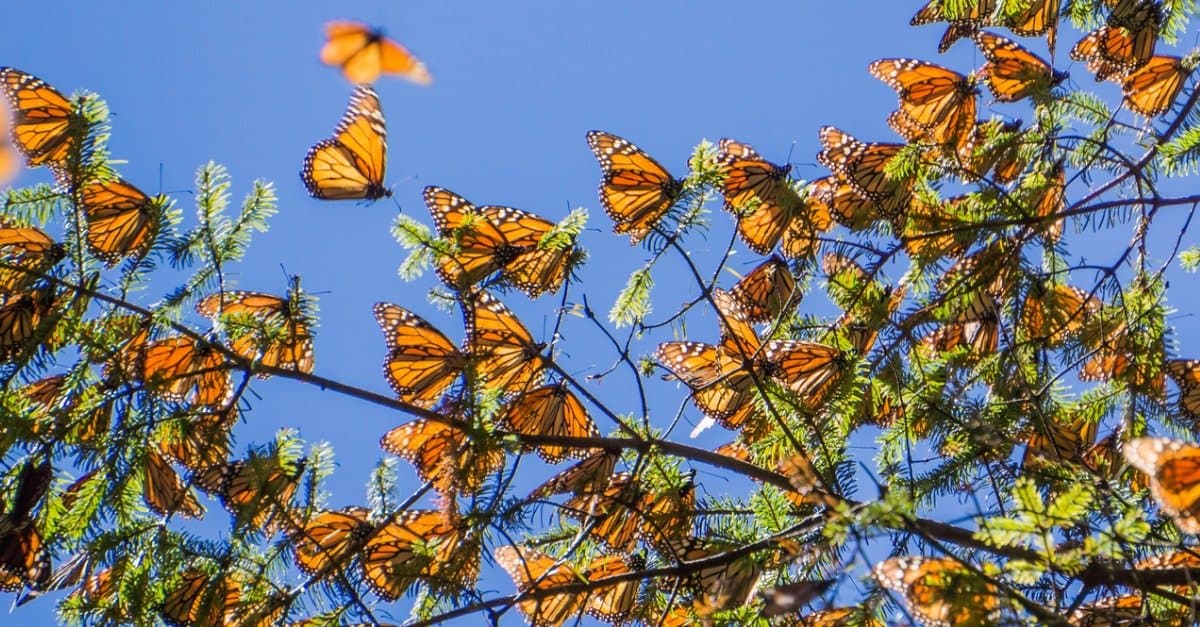
“Bivouac” is one of the more intriguing names. A bivouac is a temporary camp set up by soldiers. This name is well-suited to the congregation of many butterflies on one tree or other objects as they rest together during migration. In fact, during one migration period, the same group of butterflies can be described as a kaleidoscope in flight and a bivouac at rest. One can also say they are an “army” or a “swarm” when they find a water puddle, and many join together to take a drink.
A group of butterflies can also be called a “roost.” This refers to the way butterflies roost together on a tree branch or a fence post, usually for their nightly rest. Butterflies only fly during the day and rest with their wings closed — folded upward — after dark.
Why Do Butterflies Form a Group?

Butterflies usually come together to roost at night, since they only fly during the day.
©Dotted Yeti/Shutterstock.com
Butterfly groups are less common than solitary butterflies, especially since some species only live for several days. They usually only come together for food, hydration, migratory rest, or to take in important minerals they do not get from nectar. Occasionally, you can see two courting butterflies fluttering together. During courtship, the pair flutters in the air to show each other they are healthy and ready to mate. However, their union is brief, and they do not linger in a pairing.
Larger groups are most often seen roosting together in the trees where they rest during migration. Monarch butterflies, queen butterflies, and dogface butterflies, among others, migrate from the U.S. to Mexico when the weather begins to turn cooler. Communal roosting offers defense against predators, protection from the cold, and helps conserve heat when they huddle together. If it is too cold to fly, they sit together with their wings open to attract the sun’s warmth until they can take flight again.
Sometimes it is possible to see multiple butterflies eating from the same rotting fruit, animal dung pile, or rotting animal carcass. They sometimes feed together to get sodium and other nutrients they cannot get from nectar. A group may also form if butterflies have found a puddle of water from which many can drink at once, like American snout butterflies often do as they migrate from regions of drought.
One may also see many butterflies in a field or garden. These butterflies are most likely attracted to a “super bloom” event, which is a time when many flowers blossom and provide abundant nectar. Painted lady butterflies have been known to take advantage of California’s wildflower fields during migratory flights in search of resources.
How to Attract Groups of Butterflies
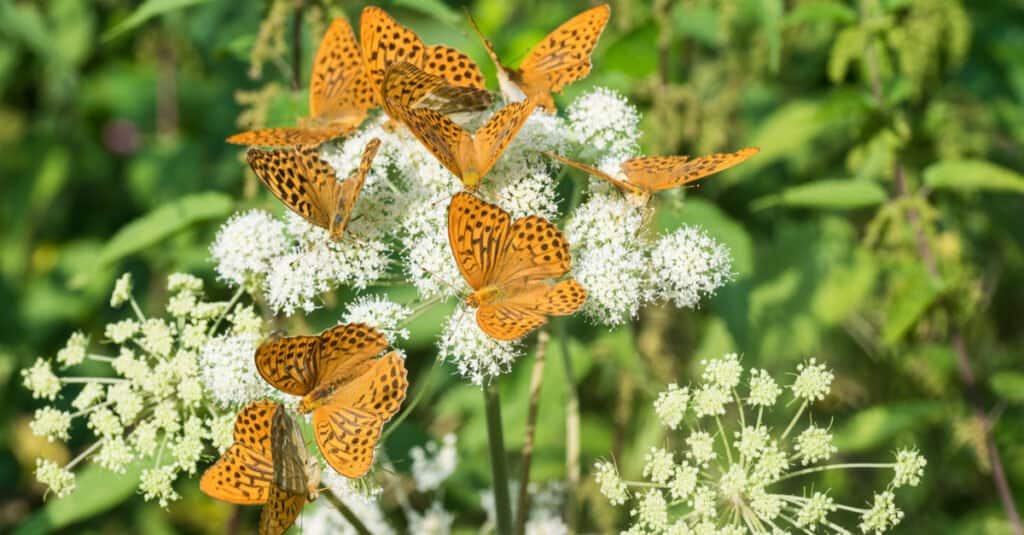
Plant your butterfly garden in a place that has ample sunlight.
©KPixMining/Shutterstock.com
If you have a little space in your yard or garden, you can easily grow a butterfly haven. By planting flowers that butterflies feed on, it is possible to attract groups of them. Of course, they will likely be solitary butterflies or butterflies of different species. However, with nectar available, one small garden can attract many butterflies each day during peak flowering season.
Butterflies love sunlight, so choose a space that has ample sunlight throughout the day. If the space has too much airflow, it will be difficult for butterflies to settle. Cover the space or choose one where there is less airflow. Butterflies feed on nectar, so if you want to attract different kinds of butterflies, plant various flowering plants in your butterfly garden. Do some research to find out what kinds of butterflies are typically found in your area, or if you live in a zone that many species use as a migratory route. Then plant according to those butterflies’ preferences. Some of the best flowering plants that attract butterflies include:
- Butterfly bush
- Lavender
- Bluebells
- Marigolds
- Lantana
- Buttercups
- Coneflower
- Hyacinth
- Black-eyed Susan
- Herbs, such as Clover, Willow-herbs, Mint, Marjoram, Knapweed, Thistles, Blackberry, and Heather
- Bowles’ Mauve wallflower
You may also want to create a compost heap that contains rotting fruits and vegetables. Butterflies need water to survive, just like any other living thing. However, they sip water from mud puddles and damp soil, so make sure your garden bed is moist and has adequate water.