
Quick Take
- Porcupine tracks in snow rarely look like footprints at all, and understanding the reason why changes how you search for them. See how snow hides tracks →
- The texture on a porcupine's foot serves a purpose most people wouldn't guess just from looking at a print. See the pebbly texture →
- Even if you never spot a single track, four other clues can still confirm a porcupine passed through, including one that involves the trees themselves. Explore other sign clues →
- One common belief about porcupine quills is flat-out wrong, a fact that would affect how you'd actually react if you encountered one. Discover the quill truth →
A porcupine is a large rodent with sharp quills on its back to protect it from predators. These rodents occur on every continent except Antarctica and Australia. They are classified into two groups, depending on their location. Old World porcupines (Hystricidae) inhabit Asia, Europe, and Africa, while New World porcupines (Erethizontidae) occur in the Americas. The North American porcupine (Erethizon dorsatum) is the only porcupine species in the U.S. It inhabits Canada, Alaska, parts of the continental U.S., and northern Mexico. If you live in the western, northeastern, or Great Lakes regions, you may have stumbled across porcupine tracks in snow, sand, or mud. Here is a guide to help you identify their footprints.
Porcupine Tracks
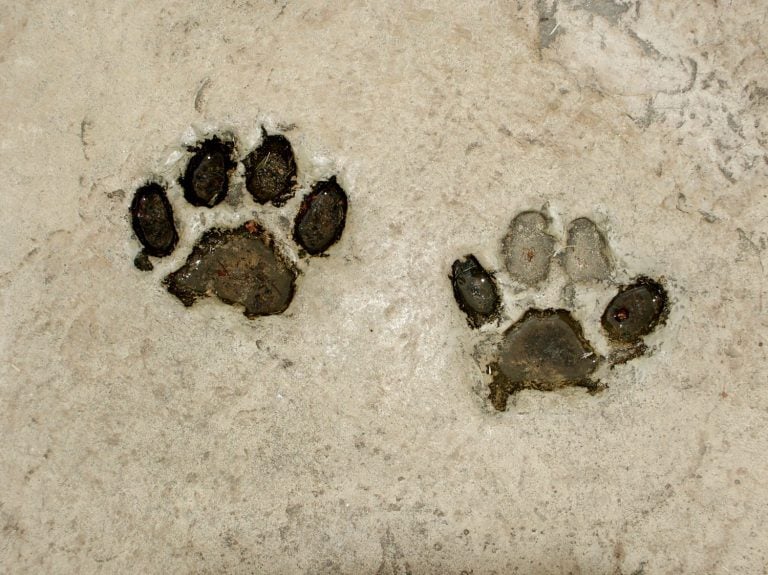
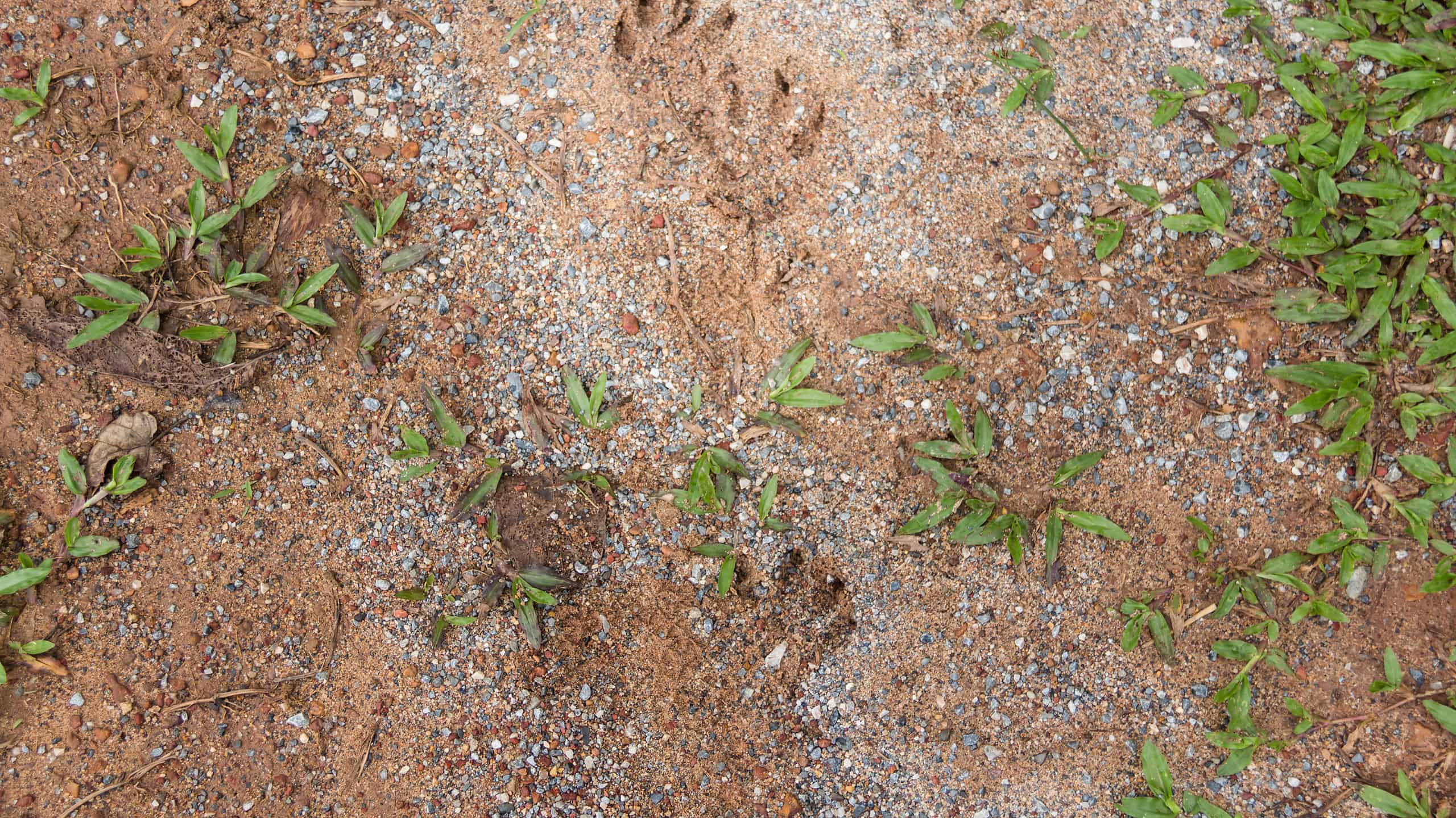
Porcupine tracks show four toes on the front print and five on the hind paw. They have long claws, which are often visible in their tracks. Their heel pads have a pebbly texture, which acts as a non-slip surface. The texture on their heel pads also helps them climb trees. Sometimes, porcupines drag their tails through their paw prints, obscuring their tracks.
The porcupines’ front prints measure 2.5 inches long, and their hind prints are approximately 3.5 inches long. Because they move so slowly, their prints often leave deep impressions. Paw prints point inward because they are pigeon-toed. One of the best places to find prints is in wooded areas, especially at the bases of trees.
Porcupine Tracks in the Snow
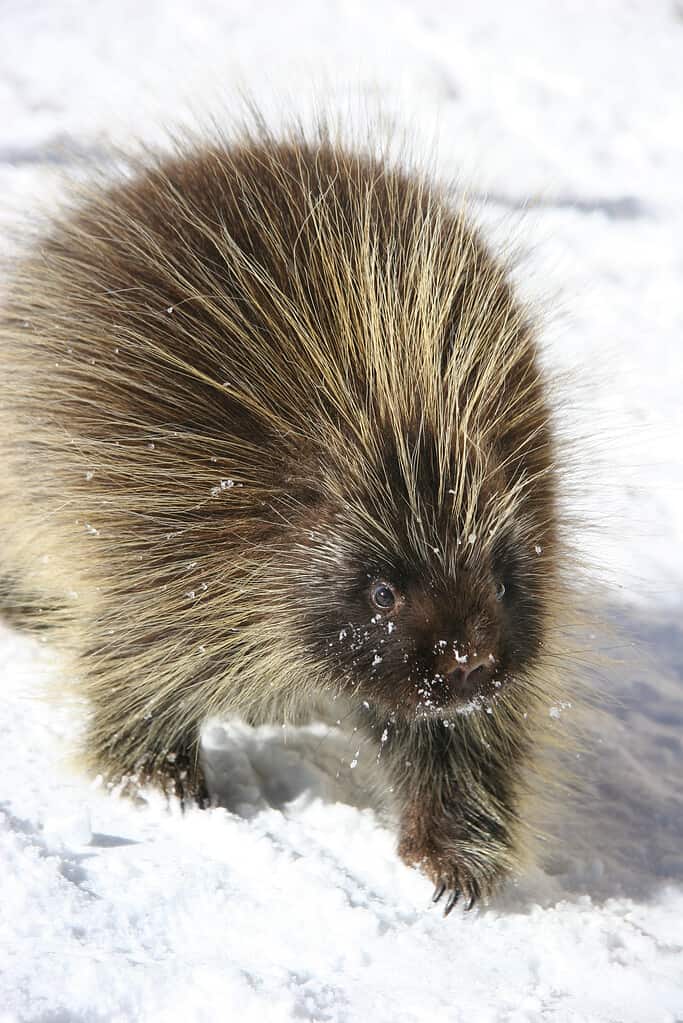
Porcupines’ bellies drag the ground and their tails sweep behind them, making trenches instead of tracks.
©PGile/Shutterstock.com
Unfortunately, porcupine tracks often lack detail in the snow. Additionally, the clarity of the print is determined by the texture and height of the snow. Porcupines have a waddling, side-to-side gait and short legs, so their bellies drag the ground and their tails sweep along behind them, frequently making the tracks look more like trenches. While porcupines have long claws that sometimes leave marks on the ground, claw marks are usually not visible in the snow.
Porcupine Tracks in the Sand
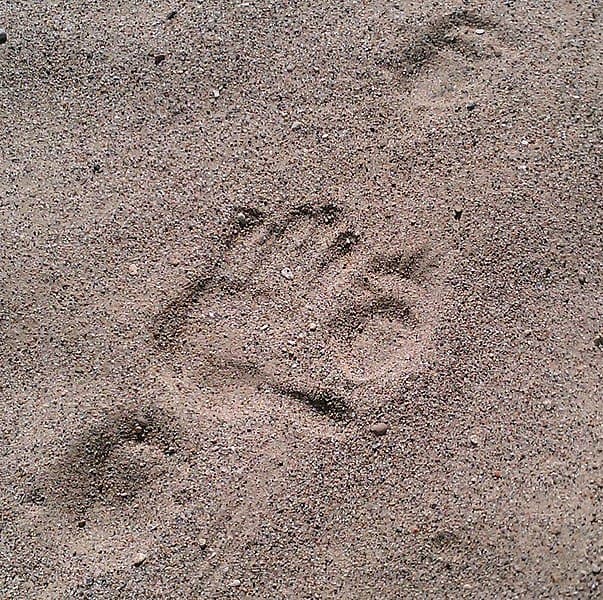
Porcupine tracks (R) with human adult handprint (L) for scale. Drag marks between porcupine tracks are from their tail.
When porcupines walk in the sand, you can generally see deeper impressions from their heel pads, as well as claw marks at the front of the toes. You can also see the drag marks from their tails in between the two prints.
Porcupine Tracks in the Mud
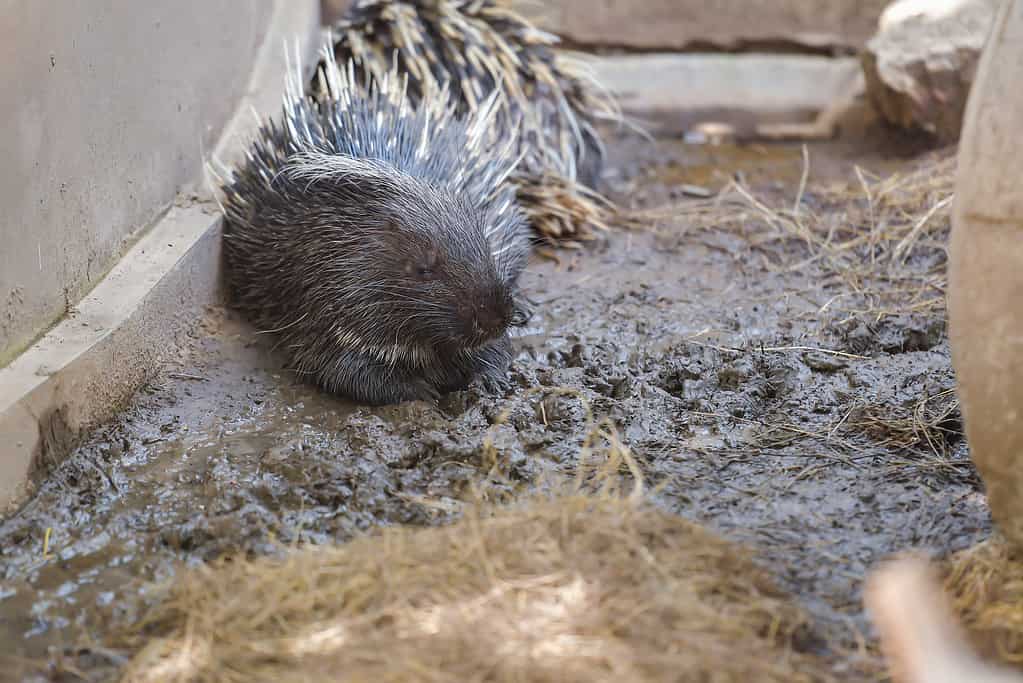
Porcupine tracks in the mud are accompanied by drag marks from their tails.
©jirayupol kiriyaporn/Shutterstock.com
Porcupine tracks in mud are similar to their tracks in the sand, but they are much more detailed. Tracks leave deep impressions, and you can typically see claw marks at the top of the toes, as well as the pebbly texture of their foot pads in the print. Tracks in the mud are also accompanied by drag marks from their tails.
Alternative Methods to Identify Porcupines
There are other ways of identifying porcupines besides their tracks, and they include porcupine scat, sounds, tooth marks, dens, and lost quills. Take an in-depth look at each of the markers you can use to determine if a porcupine has been in the area.
Porcupine Scat
You know a porcupine is in the area if you see their scat. Porcupine scat is in thin, curved, oblong pellets that measure 0.5-1 inch long. It is generally black or brown and often contains hair or even quills. It is usually found at the base of trees where they often feed.
Sounds
Porcupines are very vocal animals, making noise when they eat, fight, hunt for mates, warn intruders, and more. Some of the sounds they make include:
- Coughs
- Shrill screeches
- Squeaks
- Shrieks
- Tooth chattering
- Whines
- Groans
- Low grunts
- Rattling quills
Tooth Marks
When there is an active porcupine in the area, you can identify it by looking at the trees. For example, they like to gnaw on and eat tree bark, so they will often leave trunks bare or nibble on certain areas. They also like to eat twigs, so there will be numerous broken twigs around the base of trees.
Porcupine Dens
Because porcupines do not hibernate, they take cover in dens during extreme weather conditions. Dens are often found in the following places:
- Hollow logs
- Other animals’ abandoned burrows
- Rock ledges
- Under stumps
- Blown down trees
- Under buildings
Leaving Quills Behind
Contrary to popular belief, porcupines do not shoot their quills at unsuspecting victims. Instead, their sharp quills are loosely attached and, when fully grown, dislodge at the slightest touch. They also use their tails to slap their attackers. So, when a predator attacks a porcupine, the quills puncture their skin, and the barbs cause the quills to dig deeper and deeper until removed. Their quills are modified hairs with hollow shafts that measure around 2 to 3 inches long. Additionally, there are approximately 30,000 quills on their bodies.